
尿素出口政策

Search documents
尿素2026年度报告:国内供应压力难缓解,关注出口节奏
Zhe Shang Qi Huo· 2025-12-31 01:02
1. Report's Investment Rating No investment rating for the industry is provided in the report. 2. Core Viewpoints - The downside space for urea is limited, with support at the [1600] price level. The reasons include the recent maintenance of domestic gas - based plants leading to a decline in daily production on a month - on - month basis, but high levels of production and operation rates on a year - on - year basis; domestic demand is mainly for off - season storage, and industrial compound fertilizer production is in a transition period with a month - on - month improvement in demand; and cost support has slightly increased. The cost support for urea is around 1500 - 1550. With the issuance of the fourth batch of export quotas, expected to be around 600,000 tons, the specific export volume in the later stage should be monitored. Overall, with off - season storage and export regulation, the downward drive for urea is limited, and it should be treated with a sideways view [3]. - In 2026, the domestic urea market is expected to maintain a pattern of loose supply and demand and continuous inventory accumulation, with the overall supply - demand pressure potentially intensifying. Cost support and export policies will be the key factors of concern. The disk pricing is expected to follow the fundamental logic. The peak agricultural demand season may drive the price to rise periodically, and the price will face pressure to decline after entering the off - season, but the cost of the production process will form a bottom support, and exports will adjust the supply - demand balance through quota regulation. It is recommended to focus on seasonal market trends and grasp the rhythm [9]. 3. Summary by Directory Urea Trend Review - In 2025, the urea price showed a wide - range volatile trend of rising first and then falling. In the first half of the year, the price fluctuated upwards due to domestic spring - plowing demand and export expectations, but the pressure of oversupply on the supply side gradually emerged. In the second half of the year, affected by the off - season of agricultural demand and the realization of export expectations, the price center continued to move down. The market can be divided into several stages: from mid - January, with the approach of the Spring Festival holiday, manufacturers' advance orders started, and spot transactions improved; after the Lantern Festival, spring - plowing demand gradually started, and the inventory of urea enterprises decreased rapidly; from mid - June, due to the geopolitical conflict in the Middle East, the international urea price rose, which had an impact on the domestic market; from mid - August, due to the weakening of domestic demand and environmental protection policies, the urea price accelerated its decline; from mid - October, with the warming of market trading, the reserve demand increased, and the price gradually rose [16][17]. Urea Supply Side New Capacity Situation - Domestic urea capacity has entered a new expansion cycle in recent years. As of now, coal - based production still dominates, accounting for over 70%, with the proportion of anthracite - based plants decreasing to about 20% and bituminous - coal - based plants increasing to about 55% [30][31]. - In 2025, without considering capacity exit, about 5.44 million tons of new capacity were put into production according to the plan, mainly from factory expansions and upgrades. In 2026, the domestic urea industry is still in the production cycle, with an estimated new production plan of 5.95 million tons and a capacity growth rate of over 7% [36][40]. - Globally, the urea capacity is expected to maintain a growth pattern in 2026, but the growth rate will slow down. The global urea capacity is expected to reach 247 million tons, with a year - on - year increase of about 0.78% [46]. Production and Operation - In 2025, domestic urea supply remained high due to high capacity and operation rates. The daily production reached over 1.9 million tons in the first quarter, with a peak exceeding 2 million tons. In the second quarter, the daily production continued to rise, remaining above 2 million tons for a long time. In the third quarter, due to high temperatures and frequent equipment failures and maintenance, the daily production decreased to the 1.8 - 1.9 million tons range, but rebounded in September. In the fourth quarter, affected by equipment maintenance and gas restrictions for enterprises in the northwest and southwest, the domestic supply showed a seasonal decline. The overall production in 2025 is expected to reach about 71 million tons, with a year - on - year increase of nearly 7.9%. In 2026, if no backward capacity exits or policy adjustments occur, the national urea production is expected to reach 74 - 75 million tons, with a year - on - year growth rate of over 5% [60]. Urea Export - In 2025, the cumulative urea export volume from January to October was 4.01 million tons, with a significant year - on - year increase. The total annual quota was about 4.6 million tons, distributed in four batches. The export destinations were relatively scattered, with the Americas being the main destination before August, and the proportion of exports to Southeast Asia increasing significantly after September - October [69]. - In 2025, India had 8 urea import tenders, with a transaction volume of about 9.18 million tons, a significant increase compared to the same period in 2024. It is estimated that India's domestic urea production in 2025 was about 29.8 million tons, a year - on - year decrease of about 3.56%, and the import volume was about 10.2 million tons, a year - on - year increase of about 92.82%. In 2026, assuming normal production in India, it is estimated that India will need to import about 8 million tons of urea to maintain domestic supply - demand balance [70]. - For 2026, the export volume of domestic urea still depends on policy guidance. It is expected that exports will still be concentrated in the third and fourth quarters. If the export quota increases, the domestic supply pressure may be relieved; otherwise, the supply pressure will be more severe [65]. Urea Demand Substitute Demand - Synthetic ammonia, as an intermediate product of urea production, is still mainly used for urea production due to the relatively high price difference between urea and synthetic ammonia, and the external sales volume has not increased significantly [107]. - Urea has a cost - performance advantage compared to phosphate and potash fertilizers. The production and export volumes of ammonium sulfate and ammonium chloride have increased significantly in 2025, and the supply - demand pattern of nitrogen fertilizers has become looser, with the price ratio of urea to other fertilizers at a relatively high level [115][141]. Agricultural Demand - Urea agricultural demand is seasonal and rigid. The peak demand season is from March to May, and from June to July, the demand for field crops such as rice and corn is high. After August, it enters the off - season. In 2025, the domestic urea agricultural demand consumption was about 29.48 million tons, with a year - on - year growth rate of about 2.11%, but the growth rate slowed down compared to previous years. In 2026, the growth rate of urea agricultural demand is expected to further slow down [148][161]. Compound Fertilizer Demand - Compound fertilizer accounts for 15% - 20% of the downstream demand for urea. In 2025, the compound fertilizer production was expected to be 58.5 million tons, a year - on - year increase of about 5.10%, but the average operation rate decreased by about 0.40%. In 2026, the over - supply pressure in the compound fertilizer industry will still exist, and the average operation rate may continue to decline, but the demand for urea will still maintain a growth trend [171]. Urea - Formaldehyde Resin Demand - Urea - formaldehyde resin accounts for about 20% of the downstream demand for urea. In 2025, the overall operation rate of formaldehyde increased slightly, and the export demand for panels maintained a growth trend, driving the demand for urea to maintain a small increase. It is estimated that the demand for urea from the urea - formaldehyde resin sector in 2025 was about 10.82 million tons, with a year - on - year growth rate of about 2.5% [170][172]. Melamine Demand - Melamine accounts for about 7% - 10% of the downstream demand for urea. In 2025, the total melamine production was expected to be about 1.52 million tons, a year - on - year decrease of 3.76%, and the demand for urea was about 4.56 million tons, a year - on - year decrease of 170,000 tons. In 2026, the demand for urea from melamine and urea - formaldehyde resin is expected to remain stable, with limited highlights [178]. Off - Season Storage Demand - The new "National Fertilizer Commercial Reserve Management Measures" for the 2024 - 2026 period has some differences compared to previous years, including a reduction in the urea storage ratio, a change in the requirements for individual targets, an extension of the storage period, an adjustment of the storage assessment indicators, and an extension of the release time [190]. Urea Inventory - Enterprise inventory has strong seasonality, usually decreasing in the first half of the year and increasing in the second half. In 2025, due to high supply pressure, the enterprise inventory was at a relatively high level throughout the year, and although there was some destocking in November, the absolute inventory level was still high [199]. - Port inventory is closely related to export policies. After the export quota was officially issued in May 2025, the port inventory increased in an orderly manner. From September to October, with the increase in actual exports, the port inventory decreased rapidly [199]. Urea Supply - Demand Balance Sheet - In 2026, the new production capacity of urea is expected to bring an incremental output of about 2 million tons. The annual output is estimated to be around 75 million tons, with a year - on - year increase of about 4 million tons and a growth rate of about 5.5%. - The export volume is estimated to be about 5.5 million tons, and the annual consumption is estimated to be about 68 million tons. The domestic urea supply - demand will remain in an oversupply pattern throughout the year, and the price will depend on the game between cost and exports [205].
新增投产压力加大,出口政策影响市场节奏
Yin He Qi Huo· 2025-12-30 02:51
1. Report Industry Investment Rating No information about the industry investment rating is provided in the report. 2. Core Viewpoints of the Report - In 2026, the supply - side of urea will see accelerated release of new production capacity, with over 6.5 million tons of new capacity expected to be put into operation, increasing the total domestic urea production capacity to 87 million tons by the end of 2026, and the daily output is expected to exceed 225,000 tons and reach a record high of 230,000 tons [5][168]. - The agricultural demand for urea is expected to peak after the Spring Festival and before the first half of the year. Overall, agricultural demand is stable, industrial demand is weak, and exports may become a key marginal variable for demand. The increase in export quotas in 2026 compared to 2025 will be a crucial factor affecting the market rhythm [5][169]. 3. Summaries According to Relevant Catalogs 3.1 First Part: Preface Summary 3.1.1 Comprehensive Analysis - In 2026, on the supply - side, new urea production capacity will continue to be released rapidly. On the demand - side, agricultural demand has a seasonal peak, and exports are a key variable [5]. 3.1.2 Strategy Recommendation - Unilateral trading: Weak before the Spring Festival, strong in the first half of the year, and mainly weak in the second half, with export quotas affecting the market rhythm [6][169]. - Arbitrage: Short - term weakness in inter - period arbitrage, and long - term positive arbitrage opportunities after the Spring Festival [6][169]. - Options: The lower margin is between 1550 - 1600, and the upper margin is between 2100 - 2200 [6][170]. 3.2 Second Part: Fundamental Situation 3.2.1 Market Review - In 2025, the domestic mainstream urea ex - factory price showed an "N" shape. It bottomed out in January, rebounded around the Spring Festival, had short - term rebounds after the release of export quotas in April, and then declined due to weakened demand in July and rebounded again in October [11]. 3.2.2 Supply Analysis - China's urea production capacity entered a de - capacity cycle after peaking in 2015 and started positive growth in 2021 due to new capacity release [34]. - In 2025, the net increase in urea production capacity was 6.5 million tons, and in 2026, it is expected to be about 6.5 million tons, with a production capacity growth rate of 7.9% [37][42]. - In 2025, the average daily urea production reached a new high, and the average daily production in 2026 is expected to exceed 210,000 tons in the second quarter [47][70]. - In 2026, coal prices will fluctuate within a range, and urea production profits will be further compressed. Demand growth may slow down, and high inventory may become normal. Attention should be paid to the winter maintenance of gas - head enterprises [57][67][75]. 3.2.3 Demand Analysis - Agricultural demand accounts for about 70% of urea demand, with seasonal characteristics. In 2025, China's grain production increased, and the demand for high - standard farmland showed steady growth [80][90][100]. - The price of urea has a significant comparative advantage over phosphate and potash fertilizers [103]. - Internationally, the total urea production capacity is expanding. India still has a large demand gap, and China's export quotas are expected to increase in 2026, with international prices affecting the export rhythm [112][121][125]. - The 2025/26 off - season storage policy continues the 2024/25 policy, and it is worth noting whether the rewards and punishments are linked to export quotas [136][140]. - Industrial demand for urea, mainly from the melamine and urea - formaldehyde resin industries, is expected to remain lackluster in 2026 [141][151]. - In 2026, the production of compound fertilizers will first rise and then fall, with different demand characteristics in different seasons [155][161]. 3.3 Third Part: Market Outlook and Strategy Recommendation 3.3.1 Comprehensive Analysis - Similar to the preface, in 2026, the supply - side will see new capacity release, and the demand - side will be affected by agricultural seasons and export quotas [168][169]. 3.3.2 Strategy Recommendation - Unilateral trading: Weak before the Spring Festival, strong in the first half of the year, and mainly weak in the second half, with export quotas affecting the market rhythm [169]. - Arbitrage: Short - term weakness in inter - period arbitrage, and long - term positive arbitrage opportunities after the Spring Festival [169]. - Options: The lower margin is between 1550 - 1600, and the upper margin is between 2100 - 2200 [170].
尿素2026年报:供应压制价格,出口提供驱动
Guan Tong Qi Huo· 2025-12-29 08:08
1. Report Industry Investment Rating No information provided in the content. 2. Core Viewpoints - In 2025, the high - end supply of urea suppressed its price increase, domestic demand determined the support level, and exports provided the driving force. The price showed a trend of rising first, then falling, and rising slightly at the end of the year. In 2026, due to new capacity, the supply side will still be under pressure. Exports are expected to continue to be released in the form of quotas. Agricultural demand may be advanced in the first half of the year, and the price is expected to be strong in the first half and decline in the second half, with an overall upward shift in the center of gravity [7]. - On the supply side, 5.87 million tons of new urea production capacity was put into operation in China in 2025, and 7.78 million tons are expected to be put into operation in 2026. Most of the new capacity is coal - based, and the coal - based production accounts for a high proportion. The total urea production from January to November 2025 was 65.057 million tons, a year - on - year increase of 7.82%. The coal price is expected to rise moderately in 2026, and attention should be paid to its impact on the cost support of urea [7]. - On the demand side, in terms of agricultural demand, the purchase of urea is expected to be advanced in 2026, and the total agricultural demand will maintain a year - on - year increase. The compound fertilizer factory has a high inventory, and raw material procurement is expected to be cautious. Other industrial demands related to real estate are expected to increase slightly. In terms of exports, the policy in 2026 is expected to be mainly relaxed, but in the first - half agricultural peak season, ensuring supply and stabilizing prices will be the main logic, and exports will be appropriately and limitedly liberalized [7]. 3. Summary by Directory Urea Market Review - In 2025, the urea market was affected by supply, domestic demand, and export news. The price showed a trend of rising first and then falling, with multiple pulse - like increases driven by export news. For example, in January, the market was weak due to insufficient domestic demand but rebounded due to export news; in February, the price rose due to the expectation of the spring plowing season; in May, the price declined due to the lower - than - expected export quota [12]. Urea Spot Price Trend - In 2025, the urea spot price showed a trend of rising first and then falling, and was lower than the previous year due to supply pressure. The Shandong spot price ranged from 1,550 yuan/ton to 1,900 yuan/ton. In 2026, if there is no significant change in export policy, the price is expected to continue to fluctuate at a low level [20]. Basis - The urea basis usually strengthens during the agricultural demand peak season and the reserve season and weakens during the off - season. In 2025, the annual fluctuation range was relatively small. Before June, the basis continued to strengthen, and then entered the agricultural off - season. The basis strengthened until the futures were at a premium, providing hedging opportunities for enterprises. During the winter storage period, the basis is expected to continue to strengthen, and attention should be paid to the entry opportunities of hedging goods [28]. Contango Structure - The contango structure of urea (near - term weak, long - term strong) is gradually flattening. Since the third quarter of 2025, the price of the 01 contract has continued to strengthen, and the 1 - 5 spread has weakened. With the arrival of the agricultural peak season in the coming year, the 5 - 9 spread is expected to gradually strengthen, and attention should be paid to positive spread arbitrage opportunities [33]. Urea Trading and Position - In 2025, the urea delivery volume increased significantly. From January to November, the delivery volume reached 25,700 lots, the highest in the same period in history. The addition of large - granular urea as an alternative delivery product deepened the service of futures to the real economy and facilitated the participation of upstream and downstream enterprises in delivery and futures business [39]. Supply Analysis Urea Production Capacity Investment - In 2025, 5.87 million tons of new urea production capacity was put into operation in China, and 7.78 million tons are expected to be put into operation in 2026. In the next five years, global new urea production capacity will mainly be concentrated in Latin America, Brazil, the United States, and India, with Australia adding 2 million tons [46]. Capacity Analysis - About 84% of the total production capacity has been in operation for less than 20 years. In recent years, most of the new production capacity uses the coal - water slurry process, and the fixed - bed and fluidized - bed processes are gradually being phased out. The anti - involution policy has promoted the optimization and technological upgrading of production capacity [54]. High - level Annual Production - From January to November 2025, the total urea production was 65.057 million tons, a year - on - year increase of 7.82%, and the capacity utilization rate was 84.64%, a year - on - year increase of 2.42%. The daily production was mostly around 190,000 - 200,000 tons. It is expected that the production capacity will resume in early 2026, increasing production [59]. Increasing Proportion of Coal - based Production - Seasonally, gas - based plants may reduce production in winter due to gas supply limitations, but the impact may be weakened by the increasing proportion of coal - based production. In 2025, the capacity utilization rate of gas - based plants was significantly lower than the previous year, while coal - based plants had more new investments and profits, with coal - based production accounting for about 76% [64][65]. Coal Price Trend - The production of coal - based urea is shifting from traditional high - quality anthracite to modern large - scale gasification using cheap lignite. The coal price in 2025 first decreased and then increased, and is expected to rise moderately in 2026 due to stricter policy regulation in the coking industry [72]. Natural Gas Price Trend - In 2025, the natural gas price fluctuated moderately and remained low and stable for two consecutive years due to sufficient supply and weak demand. The domestic natural gas production increased steadily, while the consumption growth rate slowed down [77]. Decent Profit of Coal - water Slurry Process - As of December 19, 2025, the profits of fixed - bed and gas - based urea production were negative, while the coal - water slurry process still had profits, but it was close to the cost line in November. The cost advantage of the coal - water slurry process will further expand the losses of fixed - bed and gas - based plants [81]. Unobvious Cost Support - Historically, the Shandong urea market price was initially benchmarked against the fixed - bed cost and later against the coal - water slurry cost. In 2025, the cost line support was weak, and the urea price mainly depended on fundamentals and export policies. With the expected increase in coal prices in 2026, attention should be paid to the cost support of urea [86]. Demand Analysis Overall Demand - Agricultural demand and compound fertilizer demand account for about 75% of the total urea demand [92]. Agricultural Demand - Urea agricultural demand is mainly concentrated in the first half of the year, with 4 - 5 months being the peak season. In 2025, due to the recovery of grain prices and low urea prices, the procurement of urea was advanced and dispersed. It is expected that the procurement will also be advanced in 2026. During the 14th Five - Year Plan period, the total agricultural demand will maintain a year - on - year increase due to the popularization of high - standard farmland and related technologies [97][99]. Compound Fertilizer Demand - In 2025, the production capacity of compound fertilizer plants continued to increase, and new capacity was characterized by technological upgrading and the expansion of leading enterprises. The production of compound fertilizers first decreased and then increased. In 2025, the cost of compound fertilizers was high, the price - difference with urea widened, and the demand for urea by compound fertilizer plants was advanced. It is expected that the demand will still be advanced in 2026 [106][121]. Real Estate - related Demand - In 2025, the real estate market was in a downturn, but the central government's economic work conference set the tone to stabilize the real estate market. It is expected that the real estate market will stop falling and stabilize in 2026 [129]. Melamine Demand - From January to November 2025, the melamine production decreased. Its demand for urea has obvious seasonal characteristics and is closely related to the real estate market. The export growth of melamine has slowed down, but China is still the world's largest producer and exporter [134]. Vehicle Urea Demand - With the advancement of emission standards, the demand for vehicle urea is increasing. Although the production and sales of diesel vehicles have declined, diesel trucks still dominate the market, and the demand for vehicle urea remains strong [139]. Thermal Power Denitrification Demand - With the replacement of new energy, the proportion of thermal power is gradually decreasing, and the demand for urea in thermal power denitrification has limited growth and is mainly stable [146]. Inventory - In 2025, the urea inventory was at a high level. Affected by the high - level supply and the advance of demand, the inventory decreased until April and then increased until December. With the support of winter storage and exports, the inventory began to decrease. It is expected that the inventory in 2026 will also start at a high level and show a seasonal "V" - shaped trend [151]. Export - In 2025, 4 batches of export quotas totaling about 4.6 million tons were issued, which repeatedly boosted the market but also caused price corrections after the release of positive news. It is expected that the export policy in 2026 will be mainly relaxed, and exports will be appropriately liberalized to solve the problem of oversupply during the non - agricultural peak season. The participation in Indian tenders has been low in recent years, and the export direction has shifted to Latin America and South America [155][157][158]. International Urea - In 2025, international urea prices were affected by gas restrictions in the Middle East and Indian tenders. There was a large price - difference between the domestic Shandong market price and the export price, and exports had large profits. The large - scale exports from China also put some pressure on international urea prices [163].
产品价格波段式下滑 尿素企业减收难盈利
Zhong Guo Chan Ye Jing Ji Xin Xi Wang· 2025-10-21 00:25
Core Viewpoint - The domestic fertilizer industry is facing intensified competition, leading to a significant decline in urea prices and increased losses for companies due to oversupply and weak demand [1][2][4][6]. Group 1: Market Conditions - Urea prices in North China fell below 1600 RMB per ton in September, with further declines observed post-National Day, reaching 1500-1570 RMB in Shandong and 1490-1520 RMB in Shanxi, marking over a 20% year-on-year drop [1][2]. - The overall urea production capacity in China is projected to reach 7900 million tons by the end of the year, with an expected oversupply of 5-6 million tons [2][6]. - The agricultural demand for urea is limited, with a decrease in summer grain planting area and a slowdown in industrial demand due to the real estate sector's downturn [2][3]. Group 2: Supply and Inventory - The operating rate of urea enterprises is approximately 82.39%, down 3.64 percentage points year-on-year, with a significant increase in urea inventory, reaching 145.98 million tons as of October 5 [4][5]. - The market sentiment remains bearish, with downstream purchasing activity low and a lack of strong demand leading to continuous price declines [3][4]. Group 3: Export Policies - The National Development and Reform Commission has adjusted fertilizer export policies, allowing for a total of 450 million tons to be exported by the end of September, but the allocation of export quotas has favored storage enterprises over production companies [6][7]. - Companies have suggested optimizing the export quota distribution to increase the share for production enterprises and dynamically adjusting export policies based on market conditions [7].
尿素周报:关注出口及淡储采购情况-20251020
Zhong Yuan Qi Huo· 2025-10-20 09:22
1. Report Industry Investment Rating - No relevant content provided. 2. Core Viewpoints of the Report - This week, the domestic urea spot market price rebounded slightly. Recently, many urea enterprises have shut down their devices for maintenance, resulting in a significant phased decrease in daily production, which is expected to gradually recover to over 190,000 tons after the end of the month. On the demand side, the reserve demand has moderately increased, but the rainy weather has affected the agricultural demand to some extent, and the overall downstream demand is weak. The inventory of urea enterprises has continued to accumulate significantly. Overall, there has been no obvious improvement in the supply - demand situation of urea, and the high - inventory pattern strongly limits the rebound space. The futures price continues to trade at a low level. In the future, attention should be paid to export policies and off - season storage procurement [4]. - For the UR2601 contract, focus on the trading range of 1,550 - 1,670 yuan/ton [4]. 3. Summary According to Relevant Catalogs 3.1 Week - to - Week Viewpoint Summary - **Supply**: The daily production of urea has decreased phasedly. The weekly urea production is 1.3205 million tons (-5.01%), including 1.05 million tons of coal - based urea and 270,300 tons of gas - based urea, with an average daily production of 189,000 tons. There are many planned shutdowns of urea enterprises, such as Henan Zhongyuan Dahua Group Co., Ltd., Yunnan Dawei Ammonia Co., Ltd., CNOOC Fudao Co., Ltd., and Linggu Chemical Group Co., Ltd. [4][20][24] - **Demand**: The rainy weather has affected the follow - up of terminal demand. The operating rate of compound fertilizer enterprises is 24.18% (-1.32%), and the finished product inventory is 709,100 tons (a decrease of 25,900 tons from the previous period). The production of autumn fertilizers is coming to an end, and the operating rate of compound fertilizers is at a low level. The operating rate of melamine is 55.18% (-10.29%), showing a significant month - on - month decline [4][33]. - **Inventory**: The inventory of upstream urea enterprises has continued to accumulate significantly. The inventory of urea enterprises is 1.6451 million tons, a month - on - month increase of 171,500 tons. The port inventory is 446,000 tons (a month - on - month increase of 31,000 tons), and the mainstream pre - sales days of urea enterprises are 6.71 days (a month - on - month decrease of 0.29 days) [4][30]. - **Cost and Profit**: The coal price is oscillating strongly, and the profit of urea has decreased month - on - month [4]. - **Basis and Spread**: The 1 - 5 spread is trading weakly, and the change in the 01 basis is limited [4]. 3.2 Variety Details Breakdown - **Domestic Urea Market Price**: The domestic urea market price has risen slightly this week [6]. - **International Urea Market Price**: The international urea market price has shown a mixed trend of rising and falling [10]. - **Supply**: The daily production has decreased phasedly. The weekly urea production is 1.3205 million tons (-5.01%), and the average daily production is 189,000 tons. Many enterprises have planned shutdowns [16][20][24]. - **Inventory**: The inventory of upstream urea enterprises has continued to accumulate significantly. The inventory of urea enterprises is 1.6451 million tons, a month - on - month increase of 171,500 tons. The port inventory is 446,000 tons (a month - on - month increase of 31,000 tons), and the pre - sales days of enterprises have decreased [26][30]. - **Demand**: The rainy weather has affected the follow - up of terminal demand. The operating rates of compound fertilizer and melamine enterprises have decreased [32][33]. - **Raw Material End**: The coal price is trading strongly [35]. - **Spread Analysis**: The 1 - 5 spread is trading weakly, and the change in the 01 basis is limited [44]. - **Urea - Related Product Spreads**: Relevant data on spreads such as liquid ammonia - urea and urea - ammonium chloride (in terms of pure nitrogen) are presented [54].
尿素 缺乏回升动能
Qi Huo Ri Bao· 2025-10-15 22:51
Core Viewpoint - After the National Day holiday, the price of urea futures has reached a new low for the year, with total open interest increasing significantly, indicating a market in a phase of delayed demand release, limited supply contraction, and undecided policies [1] Demand Dynamics - The demand for urea is currently characterized by delayed release and structural differentiation, with initial signs of recovery in autumn fertilizer demand following the end of rainfall in North China, but downstream stocking enthusiasm remains low [2][4] - The price of small granular urea has recently dropped to around 1500 yuan/ton, a 14.53% decrease compared to the same period last year, with some regions seeing spot prices fall to 1460 yuan/ton, marking a yearly low [4] Industrial Demand - Industrial demand for urea shows a differentiated pattern, with compound fertilizer companies holding 735,000 tons of finished product inventory and a low operating rate of 25.5% year-on-year [5] - The decline in urea prices has led to increased profits for melamine, with theoretical gross margins rising to 400 yuan/ton, while the board industry faces reduced production due to persistent humid weather [5] Supply Situation - Short-term supply contraction is limited, with urea daily production dropping from around 200,000 tons to nearly 190,000 tons due to maintenance, but still at a high level compared to the past five years [6][8] - The impact of maintenance on production is expected to be minimal, with only a few companies announcing specific maintenance schedules [9] Policy and Export Outlook - In September, China's urea exports reached 1 million tons, but the cumulative export volume from January to September was only 2.44 million tons, far below the annual quota of 4.2 million tons [10] - The upcoming tender from India for 2 million tons of urea presents a significant opportunity for domestic companies to reduce inventory, contingent on the extension of the export window and potential adjustments to export pricing policies [10] Price Guidance - The China Nitrogen Fertilizer Industry Association has issued a quarterly guidance price for urea, indicating a clear intention to support prices, although practical implementation remains questionable [11] - Urea inventory has risen to a high of 1.4439 million tons, which is expected to suppress upward price movement in the short term [11][13] Market Sentiment - The emergence of low prices has led to marginal improvements in the urea fundamentals, with futures prices finding support around 1600 yuan/ton, but the market still faces significant supply-demand pressures [13]

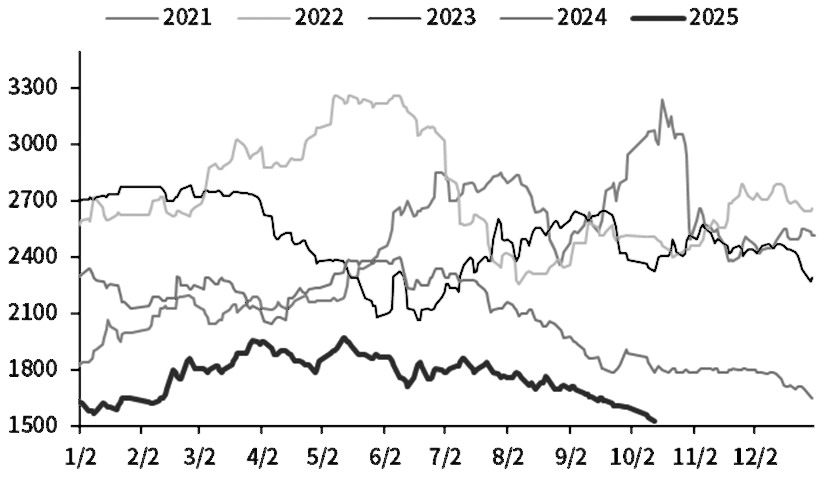
尿素周报:内需继续偏弱,关注政策动态-20251012
Hua Tai Qi Huo· 2025-10-12 11:57
Report Industry Investment Rating - Unilateral: Neutral - Inter - period: UR01 - 05 short at high prices - Inter - variety: None [3] Core Viewpoints - Urea demand is weak, spot prices continue to decline, and futures follow suit. Low - level trading has improved but the sustainability is average. Insufficient domestic demand has led to inventory accumulation in factories, while port inventory has decreased slightly. In the medium - to - long - term, urea supply and demand remain loose due to new capacity release. The market is currently affected by export sentiment, and attention should be paid to subsequent export policies and the procurement rhythm in Northeast China [2] Summary by Content Directory I. Price and Spread - Urea主力收盘1597元/吨(-12);河南小颗粒市场价1530元/吨(-10);山东小颗粒市场价1540元/吨(-10);江苏小颗粒市场价1550元/吨(-10);小块无烟煤750元/吨(+0);山东尿素基差-47元/吨(+2);河南尿素基差-57元/吨(-18);江苏尿素基差-37元/吨(+2);尿素生产利润10.0元/吨(-10.0);出口利润982.4元/吨(+11.3) [1] II. Upstream Supply - As of October 12, 2025, the enterprise capacity utilization rate was 85.67% (+1.97%) [1] III. Downstream Demand - As of October 12, 2025, the compound fertilizer capacity utilization rate was 25.50% (-6.96%), the melamine capacity utilization rate was 65.47% (+4.0%), and the pre - received order days of urea enterprises were 7.00 days (-2.2) [1] IV. Urea Inventory - As of October 12, 2025, the enterprise in - factory inventory was 1.444 billion tons (+212,000), and the port inventory was 415 million tons (-38,000) [1]
大越期货尿素早报-20250915
Da Yue Qi Huo· 2025-09-15 02:37
1. Report Industry Investment Rating No information provided. 2. Core Viewpoints of the Report - The urea market shows a mixed picture. The overall domestic supply of urea exceeds demand, with high production levels and weak domestic demand, but international prices are strong. The export policy has not been significantly liberalized, and the export profit remains high. The urea futures market is expected to fluctuate today [5][6]. 3. Summary According to Relevant Catalogs Urea Overview - **Fundamentals**: The urea futures price has been oscillating downward recently. The current daily production and operating rate have slightly declined but remain at a relatively high level, and the inventory is generally high. On the demand side, the operating rate of compound fertilizers in industrial demand has increased, the operating rate of melamine is moderate, and agricultural demand has entered the off - season. The overall domestic supply of urea far exceeds demand, the export profit is still high, and the export policy has not been significantly liberalized. The spot price of the delivery product is 1780 (+20), and the fundamentals are generally bearish [5]. - **Basis**: The basis of the UR2601 contract is 117, and the premium - discount ratio is 6.6%, which is bullish [5]. - **Inventory**: The comprehensive UR inventory is 1.41 million tons (+0.8), which is bearish [5]. - **Futures Disk**: The 20 - day moving average of the UR main contract is downward, and the closing price is below the 20 - day line, which is bearish [5]. - **Main Position**: The net long position of the UR main contract has increased, which is bullish [5]. - **Expectation**: The urea main contract is expected to oscillate weakly. International urea prices are strong, the export policy has not been liberalized beyond expectations, and the overall domestic supply exceeds demand. It is expected that UR will fluctuate today [5]. Supply - Demand Balance Sheet - Urea | Year | Capacity | Capacity Growth Rate | Production | Net Imports | Import Dependence | Apparent Consumption | Ending Inventory | Actual Consumption | Consumption Growth Rate | | --- | --- | --- | --- | --- | --- | --- | --- | --- | --- | | 2018 | | 2245.5 | | 1956.81 | 18.6% | 2405.19 | 23.66 | 2405.19 | | | 2019 | | 2445.5 | 8.9% | 2240 | 17.9% | 2727.94 | 37.86 | 2713.74 | 12.8% | | 2020 | | 2825.5 | 15.5% | 2580.98 | 19.3% | 3200.1 | 37.83 | 3200.13 | 17.9% | | 2021 | | 3148.5 | 11.4% | 2927.99 | 10.7% | 3280.4 | 35.72 | 3282.51 | 2.6% | | 2022 | | 3413.5 | 8.4% | 2965.46 | 10.2% | 3300.83 | 44.62 | 3291.93 | 0.3% | | 2023 | | 3893.5 | 14.1% | 3193.59 | 8.4% | 3486.72 | 44.65 | 3486.69 | 5.9% | | 2024 | | 4418.5 | 13.5% | 3425 | 9.5% | 3785 | 51.4 | 3778.25 | 8.4% | | 2025E | | 4906 | 11.0% | | | | | | | [10]
大越期货尿素早报-20250905
Da Yue Qi Huo· 2025-09-05 02:43
1. Report Industry Investment Rating - No relevant content provided 2. Core View of the Report - The urea market is currently in a state of overall oversupply in China, with high daily production and inventory levels. Industrial demand for compound fertilizers and melamine is at a moderate level, while agricultural demand is limited. Although the export profit is strong, the export policy has not been liberalized beyond expectations. The international urea price is strong, and the urea futures market is expected to fluctuate today [4]. 3. Summary by Related Catalogs Urea Overview - **Fundamentals**: The urea futures price has recently declined after a previous increase due to rumors of export liberalization. Current daily production and operating rates are still high, and inventory is at a high level overall. The domestic urea market remains in a significant oversupply situation. The spot price of the delivery product is 1780 (-10), and the overall fundamentals are neutral [4]. - **Basis**: The basis of the UR2601 contract is 66, with a premium - discount ratio of 3.7%, indicating a bullish signal [4]. - **Inventory**: The UR comprehensive inventory is 140.2 million tons (-3.5), indicating a bearish signal [4]. - **Disk**: The 20 - day moving average of the UR main contract is flat, and the closing price is below the 20 - day line, indicating a bearish signal [4]. - **Main Position**: The net long position of the UR main contract is decreasing, indicating a bullish signal [4]. - **Expectation**: The main urea contract is expected to fluctuate today, with a strong international price, non - over - expected export policy liberalization, and a significant domestic oversupply situation [4]. Factors Affecting the Market - **Bullish Factors**: The international urea price is strong [5]. - **Bearish Factors**: High operating rates and daily production, and weak domestic demand [5]. - **Main Logic**: The marginal changes in international prices and domestic demand [5]. Market Data - **Spot Market**: The spot price of the delivery product is 1780 (-10), the Shandong spot price is 1780 (-10), the Henan spot price is 1790 (0), and the FOB China price is 3031 [6]. - **Futures Market**: The price of the UR01 contract is 1714 (0), the basis is 66 (-10), the price of the UR05 contract is 1753 (-4), and the price of the UR09 contract is 1664 (6) [6]. - **Inventory**: The warehouse receipt is 7928 (723), the UR comprehensive inventory is 140.2 million tons (-3.5), the UR manufacturer inventory is 85.9 million tons, and the UR port inventory is 54.3 million tons [6]. Supply - Demand Balance Sheet - From 2018 to 2024, the urea production capacity has been increasing year - by - year, with growth rates ranging from 8.4% to 15.5%. The apparent consumption and actual consumption have also generally shown an upward trend, with consumption growth rates ranging from 0.3% to 17.9%. The import dependence has fluctuated between 8.4% and 19.3%. In 2025E, the production capacity is expected to reach 4906, with an 11.0% growth rate [9].
尿素月报:出口提振但内需偏弱,价格承压运行-20250902
Zhe Shang Qi Huo· 2025-09-02 02:24
1. Report Industry Investment Rating No relevant information provided. 2. Core Views - The short - term price of urea is likely to decline but the downside space is limited, with support at the 1700 price level. The reasons include high domestic production and operation rates, weak domestic demand, weak cost support, and the need to focus on the impact of export policies on prices [3]. - In the futures market, urea is in a pattern with upper - limit pressure and lower - limit support, and is expected to fluctuate mainly [9]. 3. Summaries by Catalog Urea Trend Review - In August 2025, the domestic urea market was under pressure. Although export policies boosted market sentiment, they had limited impact on actual demand. The market's acceptance of high - priced goods was low, and prices generally showed a weak trend. The price trend can be divided into three stages: an initial rise followed by a fall, a continuous decline in the middle, and a short - term rebound followed by a weakening in the late stage [14]. Urea Supply New Capacity - From January to August 2025, multiple urea production facilities were put into operation, with a total new production capacity of 225 tons and a production capacity growth rate of 2.98%. It is estimated that the total new production capacity in 2025 will reach 494 tons, with a production capacity growth rate of 6.55% [27]. Production and Operation - In August 2025, the estimated domestic urea production was 5.93 million tons, a year - on - year increase of 11.10%. Although the daily production and operation rate decreased month - on - month due to increased maintenance plans, the overall supply remained high [31]. Urea Export - In July 2025, domestic urea exports increased significantly year - on - year and month - on - month, with a total export volume of 567,200 tons. In August, a third batch of export quotas was issued, with an estimated quantity of 700,000 - 1,000,000 tons. After adding this batch, the total export quota for the year exceeded 4 million tons [50]. - India conducted multiple urea import tenders in 2025, which had an impact on the international urea market [47][48]. Urea Demand Overall Demand - In August 2025, the estimated domestic urea consumption was 4.75 million tons, a year - on - year decrease of 6.65%. It was the traditional off - season for agricultural demand, and both enterprise and port inventories increased, leading to a significant decrease in consumption [74]. Substitute Demand - There is a substitution relationship between urea and other fertilizers. Currently, urea has no obvious price advantage compared with ammonium sulfate and ammonium chloride, but it has a cost - performance advantage compared with phosphate and potash fertilizers [76]. Agricultural Demand - August is the traditional off - season for domestic agricultural demand. In September, autumn fertilization will gradually start, which is expected to bring a phased boost to the market [123]. Compound Fertilizer Demand - In August, compound fertilizer factories gradually started autumn fertilizer production, with a significant month - on - month increase in the operation rate. However, the shipment rhythm of autumn fertilizer preparation was slow, and enterprise inventories continued to accumulate [124]. Urea - Formaldehyde Resin Demand - In August 2025, the formaldehyde operation rate increased slightly week - on - week. Although domestic real - estate data was not good, plywood exports increased slightly year - on - year and month - on - month, which may support the demand for urea - formaldehyde resin [134]. Melamine Demand - In July 2025, the estimated melamine production was 135,600 tons, a year - on - year increase of about 8.48%. The market was weak in the first half of the month and improved slightly in the second half, but the supply - demand fundamentals remained weak [140]. Urea Summer Storage - The new "National Fertilizer Commercial Reserve Management Measures" for the 2024 - 2026 period has reduced the proportion of urea reserves, changed the requirements for targets, extended the storage period, adjusted the assessment indicators, and extended the delivery time [152][153][154]. Urea Inventory - In August 2025, urea enterprise inventories showed an overall accumulation trend, reaching 1.0858 million tons at the end of the month, an increase of 168,500 tons compared with the beginning of the month. Port inventories reached a high level in the same period of previous years due to the opening of export policies [166]. Urea Supply - Demand Balance Sheet - Supply forecast: The August production is adjusted according to actual production, and the September production forecast is adjusted according to maintenance plans. The daily production in September is expected to increase month - on - month. - Export forecast: The total export quota for the year exceeds 4 million tons, and this amount is evenly distributed to the second - half months. - In September, domestic agricultural demand will enter the autumn fertilizer - preparation stage, which is expected to bring a phased boost to the market [169].