
提高居民消费率

Search documents
博览宏图20260105
2026-01-05 15:42
Summary of Key Points from the Conference Call Industry Overview - The conference call discusses China's economic planning and development strategies for the "15th Five-Year Plan" (2026-2030), which is crucial for achieving a per capita GDP level comparable to that of moderately developed countries by 2035 [2][4]. Core Insights and Arguments - **Economic Growth Targets**: China's economic growth targets are expected to be moderately adjusted downwards, with the 2026 target likely set between 4.5% and 5% to alleviate debt expansion pressures and avoid over-reliance on stimulus policies, aiming for a more sustainable long-term growth rate of around 4% [2][6]. - **Strategic Opportunities and Risks**: The next five years will present a mix of strategic opportunities and challenges, emphasizing the need to leverage China's large market, complete industrial chain, rich talent resources, and institutional confidence to navigate external complexities [2][8]. - **Supply-Side Reform Focus**: The supply-side reforms will prioritize high-quality development and technological innovation, aiming to build a modern industrial system and strengthen the real economy while enhancing self-sufficiency in technology [2][9]. - **Manufacturing Sector Importance**: Maintaining a reasonable proportion of the manufacturing sector is critical for national competitiveness, avoiding premature deindustrialization, and ensuring a stable economic foundation [2][10]. - **Digital Economy Role**: The digital economy is expected to play a significant role in empowering various industries, enhancing productivity, and driving overall economic growth through technological innovation [2][12]. Additional Important Content - **Consumer Spending Strategies**: The plan emphasizes increasing the resident consumption rate, which is currently around 39.6%, aiming for approximately 48% by 2035. This will involve a combination of investments in goods and services and increasing public service spending [2][13][14]. - **Service Consumption Growth**: Service consumption is becoming a new economic growth engine, with significant potential in sectors such as childcare, education, elderly care, and healthcare, reflecting the diverse needs of different age demographics [2][15]. - **Fiscal Policy Adjustments**: To promote service consumption, fiscal policies will shift to support public service supply, creating job opportunities and enhancing overall social purchasing power through improved income distribution mechanisms [2][16]. - **Financial System's Role**: The financial system will focus on preventing financial risks while supporting the real economy, with an emphasis on regulatory oversight and participation in global governance to enhance risk management capabilities [2][17].
2026:26个关键词里的未来(二)
Di Yi Cai Jing· 2025-12-30 13:14
Group 1: Domestic Chip Replacement - The rise of domestic AI chip manufacturers is marked by significant stock price increases, with companies like Cambrian Technology surpassing major brands like Kweichow Moutai [1] - The market anticipates more AI chip companies to go public, with notable performances from companies like Moer Thread and Muxi, indicating strong investor interest in domestic chip alternatives [1] - The domestic market share for smart computing chips is projected to grow from approximately 20% in 2024 to about 60% by 2029, reflecting a shift towards local production [2] Group 2: AI Edge Computing - The emergence of AI in hardware is expected to redefine traditional devices, with predictions that mobile phones and apps may become obsolete in favor of AI-driven edge devices [3] - The global edge AI market is forecasted to grow from 321.9 billion yuan to 1.22 trillion yuan between 2025 and 2029, with a compound annual growth rate of 40% [4] - The focus of competition is shifting from hardware specifications to AI experience and ecosystem collaboration, indicating a transformation in the value chain [5] Group 3: Quantum Computing Advances - Quantum technology is recognized as a strategic frontier for technological revolution, with significant breakthroughs expected in the coming years [6] - China's advancements in quantum communication and computing are positioning it alongside global leaders, with the "Zu Chongzhi No. 3" quantum computer expected to maintain a competitive edge [7] - The practical application of quantum computing in fields like finance and protein simulation is anticipated to grow, marking a critical step towards commercialization [6] Group 4: Commercial Space Acceleration - The commercial space sector is entering a new phase of rapid evolution, supported by government policies and increased capital investment [8] - The global commercial space market is projected to grow at a compound annual growth rate of 10.5% over the next five years [8] - The demand for satellite launches is expected to surge, with significant increases in the number of satellites being deployed [9] Group 5: Solid-State Battery Development - Solid-state batteries are gaining attention as a transformative technology for electric vehicles, with major manufacturers announcing plans for testing and production [10] - The timeline for mass production is set for 2027, with initial production expected to be in small batches [11] - The industry faces challenges in cost and manufacturing processes, with a consensus that semi-solid batteries will precede full solid-state solutions [10] Group 6: L3 Autonomous Driving - The introduction of L3 autonomous driving is accelerating due to supportive policies and decreasing costs in the supply chain [12] - The commercial application of L3 technology is expected to expand significantly in 2026, with several manufacturers already in the approval process [13] - The transition from assisted to fully automated driving represents a critical milestone for the industry, with ongoing improvements in technology and data accumulation [13] Group 7: Real Estate Debt Restructuring - Major real estate companies like Country Garden and Sunac have successfully completed debt restructuring, indicating a shift in the industry’s approach to financial challenges [14] - The total scale of debt restructuring in 2025 reached approximately 1.2 trillion yuan, significantly alleviating short-term repayment pressures for affected companies [14] - The focus for 2026 will be on balancing risk management and transformation within the real estate sector, with expectations for continued progress in debt resolution [15] Group 8: "15th Five-Year Plan" Initiatives - The "15th Five-Year Plan" emphasizes high-quality development and technological self-reliance as key objectives for the next five years [16] - The plan outlines initiatives to enhance the modern industrial system and promote strategic emerging industries, including quantum technology and renewable energy [17] - Increasing the resident consumption rate is highlighted as a crucial goal, with measures aimed at boosting consumer spending and improving living standards [18]
专访尹艳林:多措并举提振消费,关键要稳定居民收入增长预期
2 1 Shi Ji Jing Ji Bao Dao· 2025-12-24 10:07
Core Viewpoint - The article emphasizes the need for increased domestic demand policies to sustain economic growth in China during the 14th Five-Year Plan period, particularly focusing on enhancing consumer spending and stabilizing investment growth [1]. Group 1: Consumer Spending - The central economic work conference highlights the implementation of special actions to boost consumption in 2026, aiming to optimize policies and unleash the potential of service consumption [1]. - In 2025, China allocated 300 billion yuan in long-term special bonds to support the replacement of consumer goods, which is expected to drive significant growth in sectors like new energy vehicles and home appliances, thereby increasing retail sales [1]. - The current consumer spending rate in China is 39.9%, which is significantly lower than that of developed countries by 10-30 percentage points, indicating a need for substantial improvement [3][4]. Group 2: Investment Growth - Investment growth in China is projected to decline in 2025 due to various factors, including adjustments in the real estate market and external economic pressures, necessitating measures to stabilize and increase investment [1][11]. - The government is encouraged to increase central budget investments and optimize the implementation of key projects to support economic recovery [1]. - The article suggests that maintaining reasonable investment growth is crucial, especially in infrastructure and public services, to align with urbanization and industrialization processes [11][12]. Group 3: Income Growth and Middle-Income Group Expansion - The article discusses the importance of increasing residents' income to enhance consumer spending, advocating for a plan to raise income levels and improve the distribution of national income [7][8]. - The middle-income group, defined as households earning between 100,000 to 500,000 yuan annually, is crucial for driving consumption, with over 400 million people falling into this category [9]. - Expanding the middle-income group is expected to shift demand structures towards higher-end goods and services, thereby boosting overall domestic consumption [9]. Group 4: Policy Recommendations - To stabilize market expectations, the economic growth target for 2026 should be set around 5%, with a focus on implementing proactive fiscal and monetary policies [6]. - The article recommends various measures to stimulate consumption, including the continuation of replacement policies for consumer goods and the removal of unreasonable consumption restrictions [10]. - It emphasizes the need for structural reforms and increased government investment to enhance public welfare and stimulate private sector investment [13][14].


罗志恒详解“十五五”时期如何提高居民消费率
Sou Hu Cai Jing· 2025-12-17 08:28
Core Viewpoint - The central economic work meeting emphasizes the importance of "domestic demand as the main driver" and aims to boost consumption and optimize supply as primary tasks for the upcoming year [1] Current Situation: Low Consumption Rate and Structural Optimization Needed - In 2023, China's household consumption rate is approximately 39.6%, significantly lower than the US rate of nearly 68%, with a gap of about 28 percentage points [2] - The projected household consumption rate for 2024 is 39.9%, with historical data indicating that it has mostly been above 40% since 1949, peaking over 60% in the 1950s and 1960s [2] - In terms of structure, the proportion of goods consumption in GDP is similar between China (21.5%) and the US (21.4%), but the difference lies in service consumption, which is currently at 46.1% in China, still below the expected level for its economic development stage [2] Pathways: Collaborative Efforts from Government, Enterprises, and Residents - Five main challenges to increasing household consumption rate include: improving consumer capacity, enhancing social security systems, insufficient urbanization of migrant populations, inadequate high-quality service supply, and long working hours for laborers [4] - To address these challenges, the government should create a favorable consumption environment, while enterprises need to provide higher quality goods and services to stimulate demand [5] - Specific government actions suggested include reforming the tax system to shift from a "production-based" to a "consumption-based" principle, and focusing fiscal policies on residents and families rather than solely on enterprises [5] Enhancing Consumer Confidence - To encourage residents to spend, it is essential to improve the social security system, including linking state-owned assets to social security funding and reforming pension systems to provide a minimum standard for all [6] - Optimizing service and product supply is also crucial, with suggestions to introduce additional public holidays to balance supply and demand, which could also create more job opportunities for low-income groups [6] - The overarching goal is to enhance the quality of life and welfare of the population, reflecting a people-centered development philosophy [6]
罗志恒:提振消费需要政府企业和居民共同推进,消费是目的而非手段
Zhong Guo Xin Wen Wang· 2025-12-16 15:44
Core Viewpoint - The increase in consumer spending in China is a collective effort involving the government, enterprises, and residents, rather than just a result of individual behavior [1][3]. Group 1: Consumer Spending Insights - The gap in consumer spending rates between China and other developed countries is primarily due to underutilized service consumption, including high-end healthcare, elder care, cultural tourism, and domestic services [1][3]. - The current urbanization level of the floating population in China is insufficient, and issues such as inadequate supply of high-quality service products and long working hours limit the potential for service consumption [1][3]. Group 2: Strategies for Increasing Consumer Spending - To enhance consumer spending capacity, it is essential to create an environment that encourages residents to consume, which includes reforming local government assessment and fiscal incentive systems [3][4]. - Enterprises should focus on providing higher quality goods and services to better meet consumer demand, and market access should be relaxed to foster healthy competition among businesses [3][4]. Group 3: Income Distribution and Social Security Reforms - The core of increasing consumer spending rates lies in reforms of income distribution and social security systems, aiming to raise the proportion of residents' income in national income distribution [4]. - Strategies to improve income distribution include stabilizing the real estate and stock markets, increasing minimum wages, and enhancing the property tax system to ensure fair income and wealth distribution [4]. - Social security reforms should involve linking state-owned assets to fiscal policies for social security funding and transitioning to a universal minimum pension system supported by central and local finances [4].
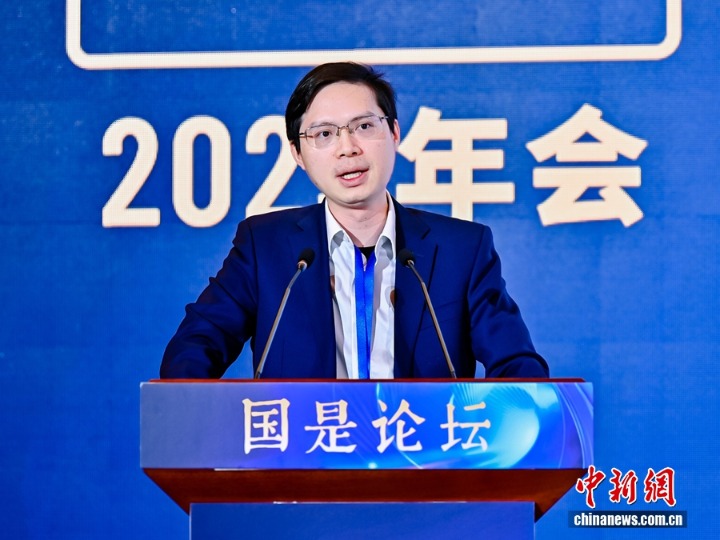
“十五五”如何提高居民消费率?增收入、促消费、宽准入共同发力
2 1 Shi Ji Jing Ji Bao Dao· 2025-11-19 11:48
Core Viewpoint - The article emphasizes the importance of domestic consumption in driving economic growth in China, particularly during the "15th Five-Year Plan" period, highlighting the need for policies to boost consumer spending and enhance residents' consumption capacity [1][2][3]. Group 1: Economic Context - China's final consumption rate has been stable above 50% from 2013 to 2024, with a projected increase from 51.9% in 2013 to 56.6% in 2024 [2]. - The average annual economic growth rate from 2013 to 2024 is 6.1%, with domestic demand contributing 93.1% to this growth, and final consumption accounting for 55% of the economic growth [2]. Group 2: Policy Recommendations - The "15th Five-Year Plan" suggests enhancing consumer capacity through measures such as increasing employment, raising income levels, and improving public service spending [1][3]. - Specific strategies include optimizing the consumption environment, reducing restrictions, and promoting service consumption through innovative scenarios [6][7]. Group 3: Income and Employment - Increasing residents' income is crucial for boosting consumption, with a focus on improving the distribution of national income and enhancing labor remuneration [3][4]. - Addressing structural employment issues and providing better social security for new employment forms are essential for improving consumer confidence [4][8]. Group 4: Consumption Trends - Current consumption rates in China are lower than those in developed countries, with a final consumption rate of around 56%, compared to 81% in the U.S. and 75% in Japan [7]. - The article suggests that achieving a consumption rate increase to over 60% during the "15th Five-Year Plan" will require extraordinary policy measures and a focus on income subsidies for low-income groups [7][8].
食品饮料行业点评:提高居民消费率被列为“十五五”规划目标之一,内需政策导向下,食品饮料相关行业有望回暖
Bank of China Securities· 2025-10-29 23:58
Investment Rating - The industry investment rating is "Outperform the Market," indicating that the food and beverage sector is expected to perform better than the benchmark index over the next 6-12 months [7]. Core Insights - The report highlights that increasing the resident consumption rate is a key goal in the "14th Five-Year Plan," with a focus on enhancing domestic demand, which is expected to lead to a recovery in the food and beverage sector [1][2]. - The report emphasizes that the food and beverage industry is a typical cyclical sector, closely linked to the external economic environment. With coordinated fiscal and monetary policies, the current consumption weakness is anticipated to improve, allowing related sub-industries to emerge from the cyclical trough [1][2]. - The report identifies that the consumer demand structure is changing in a deflationary economic environment, impacting production profitability and leading to significant differentiation within the industry [1][2]. Summary by Sections Economic Context - The report notes that the contribution of final consumption expenditure and net exports to GDP growth has been higher than that of gross capital formation in recent years. China's consumption rate remains relatively low compared to developed countries, indicating significant potential for growth [1]. - The report discusses the importance of population structure and family dynamics in shaping consumption demand, highlighting the government's initiatives to promote high-quality population development and improve birth rates through various policies [1]. Consumer Behavior - Key factors influencing consumer behavior include consumption capacity and willingness, which are affected by residents' disposable income and future income expectations. The report suggests that ongoing government policies aimed at increasing residents' income will likely improve consumer sentiment and spending [1][2]. Industry Dynamics - The food and beverage sector is characterized by significant sub-sector differentiation, with some areas like snacks and soft drinks benefiting from channel and category changes. Leading companies are expected to show strong performance even in a weak demand environment [1][2]. - The report recommends focusing on companies such as Anjijia Food, Yanjing Beer, and New Dairy, while also considering leading liquor companies like Kweichow Moutai and Wuliangye, which are currently at the bottom of the industry cycle [1].