
数据中心泡沫

Search documents
黑石集团CEO:数据中心业务并非泡沫
Xin Lang Cai Jing· 2025-12-18 16:50
Core Viewpoint - The CEO of Blackstone, Stephen Schwarzman, downplays concerns about a bubble in the data center sector, asserting that the business is extremely conservative [1][2][3] Group 1: Company Positioning - Blackstone positions itself as a supplier providing direct services to healthy enterprises [2][3] - The company builds data centers and signs long-term leases with reputable partners such as NVIDIA [1][2] Group 2: Market Presence - Blackstone is one of the largest owners and operators of data centers globally [3] - The firm manages $1.2 trillion in alternative assets, which includes QTS, the largest data center landlord in North America, and AirTrunk, a data center operator in Australia [3]

“中国可能都做不到”!AI泡沫充斥得州:超220GW大项目申请到2030年入电网
美股IPO· 2025-12-13 02:19
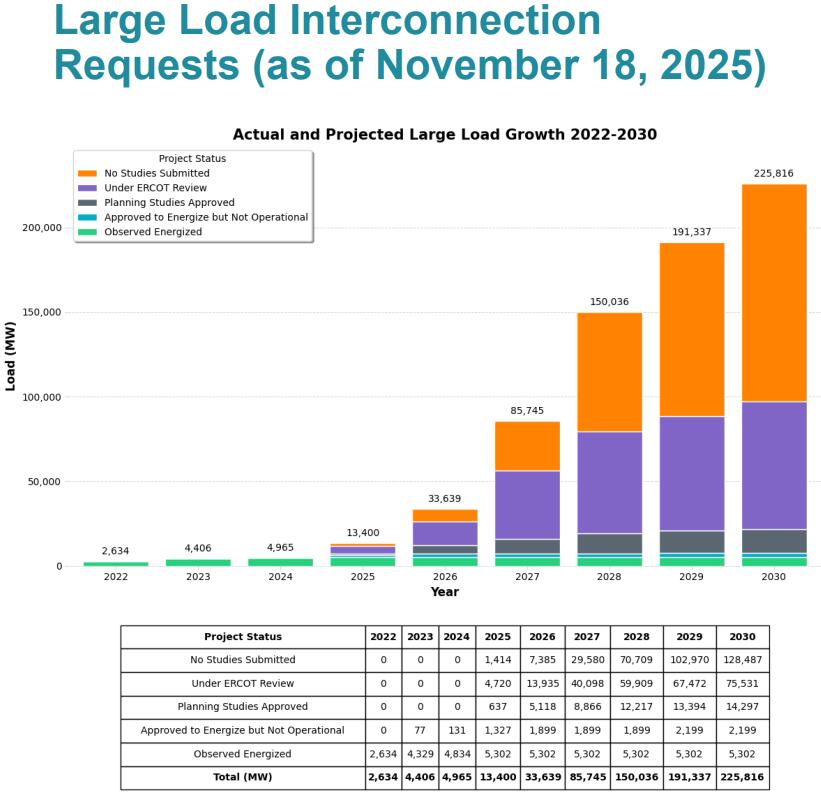
Core Viewpoint - Texas is experiencing a significant surge in data center construction, with over 220 GW of large projects applied for connection to the Texas grid by 2030, primarily driven by the AI boom, raising concerns about a potential bubble in the industry [1][3][7]. Group 1: Project Capacity and Demand - The total capacity of large projects applying for connection to the Texas grid has exceeded 220 GW, more than double the state's peak summer demand of approximately 85 GW [2][8]. - Over 70% of the projects are data centers, with more than half, approximately 128 GW, yet to be submitted for ERCOT review [1][2][8]. - The number of large projects applying for power connection in Texas has nearly quadrupled this year [1][8]. Group 2: Industry Concerns and Risks - Experts warn that the scale of applications is unsustainable, with insufficient infrastructure to meet such high demand, leading to concerns about potential oversupply and financial instability in the sector [3][7][9]. - The Texas Public Utility Commission has implemented measures to differentiate serious data center projects from speculative ones, requiring developers to pay significant fees and demonstrate site control [11]. - The risk of overbuilding is compounded by rising infrastructure costs, as data centers compete for the same limited resources [12][13]. Group 3: Financial Market Dynamics - The financing environment for data centers is characterized by aggressive lending practices, with some borrowers seeking loans exceeding project costs, raising concerns about the formation of a financial bubble [14][15]. - There have been at least $175 billion in credit transactions related to data centers in the U.S. this year, indicating a robust but potentially risky investment climate [15]. - Regulatory scrutiny is increasing, particularly in the UK, regarding the levels of spending and financing for data centers [15].

“中国可能都做不到”!AI泡沫充斥得州:超220GW大项目申请到2030年入电网
Hua Er Jie Jian Wen· 2025-12-12 22:34
Core Viewpoint - Texas is experiencing a massive data center construction boom driven by AI, raising concerns about a potential bubble due to the overwhelming demand that cannot be met by existing infrastructure [1][3]. Group 1: Data Center Demand and Capacity - ERCOT reported that large projects applying to connect to the Texas grid before 2030 exceed 220 GW, with over 70% being data center projects [1]. - The 220 GW demand is more than double Texas's record summer peak demand of approximately 85 GW and far exceeds the state's quarterly total generation capacity of about 103 GW [1]. - In 2023, the number of large projects applying for power access nearly quadrupled, with over half of the projects representing about 128 GW of potential demand growth not yet submitted for ERCOT review [4][5]. Group 2: Infrastructure and Feasibility Concerns - Experts express skepticism about the feasibility of building sufficient infrastructure to meet the projected demand, with Joshua Rhodes stating that the numbers appear absurd and likening the situation to a bubble [2][3]. - Actual projects integrated into the grid or approved by ERCOT amount to only about 7.5 GW, which is still significant, equivalent to nearly eight large nuclear power plants [5]. - Texas has implemented measures to distinguish serious data center projects from speculative ones, including requiring developers to pay for preliminary studies and provide proof of site control [6]. Group 3: Financial and Credit Market Implications - The data center construction boom has raised concerns about potential oversupply, with some centers possibly becoming unprofitable, leading to bankruptcies [3][4]. - The credit market is witnessing a frenzy, with significant debt financing for data center projects, raising fears of a bubble that could impact equity and credit participants [8][9]. - Reports indicate that at least $175 billion in credit transactions related to data centers have been completed in the U.S. this year, with some borrowers seeking loans exceeding project costs [9].
CoreWeave三季度营收13.6亿美元超预期,建设缓慢导致下调全年营收指引,股价盘后重挫6%
Sou Hu Cai Jing· 2025-11-11 03:28
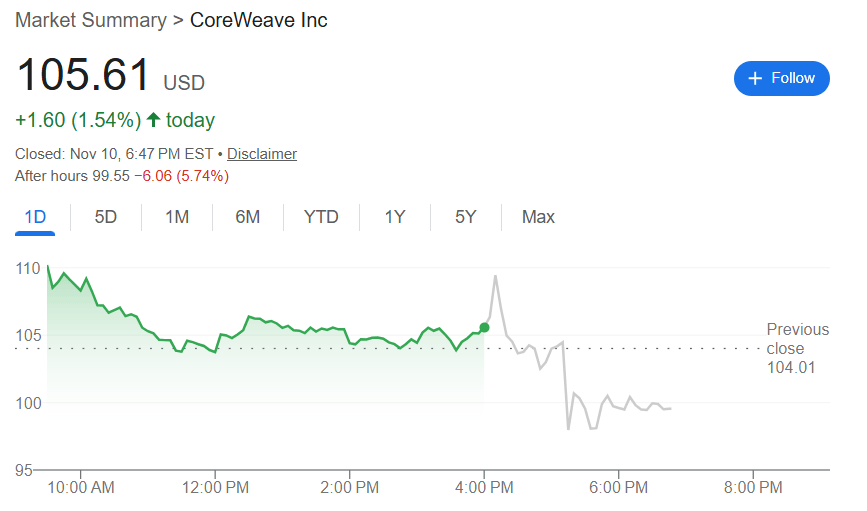
Core Financial Performance - CoreWeave reported Q3 revenue of $1.36 billion, a 134% year-over-year increase, exceeding the expected $1.29 billion [3][4] - The company experienced a net loss of $110 million, significantly reduced from a net loss of $359 million in the same period last year [3][4] - Operating profit margin was only 4%, below the expected 6.5% and lower than the previous year's margin [3][4] Revenue Guidance and Order Backlog - The revenue guidance for 2025 was lowered from a previous high of $5.35 billion to a range of $5.05 billion to $5.15 billion, below analyst expectations of $5.29 billion, primarily due to delays from a third-party data center contractor [3][4] - The company's order backlog reached $55.6 billion, nearly double that of the previous quarter [4][5] - Significant contracts include a $14.2 billion six-year agreement with Meta and an expanded $6.5 billion agreement with OpenAI [4][5] Capital Expenditure and Growth Strategy - CoreWeave's CEO indicated that the company is facing constraints due to a shortage of "powered-shell" data centers for rapid deployment [5] - Following a failed acquisition of Core Scientific, CoreWeave is accelerating its own data center construction, particularly in Pennsylvania [5] - The projected capital expenditure for 2026 is expected to exceed double that of 2025's estimated $12-14 billion, raising concerns about the aggressive investment pace relative to anticipated revenue [5]
美最新研究:如果排除AI数据中心,美国上半年GDP增长仅为0.1%
Guan Cha Zhe Wang· 2025-10-08 14:41
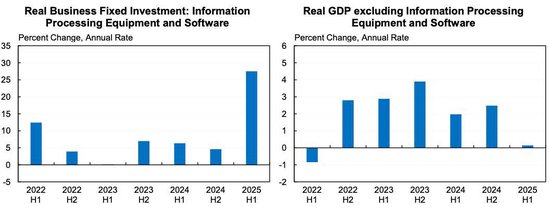
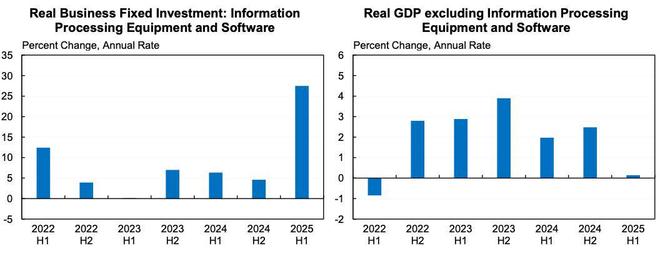
Core Insights - A study by Harvard economist Jason Furman indicates that nearly all GDP growth in the U.S. for the first half of 2025 will be driven by data centers and information processing technologies, with other sectors showing a growth rate of only 0.1% [1][4] - Concerns are rising about a "data center bubble," as many fear that without technological investments, the U.S. economy could face a recession [1][5] - Investment in information processing equipment and software accounted for only 4% of GDP but contributed 92% to GDP growth in the first half of the year [1][4] Investment Trends - Major tech companies have significantly increased their capital expenditures in data centers, with spending quadrupling in recent years to nearly $400 billion [4] - The top 10 companies account for nearly one-third of total spending in this area, contributing approximately 100 basis points to actual GDP growth [4] - Companies like Microsoft, Google, Amazon, Meta, and Nvidia have invested hundreds of billions in building and upgrading data centers due to explosive demand for computing power driven by AI [4][8] Economic Implications - The construction of AI data centers is projected to surpass consumer spending's contribution to GDP growth for the first time, which is notable given that consumer spending typically accounts for two-thirds of U.S. GDP [4] - Other sectors such as manufacturing, real estate, retail, and services are experiencing stagnation or negative growth, raising alarms about the overall economic health [5] - The labor market is also showing signs of distress, with only 22,000 jobs added in August and a rising long-term unemployment rate [5] Funding and Financial Models - As of the end of 2024, there are 1,240 data centers either completed or approved in the U.S., a fourfold increase since 2010 [8] - Major tech firms are raising funds through various channels for data center expansion, with Oracle issuing $18 billion in bonds and Meta securing $29 billion in financing [8] - There are concerns regarding the sustainability of the business model, as it remains unclear whether AI product revenues can support the rising expenditures [9]




AIl in AI?“没了数据中心,美国经济增长几乎归零”
Guan Cha Zhe Wang· 2025-10-08 13:21
Core Insights - A study by Harvard economist Jason Furman indicates that nearly all GDP growth in the U.S. for the first half of 2025 will be driven by data centers and information processing technology, with other sectors showing a growth rate of only 0.1% [1][4] - Concerns are rising about a potential "data center bubble," as the sustainability of the business model for tech giants investing heavily in data centers remains uncertain [1][8] Investment Trends - Investment in information processing equipment and software accounted for only 4% of U.S. GDP but contributed 92% to GDP growth in the first half of the year [1][3] - Major tech companies have significantly increased capital expenditures in data centers, with spending nearly quadrupling in recent years to approximately $400 billion annually [3][7] Economic Impact - The contribution of data center-related spending to U.S. GDP growth is estimated to be around 100 basis points, highlighting its macroeconomic significance [3] - AI technology is driving an explosive demand for computing power, leading to substantial investments from companies like Microsoft, Google, Amazon, Meta, and Nvidia [3][7] Sector Performance - Other sectors such as manufacturing, real estate, retail, and services are experiencing stagnation or negative growth, raising alarms about the overall health of the U.S. economy [4][5] - The labor market is showing signs of weakness, with only 22,000 jobs added in August and a rising long-term unemployment rate [5][4] Future Outlook - The current investment in AI infrastructure is closely tied to the training of large language models, which require vast amounts of data and computing power [7] - There is skepticism regarding whether AI product revenues can sustain the rising expenditures on data centers, which could reshape the U.S. economic landscape if not supported [8][1]
美最新研究:如果没有AI数据中心,美国上半年GDP增长仅为0.1%
Guan Cha Zhe Wang· 2025-10-08 13:06
Core Insights - A study by Harvard economist Jason Furman indicates that nearly all GDP growth in the U.S. during the first half of 2025 will be driven by data centers and information processing technologies, with other sectors showing a mere 0.1% growth [1][4] - Concerns are rising over a potential "data center bubble," as the sustainability of the business model for tech giants expanding data centers remains unproven [1][7] - Investment in information processing equipment and software accounted for only 4% of GDP but contributed 92% to GDP growth in the first half of the year [1][4] Investment Trends - Major tech companies have significantly increased capital expenditures in data centers, with spending quadrupling in recent years to nearly $400 billion annually [4] - The top 10 companies account for about one-third of total spending related to data centers, contributing approximately 100 basis points to actual GDP growth [4] - Microsoft, Google, Amazon, Meta, and Nvidia have invested hundreds of billions in building and upgrading data centers due to explosive demand for computing power driven by AI technologies [4][7] Economic Implications - While tech-driven growth is evident, other sectors such as manufacturing, real estate, retail, and services are experiencing stagnation or negative growth, raising fears of an economic downturn without tech investment [5] - The U.S. labor market is showing signs of stagnation, with only 22,000 jobs added in August and a rising long-term unemployment rate [5] - Some analysts suggest that the strong spending data may not correlate directly with the growth in GDP attributed to data center construction, indicating a complex economic landscape [5] Infrastructure Development - By the end of 2024, the U.S. is expected to have 1,240 data centers, a fourfold increase since 2010, with major companies projected to spend $320 billion on AI infrastructure this year [7] - The demand for data centers is closely linked to the training of large language models, which require vast amounts of data and computing power [7] - Companies are raising funds through various channels to support data center expansions, with Oracle issuing $18 billion in bonds and Meta securing $29 billion in financing for new projects [7]
速递|蔡崇信预警或成真,微软突然叫停多个在建数据中心,正重新评估AI战略
Z Finance· 2025-04-05 03:20
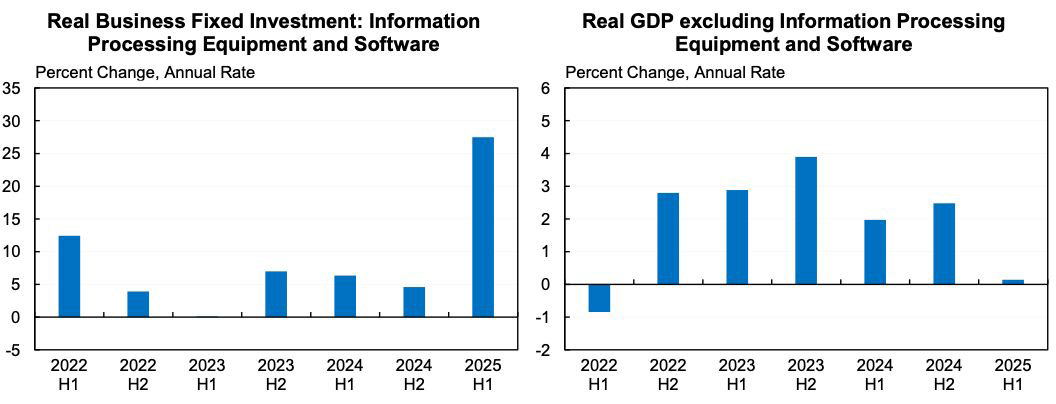
Core Viewpoint - Microsoft has made significant adjustments to its global data center strategy, pausing or delaying multiple construction projects in various countries, reflecting a reevaluation of its AI and cloud computing infrastructure plans [1][2]. Summary by Sections Strategic Adjustments - Microsoft has suspended or postponed negotiations for new data center projects in Indonesia, the UK, Australia, and several states in the US, indicating a reassessment of market demand for AI services and cloud infrastructure [1]. - The company plans to continue with a $3.3 billion investment project in Wisconsin, which is expected to be operational next year [2]. Market Reactions - The strategic shift has led to a ripple effect in the tech sector, with companies like Nvidia experiencing stock price pressure due to their close ties to data center budgets [1]. - As of the latest market close, Microsoft's stock fell by 2.3% to $373.32, marking a year-to-date decline of 9% [1]. Industry Insights - Analysts suggest that the adjustments may signal an oversupply in data center capacity relative to current demand, with a total power capacity of approximately 2 gigawatts being affected by Microsoft's project cancellations [4]. - Concerns have been raised about the potential for an industry bubble, as Alibaba's chairman noted that the pace of data center construction may have outstripped actual demand for AI services [4]. Operational Flexibility - Microsoft emphasizes its strategic flexibility in planning data center capacity over several years, adapting to the dynamic development of AI demand and the ongoing expansion of data center scale [2]. - The company is expected to maintain an $80 billion budget for data center construction this fiscal year but will moderate the pace of new projects in the next fiscal year, focusing on optimizing existing facilities [4].
TikTok中国高层对美国团队施压,因电商业绩不佳;蔡崇信:全球数据中心建设可能已有泡沫丨Going Global
创业邦· 2025-03-30 10:15
Core Insights - The article discusses significant events in the global market, particularly focusing on the implications of U.S. policies on companies like TikTok and the growth trends of e-commerce platforms like AliExpress and the expansion strategies of various companies [2][3]. Group 1: TikTok and U.S. Policies - Trump suggested he could ease tariffs on China in exchange for the sale of TikTok to a U.S. company, indicating a potential negotiation strategy [5]. - TikTok's U.S. operations face leadership changes, with the departure of key executives and a push for significant growth in advertising revenue, targeting a 50% increase by 2025 [7]. - TikTok's parent company, ByteDance, aims for substantial growth in the U.S. e-commerce sector, with a sales target of over $400 billion and a near 200% growth goal for the U.S. market [8]. Group 2: E-commerce Trends - AliExpress reported a significant increase in sales for high-ticket items, with certain categories experiencing over 300% growth during promotional events [10]. - The platform is focusing on expanding its product categories and enhancing the quality of offerings, aiming to support 1,000 new brands to achieve over $1 million in sales [12]. Group 3: Corporate Developments - Alibaba's chairman expressed concerns about a potential bubble in global data center investments, citing excessive spending without corresponding demand [14]. - ByteDance launched a short drama app in Japan, targeting a growing market projected to reach $1 billion by 2026 [16]. - Vivo plans to increase its overseas revenue share to 70% by 2027, focusing on markets outside the U.S. and Western Europe [18]. Group 4: Logistics and Retail Expansion - JD Logistics is expanding its operations in Hong Kong, enhancing its service capabilities with new automated facilities [21]. - TOP TOY announced a global expansion strategy, aiming to open over 1,000 stores in 100 countries within five years [23]. Group 5: Investment and Financing - Nvidia is set to acquire AI startup Lepton AI for several hundred million dollars, indicating a strategic move into cloud and enterprise software markets [27]. - Indian e-commerce platform Meesho plans an IPO with a target valuation of $10 billion, reflecting its rapid growth in lower-tier cities [35].
小米拟融资425亿港元;蔡崇信说全球数据中心建设可能已有泡沫;Manner开出第2000家直营店丨百亿美元公司动向
晚点LatePost· 2025-03-26 14:00
小米集团拟配售 8 亿股筹资约 425 亿港元。 小米集团今日公告,将以每股 53.25 港元价格配售 8 亿股现有股份,预计筹资约 425 亿港元用于业 务扩张、研发投资及其他一般用途。 此次配售股份占小米现有已发行股本约 3.2%,配售方式是 "先旧后新",即控股股东先将其现有股 份出售给独立第三方投资者,得到新融资后,再向该投资者发行同等数量新股,使其持股比例恢复 至原有水平。小米上一次通过配售筹资是在 2020 年 12 月,当时的配售价格为 23.7 港元,筹资约 240 亿港元。 蔡崇信说全球数据中心建设可能已有泡沫。 阿里巴巴董事长蔡崇信今天在香港的一场会议上称,他对美国在 AI 领域的投资规模感到震惊,例 如 OpenAI 、甲骨文、软银成立的 5000 亿美元合资企业 Stargate。他称千亿美元规模的投资没有必 要,"某种程度上,人们的投资超过了他们目前看到的需求。" 他说一些数据中心公司还没有与任何客户达成协议,就开始冒险地(on spec)建设新设施。"我开 始看到一些泡沫。" 上个月,阿里巴巴集团 CEO 吴泳铭宣布,未来三年,阿里将对 AI 投入超过 3800 亿元,围绕三个 方 ...