汽车市场竞争

Search documents
日野汽车社长:不要认为中国车只是便宜
日经中文网· 2026-02-28 07:48
Core Viewpoint - The competition in the commercial vehicle sector is expected to intensify in the coming years, particularly with the rise of Chinese manufacturers like BYD expanding their market share in Southeast Asia. Japanese companies must adapt to this changing landscape or risk losing their future viability [2][4]. Group 1: Competition and Market Dynamics - The president of Hino Motors, Akio Kinoshita, expressed concern that if Japanese vehicles are perceived as more expensive while Chinese vehicles offer better quality and after-sales service, the brand and performance of Japanese vehicles will struggle [2][4]. - Kinoshita emphasized that the perception of "China = cheap" among Japanese manufacturers could lead to a loss of future opportunities, highlighting the need to understand the cost structure, including labor and material costs [4]. Group 2: Strategic Responses - Hino Motors plans to leverage synergies from its merger with Mitsubishi Fuso Truck and Bus, focusing on optimizing the variety of components produced without sacrificing choice [5]. - The company aims to utilize the technological frameworks of its parent companies, Toyota and Daimler Trucks, to address future challenges in the commercial vehicle sector [5]. - In the bus segment, Hino Motors will respect the framework established with Isuzu Motors for their joint venture, J-BUS, and prioritize bus business plans post-merger [5].


奥迪怎么了? A系降至10万,多地4S店突然「消失」
Xin Lang Ke Ji· 2026-01-28 01:11
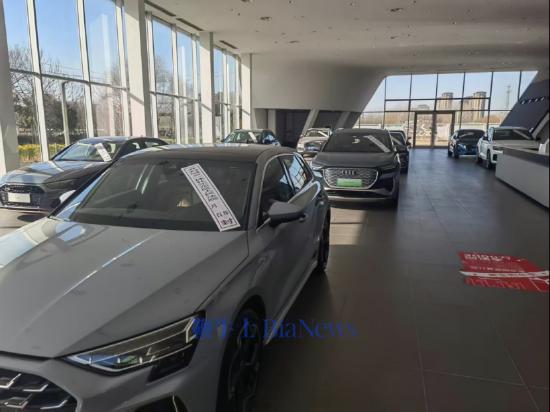
Core Insights - Audi is facing significant challenges in the Chinese market, with multiple dealerships reportedly closing down, including the Kaifeng Jinao Audi 4S store, which has left customers unable to redeem their purchased maintenance packages [1][2][4] - The overall sales of Audi in China have declined for two consecutive years, with a reported 5% drop in 2025 compared to the previous year [1][8] - In response to declining sales, Audi has initiated substantial price reductions on several models, with discounts reaching up to 50-60% [12][13] Dealership Closures - The Kaifeng Jinao Audi 4S store is among over ten Audi dealerships that have closed since the end of 2025, affecting various provinces including Guangxi, Jiangsu, Zhejiang, and others [1][5] - Customers have reported purchasing maintenance packages worth between 16,800 to 18,800 yuan, which are now rendered useless due to the dealership's closure [4][6] - Employees of the closed dealerships are also facing issues, with reports of unpaid wages and lack of communication from management [2][4] Sales Performance - Audi's total sales in 2025 reached 1.623 million units, a decrease of 2.9% from 2024, with the Chinese market accounting for 617,514 units sold, down 5% year-on-year [7][8][11] - The decline in sales is attributed to intense competition in the Chinese automotive market, with Audi's reliance on its joint ventures with FAW and SAIC being a critical factor [9][11] Pricing Strategies - In an effort to boost sales, Audi has significantly reduced prices on several models, such as the Audi A3, which is now priced starting at 106,700 yuan, representing a 40% discount from its original price [12] - Other models, including the Audi Q3 and A4L, have also seen similar price cuts, with discounts of up to 50% [12] Future Outlook - Audi's management has indicated plans for 2026 focusing on strengthening the brand, improving product offerings, and stabilizing the dealership network [15] - However, the recent closures and customer service issues suggest that maintaining brand reputation and customer satisfaction remains a significant challenge for Audi [15]
英国汽车品牌MG在中企旗下重获新生,如今在英国市场供不应求
Guan Cha Zhe Wang· 2026-01-27 08:54
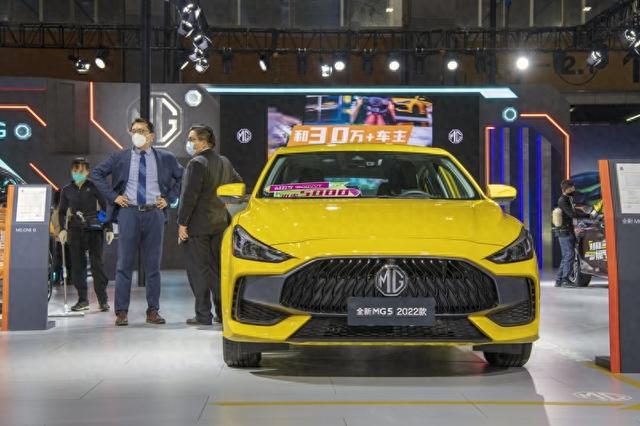
Core Viewpoint - MG, a historic British automotive brand, has experienced a significant revival under SAIC Motor Corporation, becoming a leading player in the UK market with increasing demand and sales growth [1][3]. Group 1: Brand History and Acquisition - MG was founded over a century ago in Oxford and had notable fans, including Elvis Presley and King Charles III, but faced decline leading to the bankruptcy of MG Rover in the 21st century [1]. - The brand was acquired by Nanjing Automobile Group in 2005, which was later taken over by SAIC Motor Corporation, resulting in a shift of production from the UK to China [1]. Group 2: Sales Performance and Market Position - MG's sales in the UK surged from 3,100 vehicles in 2015 to over 85,000 vehicles last year, maintaining a top ten market share [3][4]. - The MG HS SUV became the eighth best-selling model in the UK by 2025, showcasing the brand's growing popularity [3]. Group 3: Strategic Initiatives - MG has updated its vehicle lineup and expanded its dealer network across 90% of the UK, a strategy that has been emulated by other Chinese entrants like BYD and Chery [4][5]. - The brand's appeal is attributed to its affordability and a diverse range of fuel options, including gasoline, hybrid, and electric vehicles [4][5]. Group 4: Market Dynamics and Future Plans - Chinese brands, including MG, sold nearly 200,000 new cars in the UK last year, more than doubling the total from 2024, as they capitalize on market opportunities [4]. - MG plans to expand its product range with smaller and larger SUVs and aims to increase electric vehicle sales to fleet buyers [5][6]. - The company is considering establishing a manufacturing facility in Europe to mitigate challenges related to shipping vehicles from China [6].

申华控股(600653.SH):2025年度预亏1.1亿元至1.85亿元
Ge Long Hui A P P· 2026-01-23 13:28
Core Viewpoint - Shenhua Holdings (600653.SH) is expected to report a loss in operating performance for the fiscal year 2025, with net profit attributable to shareholders projected to be between -185 million and -110 million yuan, and net profit excluding non-recurring gains and losses estimated between -195 million and -120 million yuan [1] Company Summary - The company faces intensified competition in the automotive market, influenced by macroeconomic conditions and significant adjustments in financial policies, leading to ongoing price competition among brands [1] - As a dealer for the BMW brand, the company is under dual pressure from the market and the original equipment manufacturers (OEMs) [1] - The company is actively implementing strategies to respond to these challenges, including managing sales pace, enhancing service quality, and expanding sales channels to capture market share and stabilize its customer base [1] - After excluding the impacts of significant financial policy adjustments, the operational quality of the company's main business segment has shown improvement [1]

申华控股:2025年预亏1.1亿元—1.85亿元 同比转亏
Zheng Quan Shi Bao Wang· 2026-01-23 12:49
Core Viewpoint - Shenhua Holdings (600653) is expected to report a net profit loss of 110 million to 185 million yuan for the fiscal year 2025, marking a shift from profit to loss year-on-year due to intensified competition in the automotive market and significant adjustments in macroeconomic and financial policies [1] Company Summary - The anticipated net profit loss for Shenhua Holdings is attributed to increased competitive pressure in the automotive market [1] - The company faces ongoing price competition among brands, which is further exacerbated by the transmission of price reduction pressures from vehicle manufacturers to the upstream and downstream supply chain [1] Industry Summary - The automotive industry is experiencing heightened competition, leading to a challenging environment for companies [1] - Macro environment factors and major financial policy adjustments are impacting the overall industry dynamics [1]
申华控股:预计2025年度净利润亏损1.1亿元至1.85亿元
Mei Ri Jing Ji Xin Wen· 2026-01-23 12:39
Group 1 - The company Shenhwa Holdings expects to report a net loss attributable to shareholders between -185 million and -110 million yuan for the fiscal year 2025 [1] - The primary reason for the performance change is the impact of the main business, with intensified competition in the automotive market and significant adjustments in financial policies contributing to the situation [1] - As a dealer for the BMW brand, the company faces dual pressures from the market and the original equipment manufacturers (OEMs), leading to a continuous escalation of price competition [1] Group 2 - The company is actively implementing strategies to respond to these challenges, including managing the pace of operations, enhancing service quality, and expanding sales channels to capture market share and stabilize its customer base [1] - After excluding the impacts of significant financial policy adjustments, the operational quality of the company's main business segment has improved during the reporting period [1]
11月乘用车市场销量分析:新能源逆势增长 头部品牌领跑赛道
Zhong Guo Zhi Liang Xin Wen Wang· 2025-12-16 05:09
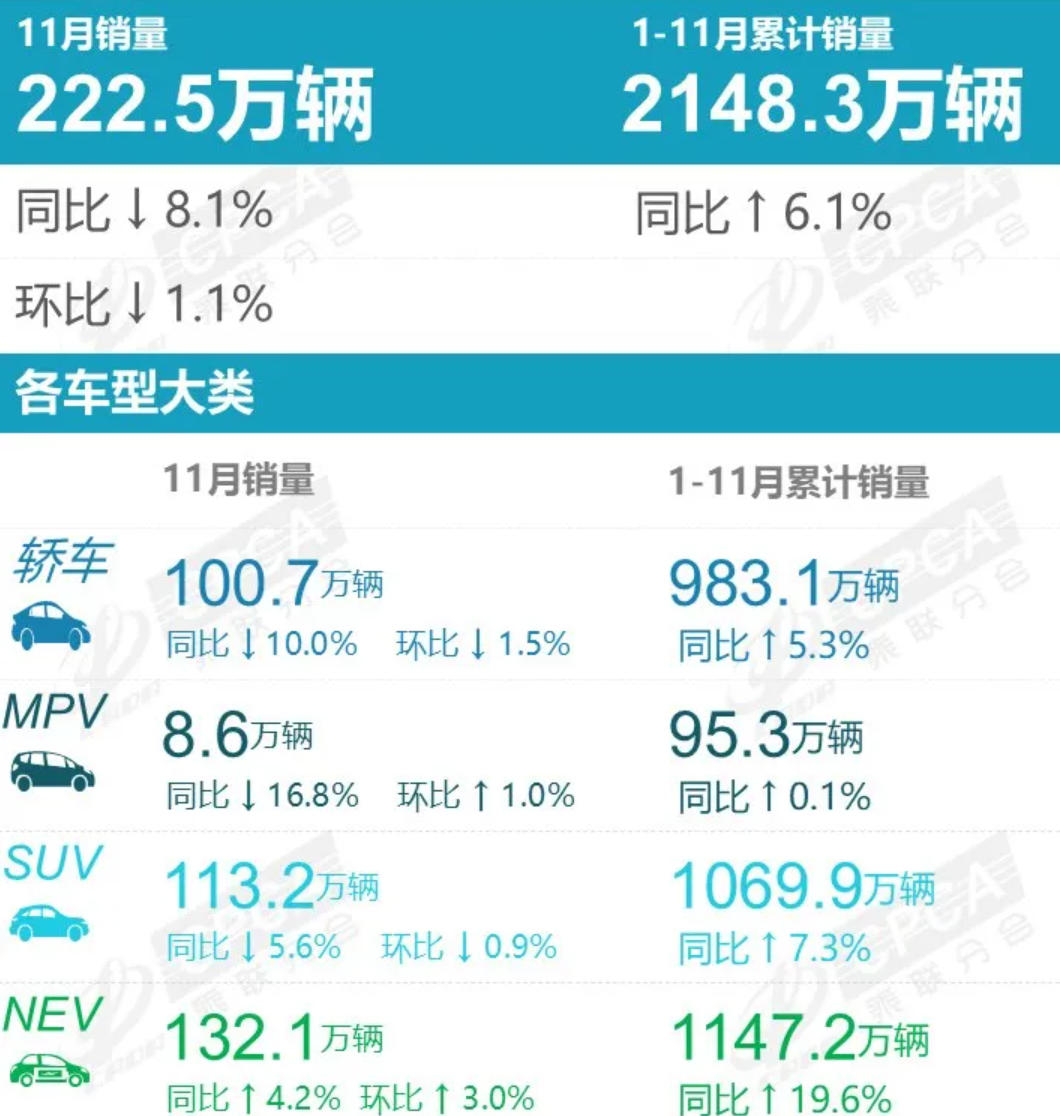
Group 1: Overall Market Performance - In November, the domestic passenger car market faced pressure, with retail sales reaching 2.225 million units, a year-on-year decline of 8.1% and a month-on-month decline of 1.1% [1] - The new energy vehicle (NEV) market, however, showed resilience with sales of 1.321 million units, a year-on-year increase of 4.2% and a month-on-month increase of 3.0%, achieving a penetration rate of over 59% [1] Group 2: Segment Performance - The sedan market saw retail sales of 1.007 million units, down 10.0% year-on-year and slightly down 1.5% month-on-month, with NEV sedans becoming a key growth point [4] - The MPV market was the weakest segment, with retail sales of 86,000 units, a year-on-year decline of 16.8% and a slight month-on-month increase of 1.0% [4] - The SUV market, while also facing year-on-year declines, performed better than sedans and MPVs, with retail sales of 1.132 million units, down 5.6% year-on-year and down 0.9% month-on-month; NEV SUVs sold 683,000 units, up 12.5% year-on-year [4] Group 3: Brand Performance - Among the top ten manufacturers, five were domestic brands, capturing 61% of the total market sales; domestic brands sold 1.49 million units, down 4% year-on-year, while joint venture brands sold 490,000 units, down 19% [4] - BYD led the sales with 306,561 units, although it experienced a year-on-year decline of 26.5% [7] - Geely ranked second with sales of 268,337 units, showing a year-on-year increase of 23.5%, becoming the fastest-growing company among the top brands [9] Group 4: Competitive Landscape - The German brands, particularly FAW-Volkswagen, maintained a stable performance in the shrinking joint venture market, with retail sales of 137,500 units [5] - SAIC Volkswagen's sales were 86,857 units, down 29.3% year-on-year, but it still retained a solid base in the fuel vehicle market [6] - New entrants like Hongmeng Zhixing and Xiaomi Auto showed significant growth, with Hongmeng Zhixing achieving a year-on-year increase of 95.2% [11][18] Group 5: Future Outlook - The market is expected to enter a phase of aggressive sales push in December, with domestic brands likely to maintain their lead in the NEV sector [18] - The competition is shifting from traditional product competition to a focus on technological strength and product quality, indicating a trend towards high-quality development in the automotive industry [18]


巴西新车涨价幅度五年来首次低于通胀率
Shang Wu Bu Wang Zhan· 2025-11-22 14:29
Core Insights - The average price of new cars in Brazil increased by 2.4% in the first ten months of the year, which is lower than the inflation rate of 3.64% [1] - This marks the first time in five years that the price increase of new cars has been below the inflation rate [1] - The trend indicates increasing competition in the Brazilian automotive market, influenced by the entry of new car manufacturers, including aggressive Chinese brands [1] Industry Summary - The average price of new cars in Brazil is reported at 159,700 Brazilian Reais [1] - The competitive landscape of the automotive market is intensifying, leading to downward pressure on car prices [1] - The presence of new entrants, particularly from China, is contributing to the changing dynamics of pricing strategies in the market [1]
众泰汽车,新诉讼
Shang Hai Zheng Quan Bao· 2025-09-22 15:25
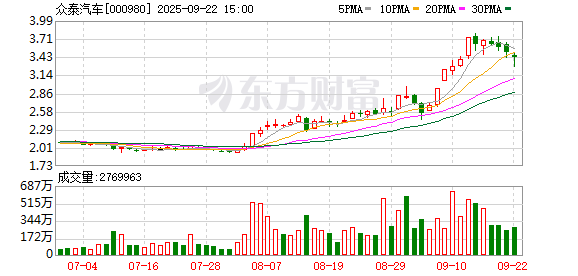
Core Viewpoint - Zhongtai Automobile is facing significant legal and operational challenges, including a lawsuit from Zheshang Bank for a loan dispute amounting to 333 million yuan, and the inability to resume production of its T300 model due to the forced dismantling of its production line [2][8][12]. Legal Issues - Zhongtai Automobile received a lawsuit notification from the Yongkang People's Court regarding a financial loan contract dispute with Zheshang Bank, involving a claim for 304,996,205.57 yuan plus interest, totaling 333 million yuan [8][9]. - The lawsuit includes a request for personal liability from certain individuals associated with the company [9]. Operational Challenges - The company has confirmed that it has not produced any vehicles in 2024 and has sold only 14 vehicles this year, with no prospects for resuming production in 2025 [12][13]. - The production line for the T300 model has been dismantled, making it impossible for the company to restart operations [12][13]. Financial Performance - In the first half of 2025, Zhongtai Automobile reported revenues of 280 million yuan, a year-on-year increase of 12.61%, but incurred a net loss of 148 million yuan, an improvement from a loss of 259 million yuan in the previous year [17]. - The company is currently facing a liquidity crisis, with the key issue being the lack of operational funds necessary for restarting production [18]. Stock Market Activity - Zhongtai Automobile's stock has experienced volatility, with a notable drop of 2.00% to 3.43 yuan on September 22, following the announcement of the lawsuit [2][12].

大众誓言捍卫欧洲主导地位,比亚迪:西方竞争对手的电动车技术仍未赶上
Guan Cha Zhe Wang· 2025-09-11 10:55
Core Viewpoint - The European electric vehicle market is experiencing intensified competition as German automakers, led by Volkswagen, prepare to counter the growing presence of Chinese competitors like BYD [1][4][10]. Group 1: German Automakers' Response - Volkswagen's CEO Thomas Schäfer stated the company is ready to defend its dominant position in Europe against Chinese competitors, emphasizing the competitiveness of their new vehicle series [1][4]. - In the wake of declining market share in China, Volkswagen is collaborating with American and Chinese electric vehicle manufacturers to strengthen its market position [4][5]. - Mercedes-Benz and BMW executives expressed confidence in their electric vehicle capabilities, with Mercedes-Benz claiming to be among the top players in the sector [5][6]. Group 2: Chinese Automakers' Expansion - BYD's executive vice president Li Ke highlighted that Western competitors have not yet caught up with their electric vehicle technology, indicating significant growth potential for BYD [2][4]. - BYD plans to introduce ultra-fast charging technology in Europe and aims to produce all electric vehicles locally within three years [6][7]. - Chinese automakers are rapidly increasing their market share in Europe, with Chinese brands capturing a record 5.7% of the overall automotive market and 10.7% of the electric vehicle market in Q2 [4][10]. Group 3: Market Dynamics and Trends - The Munich Auto Show showcased a diverse range of exhibitors, with 116 companies from China, indicating a shift in the competitive landscape [9][10]. - Analysts noted that the growth of Chinese brands in the hybrid vehicle sector remains strong, suggesting ongoing potential for expansion [9][10]. - In the first eight months of 2023, China's automobile production and sales exceeded 20 million units, with new energy vehicles accounting for 45.5% of total new car sales [11].