治理改革

Search documents
新华社观察:孟加拉国议会选举在即,民族主义党回归?
Xin Lang Cai Jing· 2026-02-10 18:02
Core Viewpoint - The upcoming national parliamentary elections in Bangladesh on February 12 are significant as they follow Prime Minister Sheikh Hasina's resignation due to nationwide protests, with the nationalist party led by Tarique Rahman likely to win according to polls [1] Group 1: Political Landscape - The nationalist party is projected to receive about 70% support from voters, with expectations of winning more than two-thirds of the seats [3] - Tarique Rahman, a key figure in the nationalist party, has returned from exile and is seen as a unifying force for the party, enhancing its electoral prospects [3][4] - The nationalist party emphasizes economic growth, job creation, and governance reform, promising a gradual approach to economic recovery if elected [4] Group 2: Other Political Parties - The Islamic Party, in alliance with the National Citizens Party, has a support rate of 31% and is working to strengthen its grassroots organization [6] - The Islamic Party's campaign includes 26 priority issues aimed at political reform and anti-corruption, gaining traction among the youth [6][7] - However, the Islamic Party faces challenges in attracting a broader voter base due to its religiously-based policies and internal coalition disputes [7] Group 3: Election Dynamics - Two key variables are expected to influence the election outcome: the potential for violence and external interference [9][10] - The temporary government's ability to manage violence is crucial, as high levels of conflict could threaten voting security and legitimacy [9] - External influences, particularly from the U.S. and India, may sway young voters towards non-traditional parties, complicating the electoral landscape [10][11]


中国反弹 vs 日本平稳:解码2025年中日创投市场温差
3 6 Ke· 2026-01-26 05:22
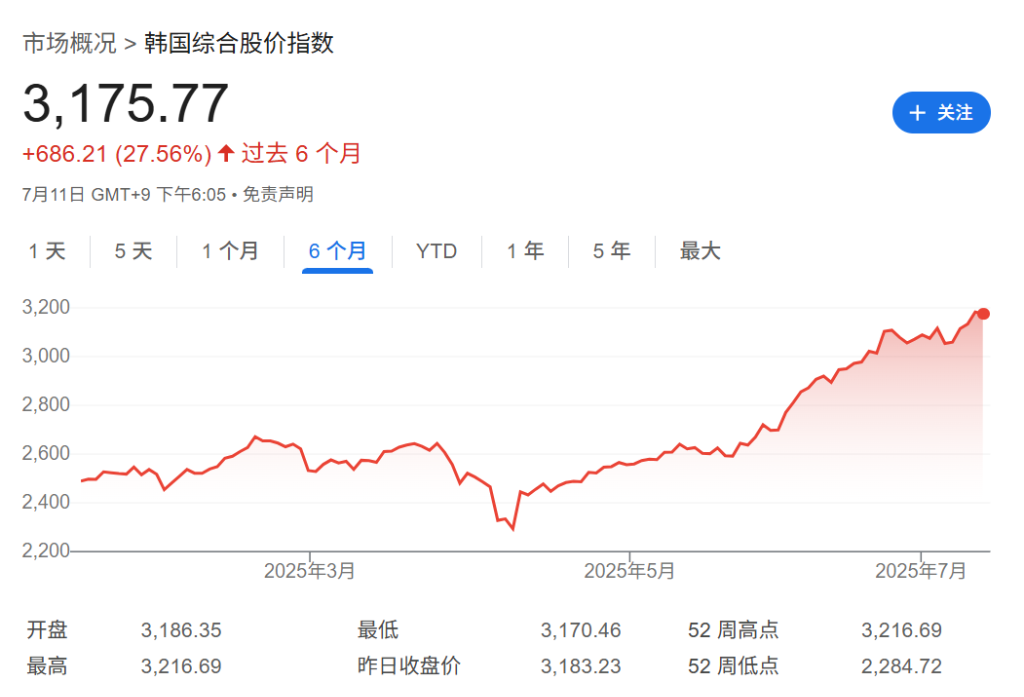
Core Insights - The 2025 equity investment markets in China and Japan exhibit distinct evolutionary paths amid complex macroeconomic and geopolitical contexts, with China showing a "V-shaped rebound" and Japan experiencing stable growth with a focus on restructuring [3] Group 1: Market Size and Activity - China saw a significant increase in transaction volume, with 9,058 investment transactions in 2025, a 28% year-on-year growth, surpassing the 2021 peak, indicating strong market recovery [5] - The total investment amount in China was 821.368 billion RMB, a slight decrease of 0.44% year-on-year, reflecting a "volume increase, price stability" trend [6] - Japan's VC market remained stable with a total investment of approximately 761.3 billion JPY (about 37 billion RMB), while the PE market reached a historic high, expected to exceed 40 billion USD (about 290 billion RMB) [8][9] Group 2: Financing Rounds and Structure - In China, early-stage financing (seed/angel/A rounds) accounted for 67% of total investments, indicating a dominance of early-stage funding [11] - The middle-stage financing (B/C rounds) saw a drastic decline, creating a "barbell" structure with significant early and late-stage funding but a lack of support for growth-stage companies [12] - Japan experienced an 18% decline in Series A funding, while Series B funding increased by 11%, indicating a shift towards verified quality projects [13][14] Group 3: Funding Sources and Attributes - In China, state-owned enterprises (SOEs) dominated with a penetration rate of 44.55%, marking a historical high, while RMB funds became predominant as USD funds receded [16][17] - Japan's market saw a rise in corporate venture capital (CVC) investments, increasing by 32 billion JPY, alongside a surge in foreign investments from global PE giants like Blackstone and KKR [18][19] Group 4: Exit Environment: IPO vs M&A - China's IPO market rebounded with 277 IPOs, a 26% increase year-on-year, while M&A transactions totaled 955, indicating a growing emphasis on diverse exit strategies [20][22] - Japan's IPO market faced challenges with only 108 IPOs, the lowest in a decade, while M&A activity surged with 167 cases, reflecting a shift towards mergers as a primary exit route [23][24] Group 5: Investment Tracks and Hotspots - In China, key investment areas included advanced manufacturing, AI, and healthcare, while traditional sectors like consumption and education saw reduced interest [25] - Japan focused on deep tech and digitalization, with funding favoring projects with high technological barriers [26][27] Group 6: Matthew Effect and Capital Concentration - In China, 1.43% of leading companies (raising over 1 billion RMB) captured 40.48% of total funding, highlighting a significant concentration of capital [28] - Japan's funding distribution became more selective, with a decrease in the median size of financing rounds from 77.6 million JPY to 62.4 million JPY [30] Group 7: Common Features - Both markets are transitioning from a focus on scale to quality, with China emphasizing high-quality development and Japan focusing on efficiency optimization [32] - The head effect is intensifying, with capital increasingly concentrated in top-tier assets, indicating a challenging environment for lower-tier projects [32] - Strategic capital is replacing purely financial capital, with China seeing a rise in government-led funds and Japan witnessing the strong emergence of CVCs [32] - Both countries are experiencing significant policy interventions to guide capital flows and reshape market rules [34]
摩根大通上调中国股票至“超配”直言近期调整是入场好时点
Feng Huang Wang· 2025-11-27 14:33
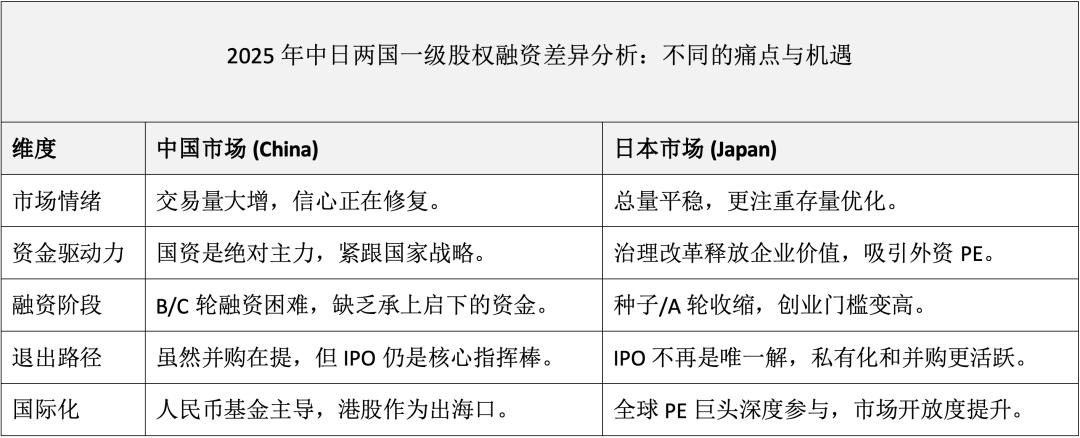
Core Viewpoint - JPMorgan has upgraded its rating on Chinese stocks to "overweight," indicating a higher likelihood of significant gains next year compared to potential downside risks [1]. Group 1: Market Analysis - The recent adjustment in Chinese assets provides an attractive entry point for investors, especially after a substantial rise earlier this year, with the MSCI China Index experiencing a nearly 6% pullback in the fourth quarter [1]. - In April, during market turbulence, JPMorgan advised investors to buy Chinese stocks, leading to a more than 30% increase in the MSCI China Index since then [5]. Group 2: Future Outlook - Multiple factors are expected to support the strength of Chinese stocks next year, including the proliferation of artificial intelligence, consumer stimulus measures, and governance reforms [5]. - The Chinese stock market is still in the early recovery phase following the previous down cycle, suggesting that valuations remain reasonable and investor positions are relatively light [5]. - The MSCI Asia ex-Japan Index is projected to rise to 1,025 points next year, representing an approximate 15% increase from the recent closing level [5]. Group 3: Regional Comparisons - Besides Chinese stocks, JPMorgan's strategy team has also given an overweight rating to stocks in South Korea and India [5]. - The Indian stock market, which has shown a V-shaped recovery over the past 14 months, is expected to see the Nifty50 index rise to 30,000 points by the end of 2026, reflecting a potential 15% increase from current levels [5].
摩根大通高呼“超配”中国:回调即买入,明年涨幅可期!
Jin Shi Shu Ju· 2025-11-27 10:01
Group 1 - Morgan Stanley has upgraded its rating on Chinese stocks to "overweight," indicating that the potential for significant gains next year outweighs the risks of major losses [1] - The report highlights that the Chinese stock market has retraced some of its excess gains from this year, creating an attractive entry point [1] - Multiple supportive factors for next year include the application of artificial intelligence, consumer measures, and governance reforms [1] Group 2 - The MSCI China Index has declined by 6.2% this quarter, while the broader MSCI Asia Pacific Index has increased by 1.3% [1] - Since early April, the MSCI China Index has risen approximately 33%, compared to a 37% increase in the Asian benchmark index [1] - The report suggests that the Chinese stock market is still in the early stages of recovery from a downtrend that began at the end of 2020, with acceptable valuations and light positioning [1] Group 3 - Fidelity International's global diversified asset investment head expresses optimism for the Chinese stock market, particularly in the technology sector, viewing recent market pullbacks as a good opportunity to increase exposure [2] - Morgan Stanley forecasts that the MSCI Asia (excluding Japan) Index could rise to 1025 points next year, representing a potential increase of about 15% from the recent closing price [2] - Open Source Securities notes that the recent upward trend in A-shares since late June is a normal fluctuation, and the current pullback is within a reasonable range for historical bull market adjustments [2] Group 4 - Open Source Securities anticipates a more balanced market style by 2026, with technology remaining a long-term allocation advantage while cyclical sectors will also present investment opportunities [3] - The report indicates that dividend styles are expected to perform better in 2026 compared to 2025, warranting attention [3]

X @外汇交易员
外汇交易员· 2025-11-05 02:24
Economic Outlook - China's economic scale is projected to exceed 170 trillion CNY in five years [1] Trade and Investment - China will steadily expand institutional opening-up to facilitate the entry of more high-quality foreign goods and services [1] - China will further conduct pilot programs for opening up in sectors such as telecommunications and healthcare [1] Policy and Governance - China is committed to promoting governance reform and improving the international economic and trade rule system [1] - Any country seeking stable and sustainable development must contribute as well as receive [1]
“韩特估”终结“泡菜折价”?摩根大通看韩国股市“两年内涨50%”
Hua Er Jie Jian Wen· 2025-07-13 04:09
Group 1 - The core viewpoint of the report is that the Kospi index in South Korea is expected to rise over 50% within two years, potentially reaching the 5000-point mark, following a strong performance this year [1][3]. - Morgan Stanley upgraded the rating of South Korean stocks from neutral to overweight, citing President Yoon Suk-yeol's commitment to governance reforms and his goal to elevate the Kospi index to 5000 points during his five-year term [3][4]. - The optimism is fueled by the expectation of governance reforms aimed at addressing the "Korea Discount," which refers to the lower valuation of South Korean companies compared to global peers due to concerns over corporate governance and policy risks [4][5]. Group 2 - Despite the strong market performance, foreign investment remains cautious, with lower buying activity compared to early 2024, indicating that investors are seeking better entry points [5]. - The report suggests that as long as the reform process remains on track, investors should consider increasing their holdings during any market volatility, as global interest in the South Korean market is rising [5].