
经济稳定

Search documents
提升社会化程度最快的方式(建议收藏)
洞见· 2026-03-21 12:35
Group 1 - The article emphasizes the importance of understanding social rules and norms for personal development and success in society [4][6][18] - It suggests that individuals who disregard rules and ethics often face negative consequences, highlighting the inevitability of legal repercussions for such actions [10][15][16] - The piece encourages readers to observe real-life situations, such as court hearings and police enforcement, to grasp the significance of adhering to societal norms [20][21][30] Group 2 - The article discusses the harsh realities of relationships, particularly the impact of financial stability on marriage, indicating that economic issues are a primary source of conflict [31][32][33] - It stresses that maintaining a stable income is crucial for family well-being and marital happiness, positioning financial security as a priority over emotional aspects [31][32][33] - The narrative underscores that individuals must recognize their responsibilities towards their families, emphasizing the need to work hard for economic stability [32][33] Group 3 - The article highlights the critical nature of health, illustrating that neglecting personal well-being can lead to dire consequences, regardless of professional success [35][36] - It points out that while work and business are important, prioritizing health is essential for sustaining life and fulfilling responsibilities [35][36] - The message conveys that individuals should take breaks and care for their health to be able to handle life's challenges effectively [36] Group 4 - The article addresses the dynamics of networking in professional settings, particularly at business events, where social hierarchies and value exchanges are evident [38][39][40] - It notes that genuine connections in high-status circles are often based on mutual value rather than superficial interactions [39][40] - The text emphasizes that building personal value and skills is essential for gaining access to influential networks and opportunities [43][44]


别再盼房价暴跌!如果真跌一半,你的工资恐怕连话费都交不起
Sou Hu Cai Jing· 2026-02-22 07:17
Core Viewpoint - The article argues that the dream of significantly reduced housing prices is unrealistic and would have detrimental effects on the economy and society as a whole [1][24][30] Group 1: Economic Implications - Local governments rely heavily on land sales for revenue, with half of their income coming from this source [3][5] - A drastic reduction in housing prices would lead to a collapse in land sales, crippling local government funding for infrastructure, education, and healthcare [5][22] - The potential for a housing market crash could trigger financial, employment, and social crises, severely impacting the overall economy [20][22] Group 2: Social Consequences - A significant drop in housing prices would erode the wealth of homeowners, many of whom have invested their life savings into real estate [9][28] - The article highlights that the desire for falling prices often overlooks the broader societal implications, including job losses and economic instability [7][24] - The notion that falling prices would benefit the average person is challenged, as it would likely lead to widespread chaos and hardship [19][26] Group 3: Market Stability - The stability of the real estate market is crucial for economic growth and job security, benefiting everyone, including those who wish for price declines [24][30] - A healthy real estate market is portrayed as essential for maintaining a stable economy, which in turn supports employment and income levels [30] - The article emphasizes that the pursuit of unrealistic housing price reductions is ultimately harmful to society and the economy [28][30]

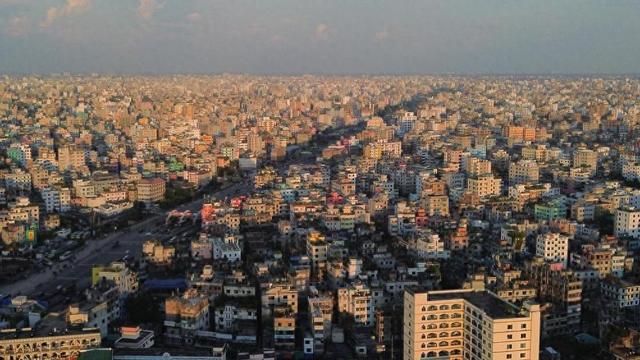
新华社观察:孟加拉国议会选举在即,民族主义党回归?
Xin Lang Cai Jing· 2026-02-10 18:02
Core Viewpoint - The upcoming national parliamentary elections in Bangladesh on February 12 are significant as they follow Prime Minister Sheikh Hasina's resignation due to nationwide protests, with the nationalist party led by Tarique Rahman likely to win according to polls [1] Group 1: Political Landscape - The nationalist party is projected to receive about 70% support from voters, with expectations of winning more than two-thirds of the seats [3] - Tarique Rahman, a key figure in the nationalist party, has returned from exile and is seen as a unifying force for the party, enhancing its electoral prospects [3][4] - The nationalist party emphasizes economic growth, job creation, and governance reform, promising a gradual approach to economic recovery if elected [4] Group 2: Other Political Parties - The Islamic Party, in alliance with the National Citizens Party, has a support rate of 31% and is working to strengthen its grassroots organization [6] - The Islamic Party's campaign includes 26 priority issues aimed at political reform and anti-corruption, gaining traction among the youth [6][7] - However, the Islamic Party faces challenges in attracting a broader voter base due to its religiously-based policies and internal coalition disputes [7] Group 3: Election Dynamics - Two key variables are expected to influence the election outcome: the potential for violence and external interference [9][10] - The temporary government's ability to manage violence is crucial, as high levels of conflict could threaten voting security and legitimacy [9] - External influences, particularly from the U.S. and India, may sway young voters towards non-traditional parties, complicating the electoral landscape [10][11]
加纳计划提升外汇储备至200亿美元
Shang Wu Bu Wang Zhan· 2026-02-10 16:01
Core Viewpoint - Ghana's President Mahama announced a plan to increase foreign exchange reserves to over $20 billion by 2029, marking a significant step towards economic stability and resilience [1] Group 1: Importance of Foreign Exchange Reserves - Strong foreign exchange reserves are crucial for safeguarding the national economy and ensuring the country can meet obligations without excessive reliance on external financing [1] - Robust reserves will protect Ghana from external shocks, stabilize the cedi exchange rate, and enhance investor confidence [1] Group 2: Strategies for Increasing Reserves - Ghana is actively leveraging its natural resource endowments, production sectors, and strategic partnerships to expand reserves [1] - Initiatives include increasing gold exports, localizing value-added processes in the mining sector, and adopting prudent fiscal and monetary policies [1] - Advocacy for repatriating African foreign exchange reserves held in Western financial institutions for investment is also part of the strategy [1] Group 3: Potential Impact of Reinvesting Reserves - President Mahama stated that reinvesting 30% of Africa's foreign exchange reserves into African financial institutions could create a significant funding pool for infrastructure, industrialization, and economic transformation [1] - The target of exceeding $20 billion in foreign exchange reserves by 2029 will provide a platform for national security, stability, and sustainable growth [1]
加纳人民生活水平提高,就业仍面临挑战
Shang Wu Bu Wang Zhan· 2026-01-24 14:46
Core Insights - The International Monetary Fund's Africa Department Director, Abebe Aemro Selassie, praised Ghana for significant progress in key areas, particularly in electricity access and overall living conditions [1] - Selassie attributed Ghana's achievements to the collective efforts of its people and institutions rather than IMF programs [1] - Electricity access in Ghana has increased from 30-40% two decades ago to nearly 90% or higher now, indicating a substantial improvement in quality of life [1] - Despite these advancements, challenges remain, particularly in job creation and economic stability, with key macroeconomic indicators showing volatility, especially during election periods [1]
加纳经济持续走强
Shang Wu Bu Wang Zhan· 2026-01-20 17:21
Core Viewpoint - Ghana's economy continues to show strong growth momentum, with a projected year-on-year growth of 3.8% in October 2025, primarily driven by the services sector [1] Economic Growth Indicators - The monthly economic growth indicators reveal that agriculture grew by 0.9%, industry by 3%, and services by 5.5% [1] - The composite economic activity growth index for the three sectors stands at 112.7, up from 108.6 in the same period last year [1] Sector Contributions - The growth in the services sector is mainly driven by telecommunications, wholesale, and retail trade [1] - Industrial growth is primarily supported by the manufacturing sector [1] - Agricultural growth is largely attributed to the fisheries sector [1] Future Outlook and Recommendations - The sustained upward trend indicates that Ghana's economy is likely to maintain positive growth, especially in the services and industrial sectors [1] - The statistical office encourages the government to continue enhancing industrial productivity and value addition while addressing structural challenges in the agricultural sector to improve its resilience [1]
美国白宫国家经济委员会主任哈塞特(Hassett):美联储的独立性对于经济稳定至关重要
Hua Er Jie Jian Wen· 2026-01-16 12:57
Core Insights - The article emphasizes the importance of understanding market risks and the necessity for investors to conduct thorough research before making investment decisions [1] Group 1 - The market presents inherent risks that require careful consideration by investors [1] - Individual investment strategies should align with personal financial goals and circumstances [1] - The article does not provide specific investment advice tailored to individual needs [1]
以色列央行原行长独家专访:控通胀如何铸就“创业国家”传奇
2 1 Shi Ji Jing Ji Bao Dao· 2025-10-30 11:44
Core Viewpoint - The independence of central banks is crucial for economic stability, especially in the current international context where political pressures can undermine effective monetary policy [1][14]. Group 1: Central Bank Independence - Central bank independence is essential for implementing necessary and sometimes difficult decisions, as political systems tend to focus on short-term goals [1][14]. - The independence of central banks allows for a long-term perspective in monetary policy, which is vital for sustainable economic outcomes [14][15]. Group 2: Israel's Economic Transformation - Israel's economic success in the 1990s was attributed to a comprehensive strategy that included stabilizing inflation, reducing budget deficits, developing capital markets, and enhancing exchange rate flexibility [2][12]. - The influx of highly skilled immigrants and improved geopolitical conditions contributed to Israel's transformation into a "startup nation," with high-tech exports accounting for over half of its total exports [2][12]. Group 3: Global Economic Governance - The shift from globalization to fragmentation is concerning, as countries are increasingly competing rather than cooperating, which can lead to unhealthy economic practices [6][8]. - China is recognized as a vital player in the global economy and should take on a larger role in global governance, responding to traditional systems' inadequacies [3][8]. Group 4: Emerging Markets Representation - Emerging markets have shown resilience and performed better than developed countries in recent years, but their representation in international institutions like the IMF does not reflect their economic weight [7][8]. - There is a growing recognition of the need to enhance the representation of emerging markets in global governance structures [7]. Group 5: Debt and Economic Stability - The accumulation of public debt is a long-term issue resulting from persistent budget and current account deficits, which can lead to systemic risks [9][10]. - Responsible government behavior and the development of robust capital markets are essential to manage high debt levels and maintain economic stability [10]. Group 6: Lessons from Israel - The experience of Israel in achieving price stability and economic openness can serve as a model for other emerging or middle-income economies [14][15]. - Effective public communication and building public support for monetary policy are critical for central banks to maintain their independence and achieve economic stability [15].

加纳将在2026年预算中优先考虑财政纪律和创造就业机会
Shang Wu Bu Wang Zhan· 2025-10-22 17:36
Core Viewpoint - The Ghanaian government is prioritizing fiscal discipline and job creation in its 2026 budget to ensure economic stability and maintain progress under the International Monetary Fund (IMF) program [1] Group 1: Fiscal Discipline - Fiscal discipline will remain central to the government's economic management framework to prevent high deficits and debt accumulation [1] - The focus is on maintaining fiscal stability while creating more job opportunities for the people of Ghana [1] Group 2: Job Creation - Job creation will be a major pillar of the 2026 budget, with interventions targeting key sectors such as agriculture, manufacturing, and digital innovation [1] - Special emphasis will be placed on providing employment opportunities for the youth [1] Group 3: Stakeholder Collaboration - The government will continue to collaborate with stakeholders to ensure the upcoming budget reflects national development priorities while maintaining fiscal prudence [1] Group 4: Upcoming Submissions - The 2026 budget statement and economic policy are expected to be submitted to Parliament in November [2]
【环球财经】关税应急计划宣布后 巴西股市汇市齐跌
Xin Hua Cai Jing· 2025-08-15 08:14
Core Viewpoint - The Brazilian government has launched the "Brazil Sovereignty Plan" to support export companies affected by the 50% tariffs imposed by the U.S., providing 30 billion reais in credit support [1] Group 1: Economic Impact - On the first day of the policy implementation, the Brazilian stock market declined, with the main index Ibovespa closing down 0.89% at 136,687.32 points [1] - The Brazilian real depreciated slightly by 0.28% against the U.S. dollar, reaching an exchange rate of 5.4014 reais per dollar [1] Group 2: Policy Background - The plan was developed in response to the U.S. tariffs and was adjusted after Trump exempted around 700 products that account for 45% of Brazil's exports to the U.S. [1] - A scheduled meeting between Brazilian and American finance ministers was canceled by the U.S., leading to ongoing market concerns regarding negotiation progress [1] Group 3: Strategic Goals - Brazil aims to diversify its exports while stabilizing its economy and mitigating the impact of tariffs [1]