清洁燃料

Search documents
报告点评:为未来供能:企业、金融和政策如何推动清洁燃料市场发展
Yin He Zheng Quan· 2026-03-02 06:58
Investment Rating - The report does not explicitly provide an investment rating for the clean fuel industry, but it emphasizes the need for collaboration among various stakeholders to unlock investment and drive project implementation [2][3]. Core Insights - Clean fuels are identified as a key pillar for ensuring energy security and achieving carbon neutrality goals, with current technological feasibility but significant barriers to scaling, including a large investment gap, policy misalignment, and insufficient value chain collaboration [2][3]. - The report highlights the importance of "policy guidance, public-private collaboration, and corporate innovation" as effective strategies to address investment challenges and transition the clean fuel market from vision to project implementation [2][3]. - The global clean fuel market is projected to see a fourfold increase in demand by 2035, contingent on the removal of market barriers and effective policy implementation [5]. Summary by Sections 1. Current Status and Social Value of Clean Fuels - Clean fuels are essential for achieving net-zero emissions by mid-century, particularly in high-emission sectors like transportation and industry [4]. - Liquid and gaseous fuels currently account for 56% of global energy consumption, and clean fuels are expected to meet 40%-55% of energy needs by 2050 [4]. - The social value of clean fuels includes reducing import dependency by 5%-15%, creating 10-30 jobs per million USD invested, and achieving significant CO2 emissions reductions [4]. 2. Market Landscape and Economic Situation - Clean fuels currently represent 1.3% of global energy consumption, with demand expected to grow 2-3.5 times from 2024 to 2040, particularly in aviation [6]. - The production costs of mature clean fuels are nearing those of fossil fuels, while emerging clean fuels still face higher costs but are expected to decrease with scale [8]. 3. Investment Barriers and Solutions - The report identifies a 30%-50% profitability gap for clean fuel projects without policy incentives, primarily due to high capital intensity and early-stage technology risks [9]. - Key barriers include financing challenges, supply chain bottlenecks, and discrepancies in customer demand [9]. - Solutions proposed include creating a predictable policy framework, enhancing public-private collaboration, and fostering corporate innovation to improve project viability and profitability [10][12][13]. 4. Role of Government and Collaboration - The report emphasizes that the scaling of the clean fuel market requires stable policies and multi-stakeholder collaboration [14]. - Successful examples from Brazil and California illustrate the effectiveness of coordinated energy, climate, and industrial policies in boosting investor confidence [14].

氢化植物油价格将保持坚挺
Zhong Guo Hua Gong Bao· 2026-01-16 02:44
Group 1 - The price of hydrogenated vegetable oil (HVO) is expected to remain strong in 2026, supported by stricter fuel blending policies in Europe and North America, and emerging demand in the Asia-Pacific region [1] - The European Union aims to reduce greenhouse gas emissions in the transportation sector by 14% by 2026, which will directly increase the blending ratio of HVO in diesel [2] - The removal of the "double counting" rule in countries like the Netherlands, Poland, and Italy is expected to double the demand for HVO in diesel, with Germany likely to follow suit [2] Group 2 - In 2025, the average import volume of renewable diesel in the U.S. dropped significantly to 5,000 barrels per day, down from 33,000 barrels per day in the same period of 2024, due to domestic tax incentives favoring local production [3] - The U.S. federal budget extended the 45Z tax credit for biofuels made from crops grown in the U.S., Canada, and Mexico, which has reduced the competitiveness of imported fuels [3] - The shift in U.S. policy has transformed the market from one that subsidized HVO exports to the EU to one that is dominated by domestic consumption, leading to a decrease in global HVO supply [4] Group 3 - In the Asia-Pacific region, countries like Australia are actively pursuing HVO initiatives, with an 11 billion AUD clean fuel plan aimed at low-carbon transitions in mining and aviation [4] - Emerging sectors such as heavy mining, aviation, and data centers are expected to drive global HVO demand growth in 2026 [4] - Some cruise companies are piloting 100% pure HVO fuel, although the higher costs compared to traditional fuels may limit widespread adoption [5] Group 4 - Analysts warn that increased competition in the raw material market due to new bio-refinery installations will put pressure on prices in 2026 [6] - The EU's sustainable aviation fuel policy and the U.S. domestic production incentives are expected to consume most of the market supply, leading to competition for resources in Asia and other emerging markets [6]
全球能源转型步入关键调整年
Zhong Guo Hua Gong Bao· 2026-01-12 03:34
Core Insights - The global energy landscape in 2026 is characterized by a shift from short-term price volatility to long-term structural transformation and competitiveness building [2][6] - Traditional oil and gas companies are adopting a more cautious approach to capital expenditure, focusing on asset optimization and financial health amid concerns of oversupply and economic outlook [3][6] - The low-carbon technology sector is experiencing accelerated investment, with a clear "dual-track" approach emerging between traditional energy and low-carbon initiatives [4][6] Traditional Energy Market Pressures - International oil prices have not seen a positive start in 2026, primarily due to concerns over oversupply and economic prospects, despite ongoing geopolitical tensions [3] - The U.S. oil production remains at historical highs, contributing to a bearish sentiment in the market, with both New York and Brent crude futures declining over the week [3] - Companies are increasingly adopting strategic restructuring and maintenance to enhance operational efficiency and ensure financial stability in response to market uncertainties [3] Low-Carbon Technology Developments - 2026 is viewed as a pivotal year for Carbon Capture, Utilization, and Storage (CCUS), with several major projects expected to make final investment decisions, contingent on stable policy support [4] - The clean fuel and green hydrogen sectors are moving from conceptual stages to actual projects, with companies like Topsoe and Ecopetrol advancing initiatives aimed at reducing carbon emissions [4] - Engineering firms are strengthening their capabilities in sustainable fuels and circular chemistry through acquisitions and integrations [4] Carbon Policy and Market Dynamics - The global carbon management landscape is undergoing leadership reshaping and mechanism deepening, with major economies expected to take a more active role in climate discussions [5] - The EU's Carbon Border Adjustment Mechanism (CBAM) is set to implement carbon pricing, providing practical incentives for affected countries [5] - New compliance carbon pricing mechanisms are anticipated to launch in 2026, with the potential for accelerated international carbon trading [5] Overall Energy Transition Trends - The focus is shifting towards deep structural adjustments in the energy industry and systematic competitiveness building, moving away from short-term oil price fluctuations [6] - Traditional oil and gas companies are expected to refine their capital expenditures, concentrating on core asset efficiency and cost optimization [6] - The success of low-carbon technologies will depend on establishing scalable business models, supported by favorable policies and market conditions [6]
甲醇日报:供需边际略微改善,中期压力仍存-20251216
Guan Tong Qi Huo· 2025-12-16 11:48
Group 1: Report Industry Investment Rating - No relevant content found Group 2: Core Viewpoints of the Report - The current supply - demand situation has slightly improved, but the short - term trend is expected to be volatile, and it will take time to break through upward. Considering the shipping data in November, the arrival pressure in December is still large, and it is difficult to significantly reduce inventory before the Spring Festival under the import pressure from December to January [4] Group 3: Summary by Related Catalogs Fundamental Analysis - As of December 10, 2025, the total methanol port inventory in China was 123.44 million tons, a decrease of 11.5 million tons compared with the previous period. The inventory in East China decreased by 10.82 million tons, and that in South China decreased by 0.68 million tons. The significant reduction in port inventory was due to factors such as vessel unloading issues and the flow of methanol back to the inland. In terms of imports, due to gas restrictions in Iran, some plants stopped production, and the daily average production capacity dropped to around 15,000 tons. However, 1.25 billion tons were loaded in November, and the expected arrival volume within the year remains high, so the import pressure still exists [1] Macroeconomic Analysis - In November, China's industrial added value of large - scale enterprises increased by 4.8% year - on - year, lower than the expected 5% and the previous value of 4.9%. The total retail sales of consumer goods increased by 1.3% year - on - year, lower than the expected 2.8% and the previous value of 2.9%. The National Bureau of Statistics stated that in November, the year - on - year increase in consumer prices further expanded, and positive changes continued to emerge. On December 16, CIMC Enric's first mass - production bio - methanol (green methanol) project in China was put into operation in Zhanjiang, Guangdong [2] Futures and Spot Market Analysis - The operating rate of Iranian plants has further decreased, but considering the shipping data in November, the arrival pressure in December is still large. Under the import pressure from December to January, it is difficult to significantly reduce inventory before the Spring Festival [3][4]
我国首个量产生物甲醇项目投产
Yang Shi Xin Wen Ke Hu Duan· 2025-12-16 09:29
Group 1 - The first large-scale biomass methanol project in China has been officially put into production, marking a strategic extension in the clean fuel sector from hydrogen to advanced liquid fuels, providing a feasible deep decarbonization solution for the global shipping industry [1] - The biomass methanol produced has a purity of 99.9% and can be widely used in shipping fuel, as well as in the pharmaceutical and chemical industries [1] - The project has established the first green methanol "production-storage-transportation-usage" supply chain ecosystem in South China, with a 30,000m3 methanol storage tank and dedicated loading and unloading berths at Zhanjiang Port, achieving a one-hour closed-loop for production, storage, and transportation [2] Group 2 - Green methanol is considered the most competitive sustainable fuel alternative for the shipping industry, with the potential to reduce carbon emissions by over 85% compared to conventional fossil fuels like coal and oil [2] - The project has created a "same-day delivery" network for ship refueling in the Greater Bay Area, significantly reducing the carbon footprint of transporting methanol and achieving an end-to-end green low-carbon solution [2]

我国首个,今日投产!
中国能源报· 2025-12-16 04:23
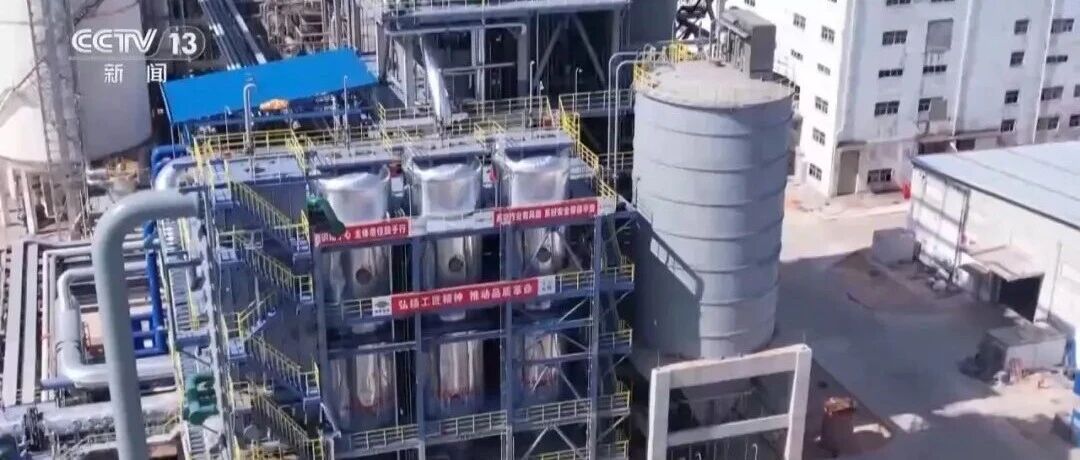
Core Viewpoint - The launch of China's first large-scale biomass methanol project marks a significant advancement in clean fuel technology, providing a viable decarbonization solution for the global shipping industry [1][10]. Group 1: Production Process - The high-purity biomass methanol, with a purity of 99.9%, is produced from biomass waste materials such as tree bark and straw [3][5]. - The production process involves a gasification island where biomass waste is subjected to high temperatures to generate carbon monoxide and hydrogen, essential for methanol production [7]. Group 2: Production Capacity and Infrastructure - The project has an initial annual production capacity of 50,000 tons of green methanol, making it the first large-scale biomass methanol project in China [5]. - A comprehensive supply chain ecosystem for green methanol has been established, including a 30,000m³ methanol storage tank and dedicated loading and unloading berths at Zhanjiang Port, enabling a one-hour production-storage-transportation cycle [7]. Group 3: Environmental Impact - Green methanol is identified as the most competitive sustainable fuel alternative for the shipping industry, with potential carbon emissions reductions of over 85% compared to traditional fossil fuels like coal and oil [9].

我国首个量产生物甲醇项目全线贯通、正式投产 清洁燃料领域拓展“新空间”
Yang Shi Wang· 2025-12-16 02:56
Core Viewpoint - The launch of China's first large-scale biomass methanol project marks a significant advancement in clean fuel production, providing a viable decarbonization solution for the global shipping industry [1] Group 1: Production Process - The high-purity biomass methanol, with a purity of 99.9%, is produced from biomass waste materials such as tree bark and straw [1] - The core component of the methanol production line is the gasification island, where biomass waste undergoes high-temperature gasification to produce carbon monoxide and hydrogen necessary for methanol production [3] - A super vacuum system within the gasification island filters out over 99% of the dust generated during production, with the remaining residue repurposed for industrial materials like cement [3] Group 2: Production Capacity and Supply Chain - The project has established a closed-loop supply chain for green methanol in South China, with an initial annual production capacity of 50,000 tons [4] - A storage facility with a capacity of 30,000 cubic meters and dedicated loading and unloading berths at Zhanjiang Port enables a one-hour closed-loop for production, storage, and transportation [6] - The project has developed a "same-day delivery" network for ship refueling in the Greater Bay Area, positioning it as the closest point for green methanol exports to international ports like Singapore, significantly reducing the carbon footprint of methanol transportation [6] Group 3: Environmental Impact - Green methanol is identified as the most competitive sustainable fuel alternative for the shipping industry, with potential carbon emission reductions of over 85% compared to traditional fossil fuels like coal and oil [6]
我国首个量产生物甲醇项目今日投产
Xin Lang Cai Jing· 2025-12-15 22:29
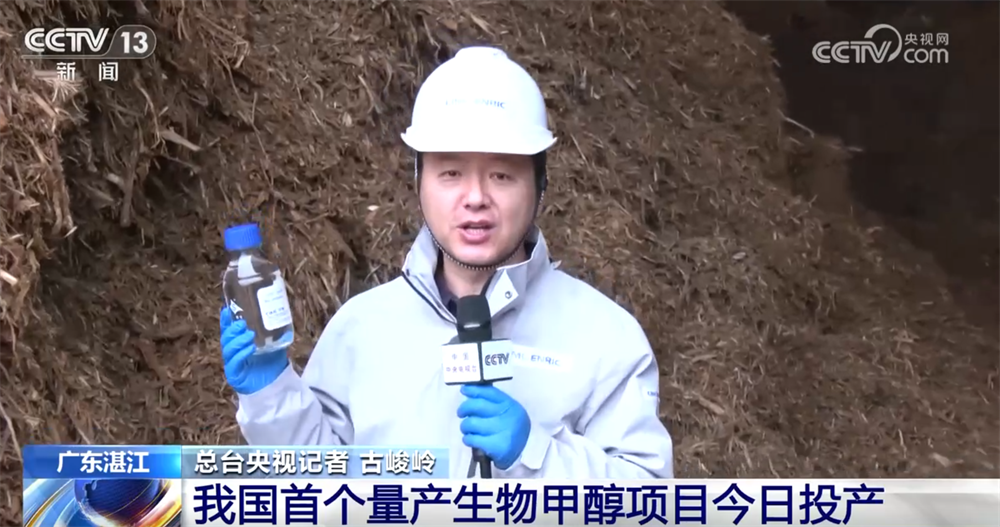
Core Viewpoint - The first large-scale bio-methanol production project in China has been officially launched, marking a significant advancement in the country's clean fuel sector and providing a viable deep decarbonization solution for the global shipping industry [1] Group 1 - The project represents a strategic extension from hydrogen energy to advanced liquid fuels in China's clean fuel landscape [1] - This development is expected to contribute to the global shipping industry's efforts in achieving deep decarbonization [1]
东大制氨新技术把空气变成汽车燃料
日经中文网· 2025-07-18 06:30
Core Viewpoint - A research team from the University of Tokyo has successfully synthesized ammonia using nitrogen, water, reducing agents, and light at room temperature and pressure, marking a significant advancement in clean energy technology [1][3][5]. Group 1: Research Significance - This is claimed to be the "world's first" case of synthesizing ammonia using nitrogen, water, and light, published in the journal Nature Communications [3]. - Ammonia's global annual production is approximately 200 million tons, comparable to the primary raw material for plastics, ethylene, with about 80% of ammonia produced used for fertilizers [3]. Group 2: Traditional Ammonia Production Challenges - Current ammonia production methods rely on a process invented in the early 20th century, which requires high temperatures (400-600°C) and pressures, leading to significant greenhouse gas emissions from hydrogen production using fossil fuels [5][9]. - The traditional method's reliance on methane for hydrogen production results in carbon dioxide emissions, while water electrolysis, though cleaner, is costly and not widely adopted [5]. Group 3: New Methodology and Future Prospects - The new method utilizes abundant resources—nitrogen, water, and light—potentially offering a clean way to synthesize ammonia, which could contribute to decarbonization efforts [5][7]. - The research focuses on mimicking enzymes found in symbiotic bacteria of leguminous plants, which convert nitrogen into ammonia without carbon emissions [5][7]. Group 4: Practical Applications and Market Potential - If ammonia can be synthesized solely from nitrogen, water, and light, it could lead to the development of next-generation vehicles powered by ammonia, or systems similar to photovoltaic panels installed on rooftops [8]. - Ammonia is gaining attention not only for its traditional fertilizer use but also as a fuel for power generation and as a means to transport hydrogen, which is difficult to store and transport [8][9]. Group 5: Competitive Landscape - The ammonia synthesis field is highly competitive, with other researchers, such as those from Caltech and Tokyo University of Science, also exploring enzyme mimicry and low-temperature, low-pressure methods for ammonia production [9]. - Achieving practical applications of direct ammonia synthesis requires overcoming challenges related to efficiency and scalability [9].