脱碳化

Search documents
EV战略转向,欧美车企巨亏后靠拢中国
日经中文网· 2026-02-12 07:51
Core Viewpoint - Major American automakers, including Ford, General Motors, and Stellantis, have reported a total loss exceeding 8 trillion yen related to electric vehicles (EVs), indicating significant challenges in the EV sector due to shifting policies in the US and Europe [2][6]. Group 1: Financial Performance and Losses - Ford reported a final loss of $11.1 billion for the fourth quarter of 2022, primarily due to adjustments in its EV development plans [4]. - The total EV-related losses for Ford, GM, and Stellantis have reached 8.1 trillion yen, reflecting the adverse impact of policy reversals on EV support in the US and Europe [6]. - Ford's total loss for 2025 is projected to reach $8.2 billion, marking the highest level since the 2008 financial crisis [6]. Group 2: Policy Changes and Strategic Adjustments - The Biden administration initially implemented various support policies for EVs, such as tax credits for purchasing EVs assembled in North America, aimed at boosting domestic EV production [6]. - The Trump administration reversed tax credit policies and modified emissions regulations, allowing major automakers to prioritize investments in gasoline and hybrid vehicles over EVs [8]. - The EU has also postponed its target to ban the sale of new gasoline vehicles after 2035, indicating a broader retreat from aggressive EV policies [10]. Group 3: Collaborations and Market Strategies - Ford is seeking partnerships with Chinese companies like Geely and Xiaomi to develop low-cost EVs, despite opposition from US hardliners [10][11]. - CEO Jim Farley emphasized the need to adapt to changing regulatory environments by leveraging partnerships and expanding market share outside the US, while also focusing on more competitively priced EVs domestically [10]. - The collaboration with Chinese firms may serve as a gateway for Chinese companies to enter the US market, as they look to expand amid domestic demand challenges [11].



法国总理:法国将大力发展核能,优先考虑能源国防
Huan Qiu Shi Bao· 2026-02-09 23:00
Core Viewpoint - France is committed to enhancing its nuclear energy capabilities and increasing its defense budget annually to achieve national independence, as stated by Prime Minister Leclerc [1] Nuclear Energy Development - The French government plans to include six new-generation nuclear reactors in its long-term energy plan, with an additional eight reactors as alternatives, establishing a structural foundation for the future of the French nuclear industry [1] - Prime Minister Leclerc emphasized the importance of nuclear energy in achieving national independence and reducing reliance on external energy sources [1] Renewable Energy Investment - In addition to nuclear energy, France will invest in renewable energy sources such as offshore wind, solar, and geothermal energy, which are crucial for decarbonization and generating electricity domestically [1] - Leclerc criticized the opposition to nuclear and renewable energy, labeling such disputes as foolish and out of touch with current realities, especially given France's annual import of €60 billion in natural gas and oil, highlighting the country's vulnerability due to external dependencies [1]
亚洲股市2025丰收年:韩国暴涨76%,日本超越泡沫经济时代年末巅峰,印尼11年最佳
美股IPO· 2025-12-31 00:37
Group 1: South Korea - The Seoul Composite Index achieved a remarkable annual performance, rising nearly 76% in 2025, marking the largest increase since 1999 [3][4] - Key drivers of this growth included semiconductor stocks, particularly Samsung Electronics and SK Hynix, which saw increases of 125% and 270% respectively [3][7] - The AI infrastructure investment significantly contributed to the market's strength, with companies like Hyosung Heavy Industries and Doosan Enerbility rising over 320% due to increased demand for data center power [6][7] - Analysts from major firms like Citigroup and Morgan Stanley predict further growth in the Korean stock market, estimating at least a 20% increase in the coming year supported by strong earnings growth [8] Group 2: Japan - The Tokyo Stock Exchange Index closed at a record high of 3408.97 points, surpassing the peak from the 1989 bubble, with a 22% annual increase [9][11] - The upward trend is attributed to valuation corrections and expanding buying interest across various sectors, including financials and real estate [9][11] - Small and mid-cap stocks outperformed large-cap stocks for the first time since 2022, indicating a broadening market appeal [11] Group 3: Indonesia - The Jakarta Composite Index rose approximately 22% in 2025, marking its best performance since 2014, driven primarily by increased participation from domestic retail investors [12] - Despite a net outflow of $1 billion from foreign investors, local retail investors significantly increased their market presence, with their numbers growing fivefold to over 20 million [12] - Analysts expect continued support for the Indonesian stock market due to factors like accelerated loan growth and low fixed-income returns, projecting the index could reach 11,000 points, a 27% increase from current levels [12]

白银与原油价格逆转,源自中国2个结构变化
日经中文网· 2025-12-25 08:00
Core Viewpoint - The report by Bank of America's strategist Michael Hartnett highlights a historic reversal in the price ratio of crude oil to silver, marking the first occurrence since 1980, driven by structural changes in China, including accelerated decarbonization and prolonged deflation risks in the domestic economy [2][4][7]. Group 1: Price Ratio and Market Trends - The price ratio of crude oil to silver has been below 1 since December, indicating that silver's price has surpassed that of crude oil for the first time in 44 years [4]. - On December 24, the spot price of silver reached $72 per ounce, a 2.5 times increase compared to the end of 2024, while WTI crude oil prices fell below $55 per barrel, the lowest in nearly five years [4]. - The reversal in prices is seen as a reflection of differing environments for precious metals and crude oil, with silver's price being influenced by speculative inflows linked to gold [5]. Group 2: Structural Changes in China - China is transitioning towards a decarbonized society, with oil demand expected to peak by 2027, as the share of new energy vehicles, including electric vehicles, surpassed 50% in October [7]. - The demand for silver is projected to exceed supply for six consecutive years until 2024, driven by the increasing use of silver in photovoltaic panels [7]. - The domestic economy is experiencing long-term deflation, with the GDP shrinkage index showing negative growth for ten consecutive quarters, and the manufacturing PMI remaining below 50 for eight months [7]. Group 3: Implications for Oil Prices - If China enters a phase of structural deflation, corporate profits may stagnate, leading to reduced oil demand [8]. - Predictions for 2026 suggest a decline in U.S. crude oil prices, with Goldman Sachs forecasting an average price of $52 per barrel, down from $58 [8]. - China's structural changes could impact global markets, with accelerated decarbonization pushing climate action forward, while prolonged deflation may lead to increased cheap exports, posing challenges for competing economies [8].

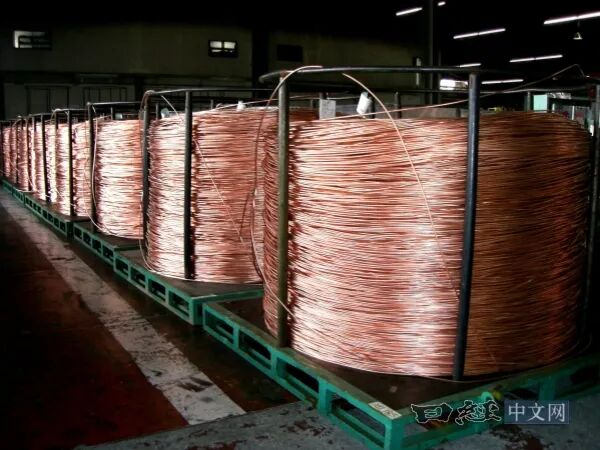
铜价步入1万美元时代
3 6 Ke· 2025-11-24 02:58
Group 1 - Copper is increasingly recognized as essential for industries such as data centers and electric vehicles, with demand expected to continue expanding [2][3] - Goldman Sachs predicts that $10,000 will become a new price floor for copper, driven by supply constraints and rising demand from sectors like artificial intelligence [5][6] - The international price of copper has reached historical highs, with LME three-month futures hitting $11,200 per ton, the highest since May 2024 [2][5] Group 2 - The International Copper Study Group (ICSG) forecasts a 3.0% increase in copper consumption in 2025 and a 2.1% increase in 2026 [3] - Supply disruptions have been reported from major mines, including the Grasberg mine in Indonesia and others in the Democratic Republic of Congo and Chile, raising concerns about copper availability [2][6] - Japanese smelting companies, such as Mitsubishi Materials, are reducing copper production due to deteriorating ore procurement conditions, which may further exacerbate supply issues [7]
铜价步入1万美元时代
日经中文网· 2025-11-22 00:34
Group 1 - Copper prices have reached a new high, with the London Metal Exchange (LME) three-month futures touching $11,200 per ton, the highest since May 2024, and remaining strong into November [4] - Concerns over copper supply have intensified due to recent accidents at major mines in Indonesia, the Democratic Republic of Congo, and Chile, leading to multiple supply disruptions this year [4][8] - The International Copper Study Group (ICSG) forecasts a 3.0% increase in copper consumption in 2025 and a 2.1% increase in 2026, indicating a growing demand for copper in industries like data centers and electric vehicles [4] Group 2 - Goldman Sachs has reported that $10,000 will become the new price floor for copper, driven by supply constraints and increased demand from sectors such as artificial intelligence [7] - The average annual price of copper is projected to rise to approximately $9,750 per ton by November 2025, reflecting a 60% increase compared to the pandemic lows in 2020 [7] - Japanese smelting companies, including Mitsubishi Materials, have begun to reduce copper production due to deteriorating ore procurement conditions, with a 14% reduction planned for the second half of the fiscal year [8]

东大制氨新技术把空气变成汽车燃料
日经中文网· 2025-07-18 06:30
Core Viewpoint - A research team from the University of Tokyo has successfully synthesized ammonia using nitrogen, water, reducing agents, and light at room temperature and pressure, marking a significant advancement in clean energy technology [1][3][5]. Group 1: Research Significance - This is claimed to be the "world's first" case of synthesizing ammonia using nitrogen, water, and light, published in the journal Nature Communications [3]. - Ammonia's global annual production is approximately 200 million tons, comparable to the primary raw material for plastics, ethylene, with about 80% of ammonia produced used for fertilizers [3]. Group 2: Traditional Ammonia Production Challenges - Current ammonia production methods rely on a process invented in the early 20th century, which requires high temperatures (400-600°C) and pressures, leading to significant greenhouse gas emissions from hydrogen production using fossil fuels [5][9]. - The traditional method's reliance on methane for hydrogen production results in carbon dioxide emissions, while water electrolysis, though cleaner, is costly and not widely adopted [5]. Group 3: New Methodology and Future Prospects - The new method utilizes abundant resources—nitrogen, water, and light—potentially offering a clean way to synthesize ammonia, which could contribute to decarbonization efforts [5][7]. - The research focuses on mimicking enzymes found in symbiotic bacteria of leguminous plants, which convert nitrogen into ammonia without carbon emissions [5][7]. Group 4: Practical Applications and Market Potential - If ammonia can be synthesized solely from nitrogen, water, and light, it could lead to the development of next-generation vehicles powered by ammonia, or systems similar to photovoltaic panels installed on rooftops [8]. - Ammonia is gaining attention not only for its traditional fertilizer use but also as a fuel for power generation and as a means to transport hydrogen, which is difficult to store and transport [8][9]. Group 5: Competitive Landscape - The ammonia synthesis field is highly competitive, with other researchers, such as those from Caltech and Tokyo University of Science, also exploring enzyme mimicry and low-temperature, low-pressure methods for ammonia production [9]. - Achieving practical applications of direct ammonia synthesis requires overcoming challenges related to efficiency and scalability [9].

第30届日经论坛“亚洲的未来”开幕
日经中文网· 2025-05-29 03:33
Core Viewpoint - The article discusses the 30th Nikkei Forum "The Future of Asia," focusing on the theme "A World Full of Challenges, Asia Rising to the Occasion," highlighting the need for collective happiness over individual interests in the face of global uncertainties [1][3]. Group 1: Forum Overview - The forum took place in Tokyo from May 29 to 30, featuring around 40 leaders, officials, and experts from various countries [1]. - Key topics included geopolitical risks, decarbonization, and the role of Asia in driving growth amid challenges such as the U.S.-China rivalry and the ongoing crises in Ukraine and the Middle East [1]. Group 2: Key Speakers and Discussions - Notable speakers included Muhammad Yunus, Prime Minister Hun Manet of Cambodia, and other high-profile officials from countries like Laos, Vietnam, and Malaysia [1][2]. - Yunus emphasized the need for Asia to move beyond rhetoric and develop concrete solutions for peace [3]. Group 3: Yunus's Vision and Political Context - Yunus called for a shift in mindset from pursuing personal interests to achieving collective happiness, stating that the future will depend on current choices [3]. - He expressed a desire for Bangladesh to join ASEAN, aiming for free movement and cross-border business activities among member states [3]. - Yunus mentioned that elections in Bangladesh are expected to occur between December 2025 and June 2026, contingent upon necessary reforms [3][4].