港股调整

Search documents
港股午评:恒指跌1.78%,有色金属板块集体回调,教育股逆势上涨
Ge Long Hui· 2026-01-30 04:11
Market Overview - The Hong Kong stock market indices experienced a collective adjustment, with the Hang Seng Index falling by 1.78% to 27,471.27 points [1] - The Hang Seng China Enterprises Index declined by 2.08%, while the Hang Seng Tech Index dropped by 1.79% [1] Sector Performance - Education stocks showed resilience, with China Spring surging nearly 70% and New Oriental rising by 3.6% post-earnings [1] - Precious metals and non-ferrous metals sectors faced significant declines, with Chifeng Jilong Gold Mining falling by 13.7% and Shandong Gold Mining dropping nearly 13% [1] - The application software, power equipment, and Hong Kong retail sectors exhibited weak performance [1]
纳指狂跌拖累港股,恒指低开0.54%,科网股普跌
Mei Ri Jing Ji Xin Wen· 2025-12-18 02:26
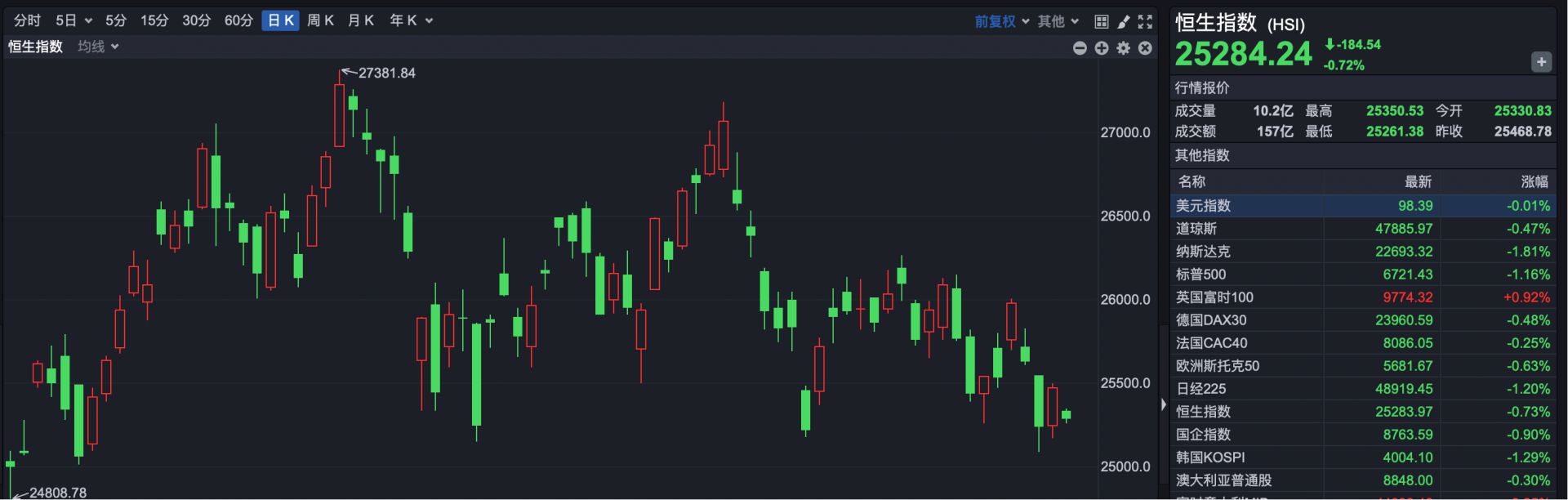
Market Overview - The Hong Kong stock market opened lower on December 18, with the Hang Seng Index down 0.54% and the Hang Seng Tech Index down 1.11% [1][2] - As of the report, the Hang Seng Index was at 25,284.24 points, down 184.54 points, a decline of 0.72% [8] - The Hang Seng Tech Index was at 5,373.57 points, down 84.38 points, a decrease of 1.55% [9] Market Influences - The previous day saw a strong rebound in the Hong Kong market, but a significant drop in the US market, particularly a 1.81% decline in the Nasdaq, negatively impacted the Hong Kong market [3][10] - The market is currently experiencing adjustments due to multiple factors, including concerns over overseas liquidity, profit-taking at year-end, a slowdown in southbound capital inflows, and a peak in unlocks in December [13] Sector Performance - Technology stocks generally declined, with Xiaomi down over 2%, and Alibaba, Kuaishou, and Baidu each down over 1% [5][12] - Automotive stocks also weakened, with Xpeng Motors down over 2% [12] - Chinese brokerage stocks showed mixed performance, with China International Capital Corporation (CICC) up over 7% following its announcement to acquire Dongxing and Xinda Securities, while China Merchants Securities fell over 1% [5][12] New Listings - Recent new listings have performed poorly, with HASHKEY HLDGS (HK02887) experiencing a slight drop on its first day and further declining over 5% in early trading [5][12] - Guoxia Technology (HK02655), which did not break its initial offering price, saw a drop of over 9% at one point [12] Capital Flow Trends - Despite a significant net inflow of southbound capital throughout the year, the recent pace has slowed, indicating a more cautious approach from investors [13] - Domestic capital is increasingly flowing into high-dividend sectors like banking, with some investors taking profits from certain tech stocks [13] - There is a rising enthusiasm for share buybacks among listed companies during this adjustment period [13]

港股下跌,其实没有“黑天鹅”,真正的原因揭晓
Sou Hu Cai Jing· 2025-12-10 00:51
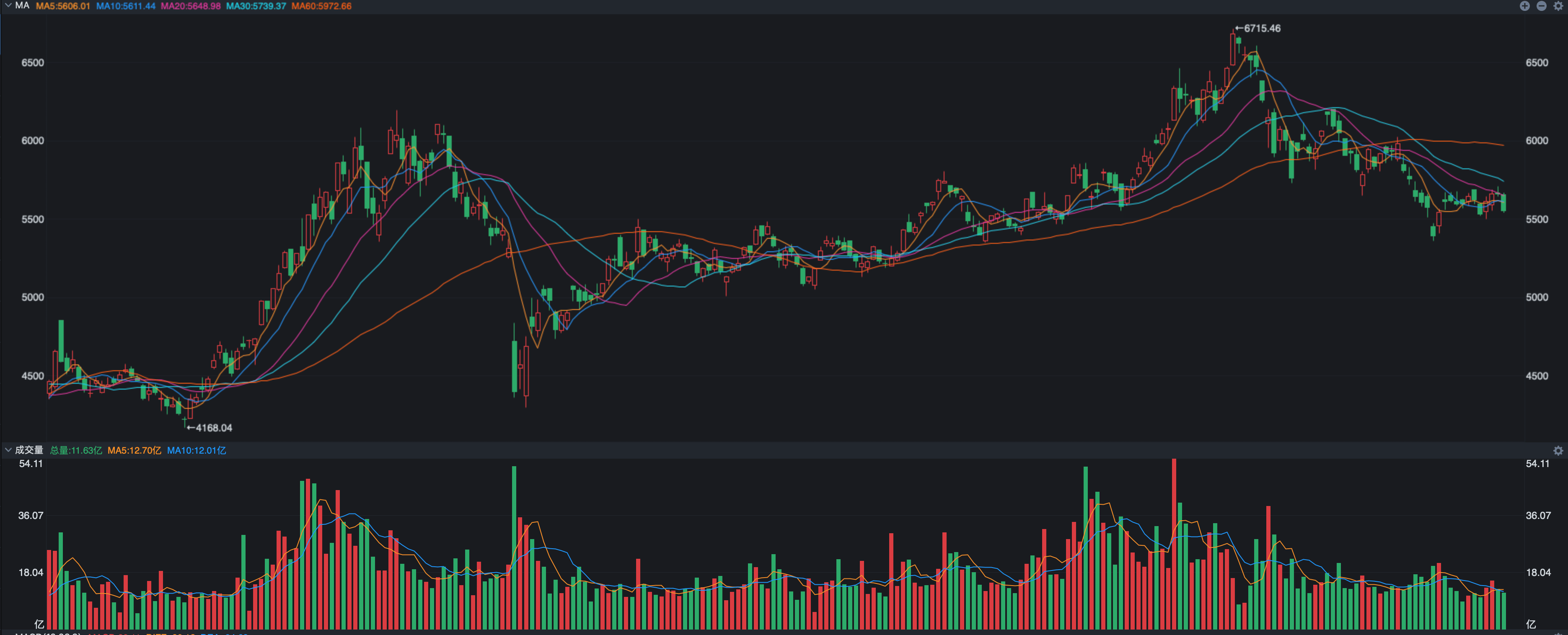
Core Viewpoint - The recent performance of the A-share market contrasts with the sluggishness of the Hong Kong stock market, particularly the Hang Seng Index and the Hang Seng Tech Index, which have seen declines amid concerns over liquidity and external economic factors [1][4]. Group 1: Market Performance - The Hang Seng Index and Hang Seng Tech Index have experienced notable declines, with the Hang Seng Tech Index dropping by 1.9% recently, undermining previous rebound efforts [1]. - The Hang Seng Index has risen from 20,000 to 27,000 points this year, marking a 35% increase, but faces resistance at the 30,000-point level, indicating potential challenges for further upward movement without strong support [4]. Group 2: Liquidity Concerns - The primary issue affecting the market is liquidity, influenced by external factors such as the ongoing decline in the bond market and uncertainties regarding the Federal Reserve's interest rate decisions [1][3]. - The influx of IPOs in the Hong Kong market, following a tightening of IPOs in the A-share market, has significantly impacted liquidity, contributing to the current market dynamics [4]. Group 3: Sector Analysis - The Hang Seng Tech Index has underperformed compared to the Hang Seng Index, primarily due to structural issues, with significant declines in new consumption stocks and pressures from competition in the internet sector [5]. - The Hang Seng Index benefits from a substantial presence of banks and high-dividend stocks, which have attracted institutional investors, providing effective support [5]. Group 4: Market Outlook - The current adjustments in the Hong Kong market should be viewed as a necessary correction to create space for future growth, reflecting both external influences and market demand [4]. - The Hang Seng Tech Index appears to have reached a relatively low valuation, with the potential for upward movement contingent on market sentiment and capital inflow [5].
A股三大指数震荡调整,关注A500ETF易方达(159361)、沪深300ETF易方达(510310)等产品配置机会
Mei Ri Jing Ji Xin Wen· 2025-11-14 05:35
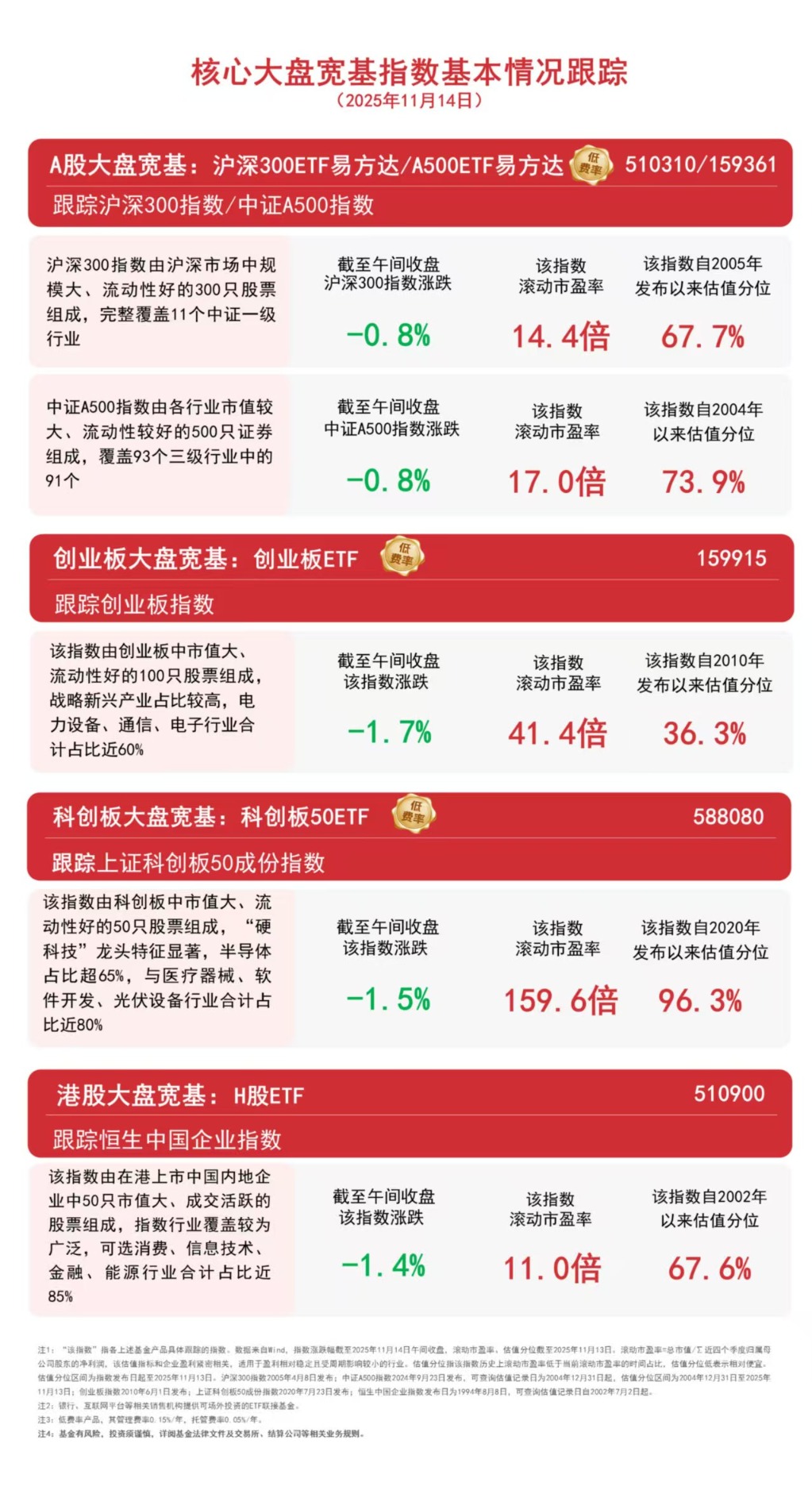
Market Overview - A-shares experienced fluctuations with the three major indices adjusting, while sectors such as Hainan Free Trade Zone, pharmaceuticals, oil and gas, and banking saw gains [1] - The Hong Kong market also showed an overall adjustment, with the innovative drug sector leading the gains, while technology stocks that surged at the end of the previous day collectively retreated [1] Index Performance - The CSI 300 Index fell by 0.8% with a rolling P/E ratio of 14.4 times, placing it in the 67.7% valuation percentile since its inception in 2005 [2] - The CSI A500 Index also decreased by 0.8%, with a rolling P/E ratio of 17.0 times, corresponding to a 73.9% valuation percentile since its launch in 2004 [2] - The ChiNext Index dropped by 1.7%, with a rolling P/E ratio of 41.4 times, which is in the 36.3% valuation percentile since its establishment in 2010 [2] - The STAR Market 50 Index declined by 1.5%, with a rolling P/E ratio of 159.6 times, placing it in the 96.3% valuation percentile since its inception in 2020 [2] Hong Kong Market Index - The Hang Seng China Enterprises Index, which includes 50 large-cap and actively traded stocks from mainland companies listed in Hong Kong, showed a decline, with a rolling P/E ratio of 11.0 times and a valuation percentile of 67.6% since its launch in 2002 [4]
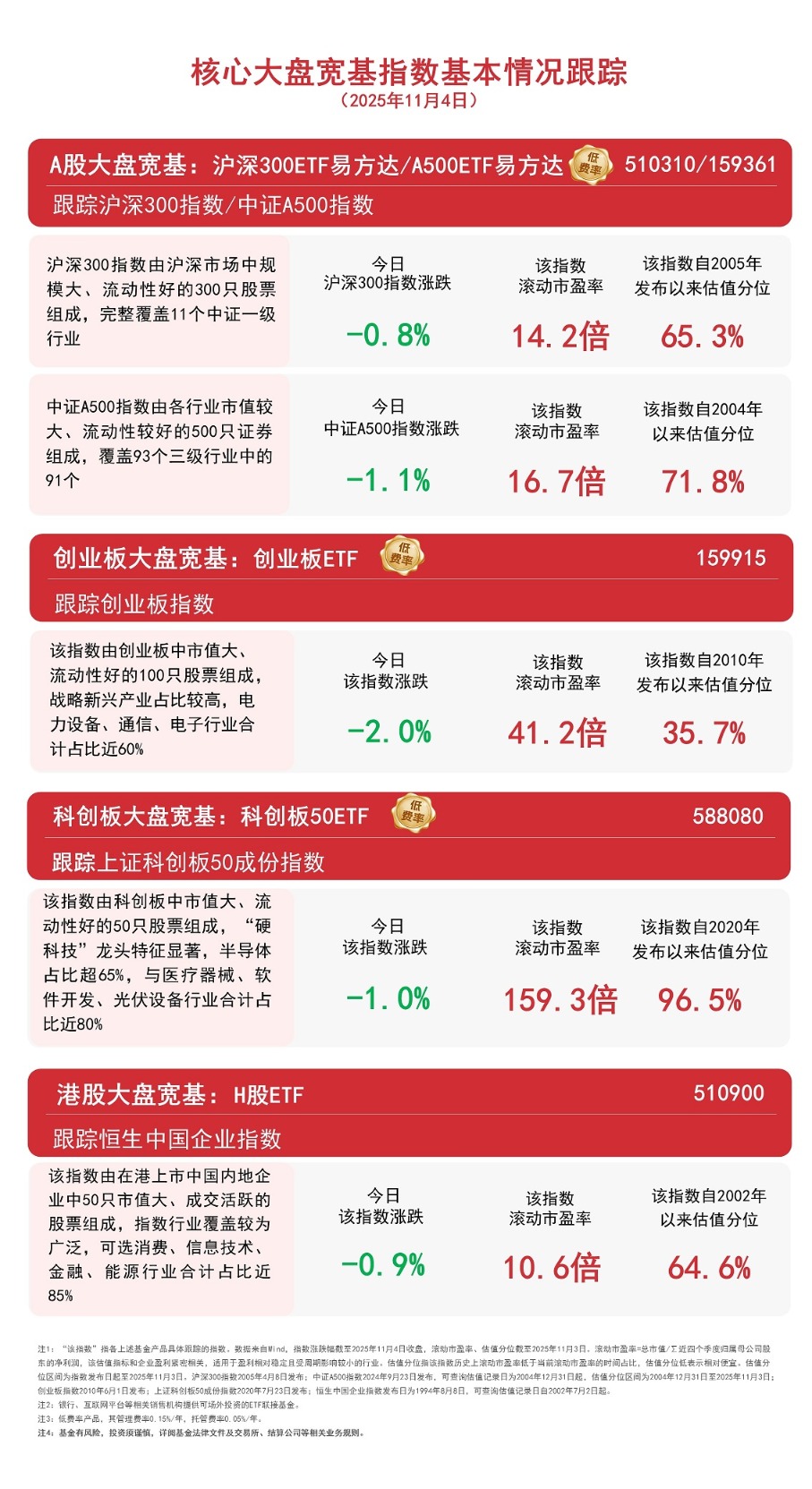
市场缩量调整,关注A500ETF易方达(159361)、沪深300ETF易方达(510310)等产品后续走势
Mei Ri Jing Ji Xin Wen· 2025-11-04 10:23
Market Overview - The A-share market experienced a collective pullback, with total market turnover exceeding 1.9 trillion yuan, a decrease of 194.5 billion yuan compared to the previous day [1] - The major indices closed lower: the CSI A500 index fell by 1.1%, the CSI 300 index decreased by 0.8%, the ChiNext index dropped by 2.0%, and the STAR Market 50 index declined by 1.0% [1] Sector Performance - Sectors that saw gains included: Fujian, banking, ice and snow industry, power grid equipment, film and television, and paper manufacturing [1] - Sectors that experienced declines included: non-ferrous metals, PEEK materials, weight loss drugs, wind power equipment, robotics, and battery sectors [1] Hong Kong Market - The Hong Kong market also faced adjustments, with significant declines in sectors such as pharmaceuticals, automobiles, and robotics [1]
中泰国际每日晨讯-20250905
ZHONGTAI INTERNATIONAL SECURITIES· 2025-09-05 03:34
Market Overview - On September 4, the Hang Seng Index fell by 1.1% to close at 25,058 points, barely holding above 25,000 points[1] - The Hang Seng Technology Index dropped by 1.9% to 5,578 points, with a total market turnover of HKD 302.2 billion[1] - Alibaba (9988 HK) declined by 3.2%, while Xiaomi (1810 HK) fell over 2%[1] Sector Performance - The financial sector showed mixed results, with China Pacific Insurance (2601 HK) down over 5%, while Agricultural Bank of China (1288 HK) rose by 2.1%[1] - Semiconductor stocks faced significant declines, with SMIC (981 HK) dropping by 6.7%[1] - Consumer stocks like dining and dairy showed resilience, rising against the overall market trend[1] Valuation Insights - The current forecasted PE for the Hang Seng Index is at 11.3 times, indicating it is at a high valuation range compared to 2018-2019[2] - Structural earnings differentiation is evident, with most sectors facing downward revisions, except for information technology, materials, and finance[2] - The Hang Seng Index is expected to find value in the 24,000-24,500 point range for potential buying opportunities[2] Company Updates - BYD (1211 HK) has reportedly lowered its sales target for the year from 5.5 million to 4.6 million units, a reduction of 16%[3] - The healthcare sector saw a decline of 3.8% in the Hang Seng Medical Care Index, with most major companies experiencing drops[3] Future Outlook - Anticipated liquidity benefits include a decrease in Hong Kong interbank rates post-month-end, continued inflow of southbound funds, and potential interest rate cuts by the Federal Reserve[2] - The global liquidity environment is expected to provide strong support for the Hong Kong stock market[2]
A股,又全线跳水了,原因是什么?
Sou Hu Cai Jing· 2025-06-19 08:24
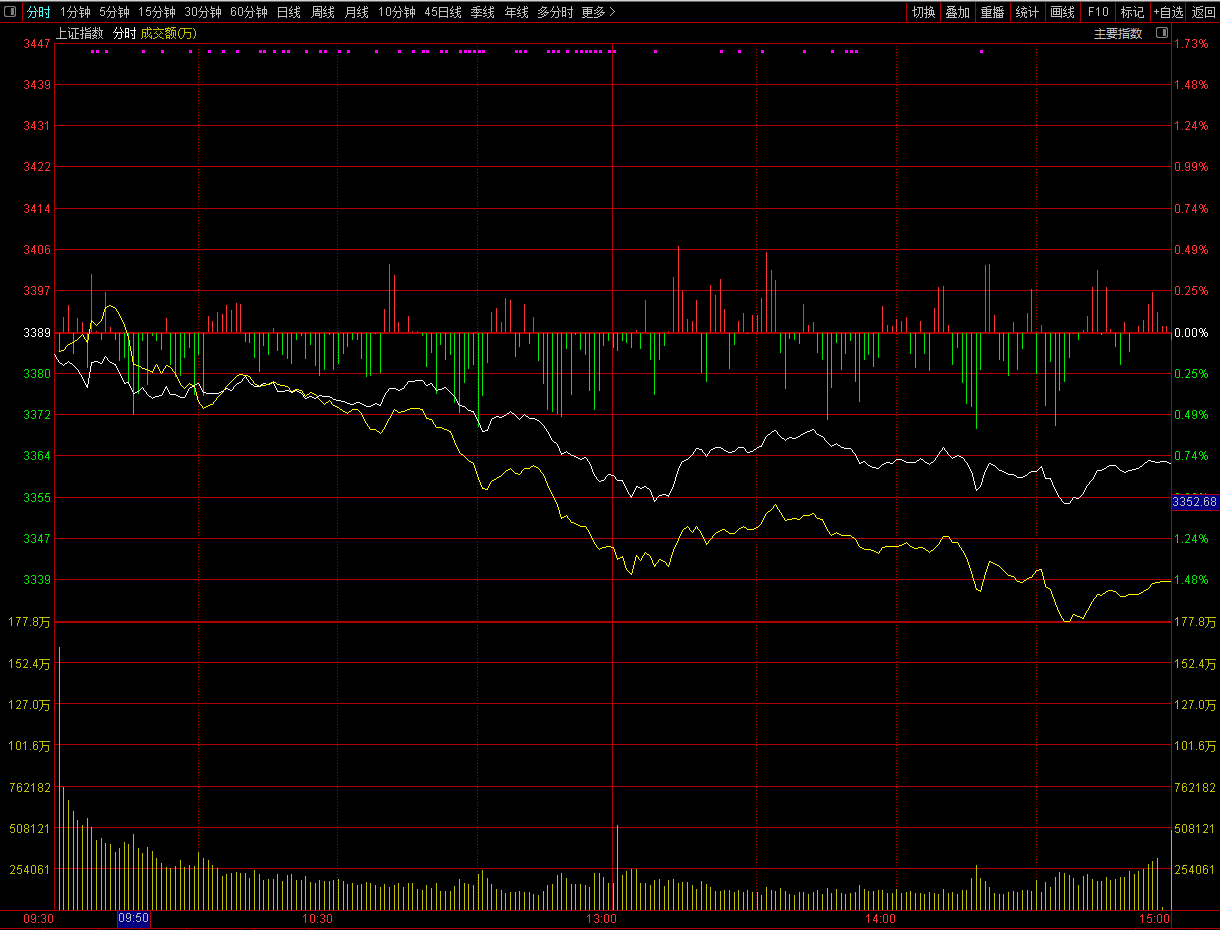
Market Overview - The market experienced a sudden decline, with the Shanghai Composite Index dropping by 34 points and reaching a low of 3353 points, while the ChiNext Index fell by 1.63% [1] - A significant bearish candlestick pattern was observed, indicating a potential downward breakout, particularly for the Shanghai Composite Index, which resembles an "M" formation [1] Influencing Factors - The Federal Reserve's recent meeting concluded without an interest rate cut, and the future path for rate cuts remains unclear, contributing to market uncertainty [1][2] - The geopolitical situation, particularly tensions involving Israel, Iran, and the U.S., has escalated, negatively impacting market sentiment across the Asia-Pacific region, including Hong Kong stocks [2] - The poor performance of Hong Kong stocks, particularly the significant drop in Pop Mart and its ripple effect on related companies, has further pressured the A-share market [2] Market Sentiment - The adjustment in the A-share market is attributed to both external influences and internal weaknesses, as the index struggles to break through the 3400-point level, leading to a sell-off [3] - There is a rising risk-averse sentiment among investors, prompting widespread selling of stocks [3] Future Outlook - The Shanghai Composite Index is at a critical juncture between 3330 and 3350 points, which is a sensitive area for potential market movement [5] - Historical patterns suggest that if the index can stabilize after a decline, it may lead to a recovery, but current conditions make predictions uncertain [5]