A股调整

Search documents
华泰证券:风险偏好下降驱动的调整波段或接近尾声
Xin Lang Cai Jing· 2026-02-08 15:06
Core Viewpoint - The report from Huatai Securities indicates that the A-share market experienced a decline this week, driven primarily by a decrease in risk appetite, with a notable shift between high and low-performing stocks [1] Summary by Categories Market Overview - The overall external macro risks have been initially priced in, with a cooling of financing funds and a narrowing of net outflows from ETFs, while both domestic and foreign institutional investors have shown a net inflow against the trend [1] Structural Analysis - The report suggests that segments with floating profits, crowded trading, and significant performance verification pressures have largely completed their initial pricing, indicating that the adjustment phase may be nearing its end [1] Calendar Effect - The report notes that the calendar effect for February in the A-share market is relatively positive, recommending a gradual increase in portfolio flexibility [1] Investment Strategy - The focus should be on selecting high-beta and relatively high valuation-cost performance segments within industries experiencing a reversal in prosperity or a continuation of improvement trends, particularly in lithium battery chains, communication equipment, semiconductors, certain building materials, and chemicals [1] - For low-beta segments, attention should be given to agriculture [1] - From a mid-term perspective, it is advised to overweight the upstream sectors of the power chain, insurance, and the aerospace industry chain [1]

5件大事发酵!A股止跌看2个信号!后市关注1个点位
Sou Hu Cai Jing· 2025-11-23 13:37
Market Overview - The U.S. stock market did not experience a continued decline, with major indices rebounding significantly [1] - Concerns regarding liquidity issues were primarily driven by the Federal Reserve's statements, leading to global market volatility [1][6] - The recent fluctuations in technology stock valuations have contributed to increased market volatility and a decline in risk appetite [1][6] Technical Analysis - The Shanghai Composite Index has a downward support level projected between 3800-3810 [3][7] - The ChiNext Index has a downward support level projected between 2500-2530 [3][7] - The market is currently in a phase of adjustment, with a focus on identifying potential buy signals [6] Investment Strategy - The current recommendation is to maintain a cautious approach and wait for stabilization signals before entering the market [5][10] - Short-term buying opportunities may arise during panic selling, but a low position is advised [5][6] - The focus should be on sectors such as banking for blue-chip stocks, pharmaceuticals for potential rebounds, and renewable energy for price increase opportunities [7] Market Sentiment - The overall sentiment indicates that risks currently outweigh opportunities, with a cautious outlook on market movements [6][10] - The market is experiencing a phase of risk release, and investors are advised to either refrain from trading or wait for clear signals of stabilization [10]

A股继续调整 投资者如何应对?
Guo Ji Jin Rong Bao· 2025-11-20 15:21
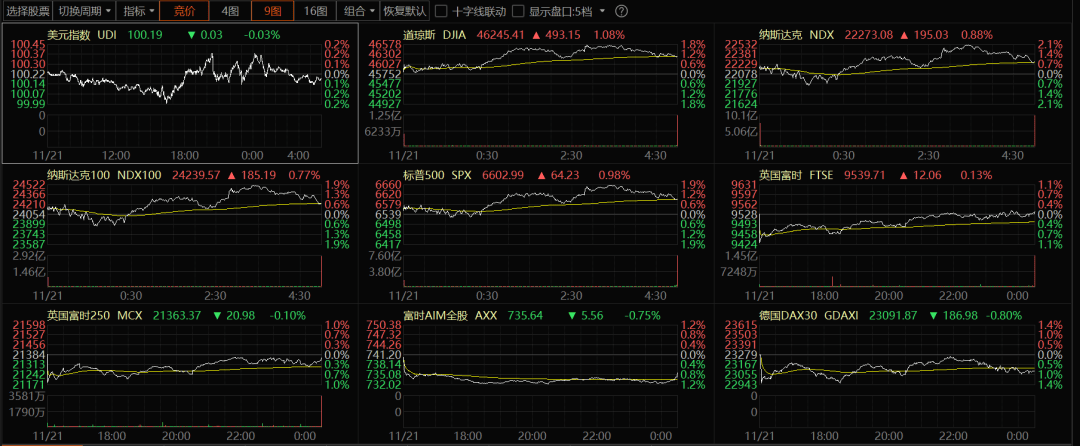
Core Viewpoint - The A-share market experienced a high opening followed by a decline, with the banking sector providing support while new consumption and power equipment sectors led the losses. The daily trading volume dropped to 1.72 trillion yuan, with over 3,800 stocks closing lower [1][2]. Market Performance - The major indices closed lower, with the Shanghai Composite Index down 0.4% at 3,931.05 points, the ChiNext Index down 1.12% at 3,042.34 points, and the Shenzhen Component Index down 0.76%. The trading volume continued to shrink, with the margin balance falling below 2.5 trillion yuan as of November 19 [2][4]. Sector Analysis - The banking sector showed resilience, with China Bank rising 4% to 6.24 yuan per share, giving it a total market capitalization of 2.01 trillion yuan. In contrast, sectors such as power equipment, coal, and leisure services saw declines exceeding 2%, while certain technology-related sectors experienced drops over 3% [4][6]. Investment Strategy - Analysts suggest a defensive investment strategy, recommending a portfolio allocation of 60% to 70% in equities, with the remainder in cash or short-term bond funds. The focus should be on low-risk, high-dividend stocks, particularly in banking and insurance, which typically offer yields above 4% and are currently undervalued [11][13]. Market Sentiment - The market sentiment remains cautious, influenced by factors such as year-end profit-taking by institutions and geopolitical tensions affecting risk appetite. Analysts expect this cautious sentiment to persist until December, when institutional pressures may ease, allowing for potential early positioning for 2026 [10][12]. Future Outlook - The market is anticipated to continue its oscillation until December, with a focus on sectors showing growth potential such as AI applications, robotics, and new energy. Investors are advised to avoid chasing short-term trends and instead concentrate on fundamentally strong companies [12][13].
A股:突然跳水大跌,原因是什么?释放什么信号?新一轮调整来了
Sou Hu Cai Jing· 2025-10-17 15:06
Core Viewpoint - The sudden drop in A-shares is primarily attributed to the collective decline of technology stocks, which triggered a broader market sell-off, compounded by the selling pressure from major funds and the retreat of heavyweight stocks [1][2][4][12] Group 1: Reasons for the Market Drop - The collective decline of technology stocks, including communication equipment, components, and semiconductors, served as the catalyst for the market's sharp drop [2] - Major funds accelerated their selling, resulting in a net outflow of 50 billion within the first hour of trading, contributing significantly to the downward pressure [3] - Heavyweight stocks initially attempted to support the market but quickly reversed, with sectors like securities, liquor, and insurance dragging the market down [4] Group 2: Signals Released by the Market Drop - The decline in technology stocks indicates a potential end to the current tech rally, as large funds appear to be cashing out [8] - The aggressive support from heavyweight stocks may be an attempt to stabilize the market while concealing the outflow of large funds [8] - The market shows signs of large funds reallocating their investments, with a noticeable shift in trading styles and strategies [8] Group 3: Potential for Future Adjustments - The increasing strength of bearish forces and heavy selling pressure suggests that a new round of market adjustments may be imminent [10] - The recent decline in trading volume, with the total turnover dropping below 2 trillion, reflects low market sentiment and trading willingness, which could lead to further adjustments [10] - The current market trend is critical, as fluctuations around key moving averages indicate a potential breakout that could trigger a new adjustment phase [10]

李大霄:A股涨幅过大也需要调整速率和上涨节奏
Feng Huang Wang Cai Jing· 2025-09-18 12:20
Core Viewpoint - The rapid increase in A-share market from 2689 to 3900 points within a year indicates a need for adjustment in the market's growth rate and pace to avoid excessive steepness [1] Group 1 - The A-share market experienced a significant rise, with a point increase of 1211 points over the course of one year [1] - The market is suggested to undergo intermittent adjustments to mitigate potential bubbles [1] - The need for a more sustainable growth pattern in the stock market is emphasized to prevent overheating [1]
中信证券谈A股此次调整:换挡调速很正常,牛市所有人都会起舞
Xin Lang Cai Jing· 2025-08-01 04:47
Group 1 - The recent adjustment in A-shares is seen as a natural occurrence in the current bull market, which may alleviate some investors' anxiety [1] - Historical analysis shows that bull markets often experience adjustments, with significant declines observed in previous bull runs, such as over 5%, 15%, and 20% in 2007 and multiple declines exceeding 10% in 2015 [1] - After surpassing 3600 points, market volatility tends to increase, with average daily fluctuations rising by over 48% in 2007 and 45% in 2015, particularly notable in indices like the Wind All A and ChiNext [1] Group 2 - The current market environment is characterized by high capital enthusiasm, with A-shares exceeding 1 trillion in trading volume for 70 consecutive days and margin financing reaching 1.97 trillion yuan, a 10-year high [1] - Valuation levels remain relatively low, with 20 out of 30 major industries having dynamic price-to-earnings ratios in the lower 50% historical range, indicating that most sectors are not considered expensive at the 3600-point level [1]

A股午后突发跳水,三大股指放量下跌,两市成交额逼近2万亿,究竟发生了啥?大跌原因找到了
Sou Hu Cai Jing· 2025-07-31 08:44
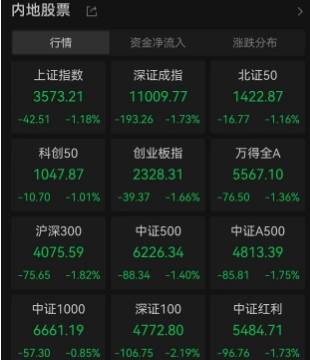
Market Overview - A-shares experienced a sudden decline, with the three major indices dropping over 1% in the afternoon session, which was unexpected [1][4] - The Shanghai Composite Index closed down 1.18% at 3573.21 points, the Shenzhen Component Index fell 1.73% to 11009.77 points, and the ChiNext Index decreased 1.66% to 2328.31 points [1][2] - Nearly 4300 stocks in the market declined, indicating a broad-based sell-off [1] Trading Volume and Market Sentiment - The trading volume for the day reached 1.96 trillion yuan, an increase of 917 billion yuan compared to the previous trading day, indicating heightened market activity [2][4] - The market sentiment was mixed, with only a few sectors like assisted reproduction and liquid cooling IDC showing positive performance, while cyclical sectors like steel and coal faced significant declines [1][4] Sector Performance - Cyclical sectors, which had previously been performing well, saw a collective downturn, with stocks like Anyang Iron & Steel and Antai Group dropping over 7% [1][4] - The financial sector also struggled, with stocks such as China Zhongjin Securities and China Life Insurance falling more than 4% and 5% respectively [1] External Factors Influencing the Market - The recent adjustment in A-shares may be attributed to several factors, including profit-taking by investors after a period of gains, particularly in cyclical stocks and innovative pharmaceuticals [4] - Concerns over the security risks associated with Nvidia's H20 computing chips, which were recently allowed to resume sales in China, have also contributed to market volatility [4][5] - The release of July's manufacturing PMI, which showed a slight decline to 49.3%, indicates a cooling in manufacturing activity, further impacting market sentiment [6] Future Outlook - Analysts suggest that while core indices may challenge their yearly highs, the path forward may not be smooth, necessitating close attention to policy implementation, economic data validation, and external environmental changes [7]
A股,又全线跳水了,原因是什么?
Sou Hu Cai Jing· 2025-06-19 08:24
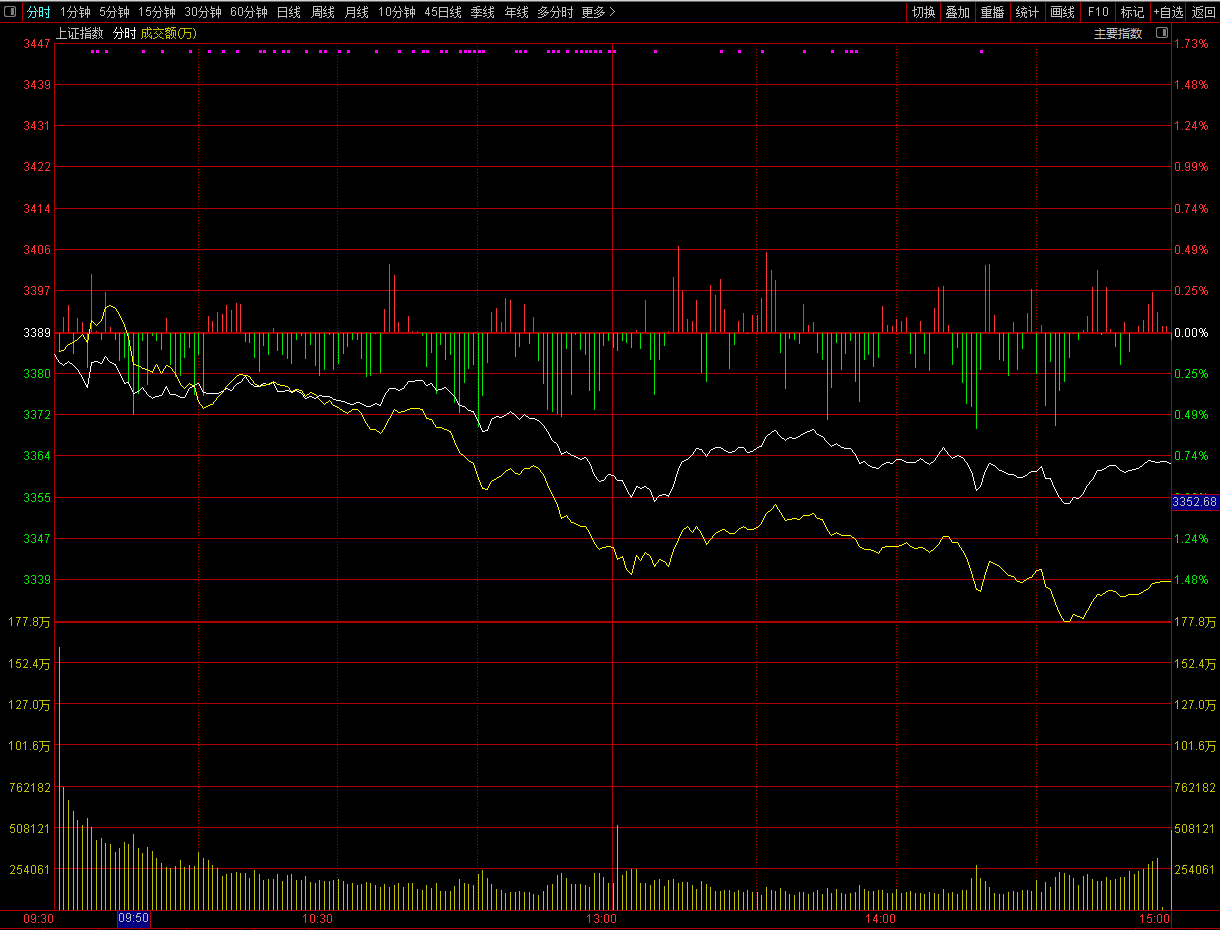
Market Overview - The market experienced a sudden decline, with the Shanghai Composite Index dropping by 34 points and reaching a low of 3353 points, while the ChiNext Index fell by 1.63% [1] - A significant bearish candlestick pattern was observed, indicating a potential downward breakout, particularly for the Shanghai Composite Index, which resembles an "M" formation [1] Influencing Factors - The Federal Reserve's recent meeting concluded without an interest rate cut, and the future path for rate cuts remains unclear, contributing to market uncertainty [1][2] - The geopolitical situation, particularly tensions involving Israel, Iran, and the U.S., has escalated, negatively impacting market sentiment across the Asia-Pacific region, including Hong Kong stocks [2] - The poor performance of Hong Kong stocks, particularly the significant drop in Pop Mart and its ripple effect on related companies, has further pressured the A-share market [2] Market Sentiment - The adjustment in the A-share market is attributed to both external influences and internal weaknesses, as the index struggles to break through the 3400-point level, leading to a sell-off [3] - There is a rising risk-averse sentiment among investors, prompting widespread selling of stocks [3] Future Outlook - The Shanghai Composite Index is at a critical juncture between 3330 and 3350 points, which is a sensitive area for potential market movement [5] - Historical patterns suggest that if the index can stabilize after a decline, it may lead to a recovery, but current conditions make predictions uncertain [5]
全球股市调整或仍将延续
鲁明量化全视角· 2025-03-30 04:43
Group 1 - The market experienced a weak rebound followed by continued adjustment, aligning with previous cautious predictions, with the Shanghai Composite Index declining by 0.40% and the CSI 500 Index down by 0.94% [2][3] - The fundamental outlook indicates increasing warning signs in the US economy, with challenges expected for China's economy due to rising tariffs and weakening domestic demand, particularly in real estate sales [2][3] - The technical analysis suggests that the market remains in a downward adjustment trend, with small-cap stocks showing weakness, confirming the ongoing market conditions [2][3] Group 2 - The domestic fundamentals and technical indicators support the continuation of adjustments in the A-share market, with expectations of further declines in the short term [3] - The small-cap sector is beginning to underperform compared to the main board, suggesting a shift in investment style towards larger-cap stocks [3] - Short-term momentum models recommend focusing on industries such as automotive and banking [3]