
低物价循环

Search documents
摩根士丹利邢自强:建议提升农民及农民工社保补贴水平,从每月200余元提升至2030年的1000元
Xin Lang Cai Jing· 2026-01-15 11:42
Core Viewpoint - The current focus should be on breaking the low-price cycle and addressing consumption deficiencies through significant reforms and adjustments [1][4]. Group 1: Consumption and Economic Reforms - Consumption should not solely rely on government subsidies, which may have short-term effects; long-term solutions require improvements in the social security system and stabilization of the real estate market [3][6]. - Enhancing the social security system is crucial to alleviate residents' concerns and encourage spending, thereby unlocking consumption potential [3][6]. - The real estate market has not yet stabilized, with historical data suggesting that economies typically take seven years to reach a stable state after significant fluctuations; China is currently in its fifth year of this cycle [3][6]. Group 2: Real Estate Market Strategies - Strategies to stabilize the real estate market include inventory reduction, maintaining key stakeholders, and implementing mortgage subsidies to lower the cost of mortgages for residents [3][6]. - Evidence from international experiences indicates that when mortgage rates are significantly lower than rental yields, it can improve public expectations for home purchases, fostering a positive cycle in the real estate market [3][6]. - Recommendations for the 2026 real estate policy include the implementation of mortgage subsidies to enhance affordability and stimulate market activity [3][6]. Group 3: Social Security Enhancements - A proposal to significantly increase social security subsidies for farmers and migrant workers from approximately 200 yuan per month to 1,000 yuan by 2030 aims to address consumer concerns and boost spending [3][6].

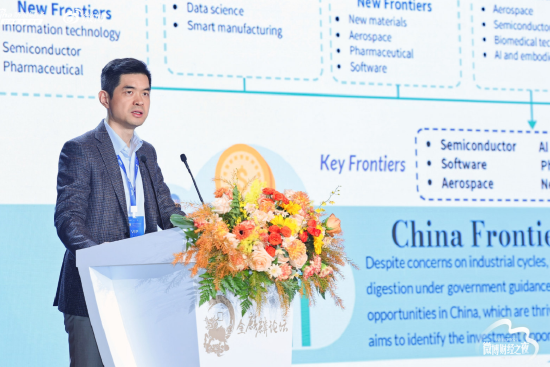
大摩邢自强:提消费、稳楼市、强社保……2026中国经济要走得远,关键还在“投资于人” | Alpha峰会
华尔街见闻· 2025-12-20 04:40
Core Viewpoint - The key to reversing the economic situation in China lies in the policy shift since September 2024, showcasing the resilience and innovation of Chinese enterprises amid complex geopolitical and regulatory challenges [2][4]. Group 1: Economic Policy and Resilience - The policy shift since September 2024 is crucial for reversing the economic situation, with Chinese enterprises demonstrating strong resilience and innovation in various technology sectors [4]. - Relying solely on certain industries' productivity highlights and companies going abroad may not sufficiently drive the economic cycle of a large economy [5]. - To effectively address the low-price cycle, efforts should focus on three areas: resolving existing issues, supporting domestic demand, and reforming to stabilize confidence [5][39]. Group 2: Fiscal and Social Reforms - The fiscal spending structure should shift from "investment in material" to "investment in people," enhancing social security to encourage consumer spending [5][45]. - Strengthening social security and balancing it can help unleash consumption potential, with fiscal burdens addressed through "opening up" and transformation [6][93]. - The current social security expenditure in China is only 10% of GDP, significantly lower than developed countries, indicating substantial room for improvement [93][94]. Group 3: Real Estate Market Dynamics - The real estate sector plays a critical role in China's economy, contributing nearly 30% of GDP at its peak, and its stabilization is essential for overall economic recovery [48][66]. - The adjustment in the real estate market has been significant, with sales and construction volumes dropping by 60%, indicating that the adjustment phase is nearing completion [61]. - The proposal of "fiscal interest subsidies" aims to narrow the gap between rental returns and mortgage costs, which is crucial for market recovery [78][82]. Group 4: Innovation and Technology - Chinese enterprises have achieved significant advancements in various technology sectors, including robotics, electric vehicles, and next-generation batteries, positioning themselves as global leaders [18][19]. - The scale effect of China's industrial clusters is unmatched by any other single economy, emphasizing that "there is no next China" [21]. - The talent pool in China, particularly in STEM fields, is vast, with approximately 11 million university graduates annually, providing a strong foundation for continuous innovation [22]. Group 5: Consumer Behavior and Economic Outlook - Consumer sentiment has shifted positively since the policy changes in September 2024, with increased interest from both international and domestic investors in diversified asset allocations [10][9]. - The high savings rate in China is attributed to an insufficient and unbalanced social security system, which needs reform to enhance consumer confidence and spending [96][97]. - The expectation is that by 2027, with further consensus and policy implementation, the economy will see significant improvements in consumer spending and overall stability [89][105].

专访邢自强:解码“十五五”规划与中国资产重估逻辑
Xin Lang Cai Jing· 2025-12-02 09:08
Group 1 - The core observation window of the 14th Five-Year Plan is set for 2026-2027, focusing on technology and consumption to address structural contradictions of supply surplus and insufficient consumption [1][5] - The economic growth target for 2025 is expected to maintain around 5%, with investment being a short-term growth driver [1][5] - The plan emphasizes the need for a robust social security network to balance technology and consumption by 2027 [1][5] Group 2 - The narrative logic of the revaluation of Chinese assets has become central on the global investment stage, with policy recognition of the dangers of a "low-price cycle" deepening [2][6] - Innovations in AI, smart driving, and biopharmaceuticals demonstrate the investment value of Chinese enterprises amid multiple challenges [2][6] - Global funds are increasingly confident in allocating to RMB assets, transitioning from "asset scarcity" to diversified equity asset allocation [2][6] Group 3 - The "East Stable, West Fluctuating" framework underlines the stability of Chinese policies, active enterprises, and flowing funds as foundational elements [3][6] - The 14th Five-Year Plan further solidifies the foundation of "East Stability" by emphasizing technology while considering livelihood and consumption [3][6] - The U.S. faces policy uncertainties and high debt, leading to a decline in the actual yield of dollar assets, which diminishes their attractiveness [4][8] Group 4 - The "East Stable, West Fluctuating" framework indicates that global funds seeking safety will flow towards stable markets like China, while growth-seeking funds will target high-growth sectors like AI and new energy [4][9] - The dual allocation logic of "safe assets + growth assets" aligns with the top-level design of the 14th Five-Year Plan [9]
专访邢自强|AI浪潮下的中国经济辨:泡沫、破困局、寻拐点
Xin Lang Cai Jing· 2025-12-02 08:57
Core Insights - The current phase of the technology revolution is characterized by significant AI capital expenditure from tech giants, with a historical tendency for over-investment being acknowledged as a natural cycle. However, the potential economic benefits of this "tech bubble" may outweigh the risks in terms of national competitiveness [1][4][5]. Group 1: AI Investment Landscape - China and the US are the only two economies with a complete AI ecosystem and industrial chain. Despite being constrained in high-end GPU production, China has advantages in computing power, talent, infrastructure, and data [5]. - China's AI capital expenditure is only one-tenth of that of the US, yet the performance gap in AI models is minimal, indicating a differentiated path in AI development [5]. Group 2: Economic Impact of AI Investment - The net effects of AI investment on the Chinese economy differ significantly from those in the US. While the US faces supply shortages and inflationary pressures due to high costs, China's AI investments are cautious and efficient, with an expected investment of approximately 2 trillion RMB over the next three years, accounting for only 0.3% of GDP [2][5]. Group 3: Capital Market and Economic Recovery - China is currently exploring ways to break the low-price cycle, with a focus on technology stocks and advanced technology sectors, which are distinct from traditional economic sectors. A broad-based bull market can only be achieved by successfully breaking this cycle and reviving corporate profits [6]. - To facilitate this economic recovery, reforms in social security and welfare for farmers and migrant workers are essential to unleash consumer potential [6]. Group 4: Real Estate Market Dynamics - The real estate sector is crucial for China to escape the low-price cycle and revive consumption. Historical data suggests that real estate adjustments typically take 6-7 years, and China has already undergone five years of adjustment, indicating room for further policy action [3][7]. - Future real estate policies are likely to follow a "stabilize first, then advance" approach, with potential for increased support measures if market conditions worsen in the first half of the year [7].
邢自强:人民币国际化破局在“道”不在“术”,提升人民币资产收益率是关键
Feng Huang Wang Cai Jing· 2025-09-25 03:55
Core Viewpoint - The forum "Phoenix Bay Area Finance Forum 2025" emphasizes the theme of "New Pattern, New Path" and aims to explore new development opportunities amidst changing circumstances [1] Group 1: Economic Insights - Morgan Stanley's Chief Economist for China, Xing Zhiqiang, highlighted that stablecoins and RWA are merely technical tools, while the real path to RMB internationalization lies in enhancing economic fundamentals and corporate profitability [3] - He noted that the enthusiasm for stablecoins has cooled since mid-year, indicating that technology alone cannot replace economic principles [3] - The core issue for RMB internationalization is addressing what trade partners can do with RMB, contrasting it with the historical dual circulation of the USD [3] Group 2: Challenges and Reforms - Domestic low price cycles have led to low returns on RMB assets, compounded by stock market volatility and real estate adjustments, resulting in international long-term capital showing only nascent interest in Chinese assets [3] - Xing emphasized the need for domestic reforms to break the low price cycle, restore economic stability, and enhance corporate profitability as essential steps for RMB internationalization [3] - The proposed three-step reform plan for 2023, focusing on debt restructuring, consumer support, and confidence stabilization, remains in progress, highlighting the urgency for more substantial reform policies to improve RMB asset returns [3]
