货币增强

Search documents
3月固定收益月报:货币增强新方向与两会前后日历效应-20260301
Western Securities· 2026-03-01 11:13
1. Report's Investment Rating for the Industry No investment rating information for the industry is provided in the report. 2. Core Views of the Report - In 2026, before the Spring Festival, the scale of Short - Term Financing ETFs exceeded 80 billion yuan and surpassed 2 money ETFs, potentially becoming a new direction for on - site cash management. This is driven by the market's demand for enhanced returns, as evidenced by the scale of FOF and bank wealth management's top - holding funds. It is expected to boost the overall scale and strategy diversification of bond ETFs in the future [1][7]. - Reviewing the calendar effect around the Two Sessions, the period from the Spring Festival to the Two Sessions is usually a traditional adjustment window for the bond market due to factors like credit expansion and rising policy expectations. During the Two Sessions, the market often enters a volatile phase. After the Two Sessions and before the Politburo meeting in April, it is typically a period for economic data verification, and with the return of bond - allocation power after the "good start" of credit, the bond market usually strengthens. However, the calendar effect may fail under certain circumstances such as liquidity tightening (2025) and extreme asset shortage (2024), and the macro - mainline of the year should be the key consideration [1][7]. - In March, the central bank's open - market operations are likely to remain active. During the period when interest rates are at a high - level grinding stage, it is recommended to moderately extend the duration when the market adjusts. The current after - tax interest rates of many 30 - year old bonds exceed the after - tax value of personal housing loan interest rates, and the 30Y - 10Y treasury bond spread is approaching 50 BP, making ultra - long bonds highly cost - effective [2][20]. 3. Summary by Relevant Catalog 3.1 3 - Month Bond Market Outlook - Short - term financing ETFs may take over part of the on - site cash management role of money ETFs. As of the end of February, the scale of short - term financing ETFs was 77.2 billion yuan, exceeding the two largest on - site money ETFs. Institutions' willingness to hold short - term financing ETFs and short - duration interest - rate ETFs has increased, which is expected to boost the scale and strategy diversification of bond ETFs [8][10]. - Based on seasonal patterns, from 2021 - 2025, the yields of 10 - year treasury bonds and 1 - year AAA inter - bank certificates of deposit (CDs) often trended downward after the Two Sessions. This year, in addition to economic growth and price targets, attention should be paid to the expected differences in fiscal and real - estate policies, the recalibration of loose - money expectations, and the stability of banks' end - of - quarter liabilities and the sustainability of bond - allocation [13][14]. 3.2 2 - Month Bond Market Review 3.2.1 Bond Market Trend Review - The long - term bond broke through the resistance level but then fluctuated repeatedly, and geopolitical risks became a new variable at the end of the month. The yield of 10 - year treasury bonds decreased to 1.78% in February [25][27]. 3.2.2 Funding Situation - The central bank net - injected 77.95 billion yuan through four major tools. In February, the funding rate was low, and it is expected to remain so in March under policy guidance. The central bank's open - market operations are likely to remain active [20][28]. 3.2.3 Secondary Market Trend - In February, bond yields showed a strong - side fluctuation. Except for the 1 - year bond, the yields of other key - term treasury bonds declined, and most key - term spreads narrowed [36]. 3.2.4 Bond Market Sentiment - In February, the inter - bank leverage ratio first rose and then fell, the 30Y - 10Y treasury bond spread continued to widen, the median duration of the full - sample bond funds decreased, while that of interest - rate bond funds increased slightly [46]. 3.2.5 Bond Supply - In February, the net financing of local bonds increased month - on - month, while the net financing of treasury bonds and policy - financial bonds decreased. The issuance interest rate of inter - bank certificates of deposit declined [60][65]. 3.3 Economic Data - The LPR quotation has remained unchanged for 9 consecutive months. Since February, post - holiday real - estate transactions have been stronger than the same period last year, while industrial production has weakened marginally [70][71]. 3.4 Overseas Bond Market - The US PPI accelerated unexpectedly. The US dollar's trend is centered around the Fed's interest - rate cut expectations, with increasing internal policy divergence. US bonds rose, while most emerging - market bond markets declined [79][81]. 3.5 Major Asset Classes - In February, the CSI 1000 index rose, the Nanhua Crude Oil index strengthened, and the Nanhua Rebar index and Shanghai Gold weakened. The performance order of major assets was: CSI 1000 > Crude Oil > Chinese Dollar - Denominated Bonds > Convertible Bonds > US Dollar > Shanghai Copper > CSI 300 > Chinese Bonds > Live Pigs > Shanghai Gold > Rebar [86]. 3.6 3 - Month Bond Market Calendar - The calendar provides a detailed schedule of liquidity injections, government bond supplies, fundamental data releases, and important domestic and international events from March 2 to March 31, 2026 [90].
基金结算新规封堵货币增强套利
2 1 Shi Ji Jing Ji Bao Dao· 2025-11-28 01:42
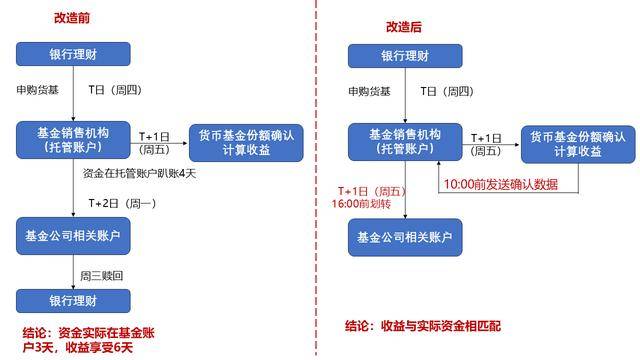
Core Viewpoint - The recent regulatory changes in the Chinese bond market, particularly regarding the "money market enhancement" strategy, are expected to significantly impact the efficiency of fund transactions and the profitability of certain financial institutions [1][9]. Regulatory Changes - The latest "Institutional Regulatory Situation Bulletin" has been released, detailing the timeline for fund subscription and settlement, aimed at improving transaction efficiency and reducing the time funds are in transit [1][5]. - The new regulations are seen as a measure to close loopholes in the "money market enhancement" strategy, which previously allowed some banks to enhance returns through interest rate subsidies [1][6]. Impact on Financial Institutions - Institutions that relied on the previous arbitrage model may face pressure to adjust product yields and reassess the sustainability of their strategies [1][9]. - The bulletin is expected to significantly hinder the business model of third-party fund distribution agencies, which have dominated the market [7][9]. Market Reactions - Following the announcement, bond yields have experienced an upward trend, with the yield on the 10-year government bond rising from a low of 1.81% to around 1.84% [1]. - Fund institutions have been identified as the main force behind the recent bearish sentiment in the bond market, although the overall impact is considered limited [9][10]. Historical Context of "Money Market Enhancement" - The "money market enhancement" strategy involved additional yield subsidies from third-party distributors, which allowed investors to benefit from a longer effective yield period than the actual time their funds were invested [3][4]. - This strategy has been criticized as unsustainable and akin to exploiting regulatory gaps [4][6]. Future Considerations - The overall stability of the yield and scale of wealth management products will be crucial in the coming year, particularly in light of potential further regulatory tightening [10].

基金结算新规封堵货币增强套利
21世纪经济报道· 2025-11-28 01:40
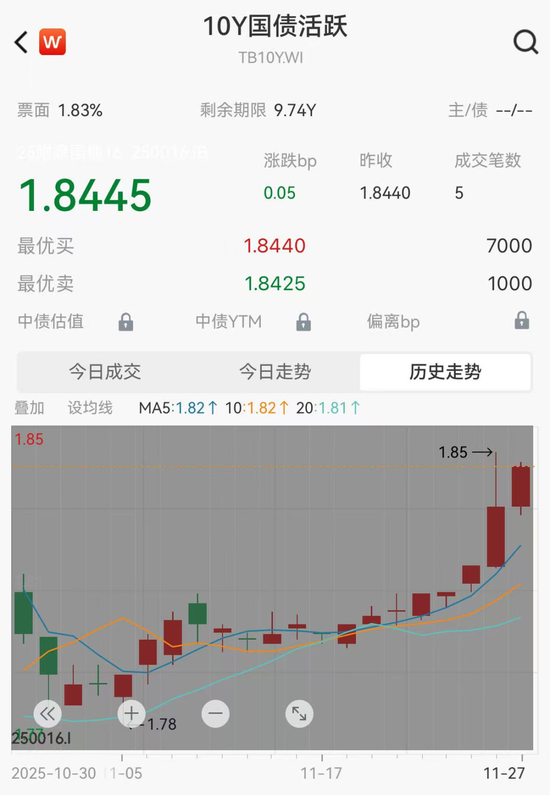
Core Viewpoint - The recent regulatory changes in the fund sales settlement mechanism aim to enhance fund transaction efficiency and curb the "money-enhanced" arbitrage practices that have been prevalent in the market [2][4][10]. Group 1: Regulatory Changes - The latest "Institutional Supervision Situation Bulletin" specifies the timeline for fund subscription and settlement, intending to improve efficiency and reduce the time funds remain in transit [2][9]. - The new regulations are expected to significantly enhance the efficiency of fund usage and protect investor interests by reducing opportunity costs associated with fund occupation [4][13]. Group 2: Impact on "Money-Enhanced" Mechanism - The adjustment in the fund sales settlement mechanism is seen as a measure to close loopholes in the "money-enhanced" arbitrage strategy, which has allowed institutions to gain additional returns through time differences in fund transactions [3][10]. - Previously, the "money-enhanced" strategy involved providing additional annualized returns of 0.6% to 0.8% through intermediaries, which could increase the annualized yield of money market funds significantly [8][7]. Group 3: Market Reactions - Following the announcement of the new regulations, the bond market experienced an upward trend in yields, with the 10-year government bond yield rising from a low of 1.81% to a peak of 1.85% [4][17]. - Fund institutions have been identified as the main force behind the recent bearish sentiment in the bond market, although the overall impact is considered limited [17][18]. Group 4: Future Considerations - The ongoing regulatory scrutiny may lead to further adjustments in the mechanisms governing fund yields, which could affect the asset allocation and net value fluctuations of financial products [18][16]. - The stability of fund scales and net values will be crucial to monitor in the coming year, as any regulatory tightening could amplify market impacts, particularly on short-term assets [18][16].

基金结算新规或终结理财“货币增强” 但对债市影响有限
2 1 Shi Ji Jing Ji Bao Dao· 2025-11-27 12:37
Core Viewpoint - Recent regulatory changes in the Chinese bond market are expected to impact the "enhanced money market fund" strategy, leading to increased short-selling sentiment in the bond market [1][8]. Regulatory Changes - The latest "Institutional Supervision Situation Report" was released on November 24, detailing the timeline for fund subscription and settlement to improve efficiency and reduce the time funds are in transit [1][5]. - The new regulations aim to close loopholes in the "enhanced money market fund" arbitrage strategy and impose direct constraints on banks' long-term practices of enhancing yields through "interest subsidies" [1][4]. Impact on Market - The bond market has seen a rise in yields across various maturities, with the yield on the 10-year government bond increasing from a low of 1.8095% to a high of 1.8460% within a few days [1]. - The new rules are expected to significantly enhance fund utilization efficiency and reduce opportunity costs associated with fund occupation, benefiting investor interests [1][4]. Enhanced Money Market Fund Mechanism - The "enhanced money market fund" strategy involves additional yield subsidies from intermediaries, which can increase annualized returns by 30-40 basis points [2][3]. - Under the previous rules, funds could remain in intermediary accounts for several days, allowing investors to enjoy returns for longer than the actual investment period, effectively transferring losses to retail investors [2][3]. Market Dynamics - The new regulations are likely to disrupt the business model of third-party fund distribution institutions, which have been the largest players in this market [6][7]. - Despite the anticipated impact, some market participants believe the overall effect on the market will be limited, as the scale of the "enhanced" strategy was relatively small [8][9]. Future Considerations - The stability of the overall yield of wealth management products and their asset allocation will be crucial in the coming months, especially if regulatory constraints tighten further [9].
别想再“偷”基民的收益!
财联社· 2025-11-26 13:23
Core Viewpoint - The regulatory body has optimized the fund sales settlement mechanism to close loopholes in money market fund "enhancements," ensuring investor interests are prioritized and promoting fair treatment among investors [3][10][11]. Group 1: Fund Subscription Process - The new regulations specify that fund managers must send confirmation and settlement data to sales institutions by 10:00 AM on the fund share confirmation day, and sales institutions must transfer confirmed subscription funds to the fund's registration account by 4:00 PM on the same day, after deducting any fees [5][10][12]. - This adjustment aims to reduce the time funds remain in transit during the subscription process, effectively closing the loophole that allowed for "enhanced" returns through delayed fund transfers [11][12]. Group 2: Fund Redemption Process - The regulations emphasize fair treatment of all investors, prohibiting differential redemption fund transfer times based on sales channels. For funds other than money market and interbank certificate funds, the transfer of redemption funds to sales institutions must occur no earlier than the next trading day after the redemption request is confirmed [7][15]. - Fund managers are required to manage liquidity risks carefully and ensure that the redemption process does not disrupt fund stability or lead to unreasonable asset liquidation [14][15]. Group 3: Marketing and Communication - The regulatory body has mandated that fund managers and sales institutions must avoid misleading marketing practices, particularly prohibiting terms like "real-time arrival" and "rapid redemption" in promotional materials, which could create unrealistic liquidity expectations for investors [8][16]. - This initiative aims to foster a more accurate understanding of fund operations among investors and mitigate potential disputes arising from service delays [16].

基金销售结算新机制出台!理财“贴息玩法”如何被堵?一图看懂
Sou Hu Cai Jing· 2025-11-26 11:30
Core Viewpoint - The regulatory authority has issued a new notice to optimize the fund sales settlement mechanism, aiming to enhance the efficiency of fund subscription fund transfers and reduce the time funds are in transit [1][8]. Group 1: Regulatory Changes - The notice specifies that for off-site money market funds, fund managers must send confirmation and clearing data to sales institutions by 10:00 on the subscription confirmation day, and sales institutions must transfer confirmed subscription funds to the fund's registration account by 16:00 on the same day [1][8]. - This optimization addresses the previously controversial "money fund enhancement" loophole, which had been exploited by some bank wealth management products [1][8]. Group 2: Impact on Bank Wealth Management - The "money enhancement" strategy, which allowed clients to receive additional returns through third-party sales institutions, is significantly impacted by the new regulations [3][6]. - The previous method involved a timing strategy where funds would be held in a third-party bank's account for several days, allowing for interest accumulation that was then partially returned to the wealth management company, effectively increasing returns beyond the actual fund performance [4][5][6]. Group 3: Stakeholder Effects - The optimization of the fund sales settlement mechanism reduces the operational space for bank wealth management's "interest subsidy" practices, which had previously benefited multiple parties at the expense of ordinary fund investors [6][8]. - The new regulations are expected to promote compliance and transparency in investment strategies, moving away from gray operations that previously existed [8]. Group 4: Fund Market Data - As of September 2025, the scale of money market funds reached 14.67 trillion, accounting for 40% of public funds [9]. - By the end of 2023, bank wealth management investments in public funds amounted to 0.61 trillion, representing 2.1% of the total, with a peak allocation of 1.38 trillion (4.2%) reached by the second quarter of 2024 [12].