超级性价比

Search documents
日本知名巨头退出中国内地市场,平价品牌狂奔,有门店日排队3000桌
21世纪经济报道· 2026-01-10 04:58
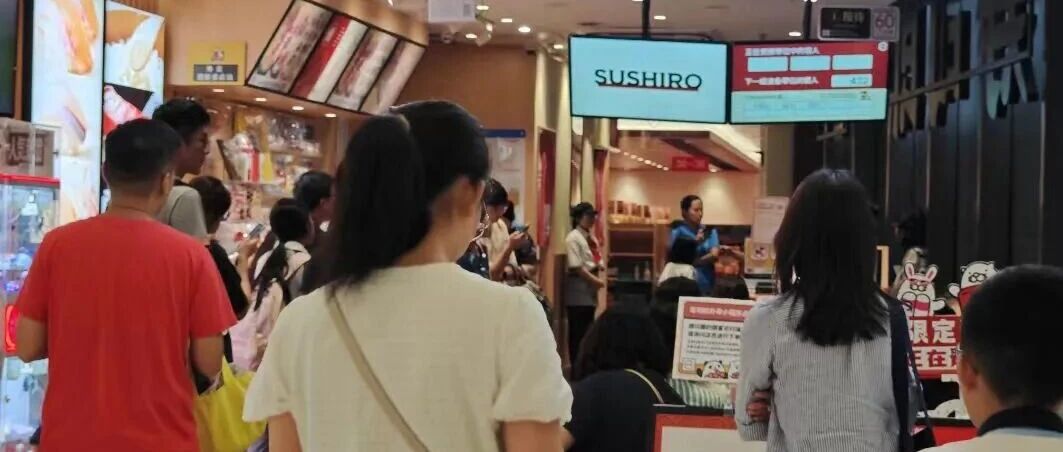
Core Viewpoint - Sushi Ramen has emerged as a phenomenon in the dining industry in 2025, characterized by long queues and high demand, attributed to its affordable pricing and perceived value [1][2]. Group 1: Sushi Ramen's Popularity - On December 31, 2025, a user reported waiting for a table at Sushi Ramen for over five hours, highlighting the brand's immense popularity [1]. - The brand's pricing strategy, with items like caramel foie gras at 8 yuan and salmon at 15 yuan, has made it a favorite among young consumers, earning it the nickname "the Luckin Coffee of Japanese cuisine" [1]. - Sushi Ramen's parent company reported a net sales increase of 41.5% year-on-year, reaching 588.07 billion yen, with profits up 98.7% to 63.71 billion yen [6]. Group 2: Competitive Landscape - Other budget sushi brands like Bin Sushi and Goldsmith Sushi are also expanding, contrasting with Kura Sushi, which is closing its stores in China due to poor performance [2][10]. - Kura Sushi's initial plan to open 100 stores in China within ten years has failed, with only three stores opened since its debut in June 2023 [11]. - Kura Sushi's financial struggles are evident, with cumulative losses exceeding 81.9 million yuan, attributed to its inability to adapt its Japanese model to the Chinese market [13][12]. Group 3: Consumer Behavior and Market Trends - The long queues at Sushi Ramen are driven by factors such as novelty, emotional value, and social influence, with many consumers feeling compelled to join the trend [2][6]. - The average consumer spending at Sushi Ramen is under 100 yuan, with many sharing promotional activities on social media [9]. - A report indicates that 31% of global consumers feel dining out does not provide sufficient value, reflecting a shift towards more rational consumer spending [9]. Group 4: Strategic Insights - Sushi Ramen's success is partly due to its localized menu, which reduces the proportion of raw fish dishes compared to its Japanese counterpart, appealing to local tastes [14]. - The competitive landscape in China's dining industry is intensifying, with consumers increasingly comparing local offerings to international standards, pushing brands to improve [15]. - Key factors for success in the Chinese market include supply chain integrity, product quality stability, and stringent food safety standards, particularly for sushi and Japanese cuisine [16].

寿司郎狂飙,平价寿司陷混战
2 1 Shi Ji Jing Ji Bao Dao· 2026-01-09 13:18
Core Insights - Sushi Ramen has become a phenomenon in the dining industry in 2025, with significant consumer interest and long queues at its locations, particularly in Beijing and Shanghai [1][2] - The brand's success is attributed to its high cost-performance ratio, appealing to consumers seeking value [1][3] - In contrast, KURA Sushi has struggled in the Chinese market, leading to its exit, highlighting the challenges of market adaptation [5][6] Group 1: Consumer Behavior and Market Trends - On December 31, 2025, a report indicated that consumers waited for hours to dine at Sushi Ramen, with queues reaching 3,000 tables [1] - Factors contributing to the popularity of Sushi Ramen include novelty, emotional value, affordability, and social influence [2] - The average consumer spending at Sushi Ramen is under 100 yuan, with promotional activities enhancing its appeal [3][4] Group 2: Competitive Landscape - Sushi Ramen plans to expand its store count in Greater China to 157-161 by the end of the 2025 fiscal year and further to 190-193 by 2026 [3] - In contrast, KURA Sushi has announced plans to gradually close its Shanghai locations due to poor performance, with significant financial losses reported [5][6] - The rapid expansion of budget sushi brands like Binsushi reflects a growing demand for affordable dining options in China [3][4] Group 3: Localization and Market Adaptation - Sushi Ramen has successfully localized its menu by reducing the proportion of raw fish dishes, which contrasts with KURA Sushi's approach of replicating its Japanese menu [8] - The competitive landscape in China's dining industry is intensifying, with consumers increasingly discerning about value and quality [8][9] - The overall restaurant market in China showed resilience, with a reported revenue of approximately 5.57 trillion yuan in 2024, growing by 5.3% year-on-year [8]
一日三餐的胜利:当餐饮进入卫星店时代
远川研究所· 2026-01-05 13:03
Core Viewpoint - The current food delivery battle has led to significant profit losses for platforms, with nearly 100 billion yuan lost in six months, while the restaurant industry is entering a "super value for money" era, where consumers demand not just low prices but also quality and variety [3][4]. Group 1: Industry Trends - The restaurant industry is experiencing a shift towards a "super value for money" narrative, as consumers seek not only affordability but also quality and a pleasant dining experience [3][4]. - The demand for food delivery has outpaced the supply capabilities of traditional dining models, leading to a mismatch between high-cost dine-in operations and the low-cost, high-quality expectations of delivery services [5][6]. Group 2: Satellite Store Model - The "satellite store" model focuses on small kitchen spaces that prioritize online orders and delivery, allowing for more flexible locations and significantly lower operational costs [6][8]. - Satellite stores can reduce rental costs to 20%-30% of traditional dine-in locations, with a payback period shortened by two-thirds, enhancing operational efficiency [8][10]. Group 3: Community Opportunities - Satellite stores are increasingly targeting community areas, where they can meet the daily dining needs of residents, leading to a 50% increase in orders in certain community settings [11][13]. - The community dining market is projected to grow from 1.8 trillion yuan to 3.2 trillion yuan over the next decade, indicating a substantial opportunity for satellite stores [11][13]. Group 4: Technological Integration - The integration of AI and digital tools is essential for satellite stores to optimize operations, menu configurations, and customer engagement, ensuring high standards of quality and efficiency [16][19]. - Meituan is leveraging its platform capabilities to assist restaurant brands in establishing satellite stores, providing data-driven insights for site selection and operational strategies [19][21]. Group 5: Market Performance - Satellite stores have shown promising financial performance, with net profits of 14.2% and a rapid return on investment, outperforming many traditional dining establishments [23][24]. - The shift towards smaller, community-focused dining options reflects changing consumer habits, where food delivery is becoming a regular part of daily life rather than an occasional convenience [25][26].

补贴撑起的“虚假繁荣”,餐饮人终于看懂了
36氪未来消费· 2025-10-28 04:07
Core Viewpoint - The article highlights the challenges faced by the restaurant industry due to the recent "takeout war," which has led to a false sense of prosperity driven by heavy subsidies, resulting in declining profit margins and customer spending [6][10][16]. Group 1: Industry Challenges - 75% of new orders during the takeout war had a payment price below 15 yuan, while dine-in customer spending has returned to 2015 levels, indicating a significant drop in profitability for restaurants [6][10]. - The takeout war has created a vicious cycle of low-price competition, with 75% of consumers opting for cheaper takeout over dine-in options, further squeezing restaurant margins [14][15]. - Many restaurants are forced to participate in subsidy programs, leading to unsustainable business practices where they often lose money on each order [21][26]. Group 2: Impact of Subsidy Wars - The subsidy wars have consumed nearly 100 billion yuan, equivalent to three years of profits for the entire takeout industry, leaving many restaurants to deal with the aftermath [6][18]. - The competition has led to a significant increase in the recovery of second-hand restaurant equipment, with reports indicating a 100% year-on-year increase in the recovery of hot pot restaurant equipment [9][10]. - Despite the apparent growth in order volume, many restaurants are experiencing closures, highlighting the disparity between reported growth and actual business health [11][24]. Group 3: Responses and Strategies - Companies like Meituan are advocating for a "de-involution" approach, focusing on supporting restaurants rather than engaging in destructive price wars [5][28]. - Meituan has launched initiatives such as the "Prosperity Plan," allocating 28 billion yuan to help restaurants maintain profits and improve operations [29][30]. - Successful restaurants are finding ways to innovate their products and business models rather than competing solely on price, as seen with brands like Laoxiangji, which has accelerated product innovation during the subsidy wars [32][33]. Group 4: Future Outlook - The article suggests that the restaurant industry's core competitiveness lies in quality, service, and innovation rather than low prices, emphasizing the need for a sustainable business model [16][44]. - The return to fundamental business practices, focusing on product and service quality, is essential for long-term survival in the industry [44].
补贴撑起的“虚假繁荣”,餐饮人终于看懂了
3 6 Ke· 2025-10-28 04:06
Core Insights - The recent restaurant industry conference in Beijing highlighted the struggles faced by businesses post the intense food delivery subsidy wars, revealing that 75% of new orders were priced below 15 yuan and dine-in customer spending has reverted to 2015 levels [1][3] - The so-called "false prosperity" created by heavy subsidies has led to a significant decline in merchant profits and customer spending, with many restaurants forced to lower prices to maintain order volumes [1][6][9] Industry Overview - The food delivery subsidy wars, which began in early 2025, have consumed nearly 100 billion yuan, equivalent to three years of profits for the entire food delivery sector, leaving restaurant owners to deal with the aftermath [3][10] - Data from the restaurant industry conference indicated a sharp decline in customer spending starting in April 2025, with many businesses unable to raise prices during peak demand months due to ongoing subsidy competition [8][14] Business Impact - Many restaurants are experiencing closures, with a significant increase in second-hand equipment being sold, as evidenced by a 100% year-on-year increase in the recovery of used equipment from hot pot restaurants [5][6] - The competitive landscape has forced restaurants to either participate in subsidy programs or lose customer traffic, leading to a vicious cycle of low pricing and reduced profit margins [9][14] Consumer Behavior - A survey indicated that 75% of consumers opted for cheaper delivery options over dine-in, and 86% would choose delivery if it was less expensive than dining in, further exacerbating the challenges for dine-in reliant businesses [8][14] Strategic Responses - Meituan's CEO emphasized the need for restaurants to focus on structural cost advantages and overall operational improvements rather than engaging in price wars [3][18] - Meituan has initiated a 28 billion yuan support plan for merchants, including direct financial assistance and funds for innovative store models, to help stabilize the industry post-subsidy wars [18][20] Future Outlook - The industry is shifting focus from aggressive discounting to enhancing product quality and service, with successful businesses finding ways to innovate and adapt rather than compete solely on price [19][25] - AI tools introduced by Meituan aim to assist restaurants in optimizing operations and improving efficiency, indicating a move towards sustainable growth strategies [26]

外卖大战下餐饮迎转型压力,美团宣布再投28亿帮商家“守住利润、健康发展”
2 1 Shi Ji Jing Ji Bao Dao· 2025-10-17 04:09
Core Insights - The restaurant industry is transitioning into a "super value for money" era, where customer demand is reshaping the market dynamics, emphasizing structural cost advantages and comprehensive operational improvements rather than price wars [1][2][3] Group 1: Industry Trends - The growth of the domestic restaurant market has slowed, with the market size increasing from 3 trillion to 4 trillion yuan in three years, but taking five years to reach 5 trillion yuan, indicating a significant deceleration [2] - The number of restaurants has surged, leading to an oversupply situation that has intensified homogenized competition and price wars [2] - The average customer spending in restaurants has reverted to levels seen a decade ago, highlighting the need for businesses to adapt to changing consumer expectations [2] Group 2: Company Initiatives - Meituan announced an upgrade to its "Prosperity Plan," committing an additional 2.8 billion yuan to support restaurant merchants, including 2 billion yuan for financial assistance and 300 million yuan for innovative store model support [1][8] - The launch of the AI decision-making tool "Kangaroo Advisor" aims to assist restaurant operators in various aspects of their business, such as market analysis, site selection, menu development, and financial analysis, and is currently available for free to all industry merchants [3][4] - Meituan is focusing on enhancing the quality of dining experiences by optimizing its ecosystem, innovating services, and upgrading operations to support long-term growth for quality restaurant brands [4][5] Group 3: Consumer Behavior and Market Dynamics - The trend of low-priced takeaway orders has surged, with 70% of new orders falling under the 15 yuan price range, raising concerns about sustainability and profitability for restaurant operators [6] - The growth of "one-person meals" has increased by over 40%, and the search volume for "small portion dishes" has grown by more than 32%, indicating a shift in consumer preferences [6] - The industry is witnessing a shift towards "light" store models, with over 900 brands collaborating with Meituan to explore satellite store formats, which are proving to be more efficient and profitable [7] Group 4: Future Outlook - Meituan plans to launch the "Good Store Long Red Action" to support a million quality stores, which includes financial support and various initiatives to enhance operational efficiency [8] - The company is committed to building a healthy industry ecosystem by ensuring food safety, high standards for infrastructure, simplified marketing, and upgraded evaluation systems to promote fair competition [7][8]

美团核心本地商业CEO王莆中:餐饮堂食客单价跌至十年前
2 1 Shi Ji Jing Ji Bao Dao· 2025-10-16 16:08
Core Insights - The current era for the food delivery industry is characterized as a "super cost-performance era," emphasizing operational efficiency over mere low pricing [1] - The importance of online and offline integration for restaurant businesses is highlighted, with a focus on creating high cost-performance store types [1] - Customer repurchase rates are crucial for long-term success, with short-term popularity being less significant than sustained business performance [1] Industry Trends - The closure rate of restaurants listed on the 2024 Dazhong Dianping must-eat list is below 1.6% within a year, while the closure rate for trendy follow-up categories is 3.7 times higher than traditional categories [1] - The example of "Tianshui Spicy Hot Pot," which gained popularity last year, illustrates that follow-up stores in this category have a significantly higher closure rate compared to regular hot pot stores [1] Consumer Behavior - The demand for super cost-performance is reshaping the restaurant industry, indicating that businesses should not rely on internal competition but rather leverage structural cost advantages to enhance overall operational levels [1] Technological Integration - The application of AI in restaurant operations is being explored, with many businesses facing challenges in utilizing AI due to limited funds and technical capabilities [1] - Meituan has introduced an AI decision-making tool called "Kangaroo Advisor," which is based on its self-developed model "Longcat," covering various aspects of daily operations and is currently available for free to all industry merchants [1] Financial Insights - The average dining price has returned to levels seen a decade ago, indicating significant implications for the industry [3] - Data shows that the annual revenue of the restaurant industry maintained growth until 2019, experienced fluctuations starting in 2020, and has shown slow growth in the past two years [3]