餐饮透明化

Search documents
西贝莜面村关闭102家门店涉及4000员工
Sou Hu Cai Jing· 2026-01-15 13:15
Group 1 - The core issue is the closure of 102 stores by Xibei, which represents 30% of its total outlets, affecting approximately 4,000 employees [2][3] - The closures are primarily concentrated in first and second-tier cities, including 19 stores in Shanghai, 10 in Beijing, 8 in Shenzhen, and 5 in Guangzhou [2] - Xibei has faced a significant decline in revenue, with a 50% year-on-year drop in January 2026, following 125 days of no profitability since the "pre-made dish controversy" began in September 2025 [3] Group 2 - There is a debate among netizens regarding the responsibility for the closures, with some blaming Luo Yonghao for causing a 20% drop in customer traffic due to his criticism of Xibei's use of pre-made dishes [4] - Others argue that Luo's exposure of the industry's long-standing issue of "information opacity" is valid, highlighting the mismatch between price and quality rather than the concept of pre-made dishes itself [5] - Following the closure news, many netizens have called for Luo Yonghao to respond, shifting the discussion from the event to personal accountability [6] Group 3 - The controversy surrounding pre-made dishes has revealed deeper operational issues within Xibei, including a collapse of consumer trust [7] - Xibei's definition of "semi-finished products" as not being pre-made dishes conflicts with consumer perceptions, as they equate non-made-to-order items with pre-made ones [7] - Evidence has surfaced showing the use of frozen beef and reheated dishes, contradicting Xibei's claims of fresh and handmade offerings [8] Group 4 - Xibei's public relations missteps, such as suing Luo Yonghao and revealing operational issues, have exacerbated the situation [9] - The company faces structural operational challenges, including high costs in first and second-tier cities, where rent and labor account for 30% of expenses, resulting in a low net profit margin of only 5% per store [11] - The loss of family customers, who make up 80% of traffic, is attributed to issues with pre-made children's meals, leading to a shift towards competitors like Laoxiangji, which clearly labels its pre-made dishes [11] Group 5 - The incident has prompted a call for greater transparency in the industry, with 83% of netizens supporting legislation to mandate the labeling of pre-made dishes [12] - Xibei plans to refocus its resources on core markets and accelerate overseas expansion, although the founder continues to deny the use of pre-made dishes, indicating a lack of fundamental change in perception [13] - The event has accelerated the implementation of pre-made dish labeling policies in regions like Jiangsu, highlighting the need for more detailed industry standards [14]


消费者的福音: “预制菜照妖镜”登场,连锁餐饮或被迫大幅降价
Sou Hu Cai Jing· 2026-01-04 04:21
Core Viewpoint - The emergence of a technology service known as the "pre-prepared food truth mirror" has sparked significant discussion online, aiming to address consumer concerns regarding the use of pre-prepared dishes in the restaurant industry [1] Group 1: Industry Trends - The pre-prepared food market has rapidly gained popularity, significantly reducing labor costs and increasing cooking efficiency, becoming a crucial tool for standardized expansion in chain restaurants [3] - A report from the China Chain Store & Franchise Association and Huaxing Capital indicates that leading chain restaurants have a high reliance on pre-prepared dishes, with companies like Zhen Gongfu, Yoshinoya, and Xibei using pre-prepared food at rates exceeding 80% [3] - Some top Chinese fast-food companies have nearly 100% of their offerings as pre-prepared foods due to quality control and operational cost reduction [3] Group 2: Consumer Impact - The "pre-prepared food truth mirror" utilizes patented technology to accurately determine whether food has been pre-processed, achieving nearly 100% identification accuracy for meat and seafood pre-prepared dishes [4] - This service provides consumers with a scientific and objective means to assess pre-prepared dishes, marking a significant shift in consumer empowerment [4] Group 3: Implications for Chain Restaurants - The introduction of the "pre-prepared food truth mirror" poses a substantial threat to chain restaurants that heavily depend on pre-prepared dishes, as it may expose their extensive use of such products and lead to a decline in consumer trust [6] - Chain restaurants may be compelled to enhance transparency regarding their use of pre-prepared foods and significantly lower prices, as consumers may find it unacceptable to pay high prices for low-cost pre-prepared items [6] - The launch of this service is not merely a challenge for individual restaurants but addresses the broader industry issue of transparency, with the future stability of chain restaurants potentially hinging on their respect for consumer rights to information [6]

率先实现正餐全菜单透明化 “爆改”后的太二如何重塑餐饮信任?
Xin Jing Bao· 2025-12-19 04:44
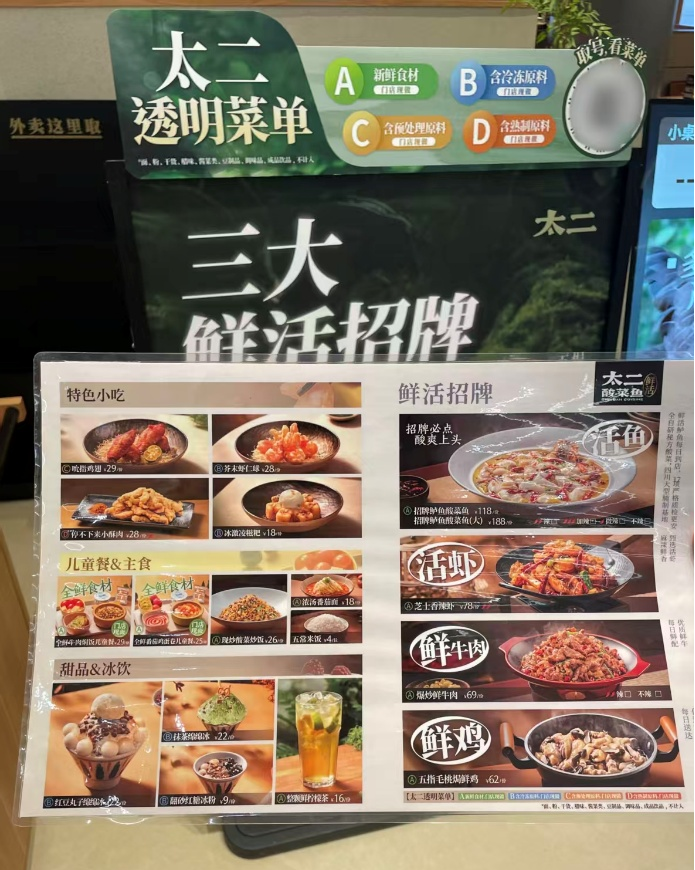
Core Insights - The article discusses the transformation of the restaurant industry in China, particularly focusing on the brand "Tai Er" and its commitment to transparency and freshness in food preparation [1][5][12] Group 1: Company Initiatives - Tai Er has launched a comprehensive menu transparency initiative, categorizing dishes based on ingredient freshness and pre-processing levels into four classes, with Class A representing the freshest ingredients [1][4] - The brand's "5.0 Fresh Model" was initiated in March 2023, and by December 2025, Tai Er aims to have over 200 restaurants operating under this model, up from an initial target of 150 [5][12] - The company emphasizes that all dishes are 100% made in-house, with a visible kitchen setup allowing customers to observe the cooking process [5][10] Group 2: Industry Trends - The chain restaurant penetration rate in the dining industry has increased from 18% in 2021 to 23% in 2024, reflecting a growing consumer demand for freshness [3][7] - The Chinese dining market is projected to reach 5.5 trillion yuan in revenue by 2024, with a year-on-year growth rate of 5.3%, surpassing the growth of retail sales [7] - Consumer preferences are shifting towards a more cautious approach, valuing authentic experiences over mere affordability, with a significant increase in searches for "fresh" and "live" food options [7][8] Group 3: Operational Challenges - The implementation of the "Fresh Strategy" poses challenges for Tai Er, particularly in managing the supply chain for fresh ingredients, which requires high standards for cold chain logistics and inventory turnover [11][12] - The company has adopted a "batch killing" method for fish to balance efficiency and freshness, ensuring that customers do not experience long wait times while maintaining quality [10][12] - Despite the positive reception of upgraded stores, the increased costs associated with fresh ingredients have led to a decline in profit margins for new store formats [12]
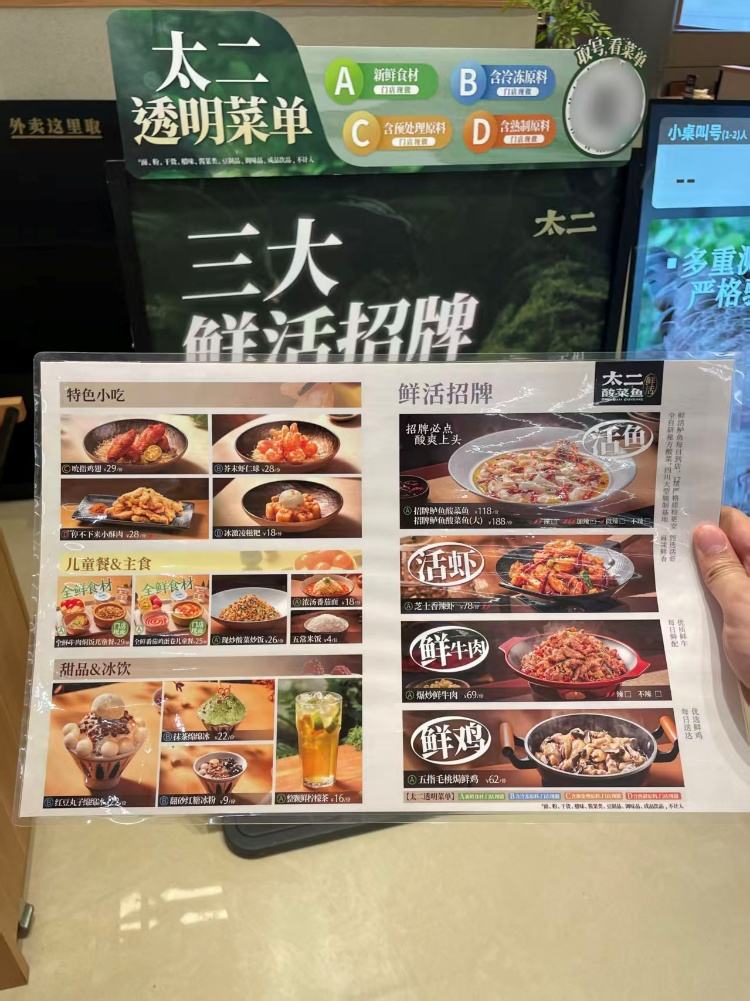
有餐企以新鲜度将菜品分“ABCD级”,餐饮透明化是趋势
Di Yi Cai Jing· 2025-12-18 10:26
Core Viewpoint - The recent focus on pre-prepared meals in China has prompted significant actions from both the government and restaurant brands to enhance transparency regarding food ingredients and preparation processes [1][4]. Group 1: Company Initiatives - Chain restaurant brand Tai Er has launched a full menu transparency classification system, categorizing dishes based on the freshness of ingredients [1]. - Tai Er's transparent menu divides dishes into four categories, with A class representing the freshest ingredients, including live fish and fresh vegetables, while B, C, and D classes indicate varying levels of processing [3]. - Fast food brand Lao Xiang Ji has implemented a similar system with a "three-color label" to indicate the processing level of dishes, enhancing consumer awareness [4]. Group 2: Industry Trends - The food industry analyst Zhu Danpeng emphasizes the need for a balance between taste and industrialization, as well as the importance of establishing national standards for pre-prepared meals [3]. - The State Council's Food Safety Office has recognized the growing public concern over pre-prepared meals and is working with various departments to expedite the formulation of national standards [4]. - The push for transparency in the restaurant industry is driven by consumer demand for fresh ingredients and visible processes, alongside regulatory pressures [4].

明厨亮灶2.0:从监管要求走向经营利器的餐饮行业新范式
Zhong Guo Jing Ji Wang· 2025-11-18 05:34
Core Viewpoint - The "Bright Kitchen, Bright Stove" initiative is evolving from a food safety measure into a crucial digital governance tool for the restaurant industry, significantly reshaping operational logic, brand structure, and competitive dynamics in the sector [1][4]. Group 1: Regulatory and Technological Developments - The Chinese government is enhancing food safety regulations through laws like the Food Safety Law and the implementation of "Internet + Supervision" and "Smart Food Safety" initiatives, aiming for a modern regulatory system that is traceable and quantifiable [1]. - The introduction of "Bright Kitchen, Bright Stove 2.0" is a response to the growing demand for transparency in food processing, moving beyond mere regulatory compliance to become a new brand asset [1][4]. - AI technology is transforming the traditional monitoring of food safety, allowing for automated inspections that significantly reduce management costs and improve confidence in food safety systems [2][4]. Group 2: Consumer Behavior and Market Dynamics - There is a notable shift in consumer preferences towards transparency in food preparation, with visible hygiene and cooking processes becoming key factors influencing purchasing decisions [1][3]. - The integration of "Bright Kitchen, Bright Stove" has led to increased consumer trust and higher sales for businesses that showcase their cooking processes, as evidenced by a 28% increase in orders and a 19% rise in repeat purchases for brands utilizing this transparency [3]. - The collaboration between platforms like Taobao Flash Purchase and various tech companies aims to provide restaurants with the necessary tools and support to adopt this transparency model, linking it directly to traffic, reputation, and exposure [3][4]. Group 3: Industry Governance and Future Implications - The shift from traditional regulatory methods to a collaborative governance model, where consumers participate in oversight, is enhancing food safety management and reducing public relations risks for businesses [4]. - The competitive landscape in the restaurant industry is changing, with transparency becoming a critical differentiator; businesses that maintain high hygiene standards and are open to public scrutiny are likely to thrive [4][5]. - The "Bright Kitchen, Bright Stove 2.0" initiative is positioned as a key driver for the restaurant industry's quality upgrade, aligning with national goals for consumer confidence, food safety, and digital governance [5].
后厨热播传递看得见的真诚
Jing Ji Ri Bao· 2025-09-24 00:06
Core Viewpoint - The rise of kitchen live streaming in the restaurant industry reflects a shift towards transparency and consumer trust, addressing concerns over food safety and quality [1][2] Group 1: Kitchen Live Streaming - A significant number of restaurants have adopted kitchen live streaming, attracting over 5 million viewers on platforms like Douyin, with some streams having up to 90,000 simultaneous viewers [1] - Kitchen live streaming breaks down information barriers, allowing consumers to see the entire cooking process, which enhances trust between consumers and restaurants [1] - This approach serves as a low-cost, high-efficiency strategy for restaurants, particularly for lesser-known establishments, to build reputation and drive sales through visible sincerity [1] Group 2: Consumer Demand and Industry Trends - Consumer expectations have evolved beyond merely satisfying hunger; they now prioritize food safety and health, seeking transparency in the dining experience [2] - Restaurants are increasingly sharing information about ingredient sourcing and dish development, contributing to a more transparent and regulated industry [2] - The core principle of restaurant operations is highlighted as "sincerity," emphasizing that transparency and genuine engagement with consumers are essential for long-term success in the industry [2]
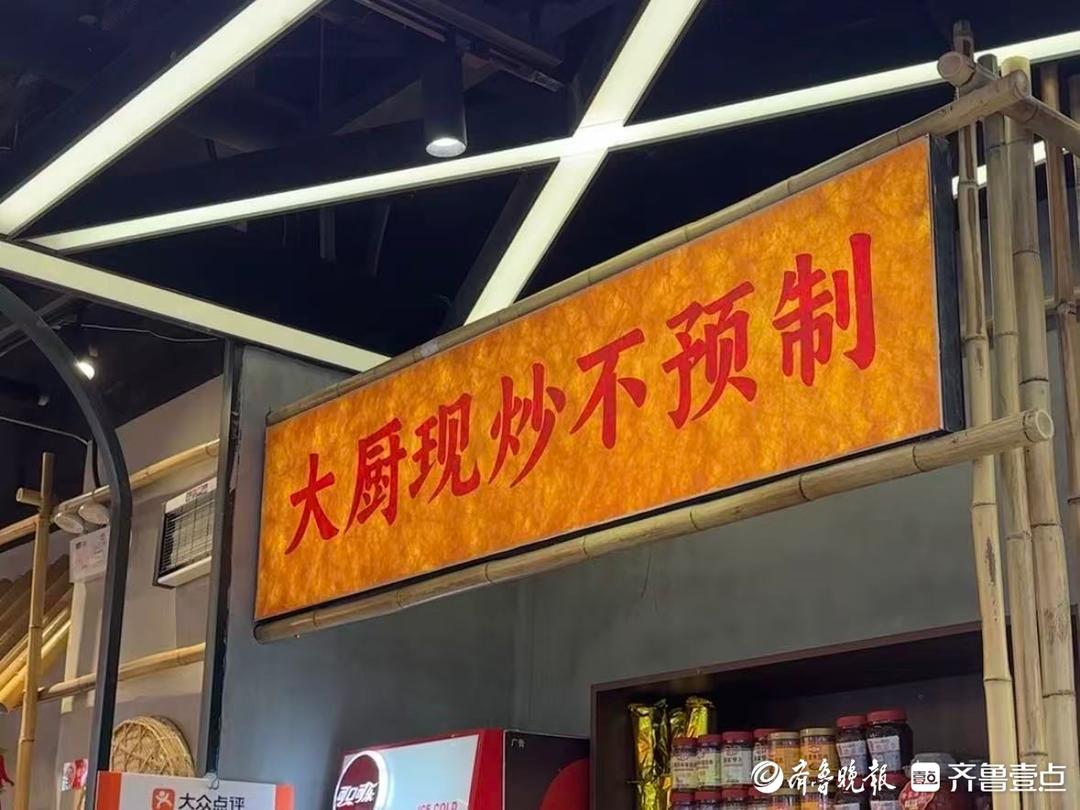
预制菜风波下,“大厨现炒”成济南不少餐企揽客新招
Qi Lu Wan Bao Wang· 2025-09-17 03:22
Core Viewpoint - The recent controversy surrounding pre-prepared dishes has sparked consumer demand for transparency in the restaurant industry, particularly in Jinan's dining scene [1][10]. Group 1: Consumer Behavior and Restaurant Response - Many restaurants in Jinan are emphasizing "freshly cooked" and "no pre-prepared dishes" as key selling points to attract customers [2][3]. - Some establishments have adopted open kitchen designs or live streaming of food preparation to reassure customers about the freshness of their meals [2][3]. - There is a noticeable increase in customer inquiries about the use of pre-prepared dishes, indicating heightened consumer awareness and concern [3][10]. Group 2: Pre-prepared Dishes Market Insights - The pre-prepared dishes market in China is projected to reach 485 billion yuan in 2024, with a year-on-year growth of 33.8%, and is expected to exceed 749 billion yuan by 2026 [10]. - The definition of pre-prepared dishes has been clarified by regulatory authorities, stating that they should not contain preservatives and do not include staple foods or ready-to-eat salads [10][12]. - The industry is seeing a trend where larger chains establish centralized kitchens to streamline food preparation, which may blur the lines of what constitutes a pre-prepared dish [9][12]. Group 3: Quality and Transparency in Pre-prepared Dishes - There is a misconception among consumers that pre-prepared dishes equate to low quality, which has led to a trust crisis in the industry [12]. - Industry experts suggest that pre-prepared dishes can maintain high quality if transparency in food processing and ingredient sourcing is prioritized [12][13]. - Recommendations for improving the pre-prepared dishes sector include establishing strict temperature control during transportation and standardizing processing procedures at restaurants [13].
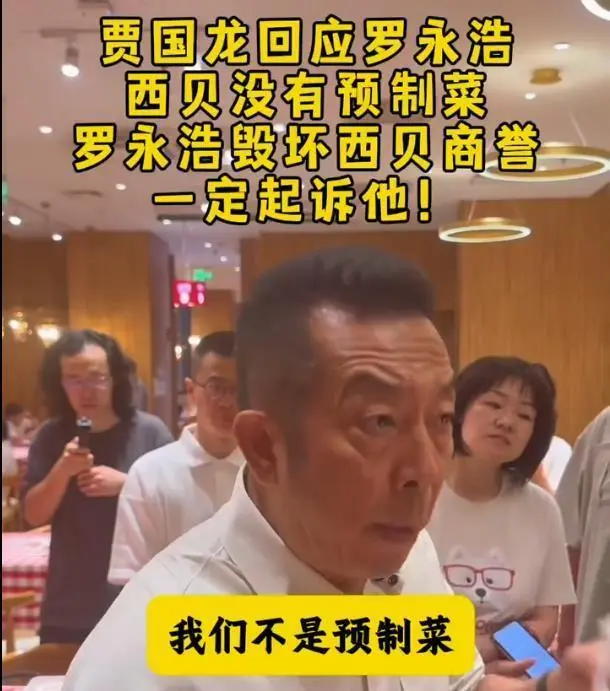
闹大了:罗永浩悬赏10万元征集证据,贾国龙:气到半夜睡不着喝酒,开放后厨所有人可随时进入参观;于东来、华与华董事长发声
3 6 Ke· 2025-09-12 07:35
Core Viewpoint - The core controversy revolves around the allegations made by public figure Luo Yonghao regarding the use of pre-prepared dishes at Xibei, which the founder, Jia Guolong, vehemently denies, asserting that all dishes are freshly made and not pre-prepared [3][12][14]. Group 1: Company Response - Jia Guolong expressed his frustration over Luo Yonghao's comments, stating that Xibei has not used pre-prepared dishes since the beginning of this year, emphasizing a clear distinction between pre-prepared and pre-cooked dishes [12][14]. - Starting September 12, Xibei will allow customers to view the kitchen and the preparation process, aiming to demonstrate transparency and authenticity in their food preparation [3][12]. - Jia Guolong publicly shared the bill from Luo Yonghao's visit, which totaled 833 yuan for 14 dishes, to counter the claims of poor quality and high prices [7][10]. Group 2: Industry Context - The debate highlights a broader issue within the restaurant industry regarding the use of pre-prepared dishes, with Jia acknowledging that while Xibei does not use them, he sees pre-prepared dishes as a future trend in the industry due to their efficiency and safety benefits [15]. - The incident has sparked discussions about the need for clearer industry standards and regulations regarding pre-prepared food, indicating a gap in current practices that needs to be addressed [15][16]. - Jia Guolong mentioned that Xibei's average profit margin is below 5%, countering the perception that their prices are excessively high, and positioning their pricing strategy as fair and quality-driven [14].

罗永浩悬赏10万元征集证据,贾国龙:气到半夜睡不着喝酒!于东来、华与华董事长发声
Mei Ri Jing Ji Xin Wen· 2025-09-12 06:31
Core Viewpoint - The dispute between Xi Bei and Luo Yonghao centers around the use of pre-prepared dishes in Xi Bei's restaurants, with Xi Bei's founder, Jia Guolong, vehemently denying the claims and emphasizing transparency in their food preparation process [1][4][14]. Group 1: Company Response - Jia Guolong announced that starting September 12, all 370 Xi Bei locations will publicly display the menu ordered by Luo Yonghao and allow customers to inspect the kitchen to verify the absence of pre-prepared dishes [3][4]. - Jia expressed his frustration over Luo's comments, stating that they significantly harm Xi Bei's reputation and that he is considering legal action against Luo for defamation [8][11]. - Xi Bei has previously sold pre-prepared dishes but has eliminated them entirely this year based on consumer feedback [17][18]. Group 2: Industry Context - The controversy highlights a broader industry issue regarding the standards and transparency of food preparation, with Jia acknowledging that the pre-prepared dish sector is a growing trend but emphasizing the need for regulation and quality control [18]. - Jia believes that pre-prepared dishes can enhance efficiency and food safety, suggesting that the industry must evolve responsibly to meet consumer expectations [18]. - The incident has sparked discussions about the pricing strategies in the restaurant industry, with Jia defending Xi Bei's pricing as fair, citing an average profit margin of no more than 5% in the first half of the year [17].