
红烧肉

Search documents
小菜园(00999):——小菜园0999.HK 2025年年报点评:以价换量促增长,26年冲刺千店
EBSCN· 2026-03-27 12:47
Investment Rating - The report maintains a rating of "Accumulate" for the company [1] Core Insights - The company achieved a revenue of 5.35 billion yuan in 2025, representing a year-on-year increase of 2.6%, while the net profit attributable to shareholders was 720 million yuan, up 23.2% year-on-year [4][5] - The company is focusing on expanding its store network, with a total of 807 stores by the end of 2025, an increase of 140 stores year-on-year [5] - The company is implementing a strategy of "price for volume," adjusting prices of key dishes to stimulate customer traffic, resulting in a decrease in same-store sales by 9.4% [5][6] - The company is enhancing its supply chain efficiency and operational capabilities, with plans to reach approximately 1,000 stores by the end of 2026 [7] Financial Performance - The company's cost structure has improved, with the cost of raw materials and consumables accounting for 29.6% of revenue, down 2.3 percentage points year-on-year [6] - The net profit margin for 2025 was 13.4%, an increase of 2.2 percentage points year-on-year, supported by effective cost optimization [6] - The company plans to maintain a high dividend payout ratio, with a proposed final dividend of 0.2125 yuan per share, resulting in an annual payout ratio of 69.8% [6] Future Projections - The net profit forecasts for 2026 and 2027 have been revised down to 622 million yuan and 731 million yuan, respectively, due to significant price reductions [8] - The projected earnings per share (EPS) for 2026, 2027, and 2028 are 0.53 yuan, 0.62 yuan, and 0.70 yuan, respectively [8] - The company is positioned as a leading brand in the affordable dining sector, aligning with current consumer trends for quality and price [8]
小菜园20260325
2026-03-26 13:20
Company and Industry Summary Company Overview - The company is planning to expand to 1,000 stores by 2026, utilizing a dual strategy of deepening existing advantageous regions and expanding into emerging markets such as Shandong and Henan [2][3] Key Points Expansion Strategy - The company aims to deepen its presence in existing regions while expanding into new markets, specifically targeting county-level cities [2][3] - The performance in newly entered markets like Shandong and Henan has been strong, with average daily profits per store increasing by approximately 10% in 2025 [4] Financial Performance and Projections - For 2026, the company expects revenue to grow in low single digits year-over-year, with net profit margins maintained between 10% and 12% [3][8] - The average breakeven period for new stores is about one month, with an investment payback period of approximately 12 months, significantly better than the industry average [2][4] Supply Chain and Digitalization - The Ma'anshan central factory is expected to start production in the first half of 2026, enabling full-chain digital management [2][4] - The company plans to establish 50-60 front warehouses to ensure delivery within three hours to support daily store operations [2][5] Business Structure Optimization - The company is implementing a "quality takeout" strategy, aiming to keep the takeout proportion during peak hours below 30% [2][5] - The "88 VIP" membership program has over 410,000 paid members with a 40% repurchase rate, with a target to reach 1 million members and a 60% repurchase rate within a year [2][5] Pricing Strategy - The average customer price is currently 56.1 yuan, down 5.2% year-over-year, as part of a strategy to enhance value for customers [6][8] - The company plans to adjust prices of certain signature dishes to improve cost-effectiveness and customer loyalty [3][8] Technological Integration - Over 30% of stores are using cooking robots, with plans to expand this to all stores, achieving over 60% SKU standardization [6] - The KDS system is being rolled out to enhance operational efficiency, with a goal for full coverage by May 2026 [6] Dividend Policy - The company commits to a dividend payout ratio of no less than 50% for 2026, with two dividend distributions planned [7][8] Market Outlook - The company believes the restaurant industry is a growth sector, with current challenges stemming from changing consumer demands rather than industry issues [9] - The company is adapting to market changes by focusing on high-quality, cost-effective offerings and plans to enhance its supply chain through strategic partnerships [12] External Factors - The company is confident in managing raw material costs, having secured fixed supply agreements for key ingredients, thus mitigating potential market price fluctuations [12] Conclusion - The company is strategically positioned for growth through expansion, technological integration, and a focus on customer satisfaction, while maintaining a strong financial outlook and commitment to shareholder returns.
难忘连队春节会餐
Xin Lang Cai Jing· 2026-02-26 19:41
Core Viewpoint - The article reflects on the nostalgic celebration of the Spring Festival in a military farm setting, highlighting the communal dining experience and the joy of traditional food during this festive period [1][2][3][4]. Group 1: Celebration and Community - The military farm hosts a festive gathering for employees during the Spring Festival, featuring a variety of traditional dishes such as rice and braised meat, with special treats like lamb, beef, chicken, and fish available in good years [1][2]. - The atmosphere is lively as the community engages in the preparation of a feast, including the slaughtering of pigs raised by the farm, which adds to the excitement of the celebration [2][3]. - The event fosters a sense of unity among employees, as they come together to enjoy the meal and share in the festivities, enhancing morale and camaraderie within the team [3][4]. Group 2: Culinary Experience - The dining experience includes a wide array of dishes, with employees enjoying meats that are typically not part of their regular diet, such as lamb, beef, and various pork dishes [3][4]. - The event is marked by a festive atmosphere, with sounds of laughter, cheers, and clinking glasses, creating a joyful environment that resonates throughout the snowy landscape [4]. - The tradition of communal dining not only serves to celebrate the holiday but also strengthens the bonds among employees and acknowledges the support of their families [4].
准能集团:在后勤食堂传递家的味道
Xin Hua Cai Jing· 2026-02-17 10:53
Core Viewpoint - The article highlights the efforts of a company to provide warm and satisfying meals for employees working during the Spring Festival, emphasizing the importance of creating a home-like atmosphere for those who cannot return home during the holiday season [1][2][4]. Group 1: Meal Preparation and Offerings - The logistics team at the company meticulously planned meal offerings based on employee preferences, ensuring a variety of dishes including meat, fish, dumplings, and fruits, to create a festive dining experience [2][3]. - The food preparation involved a significant increase in workload during the Spring Festival, with staff dedicated to ensuring that every meal was satisfying and met the needs of the employees [3][4]. Group 2: Employee Experience and Sentiment - Employees expressed gratitude for the quality and variety of meals provided, noting that the free meals contributed to a sense of warmth and community, making them feel valued during the holiday [2][3]. - The company’s efforts to provide hearty meals not only fulfilled nutritional needs but also fostered a sense of belonging and motivation among employees, encouraging them to perform well in their respective roles [4].
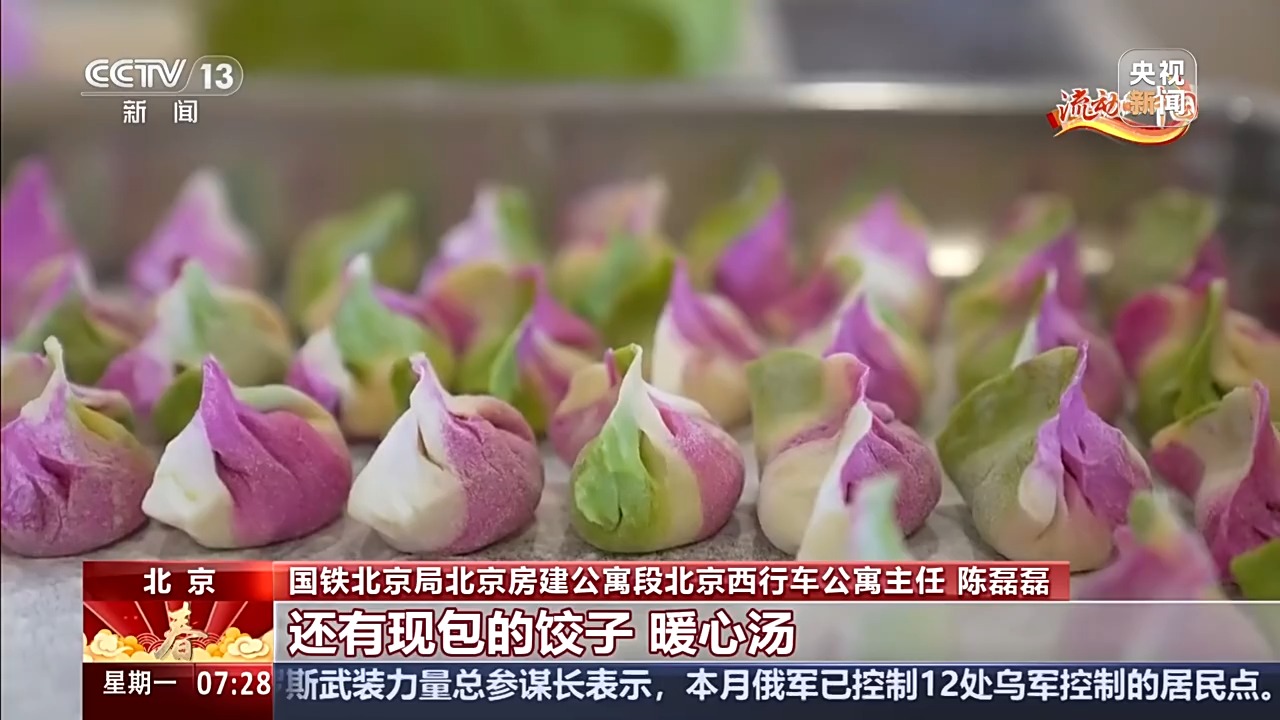
麻婆豆腐、酸菜鱼、红烧大排……在列车上也能品尝“家的味道”!
Xin Lang Cai Jing· 2026-02-16 02:33
Core Viewpoint - The article highlights the efforts of the railway departments in China to provide nutritious and culturally relevant meals for train crews and passengers during the Spring Festival travel rush, enhancing the travel experience with a taste of home. Group 1: Meal Preparation and Offerings - The Beijing West Train Service provides meal support for crews from fourteen railway bureaus, featuring dishes like crispy chicken legs and braised pork [1] - The meal preparation considers the diverse tastes of crew members from different regions and emphasizes nutritional balance, introducing over ten new hot dishes this year [3] - All meals are freshly prepared and sold on-site, with a strict two-hour shelf life for each boxed meal to ensure freshness [5] Group 2: Customized Meal Plans - The railway department implements a tailored approach with "one line, one plan; one train, one menu," offering 31 different meal varieties on multiple high-speed rail lines, presented in festive "China Red" packaging [7] - The culinary team on trains from Harbin West to Chongqing North incorporates local flavors, using regional spices to create dishes like Mapo Tofu and Water-Boiled Meat Slices, catering to travelers from Sichuan and Chongqing [9] - Special meal options include a "Family Reunion Package" featuring fish dishes symbolizing abundance and a "Couple's Package" combining local specialties with lighter fare, ensuring a personalized dining experience for all passengers [11]

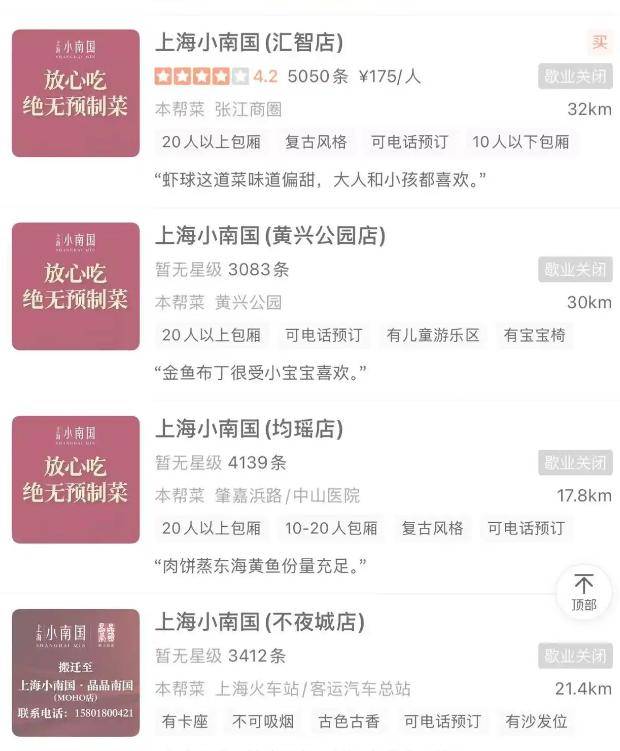
上海小南国曾年入20亿,如今十多家门店倒闭,消费者储存卡损失
Sou Hu Cai Jing· 2026-02-16 01:18
Core Viewpoint - The article discusses the sudden closure of the iconic Shanghai restaurant "Xiao Nan Guo," which had been a staple of local dining culture for over 40 years, highlighting its decline due to changing consumer preferences and the rise of pre-packaged food options [1][9]. Group 1: Company Background - Xiao Nan Guo was not just a restaurant but a cultural symbol for old Shanghai residents, known for its authentic local cuisine and the ambiance that resonated with the city's heritage [3][7]. - At its peak, the restaurant was extremely popular, with daily sales reaching up to 200,000 yuan, despite the average monthly salary in Shanghai being only 1,000 to 2,000 yuan [8]. Group 2: Business Evolution - The restaurant expanded beyond its original offerings, venturing into various sub-brands and cuisines, which led to a dilution of its core identity and essence [10][12]. - In January 2023, Xiao Nan Guo announced the sale of its Hong Kong restaurant group for just $100,000, which represented over 70% of its total revenue, indicating significant financial distress [10][12]. Group 3: Market Changes - The dining preferences of younger generations have shifted dramatically, favoring convenience and casual dining over the formalities that characterized previous dining experiences [12][14]. - The decline of traditional dining establishments like Xiao Nan Guo reflects broader changes in consumer behavior and the impact of modern technology on dining habits, such as the prevalence of food delivery services [12][14]. Group 4: Cultural Significance - Xiao Nan Guo's closure marks the end of an era, symbolizing the transition from traditional dining values to contemporary lifestyles, where the emphasis is on comfort and efficiency rather than formality [16][17]. - The restaurant's legacy is intertwined with the memories of Shanghai's past, serving as a witness to the city's evolution over the decades [16].
小南国闭店欠薪陷困境,重开新店能否自救
Sou Hu Cai Jing· 2026-02-12 01:33
Core Viewpoint - The decline of Shanghai Xiaonan Guo, a well-known local restaurant brand, is attributed to its inability to adapt to market changes and a lack of depth in its competitive strategy, leading to significant financial losses and operational challenges [1][10][11]. Company Overview - Founded nearly 40 years ago, Shanghai Xiaonan Guo once operated over 80 locations and generated annual revenues exceeding 2 billion yuan [1][5]. - The brand was a prominent player in the mid-to-high-end dining market, comparable to competitors like Qiao Jiang Nan and Xiang E Qing [1][5]. - The company went public in July 2012, becoming known as the "first Chinese restaurant stock" [5]. Financial Performance - Revenue declined from 2 billion yuan in 2015 to 314 million yuan in 2024, with cumulative losses of approximately 765 million yuan from 2018 to 2024 [5][6]. - In the first half of 2025, the company reported revenues of 102 million yuan and a loss of 18.24 million yuan, with a debt-to-asset ratio of 251.31%, indicating severe financial distress [5][6]. Business Model and Strategy - The company's heavy reliance on a traditional business model focused on banquet and gathering dining experiences has become a liability, especially post-pandemic [7][11]. - Despite attempts to diversify through multiple brands, including Nan Xiaoguan and Hui Gongguan, the company struggled to penetrate the mass dining market effectively [5][11]. - The shift in consumer behavior towards more affordable dining options has further exacerbated the company's challenges [8][11]. Recent Developments - In early 2025, Gu Tongshan returned as chairman with hopes of revitalizing the brand, but the company faced significant operational setbacks, including the closure of over 10 restaurants and employee wage disputes [3][4][7]. - The company plans to open new restaurants under different brands to attract diverse customer segments, but the effectiveness of these initiatives remains uncertain [9][11].
小菜园20260120
2026-01-21 02:57
Summary of the Conference Call for Xiaocaiyuan Company Overview - **Company**: Xiaocaiyuan - **Industry**: Restaurant and Food Service Key Points Business Adjustments and Performance - Xiaocaiyuan adjusted its takeaway policy, leading to a decrease in takeaway orders from 39% to 30%-35%, while increasing average revenue per takeaway order to over 70 yuan from around 60 yuan [2][4] - In-store dining was stimulated through cash vouchers and price reductions, resulting in a customer traffic growth rate exceeding store growth rate during the New Year period [2][5] - The company plans to expand into more lower-tier markets, with a long-term goal of reaching 3,000 stores [2][6] Financial Performance - As of December 31, 2025, Xiaocaiyuan exceeded its target by opening over 810 stores, with a gross margin of 70.5% and a net profit margin of 14.1% in the first half of 2025, indicating strong financial health [3] - The impact of price reductions on gross margin and net profit is limited, with an estimated difference of 1-2 yuan per order [2][7] Market Performance - The northern regions, such as Shandong and Beijing, outperformed southern regions like Guangdong, attributed to local market demand and company strategies [6] - Initial data from December price adjustments on key dishes showed positive effects on customer traffic, with plans for further price strategy adjustments based on market conditions [6][7] Expansion Plans - Xiaocaiyuan aims to reach 1,000 stores by the end of 2026, with plans to open 200 new stores in that year, having already opened 15 in January [2][9][10] - The company employs a dual strategy of expanding into new regions while densifying existing ones, with a focus on areas like Jiangsu [10] Supply Chain and Operational Efficiency - The Ma'anshan central kitchen is expected to begin trial operations before the 2026 Spring Festival, with full operations starting in mid-2026, allowing for capacity adjustments based on store needs [11] - The company has a fully sourced supply chain and collaborates with partners like Yihai Kerry and Jinlongyu, while also maintaining its own cold chain delivery team [4][14] Technology and Automation - Over 250 stores are equipped with cooking robots, which account for about 30% of the dishes offered, with plans to increase this to 60% after the Ma'anshan factory is operational [15] Marketing and Customer Engagement - The company will continue to invest in high-speed rail advertising and increase online promotions through platforms like Douyin and Xiaohongshu, aiming to enhance in-store dining [17] - A membership program priced at 88 yuan will be introduced to attract more customers [17] Employee Management and Development - Xiaocaiyuan has implemented a tiered management system to enhance employee career development, with significant income potential for high-performing managers [26] - The company plans to introduce flexible staffing models to improve labor efficiency [19][24] Future Outlook - The company is focused on maintaining a competitive edge in the mid-range dining market, with a target average customer price of around 55 yuan after recent adjustments [23] - Xiaocaiyuan's strategy includes a strong emphasis on family dining experiences, which are expected to drive higher frequency of visits compared to fast food [23] Conclusion - Xiaocaiyuan is positioned for growth with a robust expansion strategy, strong financial performance, and a focus on operational efficiency and customer engagement, while navigating market challenges and opportunities in the restaurant industry.
西贝将关102家店,你抵制的餐厅预制菜,为啥成年夜饭刚需?
3 6 Ke· 2026-01-16 03:23
Group 1 - The core point of the article is that Xibei Restaurant is closing 102 stores due to a significant decline in business, attributed to the pre-made food controversy and poor public relations [1][3] - Xibei's founder, Jia Guolong, reported a 50% year-on-year decline in business as of January 2026 [1] - The pre-made food controversy has affected multiple companies, including He Fu Lao Mian, which once had a valuation of 7 billion yuan but is now struggling with consumer trust [3] Group 2 - The pre-made food market is experiencing significant growth, with sales expected to approach 1 trillion yuan before the 2026 Spring Festival, and a 180% year-on-year increase in pre-made food sales for New Year's Eve dinners [3][4] - Consumers are increasingly accepting pre-made food in various settings, with over 54% of families opting for a "pre-made + self-cooked" model [3] - The demand for healthier and more transparent food options is rising, with consumers focusing on ingredient lists and health indicators such as low salt and no preservatives [7][9] Group 3 - The consumption of pre-made food in supermarkets is driven by convenience and clear pricing, with consumers willing to pay for the time saved [19] - In contrast, restaurant-goers expect a dining experience that includes freshly prepared meals, leading to dissatisfaction when pre-made food is served at high prices [21][22] - The lack of transparency regarding the sourcing and preparation of pre-made food in restaurants contributes to consumer distrust, as seen in the case of Xibei [22][23]
顿顿不离红烧肉 体重超200斤小伙突发脑疝
Xin Lang Cai Jing· 2026-01-11 18:12
Core Viewpoint - A 28-year-old patient, weighing over 200 pounds, was successfully treated for acute cerebral hemorrhage at Nanjing Medical University Second Affiliated Hospital, highlighting the importance of timely medical intervention and the risks associated with obesity and unhealthy lifestyle choices [1][2]. Group 1: Patient Case Details - The patient experienced severe symptoms including intense headache, nausea, and loss of motor function after a night of heavy eating and drinking [1]. - Initial CT scans revealed over 50ml of bleeding in the basal ganglia, leading to life-threatening brain herniation [1]. - The emergency department activated a green channel for urgent transfer to neurosurgery due to the critical condition of the patient [1]. Group 2: Medical Intervention - The neurosurgery team, led by Director Guan Jingyu, identified dangerously high blood pressure at 200/110 mmHg and the need for immediate surgery to remove the hematoma [2]. - The patient's obesity posed significant challenges for the surgical procedure, including difficulties with intubation and increased risks of postoperative complications [2]. - A personalized surgical plan was developed, and after over two hours of surgery, the hematoma was successfully removed, alleviating the brain herniation [2]. Group 3: Patient Recovery and Lifestyle Changes - Post-surgery, the patient quickly regained consciousness and was moved to a regular ward for rehabilitation [2]. - The patient expressed regret over neglecting health indicators like blood pressure and maintaining a poor diet, vowing to adopt a healthier lifestyle moving forward [2].