
AI聊天机器人

Search documents
Anthropic首次在“超级碗”打广告
Xin Lang Cai Jing· 2026-02-04 12:50
Core Viewpoint - The marketing battle surrounding AI chatbots has intensified, highlighted by Anthropic's first advertisement during the Super Bowl, targeting competitor OpenAI [1] Group 1: Advertising Expenditure - Tech companies, including Anthropic, Google, Microsoft, OpenAI, and Perplexity, spent a total of $333.6 million on broadcast television advertising for their AI products in the U.S. last year, representing a 43% year-over-year increase [1] - Digital advertising spending more than doubled, reaching $426 million [1] Group 2: Super Bowl Advertising Costs - The cost for a 30-second Super Bowl advertisement slot exceeds $8 million for many companies this year [1] - This figure does not include the additional tens of millions typically spent by brands on ad production [1]
北水动向|北水成交净买入91.78亿 北水加仓科网股及港股ETF 抢筹腾讯(00700)超19亿港元
智通财经网· 2026-01-07 10:04
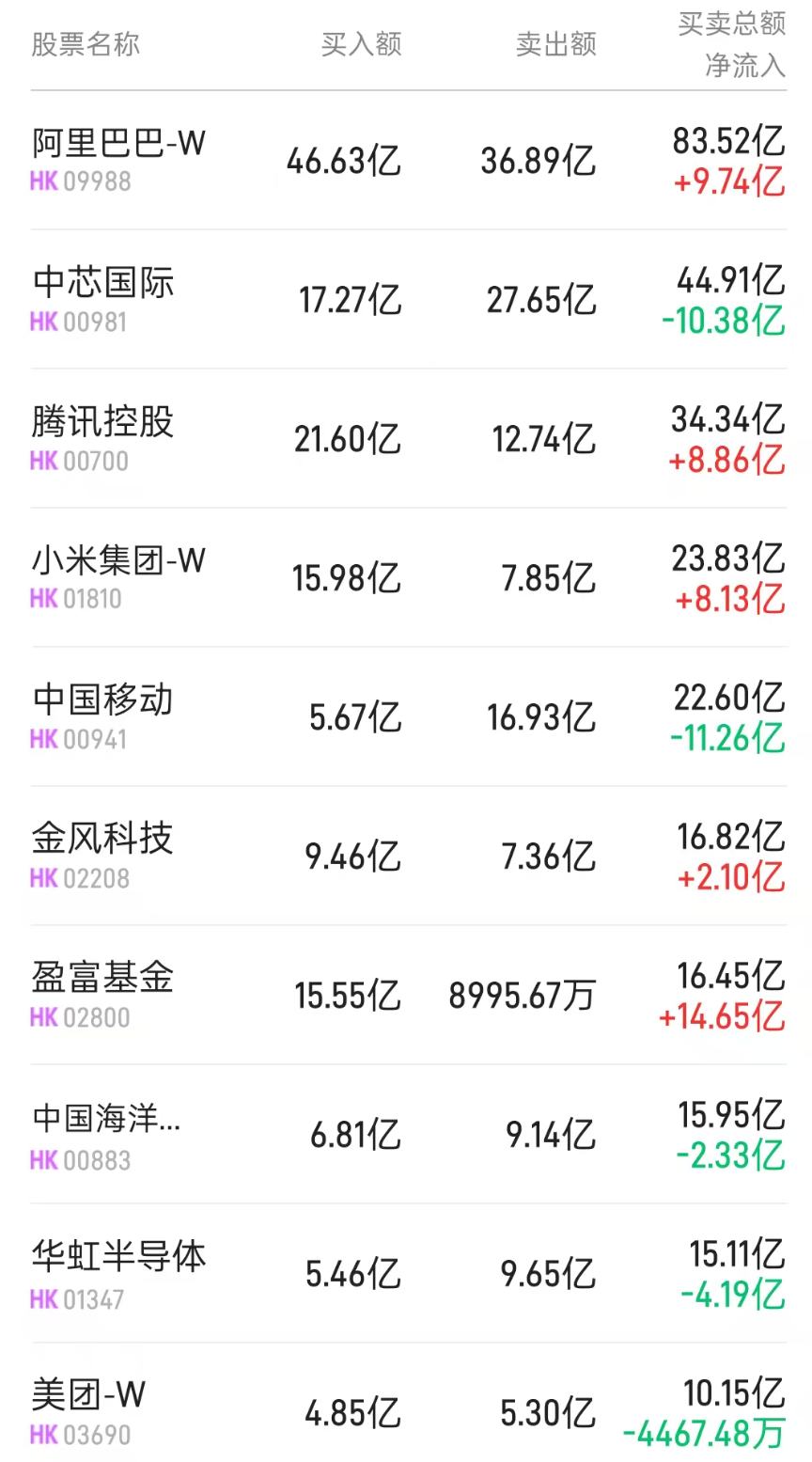
Group 1 - The Hong Kong stock market saw a net inflow of 9.178 billion HKD from northbound trading on January 7, with the Shanghai-Hong Kong Stock Connect contributing 3.49 billion HKD and the Shenzhen-Hong Kong Stock Connect contributing 5.688 billion HKD [1] - The most bought stocks included Tencent (00700), Xiaomi Group-W (01810), and the Tracker Fund of Hong Kong (02800), while the most sold stocks were China Mobile (00941), SMIC (00981), and CNOOC (00883) [1][2] - Alibaba-W (09988) recorded a net inflow of 9.74 billion HKD, while SMIC (00981) experienced a net outflow of 10.38 billion HKD [2] Group 2 - Tencent (00700) received a net inflow of 8.86 billion HKD, while Xiaomi Group-W (01810) saw a net inflow of 8.13 billion HKD [2] - The report from Citigroup highlighted three key themes for the mainland internet industry by 2026: growth in recurring revenue from cloud infrastructure, competition among major internet companies for AI chatbot user traffic, and deployment of proprietary AI agents by vertical companies [4] - Xiaomi Group-W (01810) was notably bought with a net inflow of 16.32 billion HKD, as the CEO announced plans for the new generation of the Xiaomi SU7 to be launched in April [5] Group 3 - The Tracker Fund of Hong Kong (02800) and Hang Seng China Enterprises (02828) received net inflows of 14.65 billion HKD and 9.12 billion HKD, respectively [5] - Goldman Sachs maintained an "overweight" rating on Chinese A-shares and H-shares, citing attractive risk-reward ratios amid low investor positioning [5] - Goldwind Technology (02208) received a net inflow of 2.1 billion HKD, with potential positive catalysts linked to its stake in Blue Arrow Aerospace [6] Group 4 - China Life (02628) saw a net inflow of 4.16 billion HKD, while China Mobile (00941) and SMIC (00981) faced net outflows of 11.26 billion HKD and 10.7 billion HKD, respectively [7]






ETF盘前资讯|花旗首选腾讯、阿里为核心AI概念股!港股AI开年狂飙,港股互联网ETF(513770)5日狂揽超3亿元
Jin Rong Jie· 2026-01-07 02:01
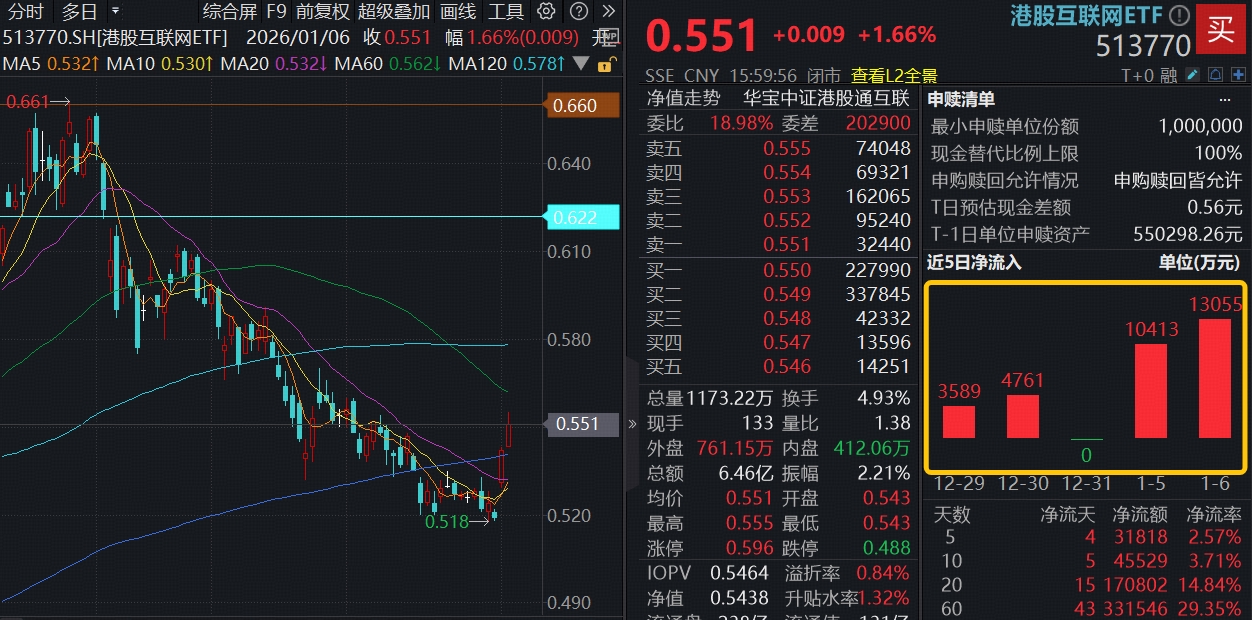
Core Insights - The report from Citigroup highlights three major themes for China's internet industry by 2026: growth in recurring revenue from cloud infrastructure, model stacks, and inference token usage; competition among major internet companies for user traffic in AI chatbots; and vertical companies deploying self-trained proprietary data AI agents to maintain competitive advantages and enhance user engagement and monetization potential [1] Group 1: Investment Opportunities - Citigroup identifies Tencent Holdings and Alibaba-W as core AI investment concept stocks, reflecting confidence in the leading companies' ability to implement AI and the capital market's reassessment of AI-driven industry value [1] - The Hong Kong stock market has seen a significant rise in AI-related stocks, with the Hong Kong Internet ETF (513770) increasing by 6.17% over two trading days at the start of 2026, and a net inflow of 1.31 billion yuan on the latest trading day, totaling 3.18 billion yuan over the past five days [1] Group 2: ETF Composition and Performance - The Hong Kong Internet ETF (513770) and its linked funds passively track the CSI Hong Kong Internet Index, heavily weighted towards Alibaba-W and Tencent Holdings, which together account for nearly 30% of the ETF [3] - The top ten holdings of the ETF focus on AI cloud computing, large models, and various AI applications, comprising over 78% of the total holdings, indicating a strong advantage for leading companies [3] Group 3: Market Valuation - As of the end of 2025, the CSI Hong Kong Internet Index has seen a cumulative decline of 18.55% since October, with a current price-to-earnings (P/E) ratio of 24.43, which is significantly lower than the 26.36% percentile over the past five years, indicating a valuation advantage compared to other indices like the ChiNext Index and Nasdaq 100 [4][5] - The leading internet companies in China are expected to benefit from increased foreign and domestic investment as AI applications deepen, potentially leading to an upward adjustment in long-term profit growth expectations and valuation improvements [5]
花旗首选腾讯、阿里为核心AI概念股!港股AI开年狂飙,港股互联网ETF(513770)5日狂揽超3亿元
Xin Lang Cai Jing· 2026-01-07 01:18
Group 1: Core Themes in China's Internet Industry - The Chinese internet industry will focus on three main themes in 2026: growth in recurring revenue from cloud infrastructure, model stacks, and inference token usage; competition among major internet companies for user traffic in AI chatbots; and vertical companies deploying self-trained proprietary data AI agents to maintain competitive advantages and enhance user engagement and monetization potential [1][9]. - Citigroup identifies Tencent Holdings and Alibaba-W as core AI investment concept stocks, reflecting confidence in the capital market regarding the value reassessment driven by AI in leading companies [1][9]. Group 2: Market Performance and Investment Trends - Since the beginning of 2026, the Hong Kong stock market has seen a significant rise in AI stocks, with the Hong Kong Internet ETF (513770) increasing by 6.17% over two trading days. There has been a net inflow of 131 million yuan on the latest trading day and a cumulative net inflow of 318 million yuan over the past five days [1][9]. - The Hong Kong Internet ETF (513770) and its linked funds passively track the CSI Hong Kong Internet Index, heavily weighted towards Alibaba-W and Tencent Holdings, which together account for nearly 30% of the ETF. The top ten holdings focus on AI cloud computing and applications, comprising over 78% of the portfolio [3][11]. Group 3: Valuation and Future Opportunities - As of the end of 2025, the CSI Hong Kong Internet Index has seen a cumulative decline of 18.55% since October, with a current price-to-earnings ratio (PE TTM) of 24.43, which is significantly lower than the valuations of the ChiNext Index and Nasdaq 100, indicating a value opportunity [4][12]. - Industry analysts suggest that leading internet companies in China are poised to benefit from a resurgence in both domestic and foreign investment, with the potential for upward adjustments in long-term profit growth expectations, leading to a "Davis Double" effect on valuations [5][12].
Meta(META.US)面临意大利反垄断压力,WhatsApp条款或被限制
智通财经网· 2025-12-24 11:28
Core Viewpoint - The Italian antitrust authority (AGCM) has ordered Meta Platforms (META.US) to suspend certain contractual terms that may exclude competitors' AI chatbots from WhatsApp, amid an investigation into potential abuse of market dominance [1] Group 1: Regulatory Actions - AGCM is investigating Meta for allegedly abusing its market power related to WhatsApp, with a focus on contract terms that may limit competition in the AI chatbot service market [1] - The investigation was initiated in July last year and expanded in November to include updated service terms of the messaging platform [1] - The European Union is also conducting a parallel investigation into similar allegations against Meta [1] Group 2: Company Response - A spokesperson for Meta described the AGCM's decision as fundamentally flawed and indicated that the emergence of AI chatbots has put unprecedented pressure on their systems [1] - Meta plans to appeal the decision made by the Italian regulatory authority [1] Group 3: Industry Context - The regulatory stance in Europe contrasts sharply with the more lenient approach in the United States, leading to resistance from the tech industry, particularly among American giants [2] - The Italian regulator is coordinating with the European Commission to address Meta's actions in the most effective manner [3]

孩子用AI聊天机器人或比社媒更危险?
Xin Lang Cai Jing· 2025-12-15 11:22
Core Viewpoint - The article discusses the potential dangers of children using AI chatbots, suggesting that they may pose greater risks than social media platforms [1] Group 1 - AI chatbots are increasingly being used by children, raising concerns about their safety and the impact on mental health [1] - The article highlights that the interactive nature of chatbots could lead to more significant risks compared to traditional social media [1] - Experts warn that children may not fully understand the implications of interacting with AI, which could lead to harmful situations [1]

深夜!利好,大涨!
中国基金报· 2025-12-04 16:12
Core Viewpoint - The article discusses the recent fluctuations in the US stock market, highlighting a significant rise in Meta's stock price due to anticipated budget cuts in its metaverse projects, which have been a source of investor skepticism and financial losses for the company [1][4][8]. Market Overview - On December 4, US stock indices showed slight fluctuations, with the Dow Jones remaining stable, while the Nasdaq and S&P 500 experienced minor declines of -0.09% and -0.05% respectively [2]. - Initial jobless claims in the US fell to 191,000, the lowest level in over three years, indicating that despite recent layoffs, companies are generally retaining employees [2][3]. - The labor market is showing signs of cooling, leading to expectations that the Federal Reserve may lower interest rates by 25 basis points in its upcoming meeting [3]. Meta's Stock Performance - Meta's stock surged nearly 4%, marking it as one of the standout performers in the market [4]. - The stock reached a high of $676.10, with a trading volume of approximately 17.3 million shares and a market capitalization of $1.68 trillion [6]. Budget Cuts in Metaverse Projects - CEO Mark Zuckerberg is reportedly planning to significantly reduce the budget for metaverse-related projects by up to 30%, which includes the Meta Horizon Worlds and Quest VR devices [8]. - This budget cut is part of the company's 2026 annual budget planning and reflects a shift in focus away from the metaverse, which has been criticized as a "money-burning black hole" [8][10]. - The Reality Labs department, responsible for the metaverse initiatives, has incurred losses exceeding $70 billion since early 2021, prompting calls from analysts for a reevaluation of resource allocation [10]. Strategic Shift - Zuckerberg has increasingly shifted focus from the metaverse to generative AI products and related hardware, indicating a strategic pivot in the company's long-term vision [10].

中国AI大战将在2026年“全面加剧”:“流量入口”成大厂“必争之地”,AI出海也将加速
硬AI· 2025-12-02 09:07
Core Viewpoint - The Chinese internet sector is expected to see a remarkable growth of 36.5% in 2025, but the real competition will unfold in 2026 around artificial intelligence (AI) [2][3] Group 1: 2026 AI Competition - The competition in the AI sector will focus on three main themes: AI cloud infrastructure, AI chatbots, and AI applications [6][7] - Major players like Alibaba, ByteDance, and Tencent are competing to capture user traffic through their AI chatbots, aiming to secure key monetization avenues in the AI era [3][7] Group 2: AI Cloud Infrastructure - Alibaba and Baidu are leading a capital race in AI cloud infrastructure, with Alibaba's capital expenditure reaching approximately 120 billion RMB over the past four quarters and planning to invest 380 billion RMB in the next three years [8] - Alibaba's cloud business revenue grew by 34% year-on-year in Q3 2025, while Baidu's AI cloud revenue also saw a 21% year-on-year increase, reaching 6.2 billion RMB [8] Group 3: AI Chatbot Competition - AI chatbots are defined as the "traffic entry point" in the AI era, with Alibaba, ByteDance, and Tencent heavily investing in this user acquisition battle [11] - ByteDance's chatbot "Doubao" leads the Chinese market with 197 million monthly active users (MAU) as of October 2025 [11] Group 4: Vertical AI Applications - Companies in vertical sectors like Meituan, Ctrip, and Didi are training their proprietary AI agents using exclusive data to enhance user engagement and explore new monetization opportunities [16] - Ctrip's AI travel assistant "TripGenie" saw its user base grow by over 200% year-on-year in the first half of 2025 [16] Group 5: Global Expansion of AI - Chinese AI applications are accelerating their global expansion, with ByteDance's products ranking among the top in global MAU [20] - As of November 2025, ByteDance's "Dola" and another Chinese product "DeepSeek" ranked fourth and fifth globally, with 47 million and 39 million MAU respectively [20] Group 6: Performance Review and Outlook - In Q3 2025, 27 out of 44 internet companies exceeded profit expectations, attributed to cost optimization and productivity gains from AI [26] - The gaming industry is expected to benefit from AI-driven efficiency improvements, with the average revenue per user (ARPU) rebounding to 41 RMB, a 13.3% year-on-year increase [27] - The tourism sector shows resilience, with tourism expenditure as a percentage of GDP at 4.3% in 2024, indicating growth potential [28]

花旗:中国AI大战将在2026年“全面加剧”,“流量入口”成大厂“必争之地”,AI出海也将加速
美股IPO· 2025-12-02 08:02
Core Viewpoint - The Chinese internet sector is expected to lead global returns with a remarkable 36.5% growth in 2025, but the real competition will unfold in 2026 around artificial intelligence (AI) [1][3] Group 1: AI Competition Themes - The competition in China's AI sector in 2026 will focus on three main themes: AI cloud infrastructure, AI chatbots, and AI applications [5] - Major players like Alibaba, ByteDance, and Tencent are vying for user traffic through their AI chatbots, aiming to secure key entry points for future ecosystem commercialization [3][5] Group 2: AI Cloud Infrastructure Investment - Alibaba and Baidu are leading a capital race in AI cloud infrastructure, with Alibaba's capital expenditure reaching approximately 120 billion RMB over the past four quarters and plans to invest 380 billion RMB over the next three years [6] - Alibaba's cloud business revenue grew by 34% year-on-year in Q3 2025, while Baidu's AI cloud revenue also saw a 21% year-on-year increase, reaching 6.2 billion RMB [6] Group 3: AI Chatbot User Acquisition - AI chatbots are defined as the "traffic entry point" of the AI era, with Alibaba, ByteDance, and Tencent heavily investing in user acquisition [9] - ByteDance's chatbot "Doubao" leads the Chinese market with 197 million monthly active users (MAU) as of October 2025 [9] Group 4: Vertical AI Applications - Companies in vertical sectors like Meituan, Ctrip, and Didi are training proprietary AI agents using their exclusive data to enhance user engagement and explore new monetization opportunities [13] - Ctrip's AI travel assistant "TripGenie" saw its user base grow by over 200% year-on-year in the first half of 2025 [13] Group 5: Global Expansion of AI Applications - Chinese AI applications are accelerating their global expansion, with ByteDance's products ranking fourth and fifth globally in MAU [15] - Combining Doubao's 197 million MAU in China with Dola's 47 million overseas users results in a total of approximately 250 million MAU, placing ByteDance's AI chat products third globally [15] Group 6: Performance Review and Future Outlook - In Q3 2025, 27 out of 44 internet companies exceeded profit expectations, attributed to cost optimization and productivity gains from AI [18] - The gaming industry is expected to benefit from AI-driven efficiency improvements, with the average revenue per user (ARPU) rebounding to 41 RMB, a 13.3% year-on-year increase [18] - The tourism sector shows resilience, with tourism spending as a percentage of GDP at 4.3% in 2024, indicating further growth potential [19]

1万亿美元薪酬方案引争议 马斯克与咨询公司展开“骂战”
Sou Hu Cai Jing· 2025-11-02 11:14
Group 1 - The core issue revolves around Elon Musk's $1 trillion compensation plan, which is set for a shareholder vote next week at Tesla. Several advisory firms, including Glass Lewis and ISS, have publicly opposed this substantial compensation proposal, leading to a public dispute between Musk and these firms [1] - Musk expressed discomfort regarding the potential impact of the advisory firms' recommendations on his leadership at Tesla, criticizing their understanding of the company's operations and contributions [1] Group 2 - Another point of contention is Musk's launch of a new encyclopedia website named Grokipedia, which is created by his AI chatbot Grok. Unlike Wikipedia, Grokipedia is not edited by human contributors, and Musk claims its purpose is to pursue truth and accuracy [1] - Observers have noted that Grokipedia exhibits clear biases, particularly in its portrayal of Musk, which tends to be overly favorable [1]
