
师范教育

Search documents
供需精准对接,闭环驱动改革 ——郑州师范学院体育教育人才培养构建实践导向新生态
Xin Lang Cai Jing· 2026-02-13 04:51
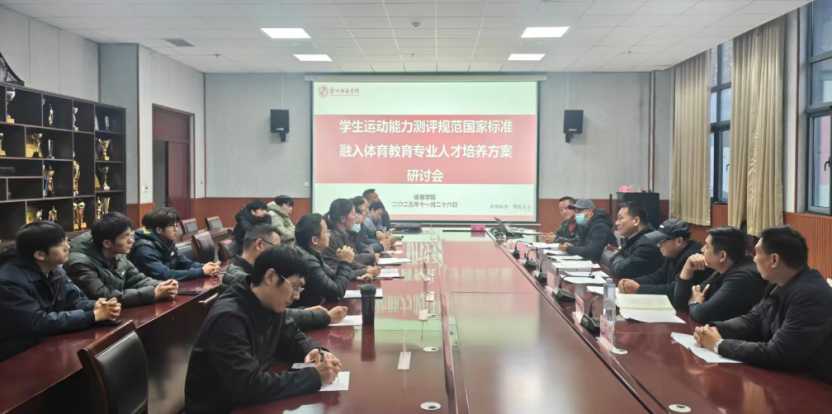
Core Viewpoint - Zhengzhou Normal University College of Physical Education is reforming teacher education by focusing on a demand-driven, evidence-based, and closed-loop improvement approach to enhance the alignment between physical education teacher training and societal needs [1] Group 1: Industry Research - The college has conducted extensive industry research as the starting point for talent training reform, organizing numerous seminars with education experts and frontline teachers to identify the needs for physical education teachers in the context of basic education reform [2] - Through systematic classroom observations, in-depth interviews, and surveys, the college has identified the essential qualities required for physical education teachers, emphasizing professional skills, curriculum design capabilities based on core competencies, differentiated teaching implementation, interdisciplinary learning planning, and the ability to utilize modern information technology for innovative teaching [4] Group 2: Educational Reform Project - Based on thorough research, the college is using a provincial-level educational reform project to shift talent training from an "experience-driven" approach to a "systematic construction" model, focusing on theoretical guidance and practical strategies [6] - The project aims to refine standards and develop evaluation tools to address issues identified in the research, including the need for a comprehensive quality evaluation system for physical education programs [6] - A collaborative education mechanism has been institutionalized, involving industry experts in course design, practical guidance, and teaching evaluation to ensure alignment between talent training and basic education reform [6] Group 3: Closed-loop Training System - The college has established a unique closed-loop training system that includes industry demand research, teaching problem diagnosis, educational reform project research, curriculum revision, teaching practice implementation, and evaluation of training outcomes [7] - The research outcomes from educational reform projects are directly integrated into the revised talent training programs, which are then tested through course teaching and practical internships [7] - The reform efforts have yielded significant results, contributing to the training of high-quality physical education teachers in Henan Province and creating a replicable quality assurance model for physical education teacher training [7]

多地严控教育类专业招生
第一财经· 2026-02-12 05:21
Core Viewpoint - The education industry is undergoing significant changes due to shifts in school-age population, prompting normal universities to accelerate their transformation and adjustment towards engineering disciplines [3][4]. Group 1: Institutional Changes - Anhui Normal University has established three new engineering colleges focused on smart information, advanced manufacturing, and artificial intelligence, aiming to create a seamless connection between education and industry [3]. - The university signed a strategic cooperation framework agreement with Chery Holding Group, indicating a commitment to integrate academic training with real-world applications in sectors like smart connected vehicles and new energy materials [3]. Group 2: Professional Structure Optimization - Many normal universities are rapidly developing new engineering talent training programs in response to national educational strategies, with a notable trend of adding multiple engineering disciplines [4][5]. - According to a report, nearly 25% of normal undergraduate institutions have added three or more engineering majors in the past three years, breaking traditional talent cultivation patterns [4][5]. Group 3: Emerging Fields and Trends - The newly added engineering majors predominantly include artificial intelligence, new energy materials, and robotics, which are characterized by strong interdisciplinary integration and alignment with current technological advancements [5]. - The reduction of teachers in kindergartens and primary schools has become evident, with a total decrease of 451,600 teachers in these sectors between 2023 and 2024 [5][6]. Group 4: Regional Adaptation and Development - Institutions like Hengyang Normal University have initiated programs to align with advanced manufacturing needs, marking a shift towards producing high-quality technical talent [6]. - Hunan Normal University has proposed a collaborative development model that integrates traditional teacher education with new professional fields, aiming to address regional talent shortages in various industries [6].
小学和幼儿园老师2年减少45万,2039年高等教育将深度洗牌
Di Yi Cai Jing· 2026-01-13 12:19
Group 1 - The changing population structure and the reduction of kindergarten and primary school teachers are significantly impacting teacher training institutions, leading to mergers and rebranding efforts among local normal universities to enhance their competitiveness [2] - Normal universities are diversifying their programs, with nearly 25% of normal undergraduate institutions adding three or more engineering majors in the past three years, focusing on fields like artificial intelligence and renewable energy [2] - The overall enrollment in higher education institutions is expected to be affected by the declining birth rate, with private colleges and vocational schools likely to face the most significant challenges [2] Group 2 - Some universities are already experiencing enrollment shortages, with ordinary undergraduate institutions struggling to fill spots even after multiple rounds of recruitment [3] - The peak of the higher education age population is projected for 2032, after which a significant decline is expected, potentially reducing the student base by over 41% compared to the peak in 2016 [3][4] - Experts predict that some affected universities may face closure due to the drastic changes in enrollment and competition in the education sector [5]
多校幼师专业大幅缩招,去年幼儿园教师减少超24万
第一财经· 2025-12-19 10:37
Core Viewpoint - The article discusses the significant impact of declining birth rates on the early childhood education sector in China, particularly focusing on the reduction in the number of kindergartens and qualified teachers [3][4]. Group 1: Changes in Early Childhood Education - The number of full-time kindergarten teachers in China decreased by 241,800 from 2022 to 2024, dropping from 3,244,200 to 2,831,900, marking a total decline of 412,300 over two years [4]. - The total number of kindergartens in China has also seen a continuous decline since 2022, with a reduction of 5,610 kindergartens in 2022 (1.9% decrease) and 14,808 in 2023 (5.12% decrease), resulting in a total loss of 41,569 kindergartens over three years [4]. Group 2: Future Trends and Adjustments - Despite the ongoing decline in birth rates, the rate of decrease is expected to slow down, with a projected increase of 520,000 in the birth population for 2024 compared to 2023, which may stabilize the number of kindergarten teachers and kindergartens in the future [5]. - Several teacher training colleges are adapting to these changes, with institutions like Hengyang Preschool Normal College establishing new departments to align with industry needs, such as setting up a Measurement and Automation Department to support advanced manufacturing [5][6]. Group 3: Institutional Responses - Ningbo Preschool Normal College has reduced its enrollment for five-year and three-year preschool education programs, aiming to eliminate the five-year program within three years and cut the three-year program enrollment by half, while also expanding into related fields like infant care and early education [6][7]. - Hunan Preschool Normal College is focusing on transforming its educational approach by developing new programs that cater to the entire lifecycle of child education and care, emphasizing the integration of digital transformation and industry needs [7].
幼师专业大幅缩招,去年幼儿园教师减少超24万
Di Yi Cai Jing· 2025-12-19 10:21
Group 1 - The number of kindergarten teachers in China has decreased by 241,800 in 2024, marking a continuous decline for two years, from 3,244,200 in 2022 to 2,831,900 in 2024, a reduction of 412,300 teachers [1] - The number of kindergartens in China has also seen a decline, with a total of 289,200 kindergartens in 2022, decreasing by 5,610, a drop of 1.9%, and further declining to 274,400 in 2023, a decrease of 14,808, or 5.12% [1] - The trend of decreasing kindergarten teachers and kindergartens is expected to slow down, as the decline in birth rates is showing signs of easing, with an increase of 520,000 births in 2024 compared to 2023 [2] Group 2 - Several teacher training colleges are accelerating their transformation in response to the declining demand for kindergarten teachers, with institutions like Hengyang Preschool Normal College establishing new departments to align with industry needs [2] - The Hengyang Preschool Normal College has initiated a transformation plan that includes establishing a metrology and automation department, aiming to train high-quality technical talents for the advanced manufacturing industry [3] - Ningbo Preschool Normal College has reduced its enrollment for five-year and three-year preschool education programs, aiming to phase out the former within three years and cut the latter by half, while expanding into related fields such as infant care and early education [3][4]
播种未来教育家:上海师范大学人文学院创新打造“教育家精神种子班”
Xin Lang Cai Jing· 2025-11-19 00:33
Core Points - The establishment of the "Seed Class of Educator Spirit" at Shanghai Normal University represents a significant step in the reform of the teacher training system, aiming to cultivate outstanding educators through innovative educational models [1][17] - The initiative emphasizes a collaborative approach between higher education institutions and primary/secondary schools to enhance teacher training and development [10][11] Group 1: Establishment and Objectives - The "Seed Class" was officially launched on November 12, 2025, as part of the university's mission to explore new paths for cultivating educators [1] - The program aims to break down barriers in teacher training and create a sustainable growth model for educators, transitioning from one-time training to continuous development [5][10] Group 2: Curriculum and Training Model - The training model focuses on nurturing the "spirit of educators" and integrating ideological education across different educational levels [8] - The program includes a five-dimensional mentorship system that combines academic, practical, and research guidance to support the growth of students in the "Seed Class" [11] Group 3: Collaboration with Schools - The university signed cooperation agreements with five quality primary and secondary schools to establish a unified training framework for pre-service and in-service teachers [10] - This collaboration aims to enhance the professional skills and educational philosophies of both pre-service teachers and current educators [10] Group 4: Student Engagement and Commitment - Students in the "Seed Class" expressed their commitment to the education profession through a collective poetry recitation and a solemn pledge to dedicate themselves to educational reform [13][15] - The event symbolized the unity of various stakeholders, including the university, schools, mentors, and students, in fostering a supportive educational community [15]
省政协委员王聪深耕育人沃土,助力海南基础教育优质均衡发展
Hai Nan Ri Bao· 2025-09-28 01:20
Core Viewpoint - The article highlights the efforts of Wang Cong, a member of the Provincial Political Consultative Conference and Dean of the College of Elementary Education at Hainan Normal University, in promoting high-quality and balanced development of basic education in Hainan Province [1][2]. Group 1: Educational Initiatives - The college has achieved significant results in subject construction, faculty development, and social service, with 85% of its graduates working in Hainan's basic education sector, and 60% in rural schools [1]. - The elementary education program became the first in the province to pass the Ministry of Education's teacher training certification, ranking 16th among 163 similar programs nationwide [1]. - The college has trained 3,000 teachers through various training projects for rural primary school teachers and township backbone teachers [1]. Group 2: Research and Development - Wang Cong's team has conducted extensive research on rural primary schools and regularly visits graduated public-funded teacher students to understand the educational realities [2]. - A "comprehensive 1+1+1" talent training model has been implemented to break down subject barriers in teacher training, focusing on developing students' comprehensive qualities and professional capabilities [2]. Group 3: Family Education Advocacy - Wang Cong emphasizes the importance of family education, recognizing it as a critical factor in children's growth and development [2]. - She has actively promoted family education awareness and provided parenting guidance services to many families [2]. - A proposal to establish a Family Education Research and Guidance Center in Hainan was submitted, aiming to address the lack of targeted family education services [2][3]. Group 4: Policy Impact - Wang Cong's feedback on the necessity of the College English Test (CET-4) for hiring English teachers in Hainan led to policy changes, allowing more talented individuals to participate in the recruitment process [3]. - The establishment of a Family Education Research and Guidance Platform has been initiated, focusing on theoretical innovation and knowledge dissemination in family education [3].
在传承与转型中寻找突围
Zhong Guo Qing Nian Bao· 2025-09-22 00:22
Core Insights - The landscape of early childhood education is undergoing significant restructuring due to shrinking teacher demand and intense competition among similar institutions [1][4] - Some institutions have successfully transformed their programs to adapt to market changes, such as introducing new majors and establishing training centers [1][2] - The emergence of new educational roles, like "education planners," reflects a shift towards integrated educational services that cater to diverse needs [2][3] Group 1: Institutional Adaptation - Changsha Preschool Normal College has pioneered a medical nutrition program, leading to high employment rates for graduates [1] - Ningbo Preschool Normal College has expanded its reach by establishing a training center for Southeast Asian teachers, indicating a strategic international focus [1] - Many schools are exploring self-transformation by aligning with local industries, although this path presents challenges, particularly in faculty expertise [3] Group 2: Educational Transformation - The education sector is witnessing a profound change, with a growing demand for professionals who possess cross-cultural educational skills [2] - The traditional roles of educators are evolving, necessitating a shift towards interdisciplinary service capabilities [2] - Institutions are encouraged to enhance their educational offerings and focus on cultivating high-quality talent in early childhood and primary education [4] Group 3: Policy and Support - Experts suggest that rather than blindly pursuing industry trends, schools should leverage their strengths to find viable paths for transformation [4] - There is a call for supportive policies from educational authorities to assist teachers in transitioning to new professional roles [4] - Collaboration among government, schools, and society is essential to preserve the core values of education while exploring new directions for sustainable development [4]
培育大国良师 建设教育强国
Ren Min Ri Bao· 2025-09-14 22:03
Core Points - The importance of strengthening the teacher workforce is emphasized as a foundational aspect of building an education powerhouse in China [2][3] - The "Special Post Teacher Program" and "Strong Teacher Project" are highlighted as key initiatives to support teacher development in underdeveloped regions [6][7] - The role of normal universities in cultivating high-quality teachers is underscored, with a focus on their mission to enhance teacher education and support national educational reforms [3][4] Group 1: Teacher Workforce Development - The central government prioritizes the construction of a high-quality, professional teacher workforce as essential for educational advancement [2][3] - Normal universities are identified as the main force in teacher education, responsible for training a high-quality teaching staff [3][4] - Initiatives like the "National Training Program" and "Excellent Teacher Program" aim to equip teachers with advanced educational concepts and methods [2][4] Group 2: Support for Underdeveloped Regions - There is a call for increased support for education in western and rural areas, with specific emphasis on teacher training and resource allocation [4][6] - The "Strong Teacher Project" is designed to create a comprehensive support system for teacher development, focusing on recruitment, training, and post-service support [5][6] - The implementation of targeted training programs for teachers in impoverished counties is a key strategy to improve educational quality in these regions [5][6] Group 3: Innovative Educational Practices - Normal universities are encouraged to explore new pathways for teacher training and development, including online and offline training models [5][6] - The establishment of a teacher education alliance aims to foster collaboration among institutions to enhance teacher training quality [5][6] - The "Strong Teacher Online" platform is introduced to provide accessible professional support to a large number of teachers [5][7] Group 4: International Influence and Experience Sharing - The "Special Post Teacher Program" is recognized as a unique educational poverty alleviation initiative that can serve as a model for other developing countries [7] - The establishment of a global teacher development academy aims to share China's educational practices and successes on an international stage [7][8] - The focus on international communication seeks to enhance the global influence of China's teacher education initiatives [7][8]
以“四阶递进”实践育人体系赋能卓越师范人才培养
Jing Ji Ri Bao· 2025-09-11 22:17
Core Viewpoint - The construction of a scientific practice education system is an inherent demand for promoting high-quality development in teacher education, particularly in the context of new requirements for ideological and political education teachers in the new era [1] Group 1: Practice Teaching and Training Integration - The integration of course practice teaching and training is the primary step in cultivating teacher education professionals, addressing issues such as excessive theoretical instruction and insufficient practical application [2] - The institution has developed a three-in-one teaching model that combines theoretical instruction, skill training, and simulated practice, resulting in significant improvements in teaching skills and student performance in various competitions [2] Group 2: Internship and Research Integration - The core aspect of practice education involves a dual mentorship model that combines university faculty and experienced secondary school teachers, enhancing the effectiveness of educational internships [3] - The quality of educational practice has significantly improved, with a high satisfaction rate from employers and notable achievements in national teaching skill competitions [3] Group 3: Competition-Driven Innovation - Competitions play a crucial role in the practical education of teacher candidates, fostering a culture of learning and innovation through a structured competition selection system [4][5] - Students have achieved numerous awards in various competitions, which not only enhance their professional skills but also cultivate their innovative mindset and teamwork abilities [5] Group 4: Social Service and Value Internalization - Social service activities are designed to bridge the gap between theoretical knowledge and practical problem-solving, allowing students to contribute to society while applying their learning [6] - The institution has successfully organized numerous outreach activities, significantly impacting both the students' personal development and their social contributions [6] Group 5: Future Directions - The "Four-Stage Progressive" practice education system developed by the institution integrates knowledge transmission, skill cultivation, and value shaping, providing a replicable model for teacher education [6] - The institution aims to continue deepening practice education reforms and expanding platforms for practical education to contribute to the cultivation of outstanding ideological and political education professionals [6]