皮革制鞋

Search documents
数据点评 | 工企盈利缘何“开门红”?(申万宏观·赵伟团队)
赵伟宏观探索· 2026-03-27 16:03
Core Viewpoint - The significant rebound in industrial profits for January-February 2026 is primarily driven by a low base effect and revenue improvement, with profits rising 10.1 percentage points year-on-year to 15.2% [2][9][80] Revenue - Revenue for January-February 2026 saw a substantial increase, supported by better-than-seasonal performance in both domestic and external demand, with consumption, investment, and export growth rates rising by 1.9, 16.9, and 15.3 percentage points to 2.8%, 1.8%, and 21.8% respectively [2][15][80] - The petrochemical, metallurgy, and consumer chains all experienced revenue improvements, with cumulative year-on-year revenue growth for these sectors rising by 7, 8.8, and 8 percentage points to -0.7%, 7.5%, and 6% respectively [2][15][80] Industry Contribution - The non-ferrous metal-related industries significantly contributed to overall profit growth, with non-ferrous selection and processing boosting profits by 1.1 and 0.9 percentage points to 1.8% and 6.1% respectively [3][21][80] - Chemical raw materials and oil and gas extraction also made notable contributions to overall profits, increasing by 4.5 and 0.9 percentage points to 1.4% and -1.2% respectively [3][21][80] Cost Structure - The cost rate for industrial enterprises fell to 84.8%, remaining stable compared to previous years, with the petrochemical and metallurgy chains showing lower cost rates than the previous year [3][24][80] - The cost rates for oil and gas extraction and non-ferrous selection saw significant declines, with reductions of 22.8% and 8% respectively [3][24][80] Inventory - The nominal inventory for industrial enterprises increased by 2.7 percentage points year-on-year to 6.6%, while the actual inventory growth rate rose by 0.6 percentage points to 7.3% [7][65][80] Future Outlook - The recent surge in oil prices may lead to price increases in the petrochemical chain, but could also pressure profit margins and demand, with expected impacts becoming evident around May 2026 [4][41][82]


——工业企业效益数据点评(26.1-2):工企盈利缘何开门红?
Shenwan Hongyuan Securities· 2026-03-27 12:56
Revenue and Profit Growth - In January-February 2026, industrial enterprises' cumulative revenue increased by 5.3% year-on-year, up from 1.1% in the previous period[1] - Cumulative profit for the same period rose by 15.2% year-on-year, significantly higher than the previous value of 0.6%[1] - The profit growth rate improved by 10.1 percentage points compared to December 2025, primarily due to a low base effect and revenue improvement[2] Revenue Drivers - Revenue growth was supported by better-than-seasonal performance in domestic and foreign demand, with consumption, investment, and export growth rates rising by 1.9, 16.9, and 15.3 percentage points to 2.8%, 1.8%, and 21.8% respectively[3] - The petrochemical, metallurgy, and consumer sectors saw revenue improvements, with cumulative year-on-year revenue growth of 7%, 8.8%, and 8 percentage points respectively[3] Cost and Profitability - The overall cost rate for industrial enterprises fell to 84.8%, remaining stable compared to previous years[4] - The petrochemical and metallurgy sectors reported cost rates of 85.7% and 87.1%, which are lower than the previous year's rates by 0.6 and 0.3 percentage points[4] - Operating profit margin increased by 4.3 percentage points to 8.5% in January-February 2026[5] Industry Contributions - The non-ferrous sector significantly contributed to overall profit growth, with non-ferrous selection and processing increasing profits by 1.1 and 0.9 percentage points respectively[6] - Chemical raw materials and oil and gas extraction also contributed to profit growth, adding 4.5 and 0.9 percentage points respectively[6] Future Outlook - Rising oil prices may lead to increased costs in the petrochemical sector, potentially impacting profit margins and demand, with effects expected to manifest around May 2026[7] - If crude oil prices rise by $10 per barrel, the profit growth rate in the petrochemical sector could decline by 8%, affecting overall profit growth by approximately 1.1 percentage points[7]
数据点评 | 工企盈利缘何“开门红”?(申万宏观·赵伟团队)
申万宏源宏观· 2026-03-27 11:50
Core Viewpoint - The significant rebound in industrial profits for January-February 2026 is primarily driven by a low base effect and revenue improvement [2][9][80]. Revenue - In January-February 2026, the cumulative revenue of industrial enterprises increased by 5.3% year-on-year, up from 1.1% in the previous period, supported by better-than-seasonal performance in both domestic and external demand [2][8][80]. - The growth rates for consumption, investment, and exports rose by 1.9, 16.9, and 15.3 percentage points respectively, reaching 2.8%, 1.8%, and 21.8% [2][15][80]. - Revenue improvements were noted across major industrial chains, with the petrochemical chain, metallurgy chain, and consumer chain showing cumulative year-on-year revenue increases of 7%, 8.8%, and 8 percentage points respectively [2][15][80]. Industry Contribution - The non-ferrous metal-related industries significantly contributed to overall profit growth, with non-ferrous selection and non-ferrous rolling contributing 1.1 and 0.9 percentage points to the profit increase, reaching 1.8% and 6.1% respectively [3][21][81]. - The chemical raw materials and oil and gas extraction sectors also made substantial contributions, increasing overall profits by 4.5 and 0.9 percentage points, respectively [3][21][81]. Cost Structure - The industrial enterprises' cost rate fell to 84.8%, remaining stable compared to previous years, with the petrochemical and metallurgy chains showing cost rates of 85.7% and 87.1%, which are lower than the previous year's figures by 0.6 and 0.3 percentage points [3][24][81]. - Significant reductions in cost rates were observed in the oil and gas extraction and non-ferrous selection sectors, with declines of 22.8% and 8% respectively [3][24][81]. Future Outlook - The recent surge in oil prices may lead to price increases in the petrochemical chain, but could also negatively impact profit margins and demand, with a transmission lag of about three months expected [4][41][82]. - If the average crude oil price rises by $10 per barrel in 2026, the profit growth rate for the petrochemical industry could decline by 8%, potentially dragging down overall profit growth by approximately 1.1 percentage points [4][41][82]. Regular Tracking - Industrial profits showed a notable increase, with cumulative profits rising by 15.2% year-on-year, up 10.1 percentage points from the previous month [5][44][83]. - The revenue growth rate for industrial enterprises improved, with significant increases noted in the leather, footwear, and wood industries [5][44][83]. - Inventory growth rates have generally declined, particularly in the mid and downstream sectors, with nominal inventory rising by 2.7 percentage points to 6.6% year-on-year [7][65][83].

工业企业效益数据点评(26.1-2):工企盈利缘何“开门红”?
Shenwan Hongyuan Securities· 2026-03-27 11:46
Revenue and Profit Growth - In January-February 2026, industrial enterprises' cumulative revenue increased by 5.3% year-on-year, up from 1.1% in the previous period[1] - Cumulative profit for the same period rose by 15.2% year-on-year, significantly higher than the previous value of 0.6%[1] - The profit growth rate improved by 10.1 percentage points compared to December 2025, primarily due to a low base effect and revenue improvement[2] Revenue Drivers - Revenue growth was supported by better-than-seasonal performance in domestic and foreign demand, with consumption, investment, and export growth rates rising by 1.9, 16.9, and 15.3 percentage points respectively[2] - The petrochemical, metallurgy, and consumer sectors saw cumulative revenue improvements of 7, 8.8, and 8 percentage points, respectively, compared to the previous month[2] Cost and Profitability - The overall cost rate for industrial enterprises fell to 84.8%, remaining stable compared to previous years[3] - The petrochemical and metallurgy sectors reported cost rates of 85.7% and 87.1%, which are lower than the previous year's rates by 0.6 and 0.3 percentage points[3] - Operating profit margin increased by 4.3 percentage points to 8.5% in January-February 2026[5] Industry Contributions - The non-ferrous sector significantly contributed to overall profit growth, with non-ferrous selection and processing increasing profits by 1.1 and 0.9 percentage points, respectively[3] - Chemical raw materials and oil and gas extraction also contributed to profit growth, adding 4.5 and 0.9 percentage points, respectively[3] Future Outlook - Rising oil prices may lead to increased costs in the petrochemical sector, potentially pressuring profit margins and demand, with effects expected to manifest around May 2026[4] - If crude oil prices rise by $10 per barrel, the profit growth rate in the petrochemical sector could decline by 8%, impacting overall profit growth by approximately 1.1 percentage points[4]
深圳中山惠州广州接连举办“广货行天下”春季行动工业品促销活动
Nan Fang Ri Bao Wang Luo Ban· 2026-02-04 08:26
Group 1: Overview of "Guangdong Goods Going Global" Initiative - The "Guangdong Goods Going Global" initiative showcases the transformation of Guangdong's manufacturing industry, shifting from scale advantages to quality and value competition, and moving towards a systematic output of standards, solutions, and culture [2][14] - The initiative involves collaboration among four cities: Shenzhen, Zhongshan, Huizhou, and Guangzhou, each hosting themed promotional activities to highlight the capabilities of Guangdong's manufacturing sector [2][14] Group 2: Consumer Electronics Sector - The consumer electronics event in Shenzhen attracted over 800 international buyers and generated sales exceeding 2.5 million yuan within four hours, with online sales surpassing 2 million yuan [3][5] - Shenzhen's robotics industry is projected to have over 74,000 enterprises and a total output value of 201.2 billion yuan by 2024, leading the nation in this sector [4] - The core competitiveness of Shenzhen's consumer electronics lies in its complete industrial ecosystem, with over 90% localization and rapid production capabilities [3][4] Group 3: Lighting Industry - The lighting industry event in Zhongshan saw over 100 companies participating in live broadcasts, resulting in a 70%-80% increase in daily exposure and a 120% rise in transaction volume [7][8] - Guangdong's lighting industry accounts for approximately 71% of the national output, with a highly efficient supply chain concentrated within a 5-kilometer radius [8] - The industry is transitioning from product sales to comprehensive lighting planning and operational services for overseas projects [8] Group 4: Leather and Footwear Industry - The leather and footwear event in Huizhou highlighted the value re-evaluation of traditional manufacturing, with 25 companies participating in live broadcasts and significant order increases [9][10] - Guangdong's footwear industry is projected to account for 20.5% of the national market share, with revenues reaching 137.3 billion yuan in 2024 [10] - The industry is characterized by a complete ecosystem that includes over 6,800 operating units and supports more than 160,000 jobs [10] Group 5: Textile and Apparel Industry - The textile and apparel event in Guangzhou emphasized the need for a strong central platform for resource allocation, with the region housing 4,240 enterprises and generating 21.78 billion yuan in revenue [12][13] - The collaboration between Xi Yin and the Zengcheng Investment Group aims to facilitate the export of textile and apparel products, addressing challenges faced by small and medium-sized enterprises [12][13] - The integration of cultural elements into design is seen as a key strategy for elevating "Guangdong Goods" from mere products to cultural symbols [13] Group 6: Broader Implications of the Initiative - The initiative reflects Guangdong's efforts to create a comprehensive consumption chain that connects various sectors, from technology to agriculture [14][15] - The transformation from a cost-driven "world factory" to an innovative community capable of systematic output is highlighted as a significant shift in Guangdong's manufacturing narrative [14][15] - The initiative serves as a response to global economic adjustments, showcasing Guangdong's creativity and cultural identity through its products [15]
“广货行天下”春季行动皮革制鞋专场促销活动在惠州举行
Nan Fang Ri Bao Wang Luo Ban· 2026-01-29 08:34
Group 1 - The event "Guangdong Goods Going Global" focused on promoting high-quality, innovative, and cost-effective shoes from Guangdong to national and global markets [1] - The live-streaming promotion attracted significant consumer interest, with 25 shoe companies participating and showcasing their products, leading to a substantial increase in order data [2] - The event highlighted the diversity and innovation of Guangdong's shoe industry, featuring products for both the mass market and specialized functional shoes [2] Group 2 - Huizhou is a key hub for the leather and shoe manufacturing industry in Guangdong, with a complete industrial chain that includes both traditional manufacturing and innovative brand development [3] - Companies are shifting their focus from merely competing on style and price to emphasizing functional differentiation and specific usage scenarios [3] - The shoe industry in Huizhou has evolved from primarily OEM production to a more integrated system that includes manufacturing, e-commerce, and public service platforms, with over 6,800 operating units and an annual production exceeding 900 million pairs [4] Group 3 - Guangdong's leather and shoe industry is characterized by clustering, specialization, and high-end development, contributing to 20.5% of the national shoe industry scale and generating revenues of 137.3 billion yuan [4] - The industry encompasses a comprehensive ecosystem, including materials, machinery, research and design, brand operation, e-commerce, and cross-border trade, making it one of the most complete shoe industry ecosystems globally [4] - Key industrial clusters are located in Huizhou, Guangzhou, Dongguan, and Foshan, with each region specializing in different aspects of shoe production and branding [4]
数据点评 | 利润走弱的两大缘由(申万宏观·赵伟团队)
赵伟宏观探索· 2025-12-27 16:03
Core Viewpoints - Industrial enterprise profits continue to decline, primarily due to a significant drop in the contribution from other gains and ongoing cost pressures [3][64] - In November, industrial enterprise profits fell by 4.6 percentage points year-on-year to -13.4%, with profit margins also decreasing [6][33] - The decline in profits is attributed to a notable decrease in other gains, which fell by 9.4 percentage points to -5.1% [3][64] Revenue - In November, industrial enterprise revenue showed improvement, with a year-on-year increase of 1.6%, slightly down from 1.8% in the previous month [2][8] - The actual revenue growth rate, excluding price factors, rose by 3.1 percentage points to 3.1%, positively impacting profit contributions [4][27] - Revenue growth was observed across major industrial chains, with the petrochemical, metallurgy, and consumer chains all experiencing increases [4][27] Costs - Industrial enterprises faced significant cost pressures in November, with the overall cost rate at 84.9%, up 0.2 percentage points from the previous year [4][23] - The metallurgy chain experienced the highest cost pressure, with a cost rate of 85.4%, which is 0.7 percentage points higher than last year [4][23] - Certain sectors, such as non-ferrous rolling and instrumentation, saw notable increases in cost rates, while the petrochemical and consumer chains experienced slight declines [4][23] Industry Performance - Specific industries, such as beverages and food, saw a dramatic decline in profit growth, with beverage profits dropping by 93.4 percentage points to -90.4% [3][17] - The negative contributions from industries like non-ferrous processing and oil and gas extraction further impacted overall profit performance [3][17] - Despite some revenue recovery, the pressures from other gains and costs significantly affected profitability in these sectors [3][17] Inventory - The nominal inventory of industrial enterprises increased by 0.9 percentage points year-on-year to 4.6% in November, indicating a slight rise in actual inventory growth [6][50] - The actual inventory growth rate, adjusted for price factors, was 7.7%, reflecting changes in inventory management across different sectors [6][50]

数据点评 | 利润走弱的两大缘由(申万宏观·赵伟团队)
申万宏源宏观· 2025-12-27 13:10
Core Viewpoints - Industrial enterprise profits continued to decline, primarily due to a significant drop in other gains and ongoing cost pressures [3][64] - In November, industrial enterprise profits fell by 4.6 percentage points year-on-year to -13.4%, with profit margins also decreasing [6][33] - The decline in profits is attributed to a notable decrease in contributions from other gains, which fell by 9.4 percentage points to -5.1% [3][64] Revenue - In November, industrial enterprise revenue showed improvement, with a year-on-year increase of 1.6%, slightly down from 1.8% in the previous month [2][8] - The actual revenue growth rate, excluding price factors, rose by 3.1 percentage points to 3.1%, positively impacting profit comparisons [4][27] - Revenue growth was observed across major industrial chains, with the petrochemical, metallurgy, and consumer chains all experiencing increases [4][27] Costs - Industrial enterprises faced significant cost pressures in November, with the overall cost rate at 84.9%, up 0.2 percentage points from the previous year [4][23] - The metallurgy chain experienced the highest cost pressure, with a cost rate of 85.4%, which is 0.7 percentage points higher than the previous year [4][23] - Certain sectors, such as non-ferrous rolling and instrumentation, saw notable increases in cost rates, while the petrochemical and consumer chains experienced slight declines [4][23] Industry Performance - Specific industries, such as beverages and food, saw a dramatic decline in profit growth, with beverage profits dropping by 93.4 percentage points to -90.4% [3][17] - The negative contributions from industries like non-ferrous processing and oil and gas extraction further impacted overall profit performance [3][17] - Despite some revenue recovery in these sectors, the decline in other gains significantly affected profit margins [3][17] Inventory - The nominal inventory of industrial enterprises increased by 0.9 percentage points year-on-year to 4.6% in November, indicating a slight rise in actual inventory growth [6][50] - The actual inventory growth rate, adjusted for price factors, was 7.7%, reflecting changes in inventory levels across different stages of production [6][50] Summary - High cost rates remain a key constraint on profit recovery, with ongoing "anti-involution" policies being implemented to address these pressures [5][66] - The current profit pressures are largely due to rigid cost increases driven by downstream investment practices [5][66] - Future monitoring will focus on the effectiveness of policies aimed at alleviating cost pressures and their impact on industrial profitability [5][66]

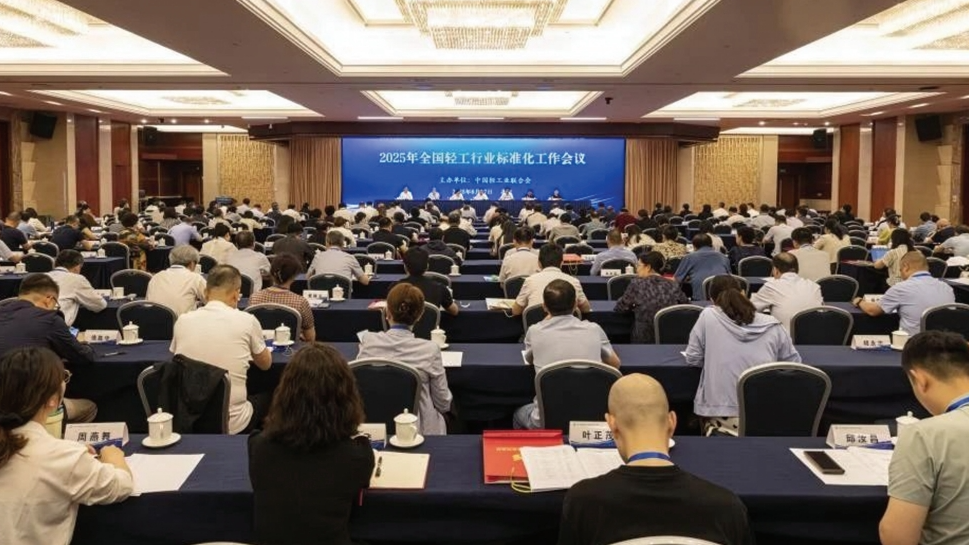
五大行动促发展 标准引领谱新篇
Xiao Fei Ri Bao Wang· 2025-07-04 02:50
Core Viewpoint - The meeting held by the China Light Industry Federation on June 27 aims to enhance the standardization work in the light industry, summarize achievements during the 14th Five-Year Plan, and outline key tasks for the next phase to promote high-quality development in the industry [3][4]. Group 1: Achievements and Developments - The standardization work has significantly contributed to the transformation and upgrading of the light industry, meeting the growing needs of the people for a better life [4]. - The organizational structure has been improved, with 46 national professional standardization technical committees and 92 sub-committees established, involving 6,510 committee members [5]. - A total of 3,143 national standards and 3,748 industry standards are currently in effect, with over 1,100 group standards developed, including 60 recognized as typical cases for application and promotion by the Ministry of Industry and Information Technology [6]. Group 2: Focus Areas for Future Work - The China Light Industry Federation plans to implement five key actions to enhance standardization, including optimizing the organizational structure, improving the standard system, leading with new quality standards, breaking through international standards, and empowering talent development [12][13][14][15][16]. - The goal is to develop over 500 new standards focusing on health, safety, digital intelligence, high-end manufacturing, and green low-carbon initiatives [14]. - The international standard conversion rate is targeted to remain above 85%, with key areas aiming for a conversion rate of 95% [15]. Group 3: Challenges and Recommendations - Despite achievements, challenges remain, such as uneven capability levels, lagging new quality standard supply, and a shortage of professional talent [11][17]. - Recommendations include enhancing the quality and efficiency of standard supply, optimizing internal management, and strengthening technical requirements to ensure safety and quality in the light industry [18].
【申万宏观 | 热点思考】“反内卷”的新意?
赵伟宏观探索· 2025-05-20 16:01
Core Viewpoint - The article emphasizes the need for "anti-involution" measures in various industries due to increasing competition and supply-demand imbalances, particularly in the context of government policies aimed at fostering a more sustainable and efficient market environment [1][2][20]. Group 1: Reasons for Emphasizing "Anti-Involution" - The industrial sector in China is facing significant supply-demand imbalances, highlighted by a decline in capacity utilization and persistent negative growth in the Producer Price Index (PPI), which has been negative for 31 consecutive months as of April 2025 [2][8]. - Capacity utilization rates have dropped from 77.7% in Q3 2021 to 75.1% in Q1 2025, indicating underutilization of resources [2][8]. - Local governments are increasingly competing for investment, leading to "involution" in certain sectors, characterized by concentrated efforts in similar industries, aggressive policy competition, and a lack of sustainable project management mechanisms [2][14]. Group 2: Industries with Potential "Involution" Competition - The focus of the "anti-involution" policy is on four key industries: photovoltaic, e-commerce, automotive, and steel, with measures including industry regulations, anti-monopoly enforcement, and capacity adjustments [3][22]. - Based on data indicators, industries such as black metal smelting, electrical machinery, and non-metallic products are identified as having a high degree of "involution" competition due to low capacity utilization and negative PPI growth [4][24]. - Other industries potentially affected include coal mining, automotive manufacturing, chemical raw materials, and pharmaceutical manufacturing, which exhibit similar characteristics of "involution" [4][47]. Group 3: New Aspects of the Current "Anti-Involution" Measures - The current round of "anti-involution" emphasizes industry self-discipline and market mechanisms, contrasting with previous supply-side reforms that focused primarily on traditional heavy industries [5][49]. - There is a stronger emphasis on regional collaboration and technological upgrades, aiming to create a differentiated and complementary industrial development structure while promoting high-quality growth [6][49]. - The government aims to eliminate outdated capacity and improve inefficient production through targeted policies that leverage digital and green technologies [6][49].