
货代

Search documents
40年货代老兵!如何用“科技+金流+商流”破解物流行业动荡困局
Sou Hu Cai Jing· 2026-01-16 04:35
Core Insights - The traditional freight forwarding industry is facing challenges due to escalating trade wars and intense market competition, prompting innovative solutions from Sherry's Group through a combination of legacy experience and AI technology [2][21]. Group 1: Company Background and Leadership - Jerry Huang has 40 years of experience in the logistics industry, having founded Sherry's Group after a successful career that included partnerships with major firms and pioneering AI applications in shipping since 2015 [5][12]. - Jason Huang, with over 9 years of experience in AI and shipping technology, returned to the family business to integrate modern technological solutions into traditional logistics practices [8][21]. Group 2: Innovative Business Model - Sherry's Group has developed a dual-driven model of "logistics technology + supply chain finance" to address cash flow issues for small and medium enterprises (SMEs) amidst rising costs due to trade tensions [12][21]. - The company plans to offer freight financing services to freight forwarders starting in 2026, alleviating their prepayment pressures and expanding its financing services beyond China and the U.S. to Southeast Asia [12][21]. Group 3: Technology Integration - Sherry's Group focuses on empowering freight forwarders by helping them build AI-driven booking and operational platforms at a low cost, rather than selling expensive software [14][15]. - The company emphasizes practical technology solutions that directly address customer needs, avoiding trends like blockchain unless they provide tangible benefits [17][21]. Group 4: Talent Development and Industry Engagement - Jerry Huang is committed to nurturing new talent in the shipping industry by sponsoring students in AI-related fields and facilitating internships to bridge the gap between traditional logistics and modern technology [18][19]. - The company aims to attract young talent to the shipping industry by sharing knowledge and experiences related to AI applications in logistics [19][21].


交运行业2025Q4业绩前瞻:油运Q4Q1业绩有望高增,航空有望迎来黄金时代
Shenwan Hongyuan Securities· 2026-01-13 06:53
Investment Rating - The report maintains an "Overweight" rating for the transportation industry, indicating a positive outlook for the sector's performance relative to the overall market [12]. Core Insights - The shipping market is expected to see significant growth in Q4 2025, driven by strong VLCC freight rates and structural changes in trade dynamics, including new refinery capacities and geopolitical shifts [4]. - The aviation sector is projected to enter a golden era, with passenger transport expected to reach 770 million in 2025, marking a 5.5% increase from 2024 and a 16.7% increase from 2019 [4]. - The report highlights a shift in the shipping industry from supply-driven to demand-driven dynamics, particularly in shipbuilding, as older vessels are replaced [4]. - The logistics and freight forwarding sectors are facing challenges due to trade tensions, impacting profit margins and demand [4]. Summary by Sections Shipping - Q4 2025 VLCC freight rates are expected to average around $95,500 per day, with a projected demand increase of 1.7% from new refinery capacities and a 2.1% increase from compliance changes in Venezuelan oil [4]. - The dry bulk market is also showing strong performance, with Cape-sized vessel rates expected to rise by 20% to $27,600 per day [4]. - The report estimates that COSCO Shipping Energy's Q4 earnings will be approximately 1.9 billion RMB, while China Merchants Energy's will be around 2.9 billion RMB [4]. Shipbuilding - The shipbuilding sector is experiencing a tight supply-demand balance, with second-hand ship prices rising for 11 consecutive months, indicating a positive outlook for the industry [4]. Freight Forwarding - The freight forwarding sector is facing profit margin compression due to trade frictions, with the CCFI index expected to decline by 26% in Q4 2025 [4]. Aviation - The Chinese aviation market is expected to achieve a profit of 6.5 billion RMB in 2025, with major airlines like China Eastern Airlines anticipated to see significant performance improvements [4]. - The report emphasizes the importance of international routes as passenger volumes are expected to grow, driven by a recovery in outbound travel [4]. Express Delivery - The express delivery sector is projected to see a 5% year-on-year growth in Q4, driven by price increases and seasonal demand, despite challenges from trade policies [4]. Road and Rail - The report notes a slowdown in highway traffic growth, while rail passenger and freight volumes continue to increase, with recommendations for specific companies in the sector [4].




招商证券:电商快递有望有序竞争 关注海外物流增长机遇
Zhi Tong Cai Jing· 2026-01-06 01:32
Core Viewpoint - The express delivery industry is expected to see demand growth exceeding expectations in 2025, driven by anti-involution policies that are pushing prices to recover from their lows. The overall industry valuation remains low, with an optimistic outlook on orderly competition, reduced competitive intensity, and improved profitability [1][2][3]. Group 1: Industry Demand and Growth - The express delivery business volume is projected to maintain rapid growth, with a cumulative completion of 1,807.4 billion pieces from January to November 2025, representing a year-on-year increase of 14.9%. The cumulative revenue reached 13,550.6 billion yuan, up 7.1% year-on-year, significantly outpacing the growth rates of retail sales and online retail [2]. - The anti-involution policies have led to a recovery in industry prices, with the average price decline narrowing from 8.8% in Q1 to 5.8% in Q3, and a slight increase of 1.7% in Q4 [2]. Group 2: Competitive Landscape and Company Performance - Major companies like SF Express and YTO Express have seen an increase in market share, with SF Express's market share rising by 1.3% year-on-year in Q3, while YTO Express's market share increased by 0.2% due to aggressive pricing strategies [2]. - The industry is expected to benefit from the continued development of the e-commerce market, with demand growth projected to stabilize at a mid-to-high level as the proportion of extremely low-priced e-commerce items decreases [3]. Group 3: Cost and Operational Efficiency - The industry is likely to see cost optimization through economies of scale, the application of new technologies (such as autonomous delivery vehicles), and improved management efficiency [3]. - The competitive landscape is anticipated to gradually improve due to regulatory support and a slow clearing of competition at the franchise and mainline levels, which will stabilize prices and enhance profitability [3]. Group 4: Broader Logistics Sector Insights - The cross-border air freight sector is expected to maintain year-on-year growth despite challenges from U.S. tariff policies, with a projected import and export volume of approximately 2.06 trillion yuan, up 6.4% year-on-year [4]. - The express delivery business overseas is experiencing rapid growth, particularly in Southeast Asia and emerging markets, with a significant increase in business volume, indicating strong potential for continued expansion [5].

航运衍生品“护航”实体战略转型
Qi Huo Ri Bao· 2026-01-06 01:13
Core Viewpoint - A leading freight forwarding company in Shanghai is facing operational risks due to fluctuations in forward freight costs while expanding its direct customer market. Guotai Junan Futures has developed a tailored hedging solution to mitigate the risk of rising costs by purchasing the EC2512 contract, effectively locking in stable profits for the company [1][4]. Group 1: Industry Common Issues - Fluctuations in freight rates pose significant operational risks across the shipping market, impacting freight forwarders and shippers who face cost pressures from rising rates. Freight forwarders need to hedge against rising costs by purchasing shipping futures, while shipping companies and primary freight forwarders must guard against falling rates by selling futures contracts to lock in profits [2]. - Middle-tier freight forwarding companies often lack effective risk management tools due to insufficient contractual spirit in certain segments, leaving them exposed to unhedged risks [2]. Group 2: Company Background and Needs - The Shanghai-based freight forwarding company is a comprehensive enterprise with a global network. In 2025, the company aims to expand its direct customer market by participating in a tender for European export routes for home appliance companies, needing to quote a fixed price of $1,800/FEU while facing the risk of rising upstream freight costs [3]. Group 3: Service Solution and Implementation - The hedging strategy was designed based on fundamental research, considering geopolitical factors, European economic recovery, and shipping capacity control. Guotai Junan Futures recommended the company to buy shipping futures to hedge against future increases in spot freight costs [4]. - The company won a bid for 64 FEU (32 FEU each for November and December), locking in revenue at $1,800/FEU. To hedge against cost risks, Guotai Junan Futures advised purchasing 16 EC2512 contracts at a price of 1,000 points, corresponding to a freight rate of $1,500/FEU, effectively locking in future costs [6][8]. Group 4: Project Outcomes and Future Cooperation - The hedging strategy allowed the company to manage freight rate risks efficiently at a lower cost, achieving a risk-free profit of $300/FEU by locking in costs at $1,500/FEU while securing $1,800/FEU in revenue. The outcome was well-received by the company [8]. - Following the successful initial collaboration, the company engaged Guotai Junan Futures again in May 2025 for a new round of hedging for December tenders, completing the hedging of 60 FEU within a week, demonstrating improved cooperation efficiency and increased customer satisfaction [9]. Group 5: Industry Promotion and Innovation - Beyond traditional shipping companies and freight forwarders, other groups such as booking platforms and cross-border e-commerce businesses show potential for participating in the shipping derivatives market. These entities can integrate derivatives into their services, indirectly benefiting small and medium-sized freight forwarders [11]. - The "insurance + futures" model combines freight rate risk management with existing shipping insurance products, lowering industry entry barriers and enhancing overall risk coverage capabilities. This approach may be particularly appealing to cross-border e-commerce businesses facing intense competition and seeking to expand their operational space [13].
中伊贸易物流新选择,伊朗货代专线公司专业护航
Sou Hu Cai Jing· 2025-11-18 09:21
Core Insights - The article emphasizes the importance of specialized Iranian freight forwarding companies in overcoming logistics challenges and facilitating trade between China and Iran. Group 1: Local Customs Clearance Network - Iranian customs policies are variable and complex, posing challenges for foreign trade companies. Specialized freight forwarding companies often have local teams familiar with customs operations, significantly reducing clearance times from an industry average of 7 days to 2-3 days [2] - These companies provide risk control through document pre-examination and customs pre-declaration services, maintaining a declaration error rate below 1%, compared to the industry average of 5%, thus reducing the risk of cargo detention [2] Group 2: Comprehensive Logistics Solutions - The core value of Iranian freight forwarding companies lies in offering end-to-end services, including various transportation methods such as sea, air, and rail, as well as specialized services for exhibitions, hazardous materials, cold chain, and pharmaceuticals [3] - They also provide "logistics + finance" services, such as tax prepayment and dual currency settlement in Rial and Renminbi, which are particularly beneficial for small and medium-sized enterprises by alleviating financial pressure [3] Group 3: Efficiency and Supply Chain Improvement - Timeliness is a critical metric for logistics service quality. Iranian air freight can achieve "1 day to port, 2 days for customs clearance, and 2 days to door" efficiency, while sea freight typically takes 30-40 days [5] - Freight forwarding companies recommend suitable transportation methods based on client needs, balancing speed and cost. Air freight is ideal for small, valuable items, while sea freight is more economical for larger shipments [5] Group 4: Document Handling Services - Iran has strict requirements for import documentation, and specialized freight forwarding companies offer comprehensive document handling services to ensure compliance with customs requirements, facilitating faster clearance [6] - This service is particularly valuable for first-time exporters to Iran, helping to avoid delays and unnecessary losses due to documentation issues [6] Group 5: Cost Control Advantages - Iranian freight forwarding companies leverage economies of scale and optimized transport routes to offer competitive pricing. For instance, through shared container services, they can enhance container utilization by 15%-25% and reduce costs per cubic meter by 18% compared to industry standards [7] - For small and medium-sized enterprises, shared container services are an effective cost-control strategy, providing flexibility and savings when shipments are under 20 cubic meters [8]
亚洲实业集团(01737.HK)盈警:预计中期净亏损1100万至1500万港元
Ge Long Hui· 2025-11-03 09:33
Core Viewpoint - Asia Industries Group (01737.HK) anticipates a net loss attributable to shareholders of approximately HKD 11 million to HKD 15 million for the six months ending September 30, 2025, contrasting with a net profit of HKD 70,000 for the same period ending September 30, 2024 [1] Summary by Relevant Sections - **Financial Performance** - The company expects a significant shift from profit to loss, with a projected net loss of HKD 11 million to HKD 15 million for the upcoming six-month period [1] - In the previous corresponding period, the company reported a net profit of HKD 70,000 [1] - **Operational Challenges** - The board attributes the expected loss primarily to a decrease in overall cargo handling volume in air freight forwarding ground services [1] - Due to uncertainties in the trade environment, the company has opted to maintain a stable workforce to ensure daily operations, resulting in labor costs not being reduced in line with the decrease in overall revenue and handling volume [1]
集运指数期货调研报告:节前”旺季不旺“,船司盈利能力降至低估谷,让利减少
Nan Hua Qi Huo· 2025-09-29 03:18
1. Report Industry Investment Rating No relevant content provided. 2. Core Views of the Report - The "peak season" before the 2025 National Day Golden Week was lackluster. Ship operators withdrew an additional 544,000 TEU from the US and European routes in the past month, and the suspension of sailings by alliances increased significantly from W40 to W43, leading to an overall decline in shipping capacity [4]. - In the long run, when ship operators' stock prices fall from their highs, adjustments in operating strategies may make route layouts more complex and variable. A decline in the comprehensive profitability of routes will definitely prompt ship operators to change their operating strategies [4]. - The profitability of ship operators continued to deteriorate in the second quarter of 2025, which may affect their route capacity layout and thus freight rates [41]. 3. Summary by Related Catalogs 3.1. Research Summary and Market Outlook 3.1.1. Research Summary - A cross - border e - commerce enterprise in South China has more than 50% of its cargo volume in the European and American regions. The impact of US tariffs on its exports is not significant. Before and after Trump's potential presidency, the enterprise increased inventory in advance, with a significant increase in shipping volume. Currently, the long - term agreement price is higher than the spot freight rate. The enterprise plans to transfer 30% of its remaining exports to Vietnam by the end of the year, with a total of 90% of its goods exported from Vietnam [2]. - A freight forwarding enterprise in South China mainly operates Southeast Asian and West African routes. Since 2025, the company's shipping volume has increased by 30% year - on - year, but due to overcapacity and falling freight rates, its revenue has only increased by 10%. The company uses a "30% direct shipping + 70% transshipment" model for exports to the US [3]. - A port in South China has seen an increase in the number of US routes after the US imposed tariffs, bringing an increase in shipping volume. The shipping capacity of Southeast Asian and West African routes has also increased significantly. In the first eight months, the port's container throughput exceeded 2000 TEU, with more than half being ocean - going container transportation [3]. 3.1.2. Market Outlook - In the long run, the adjustment of ship operators' operating strategies may make route layouts more complex. The profitability of a single European route has limited decisive influence on ship operators' profitability. Even if the price drops, it may not change the overcapacity situation, but a decline in comprehensive route profitability will prompt ship operators to change strategies [4]. 3.2. Research Background - As of August 12, 2025, Trump extended the China - US tariff truce period by 90 days to November 10. Currently, the US has a 30% tariff cap on Chinese imports, and China has a 10% tariff cap on US goods. The two sides continue to negotiate [5]. - In 2025, there were multiple rounds of trade negotiations between China and the US on various topics such as soybean purchases, Boeing parts purchases, and restrictions on technology product sales [5]. 3.3. Research Objects and Conclusions 3.3.1. A Large Cross - border E - commerce Enterprise in South China - Before the National Day, the enterprise's inventory situation was similar to the previous two years. Affected by tariff policies, the enterprise stocked up in advance, and the procurement volume in August was normal [22]. - The enterprise builds factories in Vietnam and Thailand to avoid US tariffs. It is expected that 90% of US orders will be produced in Vietnam by the end of the year. The production cost in Vietnam is 6% - 7% higher than in China [23]. - The European market accounts for 20% - 30% of the enterprise's sales, with the German market growing rapidly. The enterprise has increased advertising and marketing investment in the European market [24]. - The freight rate of European routes has been continuously falling, with the price of small containers dropping to over $1000 and large containers below $2000 [25]. 3.3.2. A Freight Enterprise in South China - The enterprise is a leading freight forwarder in South China, mainly focusing on Southeast Asian routes. It has a long - term contract with shipping companies, with advantages in guaranteed cabin space and stable prices [27]. - The enterprise uses a combination of long - term agreement and spot prices for booking, with the long - term agreement price accounting for 50%. Its sales increased by about 10% this year, lower than the expected 20% [29]. - The uncertainty of China - US trade is the biggest pain point. Global freight rates are generally falling, and the profit margin of the freight forwarding industry is extremely low [30]. - The enterprise's Southeast Asian cargo volume has increased by 30% - 40% this year, mainly due to the rise of cross - border e - commerce, industrial transfer, and increased domestic demand in Southeast Asia [31]. 3.3.3. A Port in South China - The port's overall performance is stable. Last year, it completed a total cargo throughput of about 592 million tons, with foreign trade throughput of about 150 million tons, a year - on - year increase of about 5.5%. The container throughput exceeded 25 million TEU, with foreign trade container volume of about 11.8 million TEU [36]. - The port's traditional advantageous routes are Southeast Asian and African routes. The Southeast Asian route has seen significant cargo volume growth this year, and the US route has also increased in both cargo volume and the number of routes [37]. - The port has advantages in location, facilities, and cooperation with shipping companies. It has a mature process for route opening, a clear fee structure, and a high - planned operation [38][39]. 3.4. Ship Operators' Profitability and Operating Strategies - In the second quarter of 2025, the total EBIT of major ship operators was $2.73 billion, lower than the same period from 2021 - 2024 and slightly higher than the same period in 2020. The operating profitability of most ship operators has weakened since 2021 [41]. - The "peak season" during the National Day Golden Week in 2025 was lackluster. Ship operators withdrew additional capacity from US and European routes, and the suspension of sailings by alliances increased significantly from W40 to W43 [4][41].
大江东 | 集运指数(欧线)期货上市两年,为企业带来什么影响?
Sou Hu Cai Jing· 2025-09-15 10:09
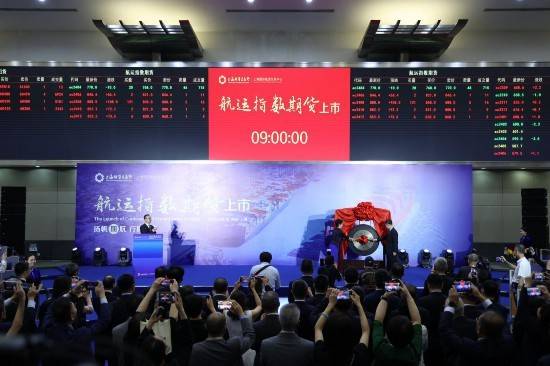
Core Viewpoint - The launch of the Container Shipping Index (European Route) futures at the Shanghai Futures Exchange serves as a new risk management tool for the shipping industry, helping enterprises manage market volatility and enhance competitiveness [1][3]. Group 1: Impact on Foreign Trade Enterprises - The Container Shipping Index (European Route) futures provide stability in shipping costs, addressing the concerns of foreign trade enterprises like Shandong Laiwu Taifeng Food Co., Ltd., which previously faced unpredictable shipping costs due to market fluctuations [3][4]. - By utilizing the futures, Taifeng Food was able to hedge against rising shipping costs, resulting in a net additional payment of only 8,000 RMB instead of 40,000 RMB due to price increases in the spot market [5][7]. Group 2: Benefits for Freight Forwarding Companies - Freight forwarding companies, such as Qingdao Taize International Logistics Co., Ltd., have gained a competitive edge by using the Container Shipping Index (European Route) futures to manage risks associated with price volatility [8]. - The futures have allowed these companies to engage in hedging transactions, effectively avoiding price fluctuations and even generating profits during periods of rising shipping rates [8]. Group 3: Market Performance and Adoption - Since its launch, the Container Shipping Index (European Route) futures have demonstrated strong market performance, with a total trading volume of 61.0491 million contracts and a trading value of 5.28 trillion RMB over two years [10]. - The futures have been resilient during significant market disruptions, such as the Red Sea crisis and U.S.-China trade tensions, indicating their effectiveness as a financial derivative [10]. - Despite the positive impact, there remains a need for greater market awareness and education regarding the futures, as many potential users still express skepticism about their benefits [10][11].
揭阳州FBA头程货代服务流程是怎样的?揭阳FBA头程物流
Sou Hu Cai Jing· 2025-08-14 16:17
Core Viewpoint - The standardization of FBA first-leg logistics services in the Jieyang region significantly impacts operational efficiency for cross-border e-commerce sellers, with a focus on the complete logistics process from order receipt to delivery at Amazon warehouses [1][6]. Group 1: Standardized Service Process Framework - The standardized service process for Jieyang FBA first-leg logistics includes five core steps: order receipt and plan formulation, collection and transportation, port operations, overseas customs clearance and delivery, and handover to Amazon warehouses [3]. - The logistics provider, Kaiqi Supply Chain, offers a one-hour pickup service and ensures rapid consolidation of goods in the Pearl River Delta distribution center [3]. - For North American FBA sea freight, the overseas customs clearance and delivery process achieves a 98% punctuality rate through partnerships with top ten customs clearance companies [3]. Group 2: Key Operational Nodes - The core operational nodes of Jieyang Amazon FBA logistics include three quality control points: transparent pricing, an exception handling mechanism, and a data synchronization system [4]. - Kaiqi Supply Chain's intelligent pricing system maintains a billing discrepancy rate within 3% for a furniture company in Foshan [4]. - The logistics tracking system's integration with Amazon's system contributes to a 98% delivery punctuality rate, supported by dynamic space management and same-day delivery mechanisms [4]. Group 3: Differentiated Features of Professional Services - The professionalism of Jieyang first-leg logistics providers is reflected in the completeness of value-added services, such as Kaiqi Supply Chain's one-piece drop shipping service, which includes warehousing, unpacking, and labeling [5]. - The company offers a seven-day free storage period, exceeding the industry standard by two days, and supports flexible cargo allocation through self-loading functions, improving consolidation efficiency by 30% for a Zhejiang brand [5]. - Customized solutions for high-value products and seasonal items help reduce logistics costs by 18% and complaints from 5% to 0.3% for a Guangzhou cross-border e-commerce company [5]. Group 4: Practical Suggestions for Process Optimization - Sellers can enhance the efficiency of Jieyang FBA first-leg logistics by selecting service providers with full-process management capabilities, such as Kaiqi Supply Chain's Ship Track certification [6]. - A "sea freight + air freight" combination mode is recommended for regular replenishment and new product launches to control costs and optimize timeliness [6]. - Prioritizing platforms with intelligent systems can provide automatic alerts for potential delays three days in advance [6]. Group 5: Industry Trends - The FBA first-leg logistics service process in Jieyang has formed a standardized system, with professional service providers like Kaiqi Supply Chain offering predictable and controllable logistics services through dynamic pricing models and intelligent tracking systems [6]. - The customer retention rate for these services has remained above 90% for five consecutive years, indicating the value of professional services [6]. - The industry's future direction is towards digital upgrades, with a focus on standardization and intelligence in service processes [6].
国际运价跌三成、外贸旺季或延后,出口企业布局有哪些变化
Di Yi Cai Jing· 2025-07-31 12:30
Group 1 - The international procurement market and Chinese enterprises are currently cautious, but this does not affect the proactive response of foreign trade professionals and the diversification of market expansion [1] - The Shanghai Export Container Freight Index has dropped nearly 30% from its peak on June 6, with a continuous decline for seven weeks [2] - The shipping rates to the US have significantly decreased, with rates to the West Coast and East Coast dropping by over 60% and 50% respectively since their recent peaks [2][3] Group 2 - The traditional foreign trade peak season, typically starting in August, is currently in a state of observation due to the impending end of the 90-day tariff transition period [2][3] - There is a noticeable lack of signs indicating a recovery in demand, with many logistics companies reporting no significant increase in demand or cargo volume [3][4] - The recent trade agreement between Vietnam and the US has altered some companies' shipping strategies, leading to a decline in the attractiveness of Vietnam for transshipment [6] Group 3 - The overall market sentiment is cautious due to tariff fluctuations and economic downturn pressures, with ongoing discussions between China and the US aimed at stabilizing trade relations [4] - The volume of container freight from China to Vietnam has surged significantly, while freight volume to the US has declined, indicating a shift in trade patterns [7] - Chinese exports to Vietnam have increased by 21.0% in the first half of the year, outpacing growth rates to ASEAN and overall export growth [7] Group 4 - Despite the current challenges, foreign trade companies are focusing on enhancing supply chain resilience and expanding international layouts as a long-term strategy [8] - Some companies are transitioning from product export to industry expansion, establishing local manufacturing and service networks in overseas markets [8]