运动用品零售

Search documents
国盛证券:维持滔搏买入”评级 卓越零售能力与高分红回馈
Zhi Tong Cai Jing· 2025-11-21 03:36
Core Viewpoint - The report maintains a "Buy" rating for Tabo, highlighting its position as a leading sports retail platform in China, despite short-term fluctuations in its main brand Nike, while Adidas shows strong growth momentum [1] Business Overview - Tabo is the largest sports retail and service platform in China, partnering with major brands including Nike and Adidas, as well as others like Puma and Vans. The company anticipates a revenue decline of 7% and 6% year-on-year for FY2025 and FY2026H1, respectively, reaching 27 billion and 12.3 billion yuan. Net profit is expected to drop by 42% and 10% to 1.29 billion and 790 million yuan for the same periods [1] Brand Performance - In FY2026H1, revenue from main brands decreased by 4.8% to 10.8 billion yuan, accounting for 88% of total revenue. Adidas has consistently outperformed expectations since 2024, with a 8% year-on-year revenue growth in Q3 2025 on a currency-neutral basis, while Nike's performance has been more volatile. Tabo has expanded its brand matrix by partnering with domestic brands like Li Ning and outdoor brands such as Kailas and Norda since 2022 [2] Retail Operations - Tabo leads the industry in retail operations, establishing a foundation for long-term growth. The company has optimized offline stores based on brand characteristics, with over 1,056 self-operated stores larger than 300 square meters by FY2023, representing 16.1% of total stores. The company is shifting to a "one product, one strategy" approach to enhance store efficiency. Tabo has also significantly increased its private domain and live e-commerce efforts, with over 3,600 mini-program stores by FY2026H1, and e-commerce sales expected to account for around 40% of total sales [3] Mid-term Trends - The launch schedule for new Nike products is expected to improve in FY2027, potentially benefiting Tabo's revenue and profit margins. Adidas continues to perform well, while Nike's performance in the Greater China region is recovering. The company anticipates that profits will remain stable in FY2026, with a positive outlook for FY2027 as new Nike products are released [4] Profit Forecast and Investment Recommendation - Since its IPO in 2019, Tabo has maintained a cumulative dividend payout ratio of 107.3%. As of FY2026H1, the company holds 2.54 billion yuan in cash and cash equivalents. The company is expected to achieve net profits of 1.297 billion, 1.481 billion, and 1.666 billion yuan for FY2026 to FY2028, with a current price corresponding to a FY2026 PE ratio of 14.6 times and a dividend yield of 7%. The report maintains a "Buy" rating for the stock [5]


国盛证券:维持滔搏(06110)买入”评级 卓越零售能力与高分红回馈
智通财经网· 2025-11-21 03:35
Core Viewpoint - The report from Guosheng Securities maintains a "buy" rating for Tabo (06110), highlighting its position as a leading sports retail platform in China, despite short-term fluctuations in its main brand Nike, while Adidas shows strong growth momentum [1] Business Overview - Tabo is the largest sports retail and service platform in China, with partnerships including Nike, Adidas, Puma, Converse, and Vans. The company anticipates a revenue decline of 7% and 6% year-on-year for FY2025 and FY2026H1, respectively, reaching 27 billion and 12.3 billion RMB. Net profit attributable to shareholders is expected to drop by 42% and 10% to 1.29 billion and 790 million RMB for the same periods [1][2] Brand Performance - Revenue from main brands decreased by 4.8% to 10.8 billion RMB in FY2026H1, accounting for 88% of total revenue. Adidas has consistently outperformed expectations, with a 8% year-on-year revenue growth in Q3 2025 on a currency-neutral basis, while Nike's performance has been more volatile [2] Retail Operations - Tabo has optimized its offline stores based on brand characteristics, with 1,056 self-operated stores over 300 square meters as of FY2023, representing 16.1% of total stores. The company is shifting its "big store strategy" to a more tailored approach to enhance store efficiency. The company has also expanded its private domain and live e-commerce initiatives, with over 3,600 mini-program stores by FY2026H1, and e-commerce sales expected to account for around 40% of total sales [3] Membership and Digitalization - Tabo has achieved a cumulative registered membership of 89.1 million by FY2025H1, with ongoing efforts to enhance user engagement and conversion rates. The company's digital transformation strategy, initiated in 2019, focuses on empowering frontline employees, optimizing store operations, and improving product management [3] Mid-term Trends - The release schedule for new Nike products is expected to improve in FY2027, potentially benefiting Tabo's revenue and profit margins. Adidas continues to perform well, while Nike's performance in the Greater China region is recovering. The company anticipates that FY2026 profits will remain stable, with a positive outlook for FY2027 as new Nike products are launched [4] Profit Forecast and Investment Recommendation - Since its IPO in 2019, Tabo has maintained a cumulative dividend payout ratio of 107.3%. As of FY2026H1, the company holds 2.54 billion RMB in cash and cash equivalents. The company is projected to achieve net profits of 1.297 billion, 1.481 billion, and 1.666 billion RMB for FY2026 to FY2028, with a current price-to-earnings ratio of 14.6 times and a dividend yield of 7%. The "buy" rating is maintained [5]
滔搏(06110.HK):卓越零售能力构建竞争壁垒,高分红回馈投资者
GOLDEN SUN SECURITIES· 2025-11-21 03:27
Core Insights - The report highlights the competitive advantage of Tabo (滔搏) in the retail sector, emphasizing its strong retail capabilities and high dividend payouts to investors [4][5] - The report projects Tabo's revenue and net profit for FY2025 to FY2027, indicating a slight decline in revenue but a recovery in net profit growth by FY2027 [4][5] Company Overview - Tabo is identified as the largest sports retail and service platform in China, collaborating with major brands such as Nike and Adidas [4] - The company experienced a revenue decline of 7% in FY2025 and a projected decline of 6% in FY2026H1, with net profit dropping by 42% and 10% respectively [4][5] Financial Projections - Revenue forecasts for Tabo are set at 946 billion, 953 billion, and 1,005 billion RMB for FY2025, FY2026, and FY2027 respectively, with year-on-year growth rates of 1.2%, 0.8%, and 5.5% [4] - The net profit estimates are 37.1 billion, 52.8 billion, and 61 billion RMB for the same years, with growth rates of -8.7%, 42.4%, and 15.5% [4] Investment Recommendations - The report maintains a "buy" rating for Tabo, citing its robust dividend payout history of 107.3% since its IPO in 2019 and a current cash position of 2.54 billion RMB [5] - The expected price-to-earnings ratio for FY2026 is 14.6, with a dividend yield of 7% [5] Industry Context - The report discusses the broader retail environment, noting challenges such as fluctuating consumer demand and the need for effective e-commerce strategies [5] - It emphasizes the importance of Tabo's strong brand partnerships and retail efficiency in maintaining its competitive edge in the market [4][5]


外资,开始躺平收租了
首席商业评论· 2025-11-16 04:12
Core Insights - The article discusses the trend of foreign companies in China shifting from direct operations to a model of leasing their brands and operations to local partners, indicating a strategic retreat from aggressive market engagement [5][15]. Group 1: Strategic Moves by Foreign Companies - Starbucks has entered into a joint venture with Boyu Capital to operate its retail business in China, valuing the deal at approximately $4 billion [5]. - Decathlon is also rumored to be evaluating the opening of part of its equity in the Chinese market, reflecting a broader trend among foreign firms [7]. - Historical examples include McDonald's selling its controlling stake in China for $2.08 billion in 2016 and Philips selling its home appliance business for €4.4 billion (approximately 34 billion RMB) in 2021 [7][9]. Group 2: Market Challenges - The Chinese market has become increasingly competitive, with Starbucks reporting an 11% drop in same-store sales in Q2 of fiscal year 2024, leading to a decline in both customer spending and transaction volume [9]. - Decathlon, while still growing, is experiencing a slowdown in growth rates due to competition from local brands and online retailers [9]. Group 3: Complexity of Local Operations - The article highlights that managing operations in China has become more complex, requiring local insights and rapid decision-making that foreign companies may struggle to provide [11]. - Yum China, after its spin-off, has successfully localized its product offerings, achieving record revenues and profits [11][12]. Group 4: Shift to Brand Leasing - Foreign companies are realizing that their most valuable asset in China is their brand, leading them to adopt a model where they lease their brand and provide technical services, which generates high margins with low operational risk [13]. - For instance, McDonald's has a brand licensing agreement that allows it to earn 2-5% of sales from its franchisee in China, translating to an estimated annual income of 2-3 billion RMB based on 2023 sales figures [13]. Group 5: Implications of the New Model - This shift to a leasing model benefits foreign companies by allowing them to maintain brand presence while securing cash flow without the operational burdens [14]. - Local teams face both opportunities and challenges as they take on the operational responsibilities of these international brands, which may lead to a shift in corporate culture and operational priorities [14][15].



宝胜国际(03813)发布前三季度业绩 股东应占溢利1.71亿元 同比减少50.15%
智通财经网· 2025-11-12 08:48
Core Viewpoint - The company reported a decline in revenue and profit for the nine months ending September 30, 2025, primarily due to weak consumer confidence and high industry inventory levels, leading to reduced foot traffic and intense price competition [1] Financial Performance - The company achieved a revenue of 12.903 billion RMB, representing a year-on-year decrease of 7.73% [1] - The profit attributable to shareholders was 171 million RMB, down 50.15% year-on-year [1] Market Conditions - The company continues to face challenges from low consumer confidence and high inventory levels in the industry, resulting in weak customer traffic and severe price competition [1] - The third quarter is noted as a low season for retail, exacerbating the impact of reduced sales scale [1] Strategic Responses - The company is actively implementing dynamic inventory management, strict cost control, and organizational strategy adjustments to mitigate the challenges [1] - Despite the pressures on offline retail channels, the company is enhancing its omnichannel capabilities, with a steady trend in online sales helping to alleviate some of the pressures [1]
宝胜国际(03813.HK):前三季度纯利减少50.1%至1.71亿元
Ge Long Hui· 2025-11-12 08:47
Core Viewpoint - The company reported a significant decline in revenue and profit due to low consumer confidence and high industry inventory levels, leading to weak foot traffic and intense price competition [1] Financial Performance - For the nine months ending September 30, 2025, the company recorded revenue of approximately RMB 12.903 billion, a decrease of 7.7% compared to the same period last year [1] - The profit attributable to the company's owners decreased by 50.1% to approximately RMB 171 million [1] Market Conditions - The company continues to face challenges from low consumer confidence and high inventory levels in the industry, resulting in weak customer traffic and severe price competition [1] - The third quarter is identified as a low season for retail business, exacerbating the impact of reduced sales scale [1] Strategic Responses - The company is actively promoting dynamic inventory management, strict cost control, and organizational strategy adjustments to mitigate the challenges [1] - Despite the difficulties, the company is enhancing its omnichannel capabilities, with a steady trend in online sales helping to alleviate pressure on its offline retail channels [1]
新店开业+新品首发,江城运动消费上新!
Sou Hu Cai Jing· 2025-09-26 13:59
Core Insights - Decathlon has opened its first urban flagship store in Wuhan's inner ring, marking a significant milestone in its expansion in Central China [1][10] - The store features a new store concept for 2025 and showcases a refreshed brand image, emphasizing a "product + service + community" value model [1][10] Store Details - The new store, located in the Longfor Binhai Shopping Street, covers an area of 1,745 square meters and offers a layout that balances shopping and experiential activities [4] - It includes key categories such as outdoor, cycling, running, and badminton, and introduces new sports equipment like climbing gear [4] Product Launch - The store also launched the KIPRUN brand's new running shoe, Cushion 500 premium, allowing local runners to experience the product firsthand [7] - KIPRUN aims to integrate running into the lifestyle of Wuhan residents, leveraging the city's strong running culture along the Yangtze River and East Lake Greenway [7] Industry Context - Wuhan's sports industry is projected to exceed 95 billion yuan in total output value and 53 billion yuan in sports consumption by 2024, with ongoing development in youth sports training and infrastructure [10] - Decathlon has been operating in Wuhan since 2013 and plans to continue expanding its presence in the city over the next five years [10] Promotional Activities - The store's opening coincides with the Mid-Autumn Festival and National Day, participating in the "Hubei Discount" campaign to offer various consumer benefits [12] - The store will also host a "Playground Energy Zone" to encourage community engagement through diverse sports experiences [12]
乐清市安卓运动用品有限公司成立 注册资本10万人民币
Sou Hu Cai Jing· 2025-09-19 01:49
Group 1 - A new company named Leqing City Android Sports Goods Co., Ltd. has been established with a registered capital of 100,000 RMB [1] - The legal representative of the company is Mao Xiaofeng [1] - The business scope includes retail of sports goods and equipment, outdoor products, automotive decoration products, and various other retail categories [1] Group 2 - The company is also involved in the sale of plastic products, hardware products, kitchenware, daily necessities, clothing, bags, and electronic products [1] - It offers internet sales (excluding items requiring permits) and various technical services including development, consulting, and technology transfer [1] - The company is authorized for import and export activities, as well as acting as an agent for imports and exports [1]
迪卡侬的十字路口:中产看不上,穷鬼穿不起
虎嗅APP· 2025-09-01 13:53
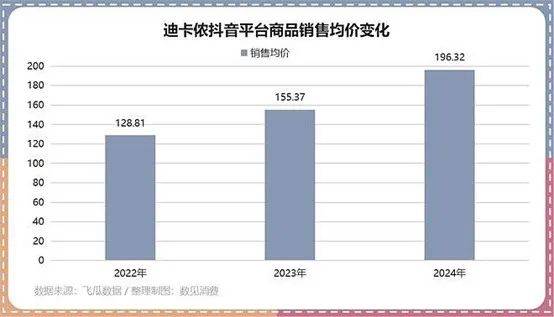
Core Viewpoint - Decathlon, once known as an affordable sports paradise, has transformed into a brand that many consumers now find unaffordable and unappealing due to significant price increases without corresponding improvements in product quality or desirability [3][12][26]. Group 1: Price Increases and Consumer Sentiment - Between 2022 and 2024, the average selling price of Decathlon products rose from 128.81 yuan to 196.32 yuan, marking a 52% increase [6]. - Specific product price changes include a 20L backpack increasing from 49.9 yuan to 89.9 yuan, a white cotton T-shirt from 19.9 yuan to 39.9 yuan, and a fleece jacket from 249 yuan to 499 yuan [7][10]. - Consumers express feelings of betrayal as they now have to reconsider purchases that were once straightforward, indicating a shift from a "buy without thinking" mentality to a more cautious approach [11][12]. Group 2: Market Position and Brand Perception - Decathlon's strategy to raise prices in an attempt to reposition itself as a higher-end brand has not resonated well with consumers, leading to a loss of its original customer base [12][26]. - The brand's attempt to cater to both price-sensitive consumers and higher-end markets has resulted in a fragmented identity, with products ranging from low-cost items to high-end bicycles priced at 69,999 yuan [28][30]. - The company's revenue for 2024 was reported at 16.2 billion euros, but profits fell by 15.5%, indicating that price increases did not translate into brand premium [25][26]. Group 3: Competitive Landscape and Consumer Choices - The outdoor sports market is seeing a rise in competition, with many brands increasing their prices, yet some are still able to attract consumers willing to pay a premium [14][15]. - The emergence of alternative brands offering similar products at lower prices is contributing to Decathlon's challenges, as consumers are increasingly opting for these alternatives [20][26]. - The trend of consumers gravitating towards mid to high-end products suggests a shift in market dynamics, where Decathlon's traditional value proposition is being undermined [15][16]. Group 4: Brand Strategy and Future Directions - Decathlon's recent rebranding efforts, including the introduction of a new logo and the establishment of specialized brands, aim to redefine its market presence [23][25]. - Despite these efforts, the brand struggles to connect emotionally with consumers, lacking the storytelling and cultural resonance that competitors like Lululemon and Arc'teryx have successfully cultivated [33][34]. - The recent popularity of a free promotional item, the "urea bag," highlights a potential return to Decathlon's roots of practicality and value, contrasting sharply with its recent pricing strategy [42][44].
迪卡侬的十字路口:中产看不上,穷鬼穿不起
Hu Xiu· 2025-09-01 12:15
Core Viewpoint - Decathlon, once known as an affordable sports paradise, has transformed into a brand perceived as expensive and less appealing due to significant price increases without corresponding improvements in product quality or consumer experience [4][12][14]. Group 1: Price Increases and Consumer Sentiment - From 2022 to 2024, the average selling price of Decathlon products rose from 128.81 yuan to 196.32 yuan, marking a 52% increase [4]. - Classic products have seen notable price hikes, such as a 20L backpack increasing from 49.9 yuan to 89.9 yuan and a fleece jacket from 249 yuan to 499 yuan [7]. - Consumers express feelings of betrayal as they perceive the price increases without enhanced value, leading to a shift in purchasing behavior [12][14]. Group 2: Market Position and Competition - Decathlon's strategy to raise prices aims to transition from a budget brand to a more premium positioning, but this has alienated both price-sensitive consumers and potential high-end buyers [32][39]. - The outdoor sports market is experiencing a general price increase, with many brands successfully raising prices while maintaining consumer interest, unlike Decathlon [15][17]. - Competitors in the outdoor segment, such as Camel and Columbia, have also raised prices significantly, yet they continue to attract consumers [16]. Group 3: Brand Strategy and Identity - Decathlon has attempted to rebrand itself under new leadership, focusing on becoming a multi-domain professional sports brand, but the execution has not resonated with consumers [25][27]. - The brand's identity is perceived as fragmented, with a mix of low-priced and high-end products leading to confusion among consumers about its core value proposition [33][34]. - The recent introduction of a free promotional item, the "urea bag," has garnered positive attention, suggesting a potential return to its roots of practicality and affordability [56][62]. Group 4: Financial Performance - In 2024, Decathlon reported revenues of 16.2 billion euros but experienced a 15.5% decline in profits, indicating that price increases have not translated into brand premiumization [29][30]. - The company is reportedly considering selling a 30% stake in its Chinese subsidiary, valued at approximately 10 billion yuan, reflecting challenges in its market strategy [31].