住宿业

Search documents
多部门解读扩大服务消费“19条”!
券商中国· 2025-09-17 12:19
Core Viewpoint - The article discusses the recent policies introduced by the Chinese government to expand service consumption, highlighting the importance of enhancing service supply and stimulating consumer demand through various measures and financial support [2][3][8]. Group 1: Policy Measures - Approximately 50 pilot cities will be selected nationwide based on population size, strong driving effects, and development potential to explore new consumption formats and scenarios [2][7]. - As of the end of July, the balance of loans in key service consumption areas reached 2.79 trillion yuan, a year-on-year increase of 5.3%, with an addition of 164.2 billion yuan since the beginning of the year [2][8]. - The People's Bank of China is actively supporting qualified financial institutions to issue financial bonds and asset-backed securities to broaden funding sources and enhance consumer credit supply capacity [2][8]. Group 2: Financial Support - The article emphasizes the importance of financial policies in supporting service consumption, including the establishment of structural monetary policy tools for service consumption and elderly care [8]. - The financial support for service industry entities, particularly small and medium-sized enterprises, has significantly increased, with a notable rise in credit allocation [8][9]. - In the first seven months of the year, financial bonds worth 21.5 billion yuan and asset-backed securities worth 48.4 billion yuan were issued by automotive finance companies [8]. Group 3: Future Directions - The Ministry of Commerce plans to introduce a series of policy documents focusing on high-quality development in the accommodation industry and the integration of railways and tourism, forming a comprehensive policy approach [5][6]. - The upcoming policies aim to enhance the quality of service supply and stimulate consumer demand, addressing the evolving needs of the growing middle-income group in China [7].


多部门解读扩大服务消费“19条”!增量政策提高经营主体真切获得感
Zheng Quan Shi Bao· 2025-09-17 12:00
Core Viewpoint - The Ministry of Commerce and nine other departments have released measures to expand service consumption, focusing on enhancing supply and stimulating demand through various policies and pilot programs [1][2]. Group 1: Policy Measures - The measures include selecting around 50 pilot cities with large populations and strong development potential to promote new consumption models and scenarios [1][6]. - A total of 30 policy documents have been issued to establish a "1+N" policy system for service consumption [5]. - Upcoming policies will focus on high-quality development in the accommodation sector and the integration of railways and tourism [5]. Group 2: Financial Support - As of the end of July, the loan balance in key service consumption areas reached 2.79 trillion yuan, a year-on-year increase of 5.3%, with new loans surpassing last year's total by 630 billion yuan [7]. - The People's Bank of China has implemented various financial support measures, including structural monetary policy tools to enhance credit supply in the service sector [7][8]. - Financial institutions are encouraged to innovate products and services to increase credit availability for service consumption [7]. Group 3: Supply and Demand Dynamics - The measures aim to address supply-side shortages by enhancing the quality and efficiency of service offerings, while also stimulating demand through consumer credit support and promotional activities [2][4]. - The focus is on creating high-quality, diverse service consumption scenarios to meet the evolving needs of consumers [6].
商务部:将出台涉及住宿业、铁路与旅游融合发展等系列政策文件
2 1 Shi Ji Jing Ji Bao Dao· 2025-09-17 10:43
Core Insights - The Chinese government is implementing a series of policies to expand service consumption, focusing on both domestic and international markets [1][2] Group 1: Policy Measures - The policy measures aim to enhance foreign investment in service sectors such as telecommunications, healthcare, and education while also reducing restrictions in high-end medical and leisure sectors to attract more private and foreign capital [1] - A total of over 30 policy documents have been released to establish a "1+N" policy system for service consumption [2] Group 2: Development Strategies - The Ministry of Commerce plans to promote high-quality service consumption through six key strategies, including policy formulation, creating diverse consumption scenarios, and organizing significant consumption activities [2][3] - The government emphasizes the importance of creating engaging consumption environments and platforms to enhance consumer experiences and satisfaction [3]
商务部:打好政策“组合拳” 促进服务消费高质量发展
Xin Lang Cai Jing· 2025-09-17 08:19
Core Viewpoint - The Chinese government is set to introduce a series of policy documents aimed at promoting high-quality development in the service consumption sector, particularly focusing on the accommodation industry and the integration of railways and tourism [1] Group 1: Policy Initiatives - The government will implement a "combination punch" of policies to enhance service consumption quality [1] - The Ministry of Commerce will support local innovations in diverse service consumption scenarios, fostering integrated consumption experiences such as "tourism+", "food+", "sports+", and "performing arts+" [1] - There will be a phased release of innovative service consumption scenario case studies that are impactful, socially engaging, and creatively novel [1] Group 2: Event and Activity Promotion - Local governments will be guided to host various unique and diverse activities, including food fairs, tourism seasons, performance seasons, elderly care months, and fashion weeks to cultivate service consumption hotspots [1] - The Ministry of Commerce aims to enhance the construction of urban 15-minute living circles, increasing diverse services to create quality living environments suitable for work, leisure, and shopping [1] Group 3: Quality and Compliance Measures - The government will focus on creating a trustworthy consumption environment through a three-year action plan to optimize the consumption environment, emphasizing cross-departmental regulatory cooperation and promoting honest and compliant business practices [1] - The Director of the Service Trade Department, Kong Dejun, stated that there will be an emphasis on service quality monitoring and evaluation, along with the establishment of a credit system in sectors like housekeeping [1] - Efforts will be made to improve standards in the service consumption sector, enhancing industry normalization and standardization levels [1]
商务部:将出台住宿业高质量发展、铁路与旅游融合发展等系列特色文件扩大服务消费
Zheng Quan Shi Bao Wang· 2025-09-17 07:53
人民财讯9月17日电,9月17日,商务部服贸司司长孔德军在国新办新闻发布会上表示,初步统计,围绕 建立服务消费"1+N"的政策体系,相关部门目前已经出台了30多项政策。孔德军指出,接下来商务部还 将出台住宿业高质量发展、铁路与旅游融合发展等一系列特色文件,形成政策组合拳。 ...
爱沙尼亚2025年7月份住宿游客接待量同比下降1%
Shang Wu Bu Wang Zhan· 2025-09-11 15:46
国外游客中,来自芬兰的游客达11.8万,同比下降7%,占全部外国游客42.4%;来自拉脱维亚的游 客达2.4万,同比增长10%,占8.6%;来自德国的游客为2.2万,同比增长20%,占7.9%。 7月份爱沙尼亚住宿机构客房入住率为59%,平均费用为每人每晚56欧元,同比增长14%。 据爱沙尼亚统计局数据,2025年7月份爱沙尼亚住宿机构游客接待量达50.2万人次,同比下降1%。 其中,外国游客接待人数达27.8万,占55.4%,同比增长2%;国内游客接待人数为22.4万,占44.6%,同 比下降5%。 (原标题:爱沙尼亚2025年7月份住宿游客接待量同比下降1%) ...
三位东北老铁,把AI创新热潮带进了哈尔滨!
混沌学园· 2025-09-10 12:13
Core Viewpoint - The article discusses the establishment of the Chaos AI Learning Centers in four cities in China, focusing on the collaborative efforts of local entrepreneurs to create a supportive learning environment for AI application and entrepreneurship [1][19]. Group 1: Learning Centers and Their Purpose - The first Chaos AI Learning Centers have been launched in Harbin, Chongqing, Tianjin, and Qingdao, aiming to explore real-world applications of AI [1]. - The Harbin Learning Center is designed to be a space for female entrepreneurs to connect and support each other, fostering a community of trust and collaboration [8][21]. - The learning centers aim to provide systematic business thinking and scientific methodologies to entrepreneurs in less resource-rich areas, helping them avoid pitfalls and achieve greater dreams [13][21]. Group 2: Founders and Their Experiences - The founders of the Harbin Learning Center, including Meng Siqi, Lan Qi, and Xiao Jun, are successful entrepreneurs in their respective fields, bringing diverse experiences to the center [3][12]. - Lan Qi emphasizes the importance of continuous supply of learning opportunities to keep participants engaged and motivated [13]. - Meng Siqi focuses on commercial innovation and aims to help local entrepreneurs embrace AI and enhance their capabilities [14]. Group 3: Community and Collaboration - The founders believe in the power of mutual support and collaboration, stating that trust among team members is essential for their collective success [10][17]. - They adopt a "three-person two-vote system" to address disagreements, ensuring that decisions are made in the best interest of the learning center and its participants [17]. - The community atmosphere in Harbin fosters a sense of belonging and encourages participants to share knowledge and resources [20][21]. Group 4: Future Vision and Mission - The mission of the Harbin Learning Center is to create a comfortable learning environment that attracts passionate individuals eager to grow and learn [21]. - The center aims to serve as a platform for sharing diverse perspectives and insights, ultimately enhancing creativity and productivity among entrepreneurs [21][23]. - The article concludes with a call for collaboration, highlighting the importance of community in driving innovation and growth in the AI era [23][24].

经济政策一线微观察|一场球赛激活一条消费链——“比赛日经济”的“赣超”实践
Xin Hua Wang· 2025-09-06 10:41
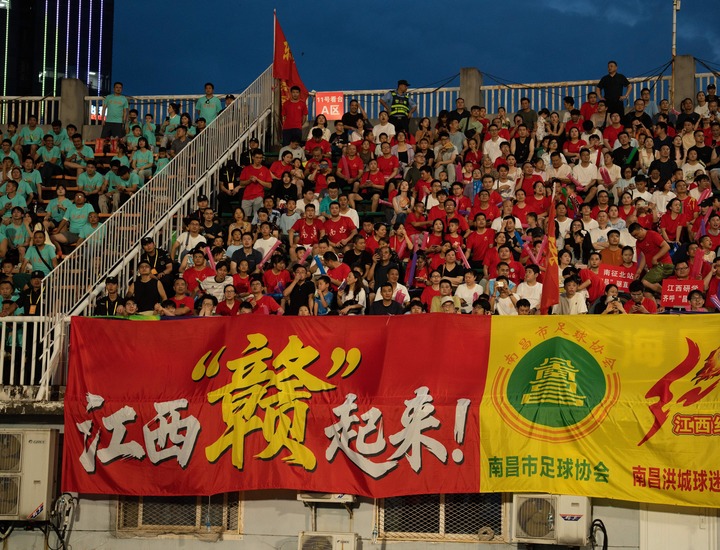
Group 1 - The Jiangxi Super Football League is significantly boosting local economies by attracting thousands of fans, leading to increased activity in sectors such as dining, transportation, accommodation, shopping, and cultural creativity [1] - The event has resulted in peak traffic at airports and high-speed train stations, with 21,000 spectators in the Shangrao division contributing to this surge [1] - The league is creating new travel trends, with fans combining match attendance with local tourism, such as visiting scenic spots like Sanqing Mountain and Songcheng [1] Group 2 - The government is focusing on unlocking the consumption potential in culture, tourism, and sports, as highlighted in the recent work report and the "14th Five-Year" sports development plan, which aims for sports consumption to exceed 2.8 trillion yuan by 2025 [3] - The league is enhancing urban image, promoting employment and entrepreneurship, and fostering inter-city exchanges, demonstrating the practical benefits of sports for the community [5] - The ongoing popularity of the league is becoming a new way for residents in Jiangxi to enjoy their weekends, providing strong momentum for urban economic growth [5]
8月PMI小幅回升 经济整体保持复苏
Qi Huo Ri Bao Wang· 2025-09-01 05:45
Group 1 - The manufacturing Purchasing Managers' Index (PMI) for August is reported at 49.4%, indicating a slight improvement of 0.1 percentage points from the previous month, but still in the contraction zone [1] - The non-manufacturing business activity index increased by 0.2 percentage points to 50.3%, while the composite PMI rose by 0.3 percentage points to 50.5%, suggesting overall economic recovery [1] - The hospitality and new orders indices in the accommodation sector, although still below 50%, showed significant month-on-month increases of over 5 percentage points, indicating strong consumer activity during the summer [1] Group 2 - The manufacturing PMI has been below the expansion threshold for five consecutive months, highlighting persistent demand issues that negatively impact certain industrial product prices, such as steel and non-ferrous metals [1] - The input price index for raw materials stands at 53.3%, reflecting a 1.8% increase, which suggests rising cost pressures that may benefit energy, non-ferrous, and steel sectors [1] - The economic recovery is characterized as weak, with production recovery outpacing demand, indicating that companies may face challenges in increasing efficiency despite production increases [2]
新动能支撑强生产——8月PMI数据点评
一瑜中的· 2025-08-31 15:35
Core Viewpoint - The manufacturing PMI showed a slight recovery in August, indicating a stabilization in production and new orders, with high-tech manufacturing sectors demonstrating strong performance [2][4][14]. Group 1: New Momentum Supporting Strong Production - In August, the PMI production index rose to 50.8%, up 0.3 percentage points from the previous month, remaining above the critical point for four consecutive months [9]. - The high-tech manufacturing PMI increased to 51.9%, a significant rise of 1.3 percentage points from the previous value, with the production index reaching around 54% [9][4]. - The manufacturing business activity expectation index improved to 53.7%, up 1.1 percentage points, with optimistic expectations in sectors like general equipment and aerospace [9][4]. - High-tech manufacturing profits turned from a decline of 0.9% in June to a growth of 18.9%, contributing to an overall acceleration in industrial profit growth [9][4]. Group 2: Data on Manufacturing PMI Recovery - The manufacturing PMI for August was reported at 49.4%, slightly up from 49.3% in the previous month [14]. - The new orders index was at 49.5%, and the new export orders index was at 47.2%, indicating continued challenges in demand [14]. - The employment index was at 47.9%, and the supplier delivery time index was at 50.5%, reflecting mixed signals in the labor market and supply chain [14]. - The raw material inventory index was at 48.0%, showing a slight increase in inventory levels compared to the previous month [14]. Group 3: Other Notable Sub-Indices - The service sector's business activity index rose to 50.5%, marking a year-to-date high, with strong performance in capital market services and transportation [17]. - The construction sector's business activity index fell to 49.1%, with new orders dropping to 40.6%, indicating a slowdown in construction activities [17][10]. - The price index for major raw materials increased, with the purchasing price index at 53.3% and the factory price index at 49.1%, suggesting rising costs in certain sectors [3][16].