信息服务业

Search documents
“十四五”规划收官之年 北京亮出高质量发展“家底”
Zhong Guo Qing Nian Bao· 2025-09-19 03:53
杨秀玲介绍,2021-2024年地区生产总值年均增长5.2%,"这一增速是在各种风险挑战冲击下实现 的,是在减量发展背景下取得的,为我国超大城市转型发展蹚出了一条新路子"。北京五年的经济增量 约1.4万亿,相当于新增了一个海淀区的经济总量。北京2024年人均地区生产总值3.2万美元,全员劳动 生产率44.4万元/人、居各省区市首位,万元地区生产总值能耗、水耗、碳排放等多项指标都为全国最 优水平。 北京市发展改革委副主任林剑华,用"基础策源力更加雄厚""经济支撑力更加突出""技术竞争力更 加强劲""创新引领力更加充沛"形容北京这座创新之城——在人工智能等新技术的支撑下,信息服务业 已成为北京第一大产业,信息服务业、科技服务业、先进制造业占GDP的比重由2020年的32.7%提升至 2024年的38.8%。 林剑华介绍,在北京,每天有300多家科技企业诞生,密度超越硅谷。截至2024年年底,北京市拥 有独角兽企业115家,专精特新"小巨人"企业1035家,均居全国城市首位;北京市人工智能企业数量超 2400家,约占全国一半,北京成为名副其实的"人工智能第一城"。 中青报·中青网记者 尹希宁 "各项指标进展顺利"" ...
智库要览丨服务贸易为全球经济发展注入更多新机遇
Sou Hu Cai Jing· 2025-09-16 07:38
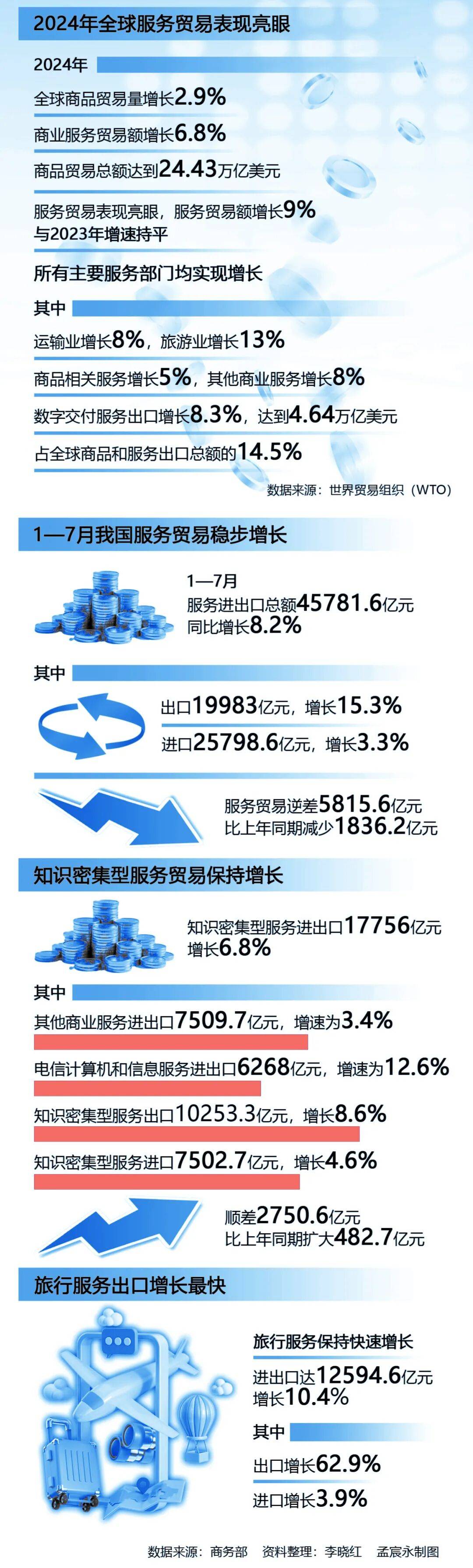
Core Viewpoint - The global service trade is increasingly becoming a key driver of trade growth, with a notable resilience in the trade system despite multiple economic challenges. Service trade is expected to grow by 9% in 2024, maintaining its growth rate from 2023, while all major service sectors are projected to experience growth [2][3][24]. Group 1: Global Service Trade Growth - The global service trade is projected to grow by 9% in 2024, with all major service sectors achieving growth, including transportation (8%), tourism (13%), and other commercial services (8%) [3][10][24]. - The total value of global goods trade is expected to reach $24.43 trillion in 2024, with a 2.9% increase in goods trade volume [3][10][24]. - Digital delivery service exports are anticipated to grow by 8.3%, reaching $4.64 trillion, accounting for 14.5% of total global goods and services exports [3][10][24]. Group 2: Regional Trade Performance - In 2024, Asia is expected to see the strongest growth in service trade at 13%, while Africa's service trade growth is projected at only 3% [4][10][24]. - North America is also expected to exceed import growth expectations, while Europe is experiencing a trade contraction [4][10][24]. Group 3: Inclusive Development in Service Trade - The demand for inclusive development in global service trade is on the rise, with digitalization playing a positive role in promoting this development [5][26]. - The "Global Service Trade Inclusive Development Trends Report 2025" outlines eight strategic recommendations to enhance inclusive service trade development, including improving digital infrastructure and supporting developing countries [6][26][27]. Group 4: China's Service Trade Dynamics - China's service trade is entering a phase of rapid development, with a focus on high-quality and diversified services, particularly in sectors like information services and finance [16][21][29]. - In the first seven months of 2023, China's service trade reached a total of 45,781.6 billion yuan, reflecting an 8.2% year-on-year growth [10][30][31].

宏观政策持续发力 三季度经济有望保持稳中有进发展态势
Zhong Guo Zheng Quan Bao· 2025-09-15 22:39
Economic Growth Overview - In August, the industrial added value of large-scale enterprises increased by 5.2% year-on-year, while the total retail sales of consumer goods grew by 3.4% year-on-year. From January to August, fixed asset investment (excluding rural households) rose by 0.5% year-on-year [1] - The spokesperson from the National Bureau of Statistics indicated that the economic growth remains stable, and macro policies will focus on stabilizing employment, enterprises, markets, and expectations, while promoting steady and healthy economic development [1] Domestic Demand Expansion - The effects of policies aimed at expanding domestic demand continue to manifest, with the third batch of consumption upgrade policies being implemented, leading to a rapid increase in sales of related goods [2] - In August, retail sales of household appliances, furniture, and cultural office supplies maintained double-digit growth [2] - The production sector is also benefiting from these policies, with significant year-on-year increases in the manufacturing of boilers and electric motors at 11.9% and 14.8%, respectively [2] Innovation and New Growth Drivers - Policies promoting innovation are enhancing new growth drivers, with the "Artificial Intelligence+" initiative gaining traction and digital economy development showing positive trends [3] - The stock market in August saw increased activity, which is beneficial for improving market expectations and enhancing development vitality [3] Private Investment Growth - A series of supportive measures for the development of the private economy are optimizing the environment for private investment, leading to significant growth in high-tech industries [4] - From January to August, private investment in the information service industry grew by 26.7%, while professional technical services saw a 17.6% increase [4] - Private capital is steadily participating in major national infrastructure projects, with private investment in infrastructure rising by 7.5%, outpacing overall infrastructure investment growth by 5.5 percentage points [4] Future Outlook - Despite challenges faced by some private enterprises, the future development space for the economy remains broad, supported by the growth in green industries and the implementation of the Private Economy Promotion Law [5] - The continuous implementation of macro policies is expected to maintain a steady and progressive economic trend in the third quarter [6]
8月经济边际改善,政策仍需适时加力丨温彬专栏
2 1 Shi Ji Jing Ji Bao Dao· 2025-09-15 22:38
Core Viewpoint - The economic indicators for August show a marginal improvement compared to July, indicating a gradual recovery in the macroeconomic environment, supported by ongoing policy efforts aimed at achieving annual economic and social development goals [1][6][13]. Economic Indicators - The manufacturing PMI for August is at 49.4%, a slight increase of 0.1 percentage points from the previous month, indicating a less severe contraction [3]. - The industrial added value growth rate for August decreased by 0.5 percentage points to 5.2%, a smaller decline than the 1.1 percentage points drop in July [3]. - Retail sales growth for social consumer goods fell by 0.3 percentage points to 3.4%, again a smaller decline than the previous month's 1.1 percentage points [3]. - Fixed asset investment growth for January to August is at 0.5%, slowing by 1.1 percentage points compared to January to July, which is less than the 1.2 percentage points decline from the previous month [3]. Export and Service Sector Performance - Exports maintained resilience with a year-on-year growth of 4.4% in August, down from 7.2% in July, but still reflecting a two-year compound growth rate of 6.5% [3][4]. - The service sector showed strong performance, with the service production index falling only 0.2 percentage points to 5.6% in August, and the business activity index rising to 50.5%, the highest this year [4]. New Growth Drivers - New growth drivers are performing strongly, with the added value of equipment manufacturing and high-tech manufacturing increasing by 8.1% and 9.3% year-on-year, respectively [4]. - Investment in information services and aerospace manufacturing grew significantly, with year-on-year increases of 34.1% and 28.0% [4]. Price Trends - The CPI for August showed a year-on-year decrease of 0.4%, while the core CPI increased by 0.9%, marking the highest growth in 18 months, indicating a release of service consumption potential [4]. - The PPI remained flat month-on-month, ending an eight-month decline, with a year-on-year decrease of 2.9%, narrowing from 3.6% in the previous month [4]. Monetary and Fiscal Policy - The loan balance growth in August was 6.8%, slightly down from 6.9% in July, while the social financing stock grew by 8.8%, down from 9.0% [5]. - The government issued 1.4 trillion yuan in new debt in August, a decrease of 251.9 billion yuan year-on-year, indicating a reduced support role for government debt in social financing [10]. Policy Coordination - The coordination between fiscal and monetary policies is expected to strengthen, with discussions on financial market operations and government bond issuance management [11]. - New policies aimed at promoting consumption and stabilizing the real estate market are being introduced, including measures to enhance service consumption and support housing market recovery [12]. Overall Economic Outlook - The current macroeconomic policy is characterized by a gradual and supportive approach, with potential for more robust counter-cyclical adjustments if economic pressures increase [13].
解码北京经济的韧性和潜力
Bei Jing Shang Bao· 2025-09-15 16:14
Core Insights - Beijing's economy is making solid progress towards high-quality development, with a focus on new technologies and industries, as highlighted in the recent press conference on the achievements during the 14th Five-Year Plan period [1] Economic Growth and Structure - The total economic output of Beijing is expected to exceed 5 trillion yuan, with a significant increase in the value added by the information service industry, which has surpassed 1 trillion yuan, making it the city's largest pillar industry [3][7] - The GDP is projected to grow by an average of 5.2% annually from 2021 to 2024, with a total economic increment of approximately 1.4 trillion yuan during the 14th Five-Year Plan [3] - By 2024, the per capita GDP is expected to reach $32,000, and labor productivity is projected at 444,000 yuan per person, leading among all provinces and cities [3] Technological Innovation - Beijing is home to over 2,400 artificial intelligence companies, accounting for about half of the national total, establishing itself as the "capital of artificial intelligence" [5][7] - The city has integrated education and technology talent initiatives to enhance the overall efficiency of its innovation system, with significant investments in research and development [6][7] - The commercial space industry is also growing, with a notable presence of core R&D units and unicorn companies [6] Consumer Market Dynamics - The consumer market in Beijing is expected to exceed 3 trillion yuan by 2025, driven by new consumption trends such as pop culture, events, and concerts [8] - Service consumption has seen an average annual growth of over 7.5% in the past four years, becoming a key driver of overall consumption [8] - Investment in high-tech industries has increased significantly, with the proportion of high-tech industry investment rising from 9.5% in 2020 to 22.6% in 2024 [8] Rural Development and Urban Integration - Beijing is advancing urban-rural integration, with initiatives to enhance rural tourism and local economies, leading to a 20% increase in collective income for demonstration villages [9] - The city is also focusing on sustainable practices and the "Two Mountains" concept, promoting both technological innovation and smart agriculture [9] Future Outlook - The dual drivers of technological and consumption innovation are expected to continue supporting Beijing's high-quality development, with a focus on artificial intelligence, digital economy, and new consumption models [9]
8月份经济运行总体平稳 社会消费品零售总额环比增速由负转正
Mei Ri Jing Ji Xin Wen· 2025-09-15 15:41
Economic Overview - In August, the overall economic operation remained stable, with solid progress in high-quality development, characterized by steady production growth, expanding domestic demand, increasing foreign trade and reserves, overall stability, and ongoing transformation and upgrading with a prominent role of innovation [1] Consumer Market - In August, the retail sales of consumer goods reached 39,668 billion yuan, a year-on-year increase of 3.4%, showing resilience in the consumption market [2] - From January to August, the total retail sales of consumer goods amounted to 323,906 billion yuan, with a year-on-year growth of 4.6% [2] - The rural consumption market outpaced urban areas, with retail sales in rural areas growing by 4.6% year-on-year, 1.4 percentage points higher than urban growth [2] Industrial Production - In August, the industrial added value of enterprises above designated size grew by 5.2% year-on-year, maintaining a rapid growth trend [3] - The manufacturing sector saw an increase of 5.7%, while high-tech manufacturing grew by 9.3%, indicating structural optimization within the industrial economy [3] Investment Trends - Fixed asset investment showed resilience despite short-term pressures, with a total of 326,111 billion yuan from January to August, reflecting a year-on-year increase of 0.5% [4] - Infrastructure investment grew by 2.0%, while manufacturing investment increased by 5.1%, indicating ongoing support for economic growth [4] - High-tech industries, such as information services and aerospace manufacturing, experienced significant investment growth, with increases of 34.1% and 28.0% respectively [4] Policy Impact - The implementation of proactive macro policies has positively influenced economic performance, particularly in expanding domestic demand and enhancing production efficiency [5][6] - The "Artificial Intelligence+" initiative has led to a notable increase in the production of new products, such as industrial robots and drones, contributing to the growth of the digital economy [6]
“十四五”时期北京GDP预计超5万亿元!经济增量等于“新增一个海淀区”
券商中国· 2025-09-15 15:13
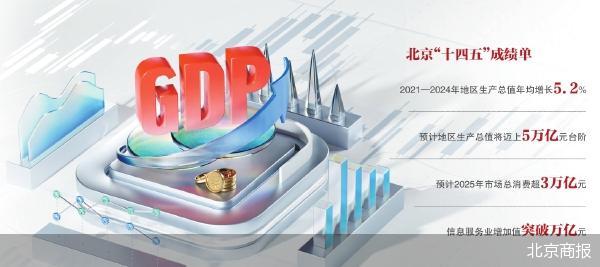
Core Viewpoint - Beijing's economic development during the "14th Five-Year Plan" has achieved significant progress, with high-value patents and economic growth exceeding expectations, indicating a solid step towards high-quality development [1][2]. Economic Growth and Structure - Beijing's GDP is expected to exceed 5 trillion yuan, with an economic increment of approximately 1.4 trillion yuan over five years, equivalent to the total economic output of Haidian District [2]. - By 2024, the per capita GDP of Beijing is projected to reach $32,000, with labor productivity at 444,000 yuan per person, leading among all provinces and cities in China [2]. Industry and Demand Dynamics - The average annual GDP growth rate for Beijing from 2021 to 2024 is projected at 5.2%, supported by strong industrial foundations and demand [3]. - The information service industry has become the largest pillar of Beijing's economy, with its added value surpassing 1 trillion yuan [3]. - The financial sector's asset scale exceeds 220 trillion yuan, accounting for about half of the national total [3]. Investment Trends - The proportion of high-tech industry investment in Beijing has increased from 9.5% in 2020 to 22.6% in 2024, marking a historical high [4]. Technological Innovation - Beijing aims to become an international technology innovation center, with R&D investment intensity maintained at around 6%, ranking among the top global innovation cities [5]. - The city has launched 158 large models in artificial intelligence, accounting for about 30% of the national total, and has seen significant applications of innovative robotic products [5]. Collaborative Development - The economic total of the Beijing-Tianjin-Hebei region is expected to reach 11.5 trillion yuan by 2024, with all three areas' GDP growth rates exceeding the national average [7]. - The output of technology contracts from Beijing to Tianjin and Hebei has reached 230.87 billion yuan during the "14th Five-Year Plan," nearly double that of the previous five years [8].
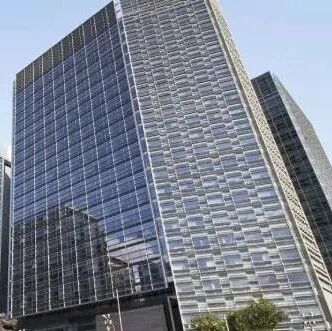
“十四五”时期北京GDP预计跨过5万亿!经济增量等于“新增一个海淀区”
Zheng Quan Shi Bao Wang· 2025-09-15 12:27
Core Insights - Beijing's economic development has made significant progress during the "14th Five-Year Plan" period, with GDP expected to exceed 5 trillion yuan and an economic increment of approximately 1.4 trillion yuan, equivalent to the total economic output of a district like Haidian [1][2] - The city has focused on high-quality development, with a strong emphasis on technological and industrial innovation, aiming to enhance its economic vitality and opportunities [1][2] Economic Growth - The average annual GDP growth rate for Beijing from 2021 to 2024 is projected at 5.2%, indicating a recovery trend despite various challenges [2] - The information service industry has become the largest pillar of Beijing's economy, with its added value surpassing 1 trillion yuan [2][4] Investment Trends - Investment in high-tech industries has increased significantly, with the proportion rising from 9.5% in 2020 to 22.6% in 2024, marking a historical high [3] - The city is directing investments towards future development, urban governance, and improving quality of life [3] Technological Innovation - Beijing aims to establish itself as an international technology innovation center, with R&D investment intensity maintained at around 6%, ranking among the top global innovation cities [4] - The city has launched 158 large models in artificial intelligence, accounting for about 30% of the national total, and has seen a significant increase in the application of robotic products [4][5] Regional Collaboration - The collaboration among Beijing, Tianjin, and Hebei has led to a combined economic total of 11.5 trillion yuan by 2024, with all three regions' GDP growth rates exceeding the national average [6][7] - The "Beijing R&D, Tianjin-Hebei manufacturing" model is evolving, with technology contract transactions reaching 230.87 billion yuan during the "14th Five-Year Plan" period, nearly double that of the previous five years [7]
GDP迈上5万亿台阶 解码北京经济的韧性和潜力
Bei Jing Shang Bao· 2025-09-15 12:10
Core Insights - Beijing's economy is making solid progress towards high-quality development during the 14th Five-Year Plan period, with a projected GDP exceeding 5 trillion yuan [1][5][9] - The information service industry has become the largest pillar industry in Beijing, with its added value surpassing 1 trillion yuan, maintaining the top position nationwide [1][5][9] - Consumption has seen new highlights, with service consumption growing at an average annual rate of over 7.5% in the past four years, becoming a major driver of economic growth [1][10][11] Economic Growth and Structure - The GDP is expected to achieve a significant increase of approximately 1.4 trillion yuan over five years, with an average annual growth rate of 5.2% from 2021 to 2024 [5][9] - By 2024, the per capita GDP is projected to reach $32,000, with labor productivity at 444,000 yuan per person, leading among all provinces and cities [5][9] - The financial sector's asset scale exceeds 220 trillion yuan, accounting for about half of the national total, while the manufacturing sector is optimizing towards high-end industries [5][8] Technological Innovation - Beijing is recognized as the "Artificial Intelligence Capital," with over 2,400 AI companies, accounting for about half of the national total [7][9] - The city has established a robust innovation ecosystem, with significant investments in R&D, maintaining an intensity of around 6% of GDP [7][9] - The integration of new technologies has led to the development of various innovative products, including robots and advanced manufacturing technologies [8][9] Consumption Trends - The market total consumption is expected to exceed 3 trillion yuan by 2025, with fixed asset investment surpassing 1 trillion yuan [10][11] - The "first store economy" is leading nationwide, with nearly 2,000 large-scale events held in 2024, averaging five events per day [10][11] - Over 70% of residents engage in short-distance vacations annually, indicating a growing trend in leisure and tourism [10][11] Urban-Rural Integration - Beijing is advancing urban-rural integration, enhancing rural service industries and increasing collective income by over 20% in demonstration areas [11][12] - The rural tourism revenue is projected to exceed 3.5 billion yuan in 2024, reflecting the successful implementation of rural revitalization strategies [11][12] - The dual drive of technological and consumption innovation is optimizing the economic structure and enhancing development momentum [11][12]

1—8月 制造业超半数行业民间投资保持两位数增长
Sou Hu Cai Jing· 2025-09-15 11:00
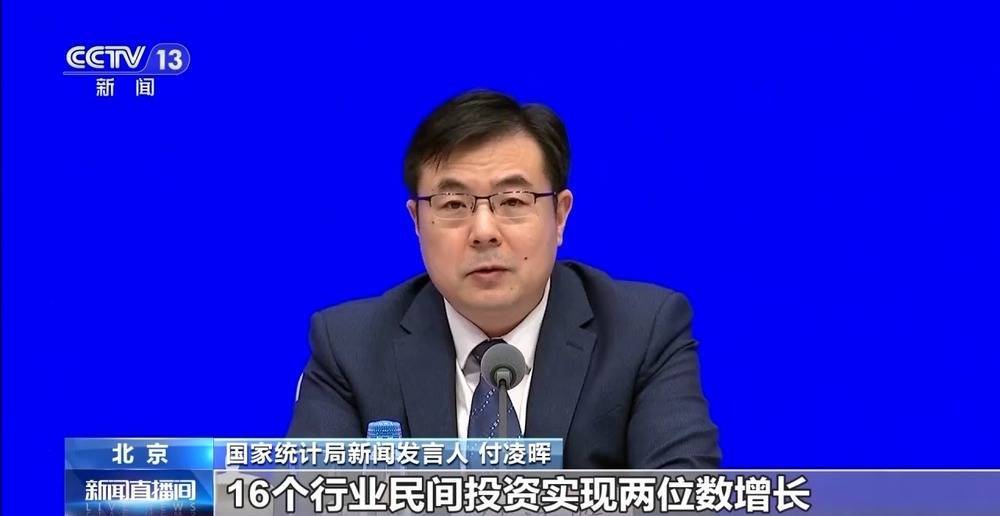
Group 1 - The core viewpoint is that the environment for the development of the private economy in China has been continuously optimized, leading to a rapid growth in private investment in the manufacturing sector [1] - From January to August, private investment in the manufacturing sector increased by 4.2% year-on-year, which is 1.2 percentage points higher than the growth rate of private project investment, accounting for 40.6% of total private investment [1] - Among 31 major manufacturing industries, 16 industries achieved double-digit growth in private investment, with notable increases in the automotive manufacturing sector (22.6%) and the railway, shipbuilding, aerospace, and other transportation equipment manufacturing sectors (16.2%) [3] Group 2 - There has been a significant increase in innovation investment, with private investment in the information service industry growing by 26.7% and in the professional technical service industry by 17.6% from January to August [5] - Private capital participation in major national infrastructure projects in sectors such as railways, energy, and water conservancy is steadily advancing, with private investment in infrastructure growing by 7.5%, which is 5.5 percentage points higher than the overall infrastructure investment growth rate [7] - In the electricity, gas, and water production and supply industry, private investment increased by 23.5% [7]