军事装备

Search documents
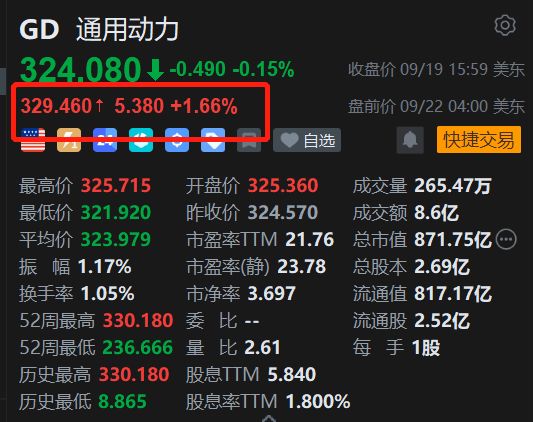
美股异动丨通用动力盘前涨1.66% 子公司与戴姆勒卡车扩大军事合作协议
Ge Long Hui A P P· 2025-09-22 09:27
Group 1 - General Dynamics (GD) shares rose by 1.66% in pre-market trading on September 22 [1] - General Dynamics Land Systems unit has partnered with Daimler Trucks to develop, produce, and maintain military logistics vehicles in certain markets [1] - This collaboration expands their agreement under the Canadian government's logistics vehicle modernization program, with the contract expected to be awarded in 2024 [1] Group 2 - The closing price of General Dynamics on September 19 was $324.080, with a pre-market price of $329.460 on September 22 [1] - The total market capitalization of General Dynamics is approximately $87.175 billion [1] - The stock has a 52-week high of $330.180 and a low of $236.666 [1]


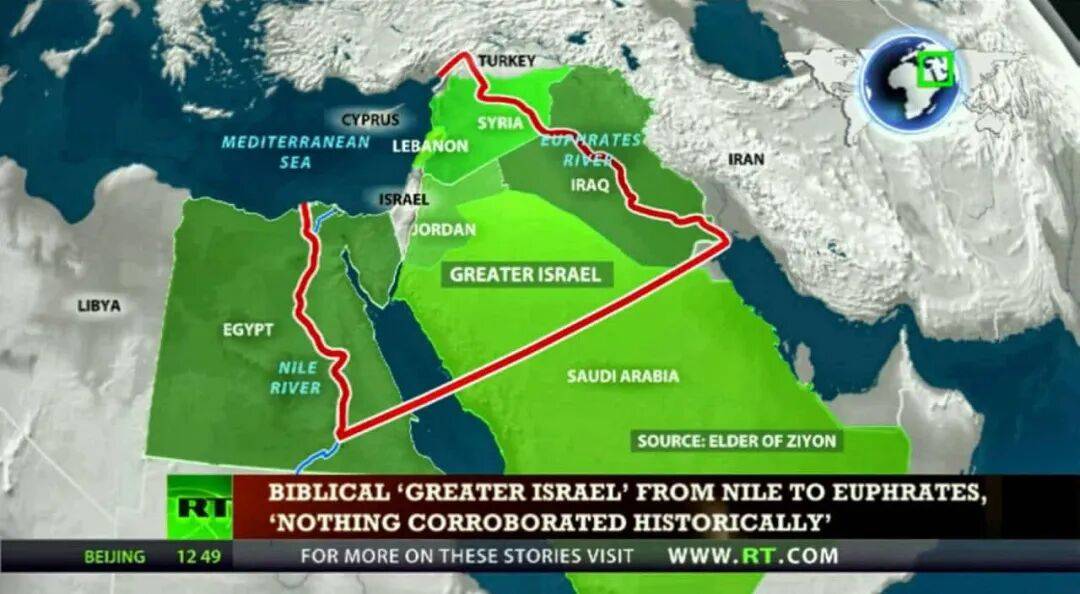
巴基斯坦和沙特军事结盟,印度是否会看向以色列?
Hu Xiu· 2025-09-22 06:42
Core Points - Saudi Arabia and Pakistan signed a mutual defense agreement establishing the principle of "an attack on one is an attack on both" amid changing security dynamics in the Middle East [1][2] - The agreement is seen as a response to recent events, particularly the May 7 air conflict between India and Pakistan, and Israel's attack on Qatar, which heightened security concerns among Arab nations [3][4] Strategic Intent - The agreement reflects a long-term cooperation between Saudi Arabia and Pakistan, but its formalization is a direct response to recent regional security developments [3][4] - The Israeli military's expansionist ambitions, as indicated by its "Greater Israel" map, have raised alarms in the Islamic world, prompting Saudi Arabia to seek stronger defense ties with Pakistan [5][7] Regional Implications - The agreement may lead to other Gulf countries pursuing similar defense collaborations with Pakistan, given the historical military support Pakistan has provided to Gulf nations [8][9] - Saudi Arabia and Pakistan's partnership is bolstered by shared religious ties and mutual interests, creating a conducive environment for defense agreements [9][10] Nuclear Deterrence - Pakistan's nuclear capabilities are viewed as a significant deterrent for the Islamic world, although their practical impact on regional security dynamics remains limited [10][11] - The agreement does not explicitly obligate Pakistan to provide nuclear protection to Saudi Arabia, but it is framed as a comprehensive defense pact [10][11] Shift in Security Dynamics - The agreement signals a potential shift away from reliance on the United States for security in the Gulf region, as recent conflicts have led Gulf states to seek alternative partnerships [13][14] - The formalization of security arrangements between Saudi Arabia and Pakistan represents a transition from informal military support to official defense commitments [14] Impact on South Asia - The agreement enhances Pakistan's diplomatic leverage against India, particularly in light of recent tensions and military confrontations [15][16] - The evolving relationship between Gulf states and India may be affected by this agreement, as Saudi Arabia seeks to balance its interests in both regions [19] Military Competition - The signing of the agreement may contribute to an ongoing arms race in the region, with both Saudi Arabia and India being major arms importers [20] - The recent military events have prompted Gulf states to consider diversifying their military procurement, potentially looking towards Chinese defense systems [20]
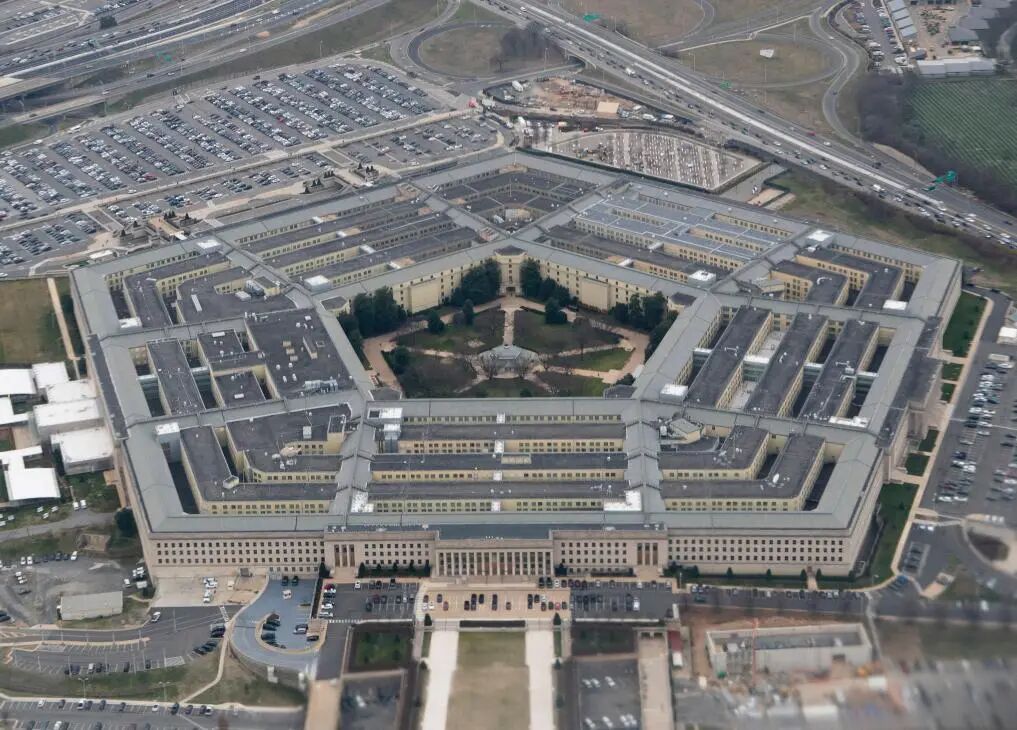
美媒曝光:五角大楼确认军备库存短缺
Zhong Guo Xin Wen Wang· 2025-09-21 05:04
Core Viewpoint - The U.S. has paused military sales to European countries, including the "Patriot" air defense system, due to the need to prioritize replenishing its own military inventory [1][3]. Group 1: Military Sales Impact - The Pentagon has reportedly lost interest in selling the "Patriot" air defense system to Denmark, valued at several billion dollars, after weeks of advancing procurement discussions [3]. - The U.S. has confirmed shortages in certain weaponry, leading to a suspension of orders from European nations [3]. - The duration of the suspension and the specific weaponry affected remain unclear, but prolonged measures could create new tensions between the U.S. and its European allies, potentially undermining U.S. military influence in Europe [3]. Group 2: Inventory Concerns - In July, the U.S. had previously suspended some military aid to Ukraine due to concerns over declining domestic arms inventories [3]. - Recent military actions, including airstrikes in Yemen and arms provision to Israel, have contributed to the rapid depletion of U.S. military stockpiles [3].
俄罗斯国防部:大规模使用无人机和地面机器人已成为西方演习的特点之一。
Xin Lang Cai Jing· 2025-09-16 15:56
Core Viewpoint - The Russian Ministry of Defense highlights that the large-scale use of drones and ground robots has become a defining characteristic of Western military exercises [1] Group 1 - The integration of unmanned aerial vehicles (UAVs) and ground robotics in military training reflects a shift in modern warfare tactics [1] - This trend indicates an increasing reliance on technology in military operations, potentially influencing future defense strategies [1]

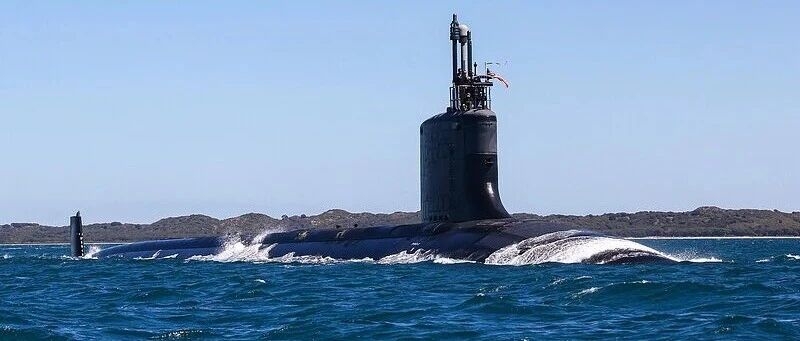
澳大利亚拟巨资打造核潜艇船坞
Xin Hua She· 2025-09-14 09:19
Group 1 - The Australian government will invest 12 billion AUD (approximately 8 billion USD) to upgrade the Henderson shipyard in Western Australia, aiming to establish it as a maintenance center for nuclear submarines over the next 20 years [1] - The total expenditure for developing the Henderson submarine dock may reach 25 billion AUD (16.6 billion USD) [1] - Australia currently lacks the infrastructure to service nuclear submarines, prompting concerns about nuclear proliferation risks associated with the trilateral security partnership with the US and UK [1] Group 2 - Recent defense investment announcements from Australia include a 10 billion AUD (6.6 billion USD) purchase of 11 Japanese "Aegis" class frigates and an investment of 1.7 billion AUD (1.1 billion USD) to develop the "Ghost Shark" underwater drone fleet [2]
澳大利亚拟斥资250亿澳元打造核潜艇船坞
财联社· 2025-09-14 08:32
Group 1 - Australia will invest 12 billion AUD (approximately 8 billion USD) to upgrade the Henderson shipyard in Western Australia, aiming to establish it as a maintenance center for nuclear submarines under the AUKUS alliance over the next 20 years [1] - The total expenditure for developing the Henderson submarine dock may reach 25 billion AUD (16.6 billion USD) [1] - Australia currently lacks the infrastructure to service nuclear submarines, prompting the need for this investment [1] Group 2 - The AUKUS partnership, which includes the US, UK, and Australia, has raised international concerns regarding nuclear proliferation risks and the potential destabilization of regional security [2] - The US Department of Defense is reassessing the AUKUS agreement to ensure it aligns with the "America First" agenda, while assurances have been given by US officials that the partnership will continue [2] - Recent Australian defense investments include a 10 billion AUD (6.6 billion USD) purchase of 11 Japanese "Mikuma" class frigates and 1.7 billion AUD (1.1 billion USD) for the development of the "Ghost Shark" underwater drone fleet [2]
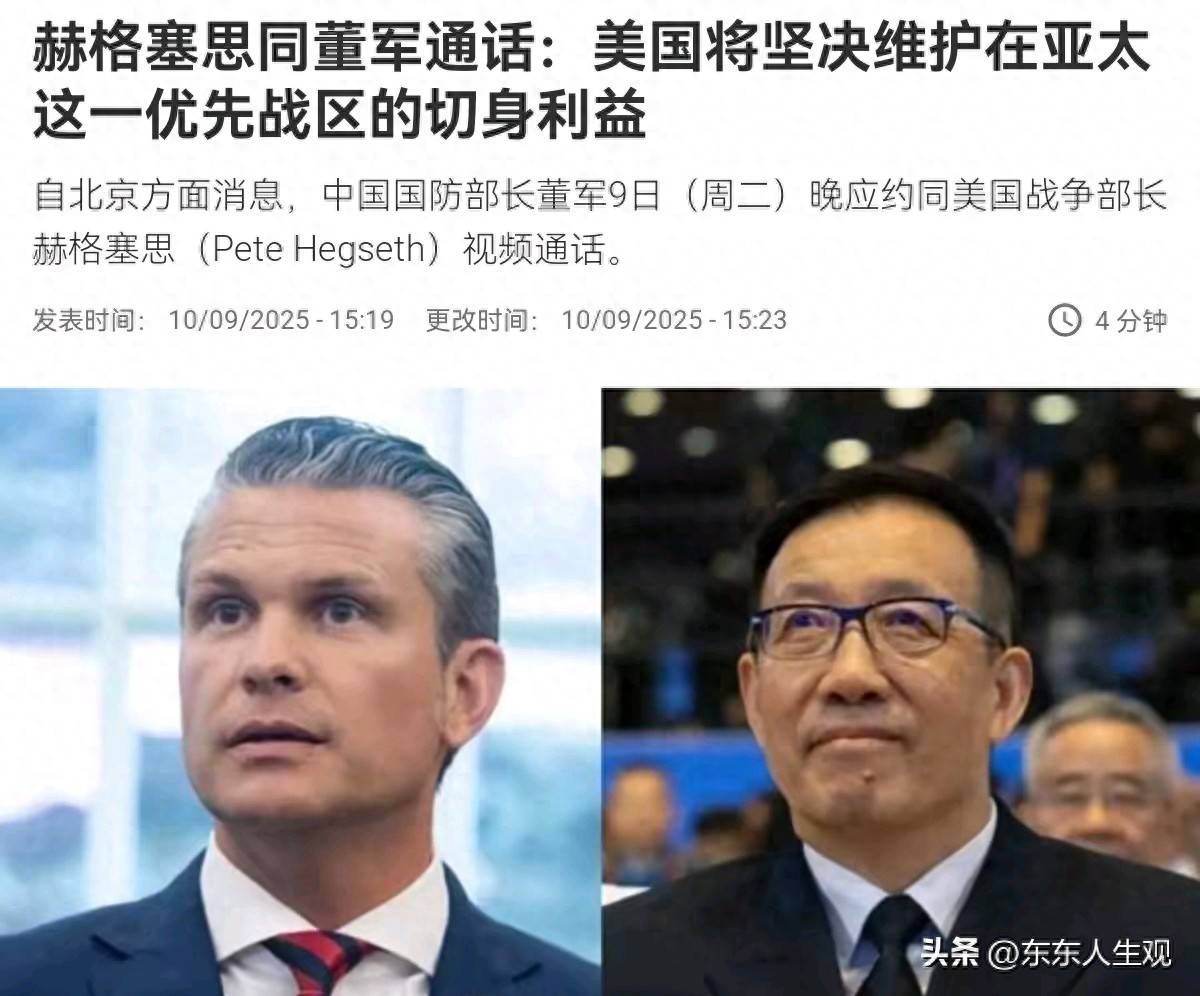
在中美金融终极对决之前,还要有一场武器性能的比拼!
Sou Hu Cai Jing· 2025-09-14 02:34
Group 1 - The article discusses the ongoing strategic competition between China and the U.S., emphasizing that any potential interest rate cuts by the Federal Reserve will not immediately lead to a direct financial confrontation between the two nations [1] - It highlights that both countries are likely to engage in strategic maneuvers in other areas before any financial conflict arises, as evidenced by recent communications between their defense ministers [1] - China's actions in the South China Sea are interpreted as a demonstration of its commitment to its core interests, while the U.S. is expected to pursue diplomatic channels before escalating tensions with China over Venezuela [1] Group 2 - Russia's decision to sell advanced aircraft engine technology to China signifies a new level of military technology cooperation between the two nations [4] - Additionally, Russia has reduced the price of natural gas exports to China to 30% lower than European spot market prices, indicating significant strategic implications for energy cooperation [4] - NATO's unexpected stance on Russian drone incursions into Poland, which downplays the threat, suggests a nuanced shift in geopolitical dynamics [4] Group 3 - The article posits that the most suitable stage for strategic competition between China and the U.S. is the vast area bordering Russia and Europe, where both can showcase their strategic capabilities [7] - It suggests that only after demonstrating their strengths in this arena will China and the U.S. be able to engage in a final financial showdown, with outcomes dependent on their economic power and financial acumen [7]
【comex白银库存】9月11日COMEX白银库存较上一日增加43.07吨
Jin Tou Wang· 2025-09-12 10:51
Group 1: Silver Market Insights - COMEX silver inventory recorded at 16,314.20 tons on September 11, an increase of 43.07 tons from the previous day [1][2] - COMEX silver price closed at $42.06 per ounce on September 11, up 1.00%, with an intraday high of $42.33 and a low of $41.33 [1] Group 2: Geopolitical Developments - Poland took unprecedented military action by shooting down suspected Russian drones, marking the first direct fire by a NATO member during the Ukraine-Russia conflict [3] - NATO's swift response emphasized the alliance's commitment to defending member territories, with Poland's Prime Minister labeling the incident as a "major provocation" [3] - The incident may indicate a strategic test by Russia of NATO's air defense capabilities, suggesting potential for larger-scale confrontations [3][4]
无人机事件触动波兰紧绷神经,北约、欧盟内部已炸锅
Jin Shi Shu Ju· 2025-09-11 14:17
Core Viewpoint - The recent incursion of Russian drones into Polish airspace has heightened tensions within NATO and the EU, marking a significant test of their collective security response [1][5]. Group 1: Military and Defense Implications - Poland has engaged its own and NATO aircraft to intercept a portion of the 19 Russian drones that entered its airspace, indicating a proactive defense strategy [1]. - The incident has prompted calls for the urgent development of a "drone wall" across the EU's eastern flank to enhance air defense capabilities against potential Russian threats [3]. - Investment in air defense is deemed critical, especially as the U.S. reportedly reduces security funding for European forces near the Russian border [4]. Group 2: Economic and Sanction Responses - The EU is reportedly finalizing its 19th sanctions package against Russia, with discussions on new economic measures to compel President Putin to negotiate [1]. - The potential for a dual strategic response is emphasized, advocating for both enhanced deterrence and stronger support for Ukraine to counter Russian aggression [5]. Group 3: Political Reactions and Statements - Polish Prime Minister Tusk has characterized the situation as the closest the country has been to open conflict since World War II, framing it as a declaration of war by Russia against the free world [5]. - NATO Secretary General Stoltenberg has expressed confidence in the alliance's ability to defend its territory, highlighting the importance of being proactive in security measures [4].
不听中方的劝告,印度又被美国痛宰一刀,特朗普坐等莫迪上门求饶
Sou Hu Cai Jing· 2025-09-07 10:14
Group 1 - India aims to reach a bilateral trade agreement with the U.S. by November, indicating a significant concession from the Modi government [1][3] - Indian Commerce Minister Goyal expressed the desire to restore trade negotiations, reflecting a shift in India's stance after facing U.S. tariffs [3][18] - The U.S. imposed a 25% tariff on Indian goods, raising the total tariff rate to 50% on over 55% of Indian exports to the U.S., severely impacting labor-intensive sectors like textiles and jewelry [11][12] Group 2 - The trade dispute has led to a slowdown in India's GDP growth, potentially dropping below 6%, marking the lowest level since the pandemic [15][21] - India's military procurement has been affected, with delays in acquiring U.S. weapons systems due to the trade tensions, impacting military modernization efforts [21] - The loss of market share in the U.S. for Indian textiles and jewelry is significant, as the high tariffs effectively block these products from entering the market [23]