
医药研发

Search documents
2025中非创新合作与发展论坛武汉开幕,39个项目签约 23个平台挂牌
Chang Jiang Ri Bao· 2025-11-20 09:49
Group 1 - The 2025 China-Africa Innovation Cooperation and Development Forum was held in Wuhan, attended by approximately 800 representatives from 43 countries and regions, focusing on innovation and cooperation opportunities [1] - The forum featured 12 parallel sessions, including a project promotion meeting for industrial cooperation between China and African countries, emphasizing areas such as technology innovation, modern agriculture, and health [1] - A total of 39 cooperation agreements were signed during the forum, including the establishment of the China-Africa Photovoltaic Industry Alliance, marking a shift towards ecological collaboration in renewable energy [1] Group 2 - The Jiangxia Laboratory signed a memorandum of cooperation with Tanzania's National Public Health Laboratory to enhance Tanzania's capabilities in pharmaceutical research and infectious disease prevention [2] - The main forum released three significant documents, including the "African Food-Water Resources-Environmental Protection and Development Scientific Action Plan (2026-2030)" and the "African Industrialization Blue Book (2024) - Focus on New Energy Industry" [2]
毕得医药股价涨5.01%,国投瑞银基金旗下1只基金重仓,持有5.32万股浮盈赚取19.26万元
Xin Lang Cai Jing· 2025-11-20 06:19
Group 1 - The core viewpoint of the news is that Bid Pharma has seen a stock price increase of 5.01%, reaching 75.90 CNY per share, with a total market capitalization of 6.898 billion CNY [1] - Bid Pharma focuses on the front end of the new drug research and development industry chain, providing innovative drug molecular building blocks and scientific reagents [1] - The main business revenue composition includes: 43.26% from molecular building block heterocyclic compounds, 23.32% from molecular building block aromatic compounds, 16.36% from molecular building block aliphatic compounds, 10.57% from catalysts and ligands, and 6.49% from life science reagents [1] Group 2 - The Guotou Ruijin Healthcare Mixed A Fund holds 53,200 shares of Bid Pharma, accounting for 2.84% of the fund's net value, ranking as the ninth largest holding [2] - The fund has achieved a year-to-date return of 32.49%, ranking 2279 out of 8136 in its category [2] - The fund manager, Liu Zexu, has a tenure of 2 years and 71 days, with the best fund return during this period being 31.19% [3]

朗新集团第二总部落户武汉光谷 AI重塑能源产业助推“双碳”战略
Chang Jiang Shang Bao· 2025-11-19 23:48
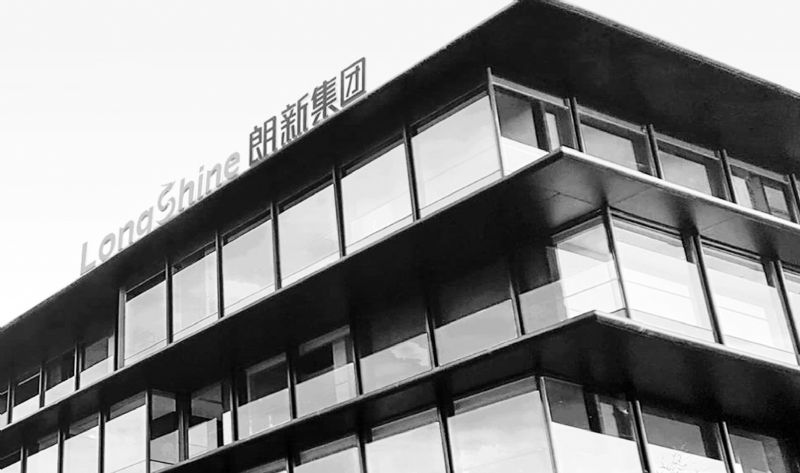
Core Insights - Longxin Group has officially established its headquarters in Wuhan, marking a significant step in its strategic layout and showcasing its "AI + Energy" integration innovations [2][8] - The company plans to invest 3 billion yuan in the East Lake High-tech Zone over the next five years to develop its energy integration business headquarters [3][8] Company Overview - Longxin Group, founded in 2003 and listed on the Shenzhen Stock Exchange in 2017, focuses on AI-driven energy technology strategies, utilizing digitalization, AI, IoT, and power electronics to promote green development [3][6] - The company reported a net profit of 106 million yuan for the first three quarters of 2025, a year-on-year decrease of approximately 34%, primarily due to rapid revenue recognition in the previous year [3] Technological Developments - The newly established "Longxin Jiugong Artificial Intelligence Laboratory" aims to develop AI technologies for energy systems, including virtual power plants and market trading [5][8] - The laboratory will collaborate with local universities to foster talent and innovation in AI and energy sectors [5] Regional Development - Wuhan has become a hub for various enterprises, including Longxin Group, due to its favorable business environment and abundant talent pool, with over 130,000 university students [6][7] - The East Lake High-tech Zone has optimized its business environment and introduced policies to support technological innovation, contributing to the growth of the AI and energy sectors [7][8] Strategic Goals - Longxin Group aims to leverage its Wuhan headquarters to focus on key areas such as renewable energy consumption, market trading, and carbon neutrality initiatives [8]

11.19犀牛财经晚报:闪存全面大幅涨价 1吨鸭绒从17万元涨到58万元
Xi Niu Cai Jing· 2025-11-19 10:32
Group 1: QDII and Market Trends - Several QDII funds tracking the Nasdaq 100 index have issued premium risk warnings, indicating that their secondary market trading prices are significantly higher than the reference net asset values [1] - The price of domestic gold jewelry has rebounded above 1290 yuan per gram, with notable increases from various brands, reflecting a halt in the previous downward trend [1] - Flash memory prices have seen a substantial increase, with the highest rise reaching 38.46%, indicating a strong demand in the semiconductor market [1] Group 2: AI Toy Market Growth - The AI toy market in China is projected to grow to 29 billion yuan by 2025, driven by advancements in materials and technology, as well as the popularity of interactive AI toys among young consumers [2] Group 3: Price Surge in Down Jackets - Due to a cold wave, the price of duck down has surged from 170,000 yuan per ton to 580,000 yuan, significantly impacting the cost of down jackets [2] Group 4: Corporate Announcements - Dongfang Electric's subsidiary plans to establish a joint venture with Anhui Waneng Energy, with a registered capital of approximately 1.857 billion yuan [3] - Guangyuyuan announced the resignation of its vice president due to work adjustments, effective immediately [4] - Tianyin Holdings received approval from the China Securities Regulatory Commission for a stock issuance to specific investors [5] - Liyuan Technology plans to reduce its shareholding by up to 2.03% due to operational needs [6][7] - Kanglongda's shareholder intends to reduce their stake by up to 3% through various trading methods [8] Group 5: Regulatory Actions and Market Responses - Jieqiang Equipment received a corrective order from the Tianjin Securities Regulatory Bureau due to internal control deficiencies [9] - Jinyuan Co. has seen its stock rise significantly, attributed to the increase in lithium carbonate prices, although the product is still in the trial production phase [10] - Yangguang Nuohuo's acquisition of Jiangsu Langyan Life Science has been accepted for review by the Shanghai Stock Exchange [10] - Puluo Pharmaceutical plans to repurchase shares worth between 180 million and 360 million yuan [11] - Dafeng Industrial won a bid for a stage equipment project worth 165 million yuan, representing 8.97% of its projected annual revenue [12] - Neusoft Group received a notification to supply intelligent cockpit controllers for a major automotive manufacturer, with a total contract value of approximately 4.2 billion yuan [13] - HeFu China has completed its stock trading anomaly investigation and will resume trading on November 20 [14] Group 6: Market Overview - The Shanghai Composite Index experienced a slight increase of 0.18%, with over 4100 stocks declining, indicating a mixed market sentiment [15]
百诚医药:自主研发的智药AI平台,可应用于毒性预测以及活性和成药性预测
Ge Long Hui· 2025-11-19 07:25
Core Viewpoint - The company, Baicheng Pharmaceutical, positions itself as a technology-driven pharmaceutical research and development enterprise, emphasizing innovation and a comprehensive value chain [1] Group 1: Company Overview - Baicheng Pharmaceutical is characterized by its innovative, full-value chain, platform-based, and inclusive attributes [1] - The company has developed an AI platform named "Smart Drug AI," which is applicable for toxicity prediction as well as activity and drug-likeness prediction [1] Group 2: Research and Development Capabilities - The new drug department of the company features an organoid platform that offers drug development technical services, including drug screening, efficacy evaluation, and safety assessment [1]
百诚医药(301096.SZ):自主研发的智药AI平台,可应用于毒性预测以及活性和成药性预测
Ge Long Hui· 2025-11-19 07:24
Core Viewpoint - Baicheng Pharmaceutical (301096.SZ) is a technology-driven pharmaceutical research and development company that integrates innovative, full-value chain, platform-based, and collaborative attributes [1] Group 1 - The company has developed an AI platform called "Smart Drug AI," which can be applied to toxicity prediction as well as activity and drug-likeness prediction [1] - The new drug department features an organoid platform that provides drug research and development technical services, including drug screening, efficacy evaluation, and safety assessment [1]
百诚医药:自主研发的智药AI平台可应用于毒性预测以及活性和成药性预测
Mei Ri Jing Ji Xin Wen· 2025-11-19 04:52
Core Viewpoint - Baicheng Pharmaceutical (301096.SZ) is positioned as an innovative pharmaceutical research and development company that integrates technology development with a full value chain and platform-based attributes [2] Group 1: Company Overview - The company focuses on technology development as its core competency [2] - It operates as a comprehensive pharmaceutical R&D enterprise with innovative and collaborative characteristics [2] Group 2: Product and Services - Baicheng Pharmaceutical has developed an AI platform named "Smart Drug AI," which is applicable for toxicity prediction as well as activity and drug-likeness prediction [2] - The new drug department features an organoid platform that offers drug screening, efficacy evaluation, and safety assessment services [2]
百诚医药:关于BIOS-0629项目签署《技术开发合作协议》的补充公告
Zheng Quan Ri Bao Zhi Sheng· 2025-11-14 13:35
Core Viewpoint - Baicheng Pharmaceutical announced a related party transaction with Zhejiang Zhongshen Innovative Pharmaceutical Technology Co., Ltd. due to the connection with its former vice president, Feng Enguang, who is now a senior executive at Zhongshen [1] Group 1: Transaction Details - The company disclosed the signing of a supplementary agreement to the original technology development cooperation agreement, modifying the effective date to be contingent upon approval from the shareholders' meeting [1] - The original cooperation under the agreement has not yet commenced [1] Group 2: Regulatory Compliance - The transaction is classified as a related party transaction under the listing rules, requiring approval from the company's shareholders [1] - The company will submit the cooperation matter for review by the board and shareholders as per regulatory requirements [1]
百诚医药就BIOS-0629项目签署合作协议 获3亿元里程碑款并享10%销售提成
Xin Lang Cai Jing· 2025-11-12 13:32
Core Viewpoint - Hangzhou Baicheng Pharmaceutical Technology Co., Ltd. has signed a technology development cooperation agreement with Zhejiang Zhongshen Innovative Pharmaceutical Technology Co., Ltd. to advance the BIOS-0629 project, focusing on the treatment of solid tumors in the Greater China region [1][2]. Group 1: Project Overview - The BIOS-0629 project is an in-house developed product by Baicheng Pharmaceutical, targeting solid tumor indications and currently in the PCC (Preclinical Candidate) stage [2]. - The cooperation is limited to the Greater China region, including mainland China and Hong Kong, Macau, and Taiwan, while other rights remain with Baicheng Pharmaceutical [2]. Group 2: Cooperation Details - The agreement specifies clear roles: Baicheng Pharmaceutical will handle research, clinical trials, and registration, while Zhongshen Innovative will manage development, production, sales, and market expansion in the Greater China region [3]. - The total transaction amount is set at 300 million yuan, with milestone payments made by Zhongshen Innovative based on research progress, and Baicheng Pharmaceutical will receive a 10% commission on sales after the product is launched in the Greater China region [3]. Group 3: Counterparty Background - Zhejiang Zhongshen Innovative Pharmaceutical Technology Co., Ltd. was established on August 5, 2025, with a registered capital of 10.755 million yuan, focusing on medical research and technology development [4]. - The company has a good credit status and strong payment capability, ensuring its ability to fulfill contractual obligations [4]. Group 4: Impact on Company - The signing and implementation of the agreement are expected to positively impact Baicheng Pharmaceutical's future operating performance, enhancing its pipeline in the oncology treatment sector and improving profitability [5]. - The company emphasizes that the contract will not adversely affect its business independence, and it will not become dependent on the counterparty for its main operations [5].
百诚医药(301096)就BIOS-0629项目签署合作协议 获3亿元里程碑款并享10%销售提成
Xin Lang Cai Jing· 2025-11-12 13:26
Core Viewpoint - Hangzhou Baicheng Pharmaceutical Technology Co., Ltd. has signed a technology development cooperation agreement with Zhejiang Zhongshen Innovative Pharmaceutical Technology Co., Ltd. to advance the BIOS-0629 project, focusing on the treatment of solid tumors in the Greater China region [1][2]. Group 1: Project Overview - The BIOS-0629 project is an in-house developed product by Baicheng Pharmaceutical, targeting solid tumor indications and currently in the Preclinical Candidate (PCC) stage [2]. - The cooperation is limited to the Greater China region, including mainland China and Hong Kong, Macau, and Taiwan, while other rights remain with Baicheng Pharmaceutical [2]. Group 2: Cooperation Details - The agreement outlines clear responsibilities: Baicheng Pharmaceutical will handle research, clinical trials, and registration, while Zhongshen Innovative will manage development, production, sales, and market expansion in the Greater China region [3]. - The total transaction amount is set at 300 million yuan, with milestone payments made by Zhongshen Innovative based on research progress, along with a 10% sales commission for Baicheng Pharmaceutical upon product launch in the region [3]. Group 3: Counterparty Background - Zhejiang Zhongshen Innovative Pharmaceutical Technology Co., Ltd. was established on August 5, 2025, with a registered capital of 10.755 million yuan, focusing on medical research and technology development [4]. - The company has a good credit status and strong payment capability, ensuring its ability to fulfill contractual obligations [4]. Group 4: Impact on Company - The agreement is expected to positively impact Baicheng Pharmaceutical's future operating performance, enhancing its pipeline in the oncology treatment sector and improving profitability [5]. - The company emphasizes that the contract will not adversely affect its business independence, as it will not create dependency on the counterparty [5].