半导体

Search documents
时代电气(688187):2025年年报点评:业绩稳健增长,半导体等新兴装备业务支撑公司后续成长
EBSCN· 2026-03-30 09:19
Investment Rating - The report maintains a "Buy" rating for both A-shares and H-shares of the company [1]. Core Insights - The company achieved a revenue of 28.7 billion yuan in 2025, representing a year-on-year growth of 15.2%. The net profit attributable to shareholders was 4.1 billion yuan, up 10.6% year-on-year, while the net profit excluding non-recurring items reached 3.9 billion yuan, growing by 20.9% [5]. - The gross margin was 33.4%, an increase of 0.9 percentage points year-on-year, while the net margin decreased by 0.9 percentage points to 15.0% [5]. Revenue Performance - The rail transit equipment segment generated revenue of 15.81 billion yuan in 2025, a growth of 8.0% year-on-year. The revenue breakdown includes 12.11 billion yuan from rail transit electrical equipment, 1.90 billion yuan from rail engineering machinery, 1.15 billion yuan from communication signal systems, and 0.65 billion yuan from other rail transit equipment, with respective growth rates of 10.2%, 0.4%, 4.0%, and 0.3% [6]. - The emerging equipment segment saw revenue of 12.78 billion yuan, growing by 26.4% year-on-year, with semiconductor, automotive, new energy, marine, and industrial segments contributing 5.36 billion, 3.27 billion, 2.40 billion, 1.03 billion, and 0.72 billion yuan respectively, with growth rates of 30.4%, 27.2%, 17.9%, 19.1%, and 34.6% [7]. Semiconductor Business - The semiconductor segment achieved revenue of 5.36 billion yuan, a growth of 30.4%. The company holds the largest market share in IGBT modules for rail transit and power grid applications, with a significant presence in the new energy market, where the installed capacity of power modules reached 2.6076 million sets, capturing approximately 13.8% of the market [8]. Automotive Sector - The automotive segment generated revenue of 3.27 billion yuan, up 27.2% year-on-year. The sales of new energy vehicle drive systems continued to rise, with 571,500 sets of motors and 689,100 sets of controllers installed throughout the year [9]. New Energy Business - The new energy segment reported revenue of 2.40 billion yuan, growing by 17.9%. The company launched a new generation of photovoltaic inverters and energy storage converters, securing significant orders in the domestic market [11]. Marine Equipment - The marine segment achieved revenue of 1.03 billion yuan, a growth of 19.1%. The company delivered the world's first underwater heavy-duty electric ROV and is expected to benefit from government policies promoting deep-sea technology [12]. Industrial Sector - The industrial segment generated revenue of 720 million yuan, growing by 34.6%. The company secured bulk orders for electric drive systems for mining trucks, maintaining a solid market position [13]. Future Outlook - The report slightly lowers the net profit forecast for 2026 and 2027 by 4.7% to 4.58 billion and 5.10 billion yuan respectively, while introducing a forecast for 2028 at 5.71 billion yuan. The company is expected to leverage its rail transit equipment business and emerging equipment growth for future growth [14].

资本市场周报(2026年第2期):市场定价由“通胀”初步切换至“衰退”逻辑-20260330
Yin He Zheng Quan· 2026-03-30 08:55
Group 1 - The market is transitioning from an "inflation" pricing logic to a "recession" pricing logic, influenced by geopolitical tensions and economic indicators [5][10] - The U.S. stock indices have shown significant declines, with the Dow Jones Industrial Average down 0.9%, S&P 500 down 2.12%, and Nasdaq Composite down 3.23% [5][9] - Chinese assets have performed relatively better, with the CSI 300 index down 1.41% and the 10-year government bond yield slightly decreasing from 1.83% to 1.82% [5][9] Group 2 - The global capital market is currently dominated by geopolitical conflicts, with major stock indices experiencing declines, particularly in South Korea and Europe due to their reliance on energy imports [9][36] - The U.S. 10-year Treasury yield has risen to 4.44%, marking a 12-month high, while the dollar index has strengthened, putting pressure on non-U.S. currencies [9][39] - The report highlights the performance of various sectors in the A-share market, with the energy sector showing resilience while technology and consumer sectors faced declines [31][34] Group 3 - The report discusses significant policy developments, including the introduction of standards for "light asset, high R&D" companies to facilitate financing, aligning with national strategic goals [43][45] - The People's Bank of China is focusing on enhancing financial stability through technology empowerment and regulatory reforms, particularly in high-frequency trading and derivatives [43][44] - The digital RMB wallet upgrade is expected to promote the internationalization of the RMB, enhancing its acceptance in global payment systems [45][47]






35年,破戒了!
是说芯语· 2026-03-30 08:50
Core Viewpoint - Arm, a leading player in semiconductor IP, is transitioning from a design-only model to manufacturing its own chips, marking a significant shift in its business strategy and a high-stakes bet on the future of AI [3][5][9]. Group 1: Company Overview - Arm was founded in 1990 and is headquartered in Cambridge, UK, focusing on processor architecture and core IP design, with a business model based on licensing technology rather than manufacturing chips [5][6]. - The company has built an ecosystem of over 22 million developers, with its architecture being used in the majority of smartphones and many IoT devices [5][6]. Group 2: Revenue Model and Historical Changes - Arm's revenue primarily comes from technology licensing fees and royalties, with a notable shift in its business model from chip manufacturing to pure IP licensing since its inception [6][8]. - The company was privatized by SoftBank in 2016 for $32 billion and went public again in September 2023, with plans to launch its first self-developed data center CPU in 2026 [6][8]. Group 3: Market Performance Post-IPO - Since its IPO in September 2023, Arm's market capitalization has shown a significant upward trend, reaching approximately $153.07 billion by March 29, 2026, placing it among the top 100 publicly traded companies globally [8]. - Arm's business model is characterized by high gross margins, typically over 95%, but its revenue ceiling is evident, with total revenue of only $2.98 billion in the 2025 fiscal year [8]. Group 4: AI Market Potential - According to McKinsey, global AI infrastructure investment is expected to reach $1.5 trillion from 2026 to 2030, with Arm targeting the "AI operating system layer" for its new CPU [9]. - Arm estimates that the market potential for data center CPUs designed for Agentic AI could reach $1 trillion, potentially generating $15 billion in annual revenue within five years, significantly boosting total revenue [9]. Group 5: Competitive Landscape - Arm and Nvidia are both dominant players in the chip industry, but their financials differ greatly, with Nvidia earning $45 billion annually compared to Arm's less than $3 billion [10][11]. - The disparity highlights Arm's strategic dilemma: whether to remain a neutral technology provider or to enter the chip manufacturing space, risking relationships with key clients [11][12]. Group 6: Client Relationships and Trust Issues - Arm's transition to chip manufacturing has raised concerns about potential conflicts of interest, as it will compete with clients who rely on its architecture [15][20]. - Qualcomm has filed antitrust complaints against Arm, alleging that it is withholding key technical information to benefit its own chip ambitions, which could threaten market competition [15]. Group 7: Manufacturing Challenges - Arm's first self-developed AI chip, the AGI CPU, will be manufactured using TSMC's 3nm process, which is currently facing capacity constraints due to high demand from major clients like Apple and Nvidia [17][18]. - The competition for TSMC's limited resources may impact Arm's production timelines and overall strategy [18]. Group 8: Industry Precedents - Companies like Google and Microsoft have successfully ventured into hardware while maintaining their platform roles, suggesting a potential path for Arm if it navigates its client relationships carefully [19][20]. - Arm aims to replicate this model by focusing its AGI CPU on the data center market while avoiding direct competition with its mobile and edge computing clients [19]. Conclusion - Arm's shift to chip manufacturing represents a significant gamble on the future of AI and could reshape the semiconductor industry's power dynamics, with the outcome remaining uncertain [21][22].


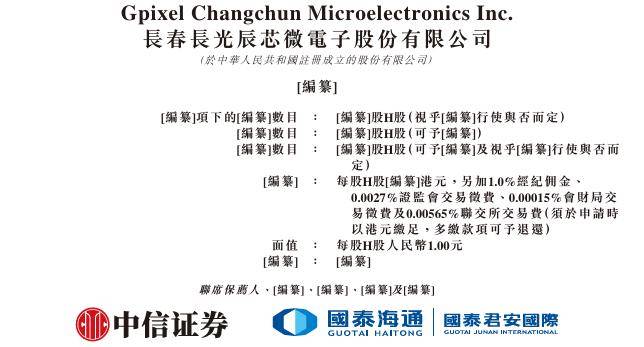
长光辰芯,通过港交所聆讯,或很快香港上市,中信证券、国泰君安联席保荐
Sou Hu Cai Jing· 2026-03-30 08:12
Core Viewpoint - Changchun Changguang Chenxin Microelectronics Inc. (referred to as "Changguang") is preparing for an IPO in Hong Kong, having submitted its prospectus after two previous applications in 2025 [1][2]. Group 1: Company Overview - Established in 2012, Changguang specializes in the research and development of high-performance CMOS image sensors (CIS), offering nine product series applicable in various advanced technology fields such as industrial imaging, scientific imaging, professional imaging, and medical imaging [2]. - The company developed the world's first BSI sCMOS image sensor in 2015 and has established a strong technological barrier with proprietary core technologies, including global shutter pixels, HDR pixels, high-sensitivity pixels, and 3D imaging sensors [2][3]. Group 2: Business Model - Operating on a fabless business model, Changguang focuses on sensor design, outsourcing production to third-party foundries, and conducting in-house wafer testing before sending for packaging [3]. Group 3: Financial Performance - Revenue projections for Changguang show a growth trajectory with expected revenues of RMB 604.835 million in 2023, RMB 673.048 million in 2024, and RMB 856.513 million in 2025 [4][12]. - The net profit is projected to increase from RMB 169.847 million in 2023 to RMB 293.146 million in 2025 [12]. Group 4: Market Position - In 2024, Changguang ranked third globally and first in China in the CIS market, capturing 15.2% of the global market share in industrial imaging and 16.3% in scientific imaging [5]. Group 5: Shareholder Structure - Prior to the Hong Kong listing, the shareholder structure indicates that Dr. Wang Xinyang and Dr. Zhang Yanxia collectively hold approximately 49.53% of the shares [8][9]. Group 6: Management Team - The board of directors consists of nine members, including three executive directors, with Dr. Wang Xinyang serving as the chairman and CEO, and Dr. Zhang Yanxia as the vice president and board secretary [11].

东兴证券晨报-20260330
Dongxing Securities· 2026-03-30 08:09
Core Insights - The report highlights the significant growth potential in the magnesium alloy industry, driven by increasing demand in high-end applications such as electric vehicles and robotics, with a projected CAGR of 29% from 2025 to 2028 [7][10][12] - The report also emphasizes the favorable price dynamics of magnesium compared to aluminum, with the magnesium-aluminum price ratio dropping to a five-year low of 0.66, indicating a 74% decline since 2021 [8][12] - The demand for magnesium alloys is expected to expand significantly across various sectors, including automotive, robotics, construction, and hydrogen storage, with specific forecasts indicating a rise in global magnesium alloy demand from 650,000 tons in 2025 to 1.39 million tons by 2028 [9][10][12] Company Insights - Hantian Technology, a silicon carbide wafer provider, recently went public in Hong Kong, with its stock price surging over 42% on the first day, achieving a market capitalization exceeding HKD 46.2 billion, marking the largest IPO in Xiamen this year [4] - Jiangfeng Electronics reported a revenue of CNY 4.605 billion for 2025, reflecting a year-on-year growth of 27.75%, with net profit increasing by 20.15% to CNY 481 million, driven by rising demand in the semiconductor sector [15][16] - Tesla's TERAFAB project aims to produce over 1 terawatt of computing power annually, indicating a significant increase in demand for high-performance chips as the humanoid robot industry scales up [4] Industry Insights - The report discusses the ongoing transformation in the financial sector, with the People's Bank of China emphasizing the importance of financial stability and risk management, which is crucial for maintaining overall economic health [6] - The logistics and express delivery industry is experiencing a shift towards quality over quantity, with major players like SF Express showing significant growth in revenue per package, indicating a positive trend in pricing strategies amid a competitive landscape [21] - The semiconductor materials market is expected to see a significant increase in demand, with projections indicating that the global sputtering target market could exceed CNY 25.11 billion by 2027, driven by rising production in the semiconductor industry [17][18]
3月第4周立体投资策略周报:资金面扰动仍在,市场情绪回落-20260330
Guoxin Securities· 2026-03-30 08:00
Group 1: Market Overview - In the fourth week of March, a total net outflow of 35.5 billion was observed in the market, compared to a net outflow of 34.6 billion in the previous week [1][7] - The financing balance decreased by 24 billion, while public fund issuance increased by 21 billion, and ETF net redemption was 5.7 billion [1][7] - Northbound capital is estimated to have a net outflow of 10.5 billion [1][7] Group 2: Short-term and Long-term Sentiment Indicators - Short-term sentiment indicators are at a medium-high level since 2005, with the recent weekly turnover rate (annualized) at 488%, positioned at the 82nd percentile historically [2][12] - The recent weekly financing transaction ratio is 8.95%, currently at the 56th percentile historically [2][12] - Long-term sentiment indicators are at a medium-low level since 2005, with the recent A-share risk premium at 2.63%, positioned at the 42nd percentile historically [2][14] - The recent weekly dividend yield of the 300 index (excluding finance) compared to the ten-year government bond yield is 1.24, currently at the 5th percentile historically [2][14] Group 3: Industry Performance - The top three industries by transaction volume percentage in the past week were power equipment (99%), communication (98%), and semiconductors (96%) [2][14] - The industries with the lowest transaction volume percentages were real estate (0%), commercial trade (1%), and liquor (1%) [2][14] - The highest financing transaction ratio industries were machinery equipment (83%), power equipment (77%), and communication (69%), while the lowest were real estate (8%), steel (9%), and banking (10%) [2][14]
中观产业研究系列之一:“反内卷”与集群化:区域比较优势如何支撑产业升级?
CMS· 2026-03-30 07:35
Group 1: Regional Comparative Advantage - The concept of regional comparative advantage is crucial for determining industrial layout efficiency and economic growth quality during the transition phase of industrial structure upgrading[6] - In 2026, 29 out of 31 provinces emphasized the importance of establishing a correct performance view, reflecting a shift towards long-term high-quality development[7] - Traditional industries are continuing to advance in cluster development based on comparative advantages, while emerging industries seek breakthroughs[11] Group 2: Key Industry Advantages - The "location quotient" (LQ) is used to analyze regional advantages, with provinces like Guangdong, Jiangsu, Shandong, and Zhejiang being key economic players due to their comprehensive industrial systems[15] - In the semiconductor industry, regions like Beijing-Tianjin-Hebei, Shanghai, Anhui, and Shaanxi have been included in the national integrated circuit industry cluster list, indicating strong regional advantages[24] - The photovoltaic equipment industry is exemplified by Jiangsu and Xinjiang, which have achieved high concentration in both quantity and revenue, forming a complete industrial cluster system[34] Group 3: Industry Concentration and Profitability - Industry concentration and profitability are not always positively correlated; for example, while the household appliance and chemical pharmaceutical industries show rising concentration and profitability, the IT services and military electronics sectors face declining profitability despite increased concentration[36] - The semiconductor industry is currently in a growth phase, with profitability improving, while the components industry shows resilience with a slight decline in concentration but recovery in profit margins[41] - The electrical equipment and electronic chemicals sectors are experiencing a decline in both concentration and profitability, indicating a period of industry turmoil and potential restructuring[46]
思特威(688213):2025年报点评:高端产品矩阵完善,构建3+AI发展战略
Guohai Securities· 2026-03-30 07:05
Investment Rating - The investment rating for the company is "Buy" (maintained) [1][10] Core Insights - The company achieved a revenue of 9.031 billion yuan in 2025, representing a year-on-year increase of 51.32%, and a net profit attributable to shareholders of 1.001 billion yuan, up 154.94% year-on-year [4][6] - The company is positioned as a global leader in CMOS image sensor manufacturing, focusing on a three-pronged development strategy in smart security, smartphones, and automotive electronics [9] - The company is expected to benefit from advancements in CMOS image sensor technology, the emergence of new application scenarios, and the growth of AI applications, with projected revenues of 12.227 billion yuan, 15.071 billion yuan, and 18.168 billion yuan for 2026, 2027, and 2028, respectively [9] Revenue Growth by Segment - The company reported significant revenue growth across four key areas in 2025: 1. Smart security and AIoT applications generated 2.488 billion yuan, up 52.38% year-on-year 2. Smartphone revenue reached 4.675 billion yuan, an increase of 43.03% 3. Automotive electronics revenue surged to 1.122 billion yuan, up 113.02% 4. AI visual ecosystem revenue was 745 million yuan, growing by 38.12% [6][9] Financial Projections - The company forecasts revenue growth rates of 35%, 23%, and 21% for the years 2026, 2027, and 2028, respectively, with net profits expected to grow by 50%, 34%, and 21% in the same years [8][9] - The projected diluted earnings per share (EPS) are 3.72 yuan, 4.98 yuan, and 6.03 yuan for 2026, 2027, and 2028, respectively [8][10] Market Performance - As of March 27, 2026, the company's stock price was 77.25 yuan, with a market capitalization of approximately 31.078 billion yuan [3][4] - The company's stock performance over the past year has been negative, with a decline of 22.2% compared to the Shanghai and Shenzhen 300 index, which increased by 14.5% [3]

存储短缺,会在2026年引发停产吗?
芯世相· 2026-03-30 06:52
Core Viewpoint - The article discusses the significant price increases and shortages in the memory chip market, driven by the rising demand for high-bandwidth memory (HBM) due to the AI boom, leading to a phenomenon termed "RAMageddon" [3][4]. Group 1: Causes of Memory Chip Shortage - The memory chip shortage is attributed to the complex transformation in the tech industry, particularly the increasing demand for HBM from companies like Nvidia and AMD, which is essential for the performance of AI models [3]. - Major semiconductor manufacturers are reallocating production capacity to HBM, resulting in decreased output of traditional DRAM and NAND chips, creating a supply-demand imbalance across various industries [4]. Group 2: Impacts on Industries - The high costs and limited supply of DRAM, NAND, and HBM are forcing companies to adopt different strategies to maintain production continuity while avoiding significant disruptions [5]. - Companies are facing profit compression as they absorb higher costs without immediately passing them on to consumers, particularly in sectors like consumer electronics and automotive [6]. - Price increases are becoming inevitable, with manufacturers like Dell and Lenovo planning to raise product prices by up to 20% in 2026, and IDC predicting a 14% increase in global smartphone average prices [7]. Group 3: Strategies to Cope with Shortages - Some manufacturers are considering redesigning products to reduce memory requirements, although this approach is costly and time-consuming, and may risk product quality and user experience [10]. - The automotive industry is also feeling the impact, with companies like Tesla indicating that DRAM shortages will affect production in 2026, leading to strategic allocation of resources to higher-margin vehicles [13]. - Consumer electronics manufacturers are signaling that DRAM shortages could constrain production, with expectations of flat or declining product shipments in the near term [12].

【买卖芯片找老王】260330 华邦/三星/GD/NXP/ALTERA/ISSI/TI
芯世相· 2026-03-30 06:52
Core Insights - The article discusses the challenges of managing excess inventory in the semiconductor industry, highlighting the financial burden of storage and capital costs associated with unsold materials [1] - It promotes a service called "Chip Superman," which has served 22,000 users and offers rapid transaction completion for inventory clearance [9] Group 1: Inventory Management - Excess inventory of 100,000 units incurs monthly storage and capital costs of at least 5,000, leading to a potential loss of 30,000 after six months [1] - The article emphasizes the difficulty in promoting and selling excess materials, suggesting that companies can seek assistance from Chip Superman to improve sales outcomes [1][10] Group 2: Inventory Offerings - A list of available materials for sale includes various brands and models, with quantities ranging from 3,000 to 90,000 units [4][5] - The total inventory at Chip Superman includes over 1,000 models from 100 brands, with a total of 50 million chips valued at over 100 million [8] Group 3: Purchase Requests - The article also includes a list of requested materials, indicating demand for specific components from brands like Infineon and ST, with quantities ranging from 3,000 to 20,000 [6][7]