智能汽车

Search documents
手握最强AI大脑,千里科技打响智能汽车“含模量”战役
Jing Ji Guan Cha Bao· 2026-01-26 06:38
(原标题:手握最强AI大脑,千里科技打响智能汽车"含模量"战役) 1月26日,大模型领军企业阶跃星辰正式官宣,由印奇出任公司董事长 。这一任命不仅标志着这位跨越 AI双时代的领军人物正式完成其"AI+终端"的战略拼图,更预示着中国版"AI+终端"航母已然起航,加 速推动大模型能力向物理世界的深度渗透 。 据了解,阶跃星辰已顺利完成近50亿人民币的B+轮融资,资金将倾力投入全球领先的基座模型研发, 旨在通过终端Agent的落地,探索AI与硬件融合的新形态。印奇此番同时掌舵阶跃星辰与千里科技,不 仅是两家企业的深度战略接轨,更意味着一个打通底层算法到规模化应用的全链路"Physical AI"体系正 式成型 。 从传感器研究到Physical AI的战略合围 印奇的创业叙事,是一场关于"Physical AI"的长期主义长征。从2011年创办旷视科技起,他便坚持AI的 终极价值在于对物理世界的重构。在早期算法为王的时代,他逆流而上,主张算法必须依附于硬件载体 方能转化为商业价值。从清华姚班到哥大博士,这种"让AI作用于现实"的思维火种始终闪耀。 生态进化,以"含模量"构建差异化技术护城河 "千里+阶跃"战略闭环的 ...

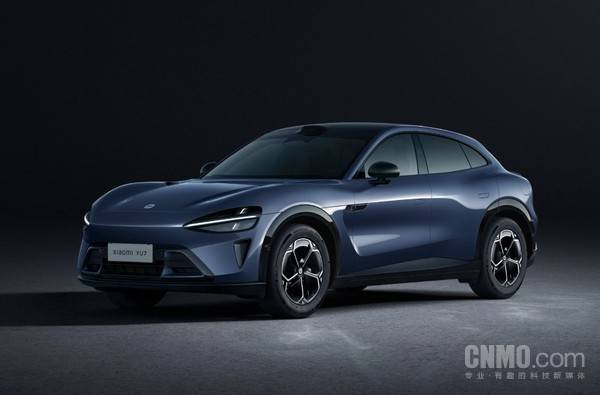
云米科技CEO给员工奖励小米YU7:期待能奖励更多台
Sou Hu Cai Jing· 2026-01-26 02:02
Core Viewpoint - The CEO of Yunmi Technology, Chen Xiaoping, announced a significant employee reward in the form of a Xiaomi YU7 car, reflecting the company's commitment to recognizing employee contributions and enhancing team morale [1][6]. Group 1: Employee Recognition - The company rewarded an employee responsible for major clients with a Xiaomi YU7 car for their diligent efforts and significant project advancements [1]. - Chen Xiaoping expressed a vision to reward more cars by 2026, indicating a long-term commitment to employee recognition [1]. Group 2: Product Details - The rewarded vehicle is a Xiaomi YU7 in "Cambrian Gray," a special color option that typically incurs an additional cost of approximately 7,000 yuan [3]. - The Xiaomi YU7 is set to be officially launched in June 2025, with three versions available: standard, Pro, and Max [3]. Group 3: Market Context - Yunmi Technology focuses on smart home solutions, particularly in the water purification sector, and is navigating a highly competitive market [6]. - The decision to offer high-value physical rewards, such as electric vehicles, is seen as a strategy to boost team morale and reinforce a performance-driven culture following key business breakthroughs [6]. - The rising appeal of smart electric vehicles as valuable rewards reflects their increasing status as "hard currency" prizes within technology companies [6].



AI全产业链解析:上游算力强劲,下游应用关注预期兑现
Mei Ri Jing Ji Xin Wen· 2026-01-26 02:00
Group 1: Semiconductor Equipment and AI - The core logic driving the rise of the semiconductor equipment sector is the demand for advanced process expansion, particularly in the production of high-end chips like 5nm, 3nm, and 2nm, where China has not yet achieved full autonomy [1] - The domestic semiconductor industry has made some breakthroughs, particularly in GPU design, with several local companies expected to go public by the end of 2025, indicating a gradual technological advancement [1] - The semiconductor equipment ETF (159516) is primarily driven by the expansion needs of advanced processes, which is a key factor in its performance [1] Group 2: Storage Chip Price Increases - The price increase of storage chips has created a chain reaction, leading to urgent expansion needs among related companies, which is reflected in the performance of the semiconductor equipment ETF (159516) [2] - Despite the absence of a pure storage ETF, the semiconductor equipment ETF serves as a relevant investment vehicle due to the ongoing supply-demand imbalance in storage chips, which has been driving prices up since 2025 [2] - The recent performance of TSMC, which raised its earnings forecast and capital expenditures, has positively influenced market sentiment towards the semiconductor equipment sector [2] Group 3: Communication Equipment and Light Modules - The communication ETF (515880) is highlighted as a potential investment focus, particularly in light modules, which are expected to experience a supply-demand imbalance in 2026 due to anticipated upgrades in chip architecture [3] - The expected transition to "in-cabinet" light modules by 2027, which could see market sizes 4-5 times larger than current external models, presents significant growth opportunities [4] - The communication ETF's performance is tied to the expansion of production capabilities in response to the anticipated demand for upgraded light modules [3][4] Group 4: AI Applications and Market Dynamics - The AI application sector is currently fragmented, with significant areas being robotics and smart vehicles, both of which are not showing substantial growth in 2025 [4][6] - The gaming sector is identified as having a more stable fundamental outlook within AI applications, benefiting from normalized game license issuance and the potential for blockbuster products [8][10] - The gaming ETF (516010) has shown significant growth, with a more solid fundamental base compared to other AI application sectors, although it lacks the short-term catalysts seen in other areas [9][10]
智能汽车主线周报:特斯拉推出无安全员Robotaxi服务,看好智能化
Soochow Securities· 2026-01-26 00:24
证券研究报告 智能汽车主线周报: 特斯拉推出无安全员Robotaxi服务,看好智能化 注:若无特殊说明,"本周"均代表2026.1.19-2026.1.25 2 ◼ 本周智能汽车行情复盘:我们编撰的智能汽车指数+2.8%,智能汽车指数(除特斯拉)-1.4%。截至2026年 1月23日,智能汽车指数PS(TTM)为14.0x,该估值位于2023年初以来97%分位数;智能汽车指数(除特 斯拉)PS(TTM)为6.8x,该估值位于2023年初以来94%分位数。智能汽车指数标的池中中国汽研、浙江世 宝-H、佑驾创新、经纬恒润、四维图新涨幅前五。 ( ◼ 本周行业核心变化:1) 《广东省人工智能赋能交通运输高质量发展若干政策措施》出台,确认南沙的全域 自动驾驶突破;2)特斯拉推出无安全员Robotaxi服务,Cybercab已抵达纽约布法罗进行冬季测试;3)轻 舟智航:公布了自动驾驶技术、量产NOA辅助驾驶的最新成绩,还发布了全新轻舟乘风解决方案、L4自动驾 驶开放平台及 L4无人物流业务等;4)北美Robotaxi最新跟踪:2026年1月23日特斯拉可发现车队225辆, 截至2026年1月23日,FSD里程数共计73 ...
投顾晨报20260126-20260126
Orient Securities· 2026-01-25 23:34
Core Insights - The report emphasizes a "structural" investment strategy, focusing on mid-cap blue-chip stocks amidst ongoing market fluctuations. The expectation of a slow bull market reinforces this approach [4][8]. - The chemical sector, particularly PVC, is highlighted for its potential value re-evaluation due to supply constraints during China's carbon peak period. The demand from developing regions in Asia, Africa, and Latin America is expected to drive this sector [4][8]. - The report discusses Tesla's advancements in Full Self-Driving (FSD) technology, which may influence domestic automakers to adopt software payment models, potentially transforming the automotive industry [4][8]. Market Strategy - The market is currently experiencing a high-level consolidation phase, with expectations of reduced trading activity as the Chinese New Year approaches. The report suggests maintaining a focus on mid-cap blue-chip stocks [4][8]. - The report identifies specific ETFs related to mid-cap blue-chip stocks and the chemical sector, indicating a strategic investment direction [4][8]. Industry Strategy - The PVC industry is noted for its high energy consumption and carbon emissions, which may lead to stricter supply controls. This could create a significant supply-demand imbalance, driving up the value of PVC [4][8]. - The report suggests that the strong energy infrastructure in China makes it difficult for other countries to replicate the production of energy-intensive products like PVC, further emphasizing the industry's unique position [4][8]. Theme Strategy - Tesla's push for FSD subscription services is expected to enhance its revenue streams and set a precedent for other automakers to follow suit in software monetization [4][8]. - The report recommends monitoring companies involved in intelligent driving and the broader automotive supply chain as this trend develops [4][8].
朝闻道20260126:震荡依旧,结构为王
Orient Securities· 2026-01-25 12:47
Core Insights - The report emphasizes a "structural" investment strategy amidst ongoing market fluctuations, with a focus on mid-cap blue-chip stocks as the primary direction for investment [4][8] - The chemical sector, particularly PVC, is highlighted for its potential value re-evaluation due to supply constraints during China's carbon peak period [4][8] - The report discusses the impact of Tesla's Full Self-Driving (FSD) subscription model on the automotive industry, suggesting a shift towards software monetization among domestic car manufacturers [4][8] Market Strategy - The market is expected to maintain a high-level oscillation, influenced by the upcoming long holiday and regulatory signals for counter-cyclical adjustments [4][8] - Mid-cap blue-chip stocks are recommended, with a specific focus on the chemical sector and energy-related stocks, as they have shown resilience during market adjustments [4][8] Industry Strategy - The PVC industry is projected to face stricter supply controls, potentially leading to a significant re-evaluation of its market value due to its high energy consumption and carbon emissions [4][8] - Demand for PVC in developing regions such as Africa, Asia, and Latin America is expected to grow, driven by their industrial development needs [4][8] Theme Strategy - Tesla's advancements in FSD and the launch of Robotaxi services are anticipated to influence the domestic automotive sector, encouraging a transition towards software-based revenue models [4][8] - The report suggests monitoring companies involved in intelligent driving and related technologies, as they may benefit from the shift in the automotive landscape [4][8]

雷军:新一代小米SU7争取春节前部分样车进店
Mei Ri Jing Ji Xin Wen· 2026-01-25 02:38
每经AI快讯,1月25日,小米创办人、董事长兼CEO雷军发文表示,新一代SU7卡布里蓝实车非常漂 亮,争取春节前部分样车能够进店,到时候大家就可以到店感受。现在已经开始小订。 (文章来源:每日经济新闻) ...
汽车行业2026年投资策略:汽车出海迈入深水区,智能化&机器人大展宏图
Southwest Securities· 2026-01-23 12:34
Investment Rating - The report provides a positive investment outlook for the automotive industry, particularly focusing on smart vehicles, new energy vehicles, commercial vehicles, and humanoid robots, indicating significant growth potential in these sectors [1][2]. Core Insights - The automotive industry is entering a transformative phase driven by policies that support the development of smart vehicles and the expansion of new energy vehicles. The report highlights the acceleration of intelligent driving technology and the increasing market penetration of new energy vehicles [3][4]. Summary by Relevant Sections Smart Vehicles - The report emphasizes that the intelligent vehicle sector is experiencing rapid advancements due to policy support, with L3 vehicle standards expected to be implemented by 2026. The adoption of advanced driving assistance systems (ADAS) is increasing, with new vehicle models showing significant growth in features like highway and urban NOA (Navigation on Autopilot) [4][68]. - The financing landscape for autonomous driving is booming, with 35 companies in the sector raising over 582 billion yuan in 2025, nearly three times the amount raised in 2023 [4][80]. New Energy Vehicles - The continuation of vehicle replacement policies is expected to bolster sales, with wholesale volumes of new energy passenger vehicles projected to reach 18.16 million units in 2026, a year-on-year increase of 18% [4][34]. - Exports of new energy vehicles have shown remarkable growth, with a 102.5% year-on-year increase in 2025, indicating strong demand in international markets [4][34]. Commercial Vehicles - The heavy truck sector is supported by ongoing vehicle replacement policies, with sales expected to reach 1.196 million units in 2026, reflecting a year-on-year growth of 4.6% [4][34]. - The report notes that the heavy truck market is benefiting from both domestic and international demand, with significant growth anticipated due to the continued penetration of new energy heavy trucks [4][34]. Humanoid Robots - The humanoid robot sector is poised for rapid growth, with applications in automotive manufacturing expected to enhance production efficiency. The report forecasts a compound annual growth rate of approximately 85% in humanoid robot shipments from 2024 to 2035 [4][34]. - The cost of humanoid robots is expected to decrease significantly, with projections indicating that the price of a standard humanoid robot could drop from $80,000-$90,000 to $15,000-$20,000 by 2030 [4][34]. Policy Environment - The report highlights a favorable policy environment that is increasingly supportive of the automotive industry's transition towards smart and electric vehicles. Key policies include the approval of L3 autonomous vehicle models and the establishment of unified standards for vehicle replacement subsidies [4][53]. Market Trends - The automotive market is witnessing a shift towards intelligent and electric vehicles, with consumer preferences evolving towards higher levels of automation and connectivity in vehicles. The report indicates that the penetration rate of intelligent driving features is expected to increase significantly in the coming years [4][68]. Capital Market Activity - The report notes a surge in investment activity within the autonomous driving sector, indicating a strong belief in the future growth of this industry. The capital market's enthusiasm is reflected in the substantial funding raised by various companies, signaling a robust outlook for the sector [4][80].



亿欧智库:2026中国科技出行产业10大战略技术趋势展望
Sou Hu Cai Jing· 2026-01-22 11:41
Core Insights - The report by Yiou Research Institute outlines ten strategic technology trends in China's technology mobility industry for 2026, focusing on autonomous driving, mobility technology, and new energy sectors, providing insights for industry players and investors [1][9]. Group 1: Cost Reduction and Efficiency - Chiplet technology is expected to become the standard for vehicle high-performance computing (HPC) by 2026, addressing the challenges of traditional SoC in terms of cost and power consumption [2][13]. - AI Box is projected to become a market breakout solution in 2026, providing flexible computing power without altering existing vehicle architectures, initially focusing on smart cockpits and later expanding to intelligent driving and body control domains [2][16]. - The domestic production of automotive-grade chips is advancing, with a focus on cost-effective, stable delivery, and local service, leading to a competitive landscape between international giants and local manufacturers [2][20]. - The 48V low-voltage architecture is set to be adopted in more flagship models by 2026, supporting high-power intelligent components, transitioning from initial partial adoption to a main distribution structure over time [2][26]. Group 2: User Experience Enhancement - Vehicle optical communication is expected to begin pilot projects in 2026, offering advantages such as high bandwidth and low latency, potentially replacing traditional vehicle Ethernet [3][23]. - The smart cockpit is entering its 3.0 era, evolving from a functional tool to a system-level intelligent entity capable of task planning and cross-domain collaboration, supported by an integrated "end-cloud-vehicle" architecture [3][31]. - The L3 autonomous driving technology is anticipated to enter a "small-scale, conditional" commercialization phase in 2026, with a focus on safety features like AEB becoming central to industry efforts [3][36]. - Small screens are emerging as a new interaction point in the cockpit, reducing cognitive load during driving and shifting the interaction logic from centralized to multi-screen collaboration [3][42]. Group 3: Ecological Innovation and Development - Physical AI technology is facilitating multi-ecosystem layouts, allowing automotive manufacturers to transition from vehicle integrators to cross-terminal AI capability platforms, promoting a second growth curve in the industry [5][39].
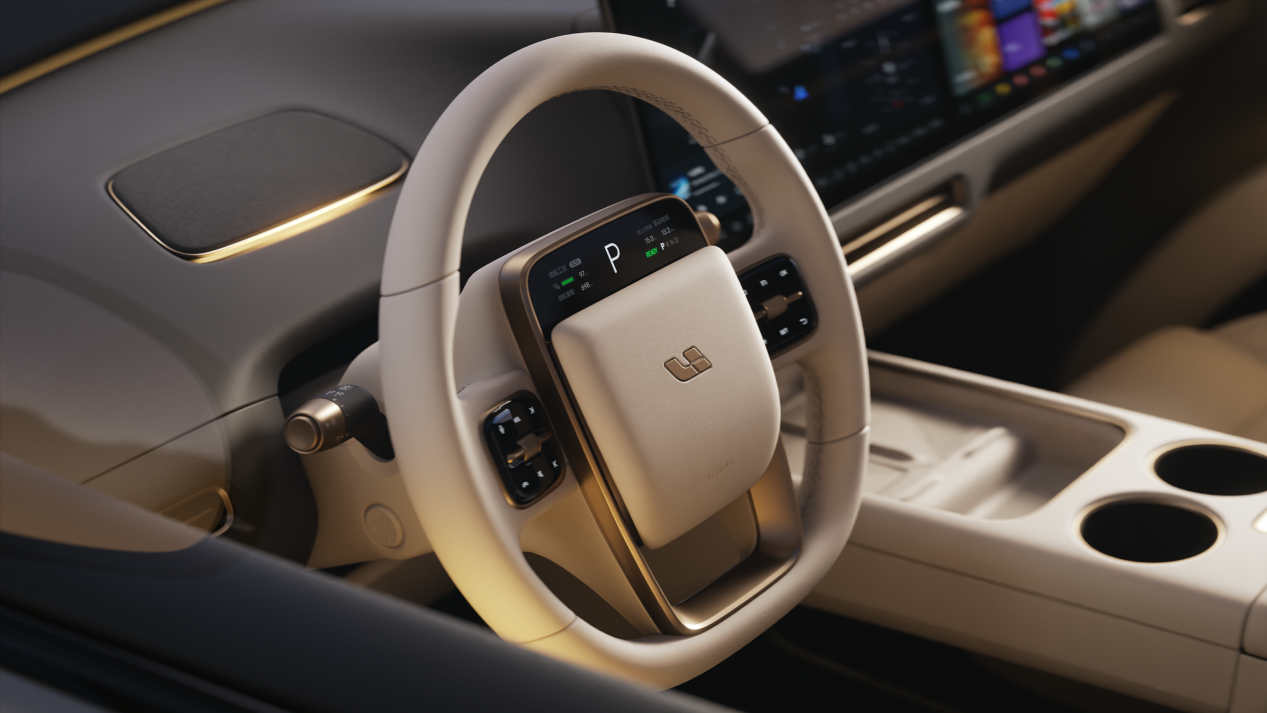
理想的VLA,不只是辅助驾驶
Jin Rong Jie· 2026-01-22 09:22
Core Insights - The introduction of the VLA (Visual-Language-Action) driver model by Li Auto in 2025 marks a significant leap in AI's understanding of the physical world, moving beyond traditional assisted driving to a more advanced form of intelligent interaction [1][9][14] Group 1: Evolution of Assisted Driving - Li Auto's evolution in assisted driving reflects the technological advancements and cognitive deepening within China's smart automotive industry, transitioning from rule-based systems to AI-driven models [3][6] - The shift from "imitation" to "thinking" in driving models highlights the limitations of earlier systems, which relied heavily on human-engineered rules and lacked deep reasoning capabilities [3][6] - The introduction of the VLA model aims to overcome the communication barriers and slow reasoning speeds that hindered previous models, enhancing the overall performance of assisted driving [6][10] Group 2: VLA Technology and Its Implications - The VLA model is positioned as a foundational technology for the next generation of AI systems, transforming vehicles from passive tools into proactive service robots [9][12] - Li Auto's commitment to the VLA model is supported by a vast dataset from over 1.5 million vehicles, enabling a data loop that enhances the model's training and performance [6][10] - The VLA model's ability to exhibit "human-like" behaviors signifies a shift towards a more intuitive interaction between humans and vehicles, allowing for voice commands and complex decision-making [7][10] Group 3: Future of the Automotive Industry - The ongoing development of the VLA model is expected to lead to the emergence of "automobile robots," capable of achieving higher levels of automation and intelligence [12][14] - Li Auto's exploration of VLA technology is influencing other leading companies in the industry, indicating a broader trend towards integrating large-scale data and advanced algorithms into automotive systems [12][14] - The ultimate goal of the assisted driving industry may evolve from merely achieving "autonomous driving" to creating mature embodied intelligent products, marking a new era in the automotive and AI sectors [12][14]