
汽车行业

Search documents
联合国贸发会议报告显示—— 南南贸易对全球增长作出重要贡献
Jing Ji Ri Bao· 2025-10-15 22:11
Core Insights - The UNCTAD report indicates that global trade is expected to maintain strong growth in the first half of 2025, with an increase of over $500 billion, driven primarily by trade expansion among developing countries and a rebound in manufacturing exports [1][2] Group 1: South-South Trade - South-South trade is showing strong growth, significantly contributing to global trade expansion, particularly in East Asia, where trade among developing countries is active [1][2] - The growth in South-South trade is driven by increasing complementarity among developing countries, which possess abundant natural and labor resources, allowing for mutual learning and technology sharing [2] - However, the growth is uneven, with East Asia leading while other regions lag behind; excluding East Asia, global South-South trade contracted in Q2 2025, highlighting challenges such as inadequate infrastructure and trade barriers [2] Group 2: Manufacturing Sector - Manufacturing is a key driver of global trade growth, with a quarterly growth rate of 3%, outperforming agriculture and natural resources sectors [3] - The electronics and automotive industries are particularly strong, with electronic product trade increasing by 7% quarter-on-quarter, and electric and hybrid vehicles seeing trade growth of 17% and 10%, respectively [2][3] - The report anticipates continued growth in manufacturing, especially in renewable energy equipment and AI-related electronics, supported by ongoing green and technological transitions [3] Group 3: China's Role - China, as the largest goods trader globally, plays a crucial role in shaping global trade dynamics, contributing significantly to trade growth in the first half of 2025 [4] - China's robust manufacturing base and complete industrial chain have bolstered global manufacturing trade, with strong performance in electronics and green transportation sectors [4] - Investments in the new energy vehicle sector have enhanced China's manufacturing exports, increasing its share in global automotive trade, while also diversifying trade markets through initiatives like the Belt and Road [4]
赛力斯:10月14日召开董事会会议
Mei Ri Jing Ji Xin Wen· 2025-10-14 10:33
2024年1至12月份,赛力斯的营业收入构成为:汽车行业占比97.13%,其他业务占比2.87%。 每经AI快讯,赛力斯(SH 601127,收盘价:159.53元)10月14日晚间发布公告称,公司第五届第二十 六次董事会会议于2025年10月14日以现场与通讯表决的方式召开。会议审议了《关于确定公司H股全球 发售及在香港联交所上市相关事宜的议案》等文件。 截至发稿,赛力斯市值为2606亿元。 每经头条(nbdtoutiao)——中科院博导带队,中国固态电池技术又有重大突破! (记者 王晓波) ...

“从汽车到战斗机全是痛点,但特朗普记吃不记打”
Guan Cha Zhe Wang· 2025-10-13 14:49
Core Points - China has implemented new regulations on rare earth exports, significantly impacting global manufacturing industries, particularly in automotive and military sectors [1][4][5] - The new rules require foreign companies to obtain Chinese approval for exporting products containing Chinese rare earth elements or utilizing Chinese technology [4][5][9] - The regulations are seen as a response to increasing trade tensions and are expected to enhance China's influence over critical manufacturing sectors globally [1][5][10] Group 1: New Regulations Overview - The new regulations cover a wide range of products, including those with 0.1% or more Chinese rare earth content, and will take effect on December 1 for certain items [8][9] - Military-related exports will generally not be permitted, and applications for AI technologies with potential military uses will be reviewed on a case-by-case basis [5][9] - The regulations expand the scope of existing procedures, requiring exporters to submit technical drawings and usage explanations for products made with Chinese rare earths [5][9] Group 2: Impact on Industries - The automotive industry is particularly affected, with many manufacturers facing delays in obtaining export licenses for components that rely on Chinese rare earths [6][8] - European automotive suppliers have already halted production due to shortages of rare earth components, highlighting the immediate impact of the new regulations [8][9] - Companies are attempting to reduce reliance on Chinese rare earths by sourcing from alternative suppliers, but the new rules indicate that Chinese jurisdiction extends to these activities as well [9][10] Group 3: Geopolitical Reactions - The new regulations have raised concerns among Western nations, particularly regarding their military supply chains and support for Ukraine [5][10] - The measures are perceived as a counteraction to the EU's tariffs on Chinese electric vehicles, reflecting China's dissatisfaction with recent trade policies [5][10] - China's Ministry of Commerce has stated that these export controls are a normal action to enhance its export control system in response to external pressures [10]

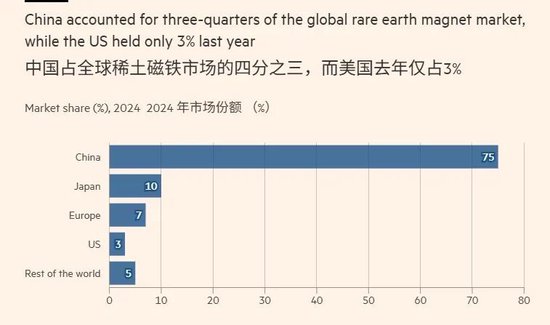
上海汽车以旧换新补贴要靠摇号抢资格
Di Yi Cai Jing· 2025-10-10 23:05
取得摇号中签资格也不等同于符合补贴条件。个人消费者取得摇号中签资格后,仍需按照有关规定执行。 参与摇号的消费者,在报名时,需开启位置定位服务,并允许相关设备获取位置权限,位置信息定位在上海。个人消费者报名时,参加报名摇号和申请补 贴的消费者应为同一人(同一身份证件类型和证件号码)。 关于报名的次数,原则上每两周开展一轮报名。第一轮报名时间为2025年10月25日至2025年10月27日。当次没有中签的,可继续参加下次摇号。 此外值得注意的是,每次报名仅限申请汽车报废更新或者置换更新补贴资格,不能同时申请上述两项补贴资格。 自下周一(10月13日)开始至年底12月31日,上海置换新车和报废更新补贴需要通过摇号来取得资格了,这个双休日是最后的窗口期。 上海商务委表示,本市汽车以旧换新补贴活动规则主要涉及以下两方面调整:一是关于补贴申请方式调整。按照"个人消费者报名、公证摇号、中签获取 资格"方式,开展汽车报废更新和置换更新补贴活动。二是关于报废更新补贴申领新增限定条件。下周一开始,个人消费者购买新车并申请汽车报废更新 补贴的,所购新车应当在上海市进行注册登记。上述日期以《机动车销售统一发票》载明的开票日期为准。 ...
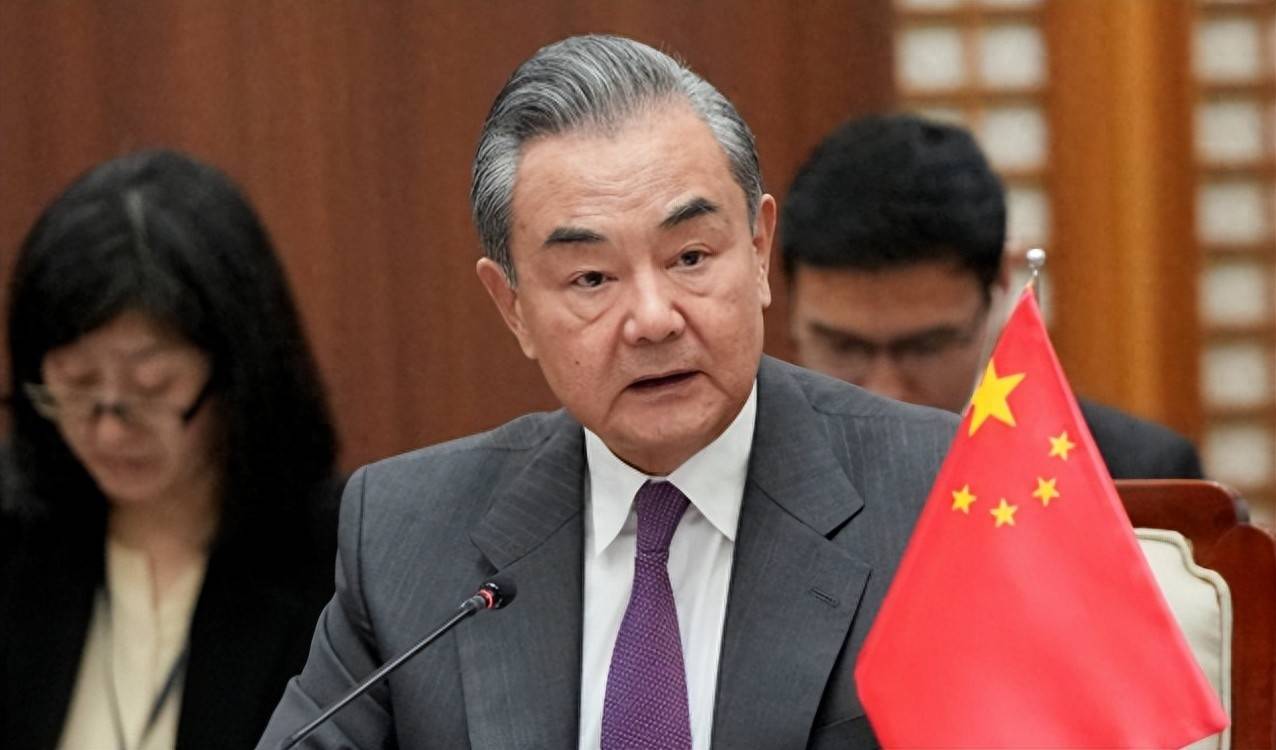
王毅刚到欧洲,不到24小时,欧盟计划对华加税,中方反制来得很快
Sou Hu Cai Jing· 2025-10-09 14:26
Group 1 - The EU's recent decision to significantly increase tariffs on steel imports is perceived as a targeted action against China, despite not explicitly naming it [4][10][22] - The EU's steel industry struggles are attributed more to internal issues such as high energy costs and outdated production lines rather than foreign competition [5][20] - The timing of the EU's tariff announcement, shortly after Trump's global tariff declarations, suggests a political motive rather than purely economic considerations [8][10][22] Group 2 - China's immediate response to the EU's tariffs was to implement export controls on rare earth materials, which are crucial for various modern industries [10][11][15] - The EU relies heavily on China for rare earth imports, and any restrictions could severely impact its industrial capabilities, particularly in the electric vehicle and renewable energy sectors [11][20] - The ongoing trade tensions reflect a critical juncture in China-EU relations, with the EU's actions potentially undermining its own industrial interests while trying to align with U.S. policies [22][24] Group 3 - The EU's approach to trade with China is characterized by a struggle between wanting to assert strategic autonomy and the influence of U.S. policy directions [10][24] - The economic interdependence between China and the EU is significant, with daily trade amounts reaching $2 billion, indicating that any trade disruptions could have widespread consequences [17][20] - The current trade disputes may ultimately harm the EU's industrial reputation and economic stability, as retaliatory measures from China could lead to production halts in key sectors [20][22]
关税,传出大消息
Zhong Guo Ji Jin Bao· 2025-10-04 00:38
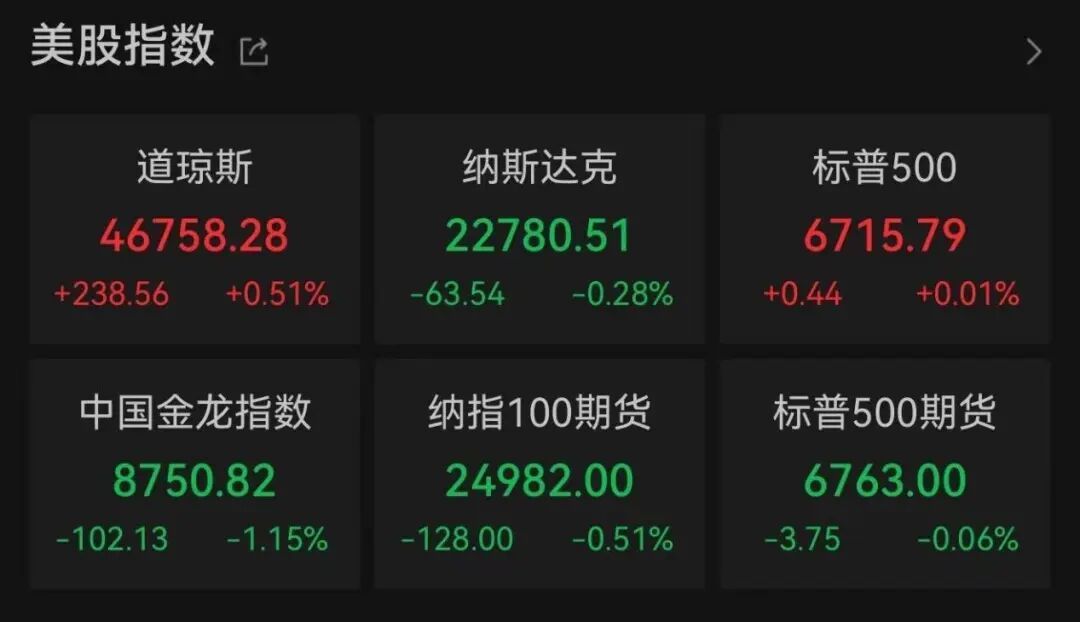
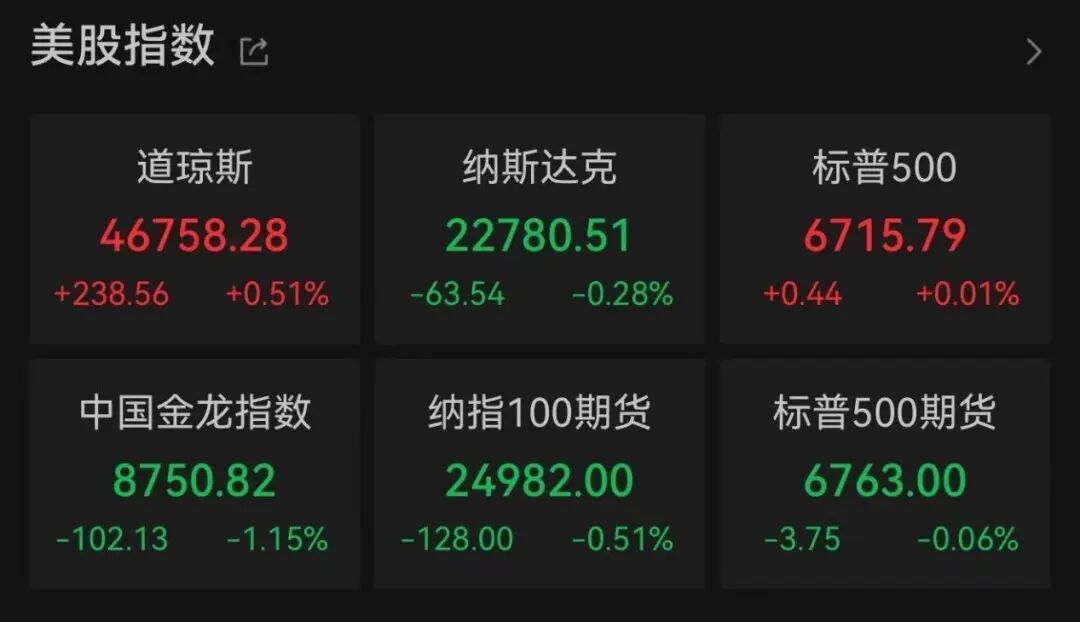
Group 1: Market Overview - The US stock market showed mixed results with the Dow Jones and S&P 500 indices reaching new highs, while the Nasdaq index declined due to a pullback in technology stocks [2][4] - The Dow Jones index rose by 0.51% to 46,758.28 points, and the S&P 500 index increased by 0.01% to 6,715.79 points, while the Nasdaq index fell by 0.28% to 22,780.51 points [2] Group 2: Technology Sector Performance - Major technology stocks experienced declines, with Nvidia down 0.67%, Amazon down 1.30%, Tesla down 1.42%, and Facebook down 2.27% [5][6] - In contrast, Apple, Microsoft, and Google saw slight increases of 0.35%, 0.31%, and 0.01% respectively [5][6] Group 3: Automotive Sector Developments - Reports indicate that Trump is considering significant tariff reductions for cars assembled in the US, positively impacting automotive stocks [5][7] - Ford shares rose by 3.6%, Toyota increased by 2.10%, and General Motors gained 1.29% following the news [7] Group 4: Chinese Market Trends - The Nasdaq Golden Dragon China Index saw a cumulative increase of 2.58% for the week but fell by 1.15% on Friday, with declines in both automotive and internet sectors [8] - Chinese electric vehicle manufacturers such as NIO, Xpeng, and Li Auto experienced declines of 2.66%, 3.09%, and 3.99% respectively [8][9] Group 5: Corporate Governance Changes - Berkshire Hathaway has officially separated the roles of Chairman and CEO in preparation for Greg Abel to succeed Warren Buffett [16][17] - This change was approved by the board on September 30, marking a significant shift in the company's governance structure [16]

关税,传出大消息!
Zhong Guo Ji Jin Bao· 2025-10-04 00:26
Market Overview - The U.S. stock market showed mixed results with the Dow Jones and S&P 500 indices reaching new highs, while the Nasdaq index declined due to a pullback in technology stocks [2][4] - As of the market close, the Dow Jones index rose by 0.51% to 46,758.28 points, and the S&P 500 index increased by 0.01% to 6,715.79 points, while the Nasdaq index fell by 0.28% to 22,780.51 points [2] Economic Factors - The U.S. Labor Department has paused nearly all economic activities, leading to the postponement of the September non-farm employment report [4] - The Senate rejected a bipartisan temporary funding bill, resulting in the continuation of the federal government shutdown [4] - Market expectations for a 25 basis point rate cut by the Federal Reserve this month are close to 95% according to the CME FedWatch Tool [4] Sector Performance - Technology giants experienced a decline, with Nvidia down by 0.67%, Amazon down by 1.30%, Tesla down by 1.42%, and Facebook down by 2.27% [4] - Conversely, Apple, Microsoft, and Google saw slight increases of 0.35%, 0.31%, and 0.01% respectively [4] Automotive Sector - Reports indicate that Trump is considering significant tariff reductions for cars assembled in the U.S., positively impacting automotive stocks [5][6] - Ford shares rose by 3.6%, Toyota increased by 2.10%, and General Motors gained 1.29% following the news [6] Chinese Market - The Nasdaq Golden Dragon China Index saw a cumulative increase of 2.58% this week, but experienced a decline of 1.15% on Friday [6] - Chinese electric vehicle manufacturers such as NIO, Xpeng, and Li Auto reported declines of 2.66%, 3.09%, and 3.99% respectively [6][7] Commodity Market - International gold prices rose by 1.14%, closing at $3,912.1 per ounce [8] - Oil prices ended a streak of declines, with NYMEX WTI crude oil increasing by 0.35% [8] Corporate Governance - Berkshire Hathaway has officially separated the roles of Chairman and CEO in preparation for Greg Abel to succeed Warren Buffett as CEO next year [12] - This change was approved by the board on September 30, marking a significant shift in the company's governance structure [12]
道指创历史新高!黄金上涨!美国政府“停摆”,非农数据停发!劳工部长:一旦开门,将立即公布
Sou Hu Cai Jing· 2025-10-03 15:19
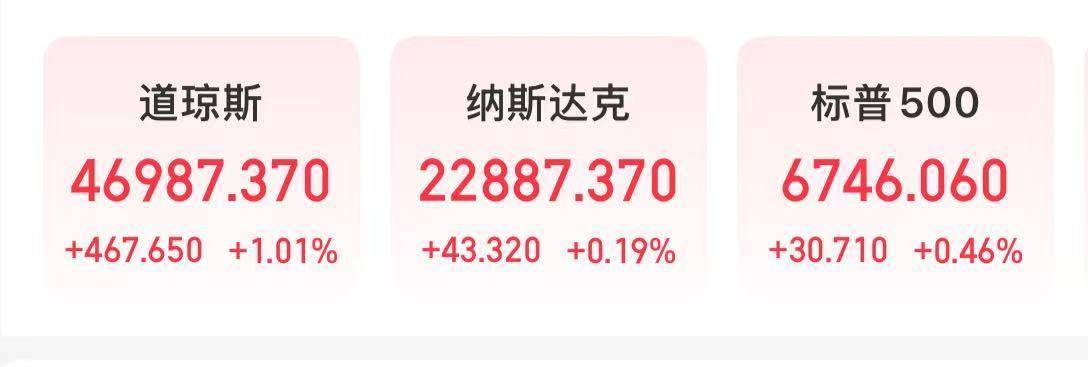
Market Overview - The three major U.S. stock indices opened slightly higher, with the Dow Jones Industrial Average rising by 1.01%, reaching a historical high [1] - The Nasdaq increased by 0.19%, and the S&P 500 rose by 0.46% [1] Technology Stocks Performance - Large-cap tech stocks showed mixed results, with Tesla declining over 2%, while Google, Meta, Nvidia, Amazon, Apple, and Microsoft saw gains [3] - Specific stock movements included: - Google A: $243.125, down 1.04% [4] - Nvidia: $189.265, up 0.20% [4] - Amazon: $222.860, up 0.20% [4] - Tesla: $425.950, down 2.31% [4] - Apple: $258.287, up 0.45% [4] - Microsoft: $519.540, up 0.74% [4] - Meta: $718.908, down 1.12% [4] Rare Earth Stocks Surge - U.S. Rare Earth stocks experienced a significant surge, with USA Rare Earth shares rising over 21% following confirmation of discussions with the White House [5] Chinese Stocks Performance - Most popular Chinese stocks declined, with Xpeng Motors down over 5%, Li Auto down over 4%, and NIO down over 3% [6] - Specific stock movements included: - Xpeng Motors: $22.607, down 5.05% [6] - Li Auto: $25.350, down 1.86% [6] - NIO: $7.585, down 3.87% [6] Economic Data Delays - The U.S. government's shutdown has delayed the release of key economic data, including September's non-farm payroll changes and unemployment rate [8] - The Labor Secretary indicated that investment activity in the employment sector is becoming evident, with data expected to be released once the government reopens [8] Federal Reserve Insights - Chicago Fed President Goolsbee estimated the September unemployment rate to be around 4.3% [9] - Goolsbee noted that the labor market remains stable but expressed caution regarding potential rate cuts, observing deterioration in the Fed's dual mandate of price stability and full employment [10] - New Fed Governor Milan emphasized the importance of data for policy-making and expressed hope for data availability before the next FOMC meeting [11]
电力股,直线拉升
Zhong Guo Ji Jin Bao· 2025-10-03 04:44
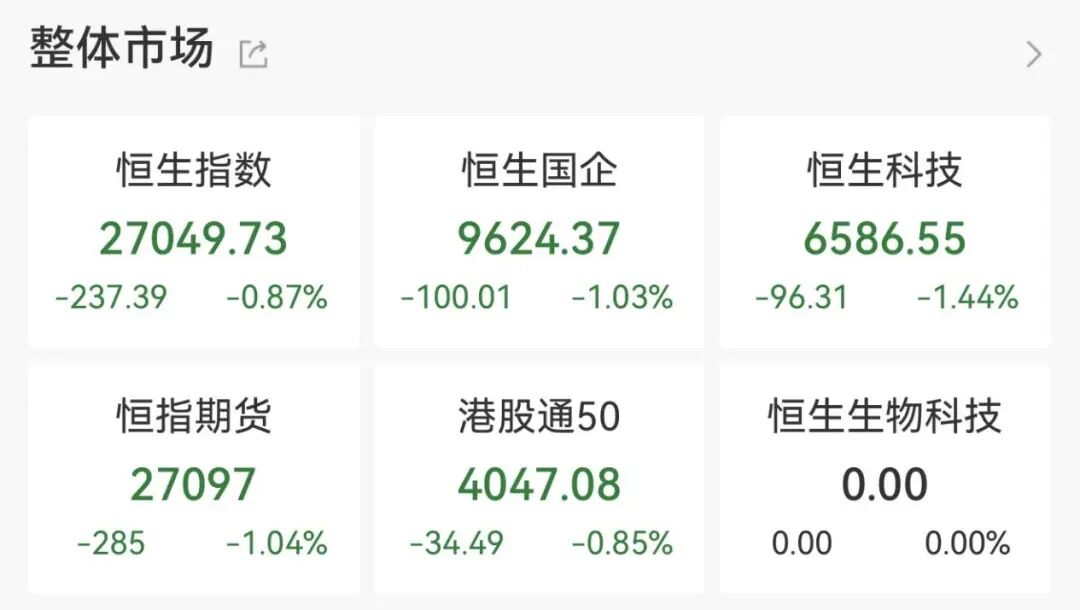
Market Overview - The Hong Kong stock market experienced fluctuations, with the Hang Seng Technology Index dropping over 1% and major automotive stocks like BYD, Xpeng, and Li Auto declining more than 3% [1][2]. Stock Performance - The Hang Seng Index closed at 27,049.73, down 237.39 points or 0.87%. The Hang Seng Technology Index fell to 6,586.55, down 96.31 points or 1.44% [2]. - BYD shares decreased by 4.48%, with a market capitalization of 992 billion. Xpeng and Li Auto also saw declines of 3.89% and 3.09%, respectively [3]. Sector Performance - The electric power sector showed resilience, with notable gains in medical equipment, environmental protection, and new energy sectors, while automotive, media, and consumer sectors faced adjustments [3][4]. - The electric power sector saw significant increases, with China Nuclear International rising over 18%, and companies like China Nuclear Technology and Shanghai Electric increasing by over 10% [6][7]. Notable Company Developments - Shanghai Electric has successfully launched the second phase of the Palau photovoltaic project in Romania, marking a strategic collaboration in clean energy and enhancing regional energy transformation [8]. - Moos International's stock surged by 134% before a temporary suspension due to pending announcements regarding financing [9][10]. - Dazhong Public Utilities experienced a stock price increase of over 30%, reaching a new high since its listing [11][12]. Investment Insights - Dazhong Public Utilities has a significant stake in Shenzhen Innovation Investment Group, which is a key part of its investment strategy [14].
美国电动车补贴退场 特斯拉(TSLA.US)上调Model 3/Y租赁价格
智通财经网· 2025-10-01 09:19
Core Viewpoint - Tesla has raised leasing prices for all models in the U.S. market following the termination of the $7,500 federal tax credit, which has led to concerns about declining electric vehicle (EV) sales in the industry [1][2]. Group 1: Price Adjustments - The leasing prices for Tesla's Model Y have increased from a range of $479-$529 to $529-$599 per month [1] - The leasing prices for the Model 3 have risen from a range of $349-$699 to $429-$759 per month [1] - Retail prices for all models have remained unchanged despite the increase in leasing prices [1] Group 2: Market Dynamics - The termination of the tax credit, which also included a $4,000 credit for used electric vehicles, is expected to further decrease EV sales [1] - Tesla's market share in the U.S. electric vehicle market has dropped to 38% in August, down from over 80% previously, marking the lowest level in nearly eight years [2] - The increase in competition from other automakers has provided consumers with more choices, contributing to Tesla's declining market share [2]