电力设备

Search documents
【20日资金路线图】建筑装饰板块净流入近28亿元居首 龙虎榜机构抢筹多股
Zheng Quan Shi Bao· 2026-01-20 11:47
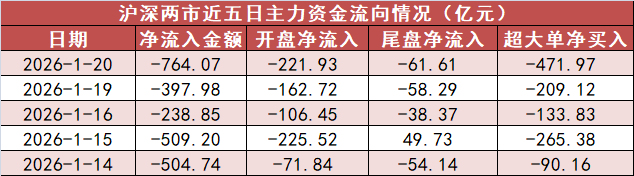
Market Overview - The A-share market experienced an overall decline on January 20, with the Shanghai Composite Index closing at 4113.65 points, down 0.01%, the Shenzhen Component Index at 14155.63 points, down 0.97%, and the ChiNext Index at 3277.98 points, down 1.79% [1] - The North Stock 50 Index also fell by 2% [1] Capital Flow - The main capital outflow from the A-share market reached 764.07 billion yuan, with a net outflow of 221.93 billion yuan at the opening and 61.61 billion yuan at the close [2] - The CSI 300 index saw a net outflow of 199.71 billion yuan, while the ChiNext experienced a net outflow of 388.98 billion yuan, and the Sci-Tech Innovation Board had a slight net inflow of 1.17 billion yuan [4] Sector Performance - Among the 8 sectors that saw capital inflows, the construction and decoration industry led with a net inflow of 27.91 billion yuan [6] - The top five sectors with net inflows included: - Construction and Decoration: 27.91 billion yuan, up 0.27% - Banking: 18.88 billion yuan, up 1.19% - Real Estate: 16.88 billion yuan, up 1.40% - Public Utilities: 15.06 billion yuan, up 0.72% - Transportation: 12.43 billion yuan, up 0.48% [7] - Conversely, the sectors with the largest net outflows included: - Electronics: -305.40 billion yuan, down 0.79% - Power Equipment: -268.40 billion yuan, down 1.47% - Computers: -198.78 billion yuan, down 1.55% - Machinery: -165.45 billion yuan, down 1.22% - Telecommunications: -160.92 billion yuan, down 2.61% [7] Stock Highlights - Zhejiang Wenhu Internet saw the highest net inflow of 5.1 billion yuan [8] - Institutions showed significant interest in several stocks, with Hunan Baiyin (002716) experiencing a net institutional buy of 80.83 million yuan, while Sanwei Communication (002115) faced a net institutional sell of 193.59 million yuan [10][11] Institutional Focus - Recent institutional ratings and target prices for selected stocks include: - Xingyu Co., Ltd.: Buy rating with a target price of 222.42 yuan, current price 121.24 yuan, indicating a potential upside of 83.45% - Dongyangguang: Buy rating with a target price of 35.28 yuan, current price 28.26 yuan, indicating a potential upside of 24.84% - Shuijingfang: Buy rating with a target price of 47.84 yuan, current price 40.35 yuan, indicating a potential upside of 18.56% [12]

【20日资金路线图】建筑装饰板块净流入近28亿元居首 龙虎榜机构抢筹多股
证券时报· 2026-01-20 11:43
Market Overview - The A-share market experienced an overall decline on January 20, with the Shanghai Composite Index closing at 4113.65 points, down 0.01%, the Shenzhen Component Index at 14155.63 points, down 0.97%, and the ChiNext Index at 3277.98 points, down 1.79% [2] - The North Star 50 Index also fell by 2% [2] Capital Flow - The main capital outflow from the A-share market reached 764.07 billion yuan, with an opening net outflow of 221.93 billion yuan and a closing net outflow of 61.61 billion yuan [3] - Over the past five trading days, the main capital flow has shown a consistent trend of outflow, with the highest outflow recorded on January 20 [4] Sector Performance - The CSI 300 index saw a net capital outflow of 199.71 billion yuan, while the ChiNext experienced a net outflow of 388.98 billion yuan, and the Sci-Tech Innovation Board had a slight net inflow of 1.17 billion yuan [5] - Among the primary sectors, the construction and decoration industry led with a net inflow of 27.91 billion yuan, while the electronics sector faced the largest outflow of 305.40 billion yuan [7][8] Individual Stocks - Zhejiang Wenlian saw the highest net inflow of 5.1 billion yuan among individual stocks [9] - The top stocks with institutional net buying included Hunan Baiyin with a 10.03% increase and a net buying amount of 80.82 million yuan, while Sanwei Communication faced significant net selling with a decrease of 9.98% and a net selling amount of 193.59 million yuan [11][12] Institutional Focus - Recent institutional interest has been noted in several stocks, with notable ratings and target prices provided by various securities firms, indicating potential upside for stocks like Xingyu Co. and Dongyangguang [13]

谨慎加仓?
第一财经· 2026-01-20 10:40
Market Overview - The A-share market shows a differentiated adjustment pattern, with the Shanghai Composite Index demonstrating resilience, regaining the 4100-point level, primarily driven by the real estate, banking, and oil sectors [4] - A total of 2231 stocks experienced an increase [5] - The market exhibited a clear divergence, with the real estate sector leading gains, while the TMT (Technology, Media, Telecommunications) sector and power equipment faced significant adjustments [6] Trading Activity - The total trading volume of both markets reached 1 trillion yuan, an increase of 2.56%, indicating a moderate increase in trading activity as funds shifted from previously popular sectors to those with lower valuations or solid fundamentals [7] - Institutional investors are reallocating their portfolios, selling off previously popular sectors like power equipment and telecommunications, and moving towards defensive sectors such as banking, construction, insurance, and real estate [9] Fund Flows - There was a net outflow of 68.4 billion yuan from major funds, while retail investors saw a net inflow [8] - Retail investors are absorbing the selling pressure and speculating on themes, with some funds flowing into short-term overbought stocks, partially offsetting the outflow from popular sectors like semiconductors and commercial aerospace [9] Investor Sentiment - As of January 20, 32.96% of investors increased their positions, while 20.13% reduced their holdings, with 46.91% remaining unchanged [12] - Retail investor sentiment is currently at 75.85% [10]

数据复盘丨石油石化、建筑材料等行业走强 71股获主力资金净流入超1亿元
Zheng Quan Shi Bao Wang· 2026-01-20 10:00
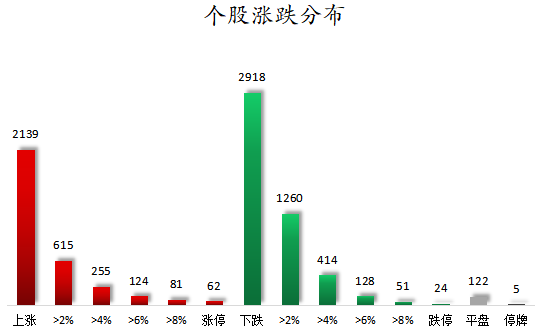
Market Overview - The Shanghai Composite Index closed at 4113.65 points, down 0.01%, with a trading volume of 12,215 billion yuan [1] - The Shenzhen Component Index closed at 14,155.63 points, down 0.97%, with a trading volume of 15,563.13 billion yuan [1] - The ChiNext Index closed at 3,277.98 points, down 1.79%, with a trading volume of 7,092.73 billion yuan [1] - The STAR 50 Index closed at 1,482.99 points, down 1.58%, with a trading volume of 978 million yuan [1] - The total trading volume of both markets was 27,778.13 billion yuan, an increase of 694.23 billion yuan compared to the previous trading day [1] Sector Performance - Strong sectors included oil and petrochemicals, building materials, precious metals, real estate, transportation, banking, chemicals, and coal [3] - Active concepts included epoxy propylene, glyphosate, cultivated diamonds, rental and sale rights, beer, longevity medicine, gold, and prefabricated buildings [3] - Weak sectors included communications, defense and military industry, computers, electrical equipment, machinery, and electronics [3] Individual Stock Performance - A total of 2,139 stocks rose, while 2,918 stocks fell, with 122 stocks remaining flat and 5 stocks suspended [3] - Among the stocks that hit the daily limit, 62 stocks rose to the limit, while 24 stocks fell to the limit [3] - The stock with the most consecutive limit-ups was Fenglong Co., with 15 consecutive limit-ups [6] Capital Flow - The net outflow of main funds in the Shanghai and Shenzhen markets was 764.07 billion yuan, with the ChiNext experiencing a net outflow of 388.98 billion yuan [7] - The real estate sector saw the highest net inflow of main funds, amounting to 4.71 billion yuan [7] - A total of 71 stocks saw net inflows exceeding 1 billion yuan, with Zhejiang Wenlian leading at 5.1 billion yuan [11] Institutional Activity - Institutions had a net buy of approximately 1.78 billion yuan, with Hunan Baiyin receiving the highest net buy of about 808.27 million yuan [18] - The stocks with the highest net sell by institutions included Xinyi Sheng, with a net outflow of 2.194 billion yuan [14]
72只股收盘价创历史新高
Zheng Quan Shi Bao Wang· 2026-01-20 09:48
Core Viewpoint - The Shanghai Composite Index experienced a slight decline of 0.01%, while 72 stocks reached historical closing highs, indicating a mixed market performance with a significant number of stocks achieving new price milestones [1][2]. Group 1: Market Performance - Among the tradable A-shares today, 2,233 stocks rose, accounting for 40.85%, while 3,102 stocks fell, making up 56.74% of the market [1]. - The average closing price of stocks that reached historical highs was 65.97 yuan, with 11 stocks priced over 100 yuan and 23 stocks priced between 50 yuan and 100 yuan [1][2]. Group 2: Sector Analysis - The sectors with the highest concentration of stocks reaching historical highs included electronics (17 stocks), electrical equipment (11 stocks), and non-ferrous metals (9 stocks) [1]. - Notable stocks with significant price increases included Zhizhi New Materials (19.01%), Sains (13.80%), and Yinen Power (11.14%) [2][3]. Group 3: Capital Flow - The total net outflow of main funds from stocks that reached historical highs was 870 million yuan, with notable inflows into Tongfu Microelectronics (431 million yuan), Baiwei Storage (276 million yuan), and Zhaoyi Innovation (236 million yuan) [2]. - Stocks with the highest total market capitalization among those reaching historical highs included Zhaoyi Innovation (195.01 billion yuan), Shandong Gold (171.94 billion yuan), and Baofeng Energy (160.53 billion yuan) [2]. Group 4: Stock Highlights - The stock with the highest closing price today was Zhaoyi Innovation at 292.00 yuan, which increased by 1.23% [4]. - Other notable stocks that reached historical highs included Jintai International (32.75 yuan), and Longteng Co. (74.77 yuan) [3][4].




1月20日创业板高换手率股票(附名单)
Zheng Quan Shi Bao Wang· 2026-01-20 09:41
Market Performance - The ChiNext Index fell by 1.79%, closing at 3277.98 points, with a total trading volume of 709.27 billion yuan, a decrease of 5.791 billion yuan from the previous trading day [1] - Among the tradable ChiNext stocks, 377 stocks closed higher, with 14 stocks rising over 10%, while 991 stocks closed lower, including 7 stocks that fell over 10% [1] Turnover Rate - The average turnover rate for ChiNext stocks today was 5.01%, with 40 stocks having a turnover rate exceeding 20% [1] - The highest turnover rate was recorded by Blue Arrow Electronics at 46.83%, followed by Double杰 Electric at 46.79% [1] Sector Analysis - In terms of sector performance, the electronics industry had the most stocks with a turnover rate exceeding 20%, followed by power equipment and basic chemicals [2] Institutional Activity - Six high-turnover ChiNext stocks appeared on the Dragon and Tiger List, with institutional participation noted in several stocks, including Yunhan Chip City and Double杰 Electric [3] - Yunhan Chip City saw a net institutional buy of 26.86 million yuan, while Double杰 Electric experienced a net institutional sell of 10.56 million yuan [3] Capital Flow - Among high-turnover stocks, 19 stocks experienced net inflows of main funds, with the highest inflows seen in Sifangda, Doctor Glasses, and Tianlong Group [4] - Conversely, Tianyin Machinery, Shennong Agriculture, and Double杰 Electric had significant net outflows [4] Earnings Forecast - Six high-turnover stocks released earnings forecasts for 2025, with five stocks expecting profit increases and one stock expecting a profit [4] - The stock with the highest expected net profit growth is Chuanjin Nuo, with a projected net profit of 455 million yuan, representing a year-on-year increase of 158.44% [4]



A股尾盘,多股逆势拉升封板,6股获巨额资金抢筹
Zheng Quan Shi Bao· 2026-01-20 09:39
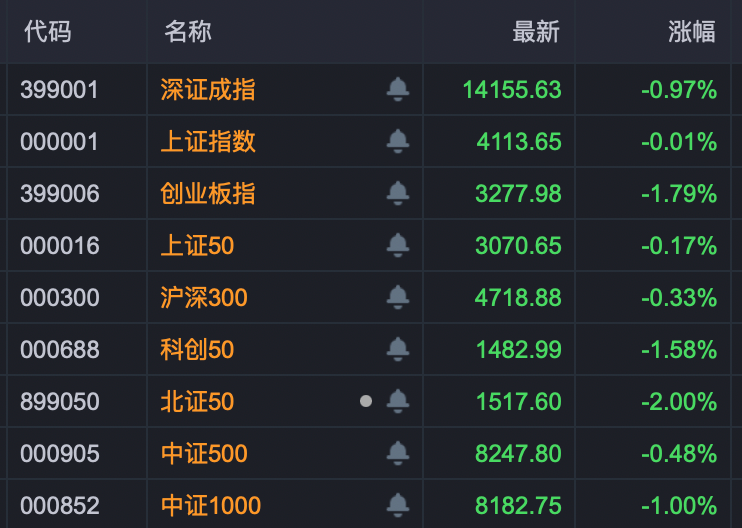
Market Overview - On January 20, the A-share market experienced fluctuations, with the Shanghai Composite Index barely holding above 4100 points and the ChiNext Index falling below 3300 points, while the Shenzhen Component, CSI 300, and CSI 500 all closed with small bearish candles. The market turnover reached 2.8 trillion yuan [1]. Index Performance - The Shenzhen Component Index closed at 14155.63, down 0.97% - The Shanghai Composite Index closed at 4113.65, down 0.01% - The ChiNext Index closed at 3277.98, down 1.79% - The CSI 300 Index closed at 4718.88, down 0.33% - The CSI 500 Index closed at 8247.80, down 0.48% [2]. Sector Performance - Chemical, precious metals, real estate, and aviation sectors showed the highest gains, while aerospace equipment, photovoltaic equipment, communication devices, and glass fiber sectors experienced the largest declines [2]. Fund Flow Analysis - The public utilities sector saw a net inflow of over 3.7 billion yuan, while the construction and decoration sector received over 3.6 billion yuan. Real estate, banking, basic chemicals, and building materials sectors each gained over 2 billion yuan in net inflows. Transportation and retail sectors also saw net inflows exceeding 1 billion yuan. Conversely, electronics, power equipment, communications, defense, and computer sectors experienced net outflows exceeding 10 billion yuan [3]. Notable Stocks - China XD Electric (601179) saw a net inflow of 1.561 billion yuan, with a price increase of 8.84% - Shanzhi High-Tech (000981) had a net inflow of 1.423 billion yuan, with a price increase of 6.69% - Zhejiang Wenhu (600986) had a net inflow of 1.318 billion yuan, with a price increase of 10.04% - China Power Construction (601669) had a net inflow of 1.305 billion yuan, with a price increase of 7.02% [4]. Market Outlook - According to Yingda Securities, the Shanghai Composite Index is expected to oscillate around the 4100-point mark, indicating a market cooling period. This does not suggest a deep correction but rather a healthy consolidation after rapid gains. Investors are advised to take profits on short-term high-flying stocks while looking for value opportunities in underperforming sectors with solid fundamentals [4]. Future Predictions - Zhongyin International predicts that by 2026, the core broad-based indices of the Chinese stock market may see an overall increase of over 40%, driven by nearly 20% profit growth and 20% valuation improvement. Key sectors expected to lead include technology manufacturing, biomedicine, national defense, and non-ferrous metals, while sectors like communications, internet, brokerage insurance, new consumption, and real estate may have potential for catch-up gains [5]. Commodity Trends - Precious metals stocks surged in the afternoon, with the sector index reversing from an early drop of over 3% to a gain of 3.5%, reaching a historical high. Notable stocks include Hunan Silver and Zhaojin Gold, which quickly hit the daily limit [5][6]. - International gold and silver prices continued to rise, with London spot gold surpassing $4700 per ounce, marking a historical high. The trend of central banks purchasing gold is expected to support gold prices amid ongoing geopolitical tensions [6]. Chemical Industry Insights - The chemical sector showed strong performance, with various sub-sectors like daily chemicals and petrochemicals experiencing significant gains. The recent global price surge in chemicals has been noted, with major companies like BASF and Dow increasing prices across multiple regions [7][9]. - Recent data indicates that chemical product prices have generally increased, with synthetic rubber seeing the highest rise of 11.7% [9].
如何从一二级市场联动寻找产业债交易信号?(行业篇)
Soochow Securities· 2026-01-20 09:28
Report Industry Investment Rating No information provided in the content. Core Viewpoints - The secondary - market trends of industrial bond sub - industries show a divergence in the correlation between primary and secondary markets. This divergence may be due to differences in supply among industries and differences in bond liquidity and trading popularity within each industry. If an industry has many issuing entities with strong willingness and ability to issue bonds and is in a good development trend, the probability of a synchronous resonance relationship between primary - market supply and secondary - market demand is relatively high, which can improve the accuracy of judging trading signals of narrowing spreads from daily net financing [1][14]. - Most industries have trading signals transmitted from primary - market supply to secondary - market demand, including comprehensive, non - ferrous metals, and others. Some industries show a stronger negative correlation between primary - market supply and secondary - market demand, such as comprehensive and non - ferrous metals. Some industries have a weak correlation between daily net financing and daily spreads, including communication and food and beverage [2][4]. Summary by Directory 1. Industrial Bond Sub - industries Show Divergence in Primary - Secondary Market Trend Correlation - **Research Method**: Classify industrial bond issuers by Shenwan primary industries, calculate the daily net financing and daily credit spreads of each sub - industry from January 1, 2025, to December 19, 2025, to observe the correlation between primary - market supply and secondary - market demand [12]. - **Divergence Performance**: Most industries have trading signals transmitted from primary - market supply to secondary - market demand, while some do not show this feature significantly [13]. - **Reasons for Divergence**: Differences in supply among industries are related to the number, size, and life - cycle stage of issuing entities. Differences in bond liquidity and trading popularity within industries are related to the scale of outstanding bonds, valuation levels, and event catalysts [14]. 1.1. Industries with Obvious Correlation - **Comprehensive Industry**: From January to March 2025, daily net financing decreased and daily spreads increased; from March to June, daily net financing increased and daily spreads decreased; from June to December, both were in a low - level oscillation [21]. - **Non - ferrous Metals Industry**: From January to July 2025, daily net financing increased and daily spreads decreased; from July to September, daily net financing decreased and daily spreads increased; from October to December, both were in a low - level oscillation [25]. - **Other Industries**: Similar analysis is conducted for industries such as pharmaceutical biology, social services, and others, with different trends in different time intervals [27][30][32]. - **Common Features**: These industries generally have a large scale of outstanding bonds and high institutional investor attention, which is conducive to the transmission of primary - market supply changes to secondary - market spread changes [3][87]. 1.2. Industries with General Correlation - **Industries Included**: Communication, food and beverage, and other industries have a weak correlation between daily net financing and daily spreads, and the linkage and transmission between primary - and secondary - market indicators are relatively weak [4][13]. - **Reasons**: These industries have low participation in the bond market, and their secondary - market trading demand is more affected by overall bond - market trends, industry risk premiums, and liquidity premiums. Different types of industries have specific reasons for the weak correlation [4][90][91].
招商证券:国网“十五五”投资规划超预期,总投资预计达4万亿元聚焦新型电力系统
Xin Lang Cai Jing· 2026-01-20 09:26
Group 1 - The core investment of the State Grid Corporation during the 14th Five-Year Plan is expected to reach 4 trillion yuan, a significant increase of approximately 40% compared to the previous plan [1][5] - The implied annual compound growth rate (CAGR) for achieving this target is about 7%, which is comparable to the growth rate of 7.1% during the 14th Five-Year Plan [1][5] - The focus of investment is shifting from "stabilizing growth" to "building a new power system," indicating a high level of industry prosperity expected to continue throughout the 14th Five-Year Plan [1][5] Group 2 - The report highlights significant challenges in power consumption, with electricity demand expected to grow rigidly due to new needs from electric vehicles and AI computing [2][8] - The supply side has seen explosive growth in renewable energy installations, with nearly 80% of new photovoltaic and wind power capacity added in the last three years, exceeding the grid's original capacity [2][8] - The construction of external transmission channels (UHV/main grid) and the enhancement of system regulation capabilities (energy storage/distribution network) are viewed as key technical paths to address these challenges [2][8] Group 3 - The overseas power grid is entering a renewal cycle, with equipment averaging 30 to 40 years of service nearing replacement, leading to a "passive acceleration" of investment [3][9] - Chinese leading power equipment companies are demonstrating strong delivery capabilities and competitive advantages in transformers, switches, smart meters, and insulators, benefiting from early overseas market positioning [3][9] - These companies are expected to achieve more prominent development in this global cycle [3][9] Group 4 - The report suggests focusing on domestic companies such as Guodian NARI, Sifang Electric, China XD Electric, and TBEA, among others [6][11] - For overseas layout, companies like Sifang Electric, Igor, and TBEA are highlighted as key players [6][11]

14股今日获机构买入评级
Zheng Quan Shi Bao Wang· 2026-01-20 09:24
Group 1 - 14 stocks received buy ratings from institutions today, with notable upgrades for Saisir and first-time attention for Jianghuai Automobile and Yirui Technology [1] - The average performance of stocks with buy ratings declined by 0.42%, underperforming the Shanghai Composite Index, with five stocks experiencing price increases [1] - The top gainers included Nanshan Aluminum, Hunan YN, and Zhongsheng Pharmaceutical, with respective increases of 7.49%, 2.77%, and 1.80% [1] Group 2 - Among the stocks rated by institutions, eight released annual performance forecasts, with Hunan YN expecting a net profit growth of 114.81%, followed by Zhenyu Technology and Lintai New Materials with expected growths of 106.74% and 75.22% respectively [1] - The power equipment industry was the most favored, with four stocks including Keda and Hunan YN making the buy rating list, while the automotive and food & beverage sectors also attracted attention with three and two stocks respectively [1]