
网约车

Search documents
曹操出行港股上市:定制车生态持续赋能,Robotaxi抢占风口
3 6 Ke· 2025-06-25 09:54
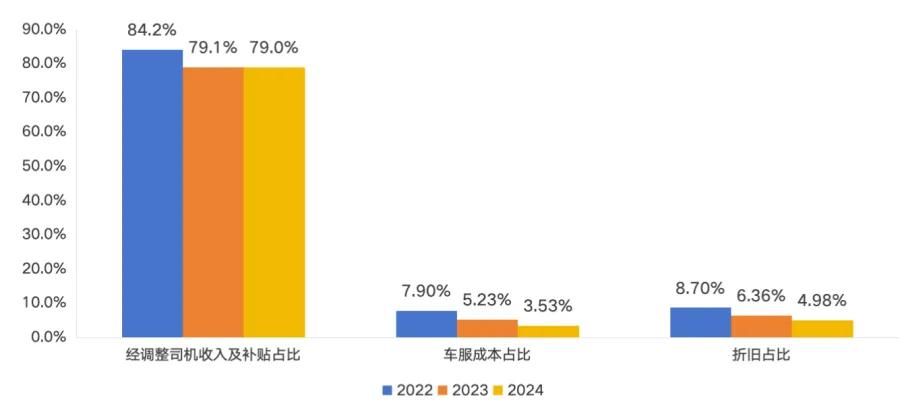
Core Viewpoint - Caocao Travel has officially listed on the Hong Kong Stock Exchange, becoming the largest technology ride-hailing platform in the market, with significant advantages in scale, business ecosystem, and innovative exploration in the industry [1][12]. Group 1: Business Performance and Financials - Caocao Travel's projected GTV for 2024 is expected to reach 17 billion yuan, holding the second-largest market share in the ride-hailing industry [1]. - The company's revenue for 2022, 2023, and 2024 is reported at 7.631 billion, 10.668 billion, and 14.657 billion yuan respectively, with a compound annual growth rate of 39% [1]. - The adjusted net loss is expected to narrow from 1.65 billion yuan in 2022 to 724 million yuan in 2024, indicating improving financial health [6]. Group 2: Custom Vehicle Advantages - By the end of 2024, Caocao Travel will operate a fleet of over 34,000 self-owned custom vehicles across 31 cities, with plans to expand to 50,000 vehicles [2]. - The proportion of custom vehicle GTV to total GTV is projected to increase from 5.3% in 2022 to 25.1% in 2024, showcasing a growing trend [2]. - The average hourly income for drivers has increased from 30.9 yuan in 2022 to 35.7 yuan in 2024, significantly higher than the industry average of approximately 27 yuan [3]. Group 3: Cost Structure and Profitability - The total cost of ownership (TCO) for Caocao's custom vehicles is significantly lower than typical electric vehicles, with reductions of 33% and 40% for its two main models [4]. - The adjusted driver income and subsidies as a percentage of ride service revenue decreased from 84.2% in 2022 to 79.0% in 2024, while vehicle service costs dropped from 7.9% to 3.53% [4]. - The gross margin improved from -4.44% in 2022 to 8.09% in 2024, reflecting the positive impact of the custom vehicle model on profitability [4]. Group 4: Competitive Advantage and Market Position - Caocao Travel has established a unique supply-side barrier through its custom vehicle ecosystem, which is difficult for competitors to replicate due to the required automotive industry background [8]. - The shift towards aggregation platforms has increased competition, making it essential for ride-hailing services to differentiate themselves beyond mere scale [7]. - The company is well-positioned to leverage its partnership with Geely to enhance its capabilities in automated driving and vehicle manufacturing, creating a closed-loop ecosystem [9]. Group 5: Future Outlook and Robotaxi Development - The emergence of Robotaxi is expected to fundamentally change the cost structure and profitability model of the ride-hailing industry, with significant market potential projected [10]. - By 2030, the domestic market for Robotaxi is anticipated to exceed 488.8 billion yuan, with a penetration rate of 36% in the shared mobility sector [10]. - Caocao Travel's existing supply-side advantages are expected to strengthen further as the Robotaxi era approaches, positioning the company favorably in future market competition [9][11].

下跌超10%,曹操出行港股上市首日破发!
Guang Zhou Ri Bao· 2025-06-25 09:08
Core Viewpoint - The ride-hailing platform Cao Cao Mobility was listed on the Hong Kong Stock Exchange on June 25, 2023, but experienced a significant drop in stock price, falling over 10% on its first day of trading [2]. Financial Performance - Cao Cao Mobility's revenue from 2022 to 2024 is projected to grow from 7.63 billion RMB to 14.66 billion RMB, maintaining a growth trend [3][4]. - Despite the revenue growth, the company is still operating at a loss, with losses of approximately 2.01 billion RMB, 1.98 billion RMB, and 1.25 billion RMB for the years 2022, 2023, and 2024 respectively [3][4]. Market Position - As of 2024, Cao Cao Mobility is expected to have a market share of 5.4% in the ride-hailing industry [2]. - The company's Gross Transaction Value (GTV) is projected to increase from 12.2 billion RMB in 2023 to 17 billion RMB in 2024, reflecting a year-on-year growth of 38.8% [2]. Dependency on Aggregation Platforms - Cao Cao Mobility has a high dependency on aggregation platforms, with orders from these platforms accounting for 49.9%, 73.2%, and 85.4% of GTV from 2022 to 2024 [2]. Future Developments - The company plans to launch a Robotaxi service in Suzhou and Hangzhou by February 28, 2025, marking a significant milestone for the commercialization of autonomous driving services [4]. - Cao Cao Mobility is collaborating with Geely Group to develop a custom vehicle specifically for Robotaxi services, including an L4 level Robotaxi expected to be launched by the end of 2026 [5].
曹操出行港股上市募18.5亿港元 国轩高科等基石投资
Zhong Guo Jing Ji Wang· 2025-06-25 08:56
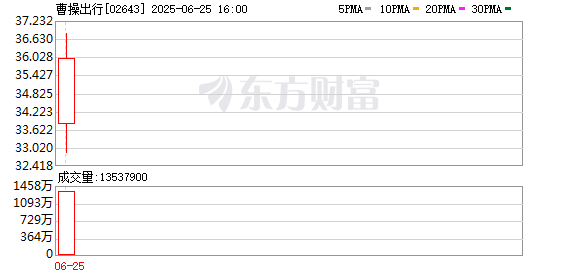
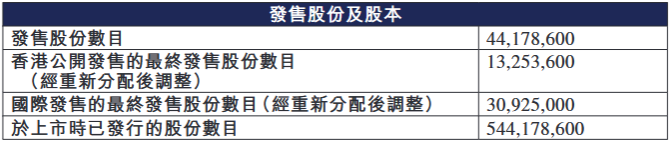
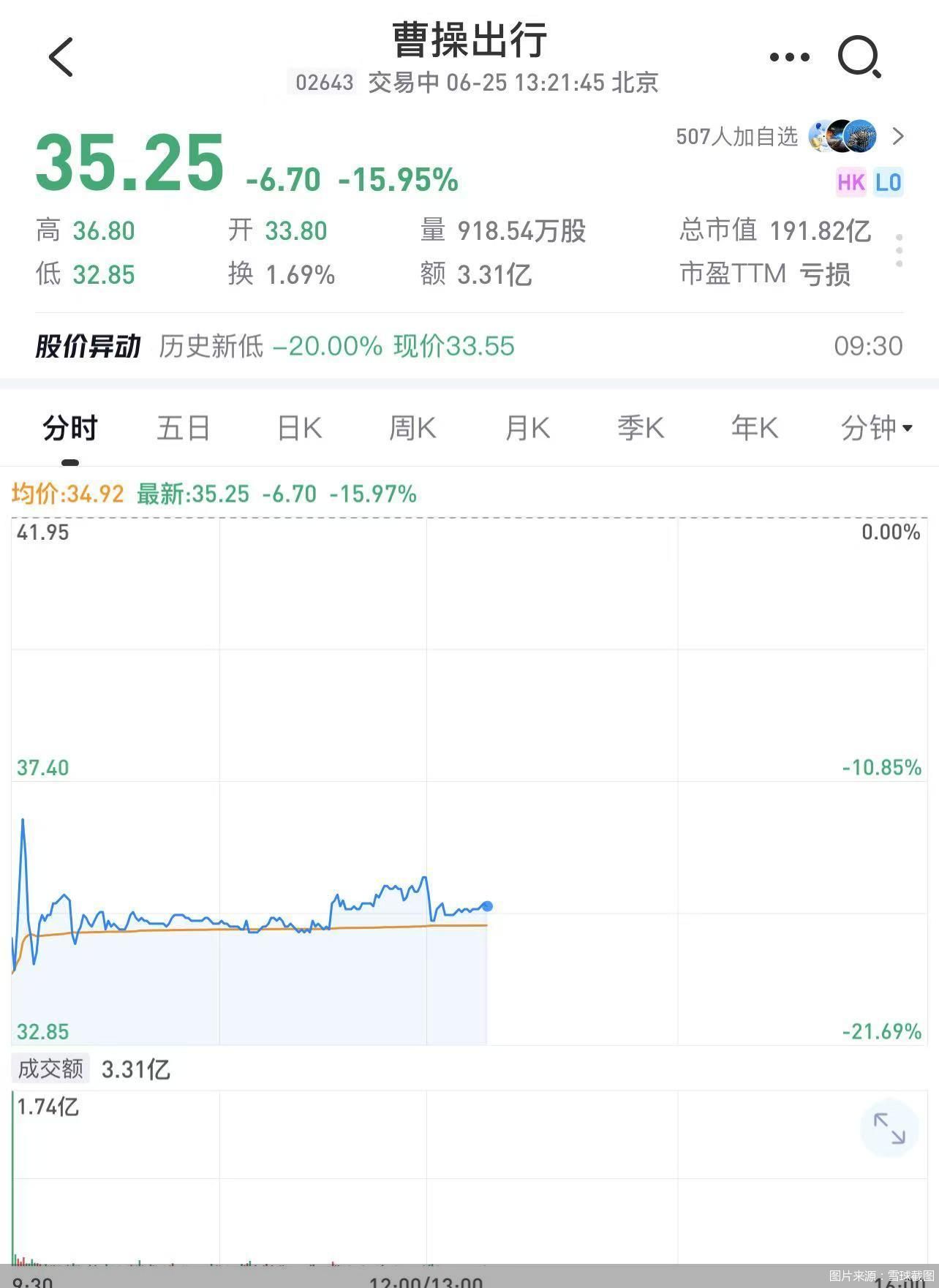
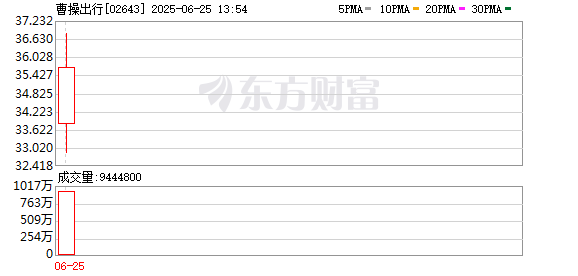
Core Viewpoint - Caocao Travel Limited (曹操出行) has been listed on the Hong Kong Stock Exchange, with its stock closing at HKD 36.00, reflecting a decline of 14.16% on its first trading day [1]. Group 1: IPO Details - The total number of shares offered by Caocao Travel was 44,178,600 [2]. - The final number of shares for the Hong Kong public offering, after reallocation, was 13,253,600, while the international offering amounted to 30,925,000 shares [2]. - At the time of listing, the total number of shares issued was 544,178,600 [2]. Group 2: Financials - The final offer price for the shares was HKD 41.94, resulting in total proceeds of HKD 1,852.85 million [3]. - After deducting estimated listing expenses of HKD 134.50 million, the net proceeds amounted to HKD 1,718.35 million [4]. Group 3: Use of Proceeds - Approximately 19.0% of the net proceeds will be used to improve vehicle service solutions and service quality over the next three years [5]. - About 18.0% will be allocated to enhance and launch customized vehicles, while 17.0% is earmarked for technology improvements and investments in autonomous driving [5]. - Additionally, 16.0% will be used to expand geographical coverage, 20.0% for repaying part of certain bank loans, and around 10.0% for working capital and other general corporate purposes [5]. Group 4: Key Investors - Notable cornerstone investors in the global offering include Mercedes-Benz Mobility Services GmbH, Future Asset Securities (Hong Kong) Limited, Infini Global Master Fund, Guoxuan High-Tech (国轩高科), EVE Energy Co., Ltd., and RoboSense HongKong Limited [5].

【快讯】每日快讯(2025年6月25日)
乘联分会· 2025-06-25 08:31
Domestic News - The Ministry of Commerce will organize the 2025 New Energy Vehicle Consumption Season from July to December 2025 to stimulate consumption potential and create new growth points in the automotive sector [3] - Six departments jointly issued guidelines to enhance financial support for consumption, encouraging financial institutions to provide various services for trade-in programs and increasing credit support for related enterprises [4] - The Ministry of Commerce aims to promote the commercial application of advanced intelligent driving vehicles while ensuring safety and compliance [5] - Guangzhou has implemented a policy allowing applicants who have been unsuccessful in the car license lottery to directly receive license plates, easing purchase restrictions [6] - Seres Automotive completed a strategic capital increase of up to 5 billion yuan, with several financial institutions participating [7] - Xiaomi's Yu7 model now supports external voice commands through its AI assistant, enhancing user interaction [8] - NIO's Firefly brand launched a Battery-as-a-Service (BaaS) rental service, reducing the car price by 40,000 yuan for users opting for this service [9] - GAC opened a sales service center in Benghazi, Libya, marking a significant step in its North African market expansion [9] International News - The South Korean market for imported diesel vehicles has significantly declined, with sales dropping by 60.2% year-on-year in May 2025 [11] - Cadillac delivered its first Celestiq model, a luxury vehicle starting at $350,000, showcasing its return to the high-end automotive market [12][13] - Uber and Waymo have launched a self-driving ride-hailing service in Atlanta, expanding their autonomous vehicle offerings [14] - Continental AG has lowered its profit margin forecast for the year due to rising costs from U.S. tariffs, now expecting a maximum adjusted EBIT margin of 11% [15] Commercial Vehicles - Beiqi Foton signed a memorandum for a localized manufacturing plant in Saudi Arabia, delivering 1,000 school buses to local customers [16] - The first cross-border heavy-duty truck battery swap line was launched, covering a distance of 980 kilometers from Sichuan to Yunnan [17] - The Haval Shanhai Pao Hi4-T was officially launched, with two versions priced at 249,800 yuan and 228,800 yuan respectively [18] - Remote's alcohol-hydrogen electric technology was showcased at a Zhejiang energy-saving promotion event, highlighting advancements in green transportation [19]

网约车老三曹操出行港股敲钟,超8成订单来自聚合平台
Nan Fang Du Shi Bao· 2025-06-25 07:41
Core Viewpoint - Caocao Travel has listed on the Hong Kong Stock Exchange, opening at HKD 33.8 per share, nearly 20% lower than the offering price, with a total market capitalization exceeding HKD 19 billion, positioning it among the leading ride-hailing stocks in the market [2] Group 1: Company Overview - Caocao Travel, founded on May 21, 2015, is a strategic investment of Geely Holding Group focused on the "new energy vehicle sharing ecosystem," offering services such as ride-hailing, car rentals, and carpooling [3] - As of March 31, 2025, Caocao Travel operates in 146 cities, with a total Gross Transaction Value (GTV) of RMB 48 billion in Q1 2024, reflecting a 54.9% year-on-year increase [3] Group 2: Market Position and Growth - The shared mobility market is projected to grow from RMB 354.7 billion in 2024 to RMB 751.3 billion by 2028, driven by increasing demand for economical travel options and higher penetration in lower-tier cities [3] - In 2024, Caocao Travel is expected to achieve a total GTV of RMB 170 billion, a 38.8% increase from 2023, with an average of 28.7 million monthly active users and 466,000 monthly active drivers, both showing approximately 50% growth year-on-year [4] Group 3: Financial Performance - From 2022 to 2024, Caocao Travel's total revenue is projected to grow from RMB 76.31 billion to RMB 146.57 billion, with losses of approximately RMB 20.07 billion, RMB 19.81 billion, and RMB 12.46 billion respectively, totaling over RMB 5.2 billion in losses but showing a narrowing trend [6] - The gross profit margin improved from -4.4% in 2022 to 8.1% in 2024, attributed to the introduction of customized vehicles and optimized vehicle operation strategies [7] Group 4: Strategic Initiatives - Caocao Travel plans to enhance collaboration with third-party aggregation platforms to drive more traffic cost-effectively, as the share of orders from aggregation platforms increased from 49.9% in 2022 to an expected 85.4% in 2024 [5] - The company is also focusing on the development of Robotaxi services, with plans to commercialize this offering and expand its coverage to more cities by 2026 [6][7]
李书福又一个IPO,190亿
投资界· 2025-06-25 07:02
Core Viewpoint - The article discusses the IPO of Cao Cao Mobility, highlighting its rapid growth and strategic positioning in the ride-hailing market, as well as its future plans for autonomous driving services [1][6]. Company Overview - Cao Cao Mobility, established in 2015, emerged from Geely Group and has quickly become a unicorn, ranking among the top three ride-hailing platforms in China since 2021 [1][7]. - The company went public on June 25, 2023, with an IPO price of HKD 41.94 per share, resulting in a market capitalization of HKD 19 billion [1]. Financial Performance - Cao Cao Mobility's revenue has increased significantly, with figures of RMB 7.63 billion in 2022, RMB 10.67 billion in 2023, and projected RMB 14.66 billion in 2024 [8]. - The net losses for the same years were RMB 2.01 billion, RMB 1.98 billion, and an expected RMB 1.25 billion, indicating a trend of decreasing losses [8]. Market Position - According to a report by Frost & Sullivan, Cao Cao Mobility is projected to become the second-largest ride-hailing platform in China by 2024, expanding its operations to 136 cities [7][9]. - The company has seen a substantial increase in order volume, with 3.83 billion orders in 2021, 4.48 billion in 2022, and 5.98 billion in 2023 [7]. Strategic Initiatives - Under the leadership of CEO Gong Xin, the company has launched customized vehicles and a new strategic framework called N³, focusing on new cars, new power, and a new ecosystem [5][6]. - The company is also venturing into autonomous driving, with plans to launch L4-level Robotaxi models by the end of 2026 [6]. Investment and Funding - Since its inception, Cao Cao Mobility has completed three rounds of financing, including a USD 100 million Series A round in 2017 and an RMB 1.8 billion Series B round in 2021, with a pre-IPO valuation reaching RMB 17 billion [11]. - The company has attracted significant venture capital and private equity interest, benefiting from its association with Geely [10][11]. Industry Context - Suzhou, where Cao Cao Mobility is headquartered, has developed into a hub for intelligent vehicle networking, with over 600 related enterprises and a market size exceeding RMB 600 billion [13][14]. - The region's focus on smart automotive technology positions it as a leader in the emerging industry landscape [14].

上市首日破发,曹操出行困局待解
Bei Jing Shang Bao· 2025-06-25 06:31
Core Viewpoint - Cao Cao Mobility officially listed on the Hong Kong Stock Exchange on June 25, but experienced a significant drop in share price, indicating market concerns about its profitability and future growth prospects [4][5]. Company Overview - Cao Cao Mobility was established in 2015 by Geely Holding Group, focusing on ride-hailing and carpooling services, with revenue primarily derived from mobility services [4]. - The company has consistently ranked among the top three ride-hailing platforms in China by gross transaction value (GTV) since 2021, achieving the second position in the industry last year [4]. Financial Performance - Revenue projections for Cao Cao Mobility from 2022 to 2024 are 7.631 billion yuan, 10.7 billion yuan, and 14.7 billion yuan, with the share of revenue from mobility services being 97.9%, 96.6%, and 92.5% respectively [4]. - Despite increasing revenues, the company reported losses of 2.007 billion yuan, 1.981 billion yuan, and 1.246 billion yuan for the same period, with high sales costs of 7.97 billion yuan, 10.052 billion yuan, and 13.471 billion yuan [5]. Debt and Financial Risks - Cao Cao Mobility maintains significant debt levels to support operations, with short-term debts projected at 3.5 billion yuan, 5.2 billion yuan, and 5.7 billion yuan from 2022 to 2024 [5]. Market Position and Competition - The company relies heavily on aggregator platforms, with orders from these platforms accounting for 49.9%, 73.2%, and 85.4% of total transaction value from 2022 to 2024 [6]. - Cao Cao Mobility holds a market share of only 5.4%, significantly lower than Didi, which commands a 70.4% share [6]. Strategic Initiatives - The company aims to improve profitability through investments in customized vehicles and Robotaxi technology, planning to purchase approximately 8,000 customized vehicles annually from 2025 to 2027 [7]. - About 17% of the net proceeds from the IPO will be allocated to enhance technology and invest in autonomous driving, with specific plans for developing next-generation Robotaxi models [7]. Industry Trends - The Robotaxi market is seen as a significant growth area, with projections suggesting a potential annual profit of $1 trillion by 2030 [8]. - Competition in the Robotaxi sector is intensifying, with various companies, including Tesla and Waymo, also investing heavily in this space [8].
港股迎来曹操出行:定制车突破行业困局,驶向智能出行新航道
Nan Fang Du Shi Bao· 2025-06-25 05:54
Core Viewpoint - The article highlights the successful listing of Cao Cao Mobility on the Hong Kong Stock Exchange and its strategic differentiation in the ride-hailing market through vehicle lifecycle management and innovative business models, positioning itself for future growth in the smart mobility sector [2][17]. Industry Overview - The Chinese ride-hailing market has been steadily growing, with a market size increasing from 68.95 trillion yuan in 2022 to an estimated 80 trillion yuan in 2024, and a projected compound annual growth rate (CAGR) of 5.4% from 2025 to 2029 according to Frost & Sullivan [2]. Company Performance - Cao Cao Mobility's gross margin improved from -4.4% in 2022 to 8.1% in 2024, and its adjusted EBITDA margin turned positive from -10.1% to 2.6% during the same period, indicating a significant turnaround in profitability [5][9]. - The company has managed to reduce the total cost of ownership (TCO) of its vehicles by 36.4% compared to typical electric vehicles, achieving a cost of approximately 0.5 yuan per kilometer [9][11]. Strategic Differentiation - Cao Cao Mobility has developed over 34,000 customized vehicles in 31 cities, making it the largest fleet of its kind in China, with the share of customized vehicle orders increasing from 20.1% in 2023 to 25.1% in 2024 [7][9]. - The customized vehicles are designed in collaboration with Geely, focusing on durability and maintenance, which enhances the working environment for drivers and reduces operational costs [9][10]. Future Outlook - The company plans to allocate 48% of its fundraising towards upgrading customized vehicles, developing Robotaxi technology, and expanding geographically, indicating a strong focus on future smart mobility solutions [13][15]. - Cao Cao Mobility's Robotaxi strategy aims to leverage its existing infrastructure and operational experience to transition smoothly from human-driven vehicles to autonomous ones, enhancing operational efficiency and profitability [13][18]. Investment Interest - The participation of major investors such as Mercedes-Benz, Guoxuan High-Tech, and Suteng Juchuang in the IPO reflects confidence in Cao Cao Mobility's potential to become a key player in the smart mobility ecosystem [14][15].
港股首日破发16%!网约车老二曹操出行上市的艰难战役
Sou Hu Cai Jing· 2025-06-25 05:20
Core Viewpoint - CaoCao Inc. has listed on the Hong Kong Stock Exchange but faced a significant drop in share price, opening down 15.47% from its IPO price, indicating weak market reception and investor sentiment [2][3]. Company Overview - CaoCao Inc. is the second-largest ride-hailing company in China, holding a market share of 5.4%, significantly lower than Didi's 70.4% [2]. - The company was founded in 2015 as part of Geely Holding Group's strategic investment in the "new energy vehicle sharing ecosystem" [5]. IPO Details - The global offering consisted of 44.18 million shares, with a public offering of 4.42 million shares and an international offering of 39.76 million shares, priced at HKD 41.94 per share, aiming to raise approximately HKD 1.853 billion [5]. - The post-IPO valuation of the company is expected to reach HKD 22.823 billion [5]. Financial Performance - The company reported total revenues of RMB 7.63 billion, RMB 10.67 billion, and RMB 14.66 billion for the years 2022, 2023, and 2024 respectively, with a year-on-year growth of 37.4% in 2024 [8][10]. - Despite revenue growth, the company has faced significant operating losses, with losses of RMB 53 billion, RMB 64 billion, and RMB 72 billion projected for 2022, 2023, and 2024 respectively [7][10]. Business Model - Unlike other ride-hailing platforms that utilize a C2C model, CaoCao operates on a B2C heavy asset model, directly purchasing vehicles and employing dedicated drivers [6]. - The company has a fleet of 216,000, 307,000, and 592,000 active vehicles as of 2022, 2023, and 2024, respectively, with corresponding active driver counts [6]. Cost Structure - CaoCao's total liabilities are projected to reach RMB 112.83 billion by 2024, with net current liabilities of RMB 81.46 billion, indicating liquidity concerns [7]. - The company’s sales costs are heavily influenced by driver income and subsidies, which account for approximately 80% of total sales costs [15]. Market Position and Competition - The ride-hailing market is highly competitive, with CaoCao's business model facing challenges in achieving profitability despite its market position [11][20]. - The company relies significantly on external aggregation platforms for orders, with 49.9%, 73.2%, and 85.4% of its Gross Transaction Value (GTV) coming from these platforms in 2022, 2023, and 2024 respectively [14]. Strategic Initiatives - To improve profitability, the company has focused on enhancing technological capabilities, reducing driver subsidies, and expanding into new markets [9]. - The company achieved a gross profit margin of 8.1% in 2024, recovering from a gross loss margin of 4.4% in 2022 [9].
200亿,浙江富豪拿下第十个IPO
3 6 Ke· 2025-06-25 03:56
Core Insights - Cao Cao Mobility officially listed on the Hong Kong Stock Exchange on June 25, 2024, with an initial market capitalization of approximately HKD 20 billion, marking the 10th IPO for Geely's founder Li Shufu [1][2] - As a leading ride-hailing platform in China, Cao Cao Mobility has expanded its services to 62 cities, with over 180 million registered users and an average daily order volume exceeding 3 million, positioning itself as the second-largest player in the market with a 5.4% market share [1][2] Financial Performance - Cao Cao Mobility's revenue has shown consistent growth, with figures of CNY 7.631 billion, CNY 10.668 billion, and CNY 14.657 billion from 2022 to 2024, reflecting a compound annual growth rate of nearly 40% [2] - The company transitioned from negative to positive gross profit starting in 2023, with gross profits of -CNY 340 million, CNY 610 million, and CNY 1.18 billion for the respective years, achieving gross margins of -4.4%, 5.8%, and 8.1% [2] - Despite the revenue growth, Cao Cao Mobility has not yet achieved profitability, with annual losses decreasing from CNY 3.007 billion in 2021 to CNY 1.246 billion in 2024, accumulating over CNY 8 billion in losses over four years [2] Market Context - The Chinese ride-hailing market is projected to reach CNY 8 trillion in 2024, with the shared mobility segment estimated at CNY 344.4 billion, indicating a penetration rate of 4.3% [7] - The shared mobility market is expected to grow to CNY 804.2 billion by 2029, with a compound annual growth rate of 17.0% from 2025, suggesting increasing market opportunities [7] - Didi, the largest player in the ride-hailing sector, held a market share of 70.4% in 2024, while Cao Cao Mobility's share was significantly lower at 5.4% [8] Strategic Positioning - Cao Cao Mobility was originally established as a premium ride service under Geely's strategic investment in the shared mobility sector, evolving from "Cao Cao Special Car" to a more diversified service platform [5][6] - The company emphasizes its commitment to being a compliant B2C platform focused on new energy vehicles, reflecting Geely's broader strategy in the automotive and mobility sectors [5][6] Regional Development - The successful IPO of Cao Cao Mobility highlights the growing strength of Suzhou as a hub for industrial innovation, with several other companies from the region also going public recently [3][19] - Suzhou has established a comprehensive industrial chain in the smart connected vehicle sector, with over 350 related enterprises and more than 600 smart connected vehicles operational [18][19]