资产管理

Search documents
主权基金正在低价买入比特币
Xin Lang Cai Jing· 2025-12-05 03:23
Group 1: Bitcoin and Sovereign Funds - BlackRock CEO Larry Fink revealed that unnamed sovereign funds are buying Bitcoin, increasing their positions as the price dropped from a peak of $126,000 to the $80,000 range, aiming to establish long-term holdings [1][3] - Fink emphasized the risk of the U.S. falling behind other countries if it does not accelerate investments in digitalization and tokenization, predicting significant growth in cryptocurrency-driven tokenization in the coming years [1][3] Group 2: Stablecoins and Central Bank Control - The International Monetary Fund (IMF) warned that the rise of stablecoins could expand access to financial services but may come at the cost of central bank control, highlighting the potential risk of "currency substitution" [4] - The IMF noted that stablecoins could penetrate national economies rapidly through the internet and smartphones, particularly in cross-border scenarios, potentially undermining monetary sovereignty [4] Group 3: Emerging Markets Outlook - Fidelity International expressed optimism for emerging market assets, predicting a strong year in 2025 and even more significant developments in 2026, with U.S. interest rate cuts enhancing the appeal of higher-yielding emerging market assets [2][5] - Fidelity's investment manager Mike Riddell stated that large-scale capital has yet to enter emerging markets, setting the stage for increased allocations to emerging market debt in 2026 [2][5] Group 4: U.S. National Debt - The U.S. Treasury's total sovereign debt has surpassed $30 trillion for the first time, more than doubling since 2018, with the total national debt reaching $38.4 trillion as of November [6] - Despite a narrowing deficit projected at approximately $1.78 trillion for the 2025 fiscal year, interest payments on the debt are expected to reach $1.2 trillion, posing significant challenges for fiscal management [6]
Vanguard称交易员低估了日本国债收益率上升的风险
Xin Lang Cai Jing· 2025-12-05 00:28
由于投资者押注日本央行将在12月18日至19日的会议上加息,日本2年期国债收益率近日突破1%,达到 2008年以来最高水平。但经过多年持续宽松的货币政策,日本利率仍然远低于G-10其他国家,而且日 本通胀期望接近自2004年有记录以来的最高水平。 Vanguard Group Inc.表示,交易员押注日本央行本月将加息,但他们仍然低估了日本利率可能需要进 一步走高以抑制通胀的风险。 由于投资者押注日本央行将在12月18日至19日的会议上加息,日本2年期国债收益率近日突破1%,达到 2008年以来最高水平。但经过多年持续宽松的货币政策,日本利率仍然远低于G-10其他国家,而且日 本通胀期望接近自2004年有记录以来的最高水平。 "市场低估了日本要缓解通胀压力中性利率需要上升的程度,因此减持日本国债是正确的做法,"管理着 11万亿美元资产的Vanguard的全球利率主管Roger Hallam周四在接受采访时表示。"我们仍然认为日本央 行将继续正常化,并将在12月加息。" 日本央行行长植田和男本周说,中性利率的预估范围很广。日本央行此前曾表示,中性利率介于1%至 2.5%之间。目前的政策利率为0.50%。 责任编 ...
存款搬家进行时 大财富管理行业转向核心能力比拼
Zheng Quan Shi Bao· 2025-12-04 17:54
Core Viewpoint - The wealth management industry is evolving as a crucial link between capital and assets, focusing on creating long-term, stable value for clients amidst changing interest rates and wealth structures [1][2]. Group 1: Trends in Wealth Management - The phenomenon of "deposit migration" is prominent, with funds shifting from traditional bank savings to wealth management products, funds, and capital markets, driven by a changing wealth structure [2][3]. - Current low interest rates are a fundamental driver of this trend, with bank deposit rates dropping below 1%, contrasting with previous years when rates were significantly higher [3][4]. - The potential for further capital market inflows remains significant, as the ratio of total deposits to A-share market capitalization is approximately 1.5 times, indicating room for growth [3][4]. Group 2: Balancing Client Expectations - Clients often seek both high returns and low volatility, creating a mismatch with financial realities in a declining yield environment [5][6]. - Effective solutions involve setting reasonable expectations and optimizing strategies, including product design to mitigate short-term volatility while enhancing returns [5][6]. - The shift from traditional "investor education" to a more supportive "investor companionship" approach is essential for helping clients understand products and manage risks effectively [6]. Group 3: Core Competencies for Future Success - The competition in the wealth management sector is shifting from scale expansion to a focus on core competencies, including global asset allocation, digital operations, and professional talent [7][8]. - Institutions are encouraged to differentiate between long-term strategic asset allocation and short-term tactical strategies to better navigate market fluctuations [7]. - Continuous improvement in client service quality, asset allocation capabilities, and digital transformation will be critical for the success of wealth management firms [8].
贝莱德智库:劳动力市场降温成美联储12月降息关键推力
Sou Hu Cai Jing· 2025-12-04 15:04
贝莱德认为,9月就业报告及其他相关数据表明,美国劳动力市场正处于"不招聘、不裁员"的停滞状 态。自年初以来,美国就业增长已经放缓,劳动力需求与供给双双下降,其中供给端下滑主要源于移民 数量的急剧放缓。维持失业率稳定所需的就业增长"盈亏平衡"水平也因此下降。这也能解释为什么工资 增长依然稳健,以及今年失业率只是小幅上升且仍处于历史低位。 贝莱德智库最新一期文章称,由于美国政府长期停摆导致数据发布延迟,美联储对经济形势的判断难度 加大。美联储担忧劳动力市场可能进一步走弱,因此有必要实行"风险管理"式降息。今年美联储已降息 两次,并将持续疲软的劳动力市场作为其决策的核心考量因素。 由于各项数据显示美国劳动力市场正在降温,贝莱德智库认为美联储本月有望降息。这一背景叠加AI 主题的推动,支撑偏好风险的立场。(新华财经) ...

在“抛售美国”声中重仓美债,Pimco登顶美国主动债基榜首,回报率超过10%
Hua Er Jie Jian Wen· 2025-12-04 13:57
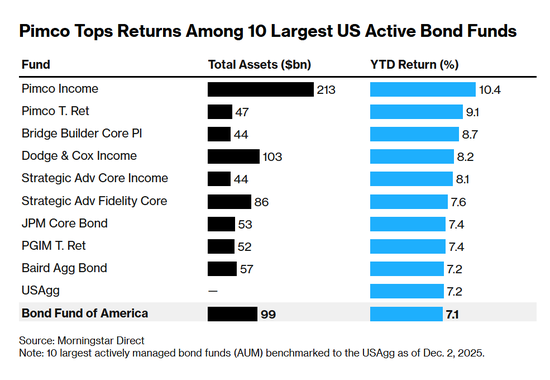
Core Insights - Pimco achieved remarkable success in 2025 by betting against the prevailing "sell America" sentiment, with its flagship fund returning over 10%, topping the list of active bond funds in the U.S. [1] - The firm maintained its positions in 5 to 10-year U.S. Treasuries and mortgage-backed securities during market turmoil, further increasing its holdings as prices fell [1][2] - Pimco's Income Fund recorded a return of 10.4%, marking its best performance in at least a decade, while the Total Return Fund followed closely with a 9.1% return [1] Investment Strategy - The investment committee at Pimco held intensive meetings to assess strategies during a critical period in April and May, focusing on the impact of Trump's tariff policies on economic growth [2] - Despite initial market reactions, Pimco's strategy to hold onto its positions in U.S. Treasuries was based on the belief that tariffs would negatively affect growth and increase uncertainty for consumers and businesses [2][3] - The firm observed that investor interest in U.S. assets was increasing, countering the narrative of a complete sell-off of U.S. Treasuries [3] Market Dynamics - During the market downturn, Pimco's Income Fund experienced a net outflow of $2 billion in April, the first since October 2023, while the overall U.S. bond market fell by 0.7% in May [3] - The frequency of investment committee meetings increased from three times a week to daily, reflecting heightened vigilance in monitoring client movements and market conditions [3] Yield Curve Strategy - Pimco maintained a bearish outlook on long-term bonds, anticipating poor performance due to central bank easing policies and concerns over sovereign debt and deficits [4] - The firm capitalized on a steepening yield curve, reducing exposure to 30-year Treasuries to lock in profits [5] Future Outlook - Pimco is shifting its focus to global bond markets, reducing its interest rate risk exposure in the U.S. and increasing positions in Japan, Australia, and the UK, reflecting a strategic pivot based on economic growth signals [5] - Despite challenges, including the recent departure of a key executive, Pimco's funds have consistently outperformed major competitors over 3, 5, and 10-year periods [6]
债券巨头Pimco拒跟“抛售美国”浪潮,抄底策略大获全胜!
Xin Lang Cai Jing· 2025-12-04 13:29
Core Insights - Pimco has faced significant challenges in managing its 5 to 10-year U.S. Treasury and mortgage-related assets during April to May due to the impact of Trump's tariffs and a wave of selling U.S. assets [1][18] - Despite these challenges, Pimco maintained its positions and even increased its holdings in U.S. Treasuries and mortgage-related assets, leading to strong performance in 2025 [18] Fund Performance - The Pimco Income Fund, with assets of $213 billion, achieved a year-to-date return of 10.4%, marking its best performance in at least a decade [2][19] - The Pimco Total Return Fund, with $47 billion in assets, followed closely with a return of 9.1% [2][19] - Pimco's Income Fund ranked in the top 3% among approximately 300 similar funds this year, a significant improvement from not being in the top 10 since 2017 [2][18] Market Context - A critical turning point for Pimco occurred on April 2, when Trump announced extensive tariffs, leading to volatility in the U.S. Treasury market [5][22] - The investment committee increased the frequency of meetings to daily during this turbulent period to assess market conditions and investor behavior [6][23] - By May 22, U.S. Treasury yields peaked at 4.6%, exacerbating concerns about U.S. debt following Moody's downgrade of the U.S. credit rating [6][22] Strategic Decisions - Pimco's investment committee decided to maintain a bullish stance on 5 to 10-year U.S. Treasuries, anticipating that tariffs would negatively impact economic growth [5][22] - The firm observed that foreign investors were not fully abandoning U.S. Treasuries but were instead using hedging strategies, which bolstered their confidence in increasing their Treasury holdings [7][23] - Pimco has since shifted some focus to global bond markets expected to yield higher returns in 2026, while still maintaining strong positions in U.S. Treasuries [7][15] Historical Performance - Pimco has a history of making timely decisions, such as predicting the 2007 housing bubble and acquiring distressed mortgage assets in subsequent years [8][24] - The Pimco Income Fund has outperformed major competitors over 3, 5, and 10-year periods, reinforcing its strong track record [8][24] Leadership Changes - The recent departure of Mark Kiesel, a key member of Pimco's investment committee, poses challenges for maintaining performance, as he had been a manager of the Total Return Fund since 2014 [10][26]

贝莱德智库:美联储12月要降息了?劳动力市场降温成关键推力
Zhi Tong Cai Jing· 2025-12-04 13:05
贝莱德智库提到,这种政策博弈部分源于美国持续高企的财政赤字。而英国的情况则正好相反:在最新 的财政预算案中,英国政府正试图减少赤字,甚至计划在五年内实现财政盈余。英国财政大臣通过多项 增收措施,使得英国政府的"财政空间"(即财政收支之间的缓冲)超出预期,这为市场带来了惊喜。这表 明英国需在市场信誉与政治公信力之间取得平衡,且目前已实现这一平衡,尽管其税收收入在GDP中的 占比预计在2030年将达到38%的历史新高。 鉴于英国的新预算案将支出前置,而大部分税收增加的效果将滞后显现,贝莱德智库对于英国国债维持 中性观点。但在五年甚至更长时间的战略配置层面,更看好英国国债,部分原因在于英国的中性利率 (即既不刺激也不阻碍经济增长的利率水平)低于其他发达市场的政府债券市场。随着美联储重启降息周 期,该机构已将美国长期国债的评级上调至中性,但考虑到潜在的政策博弈且这些博弈预计会持续存 在,仍需灵活应对。 12月4日,贝莱德智库发文称,由于各项数据显示美国劳动力市场正在降温,该机构认为美联储本月有 望降息。这一背景叠加AI主题的推动,支撑贝莱德智库偏好风险的立场。该机构对于英国国债维持中 性观点,但从长期维度来看,相较于 ...
资管机构竞争力之舆情合规篇:293家机构谁声誉、合规最佳?
2 1 Shi Ji Jing Ji Bao Dao· 2025-12-04 11:48
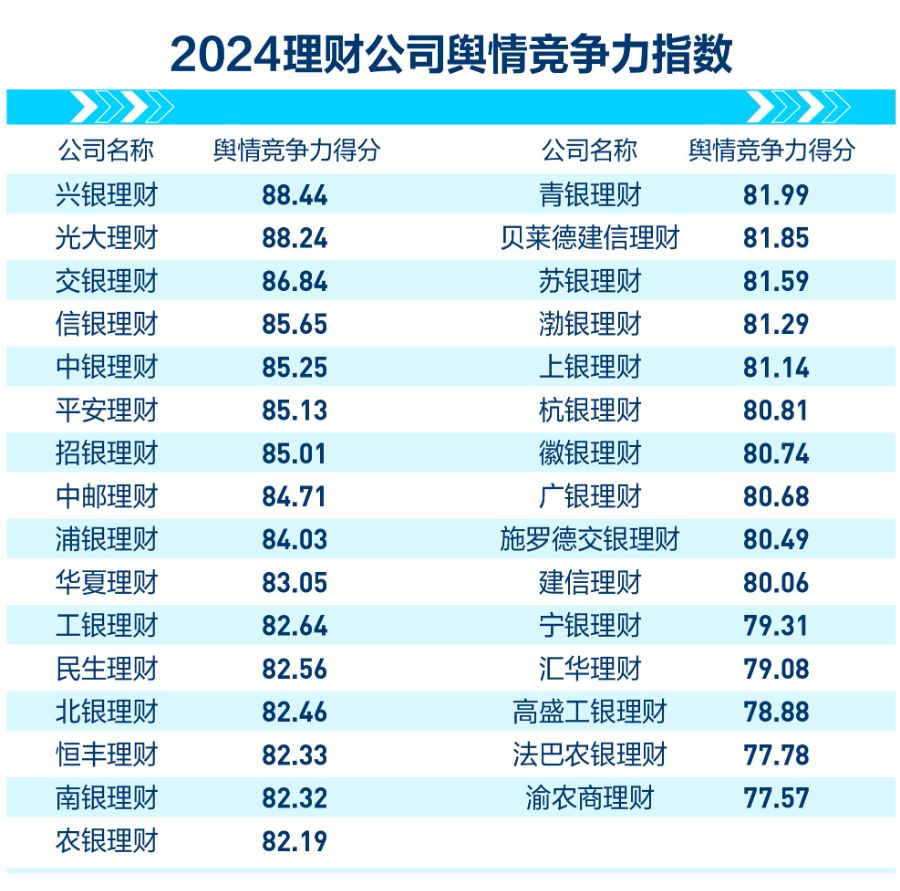
Overall Compliance Situation - In 2024, a total of 57 asset management institutions received 87 penalties, including 8 from bank wealth management companies, 15 from trust companies, 26 from public fund companies, 6 from securities asset management institutions, and 2 from insurance asset management institutions [1] - Securities asset management institutions received slightly more penalties than other types, with Huatai Securities Asset Management, Haitong Securities Asset Management, Galaxy Jin Hui Securities Asset Management, and Guojin Securities Asset Management each receiving more than 5 penalties [1] - In terms of public sentiment, securities asset management institutions had significantly higher negative sentiment volume compared to other types, with 907 negative reports, while trust companies had the highest number of negative reports at 1564 [1] Bank Wealth Management Sentiment Evaluation - The bank wealth management institution with the most negative news in 2024 was China Merchants Bank Wealth Management, with 74 negative reports [2] - The institutions with the highest proportion of negative sentiment were Yunnan Rural Commercial Bank Wealth Management (25%), China Construction Bank Wealth Management (22%), and China Merchants Bank Wealth Management (19%) [2] - Five bank wealth management institutions scored below 80 in sentiment evaluation, with scores ranging from 77.57 to 79.31 [2] Compliance Evaluation - Eight bank wealth management institutions received penalties in 2024, with the highest penalties issued to China Merchants Bank Wealth Management (8.5 million yuan) and Xinyin Wealth Management (7.5 million yuan) [6] - The main violations included failure to effectively identify underlying assets and non-compliance with information disclosure [6] Public Funds Sentiment Evaluation - In 2024, 96 out of 143 public fund companies faced negative sentiment, totaling 349 reports, with 23 institutions having more than 6 negative reports [8] - The top three public fund companies in sentiment evaluation were Harvest Fund (89.68), Southern Fund (86.61), and Huabao Fund (86.35) [9] Compliance Evaluation - A total of 26 public fund companies received 29 penalties in 2024, with Chunhou Fund receiving the most penalties [10] - Chunhou Fund is under investigation for multiple violations, including improper shareholder equity transfers and continuous information disclosure violations [10] Securities Asset Management Sentiment Evaluation - Four securities asset management companies scored below 70 in sentiment evaluation, with Guosen Asset Management scoring the lowest at 67.38 [11] - The highest number of negative reports came from Huaxi Securities Asset Management (207 reports) and Haitong Asset Management (106 reports) [11] Compliance Evaluation - Six securities asset management institutions received a total of 29 penalties, with Huatai Securities Asset Management receiving the most at 8 penalties [14] - Violations primarily involved internal system deficiencies and non-compliance with operational responsibilities [14] Insurance Asset Management Sentiment Evaluation - Six insurance asset management institutions had over 20 negative reports, with the highest scores going to China Life Asset Management (82.86) and PICC Asset Management (89.46) [15][16] - The main sentiment risks stemmed from compliance penalties and performance losses, with China Life facing a loss of 1.16 billion yuan in 2023 [15] Compliance Evaluation - Two insurance asset management institutions received penalties in 2024, with Baidian Asset Management facing a warning and compliance education requirements [18] - Taikang Asset Management was fined for failing to submit financial reports as required [18] Trust Institutions Sentiment Evaluation - Twelve trust companies had over 40 negative reports, with Wenkun International Trust leading with 108 reports [19] - Five trust institutions scored below 70 in sentiment evaluation, with the lowest being Xuesong International Trust at 62.30 [19] Compliance Evaluation - Fifteen trust institutions received 20 penalties in 2024, with significant fines issued to Yuecai Trust and Kunlun Trust, both exceeding 5 million yuan [22] - Violations included improper business practices and failure to report required information [22]
富兰克林邓普顿称英国30年期国债收益率将达6% 警告财政清算日终将来临
Zhi Tong Cai Jing· 2025-12-04 10:57
Group 1 - The core viewpoint is that the UK government will struggle to manage its spending, leading to a forecasted rise in the 30-year UK government bond yield to 6% within the next year [1] - Despite the Chancellor's budget successfully increasing the fiscal buffer, it relies on a series of tax measures that will take years to implement [1] - The tax measures are described as "very scattered," and the prediction of a 6% yield remains, even though the budget was generally well-received in the market [1] Group 2 - The UK debt management office has reduced the issuance of long-term bonds, but uncertainty surrounding the budget and inflation outlook offsets the impact of reduced supply [2] - There is difficulty in predicting how much revenue will be generated from the announced tax measures, with actual collections likely to fall short of expectations [2] - The tax measures are set to take effect around the next general election in 2029, which may lead the government to avoid politically unfavorable actions close to the election [2]
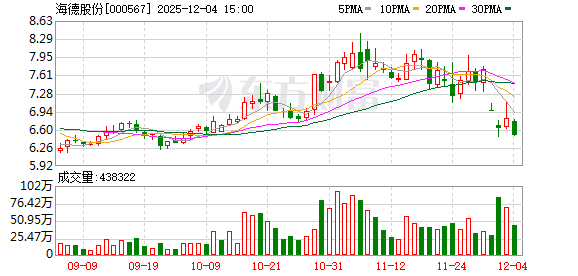
个性化纾困 海德股份以数字平台重塑个贷不良资产处置新范式
Zhong Guo Jing Ji Wang· 2025-12-04 09:08
在当前着力防范化解金融风险、强化民生保障的大背景下,传统个贷不良资产处置模式正经历一场深刻 的变革。作为持牌资产管理公司(AMC)中的先行者,海德股份(000567)以其创新打造的"海德个人 纾困平台",率先完成了从传统对抗性清收向数字化、人性化债务帮扶的成功转型,为行业可持续发展 提供了新范式。 科技与温度:AI赋能下的个性化纾困之路 海德股份深刻认识到,许多债务人并非恶意逃债,而是因临时性、阶段性困难而陷入困境。为此,公司 联合蚂蚁集团旗下科技企业,共同打造了"海德个人纾困平台"。该平台的核心优势在于利用大数据和人 工智能技术,对债务人进行精准"画像"和还款能力评估,从而提供包括债务重组、分期延期、利息减免 等在内的"千人千面"的化解方案。此举将冰冷的债权关系转变为长效的帮扶运营,不仅提升了回款效 率,更关键的是帮助债务人重塑信用、重返正常生活轨道。 合规与效能:征信系统对接实现"零投诉"突破 合规是业务的生命线。2024年,海德资管成功接入中国人民银行征信系统,成为业内少数实现个人征信 上报的持牌AMC之一。这一举措不仅极大提升了公司在风险定价和资产管理上的精准度,更重要的是 为债务人提供了规范、透明的 ...