公用事业

Search documents
新天绿色能源(00956):风电板块表现较优,售气量下滑致整体业绩承压
Tianfeng Securities· 2025-09-15 14:12
Investment Rating - The report maintains a "Buy" rating for the company, with a target price set at 4.93 HKD per share [5][14]. Core Insights - The company's overall performance has been pressured by a decline in gas sales volume, despite strong performance in the wind power sector. For H1 2025, the company reported a revenue of 10.904 billion HKD, a decrease of 10.16% year-on-year, and a net profit of 1.412 billion HKD, down 1.23% year-on-year [1]. - Wind power projects are progressing well, with a cumulative installed capacity of 6.8748 million kW as of H1 2025, and a wind power generation of 8.065 billion kWh, reflecting a year-on-year growth of 8.34% [2]. - The gas sales volume decreased significantly, with total sales of 2.814 billion cubic meters in H1 2025, down 17.07% year-on-year, primarily due to reduced heating demand and weak industrial demand [3]. - The company is focusing on its core business and has begun divesting from non-core solar power projects, which is expected to improve its fundamentals [4]. Summary by Sections Financial Performance - In H1 2025, the company achieved a total revenue of 10.904 billion HKD, a decrease of 10.16% year-on-year, and a net profit of 1.412 billion HKD, down 1.23% year-on-year. The Q2 2025 results showed a revenue of 3.993 billion HKD, a decline of 5.61%, and a net profit of 458 million HKD, down 23.43% [1]. Wind Power Development - As of H1 2025, the company has a cumulative controlling installed capacity of 6.8748 million kW and a cumulative commercial operating capacity of 6.4736 million kW. The wind power generation for H1 2025 was 8.065 billion kWh, with a year-on-year increase of 8.34% [2]. Gas Sales and LNG Projects - The total gas sales volume for H1 2025 was 2.814 billion cubic meters, a decrease of 17.07% year-on-year. The LNG sales volume was 498 million cubic meters, down 27.94% year-on-year. The company is progressing with its LNG project in Tangshan, which is expected to enhance gas sales volume upon completion [3]. Business Strategy and Future Outlook - The company is adjusting its business strategy to focus on core operations, divesting from solar projects. As of H1 2025, the company has approved a cumulative capacity of 2.88 million kW for gas turbine projects, which is expected to boost downstream demand [4]. The profit forecast for 2025-2027 has been adjusted to 2.202 billion HKD, 2.519 billion HKD, and 2.743 billion HKD, reflecting a year-on-year growth of 31.68%, 14.37%, and 8.89% respectively [4].
8月经济数据点评:8月经济:“反内卷”影响开始显现
Shenwan Hongyuan Securities· 2025-09-15 11:15
Economic Data - In August, the year-on-year growth of social retail sales was 3.4%, lower than the expected 3.8% and previous 3.7%[1] - Fixed asset investment showed a cumulative year-on-year increase of 0.5%, down from the previous value of 1.6%[1] - Real estate development investment decreased by 12.9% year-on-year, compared to the expected decline of 12.4% and previous decline of 12%[1] - The industrial added value in August grew by 5.2% year-on-year, below the expected 5.8% and previous 5.7%[1] Production and Investment - Industrial added value fell by 0.5 percentage points to 5.2% in August, indicating a slowdown in downstream production due to "anti-involution" effects[2] - Fixed asset investment dropped by 1.0 percentage points to -6.3% in August, with construction and installation investment declining significantly by 5 percentage points to -11.1%[2] - Real estate investment saw the largest decline, down 2.4 percentage points to -19.4%[2] Real Estate Market - In the real estate sector, the sales area of new commercial housing decreased by 4.7% year-on-year, while the sales amount fell by 10.6%[3] - The credit financing growth rate for real estate companies remained negative at -8.1%, with new construction down 4.8 percentage points to -20.3%[3] Consumer Behavior - The year-on-year growth of social retail sales in August was 3.4%, with significant declines in home appliances (-14.4 percentage points to 14.3%) and communication equipment (-7.6 percentage points to 7.3%) sales[3] - Service consumption remained relatively stable, with restaurant income slightly increasing by 1.0 percentage points to 2.1%[3] Economic Outlook - The report anticipates that external demand will continue to contribute to economic resilience, while internal demand remains weak, particularly due to the impacts of "anti-involution" and the ongoing decline in real estate new construction projects[4] - The need for policies to stabilize consumption and investment in services and infrastructure is emphasized, with ongoing monitoring of policy changes recommended[4]
主力资金动向 31.66亿元潜入汽车业
Zheng Quan Shi Bao Wang· 2025-09-15 09:48
Core Insights - The automotive industry experienced the highest net inflow of capital today, amounting to 3.166 billion, with a price change of 1.44% and a turnover rate of 3.72% [1] - The electronics industry faced the largest net outflow of capital, totaling 8.773 billion, with a price change of -0.04% and a turnover rate of 3.81% [2] Industry Summary - **Automotive** - Trading volume: 8.261 billion - Change in trading volume: -0.47% - Turnover rate: 3.72% - Price change: 1.44% - Net capital inflow: 3.166 billion [1] - **Electronics** - Trading volume: 10.601 billion - Change in trading volume: -13.19% - Turnover rate: 3.81% - Price change: -0.04% - Net capital outflow: -8.773 billion [2] - **Media** - Trading volume: 5.930 billion - Change in trading volume: -2.46% - Turnover rate: 4.04% - Price change: 1.94% - Net capital inflow: 0.723 billion [1] - **Agriculture, Forestry, Animal Husbandry, and Fishery** - Trading volume: 2.976 billion - Change in trading volume: 4.55% - Turnover rate: 3.12% - Price change: 1.79% - Net capital inflow: 0.436 billion [1] - **Coal** - Trading volume: 2.343 billion - Change in trading volume: 10.37% - Turnover rate: 1.79% - Price change: 1.32% - Net capital inflow: 0.334 billion [1] - **Real Estate** - Trading volume: 7.917 billion - Change in trading volume: 6.39% - Turnover rate: 3.61% - Price change: 0.49% - Net capital outflow: -2.014 billion [2] - **Banking** - Trading volume: 4.541 billion - Change in trading volume: 1.16% - Turnover rate: 0.34% - Price change: -0.90% - Net capital outflow: -3.418 billion [2] - **Telecommunications** - Trading volume: 4.114 billion - Change in trading volume: -22.56% - Turnover rate: 2.35% - Price change: -1.52% - Net capital outflow: -6.633 billion [2] - **Computer** - Trading volume: 7.596 billion - Change in trading volume: -13.89% - Turnover rate: 4.25% - Price change: -0.24% - Net capital outflow: -7.220 billion [2]
经济数据点评:总量降温结构优化,关注政策加码可能
Huafu Securities· 2025-09-15 09:23
Consumption Data - In August, the total retail sales of consumer goods increased by 3.4% year-on-year, marking a slight decline of 0.3 percentage points from July, the lowest monthly growth rate this year[3] - Retail sales of goods and catering services showed a divergence, with growth rates of 3.6% and 2.1% respectively, indicating a decline in catering services compared to July[3] - The retail sales of durable goods saw a year-on-year decline of 0.5 percentage points to 2.6%, the lowest since December 2024[3] Investment Trends - Fixed asset investment in August fell by 7.1% year-on-year, deepening by 1.8 percentage points, with all three major sectors showing weakness[4] - Real estate development investment saw a year-on-year decline of 19.5%, worsening by 2.5 percentage points[4] - Infrastructure investment also declined by 4.6% year-on-year, with significant drops in the electricity, heat, gas, and water supply sectors[4] Real Estate Market - Residential sales area decreased by 9.7% year-on-year, worsening by 2.6 percentage points, while new construction area fell by 18.3%, a decline of 9.1 percentage points[5] - The completion area saw a slight narrowing of the decline to 28.8% year-on-year[5] - National new and second-hand residential prices fell by 0.3% and 0.6% month-on-month respectively, with first-tier cities experiencing a 1.0% drop in second-hand housing prices[5] Industrial Output - The industrial added value growth rate fell by 0.5 percentage points to 5.2% year-on-year, with mining, utilities, and manufacturing sectors showing varied performance[6] - The manufacturing sector remains in a high growth range despite the impact of "anti-involution" on upstream industrial products[6] Economic Outlook - The report highlights a continued cooling in consumption, investment, and the real estate market, with potential policy measures expected to stimulate the economy[6] - There is a focus on the possibility of increased fiscal expansion to boost consumption and effective investment, alongside potential monetary policy easing to stabilize real estate market expectations[6]
中国电力(02380):煤价下滑带动火电盈利改善,水电资产整合稳步推进
Tianfeng Securities· 2025-09-15 09:15
Investment Rating - The report maintains a "Buy" rating for the company, with a target price not specified [6]. Core Views - The company's H1 2025 results show a revenue of 23.858 billion yuan, a decrease of 9.87% year-on-year, while the net profit attributable to ordinary shareholders is 2.587 billion yuan, an increase of 0.65% year-on-year [1]. - The decline in coal prices has significantly improved the profitability of the thermal power segment, with a net profit of 1.428 billion yuan in H1 2025, an increase of 28.89% year-on-year, despite a decrease in both sales volume and price [2]. - The hydropower segment faced challenges due to lower rainfall, resulting in a decrease in utilization hours and a net profit of 0.550 billion yuan, down 28.20% year-on-year [3]. - The company is rapidly expanding its renewable energy capacity, with a total installed capacity of 53.9406 million kilowatts, of which clean energy accounts for 44.1206 million kilowatts, representing 81.79% of the total [4]. - The company is actively integrating its hydropower assets to establish a clean energy flagship platform, with the asset restructuring plan already approved by shareholders [5]. Summary by Sections Financial Performance - In H1 2025, the company reported a revenue of 23.858 billion yuan, a decrease of 9.87% year-on-year, and a net profit of 2.587 billion yuan, an increase of 0.65% year-on-year [1]. - The thermal power segment's revenue was pressured by a decrease in coal power on-grid electricity price to 0.373 yuan/KWh, down approximately 0.019 yuan/KWh year-on-year, and utilization hours decreased by 96 hours to 2469 hours [2]. Segment Analysis - The thermal power segment's net profit improved to 1.428 billion yuan, up 28.89% year-on-year, due to a decrease in coal prices, with the average coal price at 676 yuan/ton, down 199 yuan/ton year-on-year [2]. - The hydropower segment's net profit was 0.550 billion yuan, down 28.20% year-on-year, with utilization hours dropping to 1387 hours, a decrease of 434 hours year-on-year [3]. - The renewable energy segment saw significant growth, with wind and solar power sales increasing by 26.90% and 9.63% year-on-year, respectively, although profitability was impacted by lower on-grid electricity prices [4]. Strategic Developments - The company is pursuing a strategic asset restructuring to consolidate its hydropower assets, aiming to enhance its position as a clean energy leader [5]. - The restructuring plan has been approved by shareholders and is progressing through regulatory channels [5]. Profit Forecast and Valuation - The profit forecast for 2025-2026 has been adjusted, with expected net profits of 4.081 billion yuan and 4.463 billion yuan, representing year-on-year growth of 21.31% and 9.36%, respectively [6].

宏观经济宏观月报:8月经济超预期回落,政策加码窗口打开-20250915
Guoxin Securities· 2025-09-15 08:26
Economic Performance - In August, the industrial added value above designated size grew by 5.2% year-on-year, a decline of 0.5 percentage points from July[1] - The total retail sales of consumer goods reached 39,668 billion yuan, with a year-on-year growth of 3.4%, down 0.3 percentage points from July[1] - From January to August, fixed asset investment (excluding rural households) totaled 326,111 billion yuan, with a year-on-year growth of 0.5%, down 1.1 percentage points from January to July[1] - The unemployment rate in urban areas rose to 5.3%, an increase of 0.1 percentage points from the previous month[1] GDP and Economic Drivers - The monthly GDP year-on-year growth rate for August is approximately 3.8%, a further decline of 0.5 percentage points from July, significantly below the annual growth target[2][3] - The construction sector contributed a drag of about 0.3 percentage points to GDP growth, while industrial and service sectors each contributed a drag of 0.1 percentage points[2][3] - The decline in economic growth is characterized by a simultaneous slowdown in consumption, investment, and exports, indicating a broad-based cooling of demand[3] Policy Outlook - The current economic situation presents a critical policy window, necessitating more aggressive macroeconomic responses to prevent further economic decline[4][15] - Key measures include accelerating the expenditure of accumulated fiscal deposits, increasing the issuance and utilization of local government special bonds, and enhancing support for infrastructure projects through policy financial tools[4][15] Risks and Challenges - The rising unemployment rate may suppress consumer income expectations and confidence, potentially undermining the effectiveness of consumption stimulus policies[3][15] - There is a risk of policy measures being ineffective if consumers choose to save rather than spend any subsidies received, leading to a "policy hollowing out" effect[3][15]
降息利好≠普涨!投资者如何挑选赢家?花旗给出答案
智通财经网· 2025-09-15 08:21
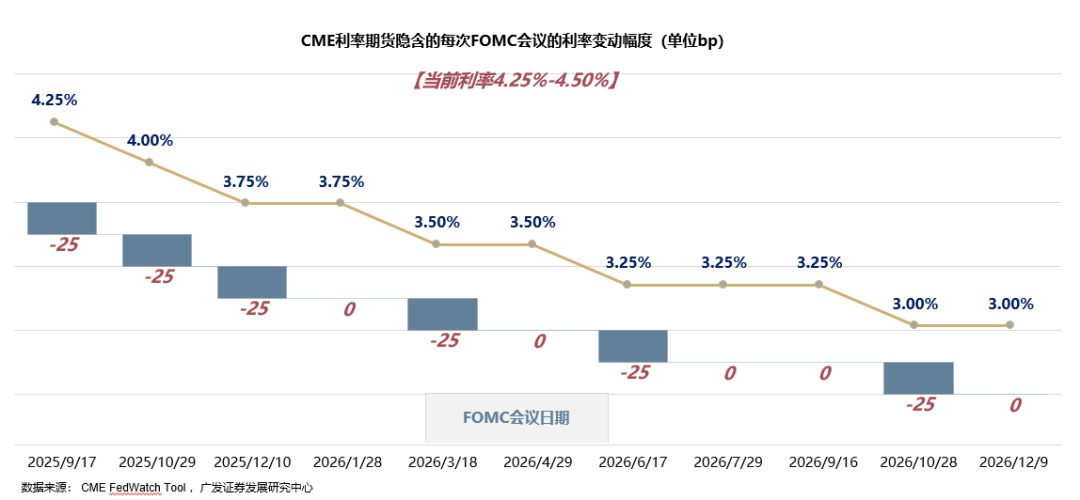
Group 1 - The core viewpoint is that the upcoming interest rate cuts by the Federal Reserve will not solely determine market winners, but will heavily depend on the economic backdrop and the shape of the yield curve [1] - The current market has largely priced in expectations of a "soft landing" or a mild recovery, but historical patterns show that significant rate cuts typically occur during periods of economic weakness or recession [1] - In scenarios of declining interest rates, a steepening yield curve, and improving economic data, sectors such as real estate, consumer discretionary, and information technology are expected to perform well, while utilities are likely to underperform [1] Group 2 - In scenarios of declining interest rates, a steepening yield curve, and deteriorating economic data, traditional defensive sectors like utilities, real estate, healthcare, and consumer staples are expected to perform better, while sectors like information technology and energy may struggle [2] - The traditional view suggests that the federal funds rate must reach a stimulative level for the market to shift from defensive to cyclical sectors [2] - Citigroup predicts that the Federal Reserve will implement five consecutive rate cuts of 25 basis points each, accompanied by slow but positive economic growth, influencing investment strategies significantly [2]

26家公司重要股东开启增持模式 累计增持21.02亿元(附股)
Zheng Quan Shi Bao Wang· 2025-09-15 02:03
Core Insights - In the past five trading days (September 8 to September 12), 26 companies experienced significant shareholder increases, totaling 237 million shares and an aggregate increase amount of 2.102 billion yuan [1][2] - During the same period, 146 companies saw shareholder reductions, with a total reduction amount of 15.997 billion yuan [1] Summary by Category Shareholder Activity - The top three companies with the highest increase amounts were Nanjing Bank (6.39 million yuan), Hualing Steel (4.28 million yuan), and China Baowu (2.83 million yuan) [1] - Five companies had shareholders increase their holdings more than twice, including Changan Automobile (19 times), BYD (6 times), and Hubei Energy (5 times) [1] Market Performance - The average increase for stocks with shareholder increases was 3.43%, outperforming the Shanghai Composite Index during the same period [2] - Notable gainers included *ST Yatai (27.62%), Hualing Steel (12.03%), and Junsheng Electronics (10.86%) [2] Fund Flow - Among the stocks with shareholder increases, 11 saw net inflows of main funds, with Hualing Steel receiving the highest net inflow of 233 million yuan [2] - Conversely, BYD and Dongsheng Technology experienced the largest net outflows, amounting to 1.280 billion yuan and 578 million yuan, respectively [2]





牛市中的震荡如何演绎?
2025-09-15 01:49
Summary of Conference Call Records Industry Overview - The A-share market is currently experiencing a strong oscillation pattern, with limited upward potential and minimal downward risk, influenced by market sentiment, economic data, and Sino-U.S. relations [1][2][5] - The technology growth sector is performing exceptionally well, particularly companies with strong industrial trends. Cyclical industries and previously underperforming growth companies, such as the telecommunications sector, also present opportunities for low-cost positioning [1][3][12] Core Insights and Arguments - Key factors contributing to market oscillation include: 1. High-level financing leading to cooling risks, with a total inflow of nearly 60 billion since September 5, and financing balances exceeding 2.3 trillion, a historical high [5] 2. Economic data from August indicating a weak recovery, with export growth slowing to approximately 4% year-on-year and a decline in new social financing and RMB loans [5] 3. Increased risk from U.S.-China semiconductor sanctions, although ongoing trade negotiations may mitigate long-term impacts [5][10] - Historical patterns suggest that oscillations in bull markets typically end with significant policy changes or external events that positively influence risk appetite [6][12] - Current indicators for the end of the oscillation phase are not fully met: - The valuation percentile of the Shanghai Composite Index is around 66, above the neutral level of 50% [8] - Trading volume has decreased by a maximum of 37%, not exceeding the 50% threshold [8] - The turnover rate remains high at 72%, indicating insufficient cooling [8] Industry Rotation and Opportunities - Industry rotation is incomplete, with consumer and cyclical sectors not showing significant recovery. In the agriculture, forestry, animal husbandry, and fishery sector, only leading stocks have increased, with an average rise of 8.1%, while non-leading stocks only rose by 1.4% [9][12] - Recommended sectors for investment include: 1. Technology, Media, and Telecommunications (TMT) and non-ferrous metals, which are expected to continue their upward trend [13][14] 2. Telecommunications and innovative pharmaceuticals, which may show signs of recovery and potential for upward movement [13][14] Additional Important Insights - The current market sentiment remains relatively high, which could lead to a decrease in potential gains [5] - The overall liquidity environment is favorable, with policies supporting inflows and a low-risk external environment due to ongoing negotiations with the U.S. [11][12] - The short-term economic outlook remains weak, but there are signs of recovery in corporate earnings data, suggesting a potential for gradual improvement [11][12]
广发策略:港股在美联储重启降息之后表现更加强劲
智通财经网· 2025-09-14 23:36
Core Viewpoint - The likelihood of a rate cut cycle restarting in September is high following the release of the US August CPI and employment data, with a total of 100 basis points cut since the cycle began in September 2024, and the Federal Reserve has paused rate cuts four times since March this year [1][2]. Market Performance Post Rate Cut - After the restart of the rate cut cycle, the Hong Kong stock market is expected to perform strongly, similar to the US stock market. In non-recession scenarios (1995, 2020, 1998), indices tend to rise, while in recession scenarios (2002, 2008), there may be a further decline for about three months before a recovery [1][4]. - Over the 12 months following a rate cut restart, the best-performing sectors are healthcare (+106.7%), technology (+88.0%), consumer staples (+55.2%), and consumer discretionary (+52.6%). The worst-performing sectors are utilities (+2.3%) and telecommunications (+13.3%) [1][4]. Asset Class Performance - In the 12 months following a rate cut restart, equity markets show significant performance. In non-recession scenarios, the S&P 500 averages a gain of 22.5%, while the Hang Seng Index averages a gain of 35.4%. Commodities like oil and copper also see substantial increases, reflecting pricing in of economic recovery [5][6]. Sector Performance in US Markets - In the US market, the sectors that perform best in the 12 months following a rate cut restart are technology (+47.8%), industrials (+22.9%), consumer discretionary (+22.0%), and materials (+20.2%). In non-recession scenarios, technology's average gain reaches +60.2%. The sectors that perform poorly include utilities (-0.5%), real estate (+3.7%), consumer staples (+5.4%), and telecommunications (+8.6%) [9][11]. Index Style Performance - In the US market, small-cap indices (Russell 2000) tend to outperform large-cap indices (Russell 1000) and the Nasdaq outperforms the Dow Jones Industrial Average, indicating a shift towards smaller-cap stocks following the restart of the rate cut cycle [13][15]. Hong Kong Market Performance - The Hong Kong market is expected to show stronger performance post rate cut restart, with healthcare, technology, consumer staples, and consumer discretionary sectors leading the gains, while utilities and telecommunications lag behind [1][4][19].