智能手机

Search documents
印度政府欲强制启用卫星定位监控 苹果等三大手机产商联名反对
Zhi Tong Cai Jing· 2025-12-05 13:28
Core Viewpoint - The Indian government is reviewing a proposal to mandate smartphone manufacturers to enable satellite tracking features for better monitoring, which has faced opposition from major companies like Apple, Google, and Samsung due to privacy concerns [1][2]. Group 1: Government Proposal - The proposal aims to require smartphones to always have location services enabled, preventing users from turning off this feature [2]. - The Indian government has previously retracted a command requiring smartphone manufacturers to pre-install a state-owned network security application due to privacy concerns raised by activists and politicians [1]. - The Indian Ministry of Home Affairs had planned a meeting with smartphone industry executives to discuss the proposal, but it was postponed [3]. Group 2: Industry Response - Apple, Google, and Samsung have expressed that the enforcement of this regulation would be an overreach and that A-GPS services are not intended for monitoring purposes [2]. - The Indian Cellular and Internet Association (ICEA) highlighted serious legal, privacy, and national security issues with the proposal, warning that it could endanger sensitive individuals such as military personnel and journalists [5]. - The telecom group argues that traditional tracking methods have become problematic due to user notifications about location requests, suggesting that the government should mandate the disabling of such notifications [5][6]. Group 3: Market Context - By mid-2025, India is projected to be the second-largest mobile market globally, with 735 million smartphones, where Google's Android system holds over 95% market share [5].


早报|豆包手机被炒至近万元,罗永浩发文力挺/突发,美光宣布退出消费级内存业务/iPhone Air成苹果「最不保值」手机
Xin Lang Cai Jing· 2025-12-05 13:09
Group 1 - iPhone Air has recorded a historic depreciation rate of 44.3% within ten weeks of its release, making it the least valuable model from Apple in the second-hand market [3][4][5] - In contrast, the iPhone 17 series has a lower average depreciation rate of 34.6%, outperforming the previous iPhone 16 series at 39% and the iPhone 15 series at 31.9% [4][5] - The depreciation range for the iPhone Air across all storage configurations is between 40.3% and 47.7%, with the 1TB version experiencing the most significant drop [4][5] Group 2 - Micron Technology announced its exit from the consumer-grade Crucial business, focusing entirely on enterprise-grade and high-bandwidth memory (HBM) [7][8] - The decision is driven by the surge in demand for memory and storage in AI-driven data centers, leading to a tight supply-demand situation [7][8] - Micron's HBM product revenue has become a core profit source, with projected market growth from $4 billion in 2023 to $25 billion by 2025, reflecting a compound annual growth rate of over 150% [8] Group 3 - Apple announced the retirement of its environment and policy head, Lisa Jackson, effective January 2026, with Jennifer Newstead from Meta set to succeed her [10][11] - This leadership change indicates a strategic adjustment in Apple's approach to environmental and social governance [10][11] Group 4 - The iPhone 17 series has achieved a global market share of 24.2%, marking a record high for Apple [33][34] - The strong performance during the Double 11 shopping festival in China was primarily driven by the demand for the iPhone 17 series, which saw a year-on-year sales increase of over 100% for the base model [33][34] - The iPhone 17 series has outperformed the iPhone 16 series in sales, with significant growth noted in the Chinese market [34]


雷军罕见出手,小米的转折点?
财富FORTUNE· 2025-12-05 13:05
Core Viewpoint - Xiaomi's stock price has experienced significant volatility, with a nearly 100% increase in the first half of the year followed by a decline of over 35% from its June peak, reflecting the challenges faced by the company and its founder Lei Jun's influence on market sentiment [1] Group 1: Stock Buyback and Market Response - Lei Jun's recent investment of over 100 million HKD in Xiaomi shares and the company's aggressive stock buyback strategy, with a single buyback amount reaching up to 400 million HKD, are seen as efforts to instill confidence in the market [1] - Following these actions, Xiaomi's stock price rose over 5% on November 25, returning above 40 HKD, indicating a potential recovery trend [1] Group 2: Business Challenges - Xiaomi's smartphone business, a cornerstone of the company, reported a revenue of 46 billion CNY in Q3 2025, a year-on-year decline of 3.2%, with a gross margin dropping to 11.1% due to rising manufacturing costs and aggressive pricing strategies from competitors like Huawei [2] - The IoT and lifestyle products segment, while showing a revenue growth of 5.6% to 27.6 billion CNY in Q3, faced a 15.7% decline in smart home appliance revenue, attributed to reduced government subsidies and intensified competition [2] Group 3: Automotive Business and Trust Issues - Xiaomi's automotive division has seen rapid growth, with the 500,000th vehicle rolling off the production line in just over a year, but it faces scrutiny over product quality and marketing practices, leading to a potential trust crisis [4] - Controversies surrounding the SU7 Ultra model, including legal disputes over marketing claims, have raised questions about the integrity of the company's messaging and the founder's accountability [5][6] Group 4: Industry Implications - The challenges faced by Xiaomi reflect broader issues within the Chinese electric vehicle industry, which is transitioning from a focus on hardware to software reliability and ethical data use, highlighting the need for improved transparency and communication [6] - The company's reliance on founder Lei Jun's personal brand and the need for a shift from a "celebrity-driven" model to one based on product reliability and service quality are critical for regaining consumer trust [7]

被抵制的“豆包手机”,断了谁的财路?
Xin Lang Cai Jing· 2025-12-05 13:00
Core Insights - The launch of Doubao Assistant, a collaboration between ByteDance and ZTE, represents a significant advancement in AI technology, allowing users to perform complex tasks on their smartphones through voice commands [2][34] - The product has generated considerable buzz, selling out within a day and causing ZTE's stock to surge, with resale prices reaching up to 9999 yuan, significantly above the original price [5][35] - Despite initial excitement, there are growing concerns regarding the practicality, privacy implications, and potential limitations of the Doubao Assistant, leading to some backlash from app developers [7][37] Product Overview - Doubao Assistant is designed to operate like an intelligent agent, enabling users to install apps, track deliveries, and compare prices across platforms with simple voice commands [2][34] - The assistant's capabilities are compared to Apple's App Intent, which aims to enhance user interaction with applications, although it has yet to be fully realized [10][38] - The integration of AI into smartphones is seen as a critical step in establishing a new user interface for the AI era, positioning Doubao Assistant as a potential entry point for user needs [12][40] Market Response - The product's launch has led to a rapid sell-out and a spike in ZTE's stock price, indicating strong market interest [5][35] - However, skepticism exists regarding the assistant's utility, with only 19% of surveyed consumers willing to pay a premium for AI capabilities in smartphones [17][44] - Concerns about privacy and data security have emerged, with users needing to relinquish significant control for the assistant to function effectively [21][48] Competitive Landscape - Doubao Assistant's approach to AI integration in smartphones is seen as a challenge to existing app ecosystems, potentially disrupting traditional revenue models for app developers [24][55] - The assistant's ability to streamline user interactions may threaten the business models of major apps, which rely on user engagement for advertising revenue [55][57] - Resistance from app developers has already been noted, with reports of compatibility issues and app malfunctions when using Doubao Assistant [58][60] Future Prospects - The long-term viability of Doubao Assistant remains uncertain, with industry experts suggesting that while the technology is in its infancy, it could pave the way for future innovations in AI [32][62] - The potential for Doubao Assistant to redefine user interaction with smartphones is acknowledged, but significant hurdles in user adoption and technical execution must be overcome [15][60] - The ongoing evolution of AI technology and its integration into consumer products will require careful navigation of regulatory and ethical considerations [60][62]

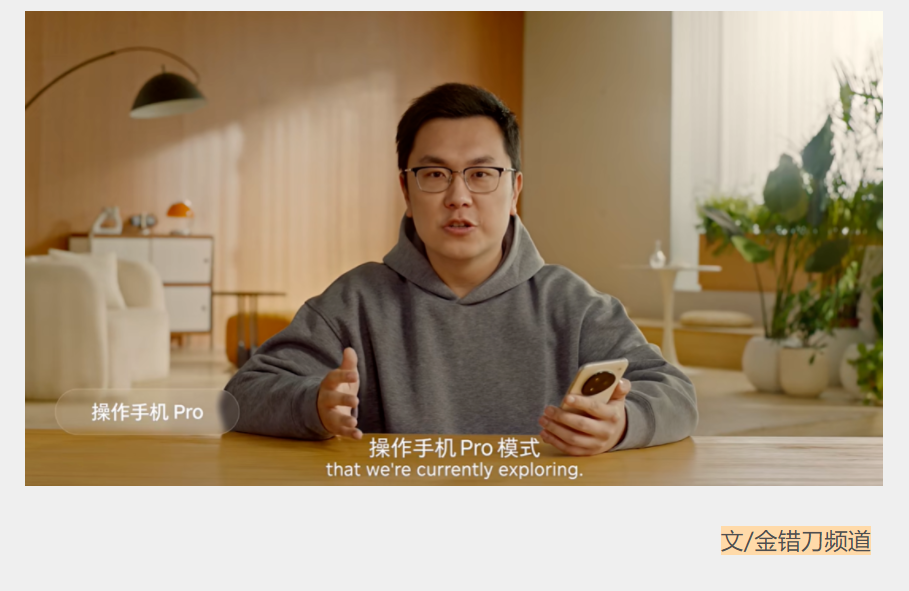
苹果17系列带动增长,国内双11期间手机销量增长3%
Xin Lang Cai Jing· 2025-12-05 12:56
除苹果外,OPPO、vivo分别实现12%、8%的同比增 长,其他品牌阵营也有12%的涨幅,但华为、小米、荣 耀则因产品节奏、市场策略等因素销量下滑。 【天极网手机频道】根据Counterpoint Research的最新数据显示,双11周期(2025年10月20日起三周) 内,苹果在市场中的占比从2024年的19%上升至26%,同比销量增长37%。此次销量增长,iPhone 17系 列是主力,基础版机型在存储、光学系统等配置升级的前提下保持了与去年iPhone 16一样的售价,销 量同比翻倍;Pro及Pro Max机型也实现了增长,叠加双11期间300元的优惠,进一步吸引了消费者。 除苹果外,OPPO、vivo分别实现12%、8%的同比增长,其他品牌阵营也有12%的涨幅,但华为、 小米、荣耀则因产品节奏、市场策略等因素销量下滑。 Counterpoint指出,如果不看苹果的情况下,市场同比下降5%,反映出更为谨慎的消费者环境以及 Q4开局动力不足。今年不少消费者已在年初借助补贴提前购机。此外,各大智能手机品牌的战略重心 转向新推出的高端设备,虽然可能提高了平均售价,但也抑制了整体销量规模。 Counterp ...
折叠屏战争进入“三折时代”,三星却已输掉中国市场
凤凰网财经· 2025-12-05 12:35
Core Viewpoint - Samsung's new Galaxy Z TriFold smartphone faces significant market scrutiny and competition, particularly from Huawei, as it attempts to re-establish its presence in the high-end foldable smartphone market in China [2][9]. Group 1: Product Overview - The Galaxy Z TriFold features a dual-hinge design that allows it to unfold into a tablet-sized device, with a price set at approximately 17,302 RMB (around 2,450 USD) [3][4]. - The device boasts a thickness of only 3.9 mm when unfolded and includes a 5,600 mAh battery, marking the largest battery capacity for Samsung's foldable phones [7]. Group 2: Market Position and Competition - In 2013, Samsung held a 20% market share in China's smartphone market, but by 2023, it has virtually disappeared from the top five rankings, with local brands like Huawei and Xiaomi dominating [2][12][13]. - Despite Samsung's global smartphone market share reaching 20.8% in 2023, its presence in the Chinese market remains weak, with a share of less than 1% by 2022 [14][17]. Group 3: Strategic Challenges - Analysts express concerns about a "product-market mismatch" for the TriFold, as Samsung lacks a significant presence in the Chinese foldable market, which is crucial for the product's success [9]. - Samsung's decision to use an older Snapdragon chip in the TriFold has been interpreted as a cost-control measure, raising questions about the product's competitiveness [9]. Group 4: Internal Dynamics and Future Outlook - Samsung's leadership has acknowledged the company's critical situation, with internal restructuring and a call for management to adopt a "survive to thrive" mentality [16][20]. - The company is facing challenges in adapting to the AI era and is experiencing a decline in traditional smartphone business profits, which may further squeeze future profit margins [19].

华为见非凡品牌计划再启,梁家辉做客:真正的非凡来自厚积薄发!
Huan Qiu Wang· 2025-12-05 12:11
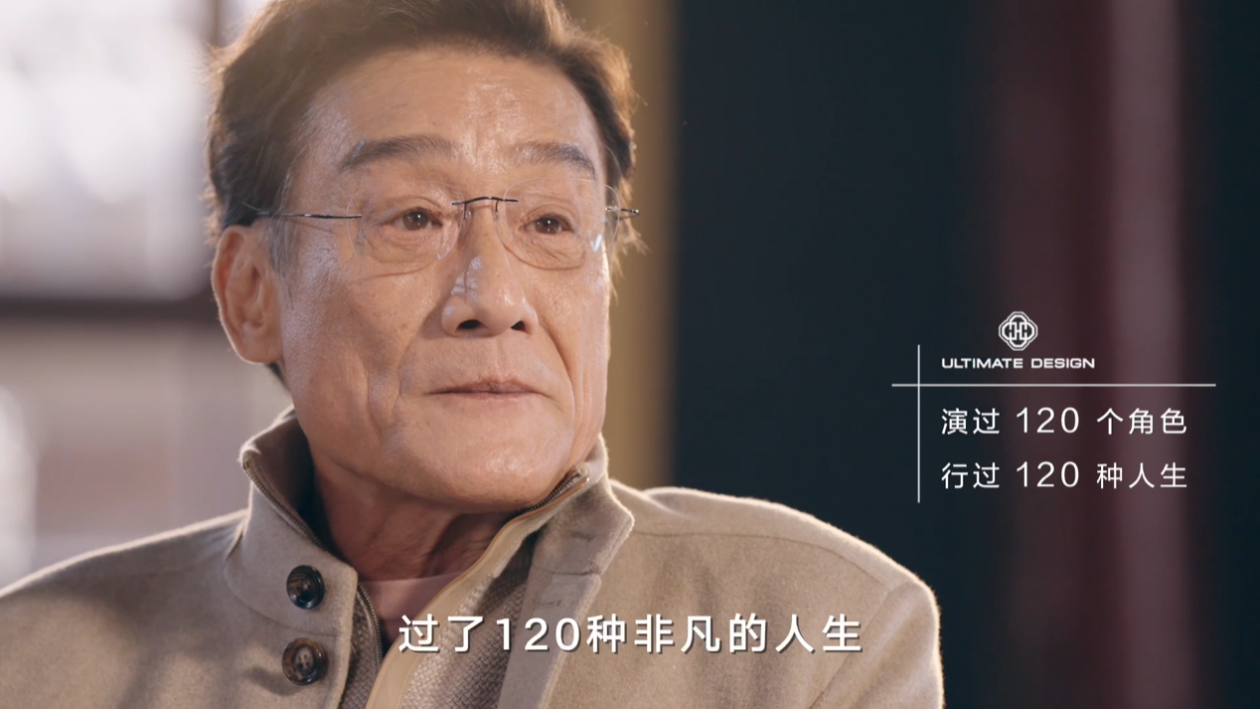
Core Insights - Huawei's "See Extraordinary" brand initiative collaborates with the "Thirteen Invitations" team to present a new character documentary featuring actor Tony Leung, emphasizing the spirit of "seeing the extraordinary in the ordinary" [1][9] Group 1: Actor's Journey - Tony Leung, a prominent figure in Chinese cinema, has portrayed numerous iconic characters and won the Hong Kong Film Award for Best Actor at the age of 26, despite facing a challenging period of street vending later in life [3][5] - Leung has played at least 120 different roles over his career, integrating keen observation and life experiences into his performances, which he believes enrich his understanding of characters [5][7] Group 2: Definition of "Extraordinary" - Leung expresses a desire to be recognized as an outstanding actor rather than a mere star, emphasizing that an actor's value lies in their ability to understand and embody their roles [7][9] - His interpretation of "extraordinary" aligns with Huawei's brand philosophy, which promotes the idea that true excellence is achieved through persistent effort and accumulation rather than sudden recognition [9][14] Group 3: Huawei Mate 80 RS Extraordinary Master - The Huawei Mate 80 RS Extraordinary Master features significant advancements, including a BT.2020 ultra-wide color gamut screen that enhances color representation by 30% compared to mainstream DCI-P3 [11] - The device also boasts a dual-membrane stereo unit for improved sound quality, making it suitable for creative users [12] - Huawei has positioned the Mate 80 series competitively, with a starting price of 4699 yuan, which is 800 yuan lower than previous models, along with various promotional offers to enhance its market appeal [12][14] Group 4: Brand Philosophy and User Engagement - The "See Extraordinary" theme reflects both Leung's extensive career and Huawei's commitment to continuous innovation in technology and design, showcasing that extraordinary results stem from long-term dedication and the pursuit of improvement [14]
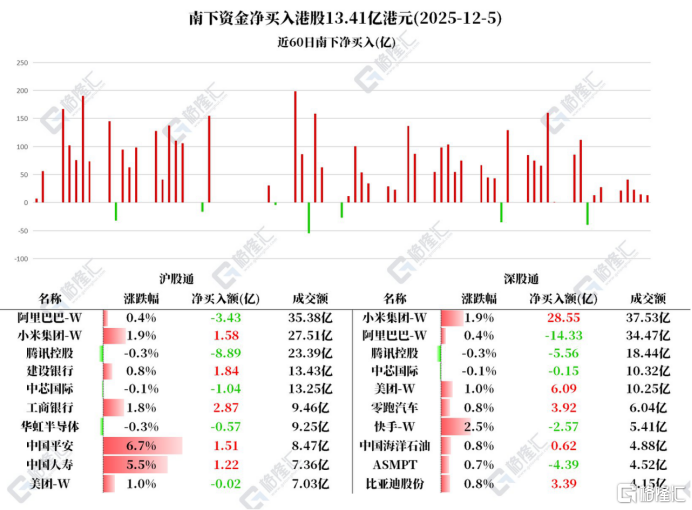
资金动向 | 北水爆买小米超30亿港元,连续12日抛售中芯国际!
Ge Long Hui· 2025-12-05 11:01
Group 1: Market Activity - Southbound funds net bought HK stocks worth HKD 1.341 billion on December 5, with notable net purchases in Xiaomi Group (HKD 3.013 billion), Tracker Fund of Hong Kong (HKD 2.606 billion), and Meituan (HKD 0.607 billion) [1] - Significant net sales were observed in Alibaba (HKD 1.776 billion) and Tencent Holdings (HKD 1.445 billion) [1] Group 2: Stock Performance - Xiaomi Group saw a price increase of 1.9% with a net buy of HKD 2.855 billion, while Alibaba experienced a decline of 0.4% with a net sell of HKD 3.43 billion [3] - Tencent Holdings had a slight decrease of 0.3% with a net sell of HKD 8.89 billion, while Industrial and Commercial Bank of China (ICBC) increased by 1.8% with a net buy of HKD 2.87 billion [3] Group 3: Company Developments - Xiaomi is expected to launch a new foldable phone, the MIX Trifold, as a new model appeared in the GSMA database, potentially making it the third manufacturer to mass-produce such a device [5] - Meituan has been involved in the development of a new national standard for food delivery services, which has recently been implemented [5] - BYD reported that its Tang family of vehicles sold 13,252 units in November, surpassing a cumulative sales figure of 880,000 units [5] - ICBC's shareholding by BlackRock increased from 4.84% to 5.00% as of November 28 [5] Group 4: Strategic Changes - Ele.me announced a rebranding to "Taobao Flash Purchase," with updates to its app reflecting this change [6]

荣耀在孟加拉国首家现代化工厂投入运营,第120家体验店同步落成
Huan Qiu Wang· 2025-12-05 10:12
近年来,强劲的本土化布局推动荣耀在东南亚市场快速增长。2024年荣耀智能手机出货量稳居市场第三,首次领跑东南亚市场。Omdia数据显示,2025年第 三季度在东南亚智能手机市场,荣耀出货量较去年同期翻倍。 荣耀方面表示,此次本地建厂是其对孟加拉国市场长期承诺的体现,也是推进全球化制造与本地化服务战略的重要一步。对于荣耀的投资及扩建计划,孟加 拉国当地政府给予高度肯定与支持,期待荣耀能够迅速成长为孟加拉国市场的领先智能终端品牌,推动本地制造业升级并扩大就业机会。(思瀚) 【环球网科技综合报道】12月5日消息,荣耀近日宣布,其在孟加拉国投建的首家现代化工厂已全面投入运营,标志荣耀正式切入当地本土化生产赛道。此 外,荣耀在孟加拉国的第120家体验店也同步落成,全国首家、也是标杆级的品牌旗舰店在首都达卡核心商圈 JFP 开业。生产端与零售端的双重突破,加速 推进荣耀全球化布局。 据了解,该工厂占地面积达5000平方米,设有3条生产线,目前整体产线具有较高自动化率,被视为当地最现代化的制造基地之一。工厂已于11月25日实现 首台设备下线,预计年产能可达100万台,目前已为本地创造超过500个就业岗位。荣耀同时制定扩建计 ...

豆包AI手机劲敌是小米?高盛:AI“系统级集成”面临挑战,这更验证了小米的长期竞争力
华尔街见闻· 2025-12-05 09:39
Core Viewpoint - The launch of ByteDance's "Doubao AI Assistant" signifies a shift in AI competition towards the operating system level, highlighting the enduring competitive strength of existing smartphone giants like Xiaomi [3][4]. Group 1: Doubao AI Assistant Overview - ByteDance's "Doubao AI Assistant" is a system-level graphical user interface (GUI) agent integrated with a large language model (LLM), aimed at enhancing mobile interaction through visual interpretation and complex task operations across applications [4]. - The Doubao model has become popular among several smartphone original equipment manufacturers (OEMs), with daily token generation reaching 1.3 trillion in May, accounting for 8% of total token consumption [4]. Group 2: Challenges for Third-Party AI Agents - High barriers exist for third-party AI agents to gain system-level operational permissions, as major smartphone OEMs retain strategic advantages and may not easily grant access to their system cores and permission frameworks [5]. - The ability of AI agents to operate across applications is contingent on the openness of third-party internet application interfaces, with some companies potentially restricting external agent usage to maintain closed ecosystems [6]. Group 3: Market Structure and Competition - The Chinese smartphone market is highly consolidated, with the top six manufacturers (vivo, OPPO, Honor, Apple, Xiaomi, Huawei) accounting for over 90% of shipment volume, creating significant barriers for new entrants [7][8]. - In contrast, the new energy vehicle (NEV) market is more fragmented, allowing for greater opportunities for differentiation through software [7]. Group 4: Xiaomi's Competitive Advantages - Xiaomi's long-term advantages are underscored by the challenges faced by Doubao AI, as the company actively pursues a comprehensive "people x car x home" ecosystem strategy, with AI as a core component [9]. - Xiaomi's investment in AI is substantial, with projected R&D spending exceeding 7 billion RMB by 2025, representing 22% of its total R&D expenses [10]. - The "Super XiaoAI" assistant has achieved significant penetration, with a 71% user adoption rate among Xiaomi smartphone users as of September 2025 [11]. Group 5: Integration and Functionality of Super XiaoAI - "Super XiaoAI" has integrated deep functionalities across various core scenarios, including social media interactions, e-commerce assistance, productivity services, and memory capabilities for user habits and sensitive data [12][13][14][15]. - This comprehensive integration positions Xiaomi favorably against third-party AI agents, reinforcing its competitive moat and validating the long-term value of its ecosystem strategy [16].