
软件

Search documents
沪指盘中窄幅震荡,商业航天概念爆发,工业软件概念崛起
Zheng Quan Shi Bao· 2026-01-08 09:35
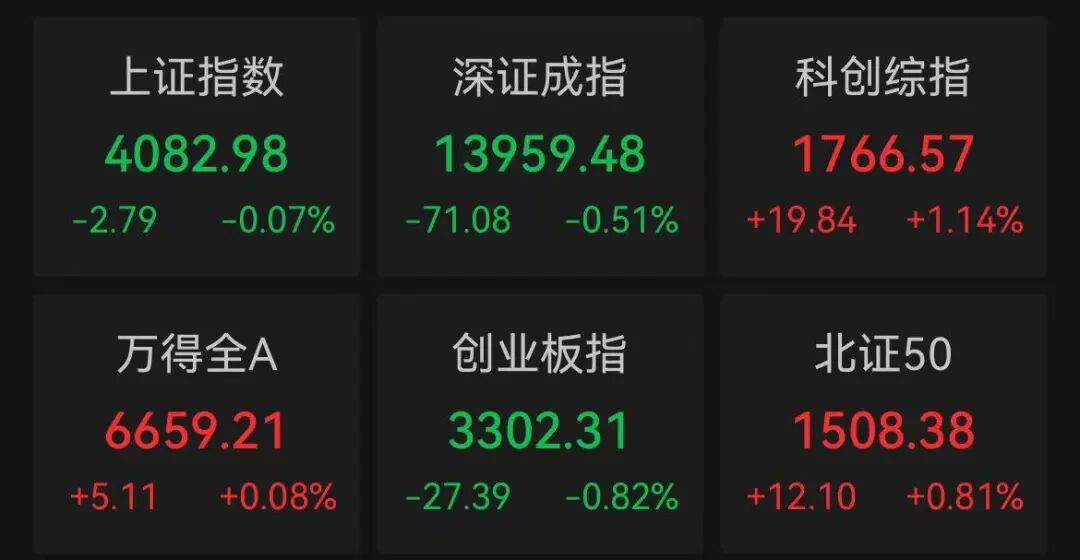
Market Overview - A-shares showed mixed performance on the 8th, with the Shanghai Composite Index experiencing narrow fluctuations and closing down 0.07% at 4082.98 points, while the ChiNext Index fell 0.82% [1] - The STAR Market Index rose strongly, gaining 0.82%, and the total trading volume in the Shanghai and Shenzhen markets was approximately 2.83 trillion yuan, a decrease of about 550 billion yuan from the previous day [1] Commercial Aerospace Sector - The commercial aerospace concept saw a significant surge, with over 3700 stocks in the A-share market closing in the green and more than 110 stocks hitting the daily limit [3] - Notable stocks included Qian Zhao Guang Dian and Pu Ni Test, which quickly reached their daily limit, while Jin Feng Technology achieved a three-day limit increase [5] - The launch of a large liquid carrier rocket assembly and recovery reuse base project in Hangzhou marked a significant development in China's commercial aerospace sector [6] Controlled Nuclear Fusion Sector - The controlled nuclear fusion concept was active, with stocks like Ha Han Hua Tong and Tian Li Composite seeing gains of over 12% and 10% respectively, with several stocks hitting their daily limit [9] - Recent breakthroughs in controlled nuclear fusion technology were reported, including the confirmation of the existence of a density-free zone in the Tokamak, which is crucial for high-density operation [10] - The upcoming 2026 Nuclear Fusion Energy Technology and Industry Conference aims to promote collaboration and innovation within the nuclear fusion industry [11] Industrial Software Sector - The industrial software concept gained traction, with stocks such as Han De Information and Bao Xin Software seeing significant increases, with Han De Information rising over 13% [13] - The Ministry of Industry and Information Technology and other departments issued a joint opinion to enhance the integration of artificial intelligence and manufacturing, which is expected to drive growth in the industrial software sector [15] - The government is expected to support the industrial software industry through policies and funding, indicating a potential rapid development phase for the sector [15]

软件ETF(515230)收涨超0.7%,技术架构革新或重塑行业逻辑
Mei Ri Jing Ji Xin Wen· 2026-01-08 08:31
Core Viewpoint - The software ETF (515230) rose over 0.7% on January 8, driven by the potential of the mHC architecture to reshape industry logic through a new paradigm in AI chip design [1] Group 1: mHC Architecture - The mHC architecture is expected to introduce a new paradigm in AI chip design by combining manifold constraints with engineering optimization, addressing the mismatch between computing power and bandwidth [1] - This architecture promotes the logic of "software actively adapting to hardware bottlenecks," steering the industry towards a direction of "efficiency first" in hardware-software collaboration [1] - mHC significantly reduces bandwidth requirements through optimizations like kernel fusion and selective recomputation, indicating that chip design does not need to solely pursue high-bandwidth memory [1] Group 2: Innovation and Market Impact - The manifold constraint logic of mHC may drive innovation in dedicated computing units for chips, potentially breaking the current monopoly of "general computing units" in AI chips and advancing towards a "general + dedicated" heterogeneous architecture [1] - The mHC architecture, as released by DeepSeek, has shown stable performance, excellent scalability, high cost-effectiveness, and efficiency in large-scale model training [1] - mHC may indicate a new direction for the evolution of next-generation infrastructure, deepening the understanding of how topological structures influence optimization and representation learning [1] Group 3: Software ETF Overview - The software ETF (515230) tracks the software index (H30202), which selects securities from publicly listed companies involved in software development, services, and related technology fields to reflect the overall performance of the software industry [1] - The software index primarily focuses on the information technology sector, characterized by significant growth potential and innovation [1]
三大指数涨跌不一,沪指半日涨0.09%,商业航天、AI应用端全线走强
Feng Huang Wang Cai Jing· 2026-01-08 03:46
凤凰网财经讯 1月8日,三大指数涨跌不一,沪指翻红,深成指跌幅收窄。截至午间收盘,沪指涨 0.09%,深成指跌0.2%,创业板指跌0.52%。沪深两市半日成交额1.77万亿,较上个交易日缩量701亿。 | | | | | 沪深京重要指数 | | | | | --- | --- | --- | --- | --- | --- | --- | --- | | 名称 *● | 咸新 | 沼帳幅% | | 涨跌 涨跌家数 | | 总手 | 现手 金额 | | 上证指数 | 4089.45 | 0.09 | 3.68 | 1468/776 | 0.00 | 4.08 7. | 3.80万 7430.76亿 | | 深证成指 | 14003.09 | -0.20 | -27.47 | 2071/752 | -0.04 | 5.74 Z | 932 1.02万亿 | | 北证50 | 1508.34 | 0.81 | 12.06 | 204/78 | 0.06 | 632 7 | 1513 165.96 7. | | 创业板指 | 3312.47 | 11-11-57 | -17.22 | 1061/313 | -0.03 ...

商业航天板块,掀涨停潮
财联社· 2026-01-08 03:44
今日早盘三大指数涨跌不一,沪指翻红,深成指跌幅收窄。 沪深两市半日成交额1.77万亿,较上个交易日缩量701亿。 盘面上热点快速轮动,全市场超3700只个股上涨,其中有80只个股涨停。 从板块来看,商业航天概念反复活跃,十余只成分股涨停,鲁信创投10天8板,银河电子4连板,通宇通讯2连板。 AI应用概念爆发,久其软件、宝信软件等多股涨停。脑机接口概念走强,创新医疗、普利特、南京熊猫4连板。可控核聚变概念表现活跃, 中国一重、国机重装、中国核建2连板。 下跌方面,证券板块走弱,华林证券触及跌停。 截至收盘,沪指涨0.09%,深成指跌0.2%,创业板指跌0.52%。 两市成交额: 1.77万亿 市场热度: 62 0 较上一日: - 701亿 今日预测量能: 50 0 100 2.78万亿 -703亿 涨停表现 封板率 75.00% 封板 64 触及 21 昨涨停今表现 上证指数 创业板指 深证成指 -4089.45 ▼14003.09 ▼3312.47 +3.68 +0.09% -17.23 -0.52% -27.47 -0.20% 市场概况 53.86%用户看涨 > 2628 1280 661 223 231 ...

1.8盘前速览 | “AI+制造”顶层设计出炉,国产算力与资源交相呼应
Jin Rong Jie· 2026-01-08 01:45
AI Industry - The government has issued implementation opinions for the "AI + Manufacturing" initiative, aiming for reliable supply of core AI technologies by 2027 [1] - Zhiyu AI and domestic GPU company Tianshu Zhixin are set to be listed on the Hong Kong Stock Exchange [1] - Meta's acquisition of Manus is facing regulatory scrutiny according to the Financial Times [1] - DKL reportedly secured over 70% of the procurement share in Google's TPU OCS [1] - The value of single cabinet power supply (PSU) is expected to increase by at least 30% [1] - Market rumors suggest significant developments in large models during the Spring Festival [1] - There are also rumors that tech companies have been asked to pause orders for NVIDIA's H200 chips [1] - Related ETFs include Semiconductor Equipment ETF, Cloud Computing ETF, and Software Leaders ETF [1] Satellite Internet - The Japanese government plans to create a domestic version of the "Starlink" system, allocating 150 billion yen to support related companies [2] Nonferrous Metals - The People's Bank of China has increased its gold reserves for the 14th consecutive month [3] Coal Industry - Multiple factors are influencing the coal market, including decreased expectations for short-term coal imports from Mongolia and the return of some increased production capacity in Yulin [4] Nuclear Fusion - Key figures have visited the China National Nuclear Corporation's West Institute to assess progress in fusion energy technology [5] Ticket Economy - The concept of "Ticket Economy," which refers to new economic activities based on event tickets, has been discussed in a publication [6] Trade and Countermeasures - An anti-dumping investigation has been initiated against Japan's dichlorodihydrosilane [7] Market Data - In 2025, the A-share market's growth will be significantly driven by valuation contributions (20.44%) compared to profit contributions (5.29%), while the Hong Kong market shows even higher valuation contributions (28.99%) [8] Strategy Observation - Recent trading volume reached 2.85 trillion, maintaining high levels, with a healthy index trend [9] - The policy direction aims to "control the rhythm rather than the direction," suggesting a rational approach to rapid increases in brokerage stocks [9] - Key sectors leading the market include coal (policy catalysts), electronics (semiconductors), and communications (AI hardware rebound) [9] - Funds are gradually returning to AI hardware, power supplies, and optical modules during mainline adjustments [9] - The satellite internet sector remains stable, with Japan's countermeasures further strengthening the logic of equipment materials [9] - AI applications and domestic computing power are becoming active with the spread of bidding news [9] - Nuclear fusion remains a dynamic theme in the market [9]
后软件时代,胜出只有这两条路可走
3 6 Ke· 2026-01-07 23:17
Core Insights - The article emphasizes the need for founders to innovate beyond traditional AI applications and avoid merely adapting existing workflows to AI, which could lead to obsolescence in the face of advancing foundational models [2][12][20] Investment Landscape - The rise of generative AI marks the end of a homogenized software era, where companies often optimized for funding milestones rather than sustainable growth [2][3] - Founders are encouraged to learn from Richard Sutton's "bitter lesson," which highlights that simpler systems with more data and computational power can outperform specialized expertise [3][20] Model Economy - The "model economy" is emerging, where businesses focus on providing resources necessary for model evolution, such as computational power and training data [7][8] - Companies like Oracle and AI cloud firms are adapting by supplying computational resources to AI labs, with Oracle's contracts reaching nearly $500 billion [7][8] Areas of Growth - Significant opportunities are identified in four key areas: - **Commoditization of computational power**: Companies are developing models to match supply and demand for computational resources [8] - **On-device AI**: AI applications that run locally to address latency, privacy, and cost issues are gaining traction [9] - **Data trading platforms**: New companies are emerging to facilitate the exchange of specialized data needed for AI model training [10] - **Security**: A shift towards proactive security measures for AI systems is anticipated, focusing on identifying vulnerabilities before they are exploited [11] Post-Materialization Applications - Not all AI applications are doomed; those that leverage unique model characteristics to create new workflows are likely to succeed [12][13] - Successful applications will avoid merely "skin-deep" AI integration and instead explore what is possible with AI's unique capabilities [12][13] Future Opportunities - Three major opportunities for post-materialization applications include: - **Coordinating multiple agents**: Tools that utilize multiple models to enhance decision-making and reduce biases [14][16] - **Large-scale simulations**: AI's ability to run thousands of experiments in parallel is transforming research methodologies [17] - **Continuous feedback loops**: AI systems that learn from every interaction can optimize and predict user needs without human intervention [18][19]
地缘政治靠边站,美股2026年的真正驱动力还是“盈利为王”
Hua Er Jie Jian Wen· 2026-01-07 18:32
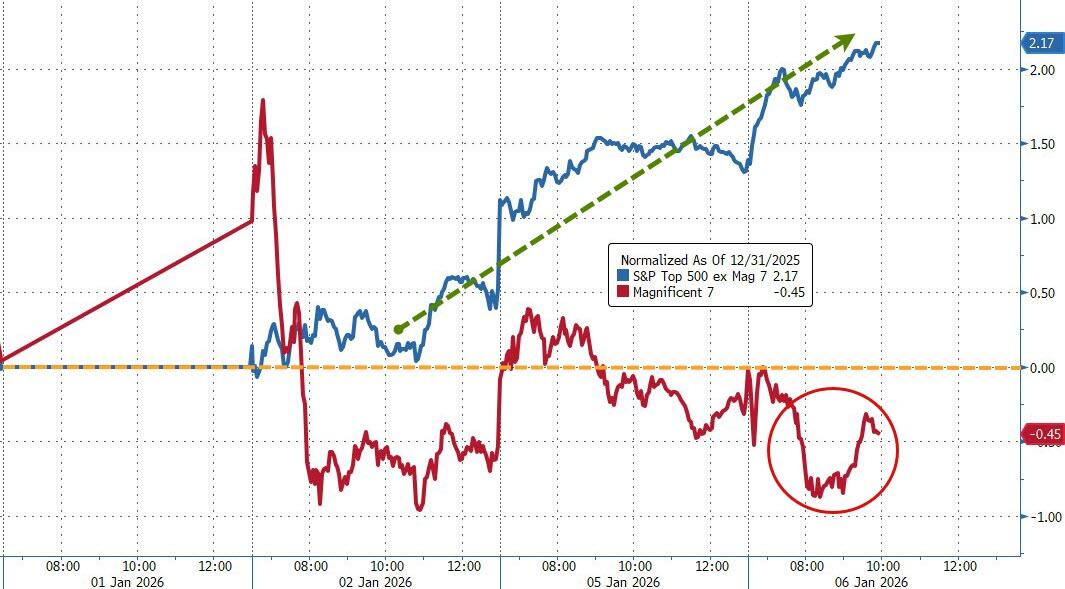
Core Viewpoint - The U.S. stock market is experiencing a trend of concentration dispersion at the beginning of 2026, with earnings growth becoming the core driver of market increases. Goldman Sachs predicts the S&P 500 index will rise to 7600 points in 2026, primarily driven by a 12% growth in earnings [1]. Market Structure Changes - Since the start of 2026, the "Magnificent Seven" tech giants, including Nvidia, Apple, Microsoft, Alphabet, Amazon, Tesla, and Meta, have collectively declined by approximately 0.5%, while the remaining 493 stocks in the S&P 500 have increased by 2.5%. This shift indicates a reallocation of assets by investors, with industrial, healthcare, and technology sectors performing notably well in the first three trading days of the year [1]. Economic Growth and Earnings Projections - Goldman Sachs' Managing Director Chris Hussey notes that accelerated U.S. economic growth combined with loose monetary policy will drive the rise of cyclical sectors in early 2026, including small-cap stocks and companies related to non-residential construction. The firm expects S&P 500 constituent earnings per share (EPS) to grow by 12% in 2026 and by 10% in 2027 [2][3]. Key Investment Themes - Five key investment themes for the U.S. stock market in 2026 have been identified: 1. Mid-cycle acceleration, recommending an increase in cyclical stocks, including industrial and HVAC-related stocks [4]. 2. "Massive Re-leveraging," where financial stocks will benefit as companies increase borrowing for future investments [5]. 3. Focus on the application of artificial intelligence (AI), with investment opportunities in companies deploying AI solutions to reduce costs [5]. 4. "Revival of the Arts," where private equity is expected to see a resurgence in exits, distributions, and fundraising due to a rebound in IPOs and M&A activity [5]. 5. Value investment opportunities, particularly in the healthcare sector, as favorable macroeconomic conditions suggest continued strong performance of value factors [5]. Risks to Monitor - Goldman Sachs highlights three key risks: the potential for economic recession due to worsening employment, the possibility of slowing AI growth impacting the overall economy, and interest rate risks. While the firm predicts moderate fluctuations in the yield of 10-year U.S. Treasuries, accelerated GDP growth typically accompanies rising yields, which could pose challenges for the stock market [6].

私募股权行业缘何开始拥抱人工智能
Xin Lang Cai Jing· 2026-01-07 09:48
Group 1 - Private equity firms have historically favored software companies for their stable cash flow from long-term clients, but this preference is waning as traditional software developers struggle to command high valuations in the current market [2][10] - The rise of artificial intelligence (AI) startups is creating direct competition for traditional enterprise software companies, prompting private equity firms to explore new valuation methods for companies that are growing faster than established software firms [2][10] - Some private equity investors are beginning to make small investments in AI startups, such as the recent investment by the Swedish private equity fund EQT in AI code assistant startup Lovable and Blackstone's $50 million investment in compliance-focused AI startup Norm AI [2][10] Group 2 - Investors are preparing for a future where revenue growth for traditional software companies may no longer be stable, as enterprise clients evaluate various ways to leverage AI in their operations [3][11] - The average revenue multiple for AI application startups has decreased from 65 times in February of last year to approximately 53 times currently, making it easier for private equity firms to increase their investments in this sector [6][14] - Private equity firms are encouraging their portfolio companies to adopt AI technologies to reduce costs and enhance product features, leveraging accumulated customer data and established trust with clients [6][14] Group 3 - Companies are developing new business habits and workflows based on AI technology, exploring its integration into internal operations, customer service, and software development processes [6][14] - The way consumers use the internet is changing, prompting major internet companies to rethink their strategies in anticipation of a new era where AI agents will handle tasks like purchasing books and booking flights instead of relying on traditional online platforms [6][14][15] - If consumers prefer using AI chatbots over traditional internet platforms, these platforms may face significant disruption [15]


瑞银:债务激增不足为虑 甲骨文(ORCL.US)投资级评级“不太可能”遭下调
Zhi Tong Cai Jing· 2026-01-07 03:39
Group 1 - UBS Group indicates that Oracle Corporation (ORCL.US) is likely to maintain its investment-grade rating in the short term despite taking on hundreds of billions in debt to expand its artificial intelligence business [1] - UBS strategist Matthew Mish noted that while Oracle's rating may be downgraded to the lowest tier of investment grade, concerns about it falling to "junk status" are likely overstated [1] - Oracle's outstanding debt is approximately $95 billion, making it the largest corporate bond issuer outside the financial sector in the Bloomberg high-rated corporate index [1] Group 2 - Oracle's decision to issue $18 billion in bonds last September for data center expansion aimed at capitalizing on the AI investment boom has led to ongoing market concerns regarding its rating sustainability [1] - The ability of Oracle to maintain its investment-grade status will ultimately depend on the prospects of its AI business and future borrowing plans [1] - All three major rating agencies currently rate Oracle two notches above junk status [1]

明源云1月6日斥资328.56万港元回购100万股
Zhi Tong Cai Jing· 2026-01-06 10:30
Group 1 - The company Mingyuan Cloud (00909) announced a share buyback plan [1] - The company will repurchase 1 million shares at a total cost of HKD 3.2856 million [1] - The buyback price per share ranges from HKD 3.27 to HKD 3.30 [1]