
保险

Search documents
股评控制市 | 谈股论金
Xin Lang Cai Jing· 2026-02-25 09:42
Market Performance - The Shanghai Composite Index initially rose to around 4167 points with a gain of approximately 1.2% before experiencing a sudden drop due to heavy selling pressure in the afternoon [1] - Despite the afternoon sell-off, the Shanghai Composite Index closed up 0.72%, the Shenzhen Component Index rose 1.29%, and the ChiNext Index increased by 1.4% [1] - A total of 3575 stocks rose while 1557 stocks fell, with the total market turnover reaching 2.45 trillion, an increase from the previous trading day [1] Capital Flow - There was a significant change in the flow of main capital, with a net inflow of about 5 billion yuan at midday turning into a net outflow of 17.7 billion yuan in the afternoon, including a net outflow of 15.1 billion yuan from the Shanghai market [1] - Low valuation, high-performance, and low-position sectors became tools for main capital to adjust the index, testing investors' understanding of investment philosophy and their ability to endure pressure [1] Sector Performance - The energy and metals sectors showed strong performance throughout the day, with various metals performing well [2] - The shipping sector benefited from rising shipping prices, leading to an increase [2] - The real estate sector received a boost from favorable policies, particularly the new real estate policy "沪七条" in Shanghai, which provided support for the real estate market and related sectors [2] - Conversely, the AI applications and robotics sectors continued to perform poorly, while the banking sector was a major force suppressing the market, closing down 0.44% [2] Hong Kong Market - The Hang Seng Index opened high but closed up 0.66%, while the Hang Seng Tech Index opened high and closed down approximately 0.16% [2] - Southbound capital saw a net outflow of over 5 billion, contributing to the downward pressure on the Hong Kong market [2] - The Hong Kong market remains in a phase of digesting previous negative factors, with the trading volume continuing to be low [3]
控制市 | 谈股论金
水皮More· 2026-02-25 09:35
Market Overview - The A-share market saw all three major indices rise, with the Shanghai Composite Index increasing by 0.72% to close at 4147.23 points, the Shenzhen Component Index rising by 1.29% to 14475.87 points, and the ChiNext Index up by 1.41% to 3354.82 points. The total trading volume in the Shanghai and Shenzhen markets reached 24.812 trillion yuan, an increase of 262.8 billion yuan compared to the previous day [3][4]. Market Dynamics - The market initially showed a positive trend but experienced a sudden reversal in the afternoon session. The Shanghai Composite Index hit a high of approximately 4167 points, with a gain of about 1.2%, before a significant sell-off occurred, particularly in stocks like China Merchants Bank, Huatai Securities, and China Life Insurance. This led to a decline of around 0.8% in the afternoon, although the index ultimately closed at 4147 points, reflecting a net increase of 0.72% [4][5]. Capital Flow - There was a notable shift in the flow of main capital, with a net inflow of approximately 5 billion yuan at midday, which turned into a net outflow of 17.7 billion yuan in the afternoon. The Shanghai market alone saw a net outflow of 15.1 billion yuan. Low-valuation, high-performance, and low-position sectors became tools for main capital to control the index, testing investors' understanding of investment philosophy and their ability to withstand pressure [5]. Sector Performance - The energy and metals sectors performed strongly throughout the day, with various metals showing impressive gains. The shipping sector benefited from rising shipping prices, while the real estate sector received a boost from favorable policies, particularly the new real estate regulations in Shanghai, which provided significant support for related sectors such as steel, cement, building materials, and real estate services [6]. - Conversely, the AI applications and robotics sectors continued to show weak performance, while the banking sector was a major force suppressing the market, ultimately closing down by 0.44%. The insurance sector managed to close flat, and the securities sector showed relative strength, although significant divergence was noted among major stocks within the sector [6]. Hong Kong Market - The Hang Seng Index opened higher but ultimately closed up by 0.66%, while the Hang Seng Technology Index opened high but closed down by approximately 0.16%. Southbound capital saw a net outflow of over 5 billion yuan, contributing to the downward pressure on the Hong Kong market. The overall trading volume in the Hong Kong market remained low, with the Hang Seng Index's trading volume at only 236.7 billion HKD [6][7].

华源晨会精粹20260225-20260225
Hua Yuan Zheng Quan· 2026-02-25 09:21
Group 1: Fixed Income - As of Q4 2025, the total investment balance of insurance companies reached 38.48 trillion yuan, an increase of 2.71% from Q3 2025 [3][5] - The bond investment balance of insurance funds grew by 17.43% year-on-year, reaching 18.70 trillion yuan, although the quarterly growth in Q4 2025 was lower than in previous quarters [6][9] - The stock investment balance of insurance funds significantly increased by 53.81% year-on-year to 3.73 trillion yuan, driven by a strong performance in the stock market [7][8] Group 2: Non-Bank Insurance - The valuation of Chinese insurance companies is expected to improve based on the recovery of new business, reduced sensitivity to interest rates, and prudent actuarial assumptions [11][12] - The new business value (NBV) of Chinese life insurance companies is anticipated to grow rapidly, driven by improved distribution channels and product offerings [12][13] - Effective asset-liability duration management and the transition to participating insurance have reduced the sensitivity of the value of Chinese life insurance to interest rates, which is beneficial for valuation [13][14] Group 3: Basic Chemicals - New and Cheng (002001.SZ) reported a revenue of 16.64 billion yuan in the first three quarters of 2025, a year-on-year increase of 5.45%, with a net profit of 5.32 billion yuan, up 33.4% [17][18] - The company has a strong cost advantage in methionine production, with a global demand growth rate of 4-6% per year [18] - The new materials segment is expected to grow rapidly, with revenue from this segment increasing by 39.5% and 43.8% year-on-year in 2024 and the first half of 2025, respectively [19][20]

花旗集团对中国平安H股的多头持仓比例增至6.09%
Xin Lang Cai Jing· 2026-02-25 09:16
Group 1 - Citigroup's long position in China Ping An Insurance (Group) Company Limited - H shares increased from 5.93% to 6.09% as of February 16, 2026 [1]


摩根大通(JPMorgan)对中国平安H股的多头持仓比例增至8.69%
Xin Lang Cai Jing· 2026-02-25 09:16
Group 1 - The core point of the article is that JPMorgan has increased its long position in China Ping An Insurance (Group) Company Limited - H shares from 8.55% to 8.69% as of February 20, 2026 [1] Group 2 - The increase in JPMorgan's holdings indicates a growing confidence in China Ping An Insurance's performance and potential [1] - The change in ownership percentage reflects a strategic investment decision by JPMorgan in the insurance sector [1] - This adjustment in holdings may influence market perceptions and investor sentiment towards China Ping An Insurance [1]

高瓴、李录、巴菲特最新持仓披露!
Sou Hu Cai Jing· 2026-02-25 08:57
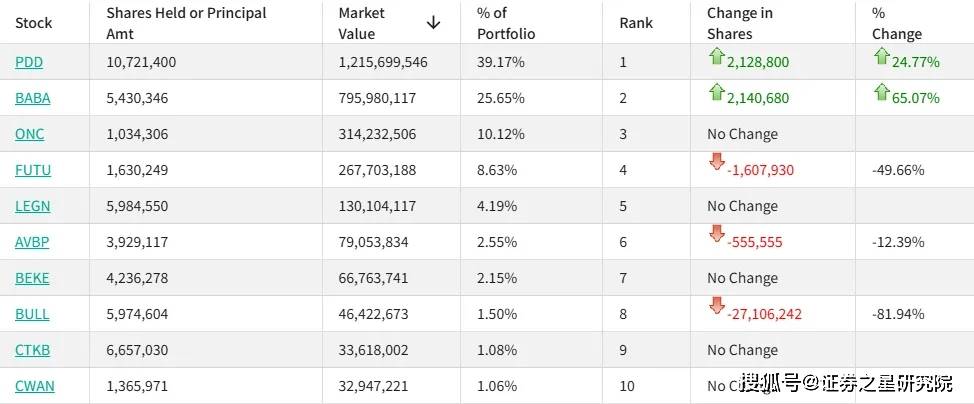
Group 1: Hillhouse Capital (HHLR) - Hillhouse Capital's HHLR fund reported a total market value of $3.104 billion at the end of Q4 2025, a decrease of 24% from the previous quarter, indicating a strategy of "focusing on core and shrinking edges" [2][4] - The top ten holdings include seven Chinese concept stocks, which account for nearly 90% of the total portfolio, primarily in internet e-commerce, biomedicine, and fintech sectors [2][4] - Significant increases in holdings were observed for Pinduoduo and Alibaba, with Pinduoduo's market value rising to $1.216 billion (up 24.77%) and Alibaba's to $795 million (up 65.07%) [3][4][5] - HHLR has reduced positions in competitive or non-core areas, clearing out stocks like Baidu and NetEase, while also entering positions in tech stocks like TSMC and Google [5] Group 2: Himalaya Capital - Himalaya Capital, managed by Li Lu, reported a Q4 2025 market value of $3.57 billion, up 10% from $3.23 billion in the previous quarter, maintaining a concentrated investment style [7][9] - The top four holdings (Google, Bank of America, Pinduoduo, and Berkshire Hathaway B) account for over 87% of the portfolio, with Google being the largest holding at $1.565 billion (43.86%) [9][10] - The fund exited its position in SOC and initiated a new position in Crocs, reflecting a focus on brands with strong market presence and cash flow [10] Group 3: Berkshire Hathaway - Berkshire Hathaway's Q4 2025 report, the last under CEO Warren Buffett, showed a portfolio dominated by familiar names, including Apple, American Express, and Coca-Cola [11][12] - Berkshire reduced its Apple holdings by over 10.29 million shares, marking the third consecutive quarter of reduction, while still maintaining Apple as its largest holding [13][14] - The company also significantly reduced its stake in Bank of America and Amazon, while increasing positions in Chevron and new investments in The New York Times, indicating a cautious approach to high-value assets [15][16] - Berkshire's cash reserves reached $381.7 billion, surpassing stock holdings for the fifth time in history, suggesting a strategic wait for better investment opportunities [16][18]





基于新业务恢复增长、利率敏感性减弱和审慎的精算假设角度:从友邦保险经验比较,看好中资保险估值有望提升
Hua Yuan Zheng Quan· 2026-02-25 07:32
Investment Rating - The industry investment rating is "Positive" (maintained) based on the recovery of new business growth, reduced interest rate sensitivity, and prudent actuarial assumptions [5][30]. Core Viewpoints - The report highlights that the valuation of Chinese insurance companies is expected to improve, drawing comparisons with AIA Group's strong performance since its listing. AIA's embedded value (PEV) multiple was approximately 1.48 times at the end of 2025, indicating high growth potential and lower sensitivity to interest rates, which could benefit the valuation of Chinese insurers [5][6]. - The new business value (NBV) of Chinese life insurance companies is recovering rapidly, driven by improved distribution channels and product offerings, with expectations for continued growth in 2026 [5][13]. - Effective asset-liability duration management and the transformation towards participating insurance have reduced the sensitivity of Chinese insurers' values to interest rates, which is favorable for valuation [15][17]. - Prudent adjustments to actuarial assumptions have brought Chinese insurers' assumptions closer to those of AIA, enhancing the credibility of their valuations [22][30]. Summary by Sections Section 1: AIA's Performance and Valuation - AIA has shown strong stock performance since its listing, with a PEV multiple of approximately 1.48 times at the end of 2025, indicating a favorable outlook for valuation improvements in Chinese insurers [5][6]. Section 2: Recovery of New Business and Growth Indicators - Chinese life insurance companies are experiencing a rapid recovery in new business growth, with NBV for AIA increasing by 18% year-on-year to USD 4.314 billion in the first three quarters of 2025. The NBV for 2024 was approximately 113% of the 2019 figure, indicating strong growth potential [8][13]. - Major Chinese insurers are expected to see NBV growth of 30%-80% in 2025, with positive growth in CSM for China Life and Ping An in the first half of 2025 [13][18]. Section 3: Interest Rate Sensitivity and Actuarial Assumptions - The sensitivity of Chinese insurers' values to interest rates has decreased due to effective duration management and a successful shift towards participating insurance. For instance, AIA's NBV only decreased by 1.9% with a 50 basis point drop in interest rates [15][17]. - Chinese insurers have made prudent adjustments to their actuarial assumptions, aligning them more closely with AIA's, which enhances the reliability of their valuations. For example, China Life's investment return assumption has been adjusted to 4% from 5% [22][30].


平安人寿换帅!85后蔡霆代行董事长职责,曾被业内称为“火箭式晋升”
Sou Hu Cai Jing· 2026-02-25 07:14
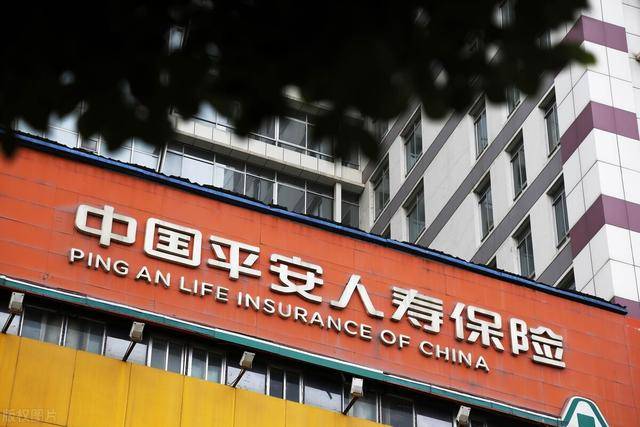
Core Viewpoint - The insurance industry is experiencing significant leadership changes as Ping An Life Insurance announces the retirement and reappointment of Yang Zheng, with Cai Ting stepping in as acting chairman, reflecting a trend towards younger management teams in the sector [1][5][6]. Group 1: Leadership Changes - Yang Zheng, born in February 1964, is retiring after a long tenure at Ping An, having held various key positions since joining in 1994, including chairman and CEO [1]. - Cai Ting, born in October 1985, has rapidly ascended within the company, becoming the youngest core executive at Ping An Life, and is currently responsible for key strategic areas [3][5]. - The leadership transition at Ping An Life is part of a broader trend in the insurance industry, with many companies undergoing similar changes to bring in fresh talent and expertise [5][6]. Group 2: Company Performance - As of the end of Q3 2025, Ping An Life's total assets reached 5.85 trillion yuan, a 12.71% increase from the beginning of the year, while net assets grew by 26.9% to 429.84 billion yuan [7]. - The company reported insurance business revenue of 470.93 billion yuan for the first three quarters, reflecting an 11.67% year-on-year growth, and a net profit of 105.57 billion yuan, up 23% [7]. - New business value from the agency channel increased by 23.3%, with per capita new business value rising by 29.9%, and the bancassurance channel saw a remarkable 170.9% growth [7]. Group 3: Strategic Focus - Ping An Life is committed to strengthening its leadership team and advancing its strategic initiatives to achieve high-quality development, particularly in the context of digital transformation and organizational change [6]. - The company is actively working on the formal appointment of a new chairman and will fulfill its information disclosure obligations as required [6].
从拿牌到筑牌:京东已递交“保险顾问”商标
Hua Er Jie Jian Wen· 2026-02-25 07:13
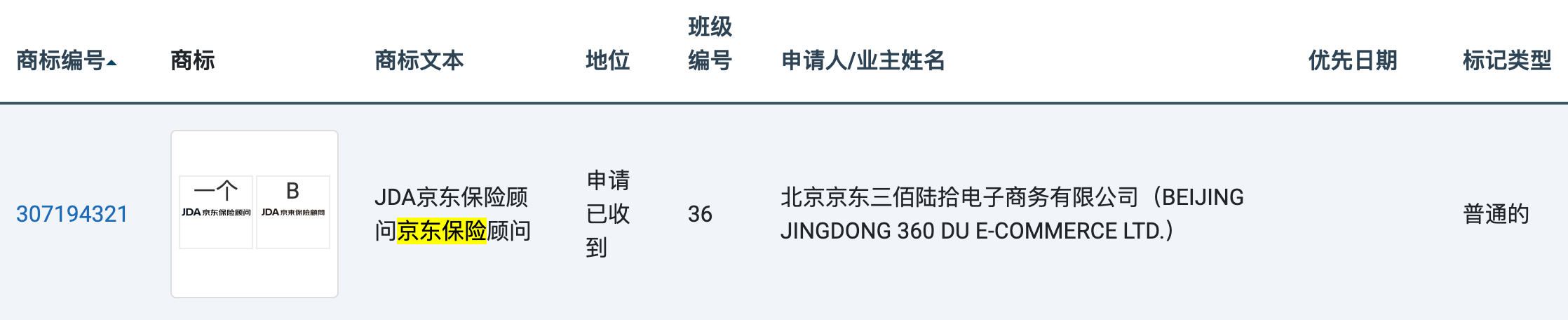
Core Insights - JD.com is expanding its financial services in Hong Kong, moving from compliance to brand establishment with the application for the "JDA JD Insurance Consultant" trademark [1][3]. Group 1: Trademark Application and Business Scope - The trademark application covers a wide range of categories, including financial management, insurance brokerage, and real estate management, indicating a strategic move into various financial sectors [3]. - This application follows JD.com's acquisition of an insurance brokerage license in October last year, marking the official launch of its insurance intermediary business in Hong Kong [3][4]. Group 2: Business Strategy and Market Position - JD.com is adopting a "license first, team follow" approach, actively recruiting for key positions in Hong Kong, which suggests a transition from planning to actual team formation [4]. - Compared to competitors like Alibaba and Tencent, JD.com is entering the market with a lighter asset model, focusing on independent brokerage rather than heavy investments in underwriting [5][6]. Group 3: Market Challenges and Strategic Vision - The Hong Kong insurance market is highly mature and relies heavily on offline agents, presenting challenges for JD.com to replicate its mainland success [9]. - The trademark's broad scope hints at a larger strategic vision for JD.com, targeting high-net-worth individuals with services like wealth management and supply chain finance [10]. - The launch of the "JD Insurance Consultant" brand is just the first step, as the company needs to convert its digital capabilities into actual premium revenue in a regulated environment [11][12].

香港信保局:将推出“中小企保障易”试点计划
智通财经网· 2026-02-25 06:51
Core Viewpoint - The Hong Kong Export Credit Insurance Corporation (HKECIC) welcomes the 2026-2027 Budget announced by the Financial Secretary, which includes measures to accelerate Hong Kong's economic development [1] Group 1: Government Initiatives - The government proposed various measures aimed at promoting economic growth in Hong Kong [1] - HKECIC is set to launch a pilot program called "SME Guarantee Easy," designed to provide comprehensive risk protection for exporters, particularly small and medium-sized enterprises (SMEs) [1] Group 2: Industry Support - The Chairperson of the HKECIC Consultation Committee, Chan Sui Kwan, expressed appreciation for the government's support of the export industry, emphasizing the need for comprehensive assistance for businesses to expand internationally [1] - The HKECIC aims to strengthen export credit insurance coverage to help exporters, especially SMEs, navigate the uncertainties in the trade environment [1] Group 3: Organizational Commitment - This year marks the 60th anniversary of the HKECIC, which plays a crucial role in Hong Kong's trade ecosystem [1] - The organization is committed to being a reliable partner for Hong Kong exporters and supporting the sustainable development of export trade [1]