金融科技

Search documents
黄河实业(00318):正就增持Claman Global Limited股权及若干科技业务的...
Xin Lang Cai Jing· 2025-11-24 14:56
截至本公告日期,集团尚未就潜在增持交易或任何可能的投资签订具有法律约束力的协议。潜在增持交 易及可能的投资的条款仍在磋商中,可能会或未必会落实。若潜在增持交易或任何可能的投资得以进 行,视有关条款,可能构成上市规则下须予公布的交易。公司将在适当时候依上市规则的规定进一步刊 发公告。 来源:智通财经网 黄河实业(00318)发布公告,集团正在就增持Claman Global Limited股权的潜在收购交易进行磋商。集团 的科技业务部门正就若干科技业务的潜在投资进行磋商,其中包括:一项从事人工智能数据训练的业 务;及一项从事金融科技系统平台的业务。 ...
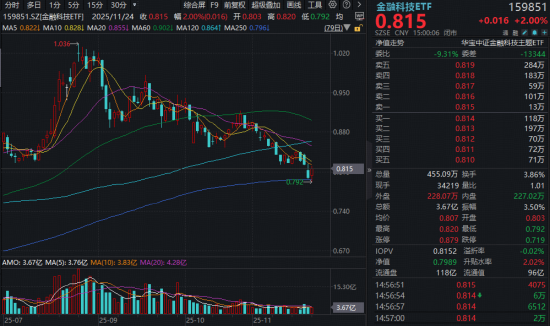
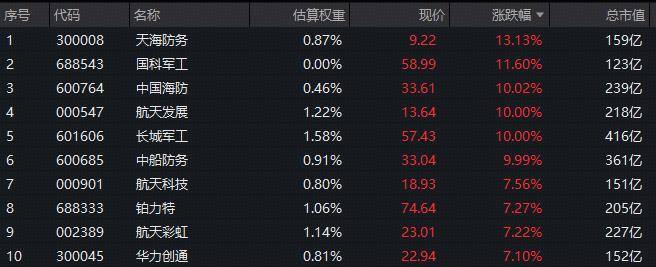
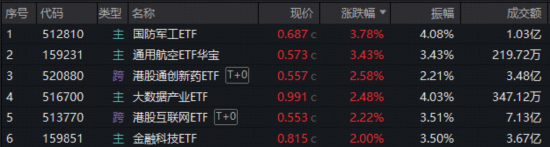
ETF日报|A股回暖!国防军工强势崛起,512810放量豪涨3.78%!阿里千问点火,港股AI率先反攻,金融科技午后发力
Sou Hu Cai Jing· 2025-11-24 14:54
Core Viewpoint - The A-share market showed a rebound with all major indices closing in the green, driven by significant inflows into the defense and military sector, as well as the resurgence of AI applications in financial technology [1][2] Group 1: Defense and Military Sector - The defense and military sector emerged as a leading performer, with over 133 billion yuan in net inflows, marking it as the top sector for institutional investment [2][5] - The defense military ETF (512810) saw a substantial increase of 3.78%, achieving its largest single-day gain since July, with 77 out of 79 covered stocks closing in the green [3][6] - Geopolitical factors are fueling the demand for defense spending, with expectations for increased investment in national defense and military capabilities [5][6] Group 2: AI and Financial Technology - The financial technology sector rebounded, with the largest financial technology ETF (159851) rising by 2%, indicating a recovery in market confidence [13][15] - Alibaba's AI assistant, Qianwen, achieved over 10 million downloads in just one week, highlighting the rapid growth of AI applications [15][10] - Analysts believe that the financial sector is an ideal testing ground for AI applications, with significant potential for transforming business processes and enhancing profitability [15][16] Group 3: Hong Kong Market Dynamics - The Hong Kong innovation drug sector also experienced a rebound, with leading companies like 3SBio and Heng Rui Medicine showing strong performance [2] - The Hong Kong internet ETF (513770) saw a price increase of over 2%, reflecting strong buying interest and a favorable valuation compared to A-shares [9][10] - The valuation of the Hong Kong internet sector is at a historical low, making it an attractive investment opportunity as it includes key players in AI and technology [9][10]

黄河实业(00318):正就增持Claman Global Limited股权及若干科技业务的潜在投资进行磋商
智通财经网· 2025-11-24 14:51
智通财经APP讯,黄河实业(00318)发布公告,集团正在就增持Claman Global Limited股权的潜在收购交 易进行磋商。集团的科技业务部门正就若干科技业务的潜在投资进行磋商,其中包括:一项从事人工智 能数据训练的业务;及一项从事金融科技系统平台的业务。 截至本公告日期,集团尚未就潜在增持交易或任何可能的投资签订具有法律约束力的协议。潜在增持交 易及可能的投资的条款仍在磋商中,可能会或未必会落实。若潜在增持交易或任何可能的投资得以进 行,视有关条款,可能构成上市规则下须予公布的交易。公司将在适当时候依上市规则的规定进一步刊 发公告。 ...
黄河实业:正就增持Claman Global Limited股权及若干科技业务的潜在投资进行磋商
Zhi Tong Cai Jing· 2025-11-24 14:49
截至本公告日期,集团尚未就潜在增持交易或任何可能的投资签订具有法律约束力的协议。潜在增持交 易及可能的投资的条款仍在磋商中,可能会或未必会落实。若潜在增持交易或任何可能的投资得以进 行,视有关条款,可能构成上市规则下须予公布的交易。公司将在适当时候依上市规则的规定进一步刊 发公告。 黄河实业(00318)发布公告,集团正在就增持Claman Global Limited股权的潜在收购交易进行磋商。集团 的科技业务部门正就若干科技业务的潜在投资进行磋商,其中包括:一项从事人工智能数据训练的业 务;及一项从事金融科技系统平台的业务。 ...
黄河实业(00318.HK)正就若干科技业务潜在投资进行磋商
Ge Long Hui· 2025-11-24 14:48
格隆汇11月24日丨黄河实业(00318.HK)公告,集团正在就增持Claman Global Limited股权的潜在收购交 易进行磋商。董事会亦希望通知股东及潜在投资者,集团的科技业务部门正就若干科技业务的潜在投资 进行磋商,其中包括:(i)一项从事人工智能数据训练的业务;及(ii)一项从事金融科技系统平台的业 务。 ...
胡玉建受聘上财苏州校友会副会长 东融科技集团与上财合作迈入新阶段
Jiang Nan Shi Bao· 2025-11-24 14:11
11月22日,"匡时姑苏 财链未来"主题论坛暨上海财经大学校友会苏州代表处年会在苏州尹山湖希尔顿 酒店隆重举行,上海财经大学校党委副书记、纪委书记何鹏程,上海财经大学数字经济研究院院长高红 冰等领导出席活动。东融科技集团董事长胡玉建受邀参加并被聘为上海财经大学苏州校友会理事及副会 长。 此次胡玉建董事长受聘为上海财经大学苏州校友会理事及副会长,标志着集团与上海财经大学的合作迈 入新阶段。未来,东融将继续携手上海财经大学,依托校友平台资源,深化在科技创新、产业研究与人 才培养等方面的合作,共同为区域经济高质量发展与行业变革注入新动能。 活动中,上海财经大学校友会苏州代表处正式宣布了理事及副会长增补名单。东融科技集团董事长胡玉 建凭借在金融科技领域的深耕以及校企合作中的积极推动,被聘为上海财经大学苏州校友会理事及副会 长。 作为上海财经大学EMBA优秀校友以及上海财经大学商学院MBA实践导师,胡玉建董事长始终积极推 动校企合作。近期,上海财经大学校领导多次率队参访东融科技集团,双方围绕整合实践项目研究方 向、共建人才培养基地、合作成立研究院等议题进行了多轮深入交流,并初步达成多项合作意向,为未 来深度合作奠定了坚 ...
三大股指期货齐涨,大摩认为美股回调即将结束
Zhi Tong Cai Jing· 2025-11-24 14:03
Market Overview - US stock index futures are all up ahead of the Thanksgiving holiday, with Dow futures rising by 0.15%, S&P 500 futures by 0.33%, and Nasdaq futures by 0.61% [1] - European indices show mixed performance, with Germany's DAX up 0.49%, France's CAC40 up 0.02%, the UK's FTSE 100 down 0.26%, and the Euro Stoxx 50 up 0.18% [2] Oil Market - WTI crude oil is up 0.17%, priced at $57.91 per barrel, while Brent crude oil is down 0.23%, priced at $61.80 per barrel [3] Economic Data and Events - This week, investors will focus on several important economic data releases, including US retail sales and PPI data for September, and the Conference Board's consumer confidence index for November [5] - The Federal Reserve's Beige Book and initial jobless claims data will also be released, with a relatively light earnings week ahead, featuring Alibaba, Dell Technologies, Kohl's, and Best Buy as key companies to watch [5] Federal Reserve Insights - Analysts from Capital Economics suggest that the Federal Reserve may face a historic 6-6 tie in its December voting, indicating increasing divisions within the committee regarding interest rate decisions [6] - Morgan Stanley's Michael Wilson believes that the recent sell-off in US stocks may soon end, maintaining an optimistic outlook for the market in 2024, with a projected rebound of the S&P 500 to 7800 points, representing an 18% increase from current levels [6] Stock Performance and Trends - The S&P 500 index has declined approximately 3.7% in November, with a potential further drop due to $150 billion in liquidity being withdrawn from the market due to US Treasury settlements [7] - Nvidia's recent earnings report has not alleviated market concerns regarding a potential AI stock bubble, with debates ongoing about the sustainability of valuations in the AI sector [8] Shipping and Tanker Market - VLCC shipping rates have surged to a five-year high, driven by increased demand for alternative oil supplies amid sanctions on Russian oil and rising production from the Middle East and the US [9][10] Company-Specific News - Lexinfintech (LX.US) reported Q3 earnings showing resilience in its ecosystem business, with revenues of 3.42 billion yuan and a net profit of 675 million yuan, reflecting a 1.5% increase quarter-over-quarter [11] - BHP Group (BHP.US) has announced it will no longer pursue a merger with Anglo American, marking a significant shift in its strategic direction [12] - Amazon (AMZN.US) operates over 900 data centers across more than 50 countries, indicating a larger scale of operations than typically recognized [12]

科技与温度筑牢金融消保防线,小赢科技入选2025年度优秀消费者权益保护机构
2 1 Shi Ji Jing Ji Bao Dao· 2025-11-24 13:04
Core Insights - The article highlights that Xiaoyin Technology has been recognized as an "Outstanding Consumer Rights Protection Institution" at the 21st Century Financial Annual Conference, reflecting its commitment to consumer rights in the financial technology sector [1] - The company emphasizes the importance of consumer rights protection as a fundamental aspect of social responsibility and sustainable development in the financial industry [1] Group 1: Consumer Rights Protection - Xiaoyin Technology has established a comprehensive "Big Consumer Protection" system, integrating the concept of "finance for the people" into its operations to enhance the effectiveness of consumer protection efforts [1] - The award received by Xiaoyin Technology serves as a recognition of its consumer protection initiatives and sets a benchmark for the fintech industry [1] Group 2: Security and Risk Prevention - In response to the accelerated digitalization in finance, Xiaoyin Technology has integrated technological innovation into its consumer protection framework, utilizing AI to enhance its "Five-in-One" WinPROT system [2] - The company has developed a full-chain security protection system that includes fraud prevention, data security, customer service efficiency, technological empowerment, and user education [2] - The introduction of the virtual digital assistant Win-Daidai aims to improve service efficiency and user experience, embodying the integration of technology and human touch [2] Group 3: Education and Empowerment - Xiaoyin Technology is committed to long-term consumer protection development through user education, launching the "Trust as a Sail, Creating the Future" column to promote credit knowledge, reaching over one million users [3] - The company has combined public welfare practices with consumer rights protection, conducting educational activities that effectively raise awareness of financial safety and risks [3] - Xiaoyin Technology has partnered with Southwest Jiaotong University for three consecutive years to promote financial literacy in remote areas, demonstrating its commitment to social responsibility and community engagement [3]
A股回暖!国防军工强势崛起,512810放量豪涨3.78%!阿里千问点火,港股AI率先反攻,金融科技午后发力
Xin Lang Ji Jin· 2025-11-24 11:57
Market Overview - A-shares showed a rebound on November 24, with all three major indices closing in the green and over 4,200 stocks rising. However, market sentiment has slightly declined, with a trading volume of 1.74 trillion yuan, down by 2.4 billion yuan compared to the previous day [1] Sector Performance - The technology growth sector significantly recovered, with the defense and military industry emerging as a leading "super dark horse," attracting over 13.3 billion yuan in net inflows, the highest across all industries [2][4] - The defense military ETF (512810) surged by 3.78%, marking its largest single-day increase since July, while the general aviation ETF (159231) rose by 3.43%, both achieving their highest daily trading volumes in months [2][4] - The financial technology sector rebounded in the afternoon, with the largest financial technology ETF (159851) gaining 2% and maintaining its position above the annual line. The AI application by Alibaba, "Qianwen," achieved over 10 million downloads in just seven days, setting a record for AI application growth [3][14] Investment Insights - Analysts from Guotai Junan Securities believe that the Chinese stock market will gradually stabilize and embark on a year-end rally, despite recent global market fluctuations [4] - The defense military sector is expected to see increased investment due to ongoing geopolitical tensions, which may drive high-quality development in the industry [7] - The Hong Kong AI sector is showing strong momentum, with major stocks like Alibaba and Kuaishou experiencing significant gains, indicating a recovery phase for the sector [10][12] ETF Highlights - The Hong Kong Internet ETF (513770) has a current price-to-earnings ratio of 21.93, placing it in the historical bottom range, indicating a valuation advantage compared to other indices [10][11] - The financial technology ETF (159851) has a scale exceeding 90 billion yuan, with an average daily trading volume of 8 billion yuan over the past six months, making it a leading choice among similar ETFs [17]
AI应用点火!恒银科技涨停,金融科技ETF(159851)反弹2%年线失而复得!机构:AI+金融拐点已至
Xin Lang Ji Jin· 2025-11-24 11:57
Group 1 - The core viewpoint of the articles highlights the resurgence of the fintech sector driven by AI applications, with the China Securities Financial Technology Theme Index rebounding and constituent stocks generally closing in the green, with 51 stocks rising over 1% [1][3] - The AI assistant Qianwen App from Alibaba has surpassed 10 million downloads within a week of its public testing, making it the fastest-growing AI application, outpacing competitors like ChatGPT and Sora [3] - Financial institutions are increasingly adopting AI technologies in core business areas and back-office scenarios, indicating a significant shift towards digital transformation in the financial sector [3] Group 2 - The largest fintech ETF (159851) experienced a price increase of 2% after a period of adjustment, with a trading volume of 367 million yuan on the day [1][4] - The financial technology ETF has a current scale exceeding 9 billion yuan, with an average daily trading volume of 800 million yuan over the past six months, indicating strong liquidity and market interest [4] - East Wu Securities suggests focusing on fintech opportunities through the fintech ETF and its associated funds, emphasizing coverage of internet brokerages, financial IT, cross-border payments, and AI applications [3][4]