
保险

Search documents
最高法:将深入研究私募基金、虚拟货币等新型金融案件司法应对举措
Zhong Guo Jing Ying Bao· 2026-02-25 06:51
Core Insights - The Supreme People's Court plans to enhance its judicial functions in civil and commercial trials, focusing on insider trading and market manipulation, as well as new financial cases like private equity funds and cryptocurrencies by 2026 [1] Group 1: Financial Case Trends - In 2025, the courts adjudicated 2.707 million financial cases, showing three main trends: the emergence of new types of disputes due to financial innovation, increased interconnectedness of cases, and the significant role of judicial rulings in mitigating financial risks [1] - The courts are actively supporting the development of technology finance, green finance, inclusive finance, pension finance, and digital finance, resulting in effective judicial outcomes [1] Group 2: Support for Green Finance - Courts in Shanghai, Nanjing, Hangzhou, Hefei, and Suzhou have collaborated to promote green finance through a joint initiative, directing financial resources towards green sectors [2] Group 3: Support for Inclusive Finance - The courts are implementing judicial suggestions to enhance financial services for the real economy, with a notable decrease in credit card and guarantee insurance disputes compared to overall civil and commercial case growth [2] - Special research was conducted by the Guangxi High Court on small loan disputes affecting impoverished populations, leading to recommendations for financial institutions [2] Group 4: Support for Pension Finance - The focus is on improving judicial services for the elderly, ensuring that financial products sold by institutions meet suitability obligations, thereby protecting the rights of senior financial consumers [2] Group 5: Support for Digital Finance - The Shanghai Financial Court has issued judicial recommendations to address issues with electronic signing in small loans, aiming to enhance compliance and protect consumer rights [2] Group 6: Future Directions - The courts will continue to implement existing judicial suggestions and develop new ones to effectively resolve disputes in supply chain finance, internet finance, and cryptocurrencies, thereby strengthening judicial support for building a financial powerhouse [3] - In 2025, the courts received 392,000 insurance disputes, marking a 21.3% increase, with efforts to protect consumer rights through diversified dispute resolution and model judgments [3]
香港最新财政预算案出炉:事关证券改革、代币化创新和“AI+”...多项金融利好定档!
智通财经网· 2026-02-25 06:38
Financial Strategy and Market Development - Hong Kong will actively align with national development strategies to promote RMB internationalization and continue reforming the securities market [1] - The government plans to legislate to optimize family office and fund tax systems, and establish licensing systems for digital asset trading and custody service providers [1] - The Hong Kong Monetary Authority and the Securities and Futures Commission are implementing the "Fixed Income and Currency Market Development Roadmap" to enhance the bond market [2][96] Securities Market Reforms - The Hong Kong Stock Exchange (HKEX) will revise listing requirements for companies with dual-class shares and facilitate secondary listings for overseas issuers [2] - Plans include optimizing the initial public offering process and providing more flexibility for biotech and specialized technology companies [2] - The introduction of a paperless securities market system is expected to be launched in the current year [2] Bond Market Innovations - The government issued tokenized bonds totaling HKD 10 billion, the largest globally at the time, and will continue to issue such bonds regularly [3][96] - A digital bond subsidy program will encourage more digital bonds to be issued in Hong Kong [3] Asset and Wealth Management - Over 3,300 single-family offices have been established in Hong Kong, with plans to optimize tax systems to attract more family offices and funds [3][98] - The government will expand the definition of "funds" to include specific single-investor funds and allow tax deductions for investments in digital assets and certain commodities [3] Green Finance Initiatives - Hong Kong aims to strengthen its position as an international green finance center by issuing sustainable bonds and enhancing regulatory environments [4] - The government will support green technology projects and explore data sharing to improve green financing and risk assessment efficiency [4] Innovation and Technology Development - The government will establish an "AI+ and Industry Development Strategy Committee" to promote AI integration across industries [17][18] - Initiatives include enhancing AI training and establishing a clinical trial academy to support biomedical technology [4][26] Economic Outlook - The Hong Kong economy is projected to grow between 2.5% and 3.5% this year, supported by strong external trade and rising private consumption [12] - The inflation rate is expected to be slightly higher than last year, with a forecasted basic inflation rate of 1.7% [12] International Financial Center Positioning - Hong Kong's financial market remains robust despite global economic uncertainties, with plans to enhance its role as an international financial center [48] - The government will deepen financial cooperation in the Greater Bay Area and leverage financial advantages to empower industrial development [48] Digital Asset Development - A comprehensive regulatory framework for digital assets will be established to position Hong Kong as a global innovation center for digital assets [57] - The government will implement a licensing system for digital asset trading and custody service providers [57]

中国人寿接连受罚 合规与业绩的矛盾凸显
Xin Lang Cai Jing· 2026-02-25 05:43
Core Viewpoint - China Life Insurance has faced significant regulatory penalties in early 2026, highlighting compliance and internal management challenges despite its strong market performance [1][4]. Regulatory Actions - China Life's branches in Henan and Hubei received fines exceeding 2 million yuan within two months, indicating a focus on compliance and governance issues [1][5]. - The first fine of 900,000 yuan was issued to the Luoyang branch for multiple violations, including fabricating insurance intermediary business and deceiving customers [1][6]. - Following this, the Hubei branch was fined 1.17 million yuan for similar violations, including providing false information and offering benefits outside of contracts [2][7]. - The penalties reflect a comprehensive regulatory approach, targeting not only the companies but also individual executives and agents involved in misconduct [2][7]. Company Performance - Despite regulatory challenges, China Life reported impressive financial results for the first three quarters of 2025, with a net profit of 167.8 billion yuan, a 60.5% increase year-on-year [3][8]. - Total investment income reached 368.6 billion yuan, up 41.0%, with a total premium income of 669.6 billion yuan, reflecting a 10.1% growth [3][8]. - The company attributes its growth to effective asset-liability management and increased equity asset allocation, maintaining a sales force of 657,000 [3][8]. Industry Perspective - The recent regulatory actions signify a shift towards a more normalized, detailed, and stringent regulatory environment in the insurance industry [4][9]. - The regulatory bodies are adopting a zero-tolerance approach towards actions that harm consumer rights and disrupt market order, sending a clear message about the importance of compliance [4][9]. - The fines, while minor relative to the company's revenue, expose significant management and internal control weaknesses that could undermine long-term market credibility if not addressed [4][9]. - China Life faces the challenge of balancing rapid business growth with effective risk management and compliance integration throughout its operations, particularly within its extensive sales network [4][9].

证券保险ETF鹏华(515630)涨近1%,超九成保险资管产品实现正收益
Xin Lang Cai Jing· 2026-02-25 05:39
Group 1 - The core viewpoint of the news highlights that as of February 24, 2026, 93.2% of the insurance asset management products disclosed this year have achieved positive returns, with nearly 20 equity insurance asset management products yielding over 10% [1] - According to Guojin Securities, the fundamentals of both assets and liabilities are expected to improve by 2026, with a favorable debt environment for listed companies due to increased market share and deposit migration, leading to a positive investment outlook [1] - The CSI 800 Securities Insurance Index rose by 0.87% as of February 25, 2026, with notable increases in constituent stocks such as First Capital rising by 5.21% and Zhongyin Securities by 3.60% [1] Group 2 - As of January 30, 2026, the top ten weighted stocks in the CSI 800 Securities Insurance Index account for 65% of the index, including major companies like Ping An Insurance and CITIC Securities [2] - The Penghua Securities Insurance ETF closely tracks the CSI 800 Securities Insurance Index, providing investors with diversified investment options within the securities insurance sector [1]
迎新春 暖民心 阳光人寿以“爱与责任”守护团圆年
Jin Rong Jie Zi Xun· 2026-02-25 05:00
Core Viewpoint - The company, Sunshine Life, actively engaged in various charitable and community support activities during the Spring Festival, embodying its cultural philosophy of "love and responsibility" through practical actions to bring warmth and professional care to the public and employees [1][25]. Group 1: Charitable Activities - Sunshine Life focused on supporting vulnerable groups, frontline workers, and special populations by delivering New Year care packages to those in need, such as providing financial aid and essential goods to struggling families in rural areas [2][6]. - The company organized events like "Insurance Escort: Warm Homecoming" in Urumqi, where volunteers assisted travelers with luggage and distributed festive gifts, while also promoting financial literacy [6]. - Various branches across the country, including in Guilin and Jiangsu, engaged in community outreach by donating essential items to social welfare institutions and organizing activities for children with autism [6]. Group 2: Financial Education Initiatives - In response to the high incidence of financial risks at year-end, Sunshine Life conducted financial education campaigns in markets, construction sites, and rural areas, using simple language and real-life examples to strengthen the public's financial security [11][13]. - The company’s branches distributed educational materials and provided explanations on topics such as illegal fundraising and telecom fraud prevention during peak shopping times, helping raise awareness among consumers [13][18]. Group 3: Employee Care Programs - Sunshine Life emphasized its commitment to employee welfare by organizing various support activities, including delivering financial aid and care packages to frontline workers facing difficulties [21][23]. - The company maintained traditions such as sending New Year gifts to employees' families and organizing cultural events to enhance team cohesion and morale [23]. - Through material support and emotional care, Sunshine Life aimed to foster a sense of unity and motivation among its employees, reinforcing the belief that "the greatest wealth is the employees" [21][25].


陈茂波:香港人才服务办公室会继续加强在海内外招揽人才
Xin Lang Cai Jing· 2026-02-25 04:34
Core Viewpoint - The Hong Kong government is actively attracting talent through various immigration programs, significantly contributing to the local economy and innovation landscape [1] Group 1: Talent Attraction and Immigration Programs - Over 270,000 talents from various regions have been attracted to Hong Kong through talent immigration programs, with the "High Talent Pass Scheme" bringing in over 100,000 global elites [1] - The Hong Kong Talent Service Office will continue to enhance its efforts in recruiting talent from both domestic and international markets, expanding its network of partners to assist talents and their families in settling in Hong Kong [1] Group 2: Research and Innovation Initiatives - InnoHK collaborates with over 30 top universities and research institutions globally, gathering more than 3,000 researchers for world-class research cooperation [1] - The government launched a HKD 3 billion "Frontier Technology Research Support Scheme" last year to align with national frontier technology strategies [1] Group 3: Internship and Training Programs - The "Innovation and Technology Internship Program" has provided nearly 20,000 internship opportunities for university students to experience innovation and technology-related work [1] - The "Research Talent Pool Program" has approved over 15,000 applications to fund institutions hiring STEM graduates for R&D roles [1] - The Financial Academy is focused on cultivating internationally-minded financial leaders, with over 80 senior executives participating in the "Financial Leaders Program," benefiting nearly 50 institutions [1] - The "Insurance Industry Talent Training Program" will be extended for three years to enhance the professional capabilities of practitioners [1] - A budget of HKD 65 million will be allocated to assist more graduates in obtaining professional qualifications by increasing government training quotas [1] Group 4: Financial Technology Initiatives - The "Bay Area Higher Education Students FinTech Dual Internship Program" funds students from both regions to undertake short-term internships in fintech companies, with around 30 companies and 100 students participating [2]
保险行业周报(20260209-20260213):25Q4险资运用:权益配置维持历史高位
Huachuang Securities· 2026-02-25 04:20
Investment Rating - The industry investment rating is "Recommended," indicating an expected increase in the industry index exceeding the benchmark index by more than 5% in the next 3-6 months [21]. Core Insights - The insurance sector's asset management balance reached approximately 38.5 trillion yuan by the end of Q4 2025, reflecting a year-to-date growth of 15.70% [2][4]. - The average comprehensive solvency adequacy ratio for insurance companies stands at 181.1%, with life insurance companies at 169.3% and property insurance companies at 243.5% [2]. - The industry is experiencing a shift in dividend insurance products, with a notable decrease in the preset interest rate to 1.25%, down from the previous cap of 1.75% [2]. - The overall premium income for the industry in 2025 is projected to be 6.12 trillion yuan, with a high fund conversion rate of 85% [4]. Summary by Sections Asset Management - As of Q4 2025, the asset management balance of insurance companies is nearly 38.5 trillion yuan, with life insurance companies holding 34.66 trillion yuan and property insurance companies 2.42 trillion yuan [2][4]. - The fund conversion rate for life insurance companies is exceptionally high at 108%, while property insurance companies have a much lower rate of 11% [4]. Equity Allocation - The allocation of equity and fund assets in the industry reached 5.70 trillion yuan, accounting for approximately 15.4% of total assets, maintaining a historical high [5]. - The stock assets alone amount to 3.73 trillion yuan, representing 10.1% of total assets, with a year-on-year increase of 2.5% [5]. Investment Recommendations - The report suggests that the insurance sector is currently in a correction phase, primarily influenced by liquidity conditions around the Spring Festival [5]. - The report recommends specific companies for investment, including China Pacific Insurance, China Life Insurance, and New China Life Insurance, with respective PEV valuations [6][10].



未知机构:午间指数表现下跌19下-20260225
未知机构· 2026-02-25 04:00
Summary of Conference Call Records Industry Overview - The conference call discusses the performance of the Hong Kong market, particularly focusing on the healthcare sector, which has shown weakness following a strong previous day. The Hang Seng Technology Index faced pressure, dropping 2.4% due to the Citrini report [1][2]. Key Points Market Performance - The Hong Kong market experienced a technical correction with indices down by 1.9% to 2.4% [1]. - The A-share market showed strength on its first trading day post-holiday, with the CSI 300 index rising by 1.33% [1]. - Southbound investors in the Hong Kong market had a net sell-off, accounting for 22% of the trading volume, indicating a shift of funds towards the A-share market [1]. Sector Performance - The healthcare sector was a major drag on the market, with a notable decline attributed to high beta characteristics and a technical pullback [1][4]. - The Hang Seng Healthcare Index is currently trading below the 50% retracement level, indicating an oversold condition [4]. - Specific stocks in the healthcare sector faced significant net sell-offs from southbound funds, including: - China National Pharmaceutical Group down 6.1% with net sell-off at approximately 10% of trading volume - Innovent Biologics down 5.7% with net sell-off at approximately 15% - CSPC Pharmaceutical Group down 5.7% with net sell-off at approximately 15% [4]. Trading Dynamics - The trading flow has shifted towards selling, particularly in traditional economic sectors, with active operations in real estate and consumer staples [2]. - The real estate sector showed strong performance, with investor pricing reflecting upward potential in residential and commercial properties [2]. - Standard Chartered Bank reported a fourth-quarter adjusted pre-tax profit of $1.24 billion, below the expected $1.38 billion, and announced a $1.5 billion share buyback plan [2]. Technology Sector - The AI sector showed weakness, with a decline of 4.6%, reflecting poor sentiment [2]. - Despite the overall negative sentiment in technology stocks, some companies like Minimax and Knowledge Atlas saw increases of 7.6% and 20.9%, respectively [2]. Additional Insights - The market lacks significant catalysts for movement, leading to a focus on liquidity and market momentum [2]. - The healthcare sector's decline is indicative of broader market sentiment, with a tendency towards selling observed in trading flows [4]. - The ongoing interest in short-selling, particularly in stocks like Kuaishou, which saw a 3.8% decline and a short interest of 7.6% of float, suggests a cautious outlook among investors [3].
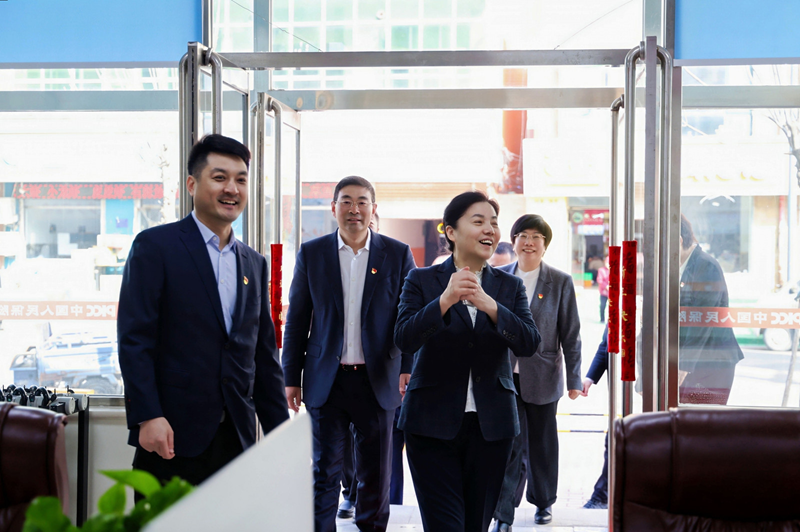
龙马启新程 慰问暖初心 两大保险集团开工首日凝聚奋进力量
Jin Rong Jie· 2026-02-25 03:58
Core Insights - The core message of the news is that the New Year visits by major insurance companies, including People’s Insurance Group and Taiping Group, reflect their commitment to high-quality development and alignment with national strategies as they embark on the "14th Five-Year Plan" [1][7][12] Group 1: Organizational Cohesion - The visits by the leadership of both groups to frontline employees and various locations are aimed at strengthening organizational cohesion, which is essential for development in the insurance industry [2][4] - Frontline employees are crucial as they directly impact the company's brand reputation and market foundation, making their engagement vital for organizational success [4][9] - The initiative breaks down management barriers and connects corporate vision with individual employee values, enhancing motivation and reducing turnover rates [4][10] Group 2: Industry Mission and Opportunities - The year 2026 marks the beginning of the "14th Five-Year Plan," where the insurance industry is expected to act as an "economic stabilizer" and "social stabilizer," supporting China's modernization efforts [7][11] - Both groups have set "high-quality development" and "achieving new successes" as their core annual goals, rooted in national development strategies and industry opportunities [7][11] - The current transition from scale expansion to quality improvement in the insurance sector necessitates enhanced product innovation, risk control, service, and digital capabilities [7][11] Group 3: Strategic Development - The cross-regional visits by Taiping Group and People’s Insurance Group reflect their strategic considerations for national and international development, aligning with the unified national market and dual circulation development pattern [8][9] - The focus on grassroots service networks and the integration of technology with traditional services are essential for tapping into the rapidly growing demand in lower-tier markets [8][9] - The competition in the insurance industry has shifted from product and price to service networks and comprehensive service capabilities, making cross-regional layouts a key competitive advantage [8][9] Group 4: Industry Implications - The actions of these leading insurance companies serve as a positive example for the entire industry, emphasizing the importance of integrating social responsibility with corporate development [9][10] - Talent development and strengthening grassroots capabilities are critical for the industry's transformation, with a focus on digital and intelligent advancements [9][10] - Building a strong corporate culture that emphasizes emotional care and value recognition is vital for enhancing organizational resilience and core competitiveness [10][11] Group 5: Future Outlook - The New Year visits set a tone for the insurance industry, emphasizing "unity, practical action, serving the overall situation, and high-quality development" for the year ahead [11][12] - The industry is encouraged to deepen its core business of risk protection while aligning with national strategies in areas like rural revitalization and social security [11][12] - Accelerating digital transformation and enhancing talent development are essential for maximizing market potential and improving service delivery in the insurance sector [11][12]
多数保险机构对2026年A股市场持较乐观态度,计划小幅增配A股
Jin Rong Jie· 2026-02-25 03:58
Group 1 - The core viewpoint of the articles indicates that insurance institutions are optimistic about domestic investments in stocks and securities investment funds for 2026, with a tendency to slightly increase stock investments [1] - Most insurance institutions plan to maintain their allocation ratios for bank deposits, bonds, securities investment funds, and other financial assets similar to 2025, with some intending to moderately increase stock investments [1] - In the bond market, insurance institutions hold a neutral outlook for 2026, favoring high-grade corporate bonds, perpetual bonds, subordinated debt, and convertible bonds, primarily focusing on bonds with maturities between 10 to 30 years [1] Group 2 - Regarding the A-share market, insurance institutions are generally optimistic for 2026, favoring indices such as the Sci-Tech Innovation 50, CSI 300, and ChiNext, and industries like electronics, non-ferrous metals, and pharmaceuticals [1] - The main factors influencing the A-share market are expected to be corporate profit recovery and liquidity conditions, with most insurance institutions planning to slightly increase their allocation to A-shares [1] - In terms of fund investments, insurance asset management institutions prefer equity funds, secondary bond funds, and mixed equity funds, with nearly half planning to slightly increase their allocation to public funds [2] Group 3 - For overseas investments, Hong Kong stocks are the most favored by insurance institutions for 2026, with gold and US stocks also receiving attention [2] - About half of the insurance asset management institutions plan to slightly increase their allocation to Hong Kong stocks, while 40% of insurance companies intend to maintain their current allocation levels [2]