
智能手机

Search documents
华为Mate 70 Pro限时抢购
Xin Lang Cai Jing· 2025-12-04 11:25
Core Viewpoint - Huawei's HUAWEI Mate 70 Pro 5G smartphone is set to launch on November 26, 2024, featuring advanced technology and a promotional price of 5699 yuan, down from the original price of 6149 yuan, offering a discount of 450 yuan [2] Product Specifications - The Mate 70 Pro is available in four premium colors: Obsidian Black, Cloud Mountain Green, Wind Letter Purple, and Snow Domain White, with the promotional model being the 12GB+256GB Obsidian Black version [2] - The device features a new high-brightness titanium basalt body structure, second-generation Kunlun glass on the front, and a durable aramid fiber material on the back, significantly enhancing drop resistance [2] - Dimensions are 164.6mm x 79.5mm x 8.2mm, and it weighs 221g, providing a solid yet lightweight feel [2] Display and Performance - It boasts a 6.9-inch OLED display with a resolution of 2832 x 1316, supporting a 1-120Hz LTPO adaptive refresh rate and covering 10.7 billion colors with P3 wide color gamut [2] - The device is powered by Huawei's self-developed Kirin 9020 processor and Maleoon 920 GPU, along with 12GB of RAM, ensuring smooth multitasking for gaming, office work, and entertainment [2] Battery and Charging - The smartphone is equipped with a 5500mAh battery, supporting 100W wired fast charging, 80W wireless fast charging, and 20W wireless reverse charging, providing strong endurance and rapid charging capabilities [2] Camera System - The rear camera system includes a 50MP ultra-light gathering main camera with a variable aperture (F1.4-F4.0, OIS), a 40MP ultra-wide-angle lens, a 48MP macro telephoto lens (F2.1, OIS), and a 1.5MP multispectral channel camera, delivering detailed and accurate color reproduction [2] - The front features a 13MP ultra-wide-angle lens and a 3D depth-sensing camera, supporting facial recognition and high-definition selfies [2] Operating System and Features - The device runs on Huawei's fully self-developed HarmonyOS, offering features like distributed file management, multi-device collaboration, and cross-device transfer [2] - It includes an intelligent multi-antenna design combined with Lingxi algorithm for faster and more stable network connections, and supports IP68/IP69 dust and water resistance, Beidou satellite messaging, two-way call noise reduction, and gesture control [2]
小米集团-W(01810):业绩提升亮眼,汽车业务与舆情承压
Waton Financial· 2025-12-04 08:59
Investment Rating - The investment rating for Xiaomi Group-W (1810.HK) is "Hold" [2]. Core Insights - Xiaomi Group reported impressive financial performance in Q3 2025, with total revenue reaching 113,120.73 million RMB, a year-on-year increase of 22.28%. Net profit was 12,270.87 million RMB, marking a significant year-on-year growth of 129.35%, achieving a historical high [5]. Financial Performance - Total revenue for Q3 2025 was 113,120.73 million RMB, up 22.28% year-on-year - Net profit reached 12,270.87 million RMB, reflecting a 129.35% increase year-on-year, also a historical high [5]. Business Development - The traditional core business, smartphones, remains a key pillar with revenue of 46 billion RMB. The combined revenue from smartphones and AIoT was 84.1 billion RMB in the quarter - IoT and lifestyle consumer products generated revenue of 27.6 billion RMB, a year-on-year growth of 5.6% - The automotive business achieved a significant breakthrough, with revenue from smart electric vehicles and AI innovation reaching 29 billion RMB, a year-on-year increase of over 199%. The automotive revenue alone was 28.3 billion RMB, with quarterly deliveries exceeding 100,000 units, a record high since its launch [6]. Earnings Forecast - Projected operating revenue for 2024 is 365,906 million RMB, with a growth rate of 35.04% - Expected operating profit for 2024 is 21,519 million RMB, reflecting a growth rate of 53.43% - Forecasted net profit for 2024 is 22,377 million RMB, with a growth rate of 61.78% [8]. Financial Statements and Projections - Total assets are projected to grow from 403,155 million RMB in 2024 to 534,956 million RMB by 2027 - Total liabilities are expected to increase from 213,950 million RMB in 2024 to 283,527 million RMB in 2027 - Shareholder equity is anticipated to rise from 189,205 million RMB in 2024 to 251,430 million RMB in 2027 [9]. Valuation Analysis - The price-to-earnings (PE) ratio is projected to decrease from 33.89 in 2024 to 15.02 by 2027 - The price-to-book (PB) ratio is expected to decline from 4.01 in 2024 to 1.73 in 2027 [11].

港股异动 小米集团-W(01810)涨超3% 小米汽车交付突破50万台 近期回购超10亿港元股份
Jin Rong Jie· 2025-12-04 07:16
Group 1 - Xiaomi Group-W (01810) shares rose over 3%, currently up 3.38% at HKD 41.58, with a trading volume of HKD 4.498 billion [1] - Xiaomi Auto announced that it has delivered over 500,000 units since starting deliveries in April 2024, with over 40,000 units delivered in November alone, maintaining this level for three consecutive months [1] - Lei Jun stated that reaching the 500,000 delivery milestone signifies that Xiaomi Auto's full-chain capabilities from R&D to after-sales service have been validated by the market, entering a new phase of scaled development [1] Group 2 - Xiaomi Group announced a share buyback of HKD 302 million for 7.5 million shares [1] - Since November 28, the company has conducted buybacks for four consecutive days, totaling 27 million shares and a cumulative buyback amount of HKD 1.093 billion [1]
小米集团-W涨超3% 小米汽车交付突破50万台 近期回购超10亿港元股份
Zhi Tong Cai Jing· 2025-12-04 06:13
小米集团-W(01810)涨超3%,截至发稿,涨3.38%,报41.58港元,成交额44.98亿港元。 此外,小米集团公告称,12月3日,公司斥资3.02亿港元回购750.00万股。值得注意的是,自11月28日以 来公司已连续4日进行回购,合计回购2700.00万股,累计回购金额10.93亿港元。 消息面上,小米汽车近日宣布,自2024年4月启动交付以来,截至12月2日累计交付量已突破50万台,其 中11月单月交付量达4万余台,连续三个月保持这一水平。雷军表示,50万台交付里程碑的达成,标志 着小米汽车从研发到售后服务的全链条体系能力已通过市场检验,正式进入规模化发展新阶段。 ...
港股异动 | 小米集团-W(01810)涨超3% 小米汽车交付突破50万台 近期回购超10亿港元股份
智通财经网· 2025-12-04 06:08
Core Viewpoint - Xiaomi Group's stock has increased by over 3%, reaching HKD 41.58, with a trading volume of HKD 4.498 billion [1] Group 1: Automotive Business - Xiaomi Auto announced that it has delivered over 500,000 units since the start of deliveries in April 2024, with over 40,000 units delivered in November alone, maintaining this level for three consecutive months [1] - Lei Jun stated that reaching the milestone of 500,000 units signifies that Xiaomi Auto's full-chain capabilities from R&D to after-sales service have been validated by the market, marking the official entry into a new phase of scaled development [1] Group 2: Share Buyback - Xiaomi Group announced a share buyback of 7.5 million shares for HKD 302 million on December 3 [1] - Since November 28, the company has conducted buybacks for four consecutive days, totaling 27 million shares and an aggregate buyback amount of HKD 1.093 billion [1]
AI智能体正重写手机安全规则,该不该让“豆包助手”模拟你的手指?
Di Yi Cai Jing· 2025-12-04 03:24
Core Viewpoint - The article discusses the implications of granting the INJECT_EVENTS permission to the "Doubao Assistant" on the Nubia M153 phone, highlighting potential security risks and the necessity of collaboration between AI developers and hardware manufacturers [1][2][3]. Group 1: Technical Aspects - The Nubia M153 has enabled the INJECT_EVENTS permission, allowing applications to simulate user input events, which is a high-risk permission in the Android system [2][3]. - This permission is typically reserved for system-level applications and requires the app to be signed with the manufacturer's system private key, making it a significant security concern if misused [3][6]. - Doubao Assistant's ability to operate like a native system component is contingent upon its collaboration with hardware manufacturers, which is essential for accessing such high-level permissions [3][4]. Group 2: Security Concerns - Granting INJECT_EVENTS permission to third-party applications could lead to severe security risks, such as unauthorized access to sensitive information like banking passwords [3][4]. - The article emphasizes the need for a dual authorization mechanism to ensure user safety when AI interacts with third-party applications [7]. - Experts express that while there are inherent risks, the collaboration between AI and hardware manufacturers can justify the need for such permissions in specific scenarios [4][7]. Group 3: Market Dynamics - The competition among mobile manufacturers, AI developers, and traditional app developers is characterized as a struggle for data access and user entry points [7]. - The current target audience for the Doubao Assistant is primarily developers, not ordinary consumers, indicating a niche market focus [8].
卢伟冰谈小米汽车出海:第一站欧洲市场是全球汽车最难的市场
Xin Lang Cai Jing· 2025-12-04 02:34
12 月 4 日消息,小米集团合伙人 / 总裁、手机部总裁、小米品牌总经理卢伟冰昨日在社交媒体发布了 答网友问第12集。 有网友提问:小米高管的身材管理都不错,是不是有指标? 卢伟冰表示,上次在机场候机的时候,我做了50个俯卧撑。当然了不只是我,好几个身体的同学也都做 到了50个以上。不过我看评论区还有很多网友说我做的不太标准,看来我还要再练练。 谈到汽车出海的问题,卢伟冰表示,第一站欧洲市场是全球汽车最难的市场。我们希望在最难的市场立 足之后,再进入其他的市场。"这次出差我去了德国,感受非常的多。德国在汽车工业方面非常的成 熟,还有很多值得我们学习的地方。十点之后我也跟当地的同事们开了一个会,进一步会讨论接下来的 方向,大家期待的不会太晚。" 卢伟冰表示,上次在机场候机的时候,我做了50个俯卧撑。当然了不只是我,好几个身体的同学也都做 到了50个以上。不过我看评论区还有很多网友说我做的不太标准,看来我还要再练练。 谈到汽车出海的问题,卢伟冰表示,第一站欧洲市场是全球汽车最难的市场。我们希望在最难的市场立 足之后,再进入其他的市场。"这次出差我去了德国,感受非常的多。德国在汽车工业方面非常的成 熟,还有很多值 ...

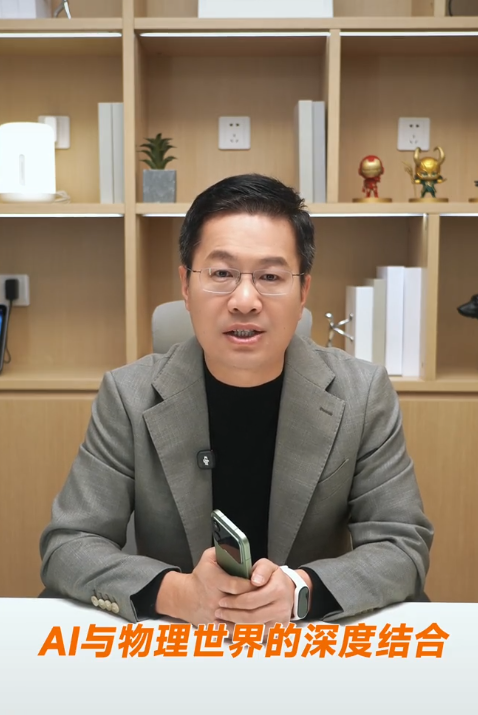
卢伟冰:在AI大模型和应用方面进展远超预期
Xin Lang Cai Jing· 2025-12-04 02:34
Core Viewpoint - Xiaomi is focusing on expanding its automotive business into the challenging European market and is making significant investments in AI technology, with expectations of exceeding previous progress benchmarks [3][7]. Group 1: Automotive Expansion - Xiaomi's first target for its automotive venture is the European market, recognized as the most difficult automotive market globally [3][6]. - The company aims to establish a foothold in Europe before entering other markets, indicating a strategic approach to market entry [3][6]. - Recent visits to Germany have provided valuable insights into the mature automotive industry, which Xiaomi intends to learn from [3][6]. Group 2: AI Strategy - Xiaomi has been making substantial investments in AI over the past few quarters, with advancements in AI models and applications exceeding expectations [7]. - The company believes that the deep integration of AI with the physical world represents the next generation of smart technology [7]. - Xiaomi is actively seeking talented individuals to join its team, emphasizing the importance of providing a supportive development platform for exceptional talent [4][7].
卢伟冰回应罗福莉加入小米
Xin Lang Cai Jing· 2025-12-04 02:34
Core Viewpoint - Xiaomi is focusing on expanding its automotive business into the challenging European market and is making significant investments in AI technology, with expectations of exceeding previous progress benchmarks [3][7]. Group 1: Automotive Expansion - Xiaomi's first target for its automotive expansion is the European market, recognized as the most difficult automotive market globally [3][6]. - The company aims to establish a foothold in Europe before entering other markets, indicating a strategic approach to market entry [3][6]. Group 2: AI Strategy - Xiaomi has been making substantial investments in AI over the past few quarters, with advancements in AI models and applications exceeding expectations [7]. - The company believes that the deep integration of AI with the physical world represents the next generation of smart technology [7]. - Xiaomi is actively seeking talented individuals to join its team, emphasizing the importance of providing a supportive development platform for exceptional talent [4][7].
再谈端侧:字节AI手机微信登录受阻,我们怎么看?
2025-12-04 02:21
Summary of Conference Call Notes Industry Overview - The AI mobile phone market is expected to show significant growth in the coming years, with notable attention on Apple's performance in the first half of 2026 and the releases from Google Open, OpenAI, and Apple Glasses in the second half of 2026 [2][10]. Key Points and Arguments AI Mobile Phone Market - ByteDance's collaboration with ZTE on AI mobile phones has shown good performance in user interface upgrades, but it faces limitations such as single-task flow and authorization issues that need to be addressed [1][5]. - The AI mobile phone market has exceeded expectations primarily due to previously low market expectations and a faster-than-anticipated release schedule [2]. Apple's AI Technology Development - Apple faces challenges in coordinating interests among mobile manufacturers, application developers, and model providers, which has slowed progress in API calls and data integration [3]. - Organizational restructuring at Apple may accelerate the implementation of AI technologies, with a significant upgrade to Siri expected in spring 2026, potentially shortening the user upgrade cycle [6][10]. - The rise in storage prices may impact consumer electronics sentiment but has limited effects on the supply chain, with high-end consumers more willing to accept additional costs due to computational power consumption [11][12]. Strategic Partnerships - Apple prioritizes ecosystem advantages when selecting AI partners, initially collaborating with ChatGPT and later with Gemini overseas, while shifting to Alibaba's Tongyi Qianwen in the domestic market [7][8]. - Alibaba's extensive ecosystem, including high-frequency applications like Taobao and Alipay, enhances user reliance on AI functionalities, making it a strategic choice for Apple [8]. ByteDance's Smart Phone Features - ByteDance's Doubao smartphone is an engineering prototype that allows for large model access in a screen-off scenario and can run background processes without affecting other applications [9]. - The Doubao smartphone offers a one-year free trial for all AI features, with potential future charges for AI functionality, indicating a market opportunity among high-end consumers who may accept additional fees [9]. Future Outlook - In 2026, companies like Apple are expected to benefit from their stability and long-term storage advantages, with investment opportunities arising from AI upgrades anticipated in March and April [6][10]. - Non-mobile hardware products, such as OpenAI's native AI hardware and Google's AR glasses, are expected to be significant in the second half of 2026, providing new growth points for the industry [10][13]. Additional Important Insights - The structural changes within Apple, including reporting adjustments for AI leadership, may enhance the speed of AI technology deployment [4]. - The market's response to AI glasses and other emerging hardware products will be crucial for investment strategies in the coming years, particularly in relation to OpenAI and Google's initiatives [13].


