电动汽车

Search documents
贝伦气候峰会中方提3点建议:把握正确方向、落实气候行动、深化开放合作
Huan Qiu Shi Bao· 2025-11-07 22:43
Core Viewpoint - The Belem Climate Summit in Brazil highlighted the importance of international cooperation in addressing climate change, with China advocating for the removal of tariffs on green products and emphasizing the need for collaboration in green technology and industry [1][2]. Group 1: Climate Action and International Cooperation - China proposed three key suggestions at the Belem Climate Summit: grasping the correct direction, implementing climate actions, and deepening open cooperation [1]. - The summit's core topic was the need to curb climate warming, coinciding with the 10th anniversary of the Paris Agreement and the submission of new national contributions [2]. - As of November 6, 72 countries, including China and Brazil, updated their national contributions, representing 62% of global carbon emissions, with a potential annual reduction of 3.2 billion tons of CO2 equivalent [2]. Group 2: China's Role in Global Climate Governance - China committed to reducing greenhouse gas emissions by 7%-10% from peak levels by 2035, with non-fossil energy consumption reaching over 30% of total energy consumption [3]. - The transition to clean energy in China is seen as crucial for saving the Paris Agreement, especially as Western countries exhibit a political shift away from climate measures [3]. - The renewable energy revolution originating from China is expected to significantly improve the lives of billions in developing countries through affordable and abundant clean energy [3]. Group 3: Technological Contributions and Market Influence - Chinese electric vehicles are playing a significant role in Brazil's energy transition, as they were used as official transportation during the Belem Summit [4]. - The choice of Chinese electric vehicles by Brazil indicates significant progress of Chinese green technology in the country [4]. - The lack of feasible technological means is a core reason for the slow decarbonization of economies, and China is increasingly providing clean energy capacity to the world [4].
特朗普按时履行中美会晤承诺,美国带头降低关税,释放合作信号
Sou Hu Cai Jing· 2025-11-07 16:13
Group 1 - The U.S. has made a significant concession by actively lowering tariffs on certain Chinese goods, indicating a shift in strategy amid rising domestic pressures such as inflation and the upcoming election year [3][4][28] - The reduction in tariffs is seen as a response to the negative impact of high tariffs on the U.S. economy, including increased costs for manufacturers and rising unemployment among the middle class [7][17] - The U.S. is using this tariff adjustment as a negotiation tool to seek concessions from China in various sectors, including rare earths and agricultural products [17][19] Group 2 - The products for which tariffs have been lowered are primarily intermediate materials that the U.S. heavily relies on, highlighting the interdependence between the two economies [21][34] - China's response to the tariff reduction has been measured, indicating confidence in its position and a willingness to engage in negotiations without feeling pressured [12][25] - The current situation reflects a broader trend of the U.S. attempting to recalibrate its approach to China, moving from a confrontational stance to one that seeks cooperation while still imposing limits [41][43] Group 3 - The ongoing trade dynamics suggest that the U.S. is recognizing the limitations of its previous strategies, as attempts to decouple from China have not yielded the desired results [30][32] - China's advancements in technology and manufacturing capabilities position it favorably in the global supply chain, making it difficult for the U.S. to isolate it economically [46][48] - The evolving relationship between the U.S. and China is likely to continue influencing global trade structures, with both countries seeking to assert their influence while navigating complex interdependencies [38][40]


道指开盘跌0.4%,标普500跌0.5%,纳指跌0.7%
Xin Lang Cai Jing· 2025-11-07 14:35
Group 1 - Lucid's stock fell by 2.6% due to Q3 performance falling short of expectations [1] - Block, a major player in mobile payments, saw a 12.5% drop in stock as Q3 revenue and earnings per share missed forecasts [1] - Opendoor's stock declined by 18.8% with quarterly sales dropping over 30% [1] Group 2 - Airbnb's stock increased by 4.9% after Q3 revenue exceeded expectations, and the company raised its Q4 revenue forecast [1] - Sandisk's stock rose by 2.5% as quarterly revenue and gross margin surpassed expectations, with a supply-demand imbalance expected to last until the end of 2026 [1]




特斯拉大消息!马斯克1万亿薪酬计划通过
Sou Hu Cai Jing· 2025-11-07 14:04
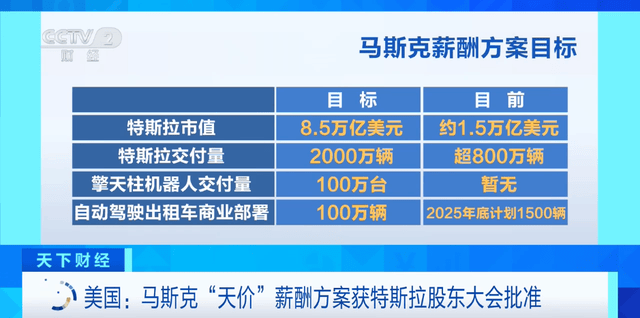
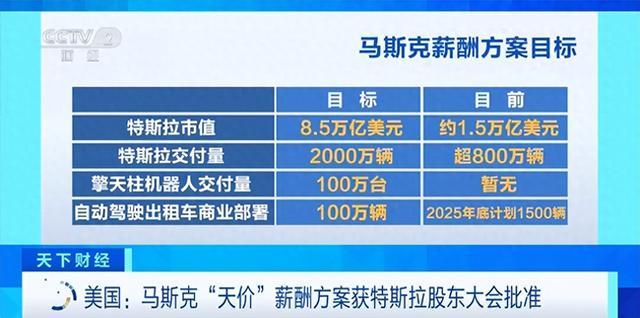
Core Points - Tesla's annual shareholder meeting approved CEO Elon Musk's controversial compensation plan, which could potentially yield nearly $1 trillion in stock options over the next decade if specific performance targets are met [1][2][4] - The plan requires Musk to achieve several ambitious goals, including increasing Tesla's market capitalization to $8.5 trillion, delivering 20 million vehicles, deploying 1 million autonomous taxis, and delivering 1 million Optimus humanoid robots [1][2] Summary by Categories Compensation Plan - 75% of voting shareholders approved Musk's compensation plan [1] - The plan was proposed by Tesla's board in September and has been a subject of controversy, with some major shareholders, including Norway's sovereign wealth fund, voting against it [2] Performance Targets - Market Capitalization Target: $8.5 trillion, up from approximately $1.5 trillion [2] - Vehicle Delivery Target: 20 million vehicles, compared to over 8 million currently delivered [2] - Autonomous Taxi Deployment: 1 million taxis, with a previous plan to deploy 1,500 by the end of 2025 [2] - Optimus Robot Delivery Target: 1 million units, with no prior deliveries reported [2] Market Reaction - Following the approval of the compensation plan, Tesla's stock price rose approximately 2% in after-hours trading on the day of the announcement [1]

特斯拉,大消息!通过
Xin Lang Cai Jing· 2025-11-07 14:04
Core Points - Tesla's annual shareholder meeting approved CEO Elon Musk's ambitious compensation plan, which could potentially yield nearly $1 trillion in stock options over the next decade if specific performance targets are met [1][2] - The approval came with 75% of voting shareholders in favor, despite some opposition from major shareholders like the Norwegian sovereign wealth fund [2][4] Summary by Category Compensation Plan - Musk's compensation plan requires achieving several milestones, including increasing Tesla's market value to $8.5 trillion from approximately $1.5 trillion, and delivering 20 million vehicles compared to over 8 million currently [2] - Additional targets include deploying 1 million autonomous taxis and delivering 1 million Optimus humanoid robots, with no prior deliveries of the latter [2] Market Reaction - Following the announcement of the approval, Tesla's stock price rose approximately 2% in after-hours trading on the same day [1] Musk's Position - Musk had previously threatened to leave Tesla if the compensation plan was rejected, indicating a potential shift of focus to his other ventures, including xAI, SpaceX, and Neuralink [4]
【环球财经】美媒:马斯克或成万亿富豪凸显美国贫富分化
Xin Hua She· 2025-11-07 13:30
Core Points - Elon Musk's $1 trillion compensation plan was approved by Tesla shareholders, potentially making him the world's first trillionaire [2] - The plan sets ambitious performance targets for Tesla over the next decade, with Musk eligible for nearly $1 trillion in stock if he meets all 12 goals [2] - The approval of Musk's compensation has sparked discussions about wealth inequality in the U.S., contrasting with the recent election of progressive mayoral candidate Zulfiqar Mamdani in New York City [2] Group 1 - The approval of Musk's compensation plan highlights a significant divide in American society regarding wealth distribution [2] - The plan is seen as a reflection of broader issues in the U.S. economy, where many feel burdened by basic living costs while a few accumulate vast wealth [2][3] - Comparatively, Musk's potential earnings far exceed those of other top executives in the tech industry, such as Satya Nadella and Tim Cook, who earned approximately $79 million and $75 million respectively last year [3] Group 2 - Nonprofit organizations have publicly opposed Musk's exorbitant compensation, viewing it as indicative of a troubling trend in CEO pay [3] - The discussions surrounding Musk's compensation and wealth accumulation are part of a larger national conversation about the challenges faced by the working class in urban areas like New York City [3]
资金动向 | 北水连续8日涌入小米,腾讯控股、阿里巴巴遭抛售
Xin Lang Cai Jing· 2025-11-07 12:38
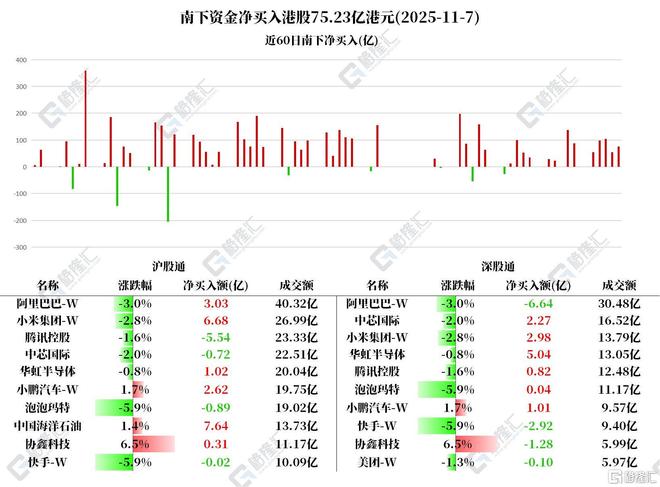
Group 1 - Southbound funds net bought Hong Kong stocks worth 75.23 billion HKD on November 7, with notable net purchases in Xiaomi Group-W (9.66 billion HKD), CNOOC (7.63 billion HKD), and Hua Hong Semiconductor (6.05 billion HKD) [1] - Xiaomi has seen continuous net buying for 8 days, totaling 51.9497 billion HKD [1] - Tencent Holdings and Alibaba-W experienced significant net selling, with amounts of 4.72 billion HKD and 3.61 billion HKD respectively [1] Group 2 - Xiaomi Group's president, Lu Weibing, recently tested the Xiaomi SU7 in Germany, covering nearly 800 kilometers and reaching a top speed of 260 km/h [3] - The company expects to achieve profitability in the second half of 2026 and plans to officially enter the European electric vehicle market in 2027 [4] - Hua Hong Semiconductor's third-quarter gross margin and fourth-quarter guidance exceeded expectations, benefiting from demand recovery and product mix upgrades [4] - Hua Hong Semiconductor's capacity growth and acquisition of Fab5 are progressing as planned, leading to an upward revision of profit forecasts for 2025 [4] - XPeng Motors launched its new generation range-extending technology, Kunpeng Super Range, and announced the pre-sale of the XPeng X9 Super Range model, with prices set at 350,000 and 370,000 CNY [4]




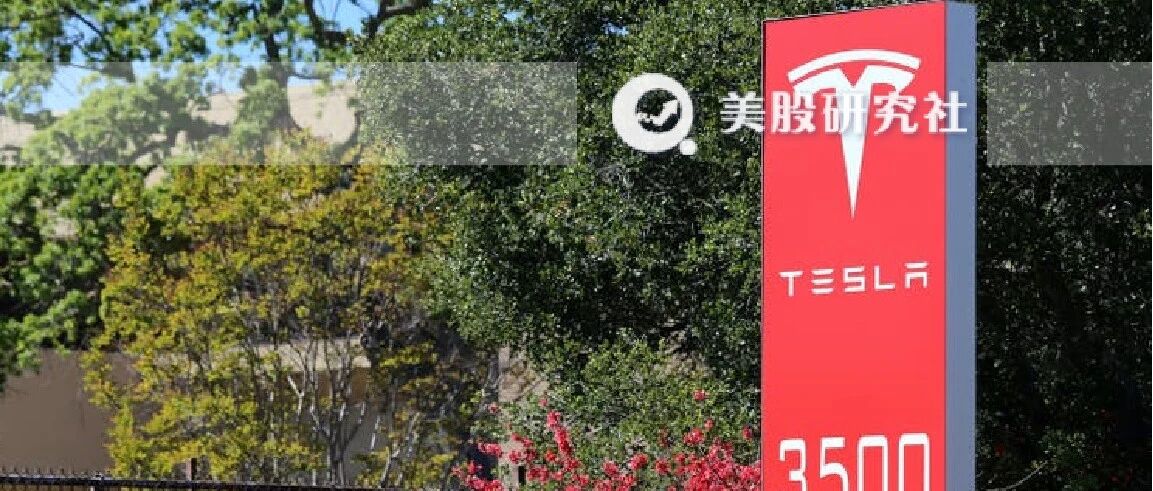
特斯拉:马斯克薪酬方案获股东通过,后续将如何发展?
美股研究社· 2025-11-07 11:30
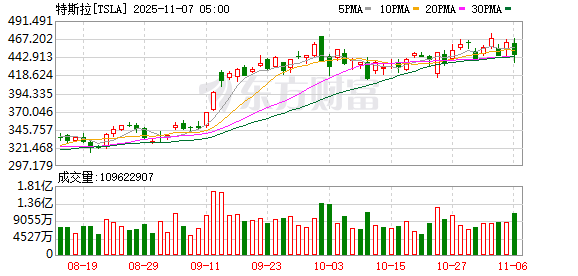
Core Viewpoint - The approval of Tesla's CEO compensation plan, valued at $1 trillion, alleviates significant uncertainty surrounding the company, despite potential equity dilution. This development is expected to restore investor confidence and drive stock price recovery as Elon Musk shifts focus to advancing Tesla's high-tech projects [1]. Compensation Plan Structure - The CEO's compensation is divided into 12 tranches, which must be achieved over the next ten years to unlock the rewards. Each tranche is tied to specific market capitalization and operational milestones [2]. - The market capitalization requirement is clear: Tesla must reach the specified market cap and maintain it for six months [3]. Operational Milestones - The operational milestones include various adjusted EBITDA targets, starting from $50 billion and going up to $400 billion, along with cumulative vehicle delivery and autonomous driving user targets [4][6]. - Specific milestones include: 1. Adjusted EBITDA of $50 billion 2. Adjusted EBITDA of $80 billion 3. Adjusted EBITDA of $130 billion 4. Adjusted EBITDA of $210 billion 5. Adjusted EBITDA of $300 billion 6. Adjusted EBITDA of $400 billion 7. Cumulative vehicle deliveries of 20 million 8. 10 million FSD subscription users 9. 1 million Robotaxi vehicles 10. 1 million humanoid robots delivered [4][6]. Feasibility of Milestones - Achieving the adjusted EBITDA milestones is challenging but feasible, as traditional automakers like Toyota have surpassed $50 billion in EBITDA. Tesla's unique advantages, including its energy and storage business, position it well for growth [9]. - The electric vehicle market is still in its early stages, and Tesla is well-placed to capture significant growth potential as consumer preferences shift towards electric vehicles [9]. Financial Performance and Projections - For the first nine months of 2025, Tesla reported a net profit of $2.9 billion, down from $4.9 billion in the same period in 2024. The adjusted EBITDA for this period was $10.8 billion, suggesting a need for an average annual growth rate of approximately 51.5% to reach $400 billion in eight years [10]. - Tesla is close to achieving the cumulative delivery milestone of 20 million vehicles, having delivered approximately 8 million vehicles by September 2025. This requires an average annual growth rate of about 9.1% in vehicle sales over the next decade [12]. Challenges and Opportunities - The target of 10 million FSD subscription users is ambitious, assuming that 50% of delivered vehicles will subscribe to the service. This high-margin service is crucial for supporting EBITDA growth [13]. - The Robotaxi fleet expansion to 1 million vehicles presents challenges, including regulatory hurdles and the need for a comprehensive operational network [15][16]. - The humanoid robot delivery target of 1 million units is seen as achievable if the robots can effectively replace blue-collar jobs in warehouses [18]. Conclusion - Analysts believe that as long as the electric vehicle market rebounds, Tesla's operational milestones are attainable. The company holds a competitive edge in the electric vehicle sector, and the ten-year timeline allows for flexibility in adjusting strategies as market conditions evolve [20].
喜娜AI速递:今日财经热点要闻回顾|2025年11月7日
Xin Lang Cai Jing· 2025-11-07 11:09
Group 1 - Tesla shareholders approved Elon Musk's $1 trillion compensation plan with over 75% support, which could lead to Musk becoming the world's first trillionaire if Tesla's market value reaches $8.5 trillion [2] - The U.S. stock market experienced significant declines, with the Nasdaq down 1.9%, S&P 500 down 1.12%, and Dow Jones down 0.84%, driven by concerns over the AI bubble and a surge in corporate layoffs [2] - The Chinese central bank is exploring mechanisms to provide liquidity to non-bank institutions, marking a shift in monetary policy from quantity adjustment to structural optimization [3] Group 2 - Pop Mart's stock price fell over 4% following a controversy over the pricing of blind boxes during a live stream, despite a significant year-on-year revenue increase in Q3 [3] - The electric grid equipment sector is gaining attention due to capital market interest, with a 44% increase in the China Electric Grid Equipment Index since July, driven by policy support and global energy transition [3] - Nvidia's cooling costs are rising sharply, with predictions of a 48% compound annual growth rate for China's liquid cooling server market from 2025 to 2029, as cooling becomes essential for high-power chips [3] Group 3 - The nuclear fusion industry is accelerating, with global financing reaching $9.766 billion by mid-2025, and major tech companies like Microsoft and Google entering the field [4] - XPeng Motors launched its first range-extended model, the X9, and plans to mass-produce a humanoid robot by the end of 2026, indicating a diversification strategy [4] Group 4 - Young consumers are purchasing vehicles from defunct companies like Neta and Jiayuan at discounted prices, but concerns about after-sales service and maintenance persist [5]
美媒感叹:欧美车企仍在艰难转型,中国电动汽车已领跑
Bei Jing Ri Bao Ke Hu Duan· 2025-11-07 10:32
Core Insights - Brazil has chosen Chinese electric vehicles as official cars for leaders at the COP30 climate summit, signaling a shift towards China in transportation and economic transformation [1][3] - Chinese electric vehicles are gaining a competitive edge due to advanced technology and lower prices compared to Western automakers, making them particularly attractive in developing countries with weaker purchasing power [4] Market Position - Chinese electric vehicles now account for approximately two-thirds of the global market share and over 80% of electric vehicles sold in Brazil, the sixth-largest automotive market [4] - The presence of electric vehicles in Brazilian streets has notably reduced exhaust emissions, indicating a shift towards cleaner transportation [4] Strategic Implications - The choice of Chinese vehicles by Brazil reflects a broader trend where countries are exploring alternatives to U.S. political and technological leadership in the automotive sector [4] - The rapid entry of China into the electric vehicle market is seen as a transformative force in the global automotive industry [4]