住宿

Search documents
1月制造业PMI回落至49.3%,超3成企业反映利润下降
Di Yi Cai Jing· 2026-01-31 03:39
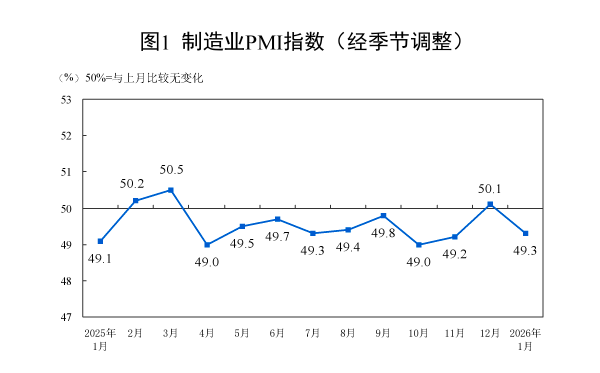
Core Viewpoint - The manufacturing sector in China is experiencing a decline in economic activity, as indicated by the drop in the Purchasing Managers' Index (PMI) below the growth threshold, reflecting insufficient market demand and the need for stronger economic recovery measures [1][4][6]. Manufacturing Sector - The manufacturing PMI for January is reported at 49.3%, a decrease of 0.8 percentage points from the previous month, indicating fluctuations in manufacturing operations [4]. - New orders index fell to 49.2%, down 1.6 percentage points, suggesting a tightening of market demand [4]. - The production index remains in the expansion zone at 50.6%, but has decreased by 1.1 percentage points, indicating a slowdown in manufacturing production growth [5]. - The prices of raw materials and finished products are rising, with the raw material purchase price index at 56.1% and the factory price index at 50.6%, marking the first time in nearly 20 months that the factory price index has risen above the critical point [5][6]. - Over 34% of manufacturing companies reported a decline in profits, highlighting concerns regarding profitability amid rising raw material costs [6]. Non-Manufacturing Sector - The non-manufacturing business activity index is at 49.4%, down 0.8 percentage points, with the construction sector experiencing a significant decline [9]. - The service sector remains relatively stable, with a slight decrease in the service business activity index to around 49.5% [10]. - The service industry shows optimistic expectations, with a business activity expectation index of 57.1%, indicating a positive outlook for the upcoming Spring Festival consumption [10].

统计局:1月官方制造业PMI为49.3% 比上月下降0.8个百分点
Guo Jia Tong Ji Ju· 2026-01-31 02:39
Group 1: Manufacturing PMI Overview - In January, the Manufacturing Purchasing Managers' Index (PMI) was 49.3%, a decrease of 0.8 percentage points from the previous month, indicating a decline in manufacturing activity [1][12] - Large enterprises had a PMI of 50.3%, down 0.5 percentage points, remaining above the critical point; small and medium-sized enterprises had PMIs of 48.7% and 47.4%, down 1.1 and 1.2 percentage points respectively, both below the critical point [1][15] - The production index was 50.6%, down 1.1 percentage points but still indicating expansion; the new orders index was 49.2%, down 1.6 percentage points, showing a slowdown in market demand [1][14] - The raw materials inventory index was 47.4%, down 0.4 percentage points, indicating a continued decrease in inventory levels; the employment index was 48.1%, down 0.1 percentage points, suggesting a slight decline in employment levels [1][14] Group 2: Non-Manufacturing PMI Overview - In January, the Non-Manufacturing Business Activity Index was 49.4%, a decrease of 0.8 percentage points from the previous month [2][12] - The construction industry Business Activity Index was 48.8%, down 4.0 percentage points, while the services industry Business Activity Index was 49.5%, down 0.2 percentage points [2][16] - The new orders index was 46.1%, down 1.2 percentage points, indicating a decline in market demand; the construction new orders index was 40.1%, down 7.3 percentage points [2][16] - The input prices index was 50.0%, indicating stability in input prices; the construction input prices index was 52.0%, up 1.2 percentage points, while the services input prices index was 49.7%, down 0.4 percentage points [2][3] Group 3: Price and Employment Trends - The sales price index was 48.8%, up 0.8 percentage points, indicating a narrowing decline in sales prices; the construction sales price index was 48.2%, up 0.8 percentage points, and the services sales price index was 48.9%, also up 0.8 percentage points [3] - The employment index for non-manufacturing was 46.1%, stable from the previous month, indicating stable employment conditions; the construction employment index was 41.1%, up 0.1 percentage points, while the services employment index was 47.0%, unchanged [3][16] - The business activity expectation index was 56.0%, down 0.5 percentage points but still indicating optimism among non-manufacturing enterprises; the construction expectation index was 49.8%, below the critical point, while the services expectation index was 57.1%, up 0.7 percentage points [3][16] Group 4: Comprehensive PMI Overview - The Comprehensive PMI Output Index was 49.8%, down 0.9 percentage points, indicating a slowdown in overall production and business activities compared to the previous month [4][12] - The manufacturing production index was 50.6%, while the non-manufacturing business activity index was 49.4%, contributing to the overall decline in the Comprehensive PMI [17]
国家统计局:1月份非制造业商务活动指数为49.4% 比上月下降0.8个百分点
Mei Ri Jing Ji Xin Wen· 2026-01-31 01:56
每经AI快讯,1月31日,国家统计局发布数据显示,1月份,非制造业商务活动指数为49.4%,比上月下 降0.8个百分点。分行业看,建筑业商务活动指数为48.8%,比上月下降4.0个百分点;服务业商务活动 指数为49.5%,比上月下降0.2个百分点。从服务业行业看,货币金融服务、资本市场服务、保险等行业 商务活动指数均高于65.0%;批发、住宿、房地产等行业商务活动指数均低于临界点。 ...
国家统计局:1月份制造业采购经理指数(PMI)为49.3%
Xin Lang Cai Jing· 2026-01-31 01:56
Group 1: Manufacturing PMI Overview - In January, the Manufacturing Purchasing Managers' Index (PMI) was 49.3%, a decrease of 0.8 percentage points from the previous month, indicating a decline in manufacturing activity [1] - Large enterprises had a PMI of 50.3%, down 0.5 percentage points, while medium and small enterprises had PMIs of 48.7% and 47.4%, down 1.1 and 1.2 percentage points respectively, both below the critical point [1] - The production index was 50.6%, down 1.1 percentage points but still above the critical point, indicating continued expansion in manufacturing production [1] - The new orders index was 49.2%, down 1.6 percentage points, suggesting a slowdown in market demand for manufacturing [1] - The raw materials inventory index was 47.4%, down 0.4 percentage points, indicating a continued decrease in major raw material inventories [1] Group 2: Non-Manufacturing PMI Overview - In January, the Non-Manufacturing Business Activity Index was 49.4%, a decrease of 0.8 percentage points from the previous month [2] - The construction industry business activity index was 48.8%, down 4.0 percentage points, while the service industry business activity index was 49.5%, down 0.2 percentage points [2] - The new orders index for non-manufacturing was 46.1%, down 1.2 percentage points, indicating a decline in market demand [2] - The input prices index was 50.0%, down 0.2 percentage points, indicating stable input prices for non-manufacturing activities [3] - The sales prices index was 48.8%, up 0.8 percentage points, indicating a narrowing decline in overall sales prices [3] Group 3: Employment and Expectations - The employment index for manufacturing was 48.1%, down 0.1 percentage points, indicating a slight decline in employment conditions [2] - The employment index for non-manufacturing was 46.1%, stable compared to the previous month, indicating stable employment conditions [3] - The business activity expectation index for non-manufacturing was 56.0%, down 0.5 percentage points but still in a high optimism range [3] Group 4: Composite PMI Overview - The Composite PMI Output Index was 49.8% in January, down 0.9 percentage points, indicating a general slowdown in production and business activities compared to the previous month [5]
国家统计局:1月份中国制造业采购经理指数为49.3%
Di Yi Cai Jing· 2026-01-31 01:45
Group 1: Manufacturing PMI - In January, the Manufacturing Purchasing Managers' Index (PMI) is at 49.3%, a decrease of 0.8 percentage points from the previous month, indicating a decline in manufacturing activity [3][6] - Large enterprises have a PMI of 50.3%, down 0.5 percentage points, remaining above the critical point; while medium and small enterprises have PMIs of 48.7% and 47.4%, down 1.1 and 1.2 percentage points respectively, both below the critical point [6] - The production index is at 50.6%, down 1.1 percentage points but still indicates expansion in manufacturing production [6] - The new orders index is at 49.2%, down 1.6 percentage points, suggesting a slowdown in market demand for manufacturing [6] - The raw materials inventory index is at 47.4%, down 0.4 percentage points, indicating a continued decrease in major raw material inventories [6] - The employment index is at 48.1%, down 0.1 percentage points, reflecting a slight decline in employment conditions in manufacturing [6][7] Group 2: Non-Manufacturing PMI - In January, the Non-Manufacturing Business Activity Index is at 49.4%, a decrease of 0.8 percentage points from the previous month [8] - The construction industry business activity index is at 48.8%, down 4.0 percentage points, while the service industry business activity index is at 49.5%, down 0.2 percentage points [8] - The new orders index for non-manufacturing is at 46.1%, down 1.2 percentage points, indicating a decline in market demand [8] - The input prices index is at 50.0%, down 0.2 percentage points, indicating stable input prices for non-manufacturing activities [8] - The sales prices index is at 48.8%, up 0.8 percentage points, indicating a narrowing decline in overall sales prices [9] - The employment index for non-manufacturing is at 46.1%, remaining stable, with the construction employment index at 41.1%, up 0.1 percentage points [10] Group 3: Composite PMI - The Composite PMI Output Index is at 49.8%, down 0.9 percentage points, indicating a general slowdown in production and business activities compared to the previous month [10]
国家统计局:2026年1月份非制造业PMI为49.4%,比上月下降0.8个百分点
Guo Jia Tong Ji Ju· 2026-01-31 01:39
1月份,非制造业商务活动指数为49.4%,比上月下降0.8个百分点。分行业看,建筑业商务活动指数为 48.8%,比上月下降4.0个百分点;服务业商务活动指数为49.5%,比上月下降0.2个百分点。从服务业行 业看,货币金融服务、资本市场服务、保险等行业商务活动指数均高于65.0%;批发、住宿、房地产等 行业商务活动指数均低于临界点。 资讯编辑:费斐 021-26093397 资讯监督:乐卫扬 021-26093827 资讯投诉:陈跃进 021-26093100 免责声明:Mysteel发布的原创及转载内容,仅供客户参考,不作为决策建议。原创内容版权归Mysteel所有,转载需取得Mysteel书面授 权,且Mysteel保留对任何侵权行为和有悖原创内容原意的引用行为进行追究的权利。转载内容来源于网络,目的在于传递更多信息,方 便学习与交流,并不代表Mysteel赞同其观点及对其真实性、完整性负责。 ...
2026年1月中国采购经理指数运行情况
Guo Jia Tong Ji Ju· 2026-01-31 01:32
国家统计局服务业调查中心 中国物流与采购联合会 一、中国制造业采购经理指数运行情况 1月份,制造业采购经理指数(PMI)为49.3%,比上月下降0.8个百分点,制造业景气水平有所回落。 从企业规模看,大型企业PMI为50.3%,比上月下降0.5个百分点,仍高于临界点;中、小型企业PMI分别为48.7%和47.4%,比上月下降1.1个和1.2个百分 点,低于临界点。 从分类指数看,在构成制造业PMI的5个分类指数中,生产指数和供应商配送时间指数均高于临界点,新订单指数、原材料库存指数和从业人员指数均低于 临界点。 生产指数为50.6%,比上月下降1.1个百分点,仍高于临界点,表明制造业生产活动保持扩张。 新订单指数为49.2%,比上月下降1.6个百分点,表明制造业市场需求有所放缓。 原材料库存指数为47.4%,比上月下降0.4个百分点,表明制造业主要原材料库存量继续减少。 从业人员指数为48.1%,比上月下降0.1个百分点,表明制造业企业用工景气度略有回落。 供应商配送时间指数为50.1%,比上月下降0.1个百分点,仍高于临界点,表明制造业原材料供应商交货时间持续加快。 表1 中国制造业PMI及构成指数(经季节 ...
十条举措,条条暖心!春节超长假期,南京送上“惠民稳岗留工”大礼包
Yang Zi Wan Bao Wang· 2026-01-30 12:28
Group 1: Core Initiatives - Nanjing City has implemented the "Ten Measures for Warm-hearted Benefits and Stable Employment during the 2026 Spring Festival," focusing on "consumer benefits, enterprise stability, and service upgrades" [28] - The measures include 10 specific actions aimed at enhancing consumer spending, supporting enterprises, and improving service efficiency [28][29] Group 2: Consumer Benefits - Over 400 promotional events will be organized, including an online New Year goods festival, with over 50 million yuan in various discount coupons [5][28] - A "Spring Festival Consumption Season" will feature diverse food promotions and a lottery for invoices over 100 yuan, with a maximum prize of 800 yuan [5][28] - Subsidies for consumers include up to 20,000 yuan for car scrapping and replacement, and up to 1,500 yuan for energy-efficient home appliances [9][28] Group 3: Support for Enterprises - Manufacturing enterprises with a quarterly output of over 200 million yuan will receive a reward of 0.1 yuan per kilowatt-hour for electricity used during the Spring Festival [18][29] - Support for foreign trade enterprises includes subsidies for participating in overseas trade exhibitions during the Spring Festival [21][29] - Continuous production incentives and targeted employment services will be provided to enterprises facing labor shortages [18][29] Group 4: Employment and Service Efficiency - Nanjing plans to hold over 60 "Talent Night Market" events and 400 recruitment activities, offering over 150,000 job positions [24][30] - The city will enhance transportation services during the Spring Festival, ensuring adequate supply for public transport and emergency services [27][30] - The implementation details of the measures will be accessible through platforms like "Ningqi Tong" and "My Nanjing" APP for streamlined service delivery [30]

50城试点有奖发票!财政部:抓紧拨付奖补资金激发居民消费
2 1 Shi Ji Jing Ji Bao Dao· 2026-01-30 10:18
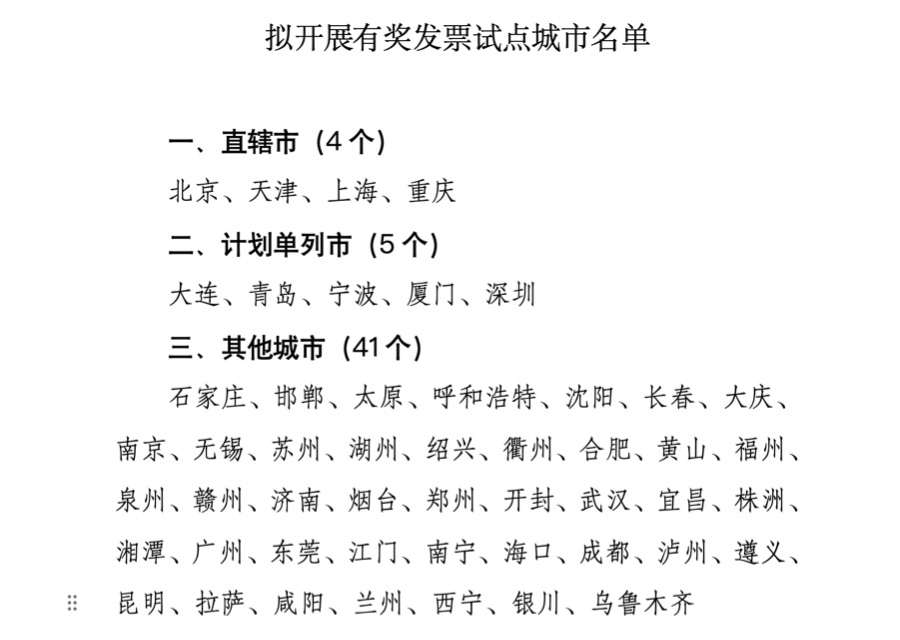
( 50 城开展有奖发票试点名单) 21世纪经济报道记者 周潇枭 北京报道 近日,商务部、财政部、税务总局联合对外公示了拟开展有奖发票试点的城市名单,包括 北京、天津、上海、重庆、大连、青岛、宁波、厦门、深圳、南京、合肥、广州、成都、海口等50个城市。 "下一步,财政部将会同相关部门抓好政策落实,加强资金监管,更好地营造消费氛围,提升消费意愿,加大优质供给。"吴盖 表示。 近日,北京市商务局明确,北京将推出有奖发票活动。春节假期,在零售、餐饮、住宿、旅游、文化艺术等5大行业参与活动商 户进行消费且单笔满100元并取得正规发票的市民,可通过微信、支付宝、云闪付、京东、抖音五大平台,便捷参与抽奖活动, 单张发票最高可中800元。 开展有奖发票试点,是按照党中央、国务院关于大力提振消费的决策部署,支持试点城市结合当地消费形势及工作基础,探索 开展有奖发票活动,进一步提高消费者积极性,激发零售、餐饮、住宿、文化艺术、娱乐、旅游、体育、居民服务业等领域消 费潜力,为巩固拓展经济稳中向好势头提供有力支撑。 三部门发文表示,支持50个左右城市开展试点工作,主要向人口基数大、带动作用强、发展潜力好的城市倾斜,同时兼顾地区 间 ...
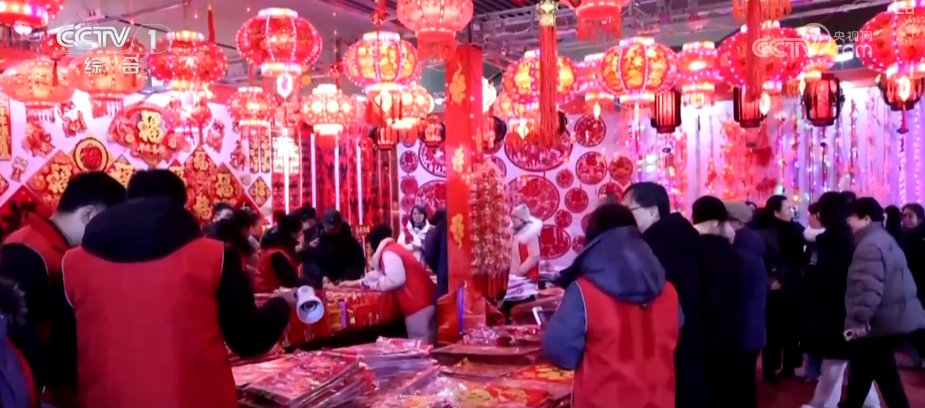
各地消费市场人气旺、活力足 “古韵国风”给火热“年经济”再添“一把火”
Yang Shi Wang· 2026-01-30 03:50
Group 1 - The traditional New Year market in Taiyuan, Shanxi, opened on January 28, featuring over 6,000 products across 20 categories, allowing consumers to purchase various New Year goods in one place [5] - Consumers can shop both on-site and through live streaming, enhancing convenience and expanding sales channels for exhibitors [5] - The market reflects a growing consumer enthusiasm as the New Year approaches, indicating a vibrant and active consumption environment [4] Group 2 - The market for New Year flowers is rapidly heating up, with local enterprises in Lianyungang, Jiangsu, incorporating horse elements and local characteristics into creative flower designs [10] - In Huangshan, Anhui, there is a surge in bookings for unique Huizhou-style homestays, with a nearly 40% year-on-year increase in reservations, and 95% of these bookings include cultural experience projects [15] - In Kaifeng, Henan, scenic spots are adorned with lanterns, creating immersive experiences that attract tourists, highlighting the popularity of traditional cultural displays [20]