电气机械器材

Search documents
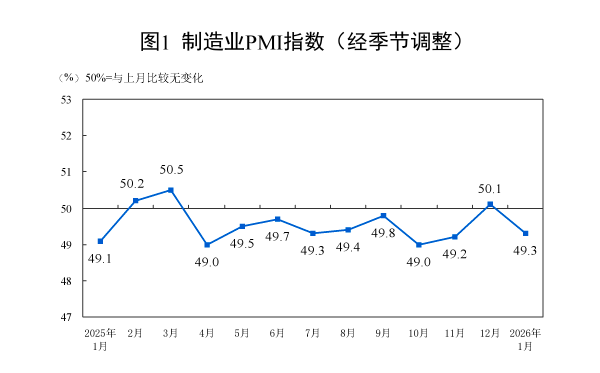
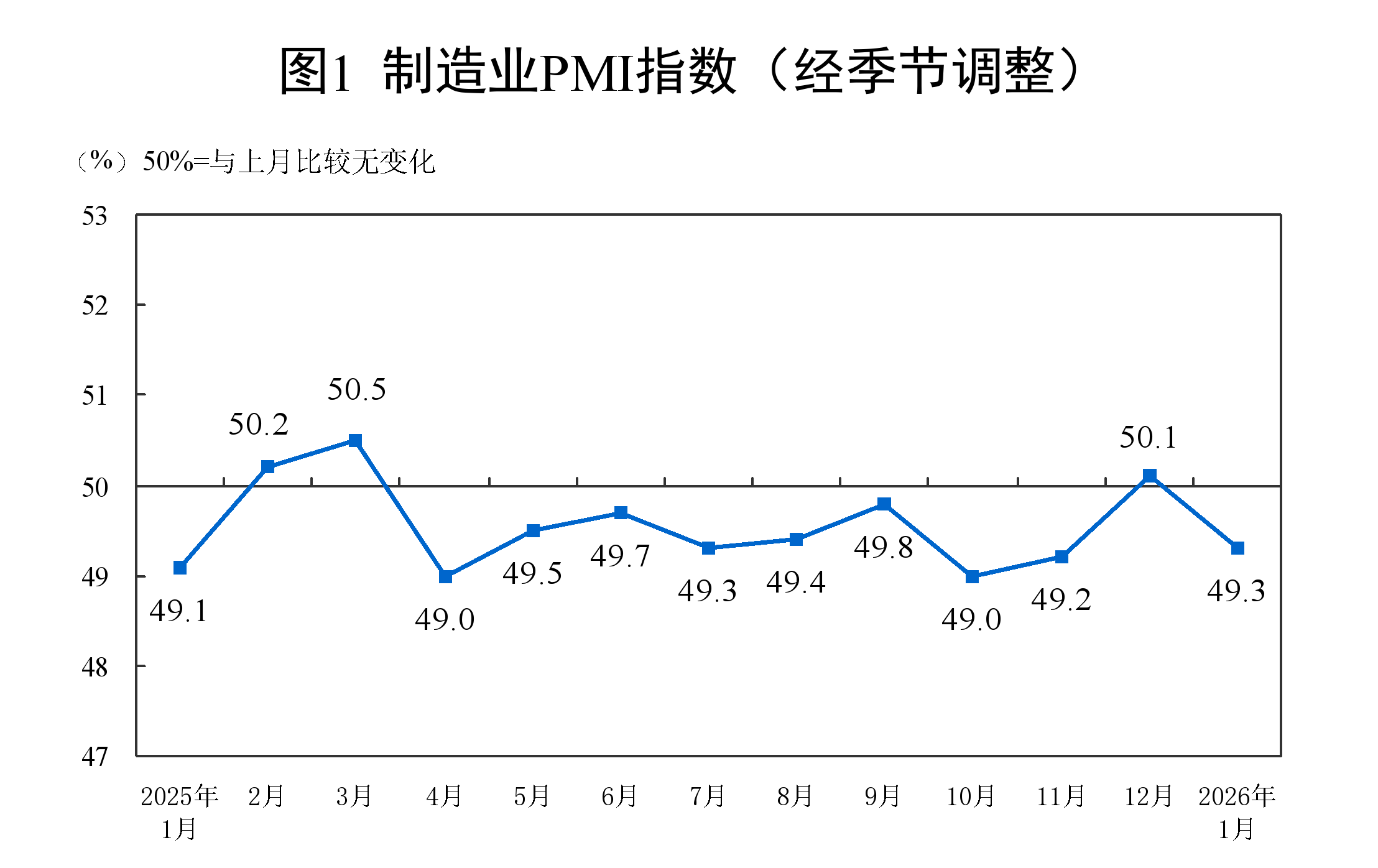
1月份制造业PMI为49.3%
Ren Min Ri Bao Hai Wai Ban· 2026-02-02 01:48
Group 1 - The manufacturing Purchasing Managers' Index (PMI) for January is 49.3%, a decrease of 0.8 percentage points from the previous month, indicating a decline in manufacturing activity due to seasonal factors and insufficient market demand [2] - The production index stands at 50.6%, indicating continued expansion in manufacturing production, while the new orders index is at 49.2%, reflecting a drop in market demand [2] - Certain industries such as agricultural processing and aerospace have production and new orders indices above 56.0%, indicating strong demand, while sectors like petroleum and automotive show indices below the critical point, suggesting a slowdown in market demand [2] Group 2 - The main raw materials purchasing price index and the factory price index are at 56.1% and 50.6%, respectively, both showing increases from the previous month, with the factory price index rising above the critical point for the first time in nearly 20 months [3] - Large enterprises maintain a PMI of 50.3%, indicating continued expansion, while medium and small enterprises show PMIs of 48.7% and 47.4%, reflecting a decline in their economic performance [3] - High-tech manufacturing leads with a PMI of 52.0%, remaining above 52.0% for two consecutive months, while consumer goods and high-energy industries show lower PMIs of 48.3% and 47.9%, indicating a decrease in their economic conditions [3] Group 3 - The production and business activity expectation index is at 52.6%, indicating optimism among enterprises, particularly in agricultural processing and food industries, which have indices above 56.0% [4] - The non-manufacturing business activity index for January is 49.4%, a decrease of 0.8 percentage points from the previous month, indicating a decline in overall non-manufacturing activity [4] - The service industry business activity index is at 49.5%, down 0.2 percentage points, with sectors like financial services showing high activity indices above 65.0%, while the real estate sector drops below 40.0%, indicating weak performance [4]

1月份中国采购经理指数有所回落
Guo Jia Tong Ji Ju· 2026-02-02 01:05
Group 1: Manufacturing Sector - The manufacturing Purchasing Managers' Index (PMI) decreased to 49.3% in January, indicating a decline in economic sentiment compared to the previous month [1][2] - The production index remained above the critical point at 50.6%, suggesting continued expansion in manufacturing production, while the new orders index fell to 49.2%, indicating a drop in market demand [2] - Large enterprises maintained a PMI of 50.3%, indicating ongoing expansion, while small and medium-sized enterprises saw declines in their PMIs to 48.7% and 47.4%, respectively [3] - High-tech manufacturing continued to lead with a PMI of 52.0%, reflecting a positive development trend in this sector [3] - The price indices for major raw materials and factory prices rose to 56.1% and 50.6%, respectively, indicating an overall improvement in market price levels [2] Group 2: Non-Manufacturing Sector - The non-manufacturing business activity index fell to 49.4%, reflecting a decrease in overall economic sentiment in this sector [1][4] - The service industry business activity index was at 49.5%, with significant activity in financial services, while the real estate sector's index dropped below 40.0%, indicating weak sentiment [4] - The construction industry experienced a notable decline, with its business activity index at 48.8%, influenced by adverse weather and the upcoming holiday [4] - Despite the decline in current activity, the service industry business activity expectation index rose to 57.1%, indicating increased confidence among service sector enterprises [4] Group 3: Composite PMI - The composite PMI output index was recorded at 49.8%, showing a slight decrease from the previous month, indicating a general slowdown in production and business activities [1][5] - The manufacturing production index and non-manufacturing business activity index were 50.6% and 49.4%, respectively, contributing to the overall composite PMI output index [5]
价格继续抑制需求
CAITONG SECURITIES· 2026-02-01 06:45
Group 1: Economic Indicators - The manufacturing Purchasing Managers' Index (PMI) for January is 49.3%, down 0.8 percentage points from the previous month, indicating a return below the growth threshold[3][7]. - The new export orders index and new orders index for January are 47.8% and 49.2%, respectively, down 1.2 and 1.6 percentage points from last month, both remaining below the growth threshold[5][13]. - The production expansion speed has slowed, with the manufacturing PMI at 50.6%, down 1.1 percentage points from the previous month, still above the growth threshold[16]. Group 2: Inventory and Pricing Dynamics - The finished goods inventory index for January is 48.6%, up 0.4 percentage points from last month, slightly above seasonal levels; the raw materials inventory index is 47.4%, down 0.4 percentage points, below seasonal levels[17][21]. - The price scissors difference between raw material purchase prices and factory prices is 5.5%, up 1.3 percentage points from last month, indicating further compression of profit margins for enterprises[20][23]. - The main raw material purchase price index is 56.1%, up 3.0 percentage points from last month, reflecting significant price increases in the commodity market[20]. Group 3: Demand Weakness and Risks - External demand is weakening due to changes in trade policies and a decline in the U.S. consumer confidence index, which fell from 94.2% to 84.5%, the lowest since May 2014[15]. - Internal demand is also showing signs of weakness, with the difference between new orders and new export orders dropping from 1.8% in December 2025 to 1.4% in January 2026[15]. - Risks include potential underperformance of domestic policy measures, unexpected changes in international geopolitical situations, and measurement errors in PMI indicators related to anti-involution industries[40].
1月制造业PMI49.3%,制造业市场价格总体改善
2 1 Shi Ji Jing Ji Bao Dao· 2026-02-01 02:29
Core Viewpoint - The manufacturing Purchasing Managers' Index (PMI) in China for January is reported at 49.3%, indicating a decline of 0.8 percentage points from the previous month, reflecting a downturn in manufacturing activity [1][5][8]. Manufacturing PMI Analysis - The decline in manufacturing PMI is attributed to seasonal factors as some industries enter a traditional off-peak period, coupled with insufficient market demand [1][8]. - The production index stands at 50.6%, indicating continued expansion in manufacturing production, while the new orders index is at 49.2%, showing a decrease in market demand [6][8]. - High-tech manufacturing PMI remains strong at 52.0%, indicating sustained positive development in related industries [1][8]. Price Index Improvement - The overall price level in the manufacturing sector has improved, with the main raw materials purchasing price index at 56.1% and the factory price index at 50.6%, both showing increases from the previous month [2][14]. - The factory price index has risen above the critical point for the first time in nearly 20 months, suggesting a general improvement in manufacturing market prices [2][14]. Employment and Inventory Trends - The employment index is reported at 48.1%, indicating a slight decline in hiring conditions within the manufacturing sector [12]. - The raw materials inventory index is at 47.4%, reflecting a continued decrease in major raw material stocks, while finished goods inventory has increased, suggesting accelerated production activities ahead of the Spring Festival [13][12]. Future Expectations - The production and business activity expectation index is at 52.6%, remaining above the critical point, although it marks the lowest level since the second half of 2025 [15]. - There is a noted concern regarding the decline in new export orders, which fell to 47.8%, indicating a contraction in external demand and potential challenges for future manufacturing activity [7][15].
2026年1月PMI点评:节前景气回落,结构分化加剧
Orient Securities· 2026-01-31 23:30
Economic Indicators - The Manufacturing PMI for January 2026 is at 49.3%, falling below the expansion threshold of 50.1%[7] - The Production and New Orders PMI are recorded at 50.6% and 49.2% respectively, both showing significant declines from previous levels[7] Sector Performance - High-tech manufacturing PMI stands at 52%, slightly down from 52.5%, but remains near the second-highest level since the implementation of equal tariff policies in April 2025[7] - The construction sector's activity has slowed significantly, with the PMI dropping below 40% due to adverse weather and the upcoming holiday[7] Demand Dynamics - New Orders PMI has seen a year-on-year decline, marking the second-lowest drop for this period, indicating insufficient domestic demand[7] - New Export Orders PMI decreased by 1.2 percentage points to 47.8%, influenced by prior export surges and trade policy adjustments from key partners[7] Price Trends - Major raw material purchase price index and factory price index have risen to 56.1% and 50.6% respectively, indicating a return to expansion after 20 months[7] - Prices in the non-ferrous metal sector are driving overall price increases, while sectors with weak internal demand, like wood processing, show price contraction[7] Future Outlook - The report suggests that geopolitical changes and investment demand in technology will continue to drive global capital expenditure and commodity prices, particularly in non-energy commodities[7] - The ongoing contradiction of strong supply versus weak demand in the domestic market remains a critical issue, with the ability of upstream prices to transmit to downstream still uncertain[7]
1月份我国制造业生产保持扩张
Xin Lang Cai Jing· 2026-01-31 20:32
Group 1 - The manufacturing Purchasing Managers' Index (PMI) for January is reported at 49.3%, indicating a slight contraction in the manufacturing sector [1] - The non-manufacturing business activity index stands at 49.4%, while the comprehensive PMI output index is at 49.8%, suggesting overall economic activity is below the expansion threshold [1] - The production index is at 50.6%, indicating that manufacturing production is still expanding [1] Group 2 - The price indices for major raw materials and factory output have risen, with the purchasing price index at 56.1% and the factory price index at 50.6%, marking a significant increase from the previous month [1] - The factory price index has risen above the critical point for the first time in nearly 20 months, indicating an overall improvement in market prices within the manufacturing sector [1] - High-tech manufacturing continues to lead with a PMI of 52.0%, remaining above 52.0% for two consecutive months, reflecting a positive development trend in related industries [2] Group 3 - Large enterprises maintain a PMI of 50.3%, indicating continued expansion, while small and medium-sized enterprises show a decline in their PMIs to 48.7% and 47.4%, respectively [2] - The production and business activity expectation index is at 52.6%, indicating optimistic expectations among enterprises [2] - Industries such as agricultural product processing and food and beverage sectors have maintained high expectation indices above 56.0%, reflecting strong confidence in recent industry developments [2]
2026 年 1 月 PMI 数据点评:PMI 淡季回落,价格回升
GUOTAI HAITONG SECURITIES· 2026-01-31 13:34
Group 1: Manufacturing PMI Insights - In January 2026, the manufacturing PMI was 49.3%, a decrease of 0.8 percentage points from the previous month[9] - The production index was 50.6%, down 1.1 percentage points, indicating cautious expansion due to demand decline[16] - New orders and new export orders indices were 49.2% and 47.8%, respectively, both declining by 1.6 and 1.2 percentage points[16] Group 2: Price and Inventory Trends - The main raw materials purchase price index rose to 56.1%, an increase of 3.0 percentage points, while the factory price index reached 50.6%, marking the first time in 20 months above the critical point[19] - Raw material inventory and finished goods inventory indices were 47.4% and 48.6%, respectively, indicating a decrease in raw material stock[21] Group 3: Non-Manufacturing Sector Performance - The service sector's business activity index was stable at 49.5%, with significant divergence among industries[22] - The construction sector's business activity index fell to 48.8%, down 4.0 percentage points, reflecting seasonal slowdowns[24] Group 4: Economic Outlook and Risks - The macroeconomic policy is expected to be more proactive, with a focus on boosting overall demand and ensuring spending increases[27] - A risk remains in the real estate sector, where demand needs to be stimulated[28]
1月制造业PMI回落至49.3%,超3成企业反映利润下降
第一财经· 2026-01-31 10:46
Core Viewpoint - The manufacturing PMI in January fell below the growth line, indicating a decline in economic activity and a need for stronger foundational support for economic recovery [3][5]. Manufacturing Sector - The manufacturing PMI for January is reported at 49.3%, a decrease of 0.8 percentage points from the previous month, indicating fluctuations in manufacturing operations [5]. - The new orders index dropped to 49.2%, down 1.6 percentage points, reflecting a tightening of market demand [5]. - Seasonal factors and changes in the export environment are contributing to the slowdown in market demand, with the new export orders index at 47.8%, a decline of 1.2 percentage points [5][7]. - The production index remains in the expansion zone at 50.6%, despite a decrease of 1.1 percentage points, suggesting continued overall expansion in manufacturing [7]. - The prices of major raw materials and factory output have increased, with the purchasing price index at 56.1% and the factory price index at 50.6%, indicating an improvement in overall price levels in the manufacturing market [7]. Non-Manufacturing Sector - The non-manufacturing business activity index is at 49.4%, down 0.8 percentage points, primarily due to a decline in the construction sector [10]. - The service sector remains relatively stable, with the business activity index slightly decreasing by 0.2 percentage points, maintaining around 49.5% [10][11]. - The service industry anticipates a boost from the upcoming Spring Festival, with a business activity expectation index of 57.1%, indicating optimism for consumer-related services [10][11]. Economic Outlook - The overall economic climate is expected to be influenced by changes in export growth, the domestic real estate market, and the timing and intensity of growth-stimulating policies [8]. - There is potential for monetary policy easing in the second quarter, with fiscal policies aimed at boosting consumption and investment expected to gain momentum [8].
1月份制造业采购经理指数有所回落
Xin Hua Cai Jing· 2026-01-31 06:59
Group 1: Manufacturing Sector - The manufacturing Purchasing Managers' Index (PMI) for January is 49.3%, indicating a decline from the previous month [1][2] - The production index remains above the critical point at 50.6%, showing continued expansion in manufacturing production [2] - New orders index is at 49.2%, reflecting a decrease in market demand [2] - Certain industries, such as agricultural processing and aerospace, show strong production and new orders indices above 56.0%, while sectors like automotive and fuel processing are below the critical point [2] - Price indices for raw materials and factory output have risen, with the raw material purchase price index at 56.1% and the factory price index at 50.6%, marking an improvement in overall market prices [2] Group 2: Large vs. Small Enterprises - Large enterprises have a PMI of 50.3%, indicating continued expansion, while medium and small enterprises have PMIs of 48.7% and 47.4%, respectively, showing a decline [3] - High-tech manufacturing leads with a PMI of 52.0%, indicating a positive development trend [3] - Consumer goods and high-energy industries show lower PMIs of 48.3% and 47.9%, respectively, indicating a downturn in these sectors [3] Group 3: Non-Manufacturing Sector - The non-manufacturing business activity index is at 49.4%, reflecting a decrease from the previous month [4] - The service sector's business activity index is at 49.5%, with financial services showing high activity levels above 65.0%, while the real estate sector is below 40.0% [4] - The construction sector's business activity index has dropped to 48.8%, indicating a significant decline in activity due to seasonal factors [4] Group 4: Composite PMI - The composite PMI output index is at 49.8%, indicating a slowdown in overall business activities compared to the previous month [5] - The manufacturing production index is at 50.6%, while the non-manufacturing business activity index is at 49.4%, contributing to the composite index's decline [5]
1月制造业PMI回落至49.3% 超3成企业反映利润下降
Di Yi Cai Jing· 2026-01-31 03:43
Group 1: Manufacturing Sector Overview - In January, the manufacturing PMI fell to 49.3%, a decrease of 0.8 percentage points from the previous month, indicating fluctuations in manufacturing operations [4][5] - The new orders index for January was 49.2%, down 1.6 percentage points, reflecting a tightening of market demand due to seasonal factors and changes in export environments [4][5] - The production index remained in the expansion zone at 50.6%, despite a decline of 1.1 percentage points, suggesting continued overall expansion in manufacturing production [5] Group 2: Price Levels and Economic Conditions - The purchasing price index for raw materials rose to 56.1%, and the factory price index increased to 50.6%, marking the first time in nearly 20 months that the factory price index exceeded the critical point [5] - The proportion of manufacturing enterprises reporting insufficient market demand decreased to 54.9%, down 9.4 percentage points, indicating a stabilization in market demand [5] - Analysts suggest that the overall economic climate is affected by seasonal fluctuations, high previous month bases, and ongoing adjustments in the real estate market [6] Group 3: Non-Manufacturing Sector Insights - The non-manufacturing business activity index for January was 49.4%, a decline of 0.8 percentage points, primarily due to a decrease in the construction sector [9] - The service sector showed relative stability, with the service business activity index slightly declining by 0.2 percentage points, remaining around 49.5% [10] - The business activity expectation index for the service sector rose to 57.1%, indicating an optimistic outlook, particularly for consumption-related services during the upcoming Spring Festival [10]