具身智能

Search documents
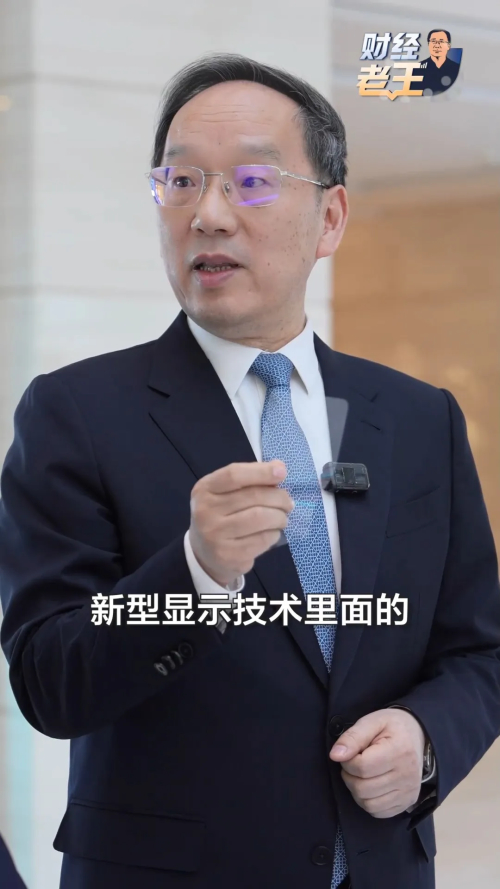
央视“财经老王”专访工信部部长李乐成
Yang Shi Xin Wen· 2026-01-13 01:31
Group 1 - The core viewpoint emphasizes the importance of technological innovation and industrial integration in driving China's economic growth, with a strong focus on artificial intelligence and its applications [1][11][13] - The Ministry of Industry and Information Technology (MIIT) plans to enhance the quality of technological supply and elevate the role of enterprises in innovation, aiming for a transformation of technological achievements [7][9] - Key sectors identified for growth include integrated circuits, new materials, aerospace, biomanufacturing, embodied intelligence, and 6G technology [7][9] Group 2 - The MIIT is implementing a new round of central financial support policies for specialized and innovative small and medium-sized enterprises (SMEs) to boost R&D investment and enhance their vitality [11] - The ministry aims to create a national pilot service network for manufacturing to bridge the gap between laboratories and production lines, promoting seamless integration of innovation and industry [9] - The focus on artificial intelligence is highlighted as a competitive edge for China, with expectations for significant advancements and surprises in the future [11][13]

全民数据采集,穹彻智能推出RoboPocket机采系统
Xin Lang Cai Jing· 2026-01-12 11:46
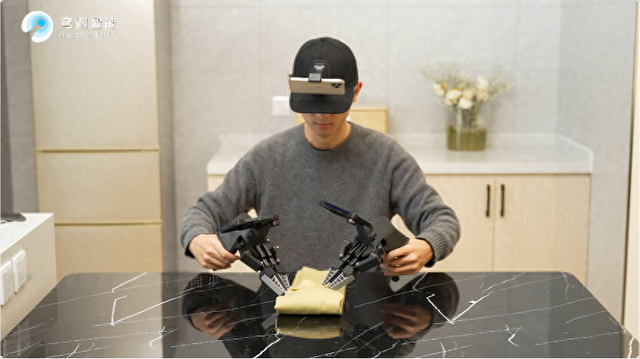
穹彻智能成立于2023年11月,由非夕科技集团战略孵化,联合创始人卢策吾在斯坦福人工智能实验室的 博士后期间,师从李飞飞和美国工程院院士 Leo Guibas,目前已获得5轮投资,阿里、红衫等均参投。 (智通财经记者 秦盛) 1月12日,智通财经记者获悉,具身智能企业穹彻智能正式推出口袋机采(RoboPocket)。 据介绍,通过智能手机和 App,用户可以直接成为数据采集的参与者,完成任务并上传数据。 Robopocket能即时诊断每一帧数据的质量、智能指导采集员调整动作,还能通过实时互动动态评估数据 价值,避免无效数据进入后处理环节,并为后处理提供筛选依据。同时,RoboPocket 还支持第一人称 视角,通过多机快速对齐实现同一空间坐标。 数据质量直接影响着的训练效果,具身智能业都在布局数据采集,穹彻智能此前在2023年便发布了 RH20T大规模具身智能数据集,2025年发布CoMiner伴随式数据采集系统。 ...
首席经济学家看开年新局 政策稳、产业兴、资本活 中国资产迈入系统性重估周期
Shang Hai Zheng Quan Bao· 2026-01-11 18:51
Core Viewpoint - The 2026 China Chief Economist Forum highlighted a significant shift in the perception of Chinese assets, moving from "overseas optional" to "globally unavoidable," driven by policy certainty, industrial innovation, and unprecedented support from capital markets [2] Policy Determination - The high degree of policy certainty is seen as a core support for Chinese assets, with foreign investors shifting their views from "China is not investable" to "Chinese assets are unavoidable" as they recognize the successful achievement of strategic goals set in the 14th Five-Year Plan [2] - The "15th Five-Year Plan" is characterized by clearer future directions and specific deployments across traditional and emerging industries, indicating a strong internal momentum for the modern industrial system [3] Capital Market Development - The development of capital markets is crucial, with unprecedented policy support for the stock market and a favorable liquidity environment expected to lead to a stable and healthy market operation in 2026 and beyond [4] Industrial Innovation - A robust traditional manufacturing sector is essential for nurturing emerging industries, with the ability to transform technology potential into commercial value being a key advantage for China [5] - The AI sector exemplifies this, where a complete industrial ecosystem is necessary to create a positive economic cycle from substantial initial capital investments [5] Investment Opportunities - Investment focus areas include development, people, and security, emphasizing the need for new productive forces and the importance of investing in human capital and safety across various sectors [7] - Specific investment opportunities identified include mergers and acquisitions, overseas expansion of Chinese companies, technology innovation, and real estate investment trusts (REITs) [7] Market Focus - The stock market remains a focal point, with a core strategy centered around technology sectors, which are expected to continue their structural trends in the first half of the year [8]

未来产业周报第5期:核聚变技术资本共振,脑机与量子进阶突破,氢能普及提速-20260111
Shenwan Hongyuan Securities· 2026-01-11 14:42
Quantum Technology - The report highlights the clear positioning of the NISQ (Noisy Intermediate-Scale Quantum) era, indicating that current quantum devices are operational but limited in capability, lacking fault tolerance and scalability. Experts estimate that small-scale fault-tolerant quantum computers will take about ten years to develop [8][9] - The collaboration between Argonne National Laboratory and Intel has successfully deployed a 12-qubit silicon-based quantum processor, demonstrating the value of mature silicon technology in scaling quantum computing [10] - D-Wave has showcased a scalable on-chip low-temperature control gate model quantum bit, significantly reducing wiring costs and addressing a major bottleneck in the industry [12][14] Biomanufacturing - Micro Yuan Synthesis has secured nearly 300 million yuan in financing to accelerate the development of methanol biomanufacturing, which addresses the reliance on food-based raw materials in traditional biomanufacturing [15][16] - The first gene-consistent human "lung chip" has been developed, providing a new tool for personalized treatment of respiratory diseases and potentially revolutionizing drug development by reducing reliance on animal models [18] Hydrogen Energy and Nuclear Fusion - Policies in Shanghai and other regions are reducing the operational costs of hydrogen vehicles through subsidies and free highway access, which is expected to significantly boost the adoption of hydrogen fuel cell vehicles [19][20] - The report notes that hydrogen energy is transitioning from being a major electricity consumer to a "regulator" of the grid, enhancing the consumption of renewable energy and long-term storage capabilities [25][28] - The Energy Singularity's "Honghuang 70" nuclear fusion device has achieved a 120-second steady-state operation, marking a significant milestone in commercial nuclear fusion technology [31] - Dongsheng Fusion has completed a multi-hundred million yuan angel round of financing to develop a "deuterium-helium-3" fusion route, which is considered safer and more cost-effective than traditional methods [32][33] Brain-Computer Interface - Strong Brain Technology has raised 2 billion yuan to scale brain-computer interface technology, aiming to help one million disabled individuals regain social functionality within five to ten years [38][39] - Sichuan Province has set maximum prices for brain-computer interface medical services, which will take effect in April 2026, facilitating the clinical application of this technology [40][41] - The first brain-computer interface deep brain stimulator surgery in Southwest China has been successfully performed, providing new treatment options for Parkinson's disease [42][43] Embodied Intelligence - NVIDIA has released several physical AI models and frameworks that support robots in understanding physical laws, enhancing the industrialization of robots across various scenarios [5][13] - Chinese companies represent nearly 25% of robot exhibitors at CES 2026, with humanoid robots making up over 50% of the exhibition area, showcasing the competitive edge of Chinese firms in this sector [5][13] Sixth Generation Mobile Communication (6G) - Nanjing has launched a special plan to build a 6G industrial ecosystem, aiming for full coverage of 6G non-cellular networks by 2027 and the establishment of over 50 vertical industry scenarios [5][14]
上海先进制造业转型文件出炉,引导企业投资五大新增长点
Di Yi Cai Jing· 2026-01-11 12:12
Core Insights - Shanghai aims to accelerate the transformation and upgrading of its advanced manufacturing industry over the next three years, targeting the establishment of 100 new manufacturing enterprises with an annual output value exceeding 1 billion yuan by 2028 [2] - The plan emphasizes the development of emerging sectors such as low-altitude economy, commercial aerospace, embodied intelligence, biomanufacturing, and smart terminals, positioning them as new growth points for the industry [2][3] Group 1: Advanced Manufacturing Transformation - The action plan outlines structural optimization and upgrading actions, including enhancing traditional industries and promoting the growth of key and emerging sectors [2] - Shanghai has established five national-level industrial clusters and four trillion-yuan industrial clusters, focusing on integrated circuits, biomedicine, new energy vehicles, large aircraft, and marine engineering equipment [2][3] Group 2: New Growth Areas - The plan identifies five new growth areas: low-altitude economy, commercial aerospace, embodied intelligence, biomanufacturing, and smart terminals, with a goal for these sectors to reach a scale of 1 trillion yuan by the end of the 14th Five-Year Plan [3] - Specific targets include achieving a scale of 100 billion yuan in the low-altitude economy and 500 billion yuan in embodied intelligence by 2027, with projections of 1 trillion yuan by 2030 for the latter [3][4] Group 3: Financial Support and Innovation - The plan includes financial incentives for companies increasing their R&D investments, with subsidies ranging from 200,000 to 1 million yuan based on the level of investment [5] - It also promotes the "AI + manufacturing" initiative, aiming for full coverage of intelligent applications in large enterprises by 2027 and increasing robot density to 600 units per 10,000 people by 2028 [5][6] Group 4: Industrial Ecosystem and Talent Development - The Shanghai Industrial Internet Association emphasizes the need for collaboration among government, industry, academia, and research to tackle challenges in the "AI + manufacturing" sector [6] - The initiative aims to build a comprehensive standard system for "AI + manufacturing" and enhance the cultivation of industrial intelligent talent [6]
自动驾驶巨头,63亿购买具身入场券
具身智能之心· 2026-01-10 03:22
Core Viewpoint - Mobileye, a leading global supplier of autonomous driving solutions, is entering the field of embodied intelligence by acquiring a humanoid robotics company, Mentee Robotics, for $6.3 billion [4]. Group 1: Industry Developments - The acquisition by Mobileye signifies a significant investment in humanoid robotics, highlighting the growing intersection between autonomous driving and embodied intelligence [4]. - NVIDIA has been advancing the development of embodied intelligence-related models and infrastructure, including the GR00T series models and embodied simulation frameworks [7]. - Tesla has been focusing on the development of its Optimus humanoid robot, indicating that a substantial portion of its future profits will come from this robotics business [8]. Group 2: Market Trends - Companies like Waymo are actively developing embodied intelligence technologies, and there are reports of Xiaopeng Robotics planning to achieve mass production this year [9]. - Major automotive manufacturers in China, such as Geely, BYD, SAIC, and GAC, are increasingly establishing or investing in various humanoid robotics companies [9]. - The technological similarities in perception, localization, and planning between autonomous driving and embodied intelligence suggest that cross-industry integration will become more frequent [10].


广州加快建设先进制造业强市 力争十年工业增加值翻一番 到2035年建成万亿级“智车之城”
Nan Fang Ri Bao Wang Luo Ban· 2026-01-09 07:44
Group 1 - The core viewpoint of the news is the release of the "Guangzhou Plan for Accelerating the Construction of a Strong Advanced Manufacturing City (2024-2035)", which aims to double the industrial added value by 2035 and establish Guangzhou as a globally competitive advanced manufacturing hub [1][2] - By 2030, Guangzhou plans to build several world-class advanced manufacturing clusters and achieve significant breakthroughs in key core technologies, positioning itself at the high end of the global value chain [1][2] - The plan outlines four strategic positions for Guangzhou's advanced manufacturing development: a world-class advanced manufacturing base, a global manufacturing innovation center, a benchmark city for digital-physical integration, and a model city for new-type industrialization [1][2] Group 2 - The plan specifies development directions for emerging pillar industries, including the intelligent connected new energy vehicle sector, which aims to reach a trillion-level scale by 2035, establishing Guangzhou as a "Smart Car City" [2] - In the ultra-high-definition and new display sector, the industry scale is projected to reach 300 billion by 2035, while the intelligent equipment and robotics sector is also expected to achieve a scale of 300 billion [2] - The plan emphasizes the introduction and cultivation of leading enterprises in the semiconductor and integrated circuit fields, as well as the development of key aerospace bases in the low-altitude economy sector [2][3] Group 3 - The spatial layout of advanced manufacturing is defined by "one axis, three poles, and multiple points," with the "one axis" representing the innovation development axis that connects key national development zones [3] - The "three poles" refer to important advanced manufacturing bases in Nansha New Area, Eastern Center, and Northern Growth Pole, which will drive the transformation of manufacturing towards high-end, intelligent, and green directions [3] - The "multiple points" strategy aims to leverage key industrial platforms to create high-quality industrial clusters by linking surrounding advantageous industries [3]
元点智能迎来CES全球“首秀”:全场景具身智能产品矩阵亮相
Zheng Quan Shi Bao Wang· 2026-01-08 12:51
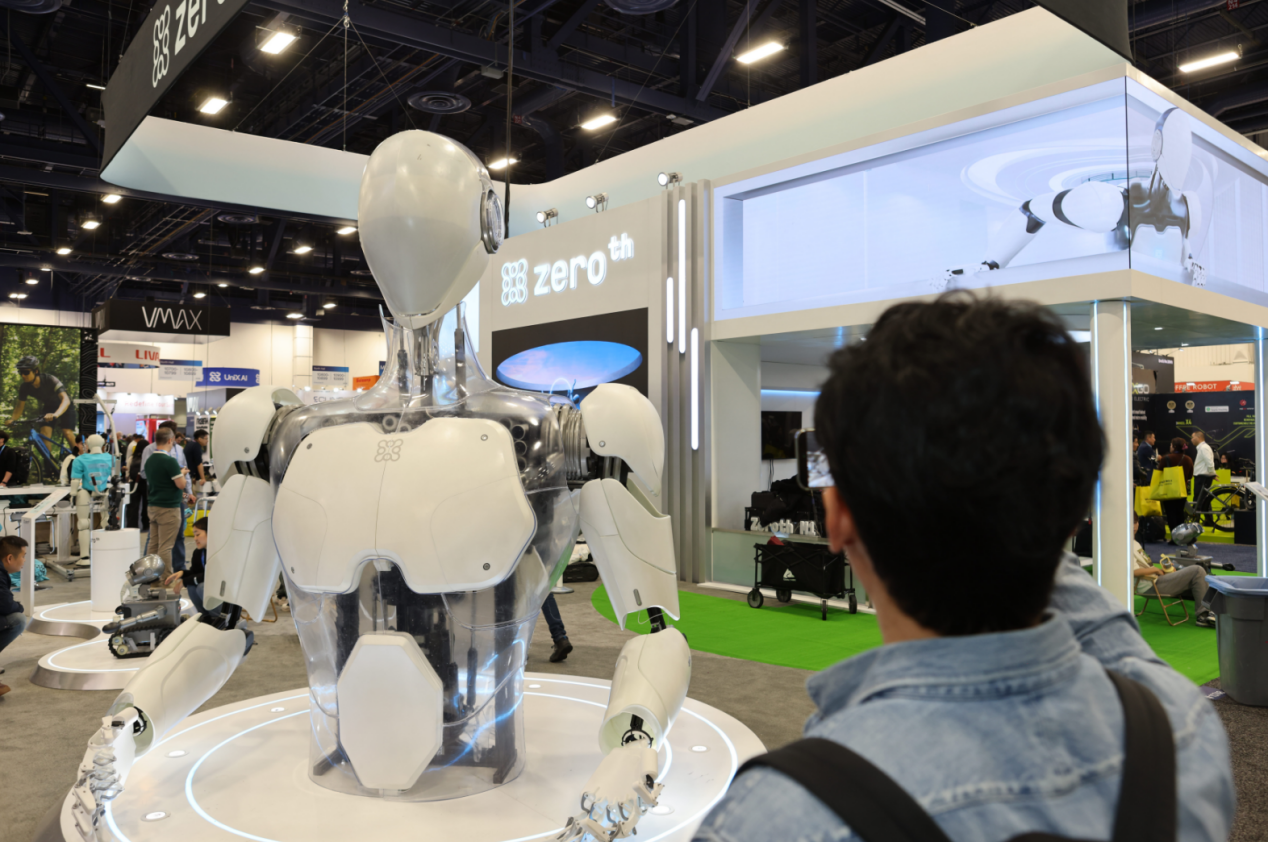
国际消费电子展(CES2026)举行前夕,乐享科技宣布推出全新具身智能品牌元点智能(Zeroth),并在展会现场以覆盖全场景的产品矩阵与突破性技术引发关 注。巨大的机器人半身模型成为展会打卡热点,多款首发产品凭借差异化定位与实用化体验,让元点智能跻身中国具身智能企业的核心看点。亿元级订单的 商业化成果,也显现出乐享科技消费级具身智能赛道开创者的实力。 全场景产品矩阵首发 元点智能此次全球首秀亮出五大核心产品,构建起从全尺寸人形机器人到迷你陪伴、从室内家庭到户外场景的完整产品雏形。其中,1.65米全尺寸人形机器 人Jupiter作为技术旗舰,搭载专属训练环境"Zeroth World",摆脱传统环境地图依赖,能在杂乱居家等复杂场景中自主适配、灵活作业,其基于世界模型的深 度学习能力,可通过过往经验与感知直觉优化行为逻辑。 此外,1.2米小型人形机器人A1同步亮相,与其他产品共同构成元点智能多元化的产品布局,使其成为当前全球产品线覆盖最全面的具身智能企业之一。 打造"能理解的伙伴" 元点智能的核心创新在于跳出"机械执行"的传统框架,赋予机器人真正的理解与交互能力。M1作为全球首款采用强化学习控制的伺服驱动机器人, ...
“星耀鹏城”20+8产业沙龙举办具身智能投融资对接专场,共筑深圳具身智能产业新高地
Quan Jing Wang· 2026-01-08 08:24
Core Insights - The event "Xiangmi Lake Financial + 'Starry Pengcheng' 20+8 Industry Salon" focused on embodied intelligence investment and financing, highlighting opportunities and pathways for Shenzhen in this field [1] - The event gathered over 100 representatives from listed companies, investment institutions, technology enterprises, and universities, aiming to promote deep integration of government, industry, academia, research, and investment [1] - The Xiangmi Lake CVC Innovation Service Center celebrated its third anniversary, emphasizing its mission to empower capital through industrial innovation ecosystems and to facilitate the deep integration of industry and capital [1] Industry and Company Summary - The event was co-hosted by the Shenzhen Listed Companies Association and the Southern University of Science and Technology Business School, featuring experts from various sectors including academia and finance [1] - Discussions covered multiple dimensions such as technological evolution, industrial applications, and capital support in the field of embodied intelligence [1] - The CVC center's four-in-one industrial investment innovation service ecosystem includes space aggregation, ecological co-construction, industry-finance linkage, and capability empowerment, aimed at establishing Shenzhen as a globally influential hub for embodied intelligence [1]
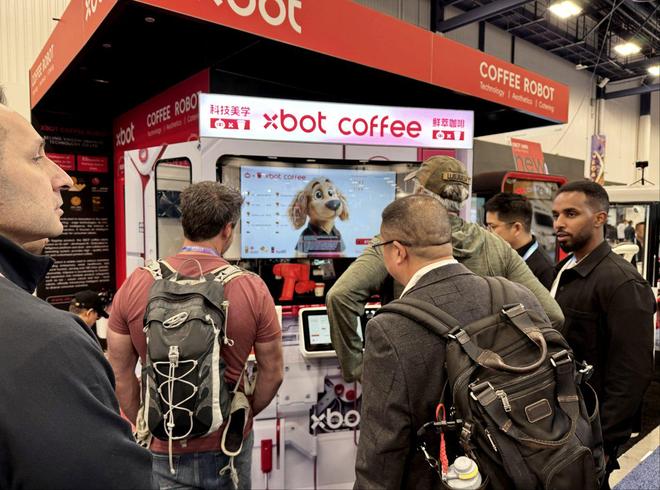
当咖啡机器人席卷CES:一场商用具身智能的消费革命
Tai Mei Ti A P P· 2026-01-08 05:24
Core Insights - The CES 2026 showcased the XBOT coffee robot from Yingzhi Technology, which attracted significant attention for its practical application in consumer scenarios, marking a milestone in the commercialization of embodied intelligence [2][4] - The XBOT has achieved impressive sales figures, with 600 units deployed and 4 million cups of coffee sold, demonstrating a successful entry into high-frequency consumer markets [4] Technology and Innovation - XBOT is not just a coffee machine but a sophisticated robot capable of making high-quality coffee, utilizing a complete technology loop from data collection to algorithm calibration [5] - The robot can replicate the precision of human baristas, with a consistency error of ±0.3g compared to ±2g for human baristas, and can produce two cups of coffee in 110 seconds, exceeding 500 cups per day [5] - The robot's ability to create intricate latte art is achieved through advanced motion capture technology and a digital twin system, allowing for precise replication of barista techniques [5][6] Product Features - XBOT can produce over 30 types of coffee drinks and offers personalized options based on customer preferences, utilizing an AI-driven model to adjust recipes in real-time [8] - The robot features a 43-inch interactive screen and an AI digital persona, enhancing user engagement and emotional connection [11] Market Strategy - The product's design philosophy combines technology and aesthetics, focusing on emotional value, which is crucial for user experience [9][11] - The pricing strategy has seen significant reductions, with the initial model priced at 600,000 yuan, now down to 189,000 yuan for the Lite version, while improving functionality by 50% [12] Industry Impact - XBOT's deployment across various commercial settings, including real estate and cultural venues, has reached over 600 units globally, with plans to exceed 3,000 units by 2026 [14] - The robot's capabilities extend beyond coffee, with potential applications in other food and beverage categories, indicating a scalable model for future consumer products [15] Future Vision - The deployment of XBOT robots in high-traffic areas aims to create a data ecosystem that captures consumer behavior, enhancing service personalization and operational efficiency for businesses [17] - The company envisions a significant transformation in the offline consumer ecosystem, positioning itself at the forefront of a multi-trillion-dollar market for intelligent upgrades [18]