基础设施建设
Search documents
14家上市公司发布利好,哪些投资机会值得关注?核心解读
Sou Hu Cai Jing· 2025-12-10 16:17
Core Viewpoint - In 2025, the Chinese A-share market is showing a steady upward trend supported by favorable policies, with the China Securities Regulatory Commission urging listed companies to increase dividends, buybacks, and shareholdings to solidify their value foundation [1] Group 1: Executive Buybacks - Since 2025, 27 companies in the A-share market have seen significant executive buybacks, particularly in high-growth sectors like healthcare, new energy, and semiconductors [2] - For instance, Kelly Tai's executives increased their holdings by 2.3 million shares, a 14% increase, benefiting from the growing orthopedic medical demand due to an aging population [2] - DeYe shares' executives bought 120,000 shares, while Tuojing Technology's executives increased their holdings by 210,000 shares, a 12% rise, aligning with national policies on technological self-reliance [2] Group 2: Policy Support - Multiple significant policies in 2025 have led to a surge in positive announcements from listed companies, with 14 companies benefiting from adjustments in the national medical insurance catalog and the encouragement of private investment [3][5] - The national medical insurance catalog added 114 new drugs, including 50 innovative drugs, significantly enhancing the market accessibility and sales scale for companies like Junshi Biosciences and Hengrui Medicine [5] - The release of 13 opinions by the State Council encourages private capital participation in key sectors like railways and nuclear power, with companies like China Railway Construction benefiting from substantial project contracts [5] Group 3: Performance Support - Many of the 14 companies have solid operational performance, signing significant contracts or achieving key technological breakthroughs that underpin their investment value [6][7] - For example, JinkoSolar's TigerNeo 3.0 components achieved a production efficiency of 24.8% and secured global orders worth 15 GW, showcasing its competitive edge in the solar market [7] - Research and development investments in A-shares reached 745.69 billion yuan in the first half of 2025, with sectors like electronics and biomedicine leading the way, indicating a strong foundation for future growth [7] Group 4: Investment Opportunities - Investors should focus on companies with executive buybacks in high-growth sectors, those benefiting from policy adjustments, and firms with significant contracts or R&D breakthroughs [8][9][10] - The combination of internal confidence from executives and favorable industry trends creates a strong investment rationale [8] - Companies directly benefiting from long-term policy releases, such as those in the medical and infrastructure sectors, present stable investment opportunities [9]
“金字招牌”理财产品爆雷!有投资者称,到期无法兑付,也无法提现
Sou Hu Cai Jing· 2025-12-09 15:02
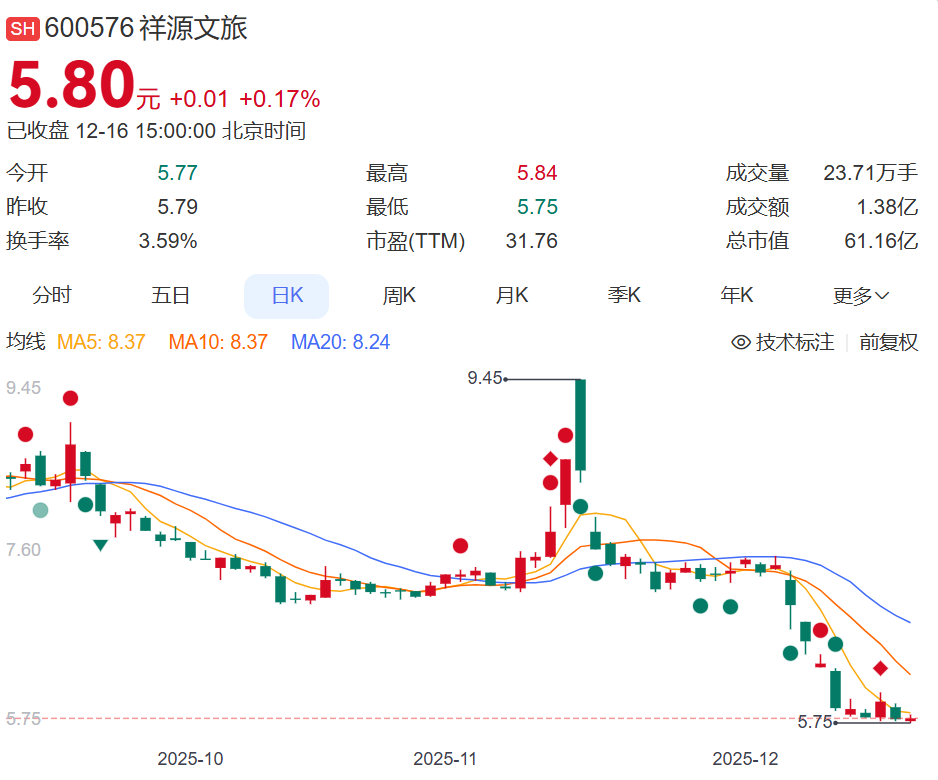
Core Viewpoint - The financial products associated with Xiangyuan Group are facing default issues, leading to investor concerns about the ability to redeem both matured and unmatured products [2][3]. Group 1: Default and Investor Concerns - Since late November, rumors of default on financial products purchased at Zhejiang Jin Center have emerged, confirmed by Xiangyuan Group's executive stating that around 2 to 3 products have not been redeemed due to lack of funds [2]. - Investors have expressed worries about the redemption of unmatured products, with reports of inability to transfer these products on the app [2][3]. - Following the news, shares of related companies, including Jiaojian Co., Xiangyuan Cultural Tourism, and Ocean Park, experienced significant declines, with Jiaojian Co. hitting a daily limit down [3]. Group 2: Company and Platform Relationships - Zhejiang Jin Center, a platform for financial asset trading, has historical ties to state-owned enterprises, which initially attracted investors [5]. - The platform has undergone ownership changes, with Hangzhou Minzhi Investment Management Co. becoming the controlling shareholder, which has close connections to Xiangyuan Group [5][6]. - Xiangyuan Group is a leading player in the cultural tourism industry, with its subsidiaries listed on stock exchanges, and has been involved in issuing financial products with guarantees from its own entities [7][8]. Group 3: Financial Product Structure - The financial products in question are primarily backed by debts owed by real estate companies associated with Xiangyuan Group, with funds reportedly used to supplement liquidity [8][12]. - Legal documents indicate that Xiangyuan Group has obligations to repurchase any unpaid principal related to these products, with the group's actual controller providing guarantees [12]. - The underlying assets of these products are debts from Xiangyuan's real estate ventures, which have been under financial strain due to a downturn in the real estate market [14]. Group 4: Regulatory Response - The Zhejiang Provincial Financial Regulatory Bureau is currently conducting a comprehensive review of the financing products involved, promising to keep investors informed about their rights [3][15].
不止地产惹的“祸”!浙商大佬深陷“祥源系”理财产品兑付危机
第一财经· 2025-12-09 00:29
Core Viewpoint - The liquidity crisis faced by Xiangyuan Holdings, led by Yu Faxiang, is primarily attributed to the downturn in the real estate market, which has historically been the company's main profit driver, while the tourism sector has not generated significant profits [3][4][11]. Group 1: Financial Crisis - Xiangyuan Holdings' financial products have faced overdue payments, which the company claims are unrelated to its listed subsidiaries, but rather stem from real estate cooperation projects [3][4]. - The company has acknowledged a cash flow issue, with total assets around 60 billion yuan and liabilities of approximately 40 billion yuan, indicating that while assets may cover liabilities, cash flow is currently insufficient [8][12]. - Investors have reported that overdue payments began as early as November 28, with a significant amount of funds pending redemption, totaling over 10 billion yuan [6][7]. Group 2: Real Estate Business - Historically, Xiangyuan Holdings has relied heavily on its real estate business, which generated sales of 20-30 billion yuan annually, but has seen a drastic decline in performance recently [4][12]. - The company's real estate sales and settlement amounts have dropped sharply in the first half of the year, with figures of 1.15 billion yuan and 698 million yuan respectively, indicating a severe downturn [13]. - The company has been criticized for its insufficient land acquisition strategy compared to other real estate firms, leading to a depletion of land reserves and a lack of new projects [11][12]. Group 3: Capital Operations - Xiangyuan Holdings has engaged in significant capital operations, including the acquisition of listed companies and assets, but these have not translated into substantial profits [15][17]. - The company has a high pledge ratio for its shares, with 95.63% of Xiangyuan Culture's shares pledged, raising concerns about the liquidity and realizable value of its assets [17][18]. - Despite the poor performance of its tourism assets, the company continues to pursue acquisitions, such as the recent purchase of a controlling stake in Haichang Ocean Park for approximately 2.3 billion HKD [17].
定调!重磅会议召开!
Jin Rong Shi Bao· 2025-12-08 13:35
Core Viewpoint - The Central Political Bureau of the Communist Party of China has set the tone for economic work in 2026, emphasizing "seeking progress while maintaining stability" and "improving quality and efficiency" as key principles for the upcoming economic strategy [1] Economic Performance - The macroeconomic resilience has exceeded market expectations, with high-tech manufacturing leading growth [2] - The total economic output is projected to reach approximately 140 trillion yuan this year [2] - The focus for 2026 will be on achieving qualitative improvements and reasonable quantitative growth while ensuring social stability and a good start to the 14th Five-Year Plan [2] Macroeconomic Policy - The meeting highlighted the continuation of a more proactive fiscal policy and moderately loose monetary policy, aiming to enhance macroeconomic governance effectiveness [3] - The fiscal deficit rate is expected to remain around 4%, with local government special bond issuance potentially increasing from 4.4 trillion yuan in 2025 to about 5 trillion yuan [3] - Monetary policy will seek a dynamic balance among multiple objectives, including stable growth and risk prevention [3] Domestic Market Development - The strategy emphasizes the need to build a strong domestic market to counter external uncertainties and enhance economic resilience [6] - Experts suggest that a consumption-oriented policy framework should be established, alongside reforms in income distribution and effective investment expansion [6] Innovation and Infrastructure - The focus on innovation and industrial development remains critical, with support for leading enterprises to form innovation alliances for national technological challenges [6] - There will be increased policy support for "new infrastructure" development, including communication networks and modern energy systems [6][7] Market Environment - A unified national market is essential for supporting technological innovation, with recommendations for optimizing institutional rules and protecting property rights [7] - Addressing "involution" competition is necessary to establish a healthy market order that promotes quality and fair pricing [7]
地方政府及城投公司资产盘活案例研究:以福建省为例
Lian He Zi Xin· 2025-12-08 11:24
Group 1: Background and Motivation - Local government debt risks have intensified due to increasing fiscal imbalances, prompting the need to activate state-owned assets[4] - As of the end of 2024, China's state-owned assets total approximately 957.8 trillion yuan, highlighting the potential for asset activation to stabilize economic growth[6] - The central and local governments have emphasized the importance of activating existing assets to alleviate debt risks and enhance fiscal revenues[6] Group 2: Impact on Regional Development - In 2024, Chongqing activated assets worth 485.5 billion yuan, recovering 261 billion yuan, demonstrating the effectiveness of asset activation in generating cash flow[7] - Non-tax revenue in China is projected to grow by 25.4% in 2024, largely due to the activation of state-owned resources, contributing to 20.36% of the general public budget revenue[9] - The activation of idle assets can significantly enhance resource allocation efficiency, allowing for better utilization of land and infrastructure[14] Group 3: Effects on Urban Investment Companies - Urban investment companies can alleviate short-term debt pressures by selling non-core and idle assets, thereby optimizing their balance sheets[16] - The issuance of public REITs or asset-backed securities allows urban investment companies to broaden financing channels and reduce reliance on traditional financing methods[16] - Asset activation fosters the development of market-oriented operational capabilities, enabling urban investment companies to transition from financing to urban operation roles[17] Group 4: Case Studies in Fujian Province - Fujian Province employs restructuring and financing activation methods tailored to local fiscal conditions and resource endowments, exemplifying a "localized" approach[5] - Coastal cities like Fuzhou and Xiamen focus on upgrading low-efficiency industrial land through innovative financial instruments like REITs, enhancing land utilization[19] - Resource-rich mountainous cities like Longyan utilize resource certification methods to convert idle rural assets into tradable capital, balancing social and economic benefits[28]
“十五五”深度研究系列报告(八):财政投资于人、投资于物如何结合?
ZHESHANG SECURITIES· 2025-12-08 10:58
Group 1: Investment in Physical Capital - China's capital stock reached approximately $93 trillion in 2024, accounting for about 503% of GDP[29] - The average growth rate of capital stock from 1961 to 1993 was about 5.2%, while from 1994 to 2016 it was approximately 10.8%, and is projected to decline to 5.8% by 2024[29] - In 2024, the total capital formation in China is estimated to be around 54.8 trillion yuan, contributing approximately 25.2% to GDP growth[2] Group 2: Investment in Human Capital - Investment in human capital focuses on enhancing capabilities across the entire population, including education, healthcare, and skills training[47] - The proportion of public spending on social welfare in China was 53.7% in 2023, compared to 60%-70% in developed countries, indicating significant room for improvement[6] - The government aims to increase the share of public investment in social welfare during the "14th Five-Year Plan" period, particularly in areas like education and healthcare[44] Group 3: Economic and Social Development - The urbanization rate in China is expected to reach 70% within five years, with a projected rate of about 67% in 2024, driving infrastructure and public service improvements[42] - The report emphasizes the need for a balanced approach between investment in physical and human capital to foster sustainable economic growth[1] - The government plans to enhance public services in nine key areas, including education, healthcare, and social security, to ensure equitable access for all citizens[52]
成都“吸血”西藏的时代,要结束了
Sou Hu Cai Jing· 2025-12-08 00:46
Core Viewpoint - The launch of the Yajiang project has generated excitement among residents of Chengdu, but the long-term implications may be negative for Chengdu's economy and real estate market due to the rise of Linzhi as a new economic center [3][11]. Group 1: Economic Implications - The Yajiang project, valued at 1.2 trillion, is seen as a short-term boon for Chengdu's real estate and economy, but it may lead to long-term disadvantages as Linzhi emerges [3][4]. - Chengdu has recently outperformed other cities in the region, such as Chongqing and Wuhan, due to its ability to attract a significant portion of central fiscal transfers from the western region [9][7]. - The influx of central fiscal transfers has allowed Chengdu to invest in infrastructure and attract high-tech industries, but this could change with Linzhi's development [9][19]. Group 2: Linzhi's Rise - The Yajiang project is not just an isolated initiative; it signifies the rise of Linzhi, which may replace Chengdu as the de facto capital for Tibet-related fiscal transfers [11][17]. - Linzhi's favorable ecological environment and lower altitude compared to Chengdu make it a more suitable location for long-term settlement and economic activity for both Han and Tibetan populations [17][19]. - The completion of the Yajiang project and the construction of the Sichuan-Tibet Railway will significantly improve logistics and reduce transportation costs, further enhancing Linzhi's economic viability [18][19]. Group 3: Political and Social Dynamics - The central government may prefer Linzhi as a new hub for Tibetan governance and economic activity, as it aligns better with the goals of national integration and resource allocation [12][18]. - The current arrangement of having Tibetan administrative units in Chengdu is politically unfavorable, as it does not facilitate effective governance or integration [13][12]. - The shift of administrative functions from Chengdu to Linzhi could lead to a more effective governance structure in Tibet, benefiting both local populations and the central government [18][19].
全年以工代赈中央投资达355亿元
Ren Min Ri Bao· 2025-12-06 00:36
Core Viewpoint - The National Development and Reform Commission has allocated 6 billion yuan for the fourth batch of the "Work for Relief" program in 2025, bringing the total central investment for the year to 35.5 billion yuan, aimed at creating job opportunities for over 1.1 million low-income individuals [1] Group 1: Investment and Employment - The total central investment for 2025 is expected to reach 35.5 billion yuan, with the "Work for Relief" program projected to create job opportunities for over 1.1 million low-income individuals [1] - The program will implement over 7,000 projects, prioritizing areas with high demand for labor among key groups such as the poverty-stricken population and those at risk of falling back into poverty [1] Group 2: Infrastructure Development - The projects will focus on small-scale infrastructure construction, including road hardening, road renovation, drainage channel dredging, and the construction of water storage facilities, addressing the "last mile" of infrastructure that meets public needs [1] - The program aims to enhance labor skills and expand employment opportunities for workers through project construction and labor skills training [1] Group 3: Labor Compensation - The proportion of labor compensation from central investment in the "Work for Relief" program is set to increase to over 40%, ensuring that central investments directly benefit the community [1]
估值不足10倍,基建50ETF冲击6连阳
Mei Ri Jing Ji Xin Wen· 2025-12-05 07:05
Core Viewpoint - The A-share market shows a collective increase in major indices, indicating positive market sentiment and potential investment opportunities in infrastructure-related sectors [1] Market Performance - As of December 5, 2025, the Shanghai Composite Index rose by 0.67%, the Shenzhen Component Index increased by 0.98%, and the ChiNext Index gained 1.25% [1] - The Infrastructure 50 ETF (159635) saw a rise of 1.26%, with the latest price at 1.122 yuan and an intraday turnover rate of 7.5% [1] Stock Performance - Among the constituent stocks, Shanghai Port Construction led with a 10% increase, followed by Zhenhua Heavy Industries at 5.72%, Huitong Technology at 4.81%, Aidi Precision at 3.38%, and XCMG at 3.26% [1] - Conversely, Sichuan Road and Bridge experienced a decline of 2.53%, with Hongrun Construction down by 1.05%, Anhui Construction down by 0.41%, Zhongli Co. down by 0.37%, and Pudong Construction down by 0.12% [1] Fund Flow - The Infrastructure 50 ETF has recorded five consecutive trading days of positive performance, with expectations for a sixth consecutive gain [1] - Over the past three trading days, there has been a continuous inflow of funds into the ETF [1] Valuation Insights - The latest price-to-earnings ratio (PE-TTM) for the Infrastructure 50 ETF is 9.64, which is below 10 and represents a valuation that is lower than 66.79% of the time over the past decade [1] - This low valuation suggests potential investment opportunities in undervalued assets within the infrastructure sector [1]
中国银行:以金融之力服务实体经济,助力现代化产业体系建设
Ren Min Ri Bao· 2025-12-03 21:52
Core Viewpoint - The 20th Central Committee of the Communist Party of China emphasizes the construction of a modern industrial system and the strengthening of the real economy, with China Bank aligning its services to support these national development goals [1] Group 1: Support for Traditional Industries - China Bank is increasing resource investment and optimizing financial services to promote the transformation and upgrading of traditional industries towards high-end, intelligent, and green development [2] - As of Q3 2025, the loan balance for advanced manufacturing in traditional industries is nearly 600 billion, while high-tech manufacturing loans amount to nearly 700 billion [2] - The bank has signed over 350 billion in equipment renewal projects, with loan disbursements exceeding 130 billion, supporting traditional industries' transformation [2] - China Bank is actively supporting the petrochemical industry's upgrade projects and has successfully provided fixed asset loans for equipment renewal to a major industrial enterprise in Jiangxi [2][3] Group 2: Support for Emerging Industries - China Bank is focusing on the development of strategic emerging industries, with loans for these sectors exceeding 3 trillion, reflecting a continuous increase in their proportion of total loans [4] - The bank supports the aerospace sector through a "loan-equity linkage" model, aiding Blue Arrow Aerospace in achieving key technological breakthroughs [4] - In the semiconductor sector, China Bank has tailored financial service plans for Jiangxi Zhao Chi Semiconductor Co., providing comprehensive support for their R&D and project construction [5] Group 3: Infrastructure Development - China Bank is deeply involved in major cross-regional infrastructure projects, particularly in the Guangdong-Hong Kong-Macao Greater Bay Area and the Yangtze River Delta [6] - The bank's loan balance for infrastructure exceeds 4.5 trillion, with over 1.8 trillion allocated to major transportation infrastructure [6] - China Bank has provided significant financial support for key projects like the Hong Kong-Zhuhai-Macao Bridge and the Shenzhen-Zhongshan Channel [6] Group 4: Cross-Border Financial Services - China Bank is leveraging its cross-border financial capabilities to support Chinese enterprises in undertaking significant overseas infrastructure projects, including financing for a light rail project in Mexico [7] - The bank is committed to integrating its development with the construction of a modern industrial system, aiming to provide high-quality financial services and innovative products [7]