服装零售

Search documents
优衣库,偷拍
盐财经· 2025-12-23 09:04
Core Viewpoint - The article discusses allegations against Uniqlo regarding the practice of secretly filming customers to prevent theft, which has sparked significant public debate and discomfort among consumers [2][8]. Group 1: Allegations and Practices - Some Uniqlo stores have been accused of "secretly filming" suspicious customers as a theft prevention measure, leading to discomfort among shoppers [2]. - Reports indicate that this practice is not isolated to individual employees but is directed by certain regional managers, suggesting a systemic issue within the company [8]. - Employees have confirmed that the decision to film customers is influenced by the level of theft experienced at specific stores, with more severe cases prompting such actions [8]. Group 2: Customer Experiences - Consumers have reported feeling closely monitored in various Uniqlo locations, with security personnel displaying heightened vigilance around them [9]. - Specific incidents were shared by customers, including one who felt followed by security after seeking assistance with a security tag issue from another store [9]. - A former employee provided evidence of a collection of photos of suspected shoplifters, indicating a systematic approach to identifying and monitoring perceived threats [9]. Group 3: Internal Communication - Internal communications within Uniqlo have revealed a focus on identifying suspicious customers, with management encouraging vigilance and sharing of information about potential thieves [8]. - The term "11号" is used internally to refer to suspected thieves, highlighting a specific nomenclature for categorizing perceived threats [9].

优衣库被曝“偷拍顾客来防盗”,官方暂无回应
Xin Lang Cai Jing· 2025-12-23 03:40
Core Viewpoint - Uniqlo has faced allegations of "spying" on customers in some stores to prevent theft, leading to significant public backlash and discomfort among consumers [1][3]. Group 1: Allegations and Reactions - Customers have expressed discomfort on social media, claiming they felt like they were being treated as thieves while shopping at Uniqlo [1][3]. - Media investigations revealed that both former and current employees confirmed the existence of suspicious behavior involving "spying" on customers in certain Uniqlo locations [1][3]. - Some consumers reported feeling recognized and monitored across different Uniqlo stores, raising concerns about being marked as potential shoplifters through "spying" methods [1][3]. Group 2: Company Response - As of the time of reporting, Uniqlo has not responded to inquiries from Sina Finance regarding the allegations [2][4].
填补行业空白 京东服饰携手中联品检发布国内首个羽绒服装保暖性能团体标准
Zhong Jin Zai Xian· 2025-12-23 03:24
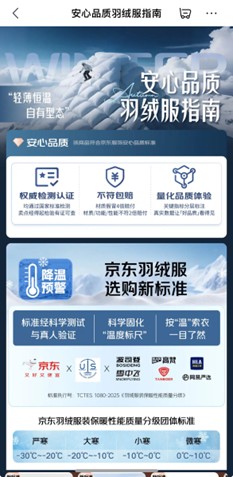
Core Viewpoint - JD Fashion, in collaboration with Zhonglian Inspection Group and several well-known down jacket brands, has launched the first group standard in China for grading the thermal performance of down jackets, providing consumers with a quantifiable basis for selecting down products [1][3]. Group 1: Standard Overview - The newly released standard (T/CTES 1080—2025) addresses the gap in existing national and industry standards regarding the direct thermal performance grading of down clothing [3]. - The standard introduces a systematic grading system based on three core parameters: down content, fluffiness, and down turbidity, categorizing products into five quality levels from AAAAA to AAA [3]. - AAAAA level requires down content ≥90%, goose down fluffiness ≥17.5cm, and turbidity ≥1000mm, all exceeding current national standards [3]. Group 2: Consumer Guidance - The standard classifies thermal performance into four levels based on extreme applicable temperatures: severe cold (-30.0℃ to -20.1℃), extreme cold (-20.0℃ to -10.1℃), mild cold (-10.0℃ to -0.1℃), and slightly cold (0℃ to 10.0℃) [3]. - It provides average power and cooling rate benchmarks for both men's and women's products, facilitating a straightforward selection process for consumers [3][4]. Group 3: Industry Impact - The standard is expected to promote the standardization of the down jacket industry, enhance the competitiveness of Chinese down products in the international market, and provide transparent, comparable product information for consumers [7]. - JD Fashion has previously launched the JD FASHION label, ensuring that products meet high standards in material quality and craftsmanship, further solidifying its commitment to quality [7]. Group 4: Future Developments - JD Fashion plans to continue collaborating with authoritative testing institutions and quality brand merchants to build a more comprehensive quality assurance system for apparel, aiming for a reliable shopping experience for consumers [9].

优衣库再被曝“偷拍”消费者,曾因隐私权纠纷被起诉
Xin Lang Cai Jing· 2025-12-23 02:32
Group 1 - Recent consumer complaints on social media indicate that some shoppers at Uniqlo felt they were treated as thieves, leading to significant public attention [1] - Interviews with former and current employees confirmed that certain Uniqlo stores engaged in "surveillance" of suspicious customers, with directives reportedly coming from regional managers [1] - Previous incidents of surveillance at Uniqlo include a 2024 case in Tokyo and a 2019 incident in Shenzhen involving hidden cameras, although investigations indicated that the latter was not conducted by store employees [1] Group 2 - Uniqlo was established in 1984 and entered the Chinese market in 2002, opening its first store in Shanghai [2] - The operating entity in China, Fast Retailing (China) Commercial Co., Ltd., was registered in 2006 with a capital of 20 million USD and is wholly owned by Fast Retailing Co., Ltd. [2] - The Greater China region is Uniqlo's largest overseas market, with projected revenue for the fiscal year 2025 expected to account for approximately 19% of the group's total revenue, although revenue in this region is forecasted to decline by 4% year-on-year [2]

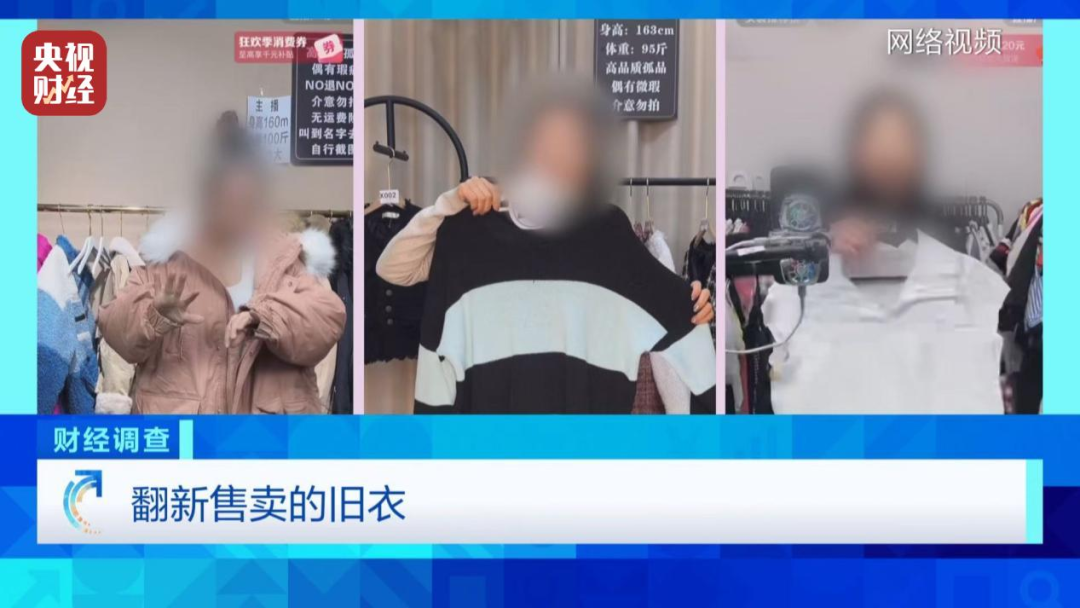
“微脏”“微瑕”?一些直播间卖的“大牌尾货”,竟是旧衣服!
Yang Shi Xin Wen· 2025-12-23 02:15
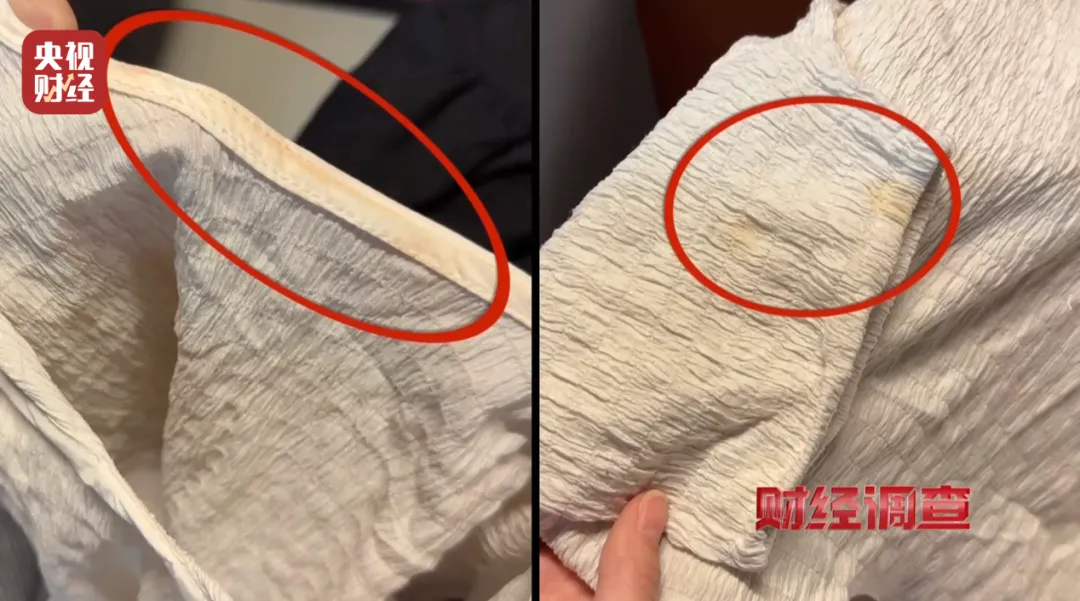
Core Viewpoint - The article highlights the deceptive practices of certain live-streaming sellers who market second-hand clothing as "new samples" or "brand excess inventory," often selling low-quality items with undisclosed origins and unfair return policies [1][2][4]. Group 1: Consumer Complaints - Consumers have reported that some live-streaming channels claiming to sell "new sample clothes" or "brand excess inventory" are actually selling second-hand clothing at very low prices [2][4]. - A specific example includes a purchase from a live-streaming channel where three items were bought for only 6 yuan, which upon closer inspection were clearly used second-hand clothes [2][4]. Group 2: Supply Chain and Sourcing - The investigation revealed that many of these live-streamed items come from old clothing recycling bins, with tracking devices showing that these items are sent to sorting warehouses [4][6]. - The sorting warehouses are known to handle large volumes of second-hand clothing, with some companies reporting daily sales of dozens of tons to live-streaming sellers [8][10]. Group 3: Sales Practices - Live-streaming sellers often use terms like "slightly dirty" or "slightly flawed" to market these second-hand items without disclosing their true nature [14][16]. - Many sellers avoid mentioning the second-hand status of the clothing, instead labeling them as "high cost-performance" items to attract consumers [14][16]. Group 4: Quality Control and Processing - The article notes that many second-hand items are not cleaned or sanitized before being sold, with sellers claiming that visible mold or stains are normal [14][16]. - Some businesses engage in refurbishing second-hand clothing, adding new tags to disguise them as new products, which allows them to sell at higher prices [17][20]. Group 5: Market Dynamics - The live-streaming market for second-hand clothing is lucrative, with some sellers reporting daily revenues of several tens of thousands of yuan [22]. - The article indicates that the practice of selling refurbished second-hand clothing as new is widespread, with many sellers relying on this strategy to maximize profits [22].
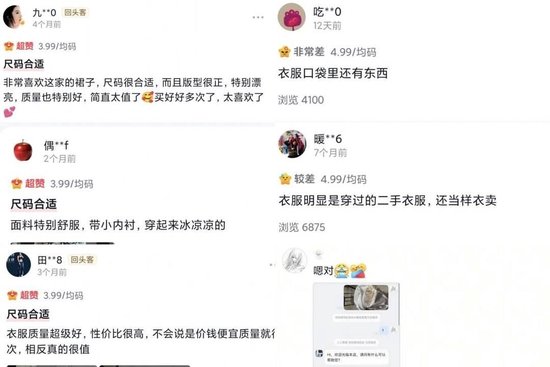
4.99元连衣裙盲盒走红 低价惊喜背后藏着哪些真相?丨封面深镜
Xin Lang Cai Jing· 2025-12-23 01:56
Core Insights - The rise of low-priced dress blind boxes, priced as low as 4.99 yuan, has captured consumer interest through a marketing strategy that combines low cost with the thrill of surprise [1][15] - The hashtag dressblindbox has garnered over 110 million views on social media, with unboxing videos receiving up to 800,000 likes, indicating a significant consumer engagement [1][15] Group 1: Consumer Behavior and Experience - Consumers are drawn to the excitement of unboxing, with some viewing it as a form of low-cost entertainment, while others express disappointment over the quality and style of the received items [2][18] - Feedback from consumers is polarized; positive reviews highlight the entertainment value and curiosity, while negative comments focus on poor quality and unmet expectations [2][18] - Some rational consumers advise caution, suggesting that low prices come with low expectations, and recommend selective purchasing based on individual needs [3][18] Group 2: Product Quality and Vendor Practices - Journalistic investigations revealed that the actual products often differ significantly from promotional images, with many items appearing outdated or of low quality [5][20] - Reports of garments arriving with stains, odors, and poor construction have been common, raising concerns about the hygiene and quality of the products [7][22] - Customer service responses from vendors often dismiss complaints, citing policies against returns for blind box items, and some representatives have been reported to use derogatory language towards dissatisfied customers [9][22][28] Group 3: Supply Chain and Regulatory Issues - Investigations into the supply chain indicate that many vendors operate from disorganized warehouses, with garments often being second-hand and lacking proper sanitation [11][28] - The lack of clear labeling and production information raises health concerns, as many items may carry harmful substances without consumer awareness [11][28] - Current regulatory frameworks for blind box sales are insufficient, with gaps in enforcement and a lack of significant penalties for violations, leading to a low-cost environment for non-compliance [14][29]
高盛:升FAST RETAIL-DRS(06288)经营利润预测 日本同店销售增长强劲
智通财经网· 2025-12-22 06:40
Core Viewpoint - Goldman Sachs has raised the operating profit forecasts for FAST RETAIL-DRS (06288) for the fiscal years 2026 to 2028 by 2%, 1%, and 1% respectively, reflecting strong domestic sales momentum in Japan, with same-store sales increasing by 11% and overall sales up by 12.1% from September to November [1] Group 1: Financial Projections - The expected operating profit for the first quarter of fiscal year 2026 is projected to be 184 billion yen, representing a year-on-year increase of 17% [1] - The target price for Fast Retailing's stock (9983.JP) has been raised to 60,000 yen, maintaining a "Buy" rating [1] Group 2: Market Performance - The forecast includes factors such as the bottoming out of performance in mainland China and the impact of U.S. tariffs, with expected sales and operating profit in the Chinese market increasing by 2% and 5% respectively [1] - In North America, despite tariff impacts, improvements in operating profit margins are anticipated due to price adjustments, discount control, and enhanced labor efficiency, particularly in the second half of the fiscal year 2026 [1] Group 3: Japan Market Insights - The weakening of the yen is expected to reduce price increases for Uniqlo in Japan, with the projected overall operating profit margin for fiscal year 2026 estimated at 16.9%, an improvement of 0.3 percentage points year-on-year [1]

高盛:升FAST RETAIL-DRS经营利润预测 日本同店销售增长强劲
Zhi Tong Cai Jing· 2025-12-22 06:37
Group 1 - Goldman Sachs has raised the operating profit forecasts for FAST RETAIL-DRS (06288) for the fiscal years 2026 to 2028 by 2%, 1%, and 1% respectively, reflecting strong domestic sales momentum in Japan as of November [1] - From September to November, same-store sales in Japan increased by 11%, while overall sales grew by 12.1% year-on-year [1] - The company expects the consolidated operating profit for the first quarter of fiscal year 2026 to be 184 billion yen, representing a year-on-year growth of 17% [1] Group 2 - Goldman Sachs has raised the target price for Fast Retailing's stock (9983.JP) to 60,000 yen and maintains a "Buy" rating [1] - The forecast includes factors such as the bottoming out of performance in mainland China and the impact of U.S. tariffs, with expected sales and operating profit in the Chinese market increasing by 2% and 5% respectively [1] - In North America, despite tariff impacts, the company is expected to improve its operating profit margin in fiscal year 2026 through price adjustments, discount control, and enhanced labor efficiency, particularly in the second half of the fiscal year [1] Group 3 - In Japan, due to the weakening yen leading to reduced price increases for Uniqlo, the consolidated operating profit margin for fiscal year 2026 is forecasted to be 16.9%, an improvement of 0.3 percentage points year-on-year [1]
直播间3件包邮的“样衣尾货”仅6元,央视曝光旧衣回收产业链内幕
Yang Shi Xin Wen· 2025-12-22 04:36
Core Viewpoint - The article highlights the deceptive practices of certain live-streaming sellers who market second-hand clothing as "new samples" or "brand excess inventory," often using misleading terms like "slightly dirty" or "slightly flawed" to attract consumers while concealing the true nature of the products [1][3][12]. Group 1: Deceptive Practices - Many live-streaming channels claim to sell "new sample clothes" or "brand excess inventory," but they are actually selling second-hand clothing sourced from recycling bins [3][12]. - Consumers have reported receiving items that show clear signs of previous use, such as stains and wear, contradicting the sellers' claims of selling new or high-quality products [3][12]. - Sellers prepare for consumer inquiries by using vague language and avoiding any mention of the second-hand nature of the clothing [5][12]. Group 2: Sourcing and Supply Chain - The investigation revealed that many of these second-hand clothes come from recycling bins, with tracking devices showing that items were sent to sorting warehouses over 60 kilometers away [5][6]. - Old clothing recycling companies report high demand from live-streaming sellers, with some companies selling dozens of tons of second-hand clothing daily [9][11]. - The clothing sold in live-streams is often not cleaned or sanitized before being resold, maximizing profit margins for sellers [12][13]. Group 3: Market Dynamics - The article notes that the practice of selling refurbished second-hand clothing as new is widespread, with sellers often using new tags to mislead consumers [13][18]. - Live-streaming sellers are able to sell refurbished items at a higher profit by marketing them as "factory excess" or "samples," avoiding any mention of their second-hand status [18][21]. - The article indicates that the live-streaming industry is lucrative, with some sellers reporting daily revenues of several tens of thousands of yuan [21].
多家优衣库门店,被曝偷拍!
Xin Lang Cai Jing· 2025-12-22 02:04
近日 优衣库部分门店 被指"偷拍"消费者来防盗 在社交媒体上 部分消费者反映 在优衣库因"被当小偷"引发不适 相关话题引发讨论 记者通过采访优衣库多位不同区域的已离职和在职员工,证实此前在部分优衣库门店,确实存在"偷 拍"可疑顾客的行为。并且这不是基层员工的个别行为,而是某些区域经理层面发出的指令。一位受访 者告诉记者,他曾拨打员工热线反映过"偷拍"问题,但并没有下文。 不过多位优衣库前员工称,是否会采取"偷拍"取决于门店因失窃造成的损失程度,"如果不是很严重一 般不太会采取这种行为。"记者就此事向优衣库方面发去采访函,未获回应。 一位广州消费者陈先生(化名)说,当他第一次进入优衣库广州的VT101店、中华广场店、萝岗万达店 和天汇广场店的时候,都遇到了被各个门店员工"一眼认出"的情况,安保人士也表现出"很警觉"的样 子,总在与他相隔不远处来回走动。 另一位消费者鞠女士(化名)告诉记者,她曾在深圳某店请店员帮处理过一条从其他门店购入但忘拆防 盗扣的丝巾,再进入广州一店铺后,就遇上了"走到哪保安跟到哪"的情况。 一位优衣库前员工向记者出示的其留存的"疑似小偷的顾客照片"的相册录屏显示,被偷拍者有戴口罩背 包路过 ...