稀土

Search documents
冤大头国家出现,特朗普乐坏了:一年后,美国的稀土会多到用不完
Sou Hu Cai Jing· 2025-11-06 08:40
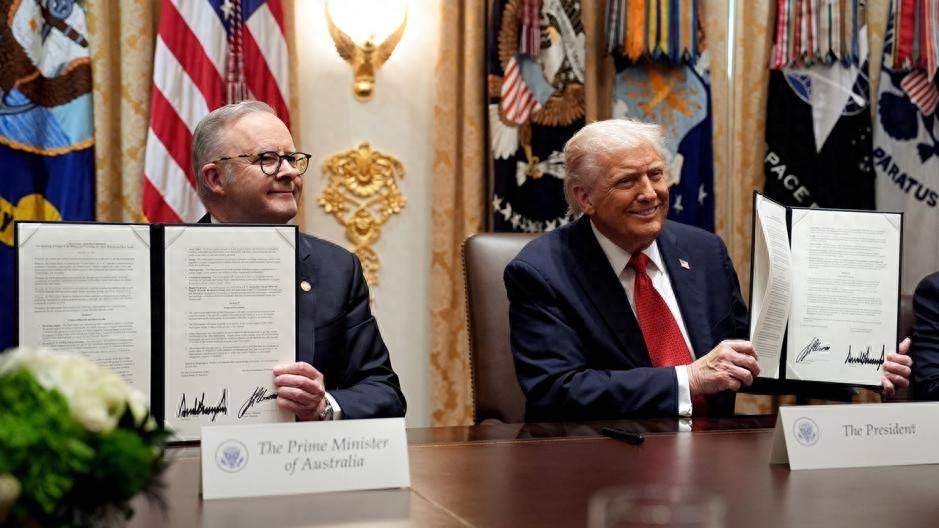
Core Viewpoint - The recent developments in the rare earth market highlight the strategic maneuvers between the U.S. and Australia, with the U.S. seeking to secure its supply chain amid China's export restrictions on rare earth processing technologies [1][9][49]. Group 1: U.S. and Australia Cooperation - The U.S. has signed an $8.5 billion deal with Australia to secure rare earth supplies, aiming to alleviate its critical shortages in heavy rare earth elements [3][10]. - This cooperation is seen as a response to China's recent export controls on several heavy rare earths and their processing technologies, which have limited Western countries' ability to independently develop their supply chains [7][9]. - The U.S. Department of Defense has raised alarms about dwindling heavy rare earth inventories, indicating a pressing need for alternative sources [10][11]. Group 2: Australia's Position - Australia, despite being a major resource holder with 3-4% of global rare earth reserves, lacks the necessary refining and processing capabilities, leading to a reliance on China for these processes [23][29]. - The deal with the U.S. may not be a mutually beneficial partnership, as Australia risks becoming overly dependent on U.S. technology and support without developing its own industrial capabilities [21][31]. - The agreement is perceived as Australia trading its resource wealth for U.S. military protection, potentially compromising its long-term economic sovereignty [35][39]. Group 3: Future Implications - The U.S. aims to stabilize its supply chain and may view Australia merely as a temporary supplier rather than a long-term partner in developing a robust rare earth industry [44][46]. - If the U.S. successfully secures its rare earth needs, Australia's role could diminish, leaving it vulnerable with unprocessed resources and no developed technology [46][49]. - The overarching theme suggests that true national security and strategic autonomy stem from a complete and independent industrial chain, rather than reliance on external partners for resource management [50][52].

商务部:中方岁稀土等相关物项依法依规开展许可审查,对符合规定的申请予以许可
Ge Long Hui· 2025-11-06 08:27
格隆汇11月6日|商务部召开例行新闻发布会:白宫11月1日发布的《报告》提到,中国将对部分稀土元 素发放一般性出口许可证。外界注意到,这一表述与中国商务部发布的新闻稿似乎有所不同,后者仅提 及10月9日公布的出口管制措施。请问中方对此有何评论?商务部新闻发言人何亚东表示,稀土等相关 物项具有明显的军民两用属性,中方依法依规开展许可审查,对符合规定的申请予以许可。中方多次强 调,愿与各方加强沟通合作,将不断优化许可流程,积极适用通用许可等便利化措施,促进出口管制物 项合规贸易,保障全球产业链供应链安全稳定。 ...
商务部召开例行新闻发布会(2025年11月6日)
Shang Wu Bu Wang Zhan· 2025-11-06 08:26
Core Insights - The "World Open Report 2025" was released at the Hongqiao International Economic Forum, highlighting four breakthroughs: international cooperation, observational perspective, historical dimension, and theoretical margins [3][4] - China emphasizes its commitment to expanding imports and has hosted the China International Import Expo for eight consecutive years, showcasing its role as a major global market [5][6] - The "Shared Big Market: Export to China" initiative aims to promote import expansion and will feature over a hundred activities annually, focusing on various themes [6] - China is actively pursuing membership in the Comprehensive and Progressive Agreement for Trans-Pacific Partnership (CPTPP), which is expected to enhance global trade and economic cooperation [8][9][10] Group 1: World Open Report 2025 - The report is co-authored by Nobel laureate and includes contributions from the UN Industrial Development Organization, enhancing its credibility [3] - It addresses current global issues such as data flow, green development, and supply chain evolution, providing actionable recommendations for a more open world [3][4] - The report extends the World Open Index's historical coverage to 35 years, offering insights into the evolution of global openness [4] Group 2: Shared Big Market Initiative - The initiative reflects China's ongoing commitment to an open economy, with the China International Import Expo generating over $500 billion in transactions [5][6] - Activities will include thematic country engagements and regional collaborations, aiming for continuous engagement and innovation [6] Group 3: CPTPP Membership - Research indicates that China's accession to CPTPP could boost member GDP by 0.2% to 1.1% and exports by 2.5% to 11.8% [9] - The inclusion of China is expected to enhance the CPTPP's global influence and create new growth opportunities in various sectors [9][10] - China aims to work collaboratively with CPTPP members to accelerate the accession process, promoting regional economic integration [10]
盛和资源:主要稀土产品价格呈波动上涨态势
Xin Lang Cai Jing· 2025-11-06 06:08
Core Insights - The company has a sufficient order backlog and is operating at a high capacity utilization rate [1] - Following the suspension of export controls related to rare earths, prices for major rare earth products have shown a fluctuating upward trend [1] Group 1 - The company's general manager, Huang Ping, highlighted the strong order backlog during the Q3 2025 earnings presentation [1] - The current capacity utilization rate of the company is at a high level, indicating robust operational efficiency [1] Group 2 - The market trend indicates that after the pause in export controls on rare earths, there has been a noticeable increase in the prices of key rare earth products [1]

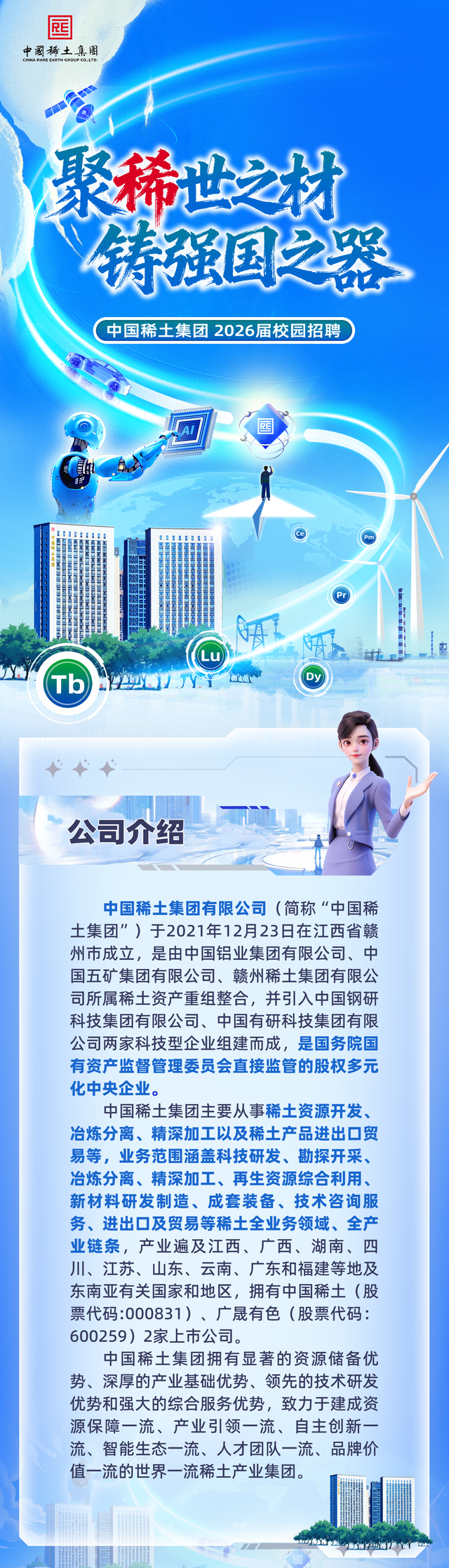
中国稀土集团启动2026届秋季校园招聘
Bei Jing Ri Bao Ke Hu Duan· 2025-11-06 05:46
Company Overview - China Rare Earth Group Co., Ltd. was established on December 23, 2021, in Ganzhou, Jiangxi Province, through the restructuring and integration of rare earth assets from several state-owned enterprises [3] - The company is directly supervised by the State-owned Assets Supervision and Administration Commission and operates across the entire rare earth industry chain, including resource development, smelting, separation, deep processing, and trade [3] - It has significant resource reserves, a strong industrial foundation, leading technological research and development capabilities, and comprehensive service advantages [3] Talent Development Programs - The "Rare Talent" management trainee program targets 2026 graduates, aiming to cultivate a team with innovative spirit and strong qualifications through rigorous selection and rotation training [5] - The "Rare Star" technology talent program is designed for young scientific talents, focusing on innovation capabilities and technical expertise, also targeting 2026 graduates [11] - Both programs emphasize practical experience, mentorship, and specialized training to prepare candidates for future roles within the company [9][12] Recruitment Details - The recruitment is open to 2026 graduates, including international students, with specific academic backgrounds required for various positions [14] - The company seeks candidates with strong academic records, a sense of responsibility, and good communication skills [15] - The recruitment process includes online application, qualification review, written tests, interviews, and health checks [19][21]

中国团队首次在蕨类植物中发现稀土成矿现象 助力稀土可持续利用
Zhong Guo Xin Wen Wang· 2025-11-06 04:38
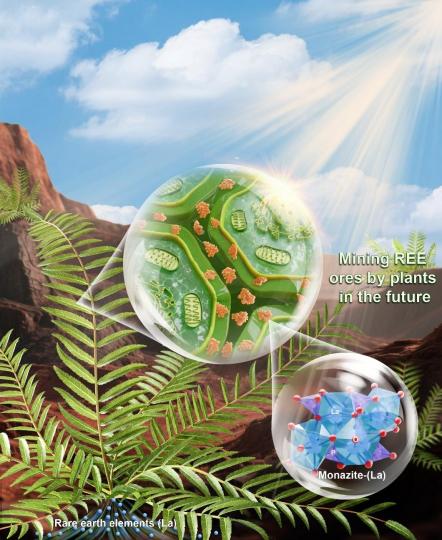
Core Insights - The research team from the Guangzhou Institute of Geochemistry has discovered a rare earth mineralization phenomenon in the fern species "Osmunda japonica," which could lead to more sustainable methods of rare earth extraction [1][3]. Group 1: Research Findings - This is the first time that rare earth elements have been found to undergo biogenic mineralization in a natural plant, contrasting with traditional geological processes that require high temperatures [3][5]. - The study reveals that the fern can absorb and concentrate rare earth elements from the soil, forming a mineral called "lanthanite" within its tissues, which acts as a detoxification mechanism for the plant [5][8]. - The research has been published in the journal "Environmental Science & Technology," highlighting the potential for using hyperaccumulating plants like Osmunda japonica for soil remediation and rare earth recovery [3][5]. Group 2: Implications for Industry - Rare earth elements are critical resources in high-tech fields such as artificial intelligence, renewable energy, and national defense, making their sustainable extraction increasingly important [5]. - The biogenic lanthanite produced by Osmunda japonica is free from radioactive elements, presenting a cleaner alternative for rare earth extraction compared to conventional mining methods [5][8]. - This discovery opens new avenues for research into other hyperaccumulating plants, potentially enhancing the understanding of plant mineralization processes [8].
中国稀土11月5日获融资买入1.17亿元,融资余额22.42亿元
Xin Lang Cai Jing· 2025-11-06 03:25
Core Insights - China's rare earth sector experienced a decline of 1.68% on November 5, with a trading volume of 1.808 billion yuan [1] - The financing data indicates a net outflow of 8.4844 million yuan on the same day, with a total financing balance of 2.260 billion yuan [1][2] Financing and Margin Trading - On November 5, the financing buy amount for China's rare earth was 117 million yuan, while the financing balance reached 2.442 billion yuan, accounting for 4.35% of the circulating market value, which is above the 80th percentile over the past year [1] - The margin trading data shows that 70,900 shares were repaid, with 16,700 shares sold, resulting in a selling amount of 810,100 yuan, and a remaining short selling balance of 1.864 million yuan, also above the 70th percentile over the past year [1] Company Performance - As of September 30, the number of shareholders for China's rare earth decreased by 5.61% to 217,100, while the average circulating shares per person increased by 5.94% to 4,889 shares [2] - For the period from January to September 2025, the company reported a revenue of 2.494 billion yuan, representing a year-on-year growth of 27.73%, and a net profit attributable to shareholders of 192 million yuan, marking a significant increase of 194.67% [2] Dividend and Shareholding Structure - Since its A-share listing, China's rare earth has distributed a total of 346 million yuan in dividends, with 124 million yuan distributed over the past three years [3] - As of September 30, 2025, the top ten circulating shareholders include Hong Kong Central Clearing Limited, which increased its holdings by 9.4669 million shares to 29.0694 million shares, while the Southern CSI 500 ETF reduced its holdings by 270,300 shares to 10.796 million shares [3]
机构:持续关注稀土产业链战略配置价值
Zheng Quan Shi Bao Wang· 2025-11-06 00:56
Core Viewpoint - The supply and demand dynamics in the rare earth sector are expected to remain favorable, leading to continued performance improvement in the industry [1] Industry Summary - The 2025 China Rare Earth Industry Association's conference on rare earth metals and alloys will be held from November 6 to 8 in Hangzhou [1] - According to CITIC Securities, the performance of the rare earth sector is likely to continue rising due to the alignment with low-carbon and environmental policies in industries such as electric vehicles, wind power, and energy-saving motors [1] - The humanoid robot sector is anticipated to become a new growth driver, with global demand for neodymium-iron-boron magnets expected to reach 329,000 tons by 2027, corresponding to a CAGR of 13% from 2024 to 2027 [1] Market Dynamics - The CR4 (concentration ratio of the top four companies) in the neodymium-iron-boron industry is estimated to be around 29% in 2024, with expectations to rise to 42% by 2026 as leading companies expand production [1] - The traditional peak demand season is approaching, which is likely to further enhance the supply-demand balance, leading to stable price increases in rare earth materials [1] - It is projected that the performance of the rare earth industry chain will improve quarter by quarter in the third and fourth quarters of this year, suggesting a strategic value in continuing to monitor the rare earth industry chain [1]
美国关税施压,中国为何稳如泰山?英国专家点出四张关键底牌
Sou Hu Cai Jing· 2025-11-05 19:14
Core Viewpoint - The article discusses the escalating trade tensions between the United States and China, particularly focusing on the significant tariffs imposed by the U.S. on Chinese electric vehicles and China's retaliatory measures, highlighting China's resilience and strategic advantages in the face of U.S. pressure [1][3]. Group 1: Tariff Impositions - The U.S. has imposed a staggering 245% tariff on Chinese electric vehicles, which has prompted China to respond with a 125% counter-tariff, showcasing China's willingness to confront U.S. trade aggression [1][3]. - The U.S. initially implemented a 34% "reciprocal tariff," which quickly escalated to 145%, indicating a pattern of extreme pressure tactics that China is not yielding to [3]. Group 2: China's Strategic Advantages - China possesses four key advantages in trade: control over rare earth resources, a large domestic market, a diversified trade network, and effective policy management [4][6][9]. - China's rare earth resources are particularly critical, as it controls over 90% of global processing and has advanced separation and purification technologies, making it difficult for the U.S. to find alternatives [11][15]. - The domestic market, with a population of 1.4 billion and a growing middle class, provides China with a buffer against external shocks, allowing for a shift from "scale expansion" to "value competition" [6]. Group 3: Trade Network Diversification - China has diversified its trade network significantly, with imports and exports to Belt and Road Initiative countries growing by 6.2%, now accounting for 51.7% of its total trade, surpassing traditional markets like the U.S. and EU [7][9]. - In 2025, China's exports grew by 8.3% and imports by 7.4%, demonstrating resilience in a complex global economic environment [9]. Group 4: Impact on U.S. Industries - China's recent expansion of export restrictions on rare earth elements, now including 12 types, poses a significant threat to U.S. industries, particularly in automotive and defense sectors, which rely heavily on these materials [13][15]. - The U.S. military's reliance on Chinese rare earths is underscored by the fact that the F-35 fighter jet requires 417 kg of rare earth materials, with China supplying 82% of global rare earth permanent magnet materials [15]. Group 5: Overall Trade Resilience - China's foreign trade structure is evolving, with a 59.4% share of electromechanical product exports, including a 28.7% increase in high-value products like electric vehicles and solar panels [15]. - The diversification of markets, with significant growth in exports to ASEAN and Africa, enhances China's resilience against U.S. tariffs, making the impact of the U.S. trade war less significant than anticipated [17].
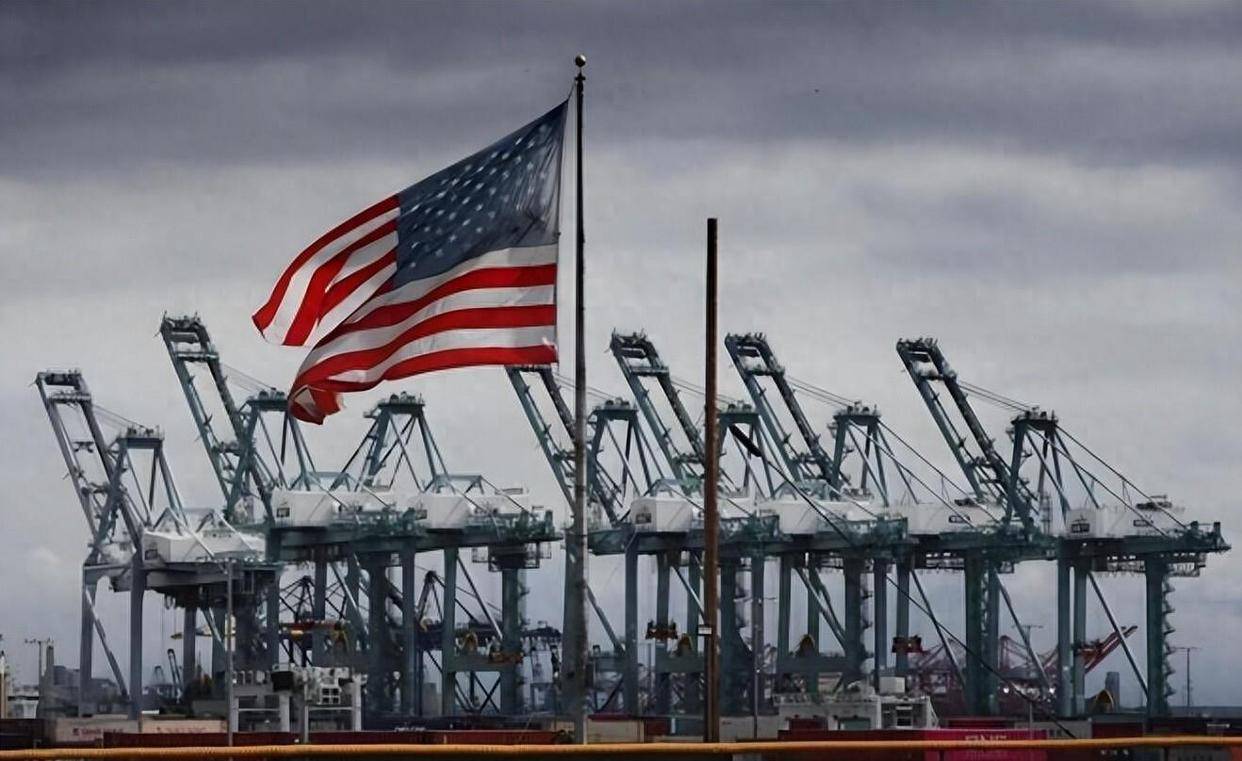
德媒:要不是中国把所有脏活累活全给干了,欧洲今天也不会这么惨
Sou Hu Cai Jing· 2025-11-05 13:58
Core Insights - China has significantly advanced in the rare earth industry, leaving Western countries at a disadvantage due to their earlier decision to outsource rare earth processing to China [2][3][5] - Rare earth elements, consisting of 17 different elements, are crucial for various technologies, including electric vehicles, wind turbines, and military applications [2][5] - The shift of rare earth production to China began in the 1990s, driven by Western companies seeking lower costs and less stringent environmental regulations [3][5][8] Industry Developments - In the 1990s, Western countries, including the US and Australia, had significant rare earth production but faced high costs and environmental challenges, leading to a decline in domestic production [3][5] - By 2008, China accounted for 80% of global rare earth exports, while Western countries relied on technology transfers to access cheaper Chinese products [5][6] - The European Union recognized the risks of dependency on Chinese rare earths but has been slow to take action, with recent initiatives aiming to reduce reliance by increasing local production [6][8] Market Dynamics - China's rare earth production reached 100,000 tons in 2015, while European demand for electric vehicles surged, highlighting the growing dependency on Chinese supply [6][8] - The EU's recent strategies, including the RESourceEU plan, aim to reduce reliance on China by developing local mining capabilities, although this is expected to take years [8][10] - China's dominance in the rare earth market has led to concerns in Europe regarding national defense and green energy initiatives, as the continent struggles to secure alternative sources [8][10]