智能手机

Search documents
收评:创指高开低走跌1.12% AI应用概念集体走弱
Xin Lang Cai Jing· 2025-12-03 07:17
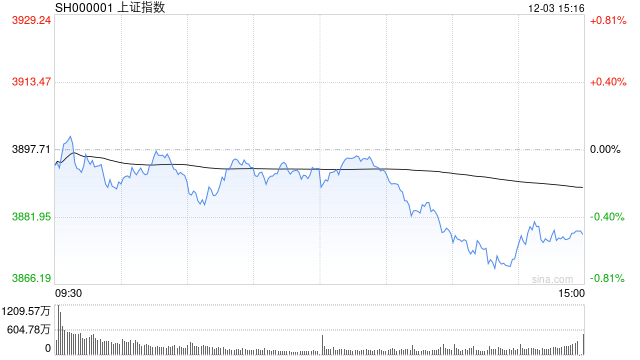
Market Overview - The market experienced a downward trend with all three major indices closing lower, with the Shanghai Composite Index at 3878.00 points, down 0.51% [9] - The ChiNext Index fell by 1.12% to 3036.79 points, while the Shenzhen Component Index decreased by 0.78% to 12955.25 points [9] Sector Performance - The superhard materials sector showed strength, with Sifangda rising over 15% [9] - The coal sector was active, with companies like Dayou Energy, New Dazhou A, and Antai Group hitting the daily limit [12] - The anti-flu concept stocks were also active, with Jindike and Yue Wannianqing rising over 10% [9] - Conversely, the AI application sector weakened, with Fushi Holdings dropping over 10% [9] - The consumer electronics sector faced adjustments, led by Haosheng Electronics, while the gaming media sector saw significant declines, with Zhejiang Wenlian leading the drop [9] Key Sectors Wind Power Equipment - Major companies like Dajin Heavy Industry and Delijia reached the daily limit, while Zhonghuan Hailu rose over 10% [11] - Dajin Heavy Industry signed a supply contract worth 1.339 billion yuan with Skyborn Renewables for a German offshore wind project [11] Coal - The coal sector saw a rise, with significant gains from Dayou Energy, New Dazhou A, and Antai Group [12] - According to GF Securities, coal prices have risen more than expected since Q4, with October thermal power generation increasing by 7.3% year-on-year [12] Institutional Insights - CICC reported that the A-share market valuation is relatively reasonable amid a synchronized global liquidity easing cycle, with a focus on growth sectors [16] - Huajin Securities indicated that December may see a strong upward trend in A-shares, driven by positive policies and external events [16] - Recommendations include balanced allocations in sectors like electronics, communications, media, computing, and renewable energy [16]

全球折叠屏手机出货新高:三星独大,华为增长10%,vivo增长67%
Guan Cha Zhe Wang· 2025-12-03 05:57
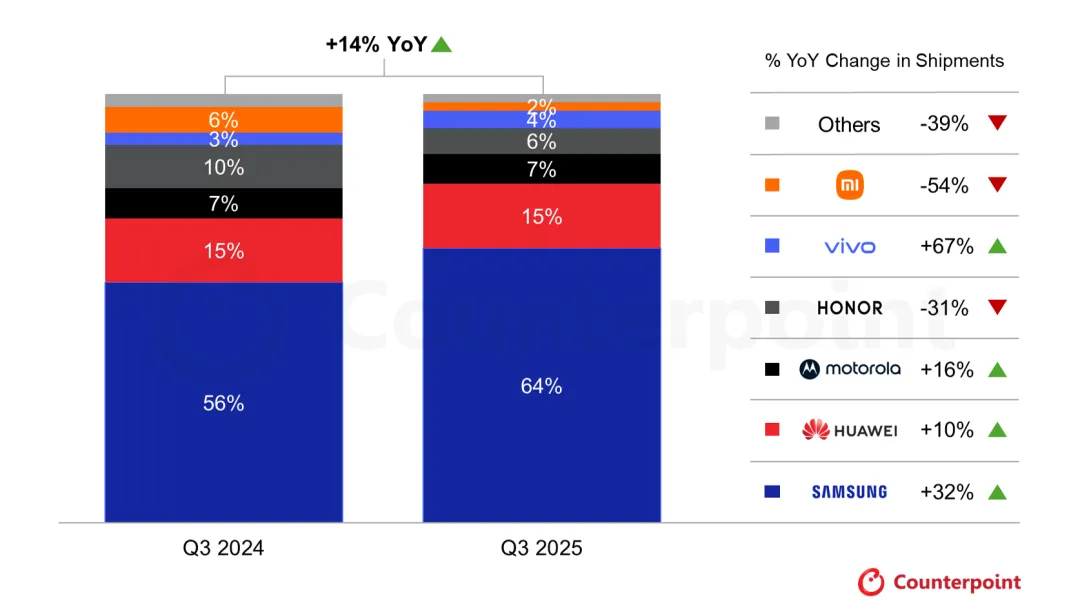
Core Insights - The global foldable smartphone market is projected to see a 14% year-on-year increase in shipments by Q3 2025, reaching a historical quarterly high for this category [1] - Samsung leads the market with a 64% share in Q3, experiencing a 32% increase in shipments compared to the previous year [1][3] - Huawei holds the second position with a 15% market share, growing by 10% year-on-year, while Motorola ranks third with a 7% share and a 16% increase [1][3] Market Performance - The foldable smartphone segment now accounts for 2.5% of global smartphone shipments, driven by the popularity of book-style models and the launch of Samsung's Galaxy Z Fold7 and Huawei's Mate series [3] - The Galaxy Z Fold7's features, such as a thinner body and improved durability, have significantly enhanced its appeal in the high-end market, contributing to unexpected growth [3] - Motorola's competitive pricing and strong channel partnerships have effectively expanded its user base in the foldable segment [3] Future Projections - Counterpoint Research anticipates a 16% year-on-year growth for the foldable market by the end of 2025, with high-end users increasingly favoring larger screens for productivity [4] - The market is expected to enter a significant expansion phase in 2026, driven by improvements in durability, thinner designs, and enhanced AI-driven software experiences [4] - Apple is expected to enter the foldable market in the second half of 2026, leveraging its large iPhone user base to initiate a new high-end product upgrade cycle [4] Competitive Landscape - The importance of technological innovation is increasing as existing manufacturers accelerate the development of multi-form factor products in anticipation of Apple's entry [5] - Companies are focusing on enhancing their technological leadership and product differentiation strategies, with foldable designs evolving beyond traditional book-style formats [5] - Samsung's upcoming tri-fold device is positioned as a pilot product to validate durability and software optimization before larger-scale commercialization [5]
全球折叠屏出货新高:三星独大,华为增长10%,vivo增长67%
Guan Cha Zhe Wang· 2025-12-03 05:56
Core Insights - The global foldable smartphone market is projected to see a 14% year-on-year increase in shipments by Q3 2025, reaching a historical high for the category [1] - Samsung leads the market with a 64% share in Q3, showing a 32% increase compared to the same period last year [1] - Huawei holds the second position with a 15% market share, growing by 10% year-on-year [1] - Motorola ranks third with a 7% share, experiencing a 16% increase [1] - Vivo and Xiaomi follow in fourth and fifth places, with Vivo showing a significant growth of 67%, while Xiaomi's shipments declined by 54% year-on-year [1] Market Trends - Foldable smartphones now account for 2.5% of global smartphone shipments, driven by the popularity of book-style models and the launch of Samsung's Galaxy Z Fold7 and Huawei's Mate series [3] - The Galaxy Z series, particularly the Z Fold7, has enhanced its appeal in the high-end market due to its thinner design, lighter weight, and improved durability [3] - Motorola's competitive pricing and strong channel partnerships have effectively expanded its user base in the foldable segment [3] Future Projections - The foldable smartphone market is expected to close 2025 with a stable growth rate of around 16% year-on-year [4] - By 2026, the market is anticipated to enter a significant expansion phase, driven by improvements in durability, thinner designs, and enhanced AI-driven software experiences [4] - Apple is expected to enter the foldable market in the second half of 2026, potentially reshaping the competitive landscape [4][5] Technological Developments - Major smartphone brands are intensifying their focus on technological leadership and product differentiation, with foldable designs evolving beyond traditional book-style formats [5] - Samsung's new triple-foldable model is positioned as a pilot product to validate durability and software optimization before larger-scale commercialization [5] - The entry of Apple into the foldable market is anticipated to bring substantial changes to the competitive dynamics [5]


AI端侧补充
小熊跑的快· 2025-12-03 05:15
Core Viewpoint - The article discusses the implications of the new AI phone developed by Doubao and Nubia, focusing on its ability to access applications quickly through a screen-reading mechanism, raising concerns about permissions and the potential for ecosystem conflicts [1][2][4]. Group 1: Technology and Functionality - The AI phone utilizes a screen-reading feature that simulates human interaction with applications, allowing it to access services like 12306 and Meituan, despite these not being listed in Doubao's partner MCPs [1][2]. - The phone's performance is noted to be impressive, especially considering it uses an earlier model of ByteDance's AI, with potential for significant improvements in future iterations [4]. Group 2: Ecosystem Conflicts - Major smartphone manufacturers, particularly Apple, are resistant to allowing AI assistants access to their operating systems, as this could undermine their revenue models [4][6]. - App developers, especially those reliant on user engagement for revenue, such as Meituan and Taobao, are likely to oppose the integration of AI assistants that could reduce user interaction with their platforms [4][5]. Group 3: Competitive Landscape - The article outlines a competitive landscape where companies like Google, Tencent, Alibaba, and ByteDance are positioning themselves in the AI assistant market, each with unique strengths and ecosystems [6][7]. - Google is highlighted as a leader due to its comprehensive ecosystem, while Tencent is expected to leverage its extensive WeChat mini-programs to develop its own AI assistant [6][7]. Group 4: Investment Opportunities - The article suggests that while the application landscape is fragmented, companies like Tencent, Alibaba, and Xiaomi are potential candidates for investment, particularly through ETFs that track technology and internet sectors [9][11]. - The recent market downturn, with declines around 15%, presents a potential opportunity for long-term investment in AI-related companies, with ByteDance being a notable player [11].

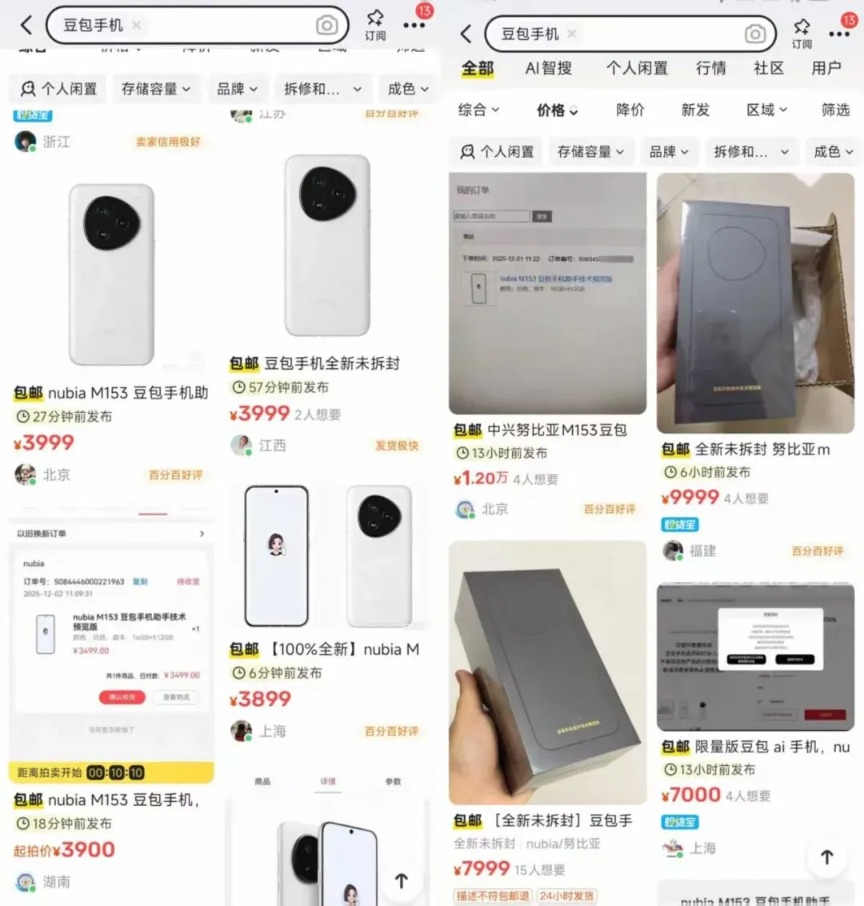
中兴豆包手机炒至9999元!用户登录微信被踢下线?微信回应:未有特别动作
Bei Jing Shang Bao· 2025-12-03 05:09
Core Insights - The collaboration between Doubao and ZTE has led to the launch of the Nubia M153 engineering phone, which has faced issues with WeChat login, indicating potential software integration challenges [1][5][6] - The Doubao Assistant is not a standalone product but an AI assistant software integrated with the Doubao App, enabling users to perform complex operations across multiple applications using voice commands [3][5] Group 1: Product Performance - Users have reported difficulties logging into WeChat on the Nubia M153, with messages indicating "your WeChat login environment is abnormal" [1][5] - The Doubao Assistant can automate various tasks such as price comparison and ordering across major e-commerce platforms, but it currently has limitations with WeChat functionalities [3][5][6] Group 2: Market Response - The Doubao Assistant phone was sold out at a price of 3499 yuan, with resale prices on platforms like Xianyu exceeding 7999 to 9999 yuan, indicating high demand and significant market interest [1] - Users have expressed concerns about the functionality of the Doubao Assistant, particularly regarding its interaction with WeChat, leading to temporary account access issues [6][8]


昔日“手机单反”陷品控争议:努比亚能靠“豆包AI”翻盘吗?
凤凰网财经· 2025-12-03 04:55
Core Viewpoint - The collaboration between ByteDance and ZTE to launch an AI smartphone has generated significant market interest, leading to a strong initial performance in the consumer electronics sector, but subsequent stock price corrections highlight ongoing challenges for ZTE and its Nubia brand [1][2]. Group 1: Market Reaction and Product Launch - On December 1, the AI smartphone concept sparked a surge in the consumer electronics sector, with ZTE's stock hitting the daily limit and trading volume exceeding 13.1 billion yuan [1]. - Following the initial excitement, ZTE's AH shares experienced a pullback, with H shares dropping over 6% [2]. - The Nubia M153, priced at 3,499 yuan, was launched with limited availability and quickly sold out, indicating strong initial demand [2]. Group 2: Industry Insights and Competitive Landscape - An industry insider noted that large model assistants may become standard in smartphones, but the competitive landscape will not provide unique advantages as various brands adopt different models [6]. - The integration of AI does not inherently resolve existing issues in smartphone performance, such as camera quality and battery life, which consumers should approach with realistic expectations [6]. Group 3: Nubia's Brand Challenges - Nubia, established in 2012, aimed to penetrate the high-end market but has struggled to maintain a significant market share, often hovering around 1% [7][8]. - Recent product launches have faced criticism for quality control and marketing issues, with the Nubia Z80 Ultra experiencing a problematic launch event [9][10]. - Nubia's high-end aspirations are hindered by a lack of differentiation and a narrow user base, making it difficult to compete against brands that dominate the mid-range market [15]. Group 4: Consumer Feedback and Quality Control Issues - User complaints highlight significant quality control issues, including camera focus problems and software bugs, leading to dissatisfaction with Nubia products [20][21]. - The Nubia Z80 Ultra has not resolved previous issues, with users reporting touch screen failures and overall poor performance [21][34]. - The brand's reputation is further damaged by negative feedback regarding customer service and warranty claims, with many users expressing frustration over unaddressed product defects [34].

报告:2025年Q3全球折叠屏智能手机出货量同比增长14%
Zheng Quan Shi Bao Wang· 2025-12-03 04:40
Core Insights - The global foldable smartphone shipment is expected to grow by 14% year-on-year in Q3 2025, reaching a historical quarterly high for this category [1] - The share of foldable smartphones in global smartphone shipments has reached 2.5% as they gain traction in the high-end market [1] - The foldable smartphone market is projected to close 2025 with a stable growth rate of approximately 16% year-on-year, driven by high-end users' preference for larger screens and enhanced durability [1] - The market is anticipated to enter a significant expansion phase in 2026, fueled by improvements in durability, thinner and lighter designs, optimized hinge and panel structures, and richer AI-driven software experiences [1]
一财主播说 | “豆包助手”手机上线三天 微信账号频现异常下线 字节撬动AI入口还需迈过几道坎?
Di Yi Cai Jing· 2025-12-03 04:04
Core Insights - ByteDance's "Doubao Assistant" phone has faced user issues shortly after launch, particularly with WeChat login problems [1] - The phone is a collaboration with ZTE, utilizing the nubia M153 engineering prototype, and is priced at 3499 yuan [1] - Despite initial problems, the phone sold out within a day, with resale prices on platforms like Xianyu increasing by 700 to 1500 yuan [1] Group 1 - ByteDance aims to capture the AI mobile operating system market through the Doubao Assistant, rather than developing its own hardware [1] - The collaboration with a smartphone manufacturer raises concerns over control and market positioning, as manufacturers may resist ceding AI OS entry points [1] - The Doubao Assistant's ability to simulate user interactions with third-party apps like Taobao and JD.com could disrupt existing commercial models, leading to potential pushback from these platforms [1] Group 2 - The introduction of the Doubao Assistant may inspire other internet companies to explore AI operating systems further, despite the challenges it faces [1]
2025年1-9月中国移动通信手持机(手机)产量为11.1亿台 累计下降4.8%
Chan Ye Xin Xi Wang· 2025-12-03 03:30
Group 1 - The core viewpoint of the article highlights a decline in the production of mobile communication handsets (smartphones) in China, with a notable year-on-year decrease of 9.4% in September 2025 and a cumulative decline of 4.8% for the first nine months of 2025 [1][3]. Group 2 - In September 2025, the production of mobile communication handsets in China reached 150 million units [1]. - The cumulative production of mobile communication handsets from January to September 2025 totaled 1.11 billion units [1].


比华为多个屏幕但更厚重,三星要用三折叠跟苹果硬碰硬
Tai Mei Ti A P P· 2025-12-03 03:27
Core Viewpoint - The smartphone market is facing a decline, particularly in China, which has experienced two consecutive quarters of negative growth. However, the foldable smartphone segment is still growing, with both Huawei and Samsung leading the market. Samsung has recently launched its first tri-fold smartphone, the Galaxy Z TriFold, which is set to compete with Huawei's offerings [2][12][18]. Group 1: Product Launches and Features - Samsung's Galaxy Z TriFold features a unique G-shaped folding mechanism, allowing for an additional external display, but it is thicker and heavier compared to Huawei's Mate X [5][9]. - The Galaxy Z TriFold has a thickness of 3.9mm at its thinnest point and weighs 309g, while Huawei's Mate X has a thickness of 3.6-12.8mm and weighs 298g [5][12]. - The device is equipped with a Snapdragon processor from the previous year, not the latest version, which raises questions about its competitiveness [3][18]. Group 2: Market Dynamics and Competition - Samsung and Huawei together hold 58% of the global foldable smartphone market share, with Samsung at 34% and Huawei at 24% [12][17]. - The foldable smartphone market is still considered niche, accounting for only 2.5% of global smartphone shipments as of Q3 2025 [17]. - The introduction of the Galaxy Z TriFold is seen as a strategic move to counter Apple's anticipated entry into the foldable market next year [18][21]. Group 3: Challenges and Future Outlook - The tri-fold design presents technical challenges in terms of components like screens and hinges, which Samsung is addressing with its Armor FlexHinge technology [7][24]. - The foldable smartphone segment is expected to evolve, with a focus on software optimization to enhance user experience, particularly as Apple prepares to launch its own foldable device [22][24]. - The Chinese market is projected to maintain a significant share of the global foldable smartphone market, with expectations of 40% over the next five years [15][17].