智能手机

Search documents
首款“豆包助手”手机售罄,二手平台加价700起
第一财经· 2025-12-02 02:51
Core Viewpoint - The first "Doubao Assistant" phone developed by ZTE and ByteDance has sold out, with second-hand prices on platforms like Xianyu ranging from 4200 to 4999 yuan, exceeding the official price by 700 to 1500 yuan [3][6]. Group 1: Product Development and Sales - The "Doubao Assistant" phone is a collaboration where Doubao leads the AI assistant product definition and experience, while ZTE's Nubia handles hardware development and manufacturing [3]. - Nubia has not disclosed sales data yet, indicating that the initial release was limited [3]. - The official website shows that the phone is not completely out of stock, as developers can apply for an F code to purchase it [3]. Group 2: Software Updates and Future Plans - Nubia plans to maintain a software update frequency of approximately every two weeks until the end of Q1 2026 [4]. - Doubao is exploring partnerships with multiple phone manufacturers but does not have plans to develop its own phone [4]. Group 3: Industry Competition and Collaboration - Major domestic phone manufacturers currently do not have similar collaboration plans with Doubao, although they have existing partnerships with other AI service providers [5]. - The integration of voice assistants into operating systems represents a significant control over ecosystem traffic and future service business models for phone manufacturers [7]. - Doubao's strategy of partnering with smaller manufacturers may allow it greater control over model development, similar to Huawei's "Smart Selection Car" model [8].



孙正义回应清仓英伟达;“豆包手机”来了丨新鲜早科技
2 1 Shi Ji Jing Ji Bao Dao· 2025-12-02 02:23
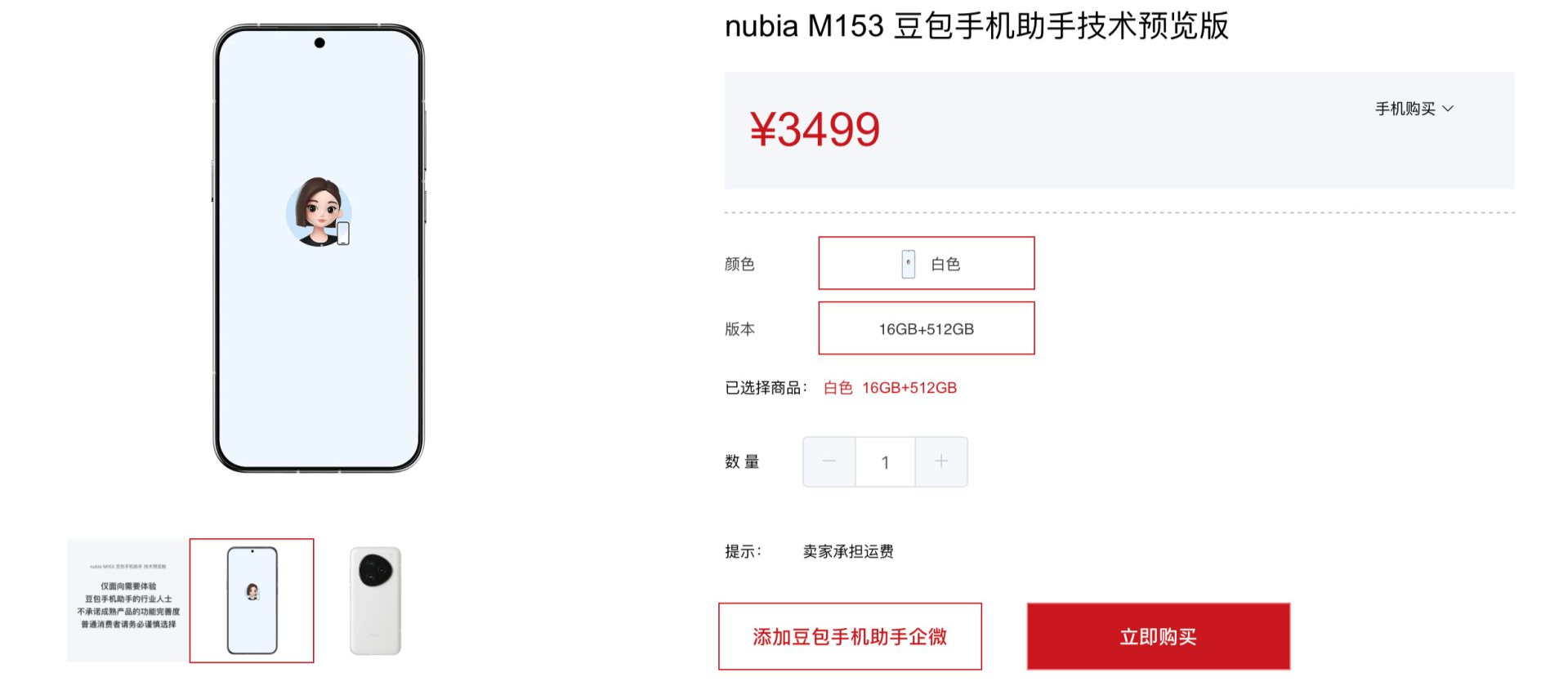
21世纪经济报道新质生产力研究院综合报道 12月1日,罗永浩发长文宣布,"罗永浩的十字路口"之年度科技创新分享大会(2025)将于今年12月30 日在上海召开。在长文中,罗永浩解答了一些相关问题。他表示,科技创新分享大会不是"带货直播", 大会上将发布细红线科技内部开发的AI软件。 【巨头风向标】 软银孙正义回应清仓英伟达:急需资金建设数据中心 12月1日消息,软银集团创始人孙正义坦言,如果软银在推进AI计划时能有"无限的资金",那么自己根 本不会卖掉英伟达的股票,只是因为为了大力投资OpenAI等一系列项目,才不得不割爱。这是孙正义 对软银清仓英伟达全部持股的首次回应。他在东京的FII Priority Asia论坛上说,公司需要资金建设数据 中心,并推动多项AI相关投资,"卖英伟达的时候我都快哭出来了"。软银近期在AI上全面提速:与鸿海 合作建设"星际之门"数据中心、收购美国芯片公司Ampere Computing,并计划在今年底前进一步增持 OpenAI。 "豆包手机"来了 字节跳动旗下豆包团队正式发布豆包手机助手技术预览版,搭载于字节与中兴联合开发的nubia M153工 程样机,售价3499元,仅面 ...

港股股票回购一览:46只个股获公司回购
Mei Ri Jing Ji Xin Wen· 2025-12-02 01:20
Group 1 - On December 1, a total of 46 Hong Kong stocks were repurchased by companies, with 5 stocks having repurchase amounts exceeding 10 million HKD [1] - Tencent Holdings, Xiaomi Group-W, and Vitasoy International had the largest repurchase amounts, totaling 636 million HKD, 402 million HKD, and 13.0162 million HKD respectively [1] - As of December 1, 251 Hong Kong stocks have been repurchased this year, with 65 stocks having a cumulative repurchase amount exceeding 100 million HKD [1] Group 2 - The companies with the largest cumulative repurchase amounts this year are Tencent Holdings, HSBC Holdings, and AIA Group, with repurchase amounts of 67.322 billion HKD, 30.257 billion HKD, and 17.693 billion HKD respectively [1]
豆包手机助手来了,适合努比亚等小厂,华为小米不大可能买单?
3 6 Ke· 2025-12-02 00:11
回头看看这一年,AI大模型那是遍地开花。Sora生成的视频已经能以假乱真,GPT-5据说智商已经赶超人类平均水平,就连咱们国内的豆包、千问和 DeepSeek也是卷得飞起。 大伙有没有觉得,2025年的科技圈虽然热闹,但总觉得少了点什么? 但是,兄弟们发现没有,这些所谓的高科技,好像大多还停留在电脑网页里,或者作为一个聊天App躺在咱们手机里。 回到咱们每天用得最多的手机上,情况好像没啥大变化。你还得一个个点击App图标,还得在微信、淘宝、小红书之间切来切去。那些大模型吹得天花乱 坠,结果你想点个外卖,还是得自己动手划屏幕。 就在大伙都以为2025年就要这么平平淡淡结束的时候,字节跳动这边却突然搞了个大新闻。 12月1日,字节跳动发布了豆包手机助手预览版。 (图源:豆包) 简单来说,这是一个面向手机厂商的系统级服务,它将豆包大模型深度融入操作系统,让用户只需动嘴(或动一下手指),就能指挥手机去执行那些原本需 要点击几十次屏幕的繁琐操作。 遗憾的是,咱们雷科技这次还真没提前拿到产品,我对那台中兴工程样机其实还挺感兴趣的。 不过,这倒也不影响我们带大伙一起看看,豆包的背后到底有多少料就是了。 Nubia首发,豆包 ...
影响市场重大事件:豆包手机助手发布技术预览版 可在工程样机nubia M153上体验
Mei Ri Jing Ji Xin Wen· 2025-12-01 23:29
Group 1 - Doubao Mobile Assistant has released a technical preview version, which can be experienced on the engineering prototype nubia M153, in collaboration with ZTE [1] - UBS Securities predicts that the profit growth rate of all A-shares in 2026 is expected to rise to 8% from 6% this year, driven by macro policies and long-term capital inflows [2] - The Ministry of Industry and Information Technology encourages Chinese companies in solar, wind, lithium batteries, and new energy vehicles to expand internationally and participate in green technology cooperation [3] Group 2 - Beijing plans to strengthen the integration of "Artificial Intelligence + government services" and enhance the top-level design of large models for digital governance [4] - CITIC Securities suggests a strategy of opportunistic layout in preparation for the year-end market, focusing on sectors like AI, new energy, and innovative pharmaceuticals [5] - TrendForce reports that the supply of NAND Flash wafers is tightening, with contract prices for some products increasing by over 60% in November due to strong demand from AI applications and enterprise SSD orders [6] Group 3 - Liaoning's 14th Five-Year Plan emphasizes the development of core AI industries and innovation in industrial software to promote intelligent development across all sectors [7][8] - The National Energy Administration is working to improve power supply reliability and quality, responding to increasing public expectations for stable voltage and overall power quality [9] - Amazon and Google are set to launch a joint multi-cloud network service to enhance network interoperability, addressing the growing market demand for reliable connections [10] Group 4 - The State Administration for Market Regulation has officially accepted registration applications for infant liquid milk formula products, aligning their management with that of infant formula powder [11]
豆包出手就是“王炸” 2100亿巨头直接涨停!
Mei Ri Jing Ji Xin Wen· 2025-12-01 17:04
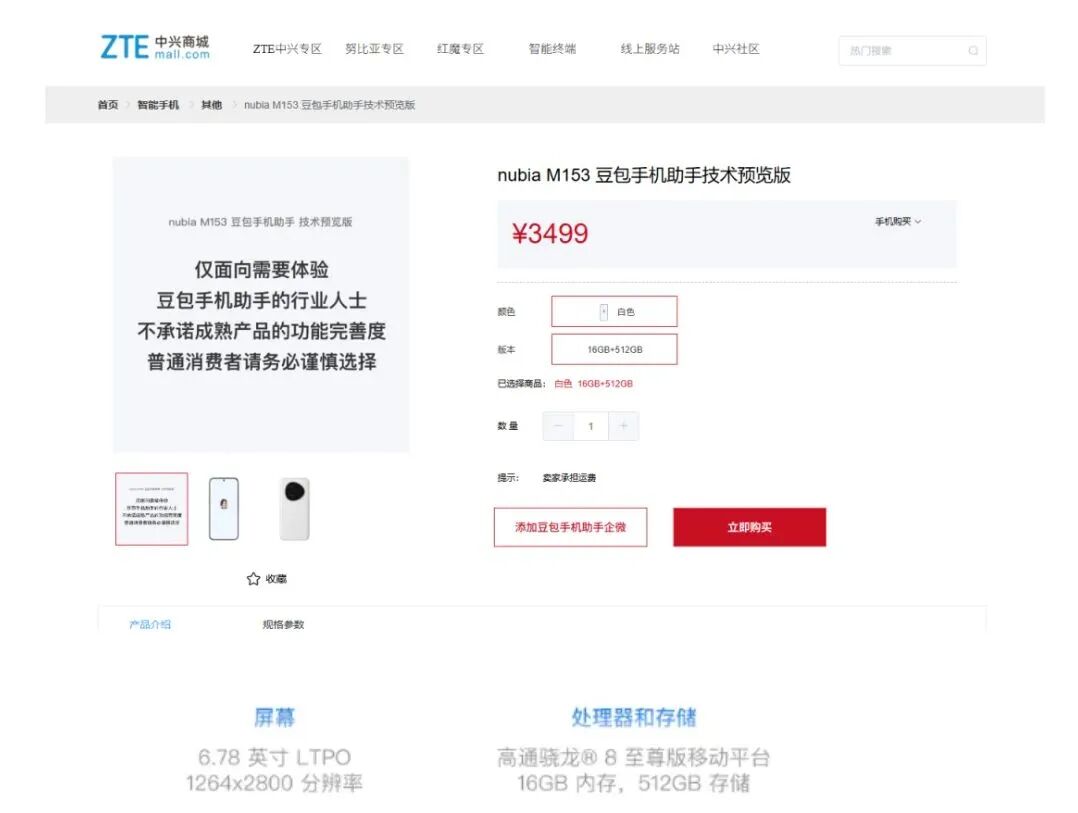
Group 1 - The core point of the news is the launch of the Doubao Phone Assistant, an AI assistant software developed by ByteDance in collaboration with smartphone manufacturers, currently in a technical preview version [2][3] - The Doubao Phone Assistant is not a standalone product but is integrated into the Doubao App, with the first demonstration on a prototype device, the Nubia M153, developed in partnership with ZTE [2][3] - The Nubia M153 features a 6.78-inch screen and is powered by the Qualcomm Snapdragon 8 Gen 2 platform, with a version offering 16GB of RAM and 512GB of storage priced at 3499 yuan, aimed at developers and tech enthusiasts [2] Group 2 - The Doubao Phone Assistant allows users to interact through voice commands, access various functionalities, and integrates features like intelligent photo editing and cross-platform price comparison [3] - ZTE's stock experienced a significant increase following the announcement, with its A-shares closing at 46.3 yuan per share and Hong Kong shares rising by 13.94% to 35.8 HKD, resulting in a total market capitalization of 211.1 billion yuan [3] - ZTE's strategy includes increasing investment in mobile phones, enhancing brand and channel development, and collaborating with AI technology firms to improve product competitiveness [4]

豆包出手就是“王炸”,2100亿巨头直接涨停!
Mei Ri Jing Ji Xin Wen· 2025-12-01 17:02
Core Insights - ByteDance's Doubao team launched the technical preview of the Doubao Phone Assistant, which is not an independent phone but an AI assistant software developed in collaboration with smartphone manufacturers at the operating system level [1][3] - The Doubao Phone Assistant is currently available on a prototype device, the nubia M153, developed in partnership with ZTE [1][3] Group 1: Product Features - The nubia M153 features a 6.78-inch screen and is powered by the Qualcomm Snapdragon 8 Gen 2 mobile platform, with a version offering 16GB RAM and 512GB storage priced at 3,499 yuan [3] - Users can interact with the Doubao Assistant through voice commands, an AI button on the phone, or headphones, allowing for direct engagement with the app and various functionalities [3] - Key functionalities include querying content displayed on the screen, intelligent removal of irrelevant objects in photos, one-click installation of multiple apps, tracking logistics across shopping platforms, and cross-platform price comparison and ordering [3] Group 2: Market Impact and Collaboration - Following the announcement, ZTE's stock surged, closing at 46.3 yuan per share in A-shares and 35.8 Hong Kong dollars in Hong Kong, marking a 13.94% increase and a total market capitalization of 211.1 billion yuan [3] - ZTE's collaboration with Doubao is characterized by Doubao leading the product definition and user experience, while ZTE's nubia handles hardware engineering and technical development [4] - ZTE plans to increase investment in its smartphone segment, focusing on brand and channel development, and enhancing product competitiveness through partnerships with AI technology firms [4]
AI手机赛道迎来重量级跨界玩家
Zheng Quan Ri Bao Zhi Sheng· 2025-12-01 16:37
Core Insights - The collaboration between ByteDance's AI assistant "Doubao" and ZTE marks a significant entry of a major player into the AI smartphone sector, focusing on redefining the hardware ecosystem through AI capabilities rather than manufacturing devices directly [1][2] - The partnership is seen as a critical variable in the industry's evolution, with the AI smartphone sector index rising following the announcement, indicating positive market sentiment [1] Group 1: Cross-Industry Collaboration - Doubao is a solution that requires deep collaboration with smartphone manufacturers at the operating system level, with ByteDance's strategy centered on "ecological cooperation" rather than self-manufacturing devices [2] - The initial batch of Nubia M153 prototypes, featuring Doubao's AI capabilities, is approximately 30,000 units, with ZTE announcing a strong market response and plans for a second-generation model [2] - ByteDance's hardware team, Ocean, has integrated members from various projects, indicating a long-term strategy of combining large models, super apps, and hardware terminals [2] Group 2: Market Dynamics and Competition - The entry of cross-industry players like ByteDance is expected to disrupt existing smartphone brands and user experience, compelling traditional manufacturers to either develop their own solutions or rely on ecological partners for AI capabilities [3] - Leading smartphone manufacturers have established their own competitive advantages, with Huawei, Honor, OPPO, and Vivo enhancing their AI capabilities and user experiences through innovative technologies [4] - IDC forecasts a strong growth in smartphone sales by the end of the year, benefiting the entire supply chain, including component suppliers and companies like ZTE and Sichuan Furong Technology [5][6]
花旗闭门会-2026中国科技硬件展望,光模块存储领跑中低端手机承压更看好PCB上游
花旗· 2025-12-01 16:03
Investment Rating - The report indicates a positive outlook for the optical transceiver market and recommends TCL Technology as a preferred investment target due to its significant revenue from LCD panels [8][9]. Core Insights - The global smartphone market is expected to see a 5% decline in low-end smartphone shipments in 2026, while average selling prices are projected to rise by nearly 7% [1][3]. - AI-related PCB and server stocks are currently trading at P/E ratios below 20, with Google's contribution to revenue and profit expected to increase significantly by 2026 [6]. - The panel prices are stabilizing after a decline, with an anticipated upward trend starting in 2026, benefiting companies like TCL Technology [7][8]. - The optical transceiver market is performing well, with positive feedback from Google's Gemini 3 project, indicating strong demand for 1.6T and 800G products [9]. Smartphone Market Outlook - The low-end smartphone market is facing challenges, with manufacturers likely to increase prices by approximately 120 RMB per unit to offset rising costs [5][4]. - Semiconductor companies in the smartphone sector are dealing with inventory surplus issues, particularly in the CIS segment, which may lead to short-term difficulties [13]. PCB and Server Industry - The P/E ratios for AI-related PCB and server stocks are low, with expectations for Google's revenue contribution to rise from 15% to 20% and profit from 20% to 25% by 2026 [6]. Panel Industry Trends - TCL Technology holds a strong position in the LCD panel market, with 60%-70% of its revenue derived from this segment, making it a key player as panel prices are expected to rise [8][7]. Memory Market Trends - Memory prices are expected to continue rising until at least mid-2026, with limited impact from Chinese suppliers until 2027 [11]. - The transition from DDR4 to DDR5 is anticipated in 2026, as both types are expected to have similar pricing [12].

不造手机 却想“接管”你的手机:字节豆包扔出一枚“生态炸弹”
Mei Ri Jing Ji Xin Wen· 2025-12-01 15:03
Core Insights - The launch of Doubao Mobile Assistant represents a significant integration of ByteDance's AI capabilities with mobile hardware, marking a strategic shift towards ecosystem collaboration rather than direct hardware development [1][6][9] - The assistant leverages Doubao's large model technology to enhance user interaction and automate tasks across applications, aiming to redefine the user experience on mobile devices [2][3][4] Group 1: Product Features - Doubao Mobile Assistant enables real-time interaction through voice commands, allowing users to ask questions about screen content and access common functions like voice and video calls [3][4] - The assistant features cross-application automation, enabling users to perform tasks such as ticket booking and price comparison across multiple e-commerce platforms with simple voice commands [3][4] - A memory function allows the assistant to store user preferences and provide personalized recommendations based on previously input data, enhancing user convenience [4] Group 2: Strategic Positioning - ByteDance's decision to collaborate with existing smartphone manufacturers rather than developing its own devices is seen as a cost-effective strategy in a highly competitive mobile market [6][9] - The company aims to embed its AI capabilities into existing hardware ecosystems, thereby expanding its reach and enhancing user engagement with its software solutions [9] - The launch of Doubao Mobile Assistant is positioned as a critical step in establishing ByteDance's presence in the AI-driven mobile landscape, with potential implications for user interaction with technology [9][10]