
无人机

Search documents
2025杭州未来生活嘉年华享受未来的乐趣
Hang Zhou Ri Bao· 2025-10-21 03:53
Group 1 - The 2025 Hangzhou Future Life Carnival took place from October 17 to 19, showcasing new products, technologies, and ideas from around the world, emphasizing a deep dialogue between Hangzhou and the future [1] - Kevin Kelly, a renowned futurist and author, delivered a keynote speech on "The Possibilities of the Next 10,000 Days," discussing the impact of AI and advanced technologies on future lifestyles, including AI-generated films and the potential for China to produce top AI chips within five years [1] - The event featured innovative aerial delivery technology from Xunyi Technology, enabling drone delivery of food, and showcased personal flying vehicles from Ku Fei (Zhejiang) Aircraft Technology Co., Ltd., highlighting advancements in transportation [2] Group 2 - Various robots were presented, including the Robbyant-R1 from Ant Lingbo Technology and the AI TR4, demonstrating capabilities in both domestic and industrial applications, indicating a shift towards more intelligent and versatile robotic solutions [2] - The "Ageless Future" segment introduced technologies aimed at enhancing the quality of life for the elderly, such as care robots and smart mobility aids, showcasing the human-centric approach of future technologies [2] - The AI Experience Park featured a range of AI applications, from AI pets to smart fitness solutions, allowing attendees to engage with the practical applications of AI in everyday life [3]
瞭望 | 天津低空经济蓄势腾飞
Sou Hu Cai Jing· 2025-10-21 03:41
Core Insights - The low-altitude economy in Tianjin is rapidly developing, connecting industrial and innovation chains, and contributing to high-quality local economic growth [2][3] Industry Overview - The low-altitude economy is expanding from traditional aviation and training to diverse applications such as agricultural protection, logistics, and emergency rescue [3][4] - By 2025, the low-altitude economy market in China is projected to reach 1.5 trillion yuan, with expectations of 3.5 trillion yuan by 2035 [3] Company Developments - Tianjin has seen the emergence of numerous innovative companies in the low-altitude sector, including manufacturers of drones and supporting enterprises [3][8] - A company named Yifei Zhikong showcased a drone performance during the National Day celebrations, highlighting the growing trend of drone displays in cultural events [1][2] Technological Advancements - Companies like Zhidao Innovation provide comprehensive drone avionics solutions for various applications, accumulating over 500 global clients [3] - Tianjin Yunsheng Intelligent Technology has developed an autonomous drone inspection system that enhances efficiency and provides detailed reports [4][6] Policy Support - The Tianjin government has implemented action plans to support the low-altitude economy, aiming to establish over 60 related enterprises by 2026 [8][9] - The establishment of various research centers and alliances in Tianjin aims to provide organizational support and policy consultation for the low-altitude industry [9][10] Regional Development - The low-altitude economy is characterized by a cluster development model, with specific applications in environmental monitoring and urban management [11][12] - The Tianjin Port Free Trade Zone has become a hub for over 70 companies in the low-altitude sector, creating a comprehensive economic chain [9][12] Investment Opportunities - The recent Tianjin International Helicopter Expo showcased new technologies and products in the low-altitude economy, attracting global interest and investment [13]

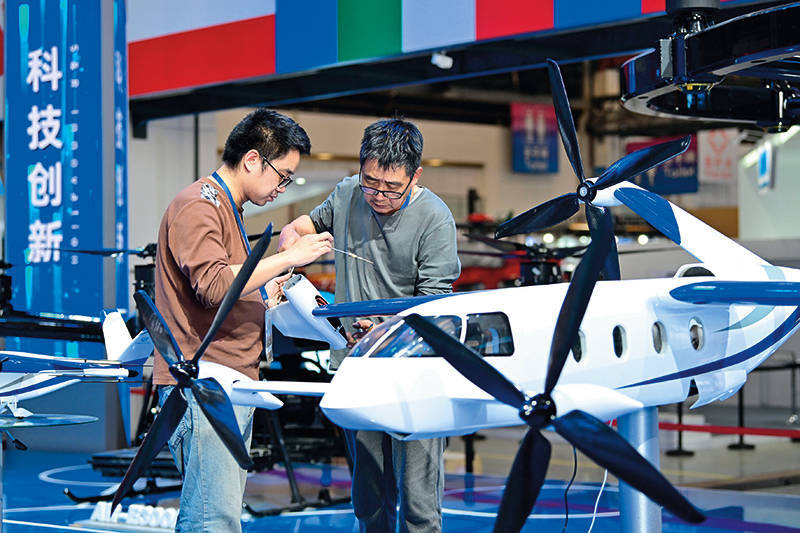
某巨头史上最大规模裁员!遣散费最高超400万;曝阿里夸克秘密开展C计划AI业务,或对标字节豆包;格力朱磊曝友商买水军丨雷峰早报
雷峰网· 2025-10-21 00:41
Key Points - Gree's marketing director Zhu Lei exposed competitors buying fake reviews, suggesting that these actions were aimed at promoting Gree while disparaging Xiaomi [4][5] - Alibaba's Quark is secretly developing an AI project called "C Plan," focusing on conversational AI applications, potentially competing with ByteDance's Doubao [8][9] - Micron plans to exit the Chinese data center market due to a ban, which has resulted in a significant loss of revenue, with its sales in China dropping from 14.03% in 2023 to an expected 7.1% by 2025 [10] - Hongguo is reportedly testing short drama e-commerce, leveraging its 200 million monthly active users to connect with Douyin's e-commerce platform [11] - Meituan's S-team has added two new members, continuing its trend of promoting young talent within the organization [12] - DJI is urgently recruiting a new head for its overseas stores following the departure of its previous leader [13] - Mercedes-Benz is undergoing a significant layoff, with around 4,000 employees opting for a generous severance package, highlighting the company's restructuring efforts [38] - Apple's AI department is reportedly in disarray, with key personnel leaving, raising concerns about the future of its AI initiatives [40]


滨江空地上办起“无人机驾校”
Chang Jiang Ri Bao· 2025-10-21 00:41
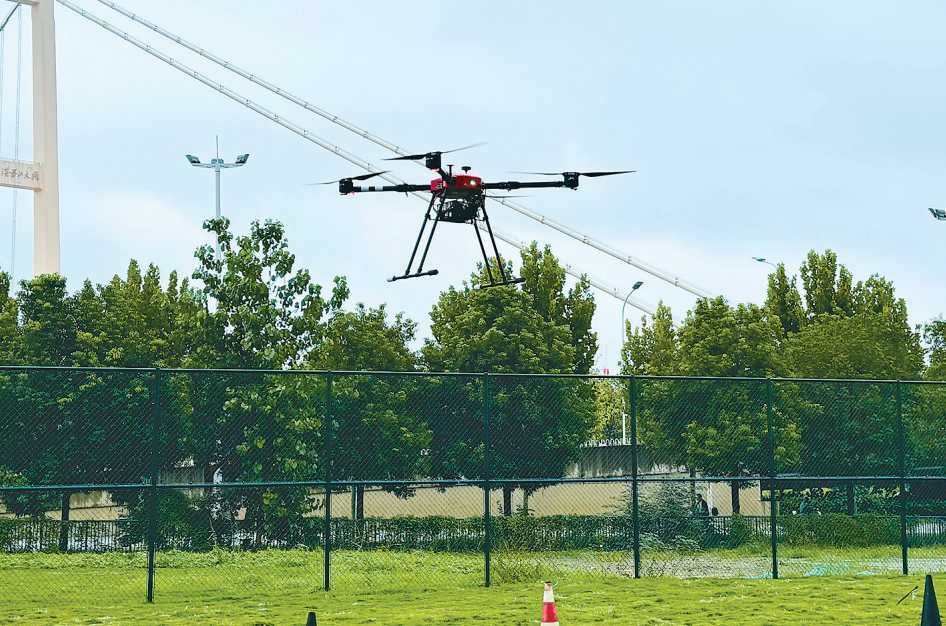
据介绍,当前项目计划以白沙滨江飞行营地与展示中心为中枢,联动誉江南小区、杨泗港大桥及洪山江滩等资源, 在3公里半径内形成低空城市政务、低空城市物流、低空城市研学、低空城市文旅四大类场景,打造"15分钟生活圈"城 市滨江低空场景综合应用区。 其中,低空城市政务主要将无人机用于城市巡查,提升城市治理的精细化水平;低空城市物流则打通空中渠道,实 现各类物品快速配送;低空城市研学依托飞行营地的优质资源,为科技爱好者提供体验场所;低空城市文旅则结合各景 点开发"空中游览"项目,让市民和游客从全新视角领略武汉魅力。通过这些场景的落地,让低空经济真正融入市民日常 生活。 近日,位于洪山区武金堤路与杨泗港快速通道交会处的白沙滨江飞行基地,一名学员在教练的指导下,正在练习操 控一台无人机。就在不久前,这里还曾是一块空置多年的小微地块,如今变成集无人机培训、展示、应用于一体的现代 化科技场所。 一台中型无人机摆放在基地草坪,旭日蓝天科技有限公司教练曹灿正在演示无人机绕桩飞行等技能。"此类飞行器 用途广泛,可用于智慧物流、消防应急、低空巡查等领域。" "基地以CAAC执照培训、低空领域行业专项培训及飞行体验为抓手,聚力培育低空产业 ...
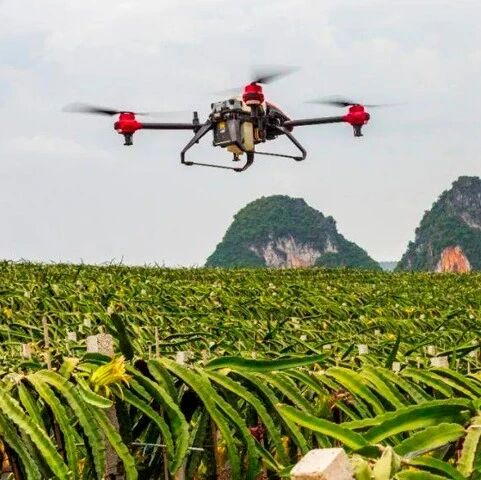
同大疆开打价格战,农业无人机行业「老二」冲击港股|IPO观察
36氪· 2025-10-21 00:10
Core Viewpoint - The article discusses the growth and competitive landscape of the agricultural drone industry in China, highlighting the significant market share held by DJI and XAG Technology, as well as XAG's recent financial performance and IPO ambitions [4][10][12]. Industry Overview - The agricultural drone market in China is mature, with sales expected to reach nearly 3 billion yuan in 2024, making it the largest single market globally [4]. - The number of agricultural protection drones in China reached 251,000, with a treatment area of 2.67 billion acres, both showing nearly 25% growth year-on-year [4]. Company Analysis: XAG Technology - XAG Technology, founded in 2012, initially explored various drone applications before focusing on agricultural drones after identifying market demand for their flight control systems [8][9]. - In 2023, XAG's market share in agricultural drone subsidies was 15.8%, while DJI held 80.54% [9]. - XAG is nearing its IPO, having submitted a prospectus in September 2023, and has achieved profitability with a projected net profit of 70.4 million yuan in 2024 [10][12]. Financial Performance - XAG's revenue from agricultural drones has been increasing, with figures of 475 million yuan in 2022, 499 million yuan in 2023, and projected 935 million yuan in 2024 [20]. - The average selling price of XAG's agricultural drones has decreased from 46,000 yuan in 2022 to 37,458 yuan in the first half of 2025, reflecting a strategy of gaining market share through lower prices [21][22]. Competitive Landscape - The agricultural drone industry has seen a "arms race" between DJI and XAG, with both companies continuously improving their products' payload and endurance [25]. - XAG has established a loyal customer base through significant R&D investments, which have contributed to its competitive positioning against DJI [27]. - The overseas market presents a significant growth opportunity for XAG, with international revenue increasing from 146 million yuan in 2022 to 371 million yuan in 2024 [28]. Market Challenges - Despite the growth potential, XAG faces challenges in the competitive landscape, particularly from DJI, which dominates the overseas market with over 70% market share in regions like Japan and Southeast Asia [29][30]. - The agricultural sector's complexity and fragmentation in rural China pose additional challenges for XAG's expansion efforts [11].
运载无人机解锁山区运输“新姿态”
Ren Min Ri Bao Hai Wai Ban· 2025-10-20 22:42
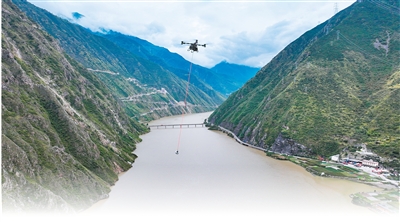
图为大疆FC100运载无人机空中吊装作业的场景。 巍巍贡嘎山,滔滔大渡河。在四川省甘孜藏族自治州泸定县,湍急的大渡河从两山之间的峡谷中奔流而 过。 9月11日至12日,大疆运载在这里举办了"甘孜天路——大疆运载无界之旅"深度媒体交流活动,在实景 演示环节,大疆FC100运载无人机吊着80公斤电力绝缘子,仅用15分钟便轻松飞越了大渡河,飞上需6 小时攀爬的险峰。 实景演示中,随着桨叶起转,空气像被"切开"。大疆FC100运载无人机挂载着电网绝缘子抬升,快速越 过峡谷,稳稳落在对岸——电力工人原本要数小时背运的物资,被安静放下,几乎没有摆动。 无人机在崇山峻岭间的"振翅",带来改变的不仅是物资运输的效率,还有偏远山区的发展机遇。国产运 载无人机正在打通空中运输渠道,让昔日"天堑"在碳纤维桨叶的搅动下,蜕变为"通途"的新注脚。 演示 把"手掌路"变成"天路" 在泸定的大山深处,脚乌村静静伫立。 这个拥有800多户人家、约2000人口的村落,曾长期被群山卡住与外界相连的通道。 这里的路,被称为"手掌路",之字形的道路贴山而凿,密得像摊开的手掌。对当地人而言,"手掌路"不 是风景,而是平凡的生活。孩子上学、老人就医、农 ...
中国GDP被低估了?美学者称:中国故意压低GDP,实际规模或超美国
Sou Hu Cai Jing· 2025-10-20 13:58
Core Viewpoint - The debate surrounding the underestimation of China's GDP suggests that if more scientific and comprehensive statistical methods were applied, China's economic scale might already be close to or even surpassing that of the United States, potentially reshaping the global economic landscape [1][19]. Statistical Methodology - The differences in GDP calculation methods between the U.S. and China are significant, with the U.S. primarily using the expenditure approach while China employs the production approach, leading to potentially divergent results for the same economic activities [3][5]. - The U.S. includes certain non-market activities in its GDP calculations, such as illegal drug trade and virtual rent for owner-occupied housing, which are excluded from China's GDP calculations to ensure only legal and verifiable activities are reflected [5][8]. Economic Structure - China's economy is characterized by a strong emphasis on the real economy, particularly in manufacturing, infrastructure, and exports, which are often undervalued in nominal GDP figures [7][10]. - In terms of energy production, China's electricity generation reached 9,456.4 billion kWh in 2023, double that of the U.S., indicating a robust industrial activity [10][11]. Manufacturing and Technological Advancements - China's manufacturing output is significantly higher than that of the U.S., with steel production at 1.384 billion tons (17 times that of the U.S.) and cement production at 22 times that of the U.S. [11][13]. - The rise of Chinese companies in high-tech sectors such as electric vehicles, drones, and solar energy is notable, with electric vehicle exports projected to reach $40 billion in 2024, capturing over 60% of the global market [13][19]. Strategic Considerations - China appears to adopt a cautious approach regarding its GDP figures, possibly as a strategic move to avoid provoking geopolitical tensions that could arise from claiming economic superiority over the U.S. [15][17]. - The historical context of Japan's economic rise in the 1970s serves as a lesson for China, emphasizing the importance of maintaining a low profile while continuing to strengthen its economic foundations [17][19]. Future Outlook - China's focus on emerging industries such as renewable energy, artificial intelligence, and aerospace is expected to facilitate a transition from quantitative to qualitative economic growth, leading to a natural surpassing of U.S. GDP figures without relying on statistical manipulation [19][21]. - The true strength of China's economy is reflected in its industrial output and technological advancements, suggesting that future competition will hinge on industry, technology, and institutional capabilities rather than mere numerical GDP comparisons [21].

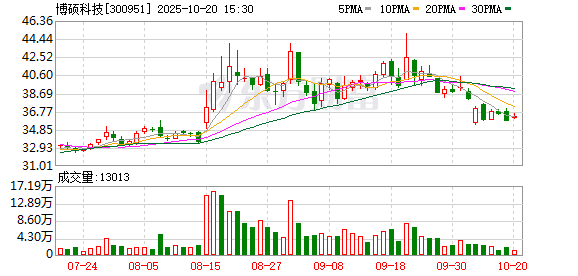
博硕科技:公司当前在低空经济无人机领域的产品为精密功能件
Zheng Quan Ri Bao· 2025-10-20 10:40
Group 1 - The company is currently focused on precision functional components in the low-altitude economy drone sector and has established a partnership with YingShi Innovation [2] - The collaboration with YingShi Innovation has not yet had a significant impact on the company's performance [2] - The main products in the new energy and automotive sectors, such as power batteries and energy storage batteries, are also precision functional components, which are important for the company's business development direction [2]

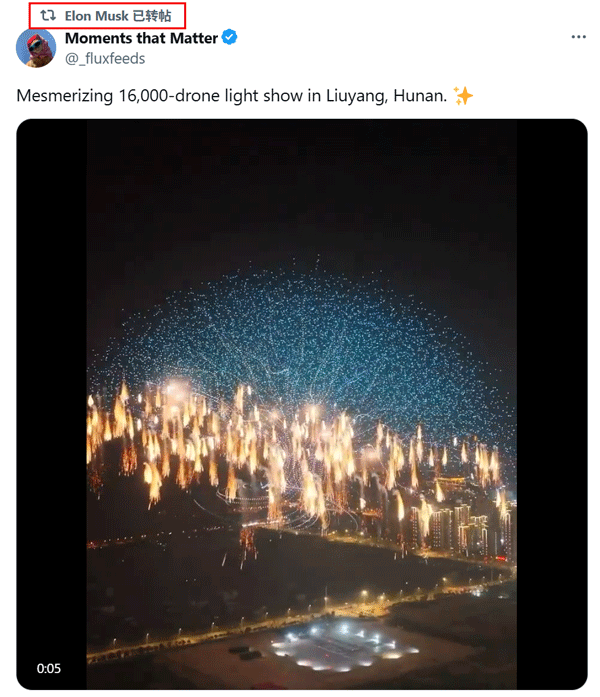
马斯克转发浏阳1.5万架无人机烟花秀,网友惊叹:仿佛AI生成的
Sou Hu Cai Jing· 2025-10-20 10:17
Core Points - The Liuyang Fireworks Festival successfully set two Guinness World Records on October 17: the largest drone display with fireworks and the most drones (15,947) launched simultaneously controlled by a single computer [1] - The event gained international attention, with Elon Musk sharing related videos on Twitter, highlighting its global appeal [1][3] Industry Insights - Liuyang, located in northeastern Hunan, is renowned for its fireworks industry and is recognized as a significant cultural and tourism hub in China [5] - The festival featured two main events: "Listening to the Sound of Flowers" daytime fireworks performance and the "A Firework Belonging to Me" online fireworks festival, showcasing the integration of technology and art [7] - The performances utilized advanced drone technology, specifically the newly developed Riff drone, capable of carrying 400 grams and programmable for 10 ignition sequences, marking a significant innovation in the fireworks industry [7] - The preparation for the events involved three months of meticulous planning, including nearly 30 revisions of the plan and 14 field tests to ensure the successful integration of technology and artistry [7][8] - Challenges during the testing phase included managing the weight and balance of different fireworks, which could affect the drones' flight stability, necessitating extensive collaboration across various teams [8]
广交会+:中国第一展对大湾区意味着什么?
2 1 Shi Ji Jing Ji Bao Dao· 2025-10-20 10:00
Core Insights - The 138th Canton Fair has evolved into a "global order trading center," transforming the operational dynamics of the Guangdong-Hong Kong-Macao Greater Bay Area [1][2] - The fair serves as a systematic platform that integrates global demand, trade rules, and technological innovation, stabilizing foreign trade fundamentals [1][2] - The "Canton Fair+" model enhances the comparative advantages of the Greater Bay Area, facilitating its transition from a manufacturing hub to an innovation highland [2][5] Trade and Economic Impact - The Canton Fair has established a "fast track" from exhibition to delivery, directly driving foreign trade growth, with Guangzhou's foreign trade import and export volume increasing by 15.5% year-on-year in the first half of the year [3][4] - The Greater Bay Area's nine cities achieved a total import and export volume of 4.38 trillion yuan, growing by 4.3%, which is faster than the overall growth rate of Guangdong and the national average [3][4] - The export of electromechanical products from the Greater Bay Area's nine cities reached 1.93 trillion yuan, accounting for 68.9% of total exports, with significant growth in key categories such as computers and integrated circuits [4][5] Innovation and Technology Development - The Canton Fair has introduced new exhibition areas focusing on smart healthcare, service robots, and green low-carbon technologies, clarifying the industry's technological roadmap [2][6] - The Greater Bay Area is home to over 71,000 high-tech enterprises and 190 national manufacturing champions, forming a complete industrial chain from key materials to industry solutions [5][6] - The fair promotes a shift from product-centric approaches to system solution capabilities, enhancing the overall efficiency of the supply chain [6][7] Regional Collaboration and Market Dynamics - The collaboration between Guangzhou and Shenzhen in exhibition organization and technology incubation strengthens the Greater Bay Area's position in the global value chain [6][7] - The fair has attracted 125,000 pre-registered buyers from 210 countries and regions, indicating a growing international interest and participation [4][5] - The focus on emerging markets has led exhibitors to adjust their products to meet the price-sensitive demands of these customers, contrasting with the customization preferences of Western clients [4][5]