
饮料

Search documents
“便宜大碗”冰红茶,要悄悄抛弃穷鬼吗?
Hu Xiu· 2025-10-23 10:02
Core Insights - The leading brand in the iced tea market, Kang Shifu, is facing challenges despite the long-standing popularity of iced tea, which has been a favorite for 30 years [1] - Since raising prices by 0.5 to 1 yuan in March last year, Kang Shifu's revenue from tea beverages has dropped by 6.3% in the first half of this year [1] - The company has reduced its number of distributors by over 10,000 since the beginning of 2024, indicating a significant shift in its distribution strategy [1] Company Performance - Kang Shifu's iced tea revenue decline highlights the sensitivity of consumers to price changes in this segment [1] - The brand's long-standing success is contrasted by its current struggles, raising questions about future growth and market positioning [1] Market Dynamics - The iced tea market remains popular, but price sensitivity among consumers is a critical factor affecting sales performance [1] - The reduction in distributors suggests a strategic response to market challenges, potentially aiming to streamline operations and improve profitability [1]
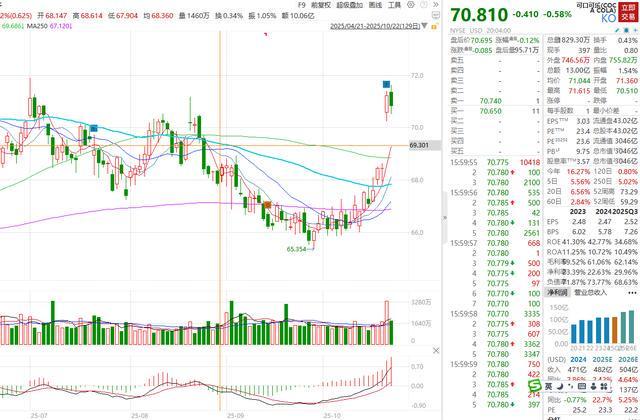
巴克莱上调可口可乐目标价至77美元
Ge Long Hui· 2025-10-23 09:34
Group 1 - Barclays raised the target price for Coca-Cola from $71 to $77, maintaining an "Overweight" rating [1]

广东省万寿山矿泉水有限公司成立 注册资本1000万人民币
Sou Hu Cai Jing· 2025-10-23 09:20
Core Insights - Guangdong Wanshou Mountain Mineral Water Co., Ltd. has been established with a registered capital of 10 million RMB [1] Company Overview - The legal representative of the company is Wu Manqi [1] - The business scope includes experiential expansion activities and planning, domestic trade agency, sales of direct drinking water equipment, delivery services, wholesale and retail of edible agricultural products, sales of agricultural, forestry, animal husbandry, sideline, and fishery machinery, trade brokerage, and food sales (only pre-packaged food) [1] - The company is also involved in food internet sales (only pre-packaged food) and beverage production, subject to approval from relevant authorities for certain activities [1]
娃小智董事长爆猛料,宗馥莉危险了
3 6 Ke· 2025-10-23 04:13
Core Viewpoint - The article discusses the internal conflict within the Wahaha Group following the departure of Zong Fuli, leading to the emergence of two competing brands, "Wahao Zong" and "Wahao Zhi," each backed by different factions of the Zong family [14][15][26]. Group 1: Brand Competition - The two factions are represented by Zong Fuli's "Wahao Zong" and Zong Zehou's "Wahao Zhi," both of which have similar products but different branding strategies [1][15]. - Zong Zehou's "Wahao Zhi" adopts a grassroots approach with zero franchise fees and incentives for distributors, contrasting with Zong Fuli's more modern and technology-driven strategy [4][18]. - The competition is characterized by a struggle for market share, with both brands targeting the same consumer base and distribution channels [19][24]. Group 2: Market Strategy - "Wahao Zhi" has already begun its recruitment of distributors, with 300 county-level distributors secured, while "Wahao Zong" is still in the early stages of market entry [4][20]. - Zong Zehou's strategy focuses on low barriers to entry and high commission rates to attract distributors, while Zong Fuli's approach has been criticized for reducing channel profits [18][23]. - The internal conflict has led to a tense atmosphere in the market, with distributors caught between the two brands and motivated by profit potential [24][26]. Group 3: Industry Implications - The split within the Zong family reflects broader issues of succession and brand management in the beverage industry, highlighting the challenges faced by second-generation leaders [25][26]. - The outcome of this internal battle could significantly impact the beverage market, as any supply disruptions from Wahaha could allow competitors to gain market share [24][26]. - The competition between "Wahao Zong" and "Wahao Zhi" may lead to a restructuring of the beverage industry, pushing both brands to adapt to consumer and distributor needs [26][27].


无糖可乐卖爆,可口可乐加码投资中国供应链
Huan Qiu Wang Zi Xun· 2025-10-23 04:11
Core Insights - Coca-Cola's Q3 2025 financial report shows revenue and net profit exceeding market expectations, with revenue growing 5% year-on-year to $12.455 billion and net profit increasing 29% to $3.683 billion, driven by price increases, strong performance of sugar-free products, and significant margin expansion [1][3] Revenue and Profit Performance - The company's global unit case volume increased by 1% year-on-year, reversing a decline seen in the previous two quarters [1] - The sales of sugar-free Coca-Cola surged by 14% globally, marking it as the fastest-growing core product [1] - The "bottled water, sports drinks, coffee, and tea" segment also performed well, with a 3% year-on-year sales increase, highlighting the strategic value of Coca-Cola's diversified product matrix [1] Regional Performance - The Asia-Pacific region showed strong performance with operating profit growing 13% year-on-year, significantly above the global average [1] - However, the report indicated a 1% decline in unit case volume in the Asia-Pacific market, including China [1][3] Pricing Strategy - The revenue growth was primarily driven by a 6% increase in price/product mix, with approximately 4 percentage points coming from direct price increases, indicating that despite short-term volume pressures in China, Coca-Cola achieved strong profit growth through product mix optimization and pricing adjustments [3] Supply Chain and Investment - To better meet long-term demand in China, Coca-Cola is collaborating with bottling partners to accelerate the establishment of a more agile and resilient national supply chain network [3] - Recent investments include the commissioning of new plants in Shaanxi and Zhengzhou, as well as the completion of the main structure of the intelligent green production base in the Greater Bay Area, reflecting Coca-Cola's long-term commitment to the Chinese market [3] Future Outlook - Coca-Cola's Chairman and CEO, James Quincey, expressed confidence in achieving the full-year performance targets for 2025 despite challenging conditions, indicating a steady progression towards longer-term goals [3]
郑州太古可口可乐30年开新篇:年产能跃至100万吨,智能拣配机器人破解塑膜抓取世界级难题
Cai Jing Wang· 2025-10-22 13:41
Core Insights - The new Zhengzhou factory of Swire Coca-Cola marks a significant investment in China's beverage market, with a total investment of 9 billion yuan and an annual production capacity exceeding 1 million tons, doubling the capacity of the old factory [2][3][4] - The factory is part of Swire Coca-Cola's commitment to invest over 12 billion yuan in mainland China over the next decade, highlighting the importance of the Chinese market for the company's growth [2][3] - The new facility incorporates advanced automation and AI technologies, including a high-capacity automated warehouse and intelligent sorting robots, which address industry challenges related to packaging automation [4][5][6] Investment and Financial Performance - Swire Coca-Cola's revenue from mainland China increased by 2.84% to 13.031 billion HKD, with significant growth in soda, juice, and energy drink segments [3] - The company's profit rose by 8% to 588 million HKD, reflecting the positive impact of the new factory on overall performance [3] Technological Advancements - The Zhengzhou factory utilizes over 30 digital management systems and advanced production lines to enhance efficiency and responsiveness to market demands [4][6] - The intelligent sorting robots developed for the factory utilize AI image recognition technology to automate the sorting process, overcoming traditional challenges in handling flexible packaging [5][6] Sustainability Initiatives - The factory is designed to meet international sustainability standards, including LEED Gold certification, and incorporates energy-saving technologies that can reduce energy consumption by approximately 3% [6][7] - Swire Coca-Cola aims to reduce absolute carbon emissions by 70% by 2030, using 2018 as a baseline, and has already achieved a 6% reduction in scope three emissions [8][9] Future Outlook - The company plans to expand its operations with new factories in Hainan, Suzhou, and the Guangdong Greater Bay Area, expected to commence construction and production by 2026 [9]

广东人“童年神饮”卖不动,养乐多连关两家厂
凤凰网财经· 2025-10-22 12:48
Core Viewpoint - Yakult is restructuring its operations in China to enhance competitiveness and achieve sustainable growth, which includes the closure of its Guangzhou No. 1 factory by November 30, 2023, and the transfer of production to other facilities [2][3]. Group 1: Company Restructuring - Yakult's parent company announced the closure of Guangzhou No. 1 factory as part of a restructuring plan aimed at optimizing production and resource utilization [2]. - The Guangzhou No. 1 factory, operational since June 2002, will have its production functions shifted to Guangzhou No. 2 and Foshan factories [3]. - The company is committed to assisting affected employees during this transition, ensuring compliance with legal regulations [4]. Group 2: Sales Performance - Yakult's sales in China have seen a significant decline, with daily average sales dropping from 625.7 million bottles in 2022 to 443.9 million bottles in 2024 [7]. - The Guangzhou subsidiary's daily average sales decreased from 259.6 million bottles in 2022 to 184.6 million bottles [7]. - The decline in sales is attributed to a waning interest in probiotic drinks and increased competition from alternative products [8][9]. Group 3: Market Trends - The market share and average price per hundred milliliters of probiotic drinks have both declined from 2022 to 2024 [11]. - Despite being the market leader, Yakult's market share has decreased alongside competitors like Mengniu and Wahaha [11]. - In response to market changes, Yakult has introduced low-sugar and new flavor products in 2023 to boost sales [11]. Group 4: Future Outlook - Recent adjustments have shown some positive results, with a reported increase in daily average sales to 383.1 million bottles in early 2025, although this remains significantly lower than the 597.4 million bottles in 2019 [11][12]. - The company continues to seek new strategies to navigate the challenges in the probiotic beverage market [12].

85%标普500公司盈利超预期,华尔街迎来四年来最强财报季
Hua Er Jie Jian Wen· 2025-10-22 12:20
Group 1 - The S&P 500 companies are delivering their strongest earnings season in four years, with approximately 85% of reported third-quarter earnings exceeding profit expectations, the highest ratio since 2021 [1] - Strong corporate performance and ongoing investments in artificial intelligence are offsetting threats from trade tensions and government shutdowns, providing new support for the U.S. stock market, which has seen a cumulative increase of 15% this year but stagnated in October [1] - Major companies are optimistic about navigating current regulatory uncertainties and are confident in future investments and capital expenditures, according to Marija Veitmane, head of equity research at State Street Global Markets [1] Group 2 - JPMorgan forecasts a nearly 12% double-digit earnings growth for S&P 500 companies, surpassing the market's general expectation of a 7.7% year-over-year increase [2] - Earnings surprises are coming from multiple sectors, with notable performances from Citigroup and Morgan Stanley in the financial sector, and General Motors benefiting from strong truck sales and tariff relief [2] - Despite strong earnings, risks such as trade tensions and slowing earnings forecast adjustments remain, prompting caution among investors, as noted by Morgan Stanley strategist Michael Wilson [2]
无糖可乐拉动业绩增长,可口可乐加码在华投资
Guo Ji Jin Rong Bao· 2025-10-22 11:45
Core Insights - Coca-Cola reported a net revenue of $12.455 billion for Q3 2025, a year-on-year increase of 5.1%, and a net profit of $3.696 billion, up 29.8% [1] - The growth in revenue and profit is attributed to product price adjustments, with organic revenue increasing by 6% and a price/product mix growth of 6% [1] - The sales volume turned from a decline to a growth of 1% due to increases in regions such as Central Asia, North Africa, Brazil, and the UK [1] Revenue and Profit Performance - The company's Q3 net revenue reached $12.455 billion, reflecting a 5.1% year-on-year growth [1] - Net profit for the same period was $3.696 billion, marking a significant increase of 29.8% [1] Product Performance - "Coca-Cola Zero Sugar" emerged as a key growth driver, with global sales increasing by 14% [1] - In the Asia-Pacific region, which includes China, there was a 13% year-on-year growth, primarily driven by price increases [3] - The Asia-Pacific region reported an 8% growth in price/product mix, although sales volume declined by 1% [3] Market Insights - Coca-Cola's CEO noted a recovery in the Asian market towards the end of Q3, with improvements compared to Q2 [3] - Despite challenges in the global economic environment, the attractiveness and growth potential of the Chinese market remain strong [3] - The company is intensifying investments in China, with new production facilities in Shaanxi and Henan coming online [3][4] Strategic Initiatives - Coca-Cola is enhancing its regional supply chain and local value chain to adapt to market changes [4] - The company is committed to long-term investment in the Chinese market, indicating a strong belief in future opportunities [4]
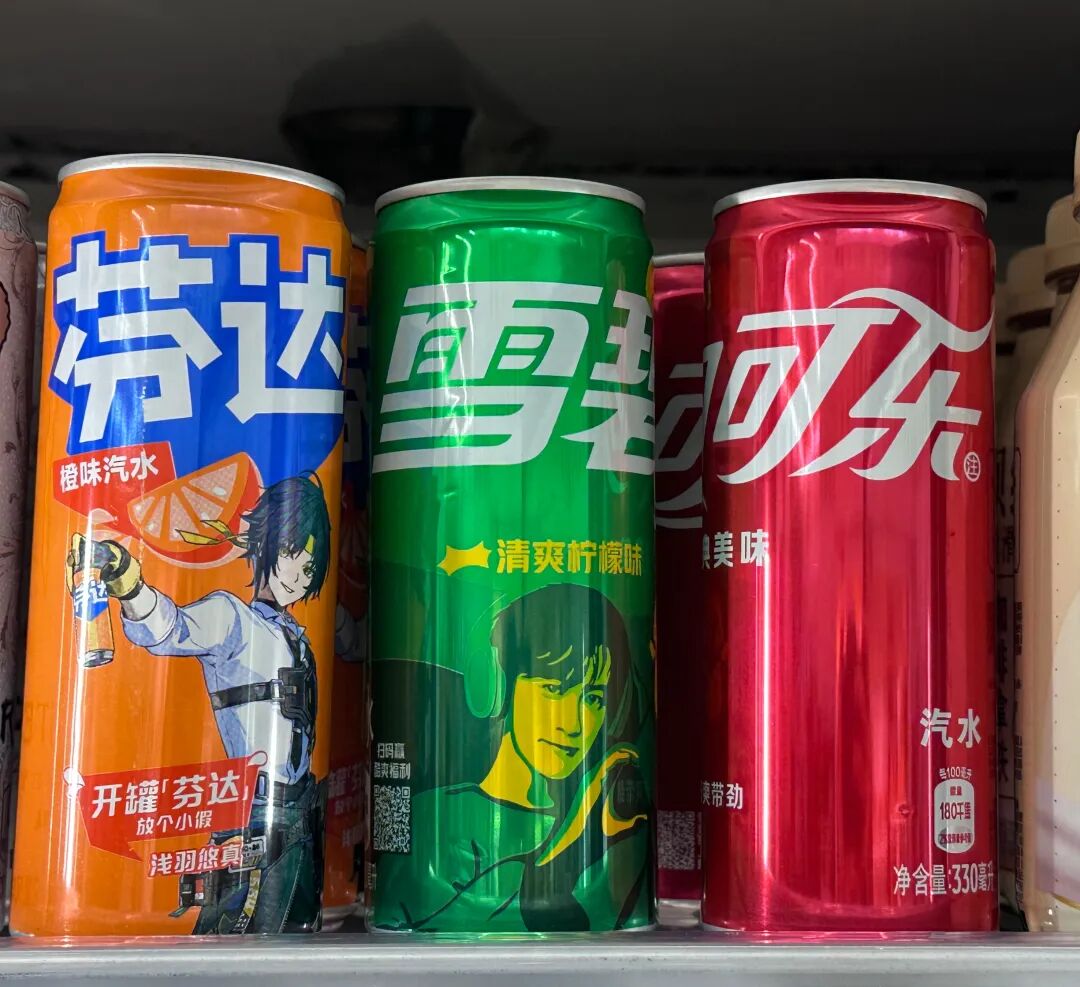
可口可乐第三季财报发布 亚太地区营业利润增长13%、单箱销量下降1%
Zhong Guo Jing Ying Bao· 2025-10-22 10:26
Core Insights - Coca-Cola reported a 5% year-over-year increase in global revenue for Q3 2025, reaching $12.455 billion, slightly above analyst expectations of $12.41 billion [1] - Organic revenue, excluding currency effects, grew by 6% [1] - The company's net profit surged by 29% year-over-year to $3.683 billion, approximately $26.5 billion in RMB [1] - Adjusted earnings per share increased by 6% to $0.82, surpassing Wall Street's forecast of $0.78 [1] - The operating profit margin expanded significantly from 21.2% in the same period last year to 32.0% this quarter, contributing to strong profitability [1] Revenue Drivers - The primary driver of revenue growth was a 6% increase in product prices, with approximately 4 percentage points attributed to price hikes and 2 percentage points from product mix optimization [1] - Despite the revenue growth, the Asia-Pacific market, including China, saw a 13% increase in operating profit, while unit case volume declined by 1% [1]