
建筑

Search documents
荧德控股(08535.HK)8月22日收盘上涨18.24%,成交55.79万港元
Jin Rong Jie· 2025-08-22 08:36
Group 1 - The Hang Seng Index rose by 0.93% to close at 25,339.14 points on August 22 [1] - Yingde Holdings (08535.HK) closed at HKD 0.201 per share, up 18.24%, with a trading volume of 2.92 million shares and a turnover of HKD 557,900, showing a volatility of 27.65% [1] - Over the past month, Yingde Holdings has seen a cumulative increase of 97.67%, and a year-to-date increase of 359.46%, outperforming the Hang Seng Index by 25.15% [1] Group 2 - As of March 31, 2025, Yingde Holdings reported total revenue of HKD 253 million, a year-on-year decrease of 12.37%, and a net profit attributable to shareholders of HKD 1.01 million, down 78.44% [1] - The gross profit margin for Yingde Holdings is 10.49%, with a debt-to-asset ratio of 49.1% [1] - Currently, there are no institutional investment ratings for Yingde Holdings [1] Group 3 - The business scope of Yingde Holdings includes the design, supply, installation, modification, and maintenance of fire sprinkler systems, fire hydrant systems, automatic alarm systems, water curtain systems, gas extinguishing systems, foam extinguishing systems, and related fire protection products, as well as drainage, electrical, and air conditioning installation [2]
823份国家标准公开征求意见,涉及ICP-MS、XRD、色谱、质谱、光谱等
仪器信息网· 2025-08-22 03:58
Core Viewpoint - The article emphasizes the critical role of scientific instruments in the formulation and revision of 823 national standards across various sectors, including plastic chemicals, metal materials, information technology, equipment manufacturing, consumer product safety, energy environment, and medical devices [1][2]. Summary by Relevant Sections National Standards Overview - A total of 823 national standard drafts are open for public consultation, covering multiple fields such as plastic chemicals, metal materials, and medical devices [2]. - The extensive standardization work highlights the importance of scientific instruments as the "eyes" and "brains" of modern industry, relying on precise and reliable analytical testing methods and instrument technology advancements [2]. Instrumentation Technologies - Inductively Coupled Plasma (ICP) technology, including emission spectroscopy and mass spectrometry, is frequently mentioned as a key method for analyzing metal and alloy compositions, detecting environmental pollutants, and controlling impurities in high-purity materials [2]. - The family of ray technologies, including X-ray diffraction (XRD), X-ray fluorescence (XRF), and non-destructive testing (DR/CT), has expanded its application from traditional material phase analysis to residual stress measurement and online industrial inspection, showcasing its powerful penetration and information acquisition capabilities [2]. - Chromatography and spectroscopy (both molecular and atomic), along with mass spectrometry, form a core technology matrix for food safety, chemical identification, and material aging mechanism research [2]. Standardization and Methodology - The standards not only regulate product performance but also impose strict requirements on the methodologies, precision, and consistency of testing instruments, marking a shift from empirical judgment to a new phase of scientific evaluation driven by precision instruments and data [3]. - The article lists specific projects and their deadlines, such as the establishment of standards for biobased plastics' carbon and environmental footprints, and various standards related to industrial applications and asset management [3][5][6].


临沂|素描“临商”
Da Zhong Ri Bao· 2025-08-22 02:03
Core Insights - The article highlights the significant role of private enterprises in Linyi's economic development, showcasing the emergence of a modern business community known as "Linyi Merchants" [2][3] - Linyi has a high density of entrepreneurs, with one in every seven individuals being a business owner, indicating a robust entrepreneurial culture [2] - The city has established a "Phoenix List" to recognize outstanding enterprises, reflecting the growth trajectory and industrial potential of Linyi [2] Group 1: Linyi Merchants and Economic Contribution - Linyi's private enterprises account for over 99% of the total, with more than 1.5 million businesses contributing significantly to tax revenue, GDP, innovation, urban employment, and enterprise numbers [2][3] - The development of "Linyi Merchants" is characterized by a transition from traditional markets to modern commerce, with notable companies like Linyi Machinery Group and Jinluo Group leading in their respective industries [3] Group 2: Government Support and Policy Initiatives - The local government has implemented various policies to enhance the business environment, including financial support and tailored strategies for 13 key industrial chains [4] - Initiatives such as "Entrepreneur Day" and the "Welcome to Linyi" service brand aim to streamline processes and improve service delivery for businesses [4]
省政府召开全省建筑业政企沟通交流会
Da Zhong Ri Bao· 2025-08-22 01:07
Core Viewpoint - The provincial government emphasizes the importance of the construction industry as a pillar of the national economy and highlights the current strategic opportunity for transformation towards industrialization, digitalization, and greening [1] Group 1: Government Initiatives - The government is committed to creating a favorable environment for construction enterprises through effective policy implementation, service optimization, and platform development [1] - The meeting involved direct communication with eight enterprises, including China Railway 14th Bureau, to address challenges and promote healthy industry development [1] Group 2: Industry Development Focus - The construction industry is encouraged to focus on technological innovation and uphold craftsmanship spirit to enhance the "Qilu Construction" brand [1] - The government urges entrepreneurs to maintain confidence in development and contribute more to the provincial economic growth [1]
武汉祥龙电业股份有限公司2025年半年度报告摘要
Shang Hai Zheng Quan Bao· 2025-08-21 19:22
Core Viewpoint - The company, Wuhan Xianglong Electric Power Co., Ltd., has released its 2025 semi-annual report, which includes significant financial data and the results of its board and supervisory meetings [3][6][18]. Group 1: Company Overview - The company is identified by the stock code 600769 and is referred to as Xianglong Electric [4][21]. - The semi-annual report is not audited, and the board and supervisory board members confirm the accuracy and completeness of the report [2][4]. Group 2: Financial Data - The company reported a total of 6,083,298.81 yuan in credit and asset impairment losses for the first half of 2025, which includes a reversal of credit impairment losses amounting to 9,952,695.51 yuan and an asset impairment loss of 3,869,396.70 yuan [10][12][13]. - The reversal of credit impairment losses was primarily due to the recovery of historical debts from Wuhan Baihushan Water Co., Ltd., which significantly impacted the financial results [12][13]. Group 3: Meeting Resolutions - The resolutions regarding the semi-annual report and the asset impairment provisions were unanimously approved by the board and supervisory board members [6][19]. - The meetings were conducted in accordance with the relevant laws and company regulations, ensuring compliance and transparency [5][17].

祥龙电业: 武汉祥龙电业股份有限公司2025年半年度报告
Zheng Quan Zhi Xing· 2025-08-21 11:10
Core Viewpoint - Wuhan Xianglong Electric Power Co., Ltd. reported a significant increase in net profit and total profit for the first half of 2025, indicating strong operational resilience despite industry challenges [2][3]. Financial Performance - The company's operating income for the first half of 2025 was approximately CNY 39.83 million, a slight increase of 0.12% compared to CNY 39.78 million in the same period last year [2]. - Total profit reached CNY 16.78 million, representing a substantial increase of 58.53% from CNY 10.58 million year-on-year [2]. - Net profit attributable to shareholders was CNY 14.31 million, up 83.32% from CNY 7.81 million in the previous year [2]. - The company's net cash flow from operating activities was CNY 35.66 million, an increase of 5.36% compared to CNY 33.85 million last year [2]. Industry Overview - The water supply industry is characterized by high capital intensity, long investment return cycles, and strong regional monopolies, with a shift from "scale expansion" to "quality improvement" currently underway [3]. - The construction industry is experiencing structural adjustments due to factors such as weak real estate investment and increased local government debt constraints, leading to intensified competition [3]. Business Operations - The company's water supply business primarily serves the Wuhan New City area, focusing on high-quality water supply for semiconductor and LCD display industries [3][4]. - The company has successfully upgraded its water treatment facilities and implemented a smart water management system, enhancing water quality to meet stringent industry standards [3][4]. - The construction business is focused on small to medium-sized municipal and residential projects, with a strategy of cautious project acceptance and risk control [3]. Competitive Advantages - The company benefits from a first-mover advantage in the regional water supply market, which enhances revenue stability [6]. - The company's operational efficiency and customer service responsiveness are significant competitive strengths in the water supply sector [6]. Future Outlook - The company is committed to technological innovation and has increased investment in research and development to enhance operational efficiency [4][5]. - The ongoing construction of key projects and the establishment of a comprehensive management system are expected to support sustainable growth [5].
带来广泛不确定性 美国关税政策反复无常、伤人害己、得不偿失
Yang Shi Wang· 2025-08-21 07:45
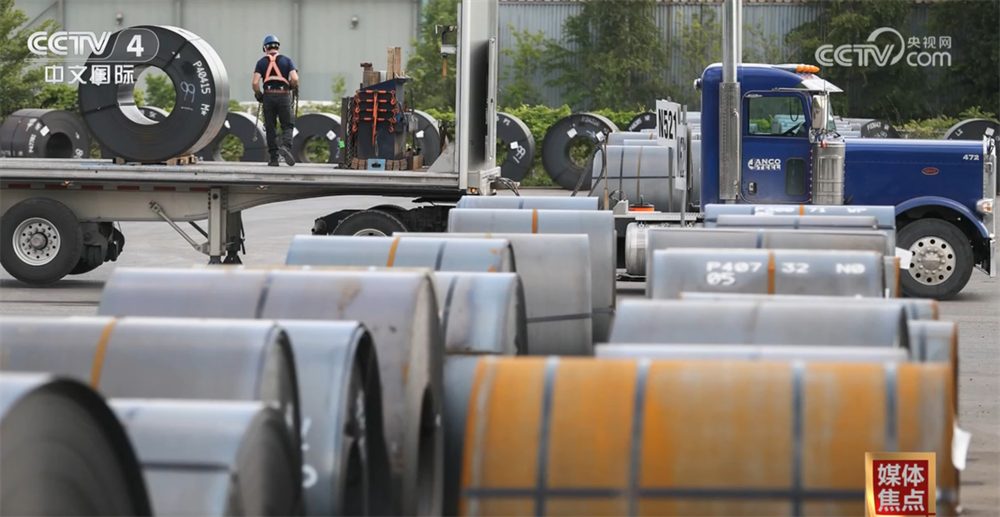
Group 1 - The Trump administration has quietly expanded the coverage of steel and aluminum tariffs to over 400 products, increasing the tariff rate to 50%, creating widespread uncertainty for businesses and trade partners [1][3] - This move is seen as an attempt to "plug loopholes," but it is expected to raise costs and disrupt global supply chains, particularly affecting U.S. manufacturing sectors reliant on imported raw materials [3][5] - The implementation of these tariffs is likely to lead to inevitable price increases for consumers, as companies will pass on the higher costs to retail prices [3][5] Group 2 - The increase in tariffs is causing significant uncertainty in global trade, prompting countries like Brazil to seek alternative trade partners and potentially reshaping global trade dynamics [7] - Analysts suggest that while inflation had eased since Trump's administration began, the new tariffs could reverse this trend, leading to noticeable price hikes in various consumer goods in the coming months [5][9] - The new trade agreements negotiated by the U.S. with allies may be economically detrimental, as they impose higher costs on American consumers and could weaken cooperative ties with allies [9]
【环球财经】东京股市三连跌
Xin Hua Cai Jing· 2025-08-21 07:37
Market Performance - The Tokyo stock market indices continued to decline for three consecutive trading days, with the Nikkei 225 index closing down by 0.65% and the Tokyo Stock Exchange Price Index down by 0.52% [1][2] - The Nikkei index fell by 278.38 points, closing at 42610.17 points, while the Tokyo Stock Exchange index decreased by 15.96 points, ending at 3082.95 points [2] Sector Performance - Most of the 33 industry sectors on the Tokyo Stock Exchange experienced declines, with pharmaceuticals, transportation machinery, and construction sectors showing the largest drops [2] - Conversely, 10 sectors, including non-ferrous metals, steel, and mining, recorded gains on the same day [2] Influencing Factors - The decline in the Tokyo stock market was influenced by the continued drop in the Nasdaq index in the overnight New York stock market, leading to a slight lower opening in Tokyo [1] - Semiconductor-related stocks, such as SoftBank Group and Tokyo Electron, faced significant declines, contributing to the downward pressure on the market [1] - The strengthening of the Japanese yen against the US dollar also pressured export-oriented stocks like Toyota and Honda [1]
从“好设计”到“好建造”,2025年服贸会将展示“好房子”全产业链成果
Bei Jing Shang Bao· 2025-08-21 06:26
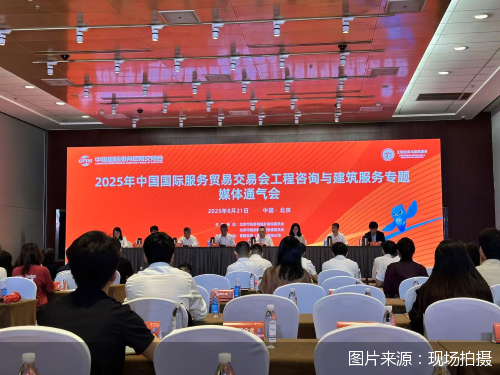
Core Viewpoint - The 2025 China International Service Trade Fair (CIFTIS) will focus on engineering consulting and construction services, with the theme "Technology Empowering 'Good Houses'" to showcase innovations in housing standards, design, smart construction, and green energy-efficient buildings [1] Group 1: Event Overview - The CIFTIS will take place from September 10 to 14 in Beijing, featuring a specialized exhibition on engineering consulting and construction services [1] - The exhibition will include 230 online exhibitors and 90 offline exhibitors, with 67 being Fortune 500 and industry-leading companies, accounting for 74% of the total [3] Group 2: Exhibition Highlights - The exhibition will present a quantifiable system for residential comfort, defining "good houses" through precise data on indoor microenvironments and space utilization [3] - A "good house" model room will be set up, allowing visitors to experience future living spaces and the industrial charm of constructing houses like cars [4] Group 3: Industry Collaboration - The event will showcase the collaborative efforts of various industry stakeholders, including design, consulting, and construction firms, as well as foreign enterprises [5] - The first national "Good House" design competition will be highlighted, demonstrating the practical outcomes of the "Good House" policy from pilot projects to large-scale implementation [6]

永安期货半导体日报-20250821
Xin Yong An Guo Ji Zheng Quan· 2025-08-21 02:28
Market Performance - The Shanghai Composite Index rose by 1.04% to 3766.21 points, while the Shenzhen Component Index increased by 0.89%[1] - The Hong Kong Hang Seng Index gained 0.17% to 25165.94 points, with the Hang Seng Technology Index down by 0.01%[1] - The total trading volume in the Hong Kong market reached 285.29 billion HKD[1] Federal Reserve Insights - The Federal Reserve's minutes indicated that most officials view inflation as a greater risk than a weak labor market[8] - The Federal Open Market Committee (FOMC) maintained interest rates in the range of 4.25% to 4.5% due to moderate economic activity and increased uncertainty[13] Chinese Currency Developments - Reports suggest that the Chinese government is considering a significant shift in its stance on digital assets, potentially allowing the launch of a Renminbi stablecoin[8][13] - The plan to expand the internationalization of the Renminbi may include a roadmap for stablecoin development, with discussions expected to take place by the end of August[13] Corporate Earnings Highlights - Baidu's Q2 revenue fell by 4% to 32.7 billion CNY (approximately 4.6 billion USD), marking its largest decline since 2022[15] - China State Construction International reported a 5.1% increase in interim profit to 5.26 billion CNY, with a revenue of 56.64 billion CNY[15]