电池制造

Search documents
豪鹏科技(001283) - 2025年11月3日投资者关系活动记录表
2025-11-03 15:32
Group 1: Business Performance and Strategy - The company is focused on a strategic shift from "scale first" to "quality first," resulting in improved profitability and a clear path for value creation [3][4] - Despite challenges in the external environment, the company has optimized its product structure and customer mix, particularly in the AI sector, leading to a gradual recovery in profitability [2][3] - The company has established deep partnerships with leading global AI brands, which are expected to drive revenue growth through new technology mass production projects in 2026 [3][4] Group 2: Financial Metrics and Growth Drivers - The company reported a positive trend in financial indicators for the first three quarters of the year, indicating a shift towards quality improvement [2] - The storage business has achieved profitability, contributing to a second growth curve for the company [3][7] - The company anticipates further enhancement of overall profitability as the proportion of high-end AI products increases and the scale effects from its manufacturing bases are realized [3][4] Group 3: Product Development and Innovation - Continuous investment in innovative technologies such as solid-state, high-silicon, and sodium batteries ensures the company maintains a competitive edge and avoids price competition [4][5] - The company is actively developing energy solutions for data centers, having made significant breakthroughs in backup battery systems [8][9] - The company is positioned to meet the growing demand for AI-related products, including AI glasses and toys, which are expected to become market leaders [9][10] Group 4: Market Challenges and Responses - The company has implemented a three-pronged strategy to address rising raw material costs, including short-term pricing adjustments, mid-term product upgrades, and long-term technological advantages [5][6] - The company is focused on optimizing its product structure towards high-value, high-margin products to navigate through market cycles [5][6] - The storage market is viewed as a long-term opportunity, with the company leveraging its expertise in battery safety technology to build a competitive advantage [7][8] Group 5: Competitive Advantages - The company has built a robust competitive advantage through long-term relationships with major global brands, underpinned by a commitment to safety, quality, delivery, and cost (SQDC) [11][12] - The company’s forward-looking technology layout and product definition capabilities allow it to meet current market demands while ensuring sustainable competitive advantages [11][12] - Lean manufacturing capabilities and the successful operation of its production bases provide resilience against complex international trade environments [12]
大众90GWh电池工厂开建
起点锂电· 2025-11-03 10:30
Core Points - The article discusses the upcoming 2025 Solid-State Battery Industry Conference and the Golden Ding Award Ceremony, focusing on new technologies and ecosystem building in the solid-state battery sector [3][4] - It highlights the construction of PowerCo's new battery factory in Ontario, Canada, which is a significant step in Volkswagen's battery strategy [5][6] Group 1: Event Details - The event will take place on November 8, 2025, at the Guangzhou Nansha International Convention Center, with an expected attendance of over 1,000 participants [4] - The event is organized by Qidian Solid-State Battery, Qidian Lithium Battery, and the SSBA Solid-State Battery Alliance, featuring various sponsors and exhibitors from the battery industry [4] Group 2: PowerCo's New Factory - PowerCo's new factory in Ontario represents its first major investment outside Europe, with a total investment of CAD 7 billion (approximately USD 5 billion) and a planned capacity of 90 GWh [5] - This factory will be the largest production base for PowerCo globally and is strategically located near major automotive hubs [5][6] - The factory is prioritized for construction, with public funding support, and aims to deliver its first products by the end of 2027 [6][7] Group 3: Volkswagen's Battery Strategy - Volkswagen has been actively investing in battery technology, including a significant investment in QuantumScape for solid-state battery development, holding nearly 20% of the company [8] - The QSE-5 battery developed by QuantumScape is expected to achieve a density of 305 Wh/kg and improve electric vehicle range significantly by 2025 [8] - Volkswagen is also exploring lithium iron phosphate (LFP) batteries to reduce costs, planning to adopt this technology in its ID.2 model starting in 2026 [9]

固态电池为何迟迟无法上车
36氪· 2025-11-03 09:34
Core Viewpoint - Solid-state batteries are considered the ultimate form of power batteries due to their high thermal stability and potential for long-range and safety, but they face significant challenges in technology, manufacturing, and cost that hinder large-scale production in the short term [4][8][27]. Summary by Sections Recent Developments - Several second- and third-tier battery manufacturers, along with automakers like Chery, have announced advancements in solid-state battery research, indicating a potential for mass production [5][7]. - On October 23, XINWANDA unveiled its solid-state battery "XIN·BIXIAO" with an energy density of 400 Wh/kg, compared to 200-250 Wh/kg for mainstream lithium iron phosphate batteries and 250-300 Wh/kg for ternary lithium batteries [5][6]. - Chery showcased its self-developed "Rhino S" all-solid-state battery module with an energy density of 600 Wh/kg, promising a range of 1200-1300 km, with plans for mass production by 2027 [7]. Industry Challenges - Despite the excitement, industry leaders like CATL have stated that solid-state batteries will not achieve small-scale production until 2027 and large-scale production until 2030 [9]. - Technical challenges include poor ionic conductivity of solid electrolytes and high interfacial resistance, which complicate large-scale production [10][11]. Material and Manufacturing Issues - The choice of materials for solid-state batteries is contentious, with current trends favoring sulfide electrolytes due to their high ionic conductivity, despite their sensitivity to moisture and complex manufacturing processes [15][16][17]. - The negative electrode materials are also not mature, with silicon-carbon composites being used, which can lead to reduced cycle life due to expansion during lithium-ion intercalation [22]. Cost and Commercial Viability - The cost of solid-state batteries is currently 5-10 times higher than that of liquid batteries, making it difficult for both automakers and consumers to adopt them [24]. - The significant changes required in manufacturing processes and equipment for solid-state batteries pose additional barriers to entry for many companies [23]. Market Dynamics - The push for solid-state batteries is driven by second- and third-tier manufacturers seeking to disrupt the market dominated by CATL, while automakers hope to gain leverage in negotiations [26]. - Recent incidents of electric vehicle fires have heightened consumer interest in safer battery technologies, further fueling the demand for solid-state batteries [26].


全固态电池大合作来了!企查查:国内相关专利申请量达1.3万项
Qi Cha Cha· 2025-11-03 06:19
(原标题:全固态电池大合作来了!企查查:国内相关专利申请量达1.3万项) 据媒体报道,10月31日,韩国电池巨头三星SDI官方宣布,已与德国豪华汽车制造商宝马集团、美国固 态电池技术公司Solid Power达成三方协议,将联合开展全固态电池的验证项目。 此举旨在为下一代电 动汽车提供更高能量密度与安全性的电池解决方案,目标直指"续航超800公里、充电仅需10分钟"的行 业愿景。 企查查数据显示,我国现存的固态电池相关企业,成立年限集中5至10年之间,占比44.1%;区域分布 上,华南、华东地区合计占比近六成,其中华南地区占比31.2%;专利申请方面,截至10月31日,我国 固态电池相关专利申请量达1.3万项,类型上以发明专利为主,其中发明公布占比63.7%。 1.从成立年限来看:超四成成立5-10年 企查查数据显示,成立年限上,我国现存的固态电池相关企业,成立年限集中于5至10年之间,占比 44.4%,其次是成立3至5年之间的企业,占比19.4%,成立1年内的企业占比最少,为9.7%。 2.从区域分布看:华南最多,占比31.2% 企查查数据显示,区域分布上,我国固态电池相关企业集中华南、华东地区,合计占比近 ...
午评:沪指半日微涨0.05% 海南自贸区早盘强势
Xin Lang Cai Jing· 2025-11-03 04:12
Core Viewpoint - The market showed mixed performance in early trading, with the Shanghai Composite Index slightly up by 0.04%, while both the Shenzhen Component Index and the ChiNext Index fell over 1% [1] Market Performance - The Shanghai Composite Index closed at 3956.72 points, up 0.05% - The Shenzhen Component Index closed at 13237.03 points, down 1.06% - The ChiNext Index closed at 3143.95 points, down 1.37% [1] Sector Performance - The Hainan Free Trade Zone showed strong performance, with stocks like Intercontinental Oil and Haima Automobile hitting the daily limit - The coal sector was active, with Antai Group also hitting the daily limit - The gaming sector saw significant activity, with 37 Interactive Entertainment hitting the daily limit - Conversely, the battery sector experienced weakness, with Haike New Energy dropping over 15% - The gold and non-ferrous metal sectors faced fluctuations, with Chao Hong Ji hitting the daily limit down - The semiconductor sector saw widespread declines, with Juguang Technology leading the drop at over 7% [1] Overall Market Sentiment - Overall, there were more gainers than losers, with over 2600 stocks rising [1]
研判2025!中国金属空气电池行业产业链、市场规模及重点企业分析:技术突破赋能性能跃升,金属空气电池拓展多领域应用[图]
Chan Ye Xin Xi Wang· 2025-11-03 01:27
Core Insights - The metal-air battery technology has made significant breakthroughs in recent years, particularly in electrode materials, electrolytes, and battery structures, enhancing performance and stability, which drives applications in electric vehicles, energy storage systems, and backup power sources [1][6] - The market size of China's metal-air battery industry is projected to reach approximately 28.63 billion yuan in 2024, representing a year-on-year growth of 2.87% [6] Industry Overview - Metal-air batteries utilize metals (such as zinc, aluminum, magnesium, and lithium) as anodes and oxygen from the air as cathode active materials, offering high theoretical energy densities (zinc-air batteries up to 1360 Wh/kg, aluminum-air batteries over 1000 Wh/kg), low cost, and environmental benefits [2][4] - The industry faces challenges such as self-discharge, limited cycle life, and electrolyte management [2] Market Size - The advancements in metal-air battery technology have led to increased market demand and growth, with the market size expected to reach approximately 28.63 billion yuan in 2024, a 2.87% increase from the previous year [6] Key Companies - Major players in the metal-air battery industry include Xiongtao Co., Ltd. and Penghui Energy, focusing on cost optimization and application expansion for zinc-air batteries, while CATL is exploring future applications of aluminum-air batteries through cross-industry collaborations [7] - Xiongtao Co., Ltd. has achieved a zinc-air battery energy density of 1360 Wh/kg, with applications in hearing aids, electric bicycles, and 5G base station energy storage, reporting a revenue of 1.606 billion yuan in the first half of 2025, a 1.44% increase year-on-year [7][8] - Penghui Energy reported a revenue of 4.301 billion yuan in the first half of 2025, a 13.99% increase year-on-year, despite a net profit decline [9] Industry Development Trends 1. Continuous technological innovation is expected to drive breakthroughs in energy density and battery life, focusing on optimizing battery structure, developing efficient catalysts, and improving the stability of metal anodes and electrolytes [10] 2. The application scenarios for metal-air batteries are diversifying, with zinc/aluminum air batteries becoming key players in energy storage for 5G base stations and data centers, while aluminum-air batteries are highlighted for their energy density advantages in logistics and drones [10] 3. Policies are expected to support the metal-air battery industry, promoting a complete supply chain from raw material supply to battery recycling, with leading companies collaborating on technology advancements and resource utilization [11]


珠海冠宇(688772):钢壳电池渗透贡献利润增量 动储减亏修复盈利能力
Xin Lang Cai Jing· 2025-11-02 12:33
Core Insights - The company reported a robust growth in revenue and profit for the first three quarters of 2025, with a revenue of 10.32 billion yuan, a year-on-year increase of 21%, and a net profit attributable to shareholders of 390 million yuan, a year-on-year increase of 44% [1] - The penetration rate of steel-shell batteries in mobile phones continues to rise, with core customer share expected to contribute to stable profit growth [1] Financial Performance - In Q3 2025, the company achieved a revenue of 4.22 billion yuan, a year-on-year increase of 33% and a quarter-on-quarter increase of 17% [1] - The net profit attributable to shareholders for Q3 2025 was 270 million yuan, a year-on-year increase of 62% and a quarter-on-quarter increase of 92% [1] - The non-recurring net profit for Q3 2025 was 220 million yuan, a year-on-year increase of 44% and a quarter-on-quarter increase of 135% [1] Product Development - The steel-shell battery, which offers higher safety and longer lifespan compared to traditional soft-pack batteries, is being adopted by major clients like Apple, with applications in the iPhone 16 Pro and iPhone 17 series [1] - The company has achieved mass production and shipment of consumer-grade steel-shell batteries, with plans to expand production lines for significant performance contributions [1] Strategic Focus - The company is focusing on the automotive low-voltage lithium battery and drone battery sectors, adjusting the construction pace of power and energy storage battery projects to control capacity release [2] - Collaborations with leading drone clients and logistics companies are being pursued to capitalize on opportunities in the low-altitude economy [2] Earnings Forecast - The company is expected to benefit from the technological upgrades and market share increases of core clients, with revenue projections of 13.5 billion yuan, 17 billion yuan, and 19.8 billion yuan for 2025, 2026, and 2027 respectively [2] - Net profit projections for the same years are 610 million yuan, 1.43 billion yuan, and 2.04 billion yuan [2]

车载电池(3)谁才是"真命天子"?
日经中文网· 2025-11-02 00:33
Core Viewpoint - The article discusses the ongoing development of next-generation batteries, particularly solid-state batteries and sodium-ion batteries, as alternatives to traditional lithium-ion batteries, which are facing performance limitations [2][6][8]. Group 1: Solid-State Batteries - Toyota and Idemitsu Kosan are collaborating to develop solid-state batteries, aiming for mass production by the fiscal year 2027 [6]. - Solid-state batteries utilize solid electrolytes, which can prevent unwanted side reactions and allow for high-temperature operation, potentially enhancing electric vehicle (EV) performance [6]. - Nissan plans to produce solid-state batteries by 2028, using metallic lithium as the electrode material, while Honda aims for production in the latter half of the 2020s [6]. Group 2: Lithium-Sulfur Batteries - Lithium-sulfur batteries, which use metallic lithium for the anode and sulfur for the cathode, are being developed with the goal of equipping EVs by 2030 through collaboration between Stellantis and emerging U.S. companies [7]. Group 3: Sodium-Ion Batteries - Sodium-ion batteries are emerging as a new type of battery, replacing lithium with sodium, which reduces costs due to the absence of rare metals [8]. - The evaluation criteria for these next-generation batteries will include cost, battery capacity that extends range, lifespan, safety, resource risks, and recycling performance [8].


天能股份
2025-11-01 12:41
Summary of the Conference Call Company Overview - **Company**: TianNeng Holdings - **Industry**: Lead-acid and lithium battery manufacturing Key Points Business Segments - **Lead-acid Battery Segment**: - Revenue increased from 13.3 billion to 41.8 billion from 2014 to 2024, with a CAGR of 12.17% [2] - Q3 revenue for lead-acid batteries was 112.8 billion, with total sales for the first three quarters reaching 304 billion [10][11] - Major applications include electric light vehicles, energy storage, and industrial power [1] - **Lithium Battery Segment**: - Revenue for lithium batteries reached 10.2 billion in Q3, a 185.26% increase year-over-year [3] - The lithium battery business is primarily driven by energy storage (57% of revenue) and light-duty power (33.17%) [3] - The company expects to reduce lithium battery losses by half this year compared to last year [4] - **New Battery Technologies**: - Focus on solid-state and sodium-ion batteries, with ongoing R&D and pilot production [6][7] - Solid-state battery products have achieved energy densities of 300 Wh/kg [6] Market Trends - **Lead-acid Battery Market**: - The lead-acid battery market is expected to show steady growth domestically [2] - The company has a strong sales network with over 3,000 dealers covering 400,000 stores globally [2] - **Lithium Battery Market**: - The lithium battery market is projected to grow significantly, driven by energy storage and light-duty applications [3] - The company is forming strategic alliances with system integrators and energy developers to enhance market penetration [4] Financial Performance - **Q3 Financials**: - Total revenue for Q3 was 4.8 billion for lithium batteries and 112.8 billion for lead-acid batteries [11] - The company reported a loss of approximately 3 billion in the first three quarters, down from a 9 billion loss last year [3][4] - The company anticipates a further reduction in losses in Q4, with expectations of turning profitable next year [25][26] Production and Capacity - **Production Capacity**: - Current production capacity is around 4 GWh, with plans for capacity upgrades through technological improvements [17][23] - Utilization rates are currently at 50-60% [16] - **Capital Expenditure**: - Capital expenditure for the year is expected to be between 10-15 billion, significantly reduced from previous years [8][57] - Future capital expenditures will focus on both lead-acid and lithium battery segments [71] Strategic Initiatives - **International Expansion**: - The company is accelerating its global expansion, particularly in Southeast Asia and Africa, with a focus on local production [7] - Plans to establish a production base in Vietnam with a capacity of 2 GWh [7] - **R&D and Innovation**: - Continuous investment in R&D for new battery technologies, including solid-state and sodium-ion batteries [6][7] - The company is also exploring partnerships with major manufacturers to enhance product offerings [5] Challenges and Risks - **Raw Material Prices**: - The company has experienced fluctuations in raw material prices, but expects stability moving forward [41][42] - The impact of raw material price changes on profitability is being closely monitored [43] - **Regulatory Environment**: - Anticipated reductions in government subsidies for battery production may impact future revenues [52][53] Conclusion - **Outlook**: - The company maintains a positive outlook for both lead-acid and lithium battery segments, with expectations of continued growth and market share expansion [84] - Strategic adjustments and technological advancements are expected to drive future profitability and operational efficiency [84]

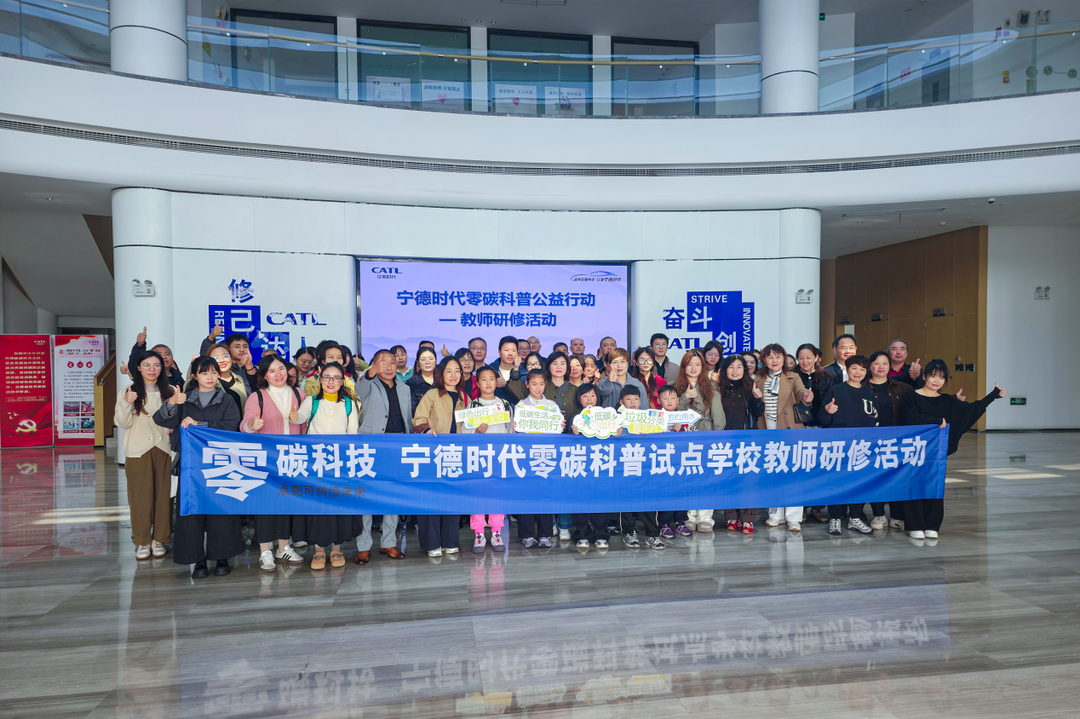
探索科普教育新范式,“零碳科普校园行”收官
Yang Zi Wan Bao Wang· 2025-11-01 12:31
Group 1 - The core idea of the news is the integration of zero-carbon technology into basic education, with teachers playing a crucial role as guides in this process [1] - The "Zero Carbon Science Popularization Campus Tour" has successfully covered nearly 400 teachers nationwide through a combination of online and offline activities [1][3] - The project initiated by CATL aims to bring cutting-edge zero-carbon technology into classrooms, targeting students in grades 3-6 and has reached over 50,000 students across more than 500 schools [3] Group 2 - The training activities for teachers include various modules such as introducing cutting-edge technology, systematic teaching training, and practical workshops, aimed at cultivating "zero-carbon science seed teachers" [4] - Professor Li Yiming emphasizes that science education should be about inspiration and experience rather than mere knowledge transmission, supported by a comprehensive teaching resource system provided by CATL [8] - The unique aspect of the training was the opportunity for teachers to visit CATL's "Lighthouse Factory," allowing them to witness the practical applications of zero-carbon concepts [10][12]